WELCOME
K.UMA
CIVIL ENGINEER
MEPCO SCHLENK ENGINEERING COLLEGE
SIVAKASI.
3D
PRINTER IN
CONSTRUCTION
CONTENTS
 3D printing
 3D printing in construction
 3D printing technology process
 History of 3D printing technology
 Comparison with other technologies
 Future benefits
 Disadvantages of 3D printing technology
 3D moon building.
3D Printing
Computer controlled sequential
layering of material.
To create three-dimensional
(3D) shapes.
Construction 3D Printing
 3DCP refers to various technologies
that use 3D Printing as a core method
to fabricate building or construction
components.
 It is also known as:
Rapid prototyping
Additive manufacturing.
Process of
3D printing
Construction
General principles
 Modeling.
 Printing.
 Finishing.
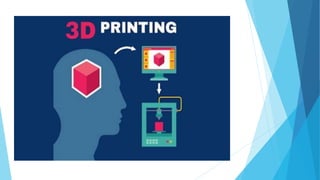
Process of 3D building construction:
1.A person creates a 3D image of an item
using a CAD software program.
2.The CAD information is sent to the printer.
3.The printer forms the item by depositing
the material in layers-starting from bottom
layer .In some cases light or lasers are used
to harden the material.
History
 The technology for printing
physical 3D object from digital
data was first developed by Chuck
Hull in 1984.
 The father of 3D printing.
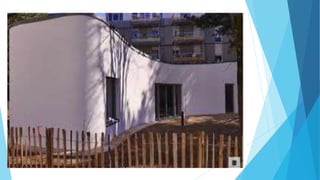
First 3D House In World
 In French.
 Overall the 95 metre.
 Within 54 hours.
 The building cost is 20% cheaper than an
identical construction with traditional
methods.
 Good thermal resistance, air circulation.
COMPARISON BETWEEN 3D
PRINTING AND
OTHER CONSTRUCTION
TECHNOLOGIES
ENVIRONMENT
3D printing
 major environmentally
friendly.
 waste reduction.
 plastics,resin,certain
metals,ceramics are used.
 no environmental impact.
 no pollution.
 no waste.
other technologies
 more waste production.
 plastics, ceramics are not used
in some construction
technologies.
 Environmental impact.
 co2 is emitted.
 pollution.
COST
3D printing
 low material cost.
 low labor cost.
 the printer does most
of the work.
 great for business’
bottom line.
Other technologies
 large material cost.
 high labor cost.
 take large time.
 the labors do most of
the work.
TIME CONSUMPTION
3D printer
 low time
consumption.
 One day is enough.
 within 42 hours, 3D
printer build a big
house.
other technologies
 high time
consumption.
 Minimum 6 mouths are
required.
 high cost.
THE FUTURE
BENEFITS
FOR 3D PRINTING IN
THE CONSTRUCTION
NEW SHAPES AND DESIGN
POSSIBILITIES
 flexible in the shapes of the designs.
 build curvilinear and rectilinear structure easily
 strongest structural.
 any shapes and size.
LOW COST
 low cost on both a large structure scale
and regard to parts.
 have potential for far lower material costs
and labor.
 very helpful for poor people.
 in China , they can be produced for less than
$5,000.
REMOTE LOCATION
CONSTRUCTION
 out of this world use of 3D
printing.
 moon building.
 3D printing could take us
anywhere.
MORE PRECISE
BUILDING
 better and more precise results.
 on small amount of area, 3D printer
build more precise building.
PRINTING OF 3D BRIDGE
AND CANAL
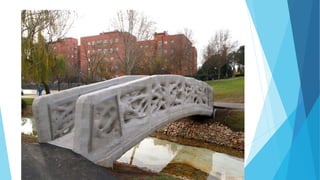
BUILDING THE WORLD’S FIRST
PEDESTRIAN 3D BRIDGE
 on 26th December 2016.
 in Madrid, Spain.
 12 meters in length.
 1.75 meters wide.
 Build by waste material.
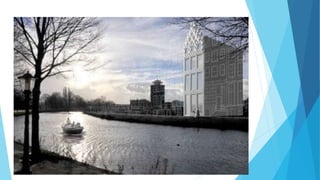
BUILDING A CANAL
 In Amsterdam.
 In 2014.
 The printer used 3D plastic to construct the
canal.
 WAAM 3D printing is used.
 Build by waste material with other material.
DISADVANTAGES
 automated fabrication is not suitable for large scale
products and conventional design approaches.
 Smaller ratio of automated products in comparison with
other industries.
 only limited material can be used by automated
machines.
 Reduced employee numbers in the industry, as the 3D
printer does most of the work.
 transportation of the printer to the site and safe storage
of it on site is problematic.
 any error in the digital model can result in problematic
issues on site during the printing or construction phase ,
that may require special handing .
 manufacture of conventional building products and plant
renting companies could suffer as their products demand
may decrease.
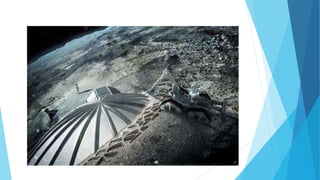
3D PRINTED MOON
BUILDING
 The building have to build on moon from material already on its
surface.
 The printers , operated by robots, would use soil from the moon.
 Site-the southern pole of the moon.
 Silicon, aluminium, calcium, iron, magnesium oxide could be used by
3D printer.
 first we plan the building plan with the help of CADD software.
 It send to 3D printer to moon with robots.
 3D printer build the building on moon with moonsoil.
 Hopes to be ready to start production by 2020.
REFERENCE
https://www.youtube.com/watch?v=8z-iebHRxJk
THANK YOU

3D printer construction

  • 1.
  • 2.
    K.UMA CIVIL ENGINEER MEPCO SCHLENKENGINEERING COLLEGE SIVAKASI.
  • 3.
  • 4.
    CONTENTS  3D printing 3D printing in construction  3D printing technology process  History of 3D printing technology  Comparison with other technologies  Future benefits  Disadvantages of 3D printing technology  3D moon building.
  • 5.
    3D Printing Computer controlledsequential layering of material. To create three-dimensional (3D) shapes.
  • 6.
    Construction 3D Printing 3DCP refers to various technologies that use 3D Printing as a core method to fabricate building or construction components.  It is also known as: Rapid prototyping Additive manufacturing.
  • 7.
  • 9.
    General principles  Modeling. Printing.  Finishing.
  • 10.
    Process of 3Dbuilding construction: 1.A person creates a 3D image of an item using a CAD software program. 2.The CAD information is sent to the printer. 3.The printer forms the item by depositing the material in layers-starting from bottom layer .In some cases light or lasers are used to harden the material.
  • 11.
    History  The technologyfor printing physical 3D object from digital data was first developed by Chuck Hull in 1984.  The father of 3D printing.
  • 12.
    First 3D HouseIn World  In French.  Overall the 95 metre.  Within 54 hours.  The building cost is 20% cheaper than an identical construction with traditional methods.  Good thermal resistance, air circulation.
  • 14.
    COMPARISON BETWEEN 3D PRINTINGAND OTHER CONSTRUCTION TECHNOLOGIES
  • 15.
    ENVIRONMENT 3D printing  majorenvironmentally friendly.  waste reduction.  plastics,resin,certain metals,ceramics are used.  no environmental impact.  no pollution.  no waste. other technologies  more waste production.  plastics, ceramics are not used in some construction technologies.  Environmental impact.  co2 is emitted.  pollution.
  • 16.
    COST 3D printing  lowmaterial cost.  low labor cost.  the printer does most of the work.  great for business’ bottom line. Other technologies  large material cost.  high labor cost.  take large time.  the labors do most of the work.
  • 17.
    TIME CONSUMPTION 3D printer low time consumption.  One day is enough.  within 42 hours, 3D printer build a big house. other technologies  high time consumption.  Minimum 6 mouths are required.  high cost.
  • 18.
    THE FUTURE BENEFITS FOR 3DPRINTING IN THE CONSTRUCTION
  • 19.
    NEW SHAPES ANDDESIGN POSSIBILITIES  flexible in the shapes of the designs.  build curvilinear and rectilinear structure easily  strongest structural.  any shapes and size.
  • 20.
    LOW COST  lowcost on both a large structure scale and regard to parts.  have potential for far lower material costs and labor.  very helpful for poor people.  in China , they can be produced for less than $5,000.
  • 21.
    REMOTE LOCATION CONSTRUCTION  outof this world use of 3D printing.  moon building.  3D printing could take us anywhere.
  • 22.
    MORE PRECISE BUILDING  betterand more precise results.  on small amount of area, 3D printer build more precise building.
  • 23.
    PRINTING OF 3DBRIDGE AND CANAL
  • 24.
    BUILDING THE WORLD’SFIRST PEDESTRIAN 3D BRIDGE  on 26th December 2016.  in Madrid, Spain.  12 meters in length.  1.75 meters wide.  Build by waste material.
  • 26.
    BUILDING A CANAL In Amsterdam.  In 2014.  The printer used 3D plastic to construct the canal.  WAAM 3D printing is used.  Build by waste material with other material.
  • 28.
    DISADVANTAGES  automated fabricationis not suitable for large scale products and conventional design approaches.  Smaller ratio of automated products in comparison with other industries.  only limited material can be used by automated machines.  Reduced employee numbers in the industry, as the 3D printer does most of the work.
  • 29.
     transportation ofthe printer to the site and safe storage of it on site is problematic.  any error in the digital model can result in problematic issues on site during the printing or construction phase , that may require special handing .  manufacture of conventional building products and plant renting companies could suffer as their products demand may decrease.
  • 30.
    3D PRINTED MOON BUILDING The building have to build on moon from material already on its surface.  The printers , operated by robots, would use soil from the moon.  Site-the southern pole of the moon.  Silicon, aluminium, calcium, iron, magnesium oxide could be used by 3D printer.  first we plan the building plan with the help of CADD software.  It send to 3D printer to moon with robots.  3D printer build the building on moon with moonsoil.  Hopes to be ready to start production by 2020.
  • 32.
  • 33.