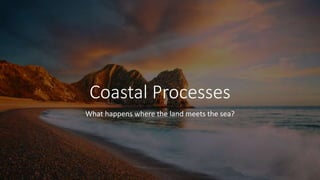
Coastal Processes
What happens where the land meets the sea?
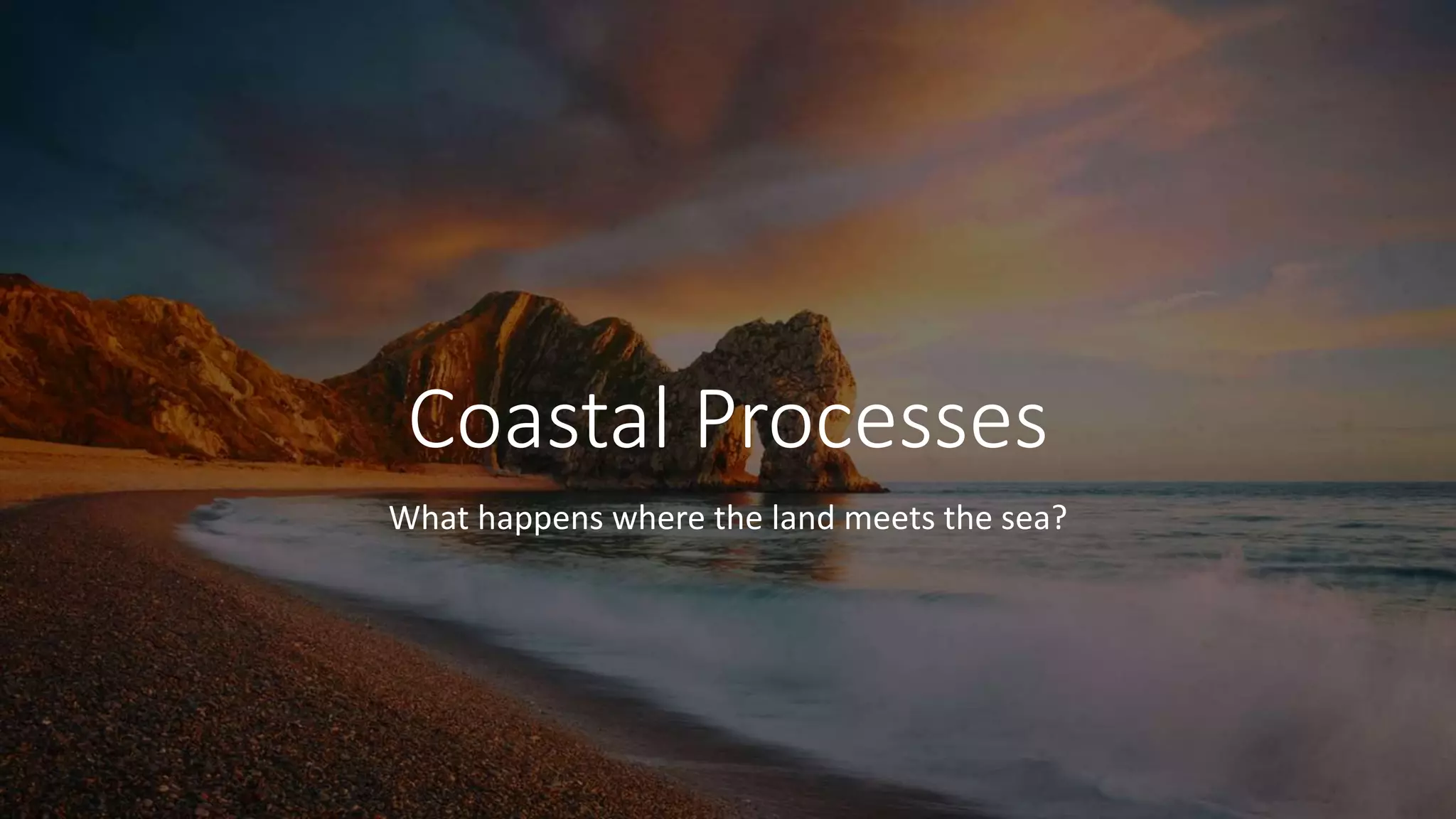
Coast
The coast is the zone
between land and sea.
The action of the waves
and the sea constantly
changes the shape and
form of the coast, and
people manage these
changes in different
ways.
The Coastal Zone
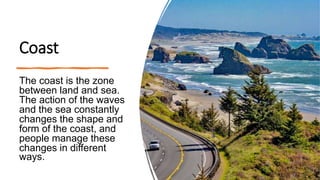
The coastal zone is a narrow stretch
between the land and the sea. The sea,
land and air constantly change its shape
and form.
The Coastal Zone
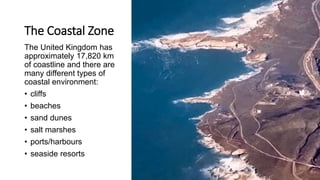
The United Kingdom has
approximately 17,820 km
of coastline and there are
many different types of
coastal environment:
• cliffs
• beaches
• sand dunes
• salt marshes
• ports/harbours
• seaside resorts
The Coastal Zone: Key
Processes
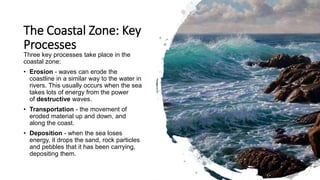
Three key processes take place in the
coastal zone:
• Erosion - waves can erode the
coastline in a similar way to the water in
rivers. This usually occurs when the sea
takes lots of energy from the power
of destructive waves.
• Transportation - the movement of
eroded material up and down, and
along the coast.
• Deposition - when the sea loses
energy, it drops the sand, rock particles
and pebbles that it has been carrying,
depositing them.
Four key factors
affect
the erosion of the
coastline:
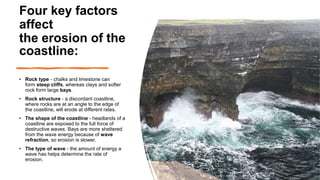
• Rock type - chalks and limestone can
form steep cliffs, whereas clays and softer
rock form large bays.
• Rock structure - a discordant coastline,
where rocks are at an angle to the edge of
the coastline, will erode at different rates.
• The shape of the coastline - headlands of a
coastline are exposed to the full force of
destructive waves. Bays are more sheltered
from the wave energy because of wave
refraction, so erosion is slower.
• The type of wave - the amount of energy a
wave has helps determine the rate of
erosion.
Deposition
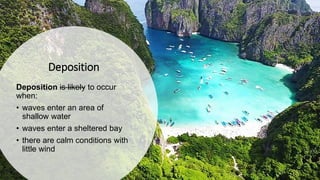
Deposition is likely to occur
when:
• waves enter an area of
shallow water
• waves enter a sheltered bay
• there are calm conditions with
little wind
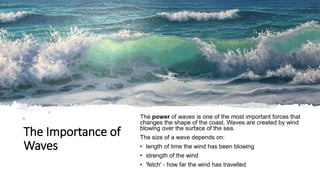
The Importance of
Waves
The power of waves is one of the most important forces that
changes the shape of the coast. Waves are created by wind
blowing over the surface of the sea.
The size of a wave depends on:
• length of time the wind has been blowing
• strength of the wind
• 'fetch' - how far the wind has travelled
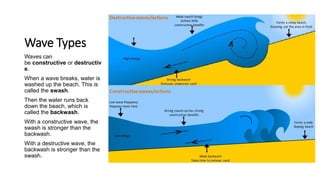
Wave Types
Waves can
be constructive or destructiv
e.
When a wave breaks, water is
washed up the beach. This is
called the swash.
Then the water runs back
down the beach, which is
called the backwash.
With a constructive wave, the
swash is stronger than the
backwash.
With a destructive wave, the
backwash is stronger than the
swash.
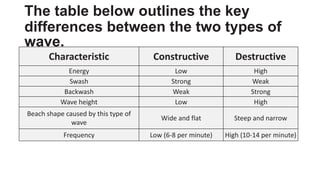
The table below outlines the key
differences between the two types of
wave.
Characteristic Constructive Destructive
Energy Low High
Swash Strong Weak
Backwash Weak Strong
Wave height Low High
Beach shape caused by this type of
wave
Wide and flat Steep and narrow
Frequency Low (6-8 per minute) High (10-14 per minute)
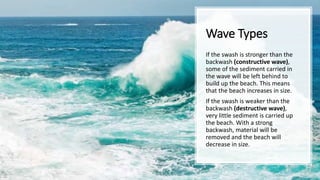
Wave Types
If the swash is stronger than the
backwash (constructive wave),
some of the sediment carried in
the wave will be left behind to
build up the beach. This means
that the beach increases in size.
If the swash is weaker than the
backwash (destructive wave),
very little sediment is carried up
the beach. With a strong
backwash, material will be
removed and the beach will
decrease in size.

Coastal processes

  • 1.
    Coastal Processes What happenswhere the land meets the sea?
  • 2.
    Coast The coast isthe zone between land and sea. The action of the waves and the sea constantly changes the shape and form of the coast, and people manage these changes in different ways.
  • 3.
    The Coastal Zone Thecoastal zone is a narrow stretch between the land and the sea. The sea, land and air constantly change its shape and form.
  • 4.
    The Coastal Zone TheUnited Kingdom has approximately 17,820 km of coastline and there are many different types of coastal environment: • cliffs • beaches • sand dunes • salt marshes • ports/harbours • seaside resorts
  • 5.
    The Coastal Zone:Key Processes Three key processes take place in the coastal zone: • Erosion - waves can erode the coastline in a similar way to the water in rivers. This usually occurs when the sea takes lots of energy from the power of destructive waves. • Transportation - the movement of eroded material up and down, and along the coast. • Deposition - when the sea loses energy, it drops the sand, rock particles and pebbles that it has been carrying, depositing them.
  • 6.
    Four key factors affect theerosion of the coastline: • Rock type - chalks and limestone can form steep cliffs, whereas clays and softer rock form large bays. • Rock structure - a discordant coastline, where rocks are at an angle to the edge of the coastline, will erode at different rates. • The shape of the coastline - headlands of a coastline are exposed to the full force of destructive waves. Bays are more sheltered from the wave energy because of wave refraction, so erosion is slower. • The type of wave - the amount of energy a wave has helps determine the rate of erosion.
  • 7.
    Deposition Deposition is likelyto occur when: • waves enter an area of shallow water • waves enter a sheltered bay • there are calm conditions with little wind
  • 8.
    The Importance of Waves Thepower of waves is one of the most important forces that changes the shape of the coast. Waves are created by wind blowing over the surface of the sea. The size of a wave depends on: • length of time the wind has been blowing • strength of the wind • 'fetch' - how far the wind has travelled
  • 9.
    Wave Types Waves can beconstructive or destructiv e. When a wave breaks, water is washed up the beach. This is called the swash. Then the water runs back down the beach, which is called the backwash. With a constructive wave, the swash is stronger than the backwash. With a destructive wave, the backwash is stronger than the swash.
  • 10.
    The table belowoutlines the key differences between the two types of wave. Characteristic Constructive Destructive Energy Low High Swash Strong Weak Backwash Weak Strong Wave height Low High Beach shape caused by this type of wave Wide and flat Steep and narrow Frequency Low (6-8 per minute) High (10-14 per minute)
  • 11.
    Wave Types If theswash is stronger than the backwash (constructive wave), some of the sediment carried in the wave will be left behind to build up the beach. This means that the beach increases in size. If the swash is weaker than the backwash (destructive wave), very little sediment is carried up the beach. With a strong backwash, material will be removed and the beach will decrease in size.