Population Dynamics
IGCSE Cambridge
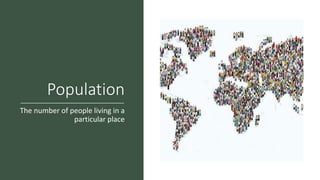
Population
The number of people living in a
particular place
Dynamics
The forces or properties which stimulate growth, development, or
change within a system or process.
Population
Dynamics
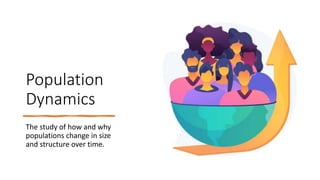
The study of how and why
populations change in size
and structure over time.
Describe and give reasons for
the rapid increase in the
world’s population
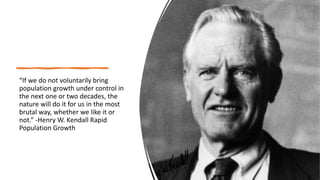
“If we do not voluntarily bring
population growth under control in
the next one or two decades, the
nature will do it for us in the most
brutal way, whether we like it or
not.” -Henry W. Kendall Rapid
Population Growth
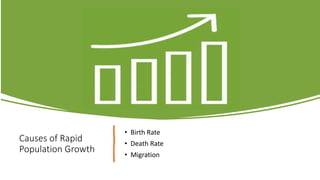
Causes of Rapid
Population Growth
• Birth Rate
• Death Rate
• Migration
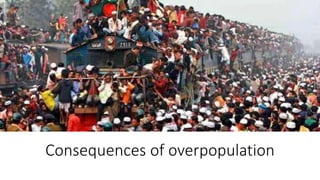
Consequences of overpopulation
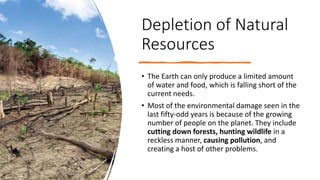
Depletion of Natural
Resources
• The Earth can only produce a limited amount
of water and food, which is falling short of the
current needs.
• Most of the environmental damage seen in the
last fifty-odd years is because of the growing
number of people on the planet. They include
cutting down forests, hunting wildlife in a
reckless manner, causing pollution, and
creating a host of other problems.
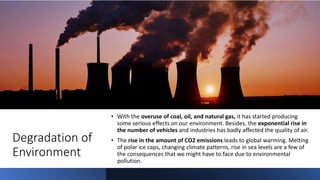
Degradation of
Environment
• With the overuse of coal, oil, and natural gas, it has started producing
some serious effects on our environment. Besides, the exponential rise in
the number of vehicles and industries has badly affected the quality of air.
• The rise in the amount of CO2 emissions leads to global warming. Melting
of polar ice caps, changing climate patterns, rise in sea levels are a few of
the consequences that we might have to face due to environmental
pollution.
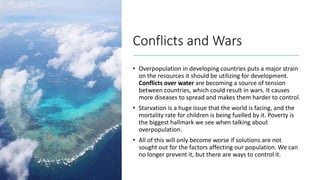
Conflicts and Wars
• Overpopulation in developing countries puts a major strain
on the resources it should be utilizing for development.
Conflicts over water are becoming a source of tension
between countries, which could result in wars. It causes
more diseases to spread and makes them harder to control.
• Starvation is a huge issue that the world is facing, and the
mortality rate for children is being fuelled by it. Poverty is
the biggest hallmark we see when talking about
overpopulation.
• All of this will only become worse if solutions are not
sought out for the factors affecting our population. We can
no longer prevent it, but there are ways to control it.
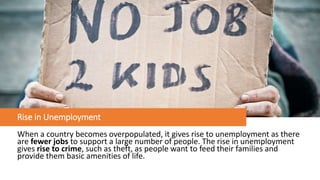
Rise in Unemployment
When a country becomes overpopulated, it gives rise to unemployment as there
are fewer jobs to support a large number of people. The rise in unemployment
gives rise to crime, such as theft, as people want to feed their families and
provide them basic amenities of life.
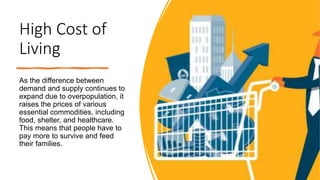
High Cost of
Living
As the difference between
demand and supply continues to
expand due to overpopulation, it
raises the prices of various
essential commodities, including
food, shelter, and healthcare.
This means that people have to
pay more to survive and feed
their families.
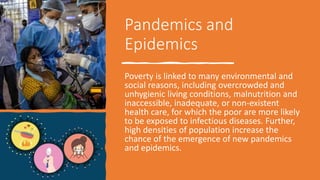
Pandemics and
Epidemics
Poverty is linked to many environmental and
social reasons, including overcrowded and
unhygienic living conditions, malnutrition and
inaccessible, inadequate, or non-existent
health care, for which the poor are more likely
to be exposed to infectious diseases. Further,
high densities of population increase the
chance of the emergence of new pandemics
and epidemics.
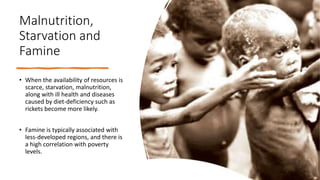
Malnutrition,
Starvation and
Famine
• When the availability of resources is
scarce, starvation, malnutrition,
along with ill health and diseases
caused by diet-deficiency such as
rickets become more likely.
• Famine is typically associated with
less-developed regions, and there is
a high correlation with poverty
levels.
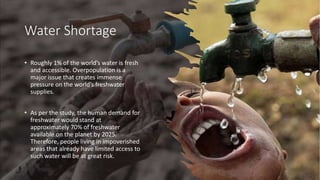
Water Shortage
• Roughly 1% of the world’s water is fresh
and accessible. Overpopulation is a
major issue that creates immense
pressure on the world’s freshwater
supplies.
• As per the study, the human demand for
freshwater would stand at
approximately 70% of freshwater
available on the planet by 2025.
Therefore, people living in impoverished
areas that already have limited access to
such water will be at great risk.
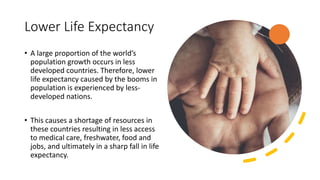
Lower Life Expectancy
• A large proportion of the world’s
population growth occurs in less
developed countries. Therefore, lower
life expectancy caused by the booms in
population is experienced by less-
developed nations.
• This causes a shortage of resources in
these countries resulting in less access
to medical care, freshwater, food and
jobs, and ultimately in a sharp fall in life
expectancy.
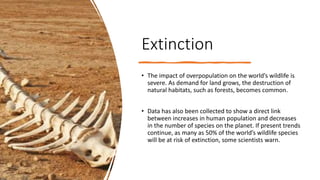
Extinction
• The impact of overpopulation on the world’s wildlife is
severe. As demand for land grows, the destruction of
natural habitats, such as forests, becomes common.
• Data has also been collected to show a direct link
between increases in human population and decreases
in the number of species on the planet. If present trends
continue, as many as 50% of the world’s wildlife species
will be at risk of extinction, some scientists warn.
https://www.conserve-energy-
future.com/causes-effects-solutions-of-
overpopulation.php

Grade 9 Consequences of Overpopulation

  • 1.
  • 2.
    Population The number ofpeople living in a particular place
  • 3.
    Dynamics The forces orproperties which stimulate growth, development, or change within a system or process.
  • 4.
    Population Dynamics The study ofhow and why populations change in size and structure over time.
  • 5.
    Describe and givereasons for the rapid increase in the world’s population
  • 6.
    “If we donot voluntarily bring population growth under control in the next one or two decades, the nature will do it for us in the most brutal way, whether we like it or not.” -Henry W. Kendall Rapid Population Growth
  • 7.
    Causes of Rapid PopulationGrowth • Birth Rate • Death Rate • Migration
  • 8.
  • 9.
    Depletion of Natural Resources •The Earth can only produce a limited amount of water and food, which is falling short of the current needs. • Most of the environmental damage seen in the last fifty-odd years is because of the growing number of people on the planet. They include cutting down forests, hunting wildlife in a reckless manner, causing pollution, and creating a host of other problems.
  • 10.
    Degradation of Environment • Withthe overuse of coal, oil, and natural gas, it has started producing some serious effects on our environment. Besides, the exponential rise in the number of vehicles and industries has badly affected the quality of air. • The rise in the amount of CO2 emissions leads to global warming. Melting of polar ice caps, changing climate patterns, rise in sea levels are a few of the consequences that we might have to face due to environmental pollution.
  • 11.
    Conflicts and Wars •Overpopulation in developing countries puts a major strain on the resources it should be utilizing for development. Conflicts over water are becoming a source of tension between countries, which could result in wars. It causes more diseases to spread and makes them harder to control. • Starvation is a huge issue that the world is facing, and the mortality rate for children is being fuelled by it. Poverty is the biggest hallmark we see when talking about overpopulation. • All of this will only become worse if solutions are not sought out for the factors affecting our population. We can no longer prevent it, but there are ways to control it.
  • 12.
    Rise in Unemployment Whena country becomes overpopulated, it gives rise to unemployment as there are fewer jobs to support a large number of people. The rise in unemployment gives rise to crime, such as theft, as people want to feed their families and provide them basic amenities of life.
  • 13.
    High Cost of Living Asthe difference between demand and supply continues to expand due to overpopulation, it raises the prices of various essential commodities, including food, shelter, and healthcare. This means that people have to pay more to survive and feed their families.
  • 14.
    Pandemics and Epidemics Poverty islinked to many environmental and social reasons, including overcrowded and unhygienic living conditions, malnutrition and inaccessible, inadequate, or non-existent health care, for which the poor are more likely to be exposed to infectious diseases. Further, high densities of population increase the chance of the emergence of new pandemics and epidemics.
  • 15.
    Malnutrition, Starvation and Famine • Whenthe availability of resources is scarce, starvation, malnutrition, along with ill health and diseases caused by diet-deficiency such as rickets become more likely. • Famine is typically associated with less-developed regions, and there is a high correlation with poverty levels.
  • 16.
    Water Shortage • Roughly1% of the world’s water is fresh and accessible. Overpopulation is a major issue that creates immense pressure on the world’s freshwater supplies. • As per the study, the human demand for freshwater would stand at approximately 70% of freshwater available on the planet by 2025. Therefore, people living in impoverished areas that already have limited access to such water will be at great risk.
  • 17.
    Lower Life Expectancy •A large proportion of the world’s population growth occurs in less developed countries. Therefore, lower life expectancy caused by the booms in population is experienced by less- developed nations. • This causes a shortage of resources in these countries resulting in less access to medical care, freshwater, food and jobs, and ultimately in a sharp fall in life expectancy.
  • 18.
    Extinction • The impactof overpopulation on the world’s wildlife is severe. As demand for land grows, the destruction of natural habitats, such as forests, becomes common. • Data has also been collected to show a direct link between increases in human population and decreases in the number of species on the planet. If present trends continue, as many as 50% of the world’s wildlife species will be at risk of extinction, some scientists warn.
  • 19.