

Coaching,
Mentoring &
Training
…
In my many years as a coach, I have
discovered that many people often confuse
coaching, mentoring and training.
Well…if you belong to this bracket of people,
that’s about to change!!
Are they similar??
• Its good you asked…
• The similarity between these terms is that
they are all ways in which an expert or
experienced individual helps someone to do
something more effectively.
• That’s about it!
The Differences
Now comes the part where I rock your boat…
Coaching
• Coaching is defined as a developmental
strategy that enables people to meet their
goals of improved performance, growth or
career enhancement.
• It is an ongoing relationship that focuses on
individuals and businesses taking action
towards their visions, goals or desires
The role of the Coach is to
They…
• Hold your hand and get you from point A to
point B
She says…
“Having a Coach is like having a personal
referee; someone to cheer you on and guide
you towards your greatest achievements”
- Joyce Mbaya-Ikiao
Question is, are Coaches important?
This is because,
1. They help you develop a capacity to think
about things in a new and creative way for
better accomplishment of your goals
2. They help you explore your talents and
capabilities and to establish what you want
to achieve
3. Most importantly, they help you work
through obstacles in life
What about Mentoring?
• Mentoring is generally an informal relationship.
A mentor will do many of the same things as a
coach or even someone who is a trainer, but
there is no formal obligation on either party
• A mentoring relationship often develops
gradually from a friendship or a professional
association, intensifies as the mentor discovers
he has valuable insight and experience to
share, and as the person being mentored
discovers his desire to learn from the mentor
It is…
So who is a Mentor?
“A mentor is someone who allows you to see
the hope inside yourself. A mentor is someone
who allows you to know that no matter how
dark the night, in the morning joy will come. A
mentor is someone who allows you to see the
higher part of yourself when sometimes it
becomes hidden to your own view”
- Oprah Winfrey
Training
• Training is the acquisition of knowledge skills
and competencies as a result of the teaching of
vocational or practical skills and knowledge
that relate to specific useful competencies
• Training has specific goals to improve one’s
capabilities, capacity, productivity and
performance
It is…
• Very formal, with well-defined learning
objectives, and is often relatively brief as
compared to coaching or mentoring
• There is a very strong focus on the trainer
been a subject matter expert
• It is expected that the participants in the
training learn from the trainer
Training Techniques include
• Discussions
• Simulations
• Presentations
• Lectures
• Case Studies
• Role Playing
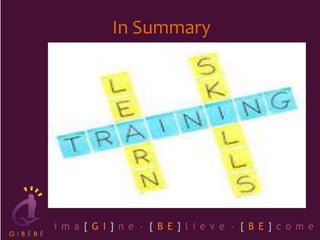
In Summary
To Wrap it up
• All three techniques are great ways of
learning
• All you have to do is discover which
methods suits you best
• And then…
GIBÉBÉ Ltd: NHIF Building, Upper Hill, Nairobi,
KENYA
T: +254 20 2728982 M: (254) 713 923759
Email: hazel@gibebe.com
Web: http://www.gibebe.com/
FB: https://www.facebook.com/gibebee
Follow on Twitter: https://twitter.com/Gibebe_Ltd

Coaching-Mentoring-Training

  • 1.
  • 2.
    … In my manyyears as a coach, I have discovered that many people often confuse coaching, mentoring and training. Well…if you belong to this bracket of people, that’s about to change!!
  • 3.
    Are they similar?? •Its good you asked… • The similarity between these terms is that they are all ways in which an expert or experienced individual helps someone to do something more effectively. • That’s about it!
  • 4.
    The Differences Now comesthe part where I rock your boat…
  • 5.
    Coaching • Coaching isdefined as a developmental strategy that enables people to meet their goals of improved performance, growth or career enhancement. • It is an ongoing relationship that focuses on individuals and businesses taking action towards their visions, goals or desires
  • 6.
    The role ofthe Coach is to
  • 7.
    They… • Hold yourhand and get you from point A to point B
  • 8.
    She says… “Having aCoach is like having a personal referee; someone to cheer you on and guide you towards your greatest achievements” - Joyce Mbaya-Ikiao
  • 9.
    Question is, areCoaches important?
  • 10.
    This is because, 1.They help you develop a capacity to think about things in a new and creative way for better accomplishment of your goals 2. They help you explore your talents and capabilities and to establish what you want to achieve 3. Most importantly, they help you work through obstacles in life
  • 11.
    What about Mentoring? •Mentoring is generally an informal relationship. A mentor will do many of the same things as a coach or even someone who is a trainer, but there is no formal obligation on either party • A mentoring relationship often develops gradually from a friendship or a professional association, intensifies as the mentor discovers he has valuable insight and experience to share, and as the person being mentored discovers his desire to learn from the mentor
  • 12.
  • 13.
    So who isa Mentor? “A mentor is someone who allows you to see the hope inside yourself. A mentor is someone who allows you to know that no matter how dark the night, in the morning joy will come. A mentor is someone who allows you to see the higher part of yourself when sometimes it becomes hidden to your own view” - Oprah Winfrey
  • 14.
    Training • Training isthe acquisition of knowledge skills and competencies as a result of the teaching of vocational or practical skills and knowledge that relate to specific useful competencies • Training has specific goals to improve one’s capabilities, capacity, productivity and performance
  • 15.
    It is… • Veryformal, with well-defined learning objectives, and is often relatively brief as compared to coaching or mentoring • There is a very strong focus on the trainer been a subject matter expert • It is expected that the participants in the training learn from the trainer
  • 16.
    Training Techniques include •Discussions • Simulations • Presentations • Lectures • Case Studies • Role Playing
  • 17.
  • 18.
    To Wrap itup • All three techniques are great ways of learning • All you have to do is discover which methods suits you best • And then…
  • 20.
    GIBÉBÉ Ltd: NHIFBuilding, Upper Hill, Nairobi, KENYA T: +254 20 2728982 M: (254) 713 923759 Email: hazel@gibebe.com Web: http://www.gibebe.com/ FB: https://www.facebook.com/gibebee Follow on Twitter: https://twitter.com/Gibebe_Ltd