Training of Trainers
Why are you here????
• Can generate open discussion
• Ask open ended question
• Can use less and more time
• Knowledge of the subject
matter
• Patient
• Move with the pace of the
trainees
• Can read the mood of the
participants
• Maintain eye contact
• Can hold the participants
• Clear voice
• Courage to face questions
• Can take quick decisions
• Use different methods
• Adjustable to different
situations
• Use all tools
• Lively
• Spontaneous
• Use bold pens
• Proper sitting arrangement-
everybody can see each other
• Never get angry
• Never leave the session in
progress
• Never react
• No personal remarks
• Don’t show off
??????To become a trainer???????
Do you think you can be one?????
YES ………. No…… May be…..
If you think you can put people in this situation……
Yes!!!! you can become a trainer!!!!!!!
Sessions outline
• Types of training
• Process of Training
• Phases of training (System Approach)
• Training Need Assessment
Session:1 (Types of Training)
Types of Training
…………………………………………………………………………
Lets recollect our experiences
…………………………………………………………………………
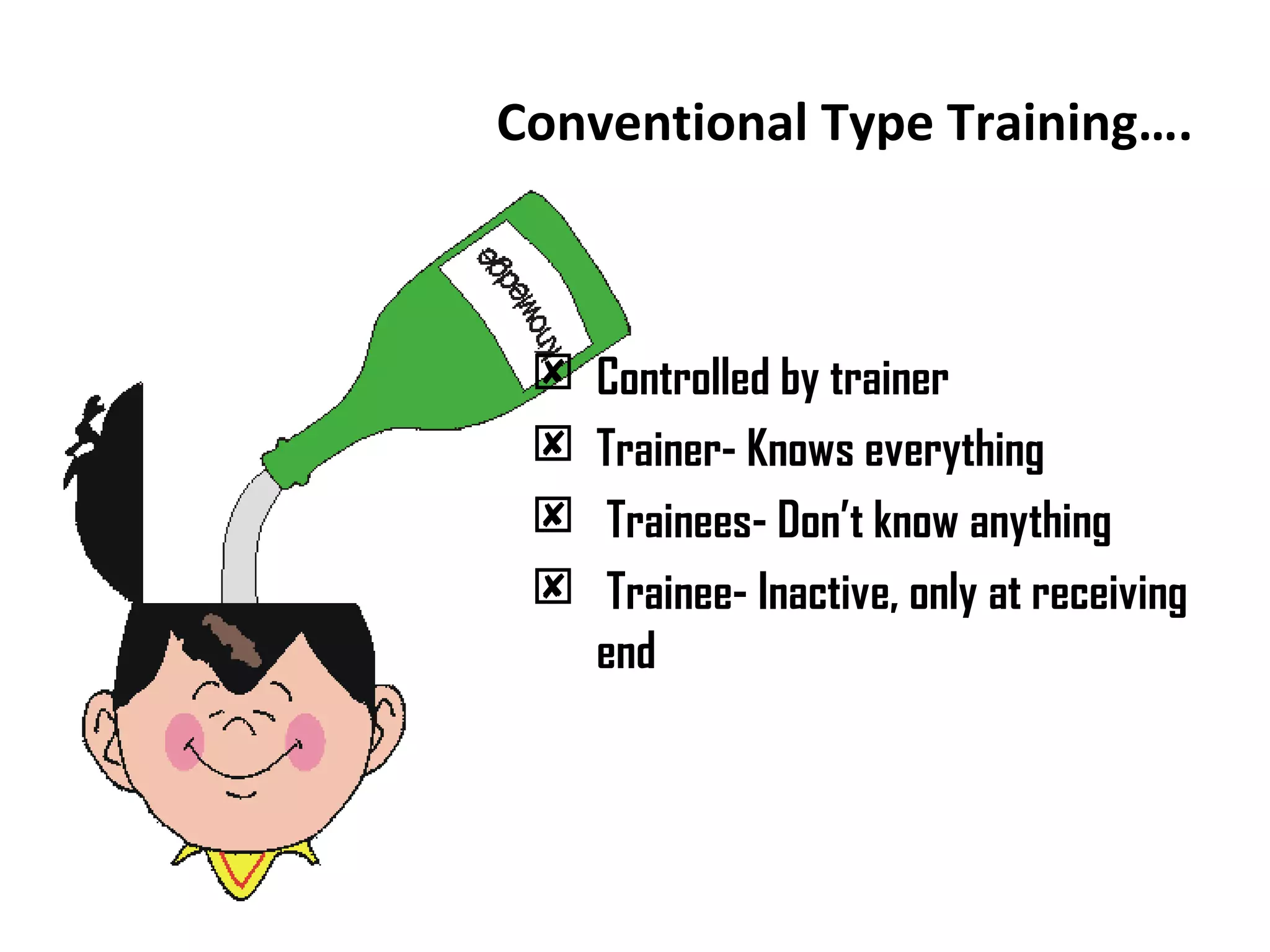
Conventional Type Training….
 Controlled by trainer
 Trainer- Knows everything
 Trainees- Don’t know anything
 Trainee- Inactive, only at receiving
end
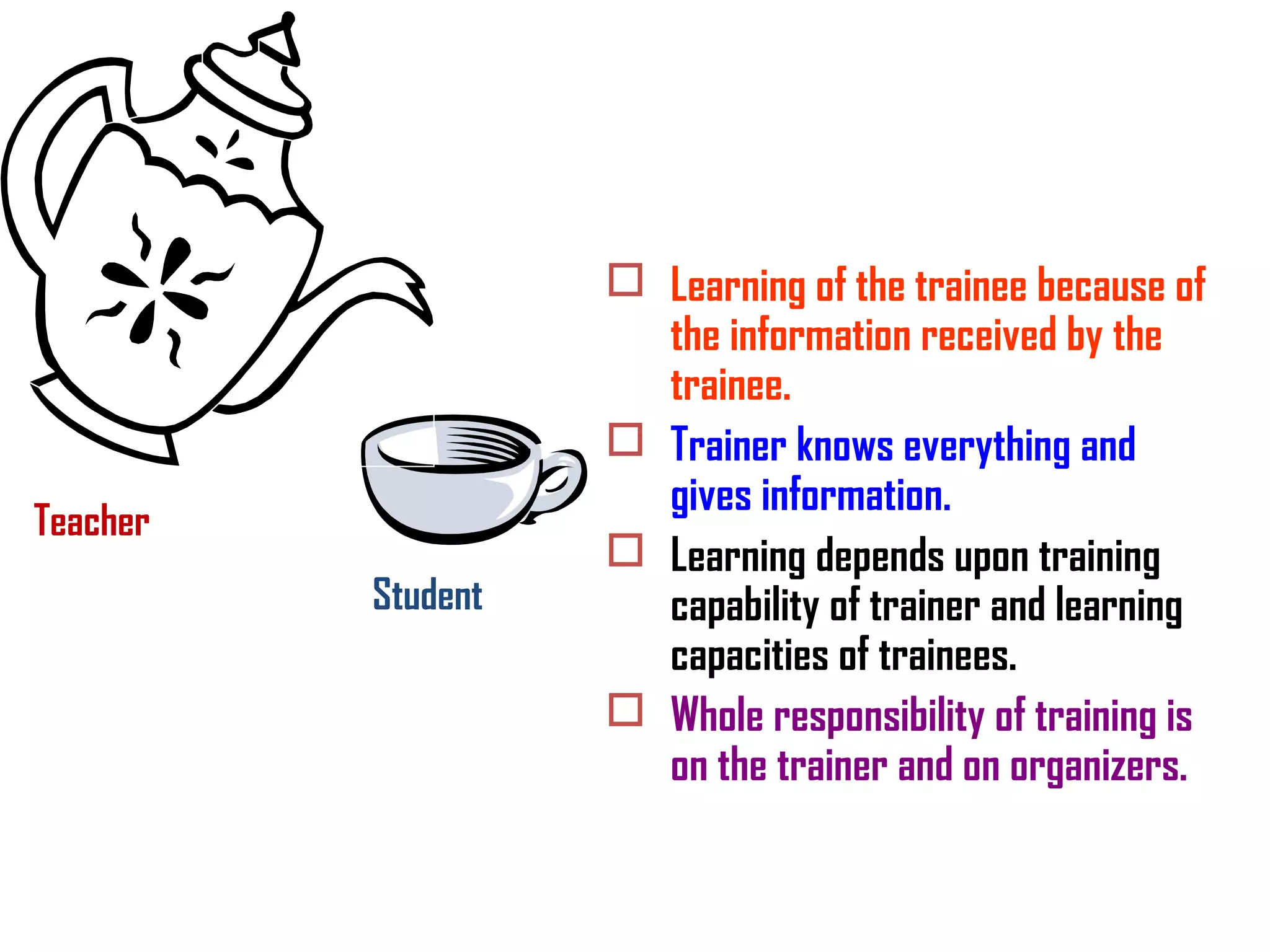
Teacher
Student
 Learning of the trainee because of
the information received by the
trainee.
 Trainer knows everything and
gives information.
 Learning depends upon training
capability of trainer and learning
capacities of trainees.
 Whole responsibility of training is
on the trainer and on organizers.
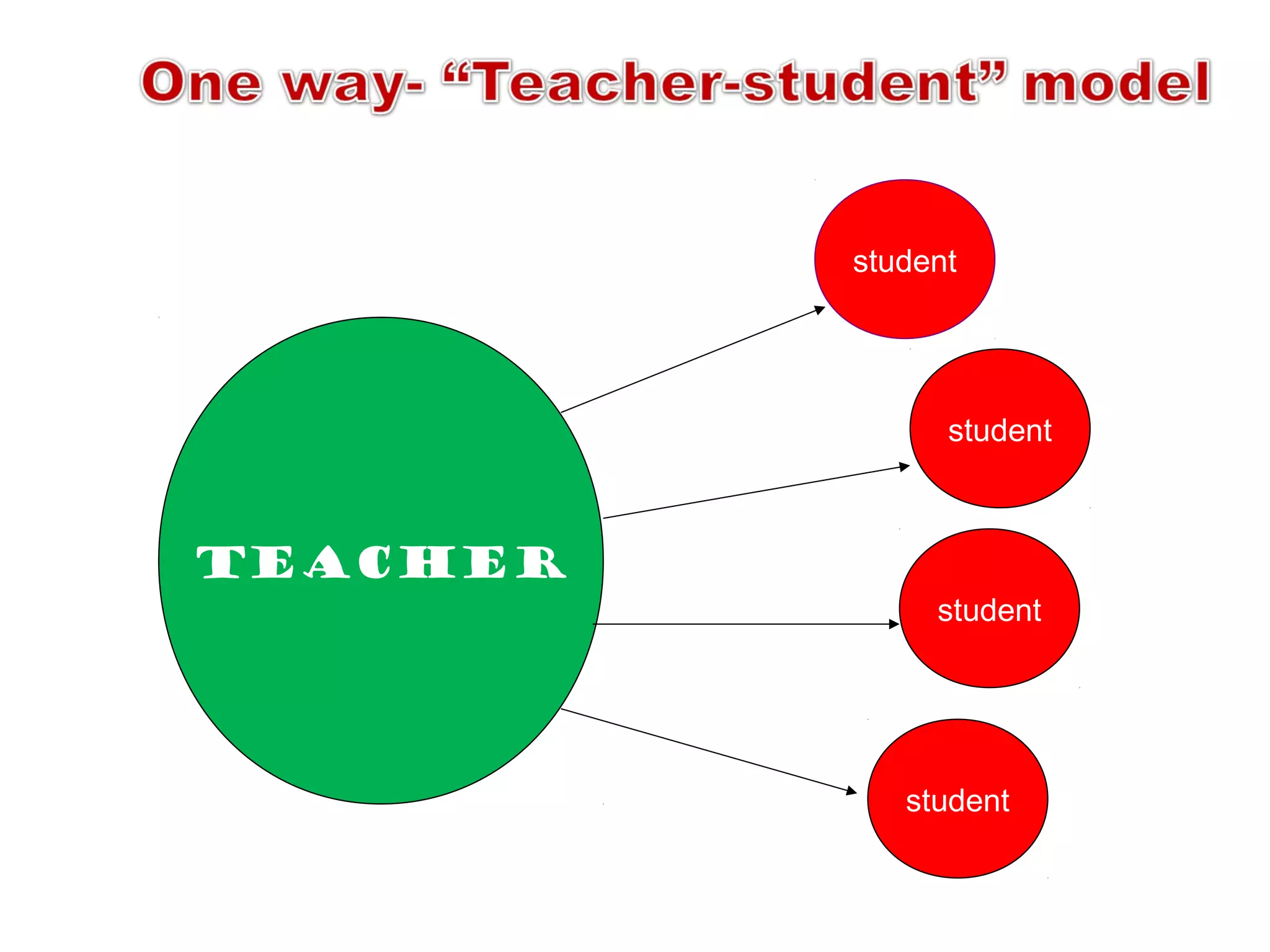
TEACHER
student
student
student
student
Participatory Type Training…..
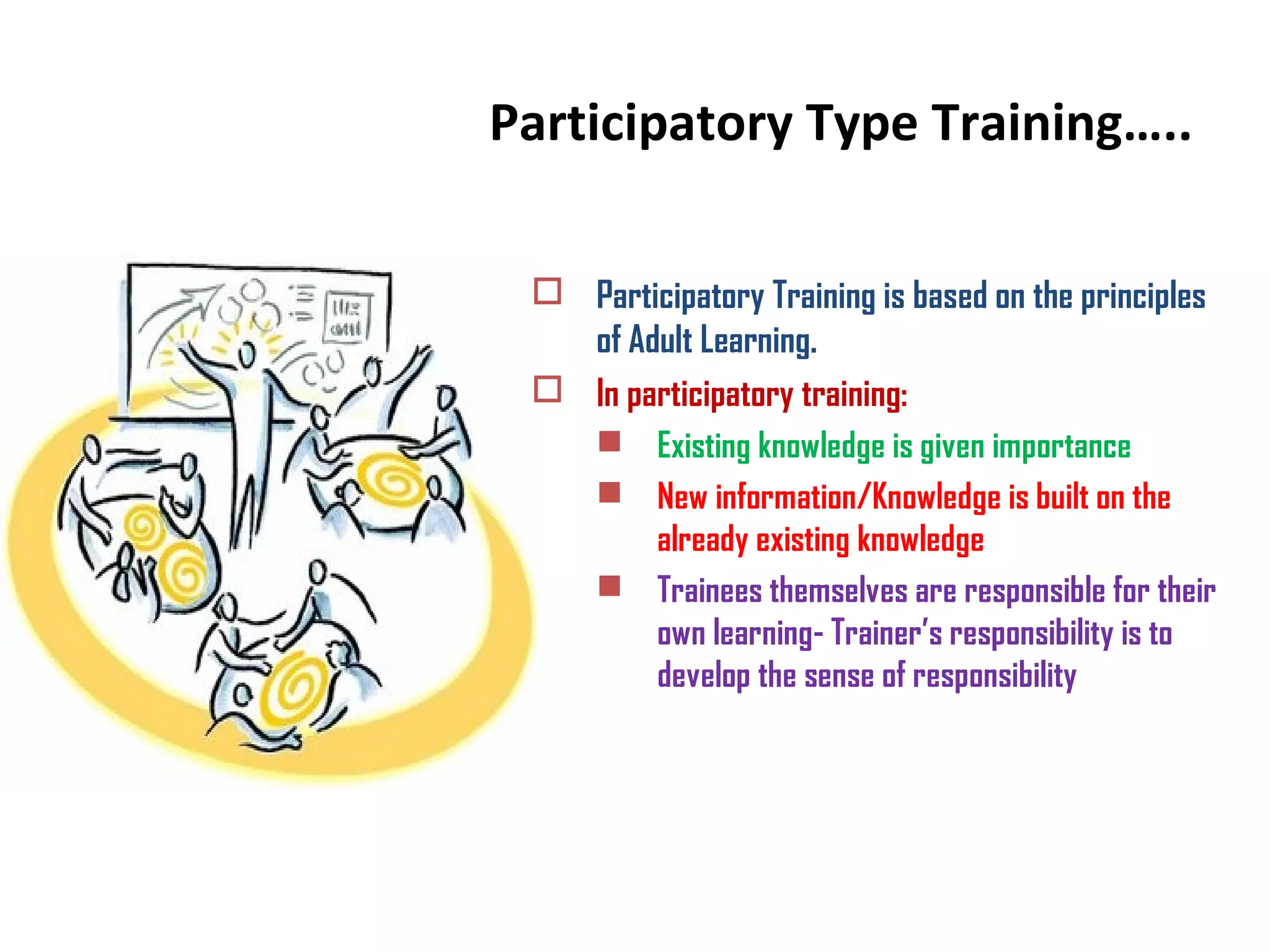
 Participatory Training is based on the principles
of Adult Learning.
 In participatory training:
 Existing knowledge is given importance
 New information/Knowledge is built on the
already existing knowledge
 Trainees themselves are responsible for their
own learning- Trainer’s responsibility is to
develop the sense of responsibility
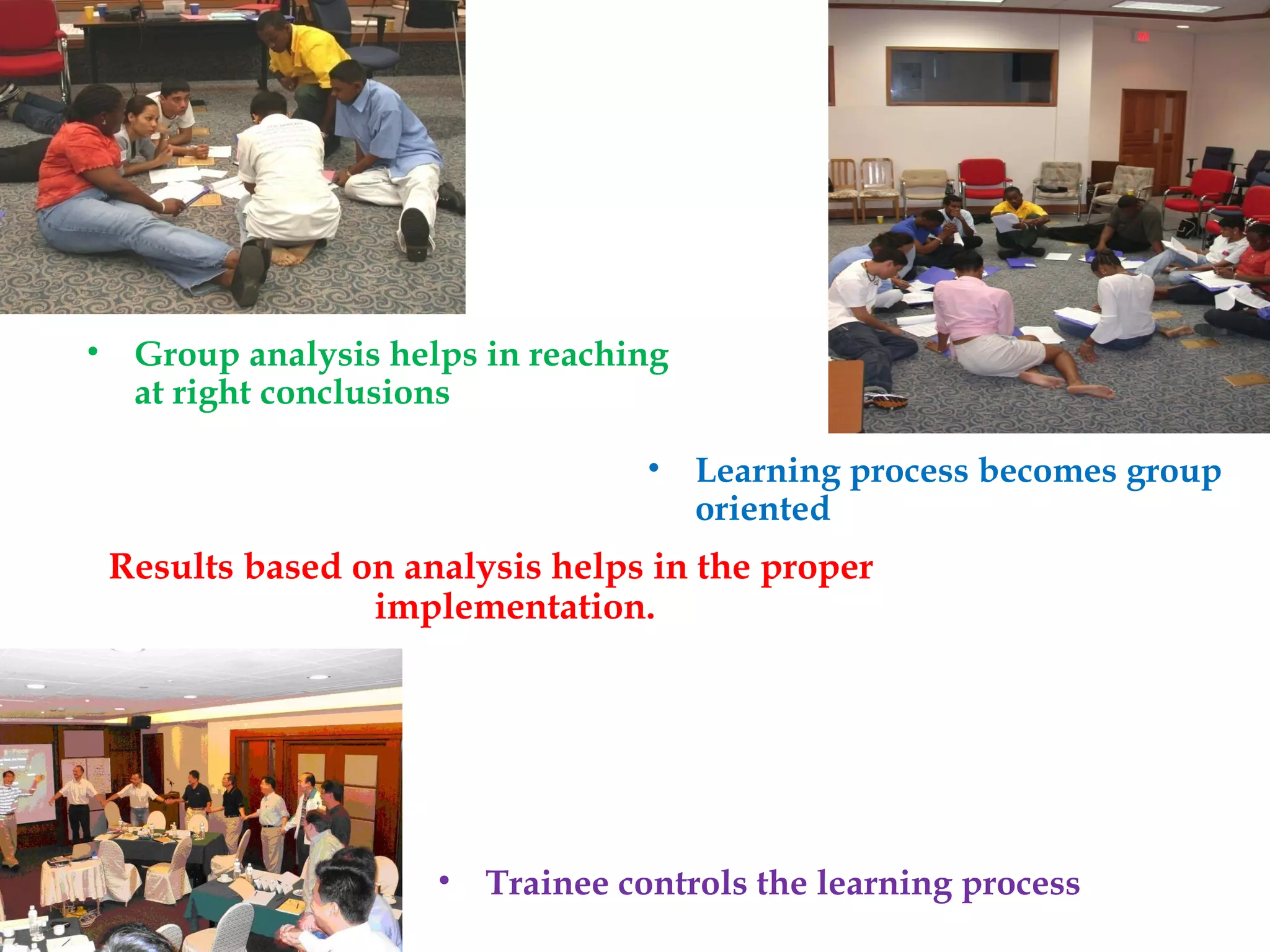
Results based on analysis helps in the proper
implementation.
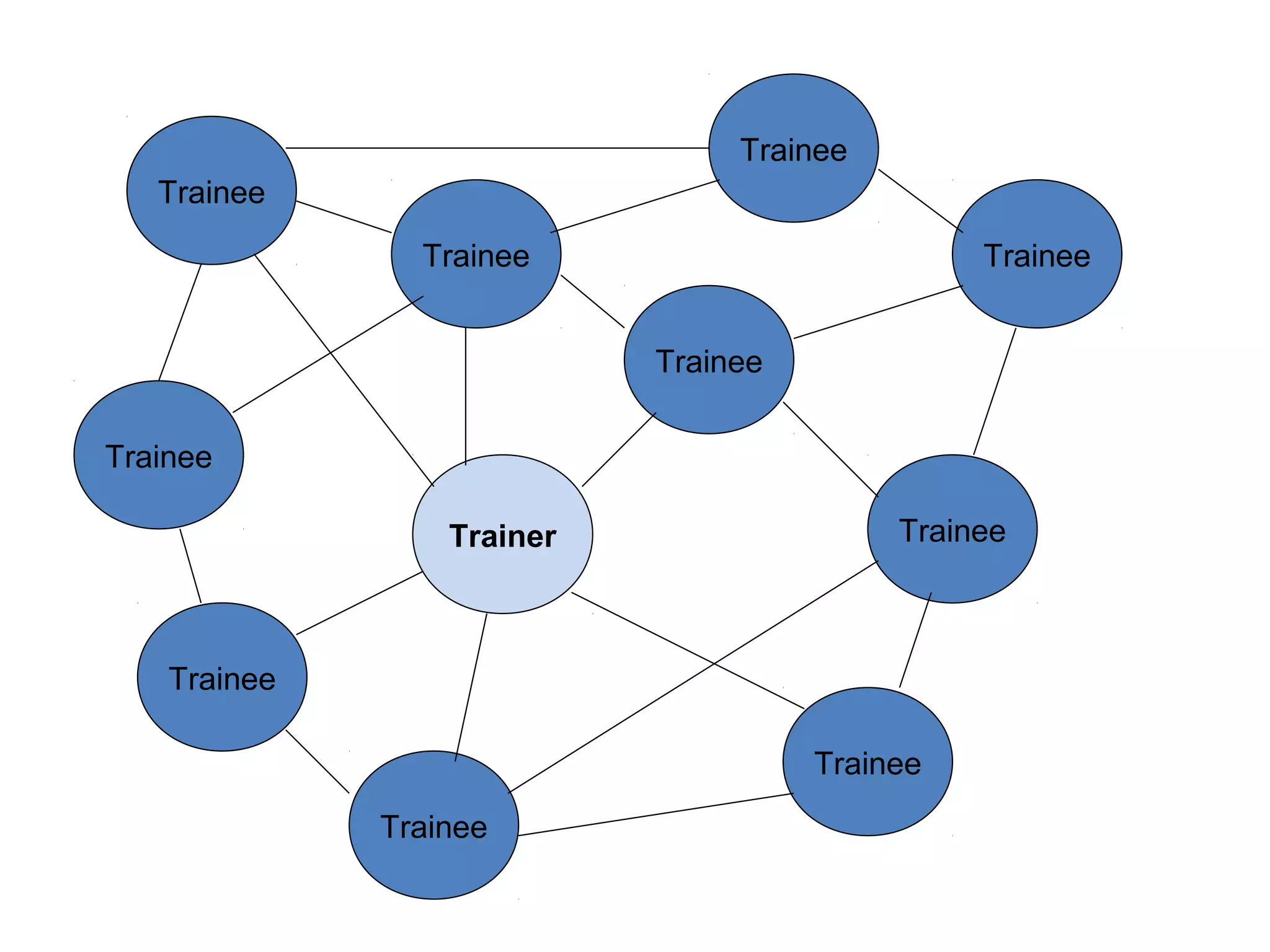
• Trainee controls the learning process
• Learning process becomes group
oriented
• Group analysis helps in reaching
at right conclusions
Trainee
Trainer
Trainee
Trainee
Trainee
Trainee
Trainee
Trainee
Trainee
Trainee
Trainee
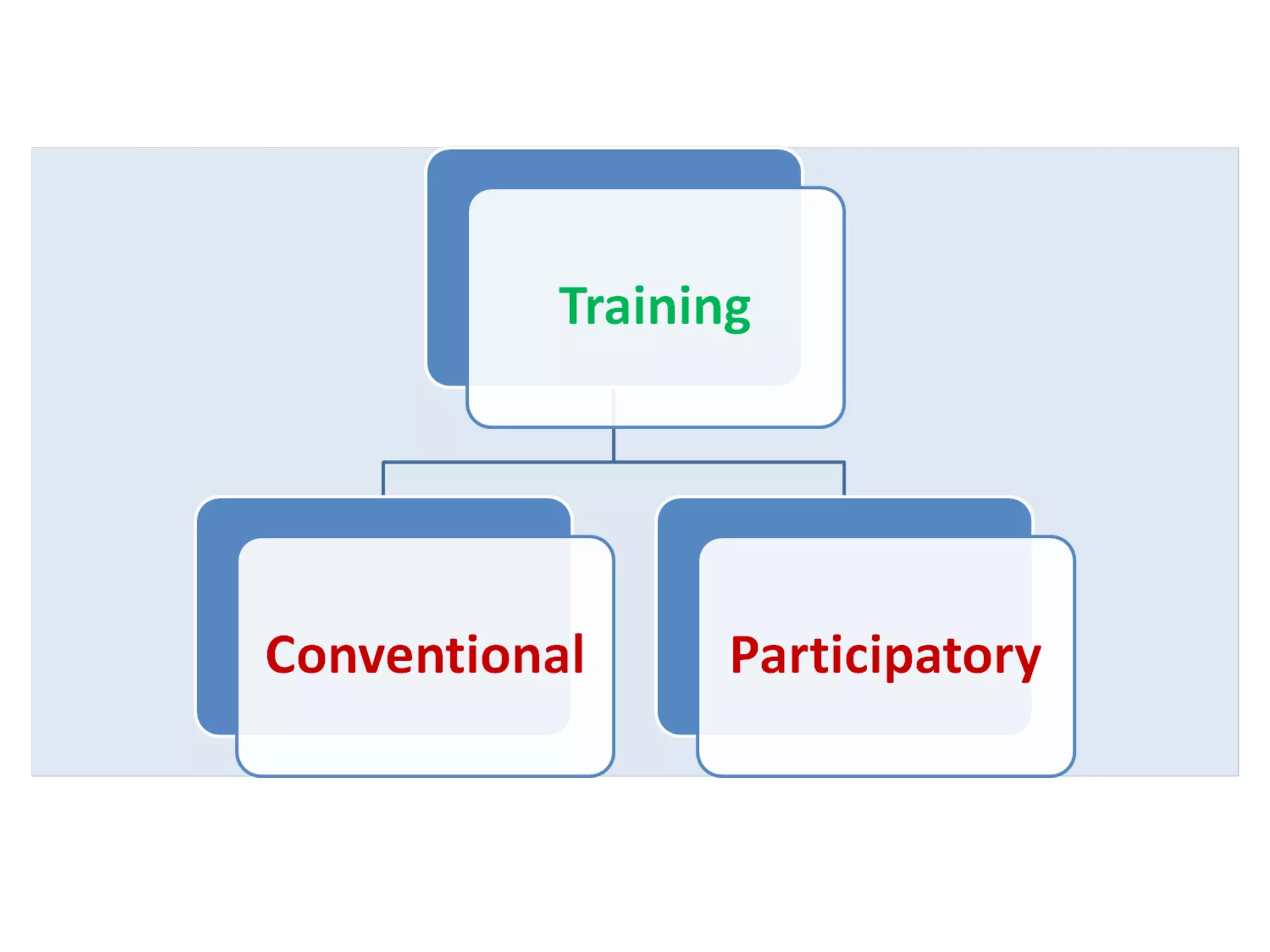
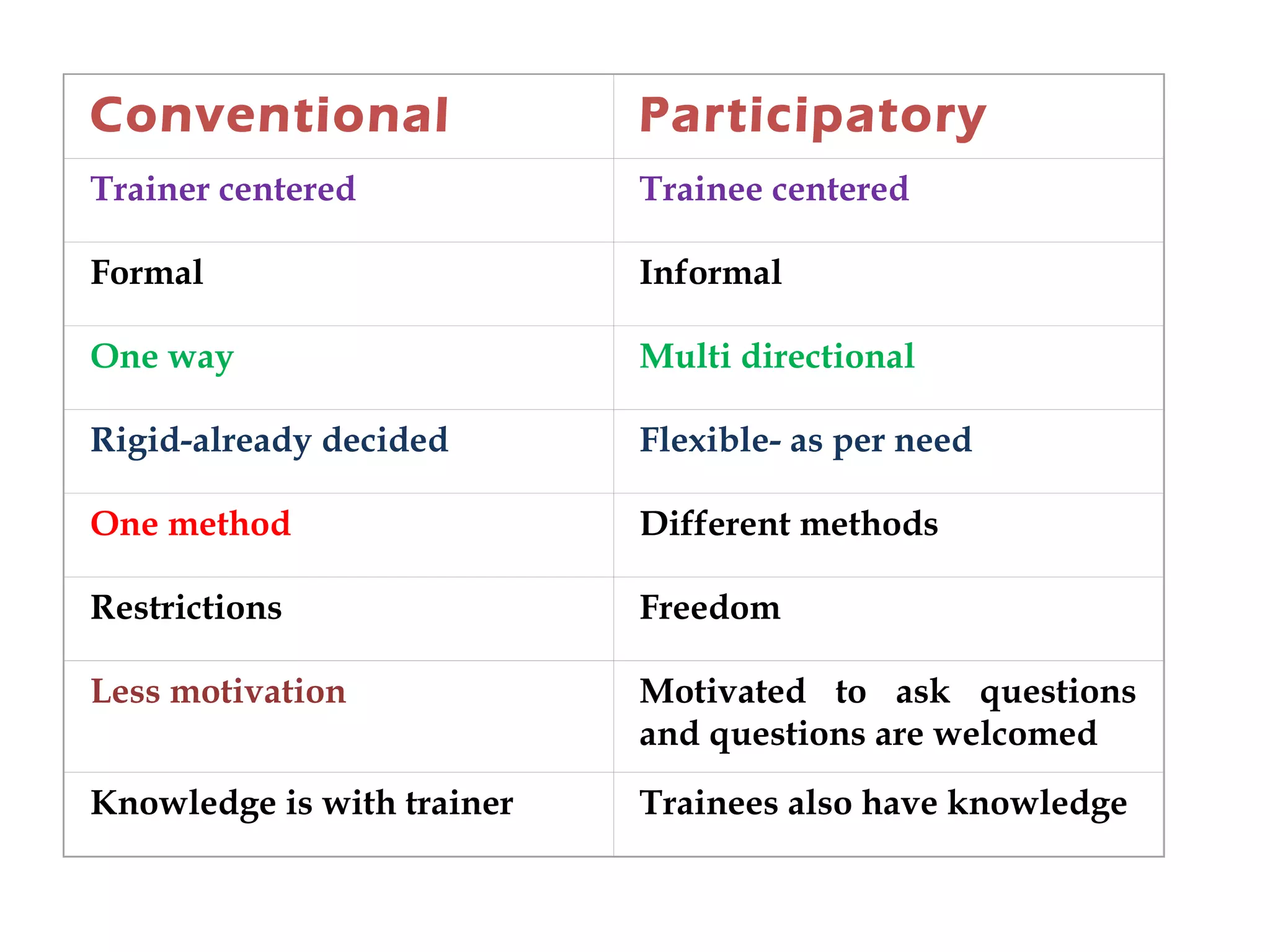
Conventional Participatory
Trainer centered Trainee centered
Formal Informal
One way Multi directional
Rigid-already decided Flexible- as per need
One method Different methods
Restrictions Freedom
Less motivation Motivated to ask questions
and questions are welcomed
Knowledge is with trainer Trainees also have knowledge
Session: 2&3 (Process of Training)
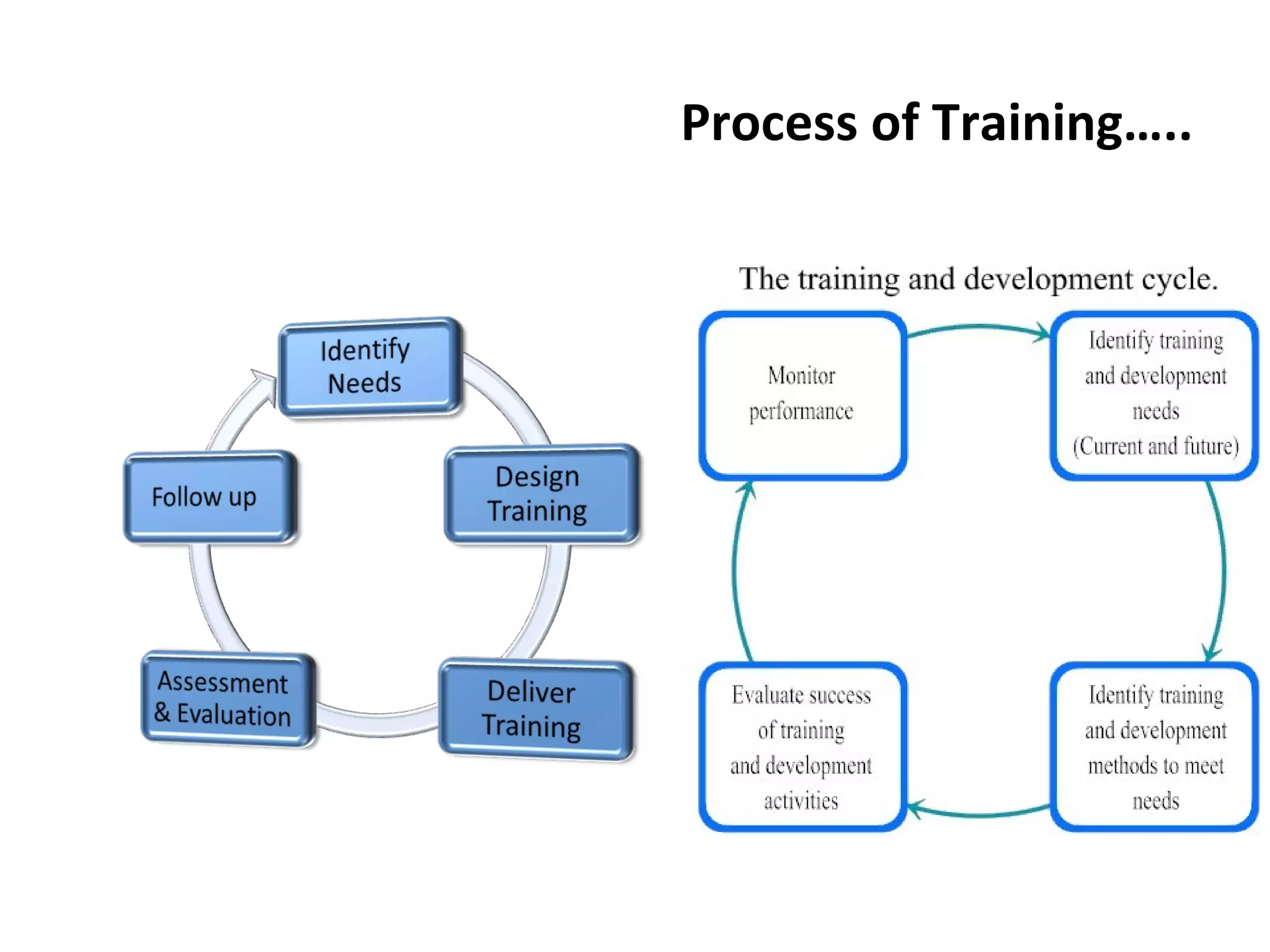
Process of Training…..
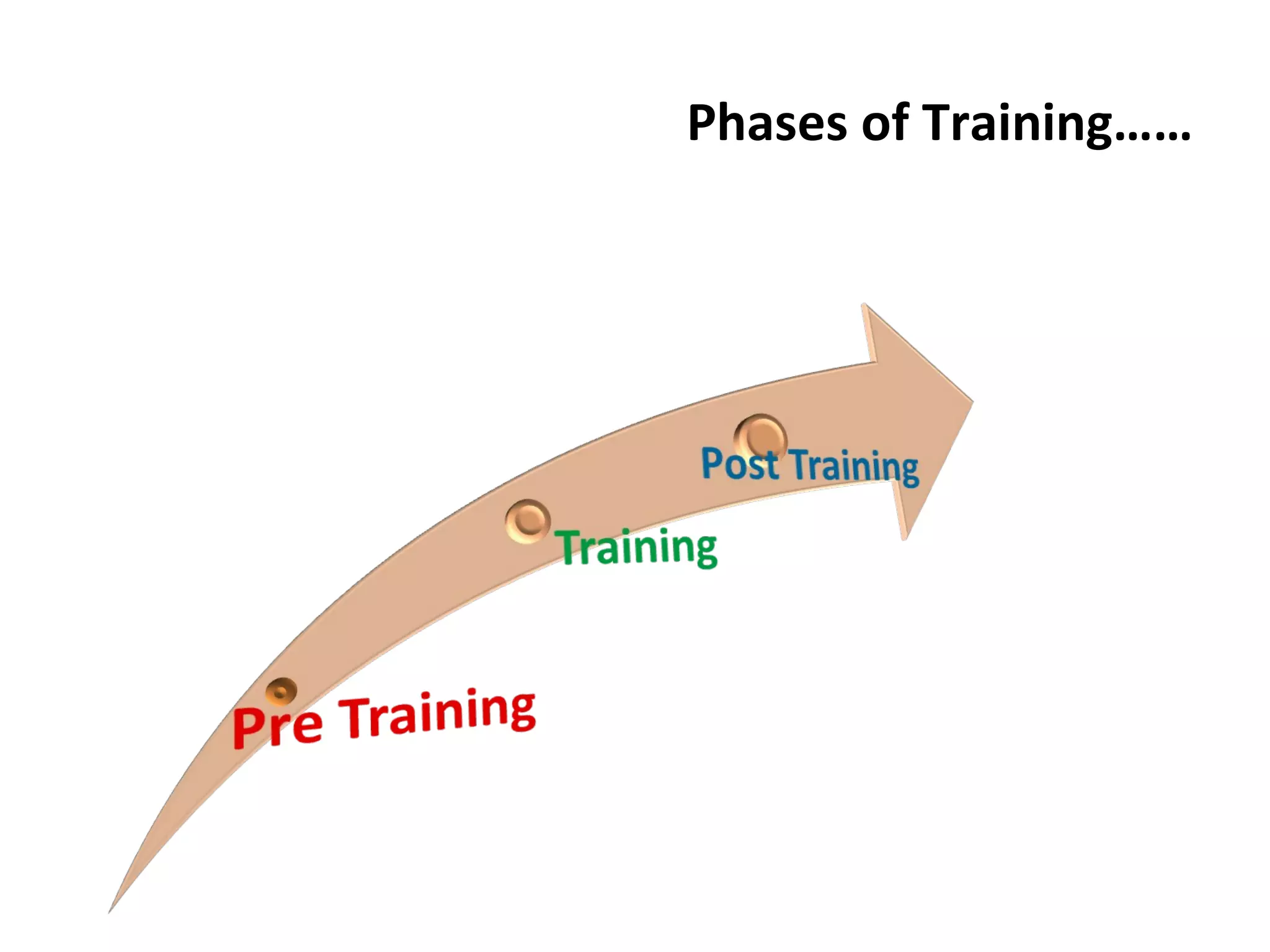
Phases of Training……
Pre Training…..
1. Identification of target trainees
2. Determination and Assessment of Training Needs
3. Formulation of Training objectives
4. Preparation of Course Content
5. Determination of Methodology
6. Production of training materials
7. Development of Program Module/schedule
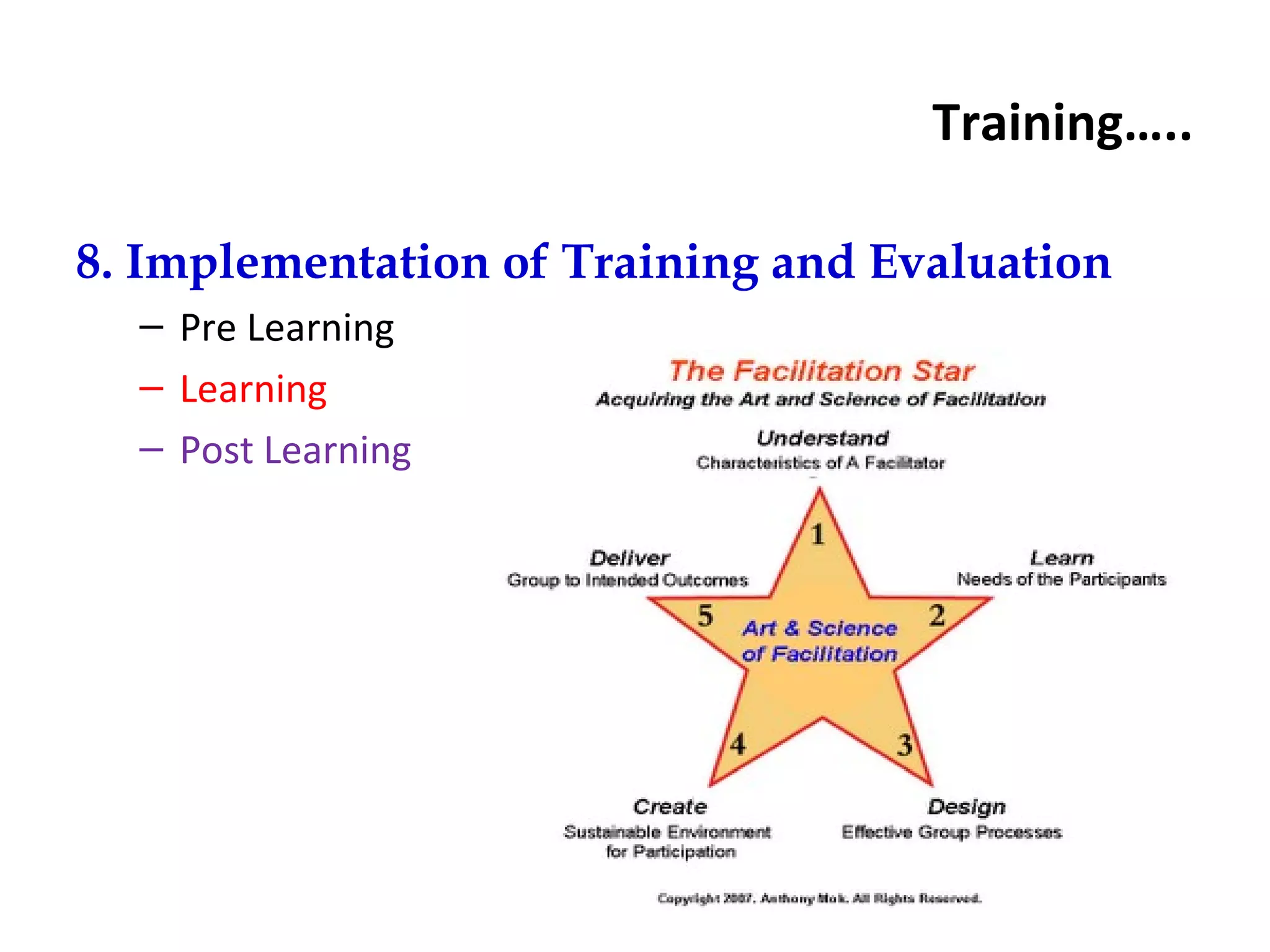
Training…..
8. Implementation of Training and Evaluation
– Pre Learning
– Learning
– Post Learning
Post Training…..
Many a times this gets missed out of the complete training
cycle…….
But the actual success of training depends on this stage……
Which is called as:
Follow Up
Session 3: Training Need Assessment
What is Training Need Analysis????
• Training we have come to know: is a process of learning as
well as de-learning…..
• Need: is the gap between what is and what ought to be…...
• Analysis: is finding out, reasoning, logical thinking
How have we been doing this??????
…………………..LETS SHARE………………………….
Ways and means of TNA……
• Questionnaire
– Have open ended questions
– Ask clear an specific questions
– Focus on skill, knowledge and attitude
• Participatory exercises
– Group discussion
– Rating and Ranking against quality of work
– SWOT
• Self Assessment
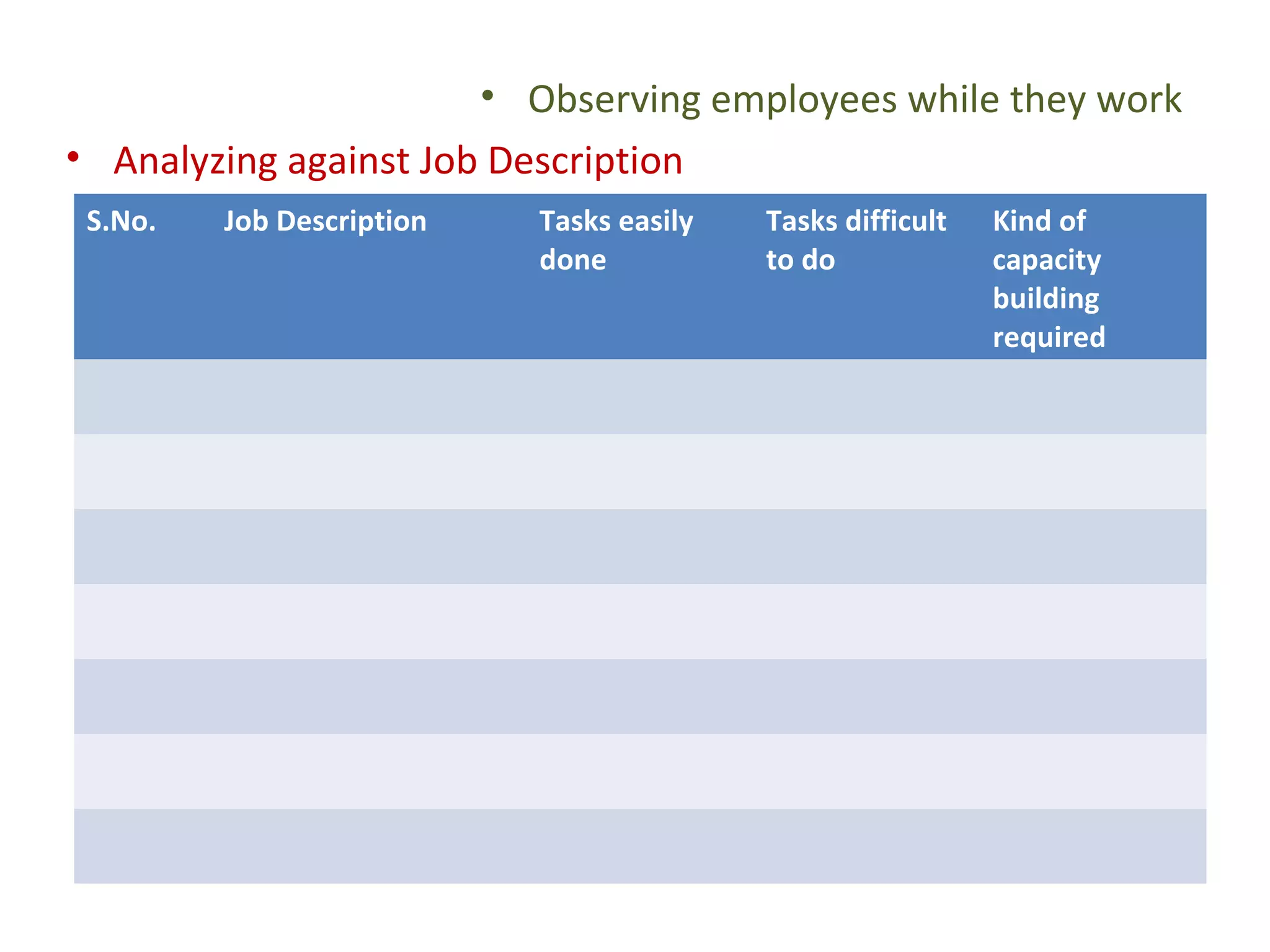
• Observing employees while they work
• Analyzing against Job Description
S.No. Job Description Tasks easily
done
Tasks difficult
to do
Kind of
capacity
building
required
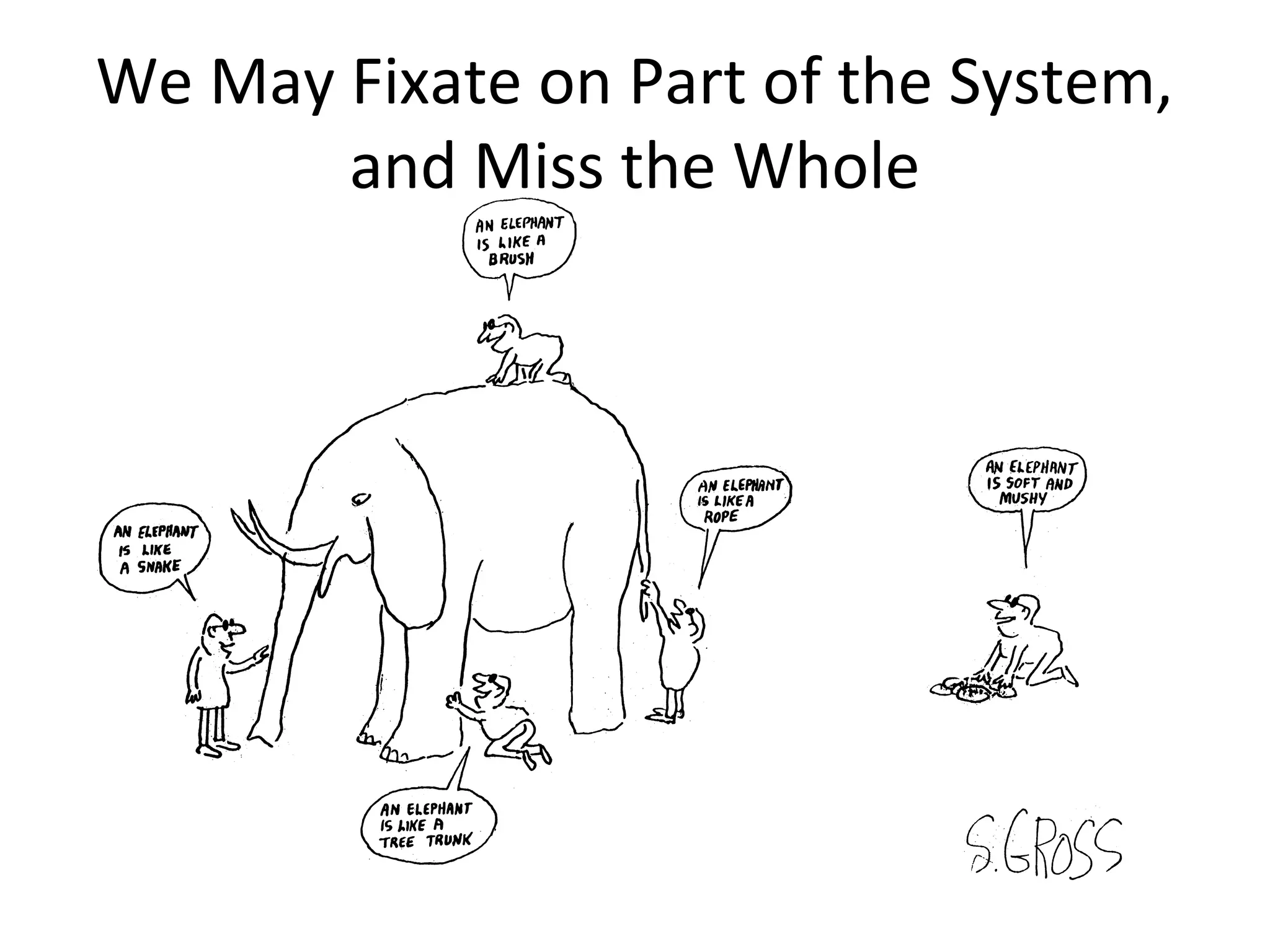
We May Fixate on Part of the System,
and Miss the Whole
Session:1 Developing Module and Schedule
There are three words used in training
world…..
????Module????
????Schedule????
????Manual????
Schedule….
• A schedule is nothing but details of:
– ……Sessions
– ……Time/Duration
– ……Methods
Module…..
• An extended version of Schedule, has details about…..
– ……..Objective of the training
– ……..Assumptions made by the trainer
– ……..Nature of participants and their numbers
– ……..Major methodologies to be used in the training
– ……..An introduction about the training
Manual…..
• While schedule and module are the planning tool for
the trainer,
– Manual is the guide book for the trainer……
– Helps the trainer conduct training……
– Has session plans and guideline……
– Includes methods, tools and ways and means to effectively
use it……
Session:2 Implementation of training
plan, Monitoring & Evaluation
Techniques of Evaluation
The various methods of training evaluation are:
• Questionnaire
• Observation
• Interview
• Picture Language
Training Evaluation……
• Example 1
• Example 2
Making Training Implementation Plan……
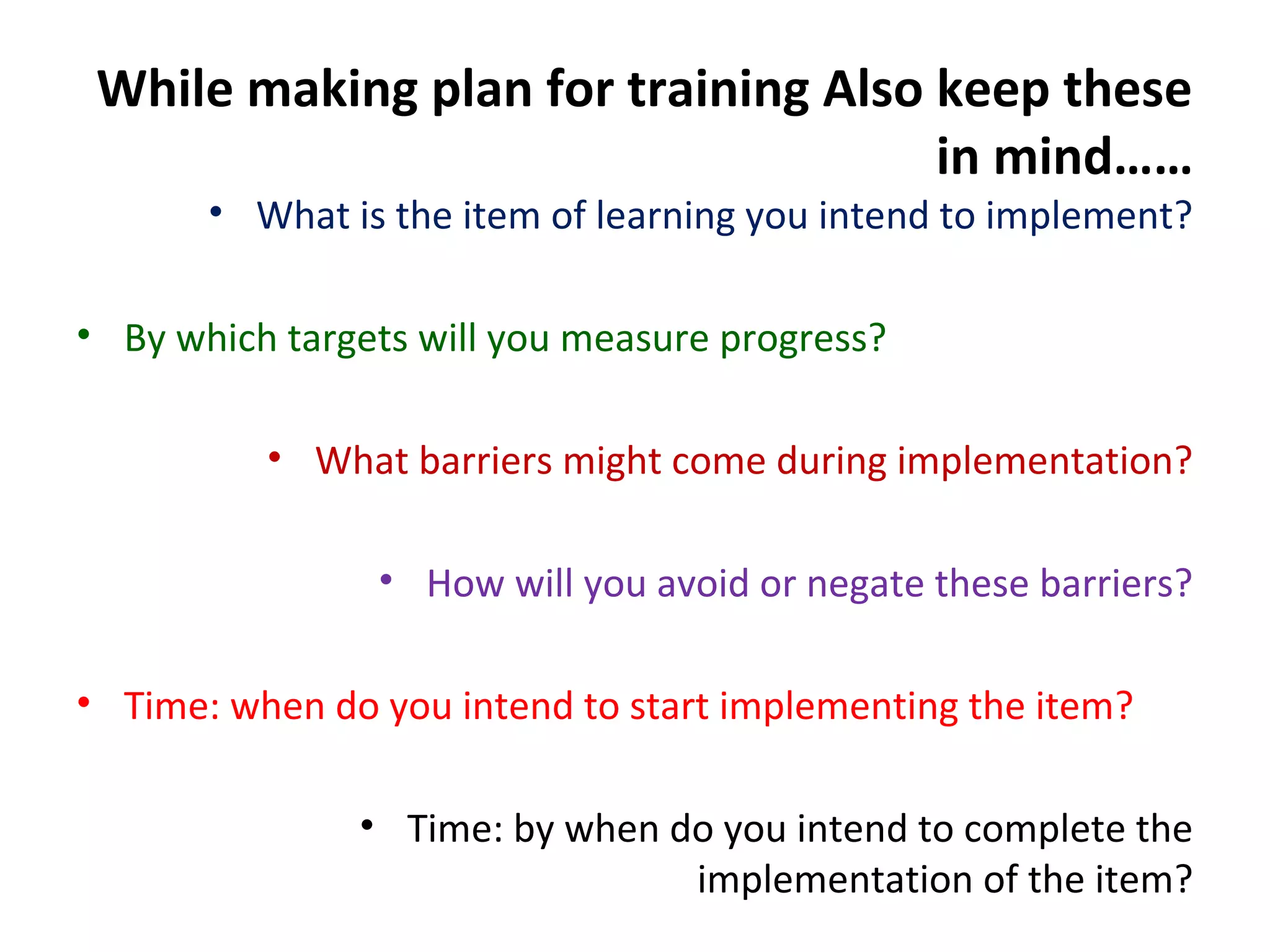
While making plan for training Also keep these
in mind……
• What is the item of learning you intend to implement?
• By which targets will you measure progress?
• What barriers might come during implementation?
• How will you avoid or negate these barriers?
• Time: when do you intend to start implementing the item?
• Time: by when do you intend to complete the
implementation of the item?
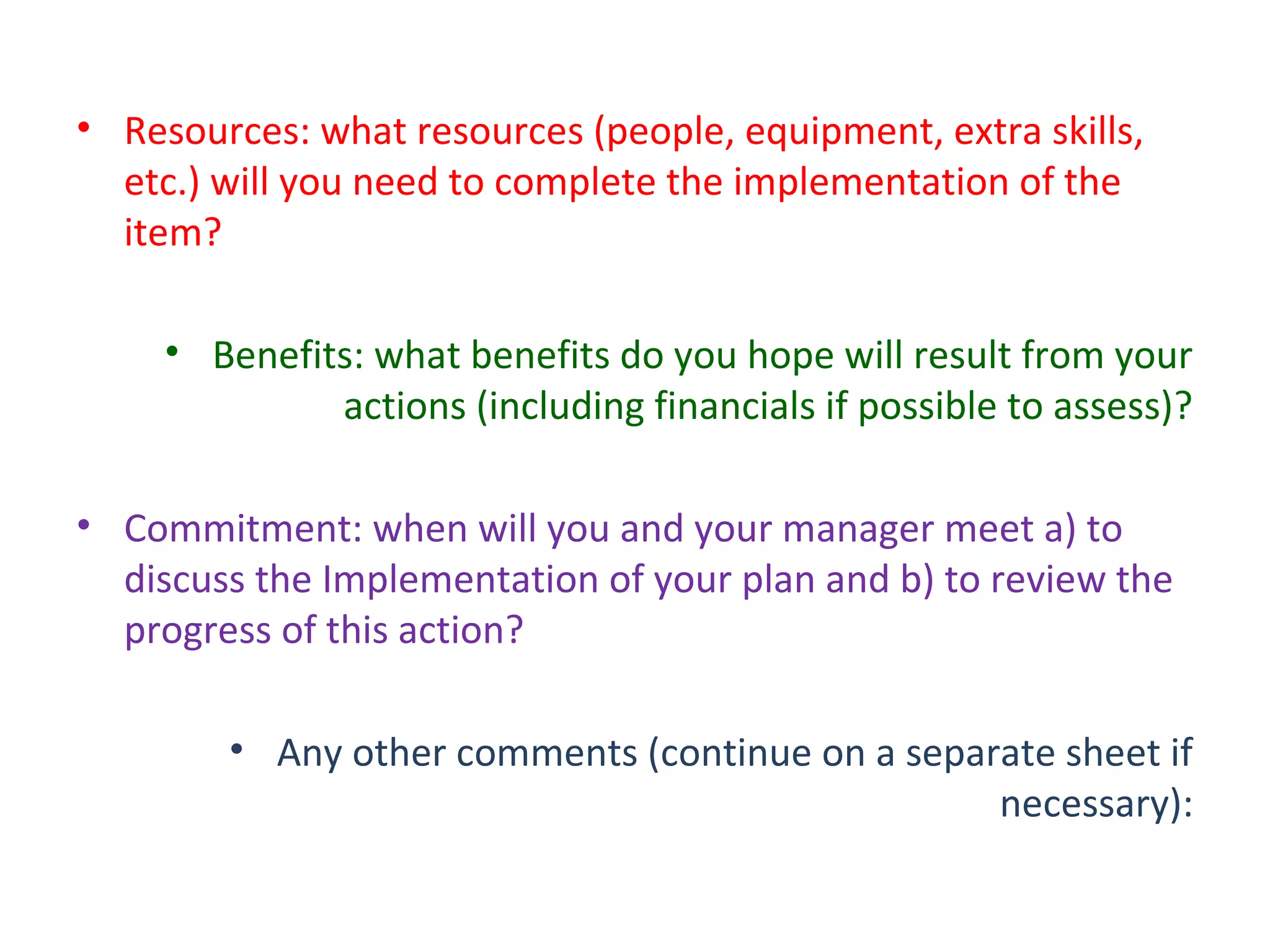
• Resources: what resources (people, equipment, extra skills,
etc.) will you need to complete the implementation of the
item?
• Benefits: what benefits do you hope will result from your
actions (including financials if possible to assess)?
• Commitment: when will you and your manager meet a) to
discuss the Implementation of your plan and b) to review the
progress of this action?
• Any other comments (continue on a separate sheet if
necessary):
Monitoring the Implementation Plan……
References:
• http://www.healthlink.org.uk
• http://www.businessballs.com/trainingprogra
mevaluation.htm
THANK
YOU

Training of Trainers

  • 1.
  • 2.
    Why are youhere???? • Can generate open discussion • Ask open ended question • Can use less and more time • Knowledge of the subject matter • Patient • Move with the pace of the trainees • Can read the mood of the participants • Maintain eye contact • Can hold the participants • Clear voice • Courage to face questions • Can take quick decisions • Use different methods • Adjustable to different situations • Use all tools • Lively • Spontaneous • Use bold pens • Proper sitting arrangement- everybody can see each other • Never get angry • Never leave the session in progress • Never react • No personal remarks • Don’t show off ??????To become a trainer???????
  • 3.
    Do you thinkyou can be one????? YES ………. No…… May be….. If you think you can put people in this situation…… Yes!!!! you can become a trainer!!!!!!!
  • 4.
    Sessions outline • Typesof training • Process of Training • Phases of training (System Approach) • Training Need Assessment
  • 5.
  • 6.
    Types of Training ………………………………………………………………………… Letsrecollect our experiences …………………………………………………………………………
  • 8.
    Conventional Type Training…. Controlled by trainer  Trainer- Knows everything  Trainees- Don’t know anything  Trainee- Inactive, only at receiving end
  • 9.
    Teacher Student  Learning ofthe trainee because of the information received by the trainee.  Trainer knows everything and gives information.  Learning depends upon training capability of trainer and learning capacities of trainees.  Whole responsibility of training is on the trainer and on organizers.
  • 10.
  • 11.
    Participatory Type Training….. Participatory Training is based on the principles of Adult Learning.  In participatory training:  Existing knowledge is given importance  New information/Knowledge is built on the already existing knowledge  Trainees themselves are responsible for their own learning- Trainer’s responsibility is to develop the sense of responsibility
  • 12.
    Results based onanalysis helps in the proper implementation. • Trainee controls the learning process • Learning process becomes group oriented • Group analysis helps in reaching at right conclusions
  • 13.
  • 14.
    Conventional Participatory Trainer centeredTrainee centered Formal Informal One way Multi directional Rigid-already decided Flexible- as per need One method Different methods Restrictions Freedom Less motivation Motivated to ask questions and questions are welcomed Knowledge is with trainer Trainees also have knowledge
  • 15.
  • 16.
  • 17.
  • 18.
    Pre Training….. 1. Identificationof target trainees 2. Determination and Assessment of Training Needs 3. Formulation of Training objectives 4. Preparation of Course Content 5. Determination of Methodology 6. Production of training materials 7. Development of Program Module/schedule
  • 19.
    Training….. 8. Implementation ofTraining and Evaluation – Pre Learning – Learning – Post Learning
  • 20.
    Post Training….. Many atimes this gets missed out of the complete training cycle……. But the actual success of training depends on this stage…… Which is called as: Follow Up
  • 21.
    Session 3: TrainingNeed Assessment
  • 22.
    What is TrainingNeed Analysis???? • Training we have come to know: is a process of learning as well as de-learning….. • Need: is the gap between what is and what ought to be…... • Analysis: is finding out, reasoning, logical thinking
  • 23.
    How have webeen doing this?????? …………………..LETS SHARE………………………….
  • 24.
    Ways and meansof TNA…… • Questionnaire – Have open ended questions – Ask clear an specific questions – Focus on skill, knowledge and attitude • Participatory exercises – Group discussion – Rating and Ranking against quality of work – SWOT • Self Assessment
  • 25.
    • Observing employeeswhile they work • Analyzing against Job Description S.No. Job Description Tasks easily done Tasks difficult to do Kind of capacity building required

  • 26.
    We May Fixateon Part of the System, and Miss the Whole
  • 27.
  • 28.
    There are threewords used in training world….. ????Module???? ????Schedule???? ????Manual????
  • 29.
    Schedule…. • A scheduleis nothing but details of: – ……Sessions – ……Time/Duration – ……Methods
  • 30.
    Module….. • An extendedversion of Schedule, has details about….. – ……..Objective of the training – ……..Assumptions made by the trainer – ……..Nature of participants and their numbers – ……..Major methodologies to be used in the training – ……..An introduction about the training
  • 31.
    Manual….. • While scheduleand module are the planning tool for the trainer, – Manual is the guide book for the trainer…… – Helps the trainer conduct training…… – Has session plans and guideline…… – Includes methods, tools and ways and means to effectively use it……
  • 32.
    Session:2 Implementation oftraining plan, Monitoring & Evaluation
  • 33.
    Techniques of Evaluation Thevarious methods of training evaluation are: • Questionnaire • Observation • Interview • Picture Language
  • 34.
  • 35.
  • 36.
    While making planfor training Also keep these in mind…… • What is the item of learning you intend to implement? • By which targets will you measure progress? • What barriers might come during implementation? • How will you avoid or negate these barriers? • Time: when do you intend to start implementing the item? • Time: by when do you intend to complete the implementation of the item?
  • 37.
    • Resources: whatresources (people, equipment, extra skills, etc.) will you need to complete the implementation of the item? • Benefits: what benefits do you hope will result from your actions (including financials if possible to assess)? • Commitment: when will you and your manager meet a) to discuss the Implementation of your plan and b) to review the progress of this action? • Any other comments (continue on a separate sheet if necessary):
  • 38.
  • 39.
  • 40.