







Go from good to great
by…EMPLOYING COACHING OR
MENTORING APPROACHES
London HR and Training
July 2016
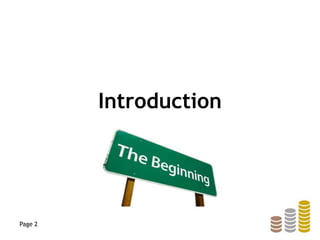
Introduction
Page 2
Intro - London HR and Training
• London HR and Training is a specialist human
resources and training consultancy headed by Timothy
Holden
• 10 years in banking
• 20 years in training and human resources
• Business owner since 2007
• The core services provided by London HR and Training
are:
- Reducing costs and saving time through bespoke HR
initiatives and projects
- Training course design and delivery
- Services for job seekers
Page 3
Contents5-6 Definitions
7-8 Motivators for obtaining coaching
9-10 Aims of coaching as stated by employers
11-12 Situations where coaching is a suitable development tool
13-14 Choosing a coach
15-16 Areas to include in a coaching agreement
17-19 Becoming a better coach
20-21 Coaching strategies for managers
22-23 Process for coaching through questions
24-25 Coaching techniques that inspire people to improve
26-27 Routes to building a coaching culture
28-29 Pitfalls to avoid with coaching
30-31 Apps for coaching and mentoring
32-33 Levels of dialogue for mentoring
34-35 Characteristics to look for when seeking a mentor
36-38 Guidelines for high impact mentoring
39-40 Benefits of ongoing groups for mentoring
41-42 Strategies for mentoring program managers
43-44 A broadening of the purpose of mentoring
45-46 Building blocks of mentoring in 2016
47-48 Exercise
49-50 To sum up…
Definitions
Page 5
Definitions
• Coaching
• Mentoring
Page 6
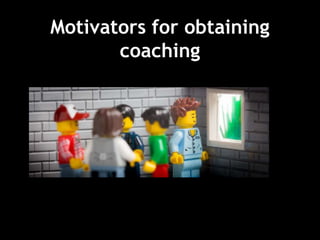
Motivators for obtaining
coaching
Motivators for obtaining
coaching
• Self-confidence
• Work-life balance
• Career opportunities
Page 8
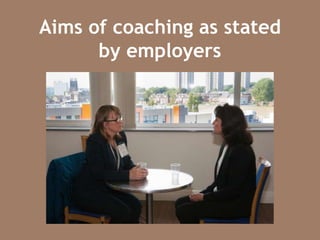
Aims of coaching as stated
by employers
Aims of coaching as stated by
employers
• Assist performance management
• Prepare and support people in
leadership roles
• Support learning and development
Page 10
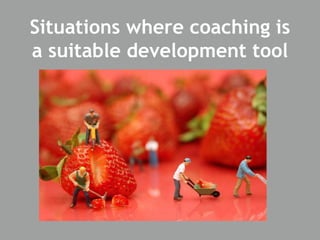
Situations where coaching is
a suitable development tool
Situations where coaching is a
suitable development tool
• Helping competent technical experts
develop better interpersonal or
managerial skills
• Developing an individual’s potential and
providing career support
• Developing a more strategic perspective
after a promotion to a more senior role
• Handling conflict situations so that they
are resolved effectively
Page 12
Choosing a coach
Choosing a coach
• Find a certified or accredited coach
• Check references and experience
• Test-drive the coach
Page 14
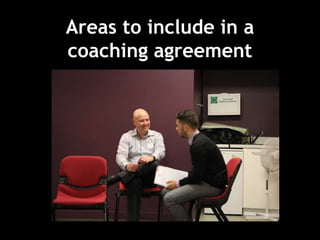
Areas to include in a
coaching agreement
Areas to include in a coaching
agreement
• Confidentiality
• Duration
• Cost
• In person, online or by telephone
• External or internal
Page 16
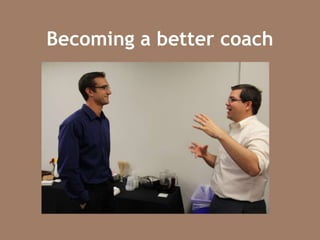
Becoming a better coach
Becoming a better coach 1 of 2
• Listen
• Silence
• Unconditional positive regard
Page 18
Becoming a better coach 2 of 2
What can organisations do?
• Coaching managers to coach better
• The thinking partner-investing in
high and low performers
• Quality coaching rather than ‘just’
coaching
• Establish a coaching culture
Page 19
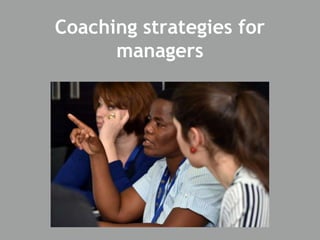
Coaching strategies for
managers
Coaching strategies for
managers
• Build a foundation of trust
• Clear communication
• Be a motivator and morale builder
• Listen
• Ask powerful questions
Page 21
Process for coaching through
questions
Process for coaching through
questions
• Issue (problem)
• Impact (present status)
• Ideal (future state)
• Intention (plan)
Page 23
Coaching techniques that
inspire people to improve
Coaching techniques that
inspire people to improve
• Coach the positive rather than
critique the negative
• Use lead-in statements
• Ask the other person what he or she
needs to learn
• Focus on the future
Page 25
Routes to building a
coaching culture
Routes to building a coaching
culture
• One-to-one coaching; discovery,
development and deepening
• Developing leaders as coaches
• Team coaching
Page 27
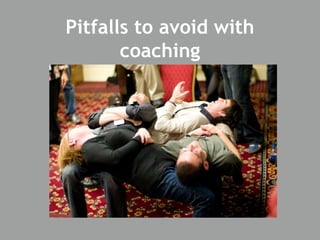
Pitfalls to avoid with
coaching
Pitfalls to avoid with coaching
• Failure to prioritize
• Desire to overuse
• Failure to position properly
Page 29
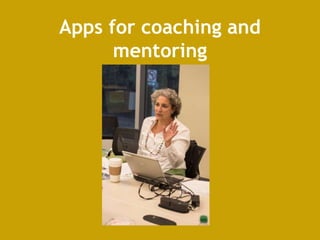
Apps for coaching and
mentoring
Apps for coaching and
mentoring
Points to bear in mind
• Be patient
• Be fun
• Be accessible
• Understand your audience
Page 31
Levels of dialogue for
mentoring
Levels of dialogue for
mentoring
• Idea/opinion level
• Behavioural observation level
• Feeling level
• Judgment/assumption level
Page 33
Characteristics to look for
when seeking a mentor
Characteristics to look for when
seeking a mentor
• Experience of both success and
failure
• Experience in the sector or industry
• Someone who is easy to get along
with
• Someone who it is possible to build a
long-term relationship with
• Someone who is honest and direct
Page 35
Guidelines for high impact
mentoring
Guidelines for high impact
mentoring 1 of 2
• Don’t start a mentoring program
unless you have got a strange hunger
for failure
• Separate life and death technical
knowledge that must be taught from
other life and death essentials that
are the real focus of mentoring
Page 37
Guidelines for high impact
mentoring 2 of 2
• Choose one or two people who bring
a lot to the business performance
table
• Inspired mentoring begins with a
different set of assumptions
• The secret behind inspired mentoring
is that mentors benefit as much as
protégés
Page 38
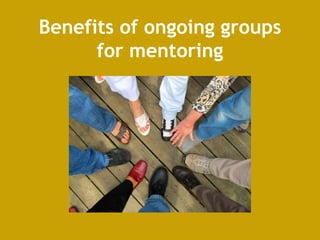
Benefits of ongoing groups
for mentoring
Benefits of ongoing groups for
mentoring
• Supervision from an external
mentoring expert
• Opportunity to sharpen their
mentoring skills
• Peer mentoring
• Reassurance in the role
• Being part of a trusted group
Page 40
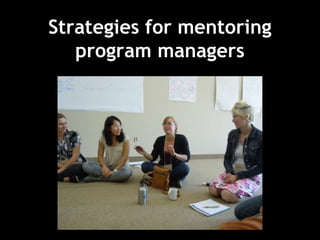
Strategies for mentoring
program managers
Strategies for mentoring
program managers
• Be prepared
• Let your commitment show
• Make your own growth and
development a priority
• Challenge yourself
• Keep your antennae up
• Think leadership succession
• Don’t go it alonePage 42
A broadening of the purpose
of mentoring
A broadening of the purpose of
mentoring
• Increasing an organisation’s
intelligence
• Enhancing an organisation’s ability to
compete
• Accelerating employee development
Page 44
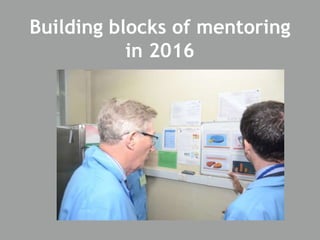
Building blocks of mentoring
in 2016
Building blocks of mentoring in
2016
• Open and egalitarian
• Diverse
• Broad and flexible
• Self-directed and personal
• Virtual and asynchronous
Page 46
Exercise
Exercise
Page 48
To sum up…
To sum up…
• Conclusion
• Summary
• Videos
• Useful links
Page 50

Coaching and mentoring 2016

  • 1.
    Go from goodto great by…EMPLOYING COACHING OR MENTORING APPROACHES London HR and Training July 2016
  • 2.
  • 3.
    Intro - LondonHR and Training • London HR and Training is a specialist human resources and training consultancy headed by Timothy Holden • 10 years in banking • 20 years in training and human resources • Business owner since 2007 • The core services provided by London HR and Training are: - Reducing costs and saving time through bespoke HR initiatives and projects - Training course design and delivery - Services for job seekers Page 3
  • 4.
    Contents5-6 Definitions 7-8 Motivatorsfor obtaining coaching 9-10 Aims of coaching as stated by employers 11-12 Situations where coaching is a suitable development tool 13-14 Choosing a coach 15-16 Areas to include in a coaching agreement 17-19 Becoming a better coach 20-21 Coaching strategies for managers 22-23 Process for coaching through questions 24-25 Coaching techniques that inspire people to improve 26-27 Routes to building a coaching culture 28-29 Pitfalls to avoid with coaching 30-31 Apps for coaching and mentoring 32-33 Levels of dialogue for mentoring 34-35 Characteristics to look for when seeking a mentor 36-38 Guidelines for high impact mentoring 39-40 Benefits of ongoing groups for mentoring 41-42 Strategies for mentoring program managers 43-44 A broadening of the purpose of mentoring 45-46 Building blocks of mentoring in 2016 47-48 Exercise 49-50 To sum up…
  • 5.
  • 6.
  • 7.
  • 8.
    Motivators for obtaining coaching •Self-confidence • Work-life balance • Career opportunities Page 8
  • 9.
    Aims of coachingas stated by employers
  • 10.
    Aims of coachingas stated by employers • Assist performance management • Prepare and support people in leadership roles • Support learning and development Page 10
  • 11.
    Situations where coachingis a suitable development tool
  • 12.
    Situations where coachingis a suitable development tool • Helping competent technical experts develop better interpersonal or managerial skills • Developing an individual’s potential and providing career support • Developing a more strategic perspective after a promotion to a more senior role • Handling conflict situations so that they are resolved effectively Page 12
  • 13.
  • 14.
    Choosing a coach •Find a certified or accredited coach • Check references and experience • Test-drive the coach Page 14
  • 15.
    Areas to includein a coaching agreement
  • 16.
    Areas to includein a coaching agreement • Confidentiality • Duration • Cost • In person, online or by telephone • External or internal Page 16
  • 17.
  • 18.
    Becoming a bettercoach 1 of 2 • Listen • Silence • Unconditional positive regard Page 18
  • 19.
    Becoming a bettercoach 2 of 2 What can organisations do? • Coaching managers to coach better • The thinking partner-investing in high and low performers • Quality coaching rather than ‘just’ coaching • Establish a coaching culture Page 19
  • 20.
  • 21.
    Coaching strategies for managers •Build a foundation of trust • Clear communication • Be a motivator and morale builder • Listen • Ask powerful questions Page 21
  • 22.
    Process for coachingthrough questions
  • 23.
    Process for coachingthrough questions • Issue (problem) • Impact (present status) • Ideal (future state) • Intention (plan) Page 23
  • 24.
  • 25.
    Coaching techniques that inspirepeople to improve • Coach the positive rather than critique the negative • Use lead-in statements • Ask the other person what he or she needs to learn • Focus on the future Page 25
  • 26.
    Routes to buildinga coaching culture
  • 27.
    Routes to buildinga coaching culture • One-to-one coaching; discovery, development and deepening • Developing leaders as coaches • Team coaching Page 27
  • 28.
    Pitfalls to avoidwith coaching
  • 29.
    Pitfalls to avoidwith coaching • Failure to prioritize • Desire to overuse • Failure to position properly Page 29
  • 30.
    Apps for coachingand mentoring
  • 31.
    Apps for coachingand mentoring Points to bear in mind • Be patient • Be fun • Be accessible • Understand your audience Page 31
  • 32.
    Levels of dialoguefor mentoring
  • 33.
    Levels of dialoguefor mentoring • Idea/opinion level • Behavioural observation level • Feeling level • Judgment/assumption level Page 33
  • 34.
    Characteristics to lookfor when seeking a mentor
  • 35.
    Characteristics to lookfor when seeking a mentor • Experience of both success and failure • Experience in the sector or industry • Someone who is easy to get along with • Someone who it is possible to build a long-term relationship with • Someone who is honest and direct Page 35
  • 36.
    Guidelines for highimpact mentoring
  • 37.
    Guidelines for highimpact mentoring 1 of 2 • Don’t start a mentoring program unless you have got a strange hunger for failure • Separate life and death technical knowledge that must be taught from other life and death essentials that are the real focus of mentoring Page 37
  • 38.
    Guidelines for highimpact mentoring 2 of 2 • Choose one or two people who bring a lot to the business performance table • Inspired mentoring begins with a different set of assumptions • The secret behind inspired mentoring is that mentors benefit as much as protégés Page 38
  • 39.
    Benefits of ongoinggroups for mentoring
  • 40.
    Benefits of ongoinggroups for mentoring • Supervision from an external mentoring expert • Opportunity to sharpen their mentoring skills • Peer mentoring • Reassurance in the role • Being part of a trusted group Page 40
  • 41.
  • 42.
    Strategies for mentoring programmanagers • Be prepared • Let your commitment show • Make your own growth and development a priority • Challenge yourself • Keep your antennae up • Think leadership succession • Don’t go it alonePage 42
  • 43.
    A broadening ofthe purpose of mentoring
  • 44.
    A broadening ofthe purpose of mentoring • Increasing an organisation’s intelligence • Enhancing an organisation’s ability to compete • Accelerating employee development Page 44
  • 45.
    Building blocks ofmentoring in 2016
  • 46.
    Building blocks ofmentoring in 2016 • Open and egalitarian • Diverse • Broad and flexible • Self-directed and personal • Virtual and asynchronous Page 46
  • 47.
  • 48.
  • 49.
  • 50.
    To sum up… •Conclusion • Summary • Videos • Useful links Page 50