CO-CRYSTAL TECHNIQUE
PRESENTED BY
MANOJ KUMAR
AMITY
UNIVERSITY
Powerpoint Templates

Page 1
INTRODUCTION
• Out of the 40% or more NCEs being generated,
nearly 60% of them are poorly water soluble.
• These poorly water soluble drugs having slow drug
absorption leads to inadequate and variable
bioavailability and gastrointestinal mucosal toxicity.
• Therefore, enhancing the aqueous solubility of poorly
water soluble drugs is a major challenge for the
pharmaceutical researchers.
Powerpoint Templates

Page 2
PHARMACEUTICAL CO-CRYSTAL
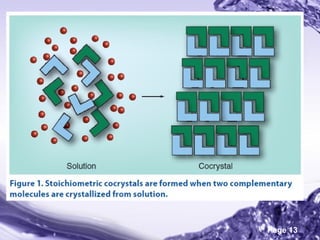
• Pharmaceutical co-crystals can be defined as crystalline
materials comprised of an API and one or more unique
co-crystal formers, which are solids at room
temperature.
• Co-crystals can be constructed through several types
of interaction, including hydrogen bonding, π-stacking,
and Van der Waals forces.
• The first known co-crystal Quinhydrone, was studied
by Friedrich Wöhler in 1844.
Powerpoint Templates

Page 3
• Co-crystals can be divided into:
1- Co-crystal anhydrates
2-Co-crystal hydrates (solvates)
3-Anhydrates of co-crystals of salts
4-Hydrates (solvates) of co-crystals of salts.

Powerpoint Templates

Page 4
ADVANTAGES OF CO-CRYSTAL
1- It is a stable crystalline form as compared to amorphous
solid.
2- It can enhance the solubility of poorly water soluble
drugs.
3- It can also enhance the bioavailability due to increased
solubility.
4- Co-crystal formation technique may be used for
purification steps.
Powerpoint Templates

Page 5
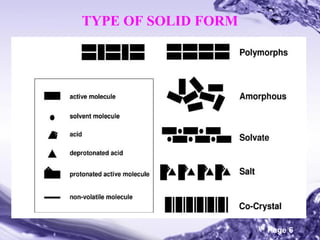
TYPE OF SOLID FORM

Powerpoint Templates

Page 6
CO-FORMERS• Co-formers are the most important components of the
co-crystal.
• The co-crystal formation is based on the structure of the
co-formers.
• The solubility of co-crystal is also depends on the
solubility of the co-formers.
• Some examples like ascorbic acid, gallic acid,
nicotinamide, citric acid , aglutamic acid, histidine,
urea, saccharine, glycine,tyrosine,valine.

Powerpoint Templates

Page 7
SOLVENTS• Solvents are also important ingredients of co-crystal
formation.
• The co-crystal formation is also depend on the selection
of solvents.
• Selection of solvents depend on the solubility of drug
and co-formers.
• Some example of solvents used in co-crystal formation
like-ethanol, methanol, acetonitrile and others organic
solvents.

Powerpoint Templates

Page 8
METHODS OF CO-CRYSTAL
PREPARATION1-SOLUTION METHODS• Evaporative co-crystallization
• Cooling crystallization
• Reaction crystallization
2-GRINDING METHOD
• Neat/Dry grinding method
• Liquid assisted grinding method
3-ANTISOLVENT METHOD
4-SLURRY CONVERSION METHOD
5-SUPERCRITICAL FLUID TECHNOLOGY
Powerpoint Templates

Page 9
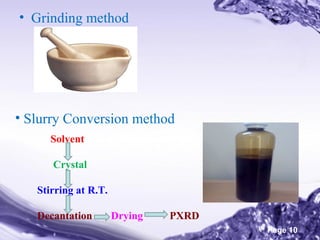
• Grinding method

• Slurry Conversion method
Solvent
Crystal
Stirring at R.T.
Decantation

Drying

PXRD

Powerpoint Templates

Page 10
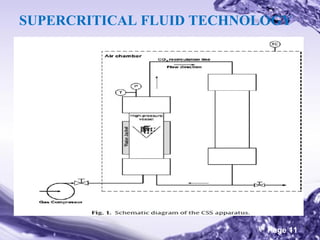
SUPERCRITICAL FLUID TECHNOLOGY

Powerpoint Templates

Page 11
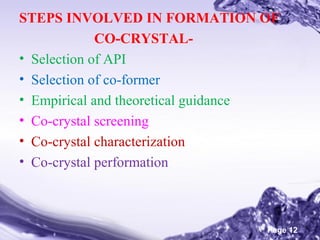
STEPS INVOLVED IN FORMATION OF
CO-CRYSTAL• Selection of API
• Selection of co-former
• Empirical and theoretical guidance
• Co-crystal screening
• Co-crystal characterization
• Co-crystal performation

Powerpoint Templates

Page 12
Powerpoint Templates

Page 13
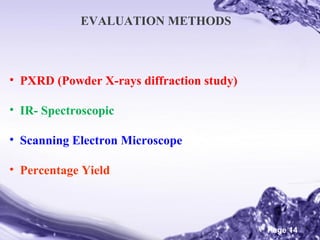
EVALUATION METHODS

• PXRD (Powder X-rays diffraction study)
• IR- Spectroscopic
• Scanning Electron Microscope
• Percentage Yield

Powerpoint Templates

Page 14
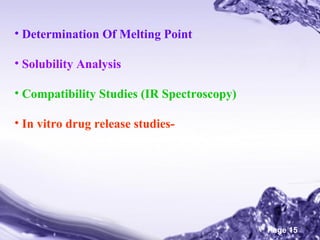
• Determination Of Melting Point
• Solubility Analysis
• Compatibility Studies (IR Spectroscopy)
• In vitro drug release studies-

Powerpoint Templates

Page 15
MARKETED PREPARATION• Pharmaceutical co-crystals of carbamazepine
(Tegretol® )
• Pharmaceutical co-crystals of fluoxetine
hydrochloride (Prozac® )
• Pharmaceutical co-crystals of itraconazole
(Sporanox® )
• Pharmaceutical co-crystals of sildenafil (Viagra® )
• Co-crystal of melamine and cyanuric acid
• Co-crystals of theophylline
• Co-crystals of aceclofenac
• Co-crystal of 5-nitrouracil
Powerpoint Templates
• Co-crystals of indomethacin
Page 16
Powerpoint Templates

Page 17
Powerpoint Templates

Page 18

Pharmaceutical Co-crystal technique

  • 1.
    CO-CRYSTAL TECHNIQUE PRESENTED BY MANOJKUMAR AMITY UNIVERSITY Powerpoint Templates Page 1
  • 2.
    INTRODUCTION • Out ofthe 40% or more NCEs being generated, nearly 60% of them are poorly water soluble. • These poorly water soluble drugs having slow drug absorption leads to inadequate and variable bioavailability and gastrointestinal mucosal toxicity. • Therefore, enhancing the aqueous solubility of poorly water soluble drugs is a major challenge for the pharmaceutical researchers. Powerpoint Templates Page 2
  • 3.
    PHARMACEUTICAL CO-CRYSTAL • Pharmaceuticalco-crystals can be defined as crystalline materials comprised of an API and one or more unique co-crystal formers, which are solids at room temperature. • Co-crystals can be constructed through several types of interaction, including hydrogen bonding, π-stacking, and Van der Waals forces. • The first known co-crystal Quinhydrone, was studied by Friedrich Wöhler in 1844. Powerpoint Templates Page 3
  • 4.
    • Co-crystals canbe divided into: 1- Co-crystal anhydrates 2-Co-crystal hydrates (solvates) 3-Anhydrates of co-crystals of salts 4-Hydrates (solvates) of co-crystals of salts. Powerpoint Templates Page 4
  • 5.
    ADVANTAGES OF CO-CRYSTAL 1-It is a stable crystalline form as compared to amorphous solid. 2- It can enhance the solubility of poorly water soluble drugs. 3- It can also enhance the bioavailability due to increased solubility. 4- Co-crystal formation technique may be used for purification steps. Powerpoint Templates Page 5
  • 6.
    TYPE OF SOLIDFORM Powerpoint Templates Page 6
  • 7.
    CO-FORMERS• Co-formers arethe most important components of the co-crystal. • The co-crystal formation is based on the structure of the co-formers. • The solubility of co-crystal is also depends on the solubility of the co-formers. • Some examples like ascorbic acid, gallic acid, nicotinamide, citric acid , aglutamic acid, histidine, urea, saccharine, glycine,tyrosine,valine. Powerpoint Templates Page 7
  • 8.
    SOLVENTS• Solvents arealso important ingredients of co-crystal formation. • The co-crystal formation is also depend on the selection of solvents. • Selection of solvents depend on the solubility of drug and co-formers. • Some example of solvents used in co-crystal formation like-ethanol, methanol, acetonitrile and others organic solvents. Powerpoint Templates Page 8
  • 9.
    METHODS OF CO-CRYSTAL PREPARATION1-SOLUTIONMETHODS• Evaporative co-crystallization • Cooling crystallization • Reaction crystallization 2-GRINDING METHOD • Neat/Dry grinding method • Liquid assisted grinding method 3-ANTISOLVENT METHOD 4-SLURRY CONVERSION METHOD 5-SUPERCRITICAL FLUID TECHNOLOGY Powerpoint Templates Page 9
  • 10.
    • Grinding method •Slurry Conversion method Solvent Crystal Stirring at R.T. Decantation Drying PXRD Powerpoint Templates Page 10
  • 11.
  • 12.
    STEPS INVOLVED INFORMATION OF CO-CRYSTAL• Selection of API • Selection of co-former • Empirical and theoretical guidance • Co-crystal screening • Co-crystal characterization • Co-crystal performation Powerpoint Templates Page 12
  • 13.
  • 14.
    EVALUATION METHODS • PXRD(Powder X-rays diffraction study) • IR- Spectroscopic • Scanning Electron Microscope • Percentage Yield Powerpoint Templates Page 14
  • 15.
    • Determination OfMelting Point • Solubility Analysis • Compatibility Studies (IR Spectroscopy) • In vitro drug release studies- Powerpoint Templates Page 15
  • 16.
    MARKETED PREPARATION• Pharmaceuticalco-crystals of carbamazepine (Tegretol® ) • Pharmaceutical co-crystals of fluoxetine hydrochloride (Prozac® ) • Pharmaceutical co-crystals of itraconazole (Sporanox® ) • Pharmaceutical co-crystals of sildenafil (Viagra® ) • Co-crystal of melamine and cyanuric acid • Co-crystals of theophylline • Co-crystals of aceclofenac • Co-crystal of 5-nitrouracil Powerpoint Templates • Co-crystals of indomethacin Page 16
  • 17.
  • 18.