
AND
Presented By
Manash Kumar Mondal
Under the Guidance of
Dr. Utpal Biswas , Prof. & Head
Department of Computer Science & Engineering
University of Kalyani
 History Of Cloud Computing.
 Cloud Computing.
 Cloud Architecture
 Deployment Model
 Services Model
 Benefit Of Cloud Computing
 Why cloud Computer become popular
 Research direction of cloud
 CloudSim toolkit
 Modules of CloudSim
 Main features of CloudSim
 CloudSim architecture
 Simulation style
 Disadvantage
 Referances
Outline
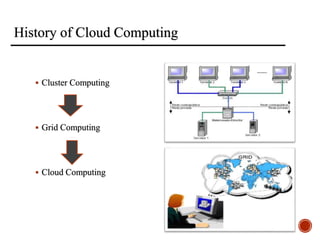
History of Cloud Computing
 Cluster Computing
 Grid Computing
 Cloud Computing
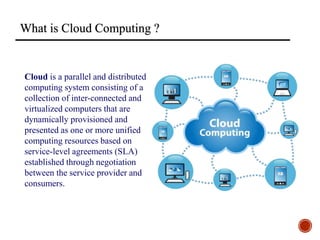
What is Cloud Computing ?
Cloud is a parallel and distributed
computing system consisting of a
collection of inter-connected and
virtualized computers that are
dynamically provisioned and
presented as one or more unified
computing resources based on
service-level agreements (SLA)
established through negotiation
between the service provider and
consumers.
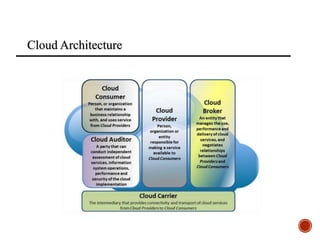
Cloud Architecture
Deployment Models
 There are four types deployment models
Private Cloud
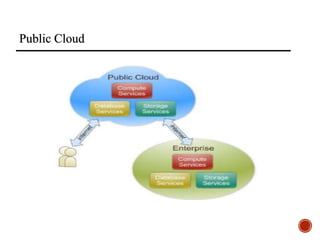
Public Cloud
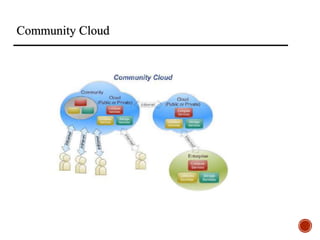
Community Cloud
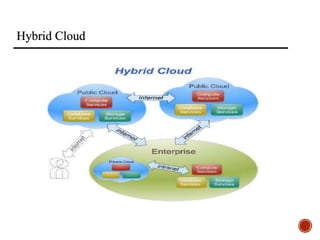
Hybrid Cloud
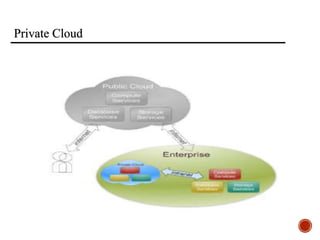
Private Cloud
Public Cloud
Community Cloud
Hybrid Cloud
Service Models
 Service models are..
Software as a Service(SaaS)
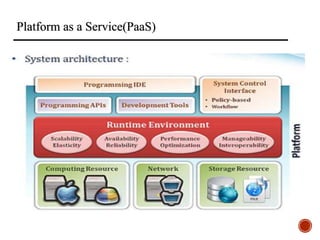
Platform as a Service(PaaS)
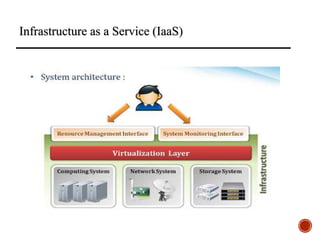
Infrastructure as a Service (IaaS)
Software as a Service(SaaS)
Platform as a Service(PaaS)
Infrastructure as a Service (IaaS)
Benefits of Cloud Computing:
Cost Savings
Mobile Access
Scalability and Capacity
Resource Maximization
 Collaboration
Customization
Why Cloud Computing Become popular? :
There are so many reasons, cloud computing ought to become
popular.
On-demand self-service
Broad network access
Resource pooling
Rapid elasticity
Measured service
Disadvantages of cloud computing
Technical Issues
Security in the Cloud
Prone to attack
Possible downtime
Cost
Inflexibility
Lack of support
CloudSiM Toolkit
A Framework For Modeling And Simulation Of
Cloud Computing Infrastructures And Services.
Originally built at the Cloud Computing and Distributed Systems
(CLOUDS) Laboratory, The University of Melbourne, Australia
It is Completely written in JAVA.
Modules of CloudSiM
Cloud user
Data center
Cloudlet
Virtual machines(vm)
Host
Main features of CloudSiM
 Modeling and simulation
 Data center network topologies and message-passing
applications
 Dynamic insertion of simulation elements
 Stop and resume of simulation
 Policies for allocation of hosts and virtual machines
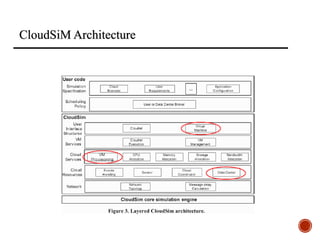
CloudSiM Architecture
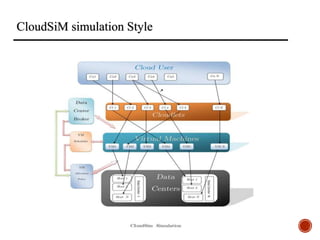
CloudSiM simulation Style
References
1.National Institute of Standards and Technology Special Publication 500-291 V2
Natl. Inst. Stand. Technol. Spec. Publ. 500-291, 108 pages (May 24, 2013)
2. Buyya Rajkumar, Yeo Chee Shin, Venugopal Srikumar, Broberg James and Brandic Ivona, “Cloud computing
and emerging IT platforms: Vision, hype, and reality for delivering computing as the 5th utility”, Future
Generation Computer Systems (2009), pp. 599-616
3. Gandotra .I, Abrol P. Gupta P. Uppal R. and Singh S. (2011) “Cloud Computing Over Cluster, Grid
Computing: a Comparative Analysis”, Journal of Grid and Distributed Computing, pp-01-04
4. Kavitha. K, ”Study on Cloud Computing Model and its Benefits, Challenges”, International Journal of
Innovative Research in Computer and Communication Engineering
5. ANCAAPOSTU1, FLORINA PUICAN2, GEANINA ULARU3, GEORGE SUCIU4, GYORGY
TODORAN5,” Study on advantages and disadvantages of Cloud Computing – the advantages of Telemetry
Applications in the Cloud”
6. Calheiros RN, Ranjan R, Beloglazov A, De Rose CA, Buyya R (2011). "CloudSim: a toolkit for modeling and
simulation of cloud computing environments and evaluation of resource provisioning
algorithms." (PDF). Software: Practice and Experience. 41 (1): 23–50.
References (cont.):
7. "The Cloud Computing and Distributed Systems (CLOUDS) Laboratory, University
of Melbourne"
8. Parsa, S., Entezari-Maleki, R.: RASA: A New Grid Task Scheduling Algorithm.
International Journal of Digital Content Technology and its Applications 3, 91–99
(2009)
9. Bhatia, W., Buyya, R., Ranjan, R.: CloudAnalyst: A CloudSimbased Visual Modeller
for
Analysing Cloud Computing Environments and Applications. In: 2010 24th IEEE
International Conference on Advanced Information Networking and Applications, pp.
446–452
(2010)
10. Calheiros, R.N., Ranjan, R., De Rose, C.A.F., Buyya, R.: CloudSim: A Novel
Framework
for modelling and Simulation of Cloud Computing Infrastructures and Services
(2009)
11. Calheiros, R.N., Ranjan, R., De Rose, C.A.F., Buyya, R.: CloudSim: A Novel
Framework
for Modeling and Simulation of Cloud Computing Infrastructures and Services.
Technical
Report, GRIDS-TR-2009-1, Grid Computing and Distributed Systems Laboratory,
The
University of Melbourne, Australia (2009)
Thank You

Cloud computing and Cloudsim

  • 1.
    AND Presented By Manash KumarMondal Under the Guidance of Dr. Utpal Biswas , Prof. & Head Department of Computer Science & Engineering University of Kalyani
  • 2.
     History OfCloud Computing.  Cloud Computing.  Cloud Architecture  Deployment Model  Services Model  Benefit Of Cloud Computing  Why cloud Computer become popular  Research direction of cloud  CloudSim toolkit  Modules of CloudSim  Main features of CloudSim  CloudSim architecture  Simulation style  Disadvantage  Referances Outline
  • 3.
    History of CloudComputing  Cluster Computing  Grid Computing  Cloud Computing
  • 4.
    What is CloudComputing ? Cloud is a parallel and distributed computing system consisting of a collection of inter-connected and virtualized computers that are dynamically provisioned and presented as one or more unified computing resources based on service-level agreements (SLA) established through negotiation between the service provider and consumers.
  • 5.
  • 6.
    Deployment Models  Thereare four types deployment models Private Cloud Public Cloud Community Cloud Hybrid Cloud
  • 7.
  • 8.
  • 9.
  • 10.
  • 11.
    Service Models  Servicemodels are.. Software as a Service(SaaS) Platform as a Service(PaaS) Infrastructure as a Service (IaaS)
  • 12.
    Software as aService(SaaS)
  • 13.
    Platform as aService(PaaS)
  • 14.
    Infrastructure as aService (IaaS)
  • 15.
    Benefits of CloudComputing: Cost Savings Mobile Access Scalability and Capacity Resource Maximization  Collaboration Customization
  • 16.
    Why Cloud ComputingBecome popular? : There are so many reasons, cloud computing ought to become popular. On-demand self-service Broad network access Resource pooling Rapid elasticity Measured service
  • 17.
    Disadvantages of cloudcomputing Technical Issues Security in the Cloud Prone to attack Possible downtime Cost Inflexibility Lack of support
  • 18.
    CloudSiM Toolkit A FrameworkFor Modeling And Simulation Of Cloud Computing Infrastructures And Services. Originally built at the Cloud Computing and Distributed Systems (CLOUDS) Laboratory, The University of Melbourne, Australia It is Completely written in JAVA.
  • 19.
    Modules of CloudSiM Clouduser Data center Cloudlet Virtual machines(vm) Host
  • 20.
    Main features ofCloudSiM  Modeling and simulation  Data center network topologies and message-passing applications  Dynamic insertion of simulation elements  Stop and resume of simulation  Policies for allocation of hosts and virtual machines
  • 21.
  • 22.
  • 23.
    References 1.National Institute ofStandards and Technology Special Publication 500-291 V2 Natl. Inst. Stand. Technol. Spec. Publ. 500-291, 108 pages (May 24, 2013) 2. Buyya Rajkumar, Yeo Chee Shin, Venugopal Srikumar, Broberg James and Brandic Ivona, “Cloud computing and emerging IT platforms: Vision, hype, and reality for delivering computing as the 5th utility”, Future Generation Computer Systems (2009), pp. 599-616 3. Gandotra .I, Abrol P. Gupta P. Uppal R. and Singh S. (2011) “Cloud Computing Over Cluster, Grid Computing: a Comparative Analysis”, Journal of Grid and Distributed Computing, pp-01-04 4. Kavitha. K, ”Study on Cloud Computing Model and its Benefits, Challenges”, International Journal of Innovative Research in Computer and Communication Engineering 5. ANCAAPOSTU1, FLORINA PUICAN2, GEANINA ULARU3, GEORGE SUCIU4, GYORGY TODORAN5,” Study on advantages and disadvantages of Cloud Computing – the advantages of Telemetry Applications in the Cloud” 6. Calheiros RN, Ranjan R, Beloglazov A, De Rose CA, Buyya R (2011). "CloudSim: a toolkit for modeling and simulation of cloud computing environments and evaluation of resource provisioning algorithms." (PDF). Software: Practice and Experience. 41 (1): 23–50.
  • 24.
    References (cont.): 7. "TheCloud Computing and Distributed Systems (CLOUDS) Laboratory, University of Melbourne" 8. Parsa, S., Entezari-Maleki, R.: RASA: A New Grid Task Scheduling Algorithm. International Journal of Digital Content Technology and its Applications 3, 91–99 (2009) 9. Bhatia, W., Buyya, R., Ranjan, R.: CloudAnalyst: A CloudSimbased Visual Modeller for Analysing Cloud Computing Environments and Applications. In: 2010 24th IEEE International Conference on Advanced Information Networking and Applications, pp. 446–452 (2010) 10. Calheiros, R.N., Ranjan, R., De Rose, C.A.F., Buyya, R.: CloudSim: A Novel Framework for modelling and Simulation of Cloud Computing Infrastructures and Services (2009) 11. Calheiros, R.N., Ranjan, R., De Rose, C.A.F., Buyya, R.: CloudSim: A Novel Framework for Modeling and Simulation of Cloud Computing Infrastructures and Services. Technical Report, GRIDS-TR-2009-1, Grid Computing and Distributed Systems Laboratory, The University of Melbourne, Australia (2009)
  • 25.