Download to read offline
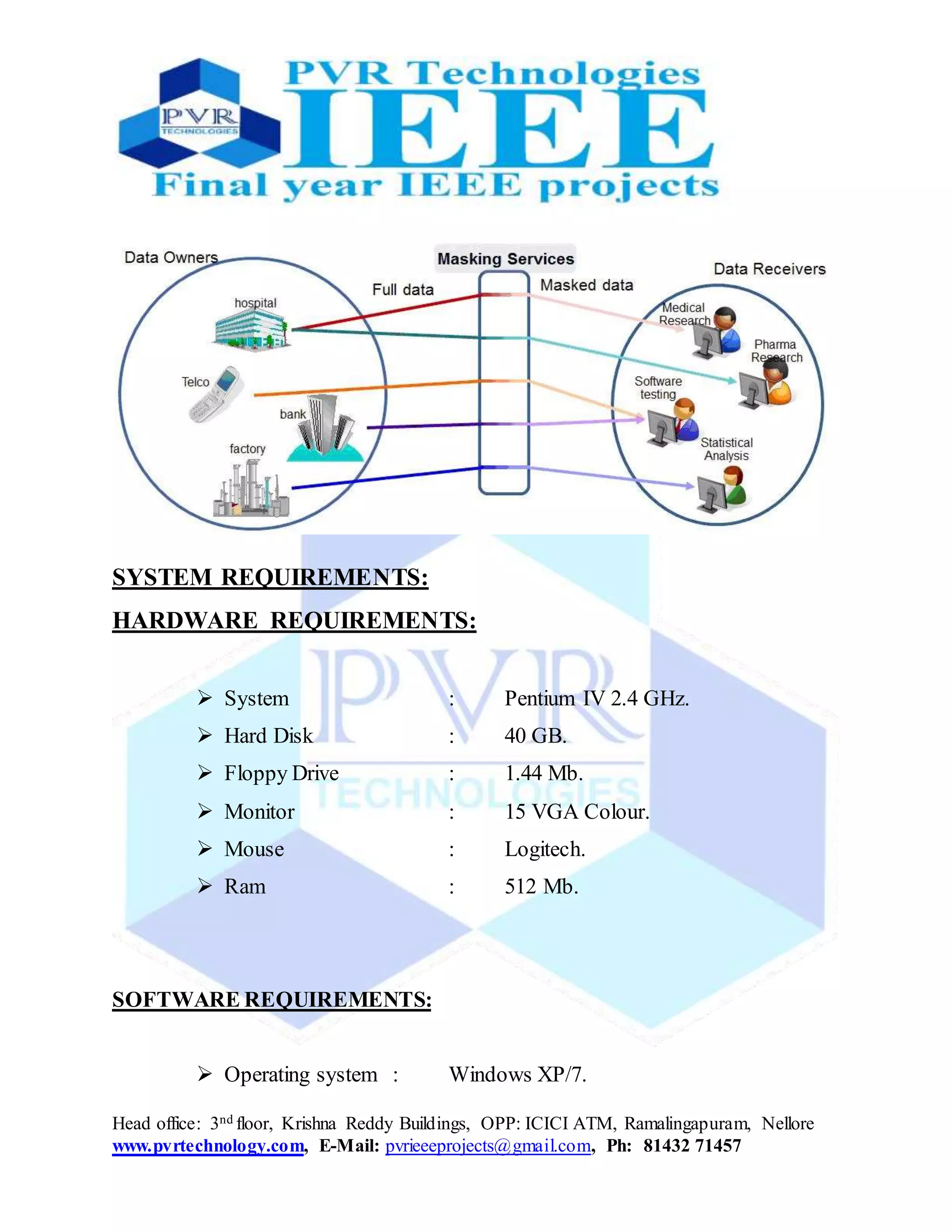

The document proposes using microaggregation techniques to generate k-anonymous datasets that satisfy t-closeness, addressing limitations of existing approaches using generalization and suppression. It presents three microaggregation-based algorithms to reconcile privacy and utility goals: one merges clusters as needed for t-closeness, while two modify the microaggregation process to directly consider t-closeness. Microaggregation preserves data utility better than generalization by maintaining granularity and numbers' continuous nature, and handles outliers less disruptively. The algorithms are empirically evaluated for generating privacy-preserving datasets.


![[IJET V2I3P14] Authors: S.Renuka Devi, A.C. Sumathi](https://cdn.slidesharecdn.com/ss_thumbnails/ijet-v2i3p14-160609053822-thumbnail.jpg?width=640&height=640&fit=bounds)


![Vibe Coding vs. Spec-Driven Development [Free Meetup]](https://cdn.slidesharecdn.com/ss_thumbnails/vibecodingvsspecdrivendevelopment-251209105622-43f455e7-thumbnail.jpg?width=640&height=640&fit=bounds)


