Clinical Toxicology
Prepared by:-
Amanuel G. (Bpharm, MSc)
7/1/2023 1
Clinical Toxicology
• Clinical toxicology is concerned with diseases caused by or
uniquely associated with toxic substances.
Clinical Strategy for Treatment of the Poisoned Patient
• The following general steps are important components of the
initial clinical encounter with a poisoned patient:
1. Stabilization of the patient
2. Clinical evaluation (history, physical, laboratory, radiology)
3. Prevention of further toxin absorption
4. Enhancement of toxin elimination
5. Administration of an antidote
6. Supportive care and clinical follow-up
7/1/2023 2
Clinical cont…
Prevention of further toxin absorption
• For toxins presented by the inhalation route:
• removing the patient from the environment and providing
adequate ventilation and oxygenation.
• For topical exposures:
• Removing cloth containing the toxin and washing the skin
with water and mild soap.
• For oral route exposures:
• induction of emesis with syrup of ipecac
• gastric lavage
• oral administration of activated charcoal
7/1/2023 3
Clinical cont…
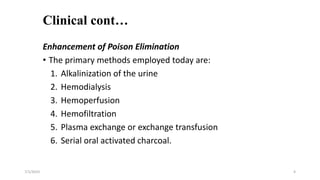
Enhancement of Poison Elimination
• The primary methods employed today are:
1. Alkalinization of the urine
2. Hemodialysis
3. Hemoperfusion
4. Hemofiltration
5. Plasma exchange or exchange transfusion
6. Serial oral activated charcoal.
7/1/2023 4
Clinical cont…
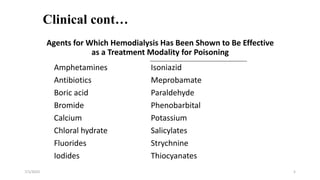
Agents for Which Hemodialysis Has Been Shown to Be Effective
as a Treatment Modality for Poisoning
7/1/2023 5
Amphetamines Isoniazid
Antibiotics Meprobamate
Boric acid Paraldehyde
Bromide Phenobarbital
Calcium Potassium
Chloral hydrate Salicylates
Fluorides Strychnine
Iodides Thiocyanates
Clinical cont…
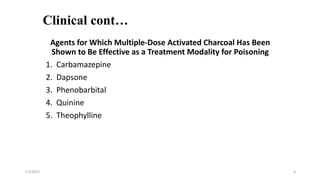
Agents for Which Multiple-Dose Activated Charcoal Has Been
Shown to Be Effective as a Treatment Modality for Poisoning
1. Carbamazepine
2. Dapsone
3. Phenobarbital
4. Quinine
5. Theophylline
7/1/2023 6
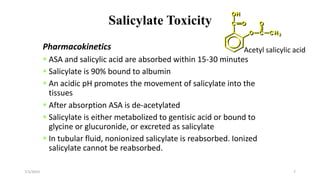
Salicylate Toxicity
Pharmacokinetics
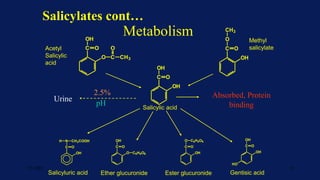
 ASA and salicylic acid are absorbed within 15-30 minutes
 Salicylate is 90% bound to albumin
 An acidic pH promotes the movement of salicylate into the
tissues
 After absorption ASA is de-acetylated
 Salicylate is either metabolized to gentisic acid or bound to
glycine or glucuronide, or excreted as salicylate
 In tubular fluid, nonionized salicylate is reabsorbed. Ionized
salicylate cannot be reabsorbed.
7/1/2023 7
Acetyl salicylic acid
Salicylate cont…
7/1/2023 8
Toxicokinetics
• Above 30 mg/dL
• Delayed absorption from pylorospasm, bezoar formation
• Peak serum levels 4 – 6 or more hours
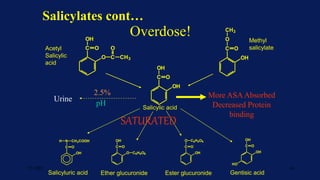
• At toxic levels, elimination routes are saturated
• Decreased fraction protein bound
Salicylate cont…
Mechanism of Action
 Inhibition of COX-1 and COX-2
 Interference with oxidative phosphorylation and the Krebs
cycle
 Activation of the CTZ on the Medulla
 Activation of the Respiratory Center in the Medulla
7/1/2023 9
Salicylate cont…
Clinical manifestations
• Respiratory alkalosis
 Increases tidal volume and respiratory rate
 Majority of the effect comes from the CNS respiratory centres
 Peripheral chemoreceptors may contribute
• Metabolic Acidosis
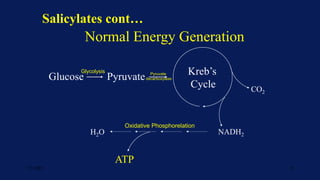
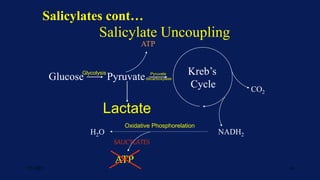
 Prevents the formation of ATP and promotes the formation of
lactate and pyruvate
 Inhibits the Krebs cycle enzymes, encouraging lipid
metabolism and ketogenisis
 Inhibition of amino acid metabolism leads to amino aciduria.
7/1/2023 10
Salicylate cont…
• Hypoglycemia
 Salicylate causes secretion of insulin
 Salicylate can also decreased glucose levels in the CNS
despite normal serum glucose
• Water and Electrolyte Losses
 Hyperthermia causing skin insensible losses
 Increased pulmonary insensible losses
 Vomiting
 Increased renal excretion of bicarbonate, sodium and K+
follow.
7/1/2023 11
Salicylate cont…
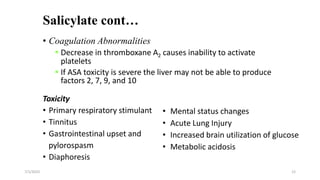
• Coagulation Abnormalities
 Decrease in thromboxane A2 causes inability to activate
platelets
 If ASA toxicity is severe the liver may not be able to produce
factors 2, 7, 9, and 10
Toxicity
• Primary respiratory stimulant
• Tinnitus
• Gastrointestinal upset and
pylorospasm
• Diaphoresis
7/1/2023 12
• Mental status changes
• Acute Lung Injury
• Increased brain utilization of glucose
• Metabolic acidosis
Metabolism
C O
OH
OH
HO
C O
O
OH
C6H9O6
C O
OH
O C6H9O6
C
N
H CH2COOH
O
OH
C
OH
O
OH
C
O
CH3
O
OH
C
OH
O
O C
O
CH3
Salicyluric acid Ether glucuronide Ester glucuronide Gentisic acid
Acetyl
Salicylic
acid
Methyl
salicylate
2.5%
pH
Urine Absorbed, Protein
binding
Salicylic acid
Salicylates cont…
7/1/2023 13
Overdose!
C O
OH
OH
HO
C O
O
OH
C6H9O6
C O
OH
O C6H9O6
C
N
H CH2COOH
O
OH
C
OH
O
OH
C
O
CH3
O
OH
C
OH
O
O C
O
CH3
Salicyluric acid Ether glucuronide Ester glucuronide Gentisic acid
Acetyl
Salicylic
acid
Methyl
salicylate
2.5%
pH
Urine More ASAAbsorbed
Decreased Protein
binding
Salicylic acid
SATURATED
Salicylates cont…
7/1/2023 14
Normal Energy Generation
Glucose Pyruvate Kreb’s
Cycle CO2
NADH2
H2O
ATP
Glycolysis Pyruvate
decarboxylase
Oxidative Phosphorelation
Salicylates cont…
7/1/2023 15
Salicylate Uncoupling
Glucose Pyruvate Kreb’s
Cycle CO2
NADH2
H2O
ATP
SALICYLATES
ATP
Lactate
Glycolysis Pyruvate
decarboxylase
Oxidative Phosphorelation
Salicylates cont…
7/1/2023 16
Salicylate cont…
7/1/2023 17
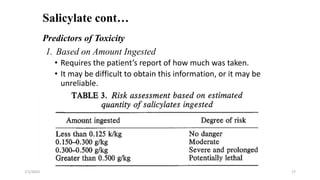
Predictors of Toxicity
1. Based on Amount Ingested
• Requires the patient’s report of how much was taken.
• It may be difficult to obtain this information, or it may be
unreliable.
Salicylate cont…
7/1/2023 18
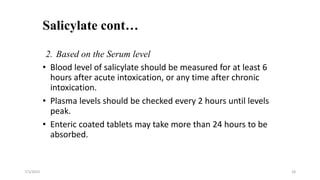
2. Based on the Serum level
• Blood level of salicylate should be measured for at least 6
hours after acute intoxication, or any time after chronic
intoxication.
• Plasma levels should be checked every 2 hours until levels
peak.
• Enteric coated tablets may take more than 24 hours to be
absorbed.
Salicylate cont…
7/1/2023 19
Salicylate cont…
7/1/2023 20
Management
Step 1: Decrease level
1. GI decontamination - Gastric lavage/activated charcoal
• Whole bowel irrigation (enteric coated)
2. Alkalinization of the plasma
• Alkalinizing the serum ionizes the salicylate, which keeps it
from entering the tissues.
• Serum pH should be in the 7.5-7.6 range (no higher than 7.6)
3. Alkalinization of the urine
• Alkalinizing the urine to pH=7.5 to 8
Salicylate cont…
Urinary Alkalinization
• Acidemia facilitates transfer of ASA into tissue
• Acetazolamide creates alkyluria AND metabolic acidosis
• Sodium bicarbonate – increases urinary elimination 10-20
times
• Bolus 1-2 mEq/kg followed by 3 amps
• (132-150mEq) in 1L D5W at 1.5-2 times maintenance
• Urine pH 7.5-8.0
• Serum pH not to exceed 7.55
• Alkalinizing urine from pH 5-8 increases renal elimination of
ASA from 1.3 mL/min to 100 mL/min
• Serum half-life decreases from 48 hours to 6 hours
7/1/2023 21
Salicylate cont…
7/1/2023 22
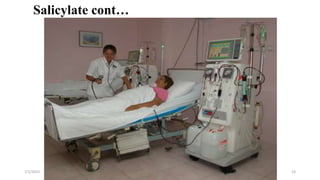
4. Dialysis
• Reasons to Perform It
• Serum concentration >100mg/100ml
• CNS dysfunction
• Renal failure
• Pulmonary Edema
• Severe acid/base electrolyte disturbances
• How to do it
• Volume of distribution is 0.2L/kg
• Toxic levels are less protein bound
• Blood flow should be 350-400cc/hr for 3.5 to 4 hours
Salicylate cont…
7/1/2023 23
Salicylate cont…
7/1/2023 24
Step 2: Manage Complications
• Correct hypokalemia
• Correct hypoglycaemia
• Avoid intubation if possible
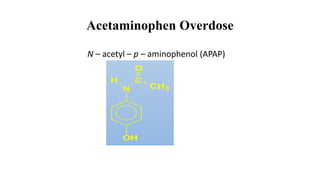
OH
N
H C
O
CH3
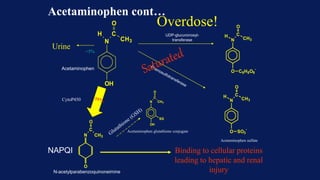
Acetaminophen Overdose
N – acetyl – p – aminophenol (APAP))
Acetaminophen (APAP) Overdose
• Most absorption occurs within 2hrs after orally taken
• Peak concentration -within 4hrs, then hepatic metabolism
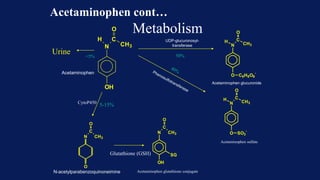
• 90% elimination 3 routes:
• conjugation with gluconroide (40-67%)
• conjugation with sulphate (20-46%)
• oxidation via CP450 or similar enzyme then conjugation
• Oxidation by CP450 or subfamily CYP2E1--> very reactive
electrophile; NAPQI (N-acetyl-p-benzoquinoeimine)
Metabolism
N-acetylparabenzoquinoneimine Acetaminophen glutathione conjugate
Acetaminophen glucuronide
Urine
OH
N
H C
O
CH3
N
H C
O
CH3
O SO3
-
N
C
O
CH3
O
N
C
O
CH3
OH
SG
Acetaminophen
Acetaminophen sulfate
N
H C
O
CH3
O C6H8O6
-
UDP-glucuronosyl-
transferase
50%
<5%
5-15%
CytoP450
Glutathione (GSH)
Acetaminophen cont…
Overdose!
N-acetylparabenzoquinoneimine
OH
N
H C
O
CH3
N
H C
O
CH3
O SO3
-
N
C
O
CH3
O
N
C
O
CH3
OH
SG
Acetaminophen
Acetaminophen sulfate
N
H C
O
CH3
O C6H8O6
-
UDP-glucuronosyl-
transferase
<5%
Acetaminophen glutathione conjugate
CytoP450
Urine
Binding to cellular proteins
leading to hepatic and renal
injury
NAPQI
Acetaminophen cont…
Acetaminophen cont…
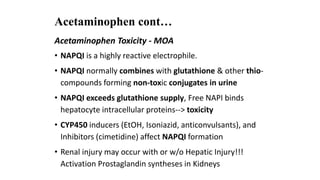
Acetaminophen Toxicity - MOA
• NAPQI is a highly reactive electrophile.
• NAPQI normally combines with glutathione & other thio-
compounds forming non-toxic conjugates in urine
• NAPQI exceeds glutathione supply, Free NAPI binds
hepatocyte intracellular proteins--> toxicity
• CYP450 inducers (EtOH, Isoniazid, anticonvulsants), and
Inhibitors (cimetidine) affect NAPQI formation
• Renal injury may occur with or w/o Hepatic Injury!!!
Activation Prostaglandin syntheses in Kidneys
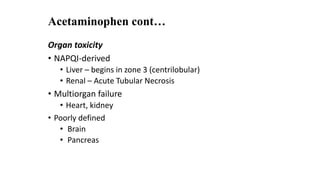
Organ toxicity
• NAPQI-derived
• Liver – begins in zone 3 (centrilobular)
• Renal – Acute Tubular Necrosis
• Multiorgan failure
• Heart, kidney
• Poorly defined
• Brain
• Pancreas
Acetaminophen cont…
Acetaminophen cont…
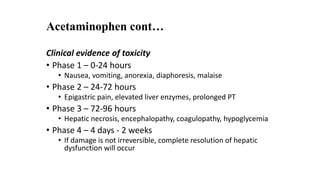
Clinical evidence of toxicity
• Phase 1 – 0-24 hours
• Nausea, vomiting, anorexia, diaphoresis, malaise
• Phase 2 – 24-72 hours
• Epigastric pain, elevated liver enzymes, prolonged PT
• Phase 3 – 72-96 hours
• Hepatic necrosis, encephalopathy, coagulopathy, hypoglycemia
• Phase 4 – 4 days - 2 weeks
• If damage is not irreversible, complete resolution of hepatic
dysfunction will occur
Acetaminophen cont…
Toxic Dose
• Acute overdose is usually considered to be a single ingestion
• Generally, 7.5 gm in an adult or 150 mg/kg in a child are the
lowest threshold capable of toxicity.
Risk Assessment
• Fatalities are relatively uncommon
• The overwhelming majority of APAP exposures result in no
toxicity
• The antidote is very safe
Acetaminophen cont…
Management
1. GI Decontamination
• Very rapid GI absorption
• Activated Charcoal
• Very early presentation
• Co-ingestants
• Adsorbs to NAC
2. N-Acetylcysteine therapy
• Prevents toxicity by limiting NAPQI formation
• Increases capacity to detoxify formed NAPQI
Acetaminophen cont…
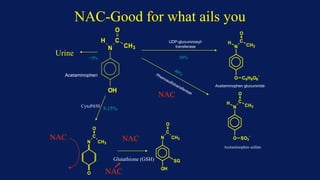
• N-acetylcysteine (NAC) serves as both glutathione precursor &
substitute
• NAC may ↓ NAPQI formation & ↑ non-toxic sulfate conjugation
• NAC improves survival in pts with acetaminophen-induced
fulminant liver failure, even long after initial metabolism
• Possible MOA for survival benefit:
• ↑ oxygen delivery/uptake by tissues,
• change in microcirculation,
• scavenging ROS and ↓ cerebral edema
NAC-Good for what ails you
Acetaminophen glucuronide
Urine
OH
N
H C
O
CH3
N
H C
O
CH3
O SO3
-
N
C
O
CH3
O
N
C
O
CH3
OH
SG
Acetaminophen
Acetaminophen sulfate
N
H C
O
CH3
O C6H8O6
-
UDP-glucuronosyl-
transferase
50%
<5%
5-15%
CytoP450
Glutathione (GSH)
NAC
NAC
NAC
NAC
Acetaminophen cont…
Late NAC Therapy
• Decreased hepatotoxicity when treatment begins 16-24 hours
post ingestion
• IV NAC begun after onset of fulminant hepatic failure
decreased need for vasopressors, and decreased incidence of
cerebral edema and death
Other Benefits of NAC
• Improved oxygen delivery and utilization in extrahepatic organs
• Helps preserve cerebral blood flow
• Possibly due to mediation of microvascular tone
Barbiturate and Benzodiazepine Poisoning
What are they?
• CNS Drugs --- Sedative-Hypnotics
• SEDATIVES: A drug that subdues excitement
and calms the subject without inducing
sleep, though drowsiness may be produced.
• HYPNOTICS: A drug that induces and/or
maintains sleep, similar to normal arousable
sleep.
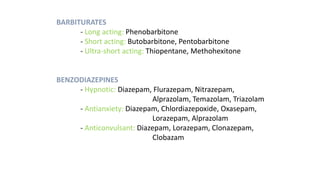
BARBITURATES
- Long acting: Phenobarbitone
- Short acting: Butobarbitone, Pentobarbitone
- Ultra-short acting: Thiopentane, Methohexitone
BENZODIAZEPINES
- Hypnotic: Diazepam, Flurazepam, Nitrazepam,
Alprazolam, Temazolam, Triazolam
- Antianxiety: Diazepam, Chlordiazepoxide, Oxasepam,
Lorazepam, Alprazolam
- Anticonvulsant: Diazepam, Lorazepam, Clonazepam,
Clobazam
Benzodiazepine Toxicity
Benzodiazepines - Uses
• Sedative-Hypnotics
• Seizure control
• Anxiety
• Alcohol withdrawal
• Insomnia
• Control of drug-associated agitation
• As muscle relaxants
• As pre-anesthetic agents; combined frequently with
other medications for procedural sedation
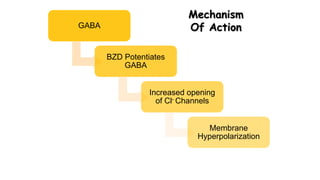
GABA
BZD Potentiates
GABA
Increased opening
of Cl- Channels
Membrane
Hyperpolarization
Mechanism
Of Action
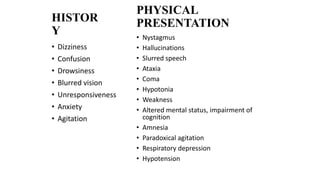
• Nystagmus
• Hallucinations
• Slurred speech
• Ataxia
• Coma
• Hypotonia
• Weakness
• Altered mental status, impairment of
cognition
• Amnesia
• Paradoxical agitation
• Respiratory depression
• Hypotension
• Dizziness
• Confusion
• Drowsiness
• Blurred vision
• Unresponsiveness
• Anxiety
• Agitation
HISTOR
Y
PHYSICAL
PRESENTATION
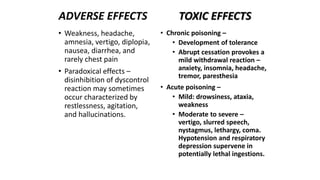
• Chronic poisoning –
• Development of tolerance
• Abrupt cessation provokes a
mild withdrawal reaction –
anxiety, insomnia, headache,
tremor, paresthesia
• Acute poisoning –
• Mild: drowsiness, ataxia,
weakness
• Moderate to severe –
vertigo, slurred speech,
nystagmus, lethargy, coma.
Hypotension and respiratory
depression supervene in
potentially lethal ingestions.
• Weakness, headache,
amnesia, vertigo, diplopia,
nausea, diarrhea, and
rarely chest pain
• Paradoxical effects –
disinhibition of dyscontrol
reaction may sometimes
occur characterized by
restlessness, agitation,
and hallucinations.
ADVERSE EFFECTS TOXIC EFFECTS
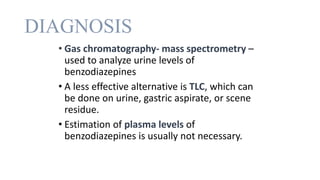
DIAGNOSIS
• Gas chromatography- mass spectrometry –
used to analyze urine levels of
benzodiazepines
• A less effective alternative is TLC, which can
be done on urine, gastric aspirate, or scene
residue.
• Estimation of plasma levels of
benzodiazepines is usually not necessary.
TREATMENT – ACUTE POISONING
• Decontamination – Stomach wash may be helpful
within 6-12 hours of ingestion. Activated charcoal
can also be given in usual manner.
• Establish a clear airway – Oxygen and assisted
ventilation if necessary.
• IV fluids
• Correction of hypotension with dopamine or
levarterenol.
TREATMENT – ANTIDOTE
• FLUMAZENIL – Antidote which acts by competitive
antagonism.
• Complete reversal can be obtained with total slow IV
dose of 1 mg
• Can also be admin. In a series of smaller doses in
increment manner, starting with 0.2 mg and progressively
increasing by 0.1 – 0.2 mg every minute until a
cumulative total dose of 3.5 mg is reached.
• Resedation can occur within 30 minutes to 2 hours…
therefore, patients must be carefully monitored and
subsequent doses of flumazenil must be given as needed.
TREATMENT – CHRONIC POISONING
• Phenobarbitone-substitution technique
• Recommended for benzodiazepine withdrawal
• Propranolol for somatic symptoms
• Phenobarbitone for detoxification
• Replacement of short half-life benzodiazepine with a
longer half-life benzodiazepine, before initiating a
taper and final discontinuation.
BARBITURATE
TOXICITY
Uses - Barbiturates
• Treatment of INSOMNIA
• Phenobarbitone for EPILESPY
• Thiopentane for ANAESTHESIA
• Adjuvants in psychosomatic disorders
• Pre-operative sedation
• Treatment of seizure disorder
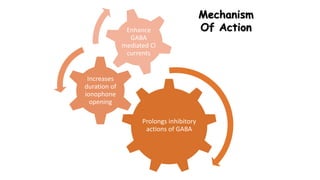
Barbiturate Toxicity
Prolongs inhibitory
actions of GABA
Increases
duration of
ionophone
opening
Enhance
GABA
mediated Cl
currents
Mechanism
Of Action
BARBITURATES ~
TOXICOKINETICS
• Usually administered orally. Parenteral route is usually
reserved for management of status epilepticus or
induction/maintenance of general anesthesia.
• Following absorption, barbiturates are distributed
widely.
• Metabolism – oxidation in liver resulting in the
formation of alcohols, ketones, phenols, or carboxylic
acids
• Excretion – in urine as such or in the form of glucuronic
acid conjugates.
BARBITURATES ~ adverse effects
• Residual depression after the main effect of drug
has passed
• Paradoxical excitement
• Hypersensitivity reaction – localized swelling of
eyelid, cheek, or lip, erythematous or exfoliative
dermatitis
• Synergistic action with ethanol and
antihistamines
BARBITURATES ~ TOXIC
EFFECTS
• Slurred speech, ataxia, lethargy, confusion, headache,
nystagmus
• CNS depression, coma, shock
• Pupils first constrict and then dilate because of hypoxia
• hypothermia
• Cutaneous bullae
• Death due to respiratory arrest of cardiovascular collapse
• Chronic abuse  tolerance.
• Withdrawal reaction: anorexia, tremor, insomnia,
cramps, seizures, delirium, orthostatic hypotension
BARBITURATES ~ USUAL FATAL DOSE
• Phenobarbitone – 6-10 g
• Amobarbitone, pentobarbitone,
secobarbitone – 2-3 g
• Lethal blood level for short/intermediate
acting barbiturate varies from 3-4 mg/100mL
• LBL for phenobarbitone varies from 8-15
mg/100mL
BARBITURATES ~ DIAGNOSIS
•TLC – urine, stomach contents,
scene residue
•GC or HPLC
•EEG – alpha coma indicates poor
prognosis
BARBITURATES ~ treatment
• Gastric lavage can be done with benefit upto 6-12
hours post ingestion
• Activated charcoal can be given at usual dose
• Forced alkaline diuresis is said to be particularly
helpful in the case of phenobarbitone poisoning
• Hemodialysis or haemoperfusion
• Supportive measures – supplemental oxygen,
intubation, assisted ventilation, IV fluids
Phenothiazine overdose
• Phenothiazines are medicines used to treat serious mental
and emotional disorders, and to reduce nausea.
• Overdose occurs when someone takes more than the
normal or recommended amount of a certain substance.
• This can be by accident or on purpose.
Poisonous Ingredient
• The poisonous ingredient is phenothiazine, which may be
found in many medicines.
7/1/2023 56
Phenotiazine cont…
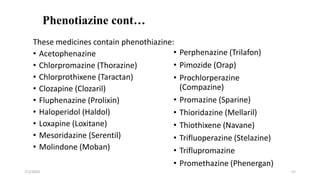
These medicines contain phenothiazine:
• Acetophenazine
• Chlorpromazine (Thorazine)
• Chlorprothixene (Taractan)
• Clozapine (Clozaril)
• Fluphenazine (Prolixin)
• Haloperidol (Haldol)
• Loxapine (Loxitane)
• Mesoridazine (Serentil)
• Molindone (Moban)
7/1/2023 57
• Perphenazine (Trilafon)
• Pimozide (Orap)
• Prochlorperazine
(Compazine)
• Promazine (Sparine)
• Thioridazine (Mellaril)
• Thiothixene (Navane)
• Trifluoperazine (Stelazine)
• Triflupromazine
• Promethazine (Phenergan)
Phenotiazine cont…
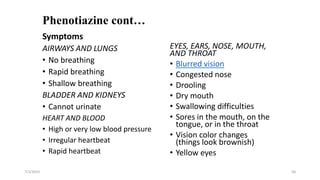
EYES, EARS, NOSE, MOUTH,
AND THROAT
• Blurred vision
• Congested nose
• Drooling
• Dry mouth
• Swallowing difficulties
• Sores in the mouth, on the
tongue, or in the throat
• Vision color changes
(things look brownish)
• Yellow eyes
7/1/2023 58
Symptoms
AIRWAYS AND LUNGS
• No breathing
• Rapid breathing
• Shallow breathing
BLADDER AND KIDNEYS
• Cannot urinate
HEART AND BLOOD
• High or very low blood pressure
• Irregular heartbeat
• Rapid heartbeat
Phenotiazine cont…
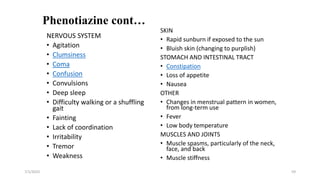
SKIN
• Rapid sunburn if exposed to the sun
• Bluish skin (changing to purplish)
STOMACH AND INTESTINAL TRACT
• Constipation
• Loss of appetite
• Nausea
OTHER
• Changes in menstrual pattern in women,
from long-term use
• Fever
• Low body temperature
MUSCLES AND JOINTS
• Muscle spasms, particularly of the neck,
face, and back
• Muscle stiffness
7/1/2023 59
NERVOUS SYSTEM
• Agitation
• Clumsiness
• Coma
• Confusion
• Convulsions
• Deep sleep
• Difficulty walking or a shuffling
gait
• Fainting
• Lack of coordination
• Irritability
• Tremor
• Weakness
Phenotiazine cont…
Management
• Measure and monitor the person's vital signs, including
temperature, pulse, breathing rate, and blood pressure.
• Symptoms should be treated.
The person may receive:
• Activated charcoal
• Blood and urine tests
• Breathing support, including oxygen
• Chest x-ray, CT scan (advanced brain imaging) and ECG
• Intravenous (IV) fluids through a vein
• Laxative
• Medicine to reverse the effects of the drug
• Tube placed down the nose and into the stomach (gastric lavage)
7/1/2023 60
Phenotiazine cont…
Outlook (Prognosis)
• Recovery depends on the amount of damage.
• Survival past 2 days is usually a good sign.
• Nervous system symptoms may be permanent.
• The most serious side effects are usually due to damage to the
heart.
• If heart damage can be stabilized, recovery is likely.
7/1/2023 61
Thank YOU
Assignment 2
Snake and Scorpion Bite Managment
• Epidemiology
• Mechanism of Action of Toxicity
• Clinical Manifestation
• Managment
7/1/2023 63

Clinical Toxicology.pptx

  • 1.
    Clinical Toxicology Prepared by:- AmanuelG. (Bpharm, MSc) 7/1/2023 1
  • 2.
    Clinical Toxicology • Clinicaltoxicology is concerned with diseases caused by or uniquely associated with toxic substances. Clinical Strategy for Treatment of the Poisoned Patient • The following general steps are important components of the initial clinical encounter with a poisoned patient: 1. Stabilization of the patient 2. Clinical evaluation (history, physical, laboratory, radiology) 3. Prevention of further toxin absorption 4. Enhancement of toxin elimination 5. Administration of an antidote 6. Supportive care and clinical follow-up 7/1/2023 2
  • 3.
    Clinical cont… Prevention offurther toxin absorption • For toxins presented by the inhalation route: • removing the patient from the environment and providing adequate ventilation and oxygenation. • For topical exposures: • Removing cloth containing the toxin and washing the skin with water and mild soap. • For oral route exposures: • induction of emesis with syrup of ipecac • gastric lavage • oral administration of activated charcoal 7/1/2023 3
  • 4.
    Clinical cont… Enhancement ofPoison Elimination • The primary methods employed today are: 1. Alkalinization of the urine 2. Hemodialysis 3. Hemoperfusion 4. Hemofiltration 5. Plasma exchange or exchange transfusion 6. Serial oral activated charcoal. 7/1/2023 4
  • 5.
    Clinical cont… Agents forWhich Hemodialysis Has Been Shown to Be Effective as a Treatment Modality for Poisoning 7/1/2023 5 Amphetamines Isoniazid Antibiotics Meprobamate Boric acid Paraldehyde Bromide Phenobarbital Calcium Potassium Chloral hydrate Salicylates Fluorides Strychnine Iodides Thiocyanates
  • 6.
    Clinical cont… Agents forWhich Multiple-Dose Activated Charcoal Has Been Shown to Be Effective as a Treatment Modality for Poisoning 1. Carbamazepine 2. Dapsone 3. Phenobarbital 4. Quinine 5. Theophylline 7/1/2023 6
  • 7.
    Salicylate Toxicity Pharmacokinetics  ASAand salicylic acid are absorbed within 15-30 minutes  Salicylate is 90% bound to albumin  An acidic pH promotes the movement of salicylate into the tissues  After absorption ASA is de-acetylated  Salicylate is either metabolized to gentisic acid or bound to glycine or glucuronide, or excreted as salicylate  In tubular fluid, nonionized salicylate is reabsorbed. Ionized salicylate cannot be reabsorbed. 7/1/2023 7 Acetyl salicylic acid
  • 8.
    Salicylate cont… 7/1/2023 8 Toxicokinetics •Above 30 mg/dL • Delayed absorption from pylorospasm, bezoar formation • Peak serum levels 4 – 6 or more hours • At toxic levels, elimination routes are saturated • Decreased fraction protein bound
  • 9.
    Salicylate cont… Mechanism ofAction  Inhibition of COX-1 and COX-2  Interference with oxidative phosphorylation and the Krebs cycle  Activation of the CTZ on the Medulla  Activation of the Respiratory Center in the Medulla 7/1/2023 9
  • 10.
    Salicylate cont… Clinical manifestations •Respiratory alkalosis  Increases tidal volume and respiratory rate  Majority of the effect comes from the CNS respiratory centres  Peripheral chemoreceptors may contribute • Metabolic Acidosis  Prevents the formation of ATP and promotes the formation of lactate and pyruvate  Inhibits the Krebs cycle enzymes, encouraging lipid metabolism and ketogenisis  Inhibition of amino acid metabolism leads to amino aciduria. 7/1/2023 10
  • 11.
    Salicylate cont… • Hypoglycemia Salicylate causes secretion of insulin  Salicylate can also decreased glucose levels in the CNS despite normal serum glucose • Water and Electrolyte Losses  Hyperthermia causing skin insensible losses  Increased pulmonary insensible losses  Vomiting  Increased renal excretion of bicarbonate, sodium and K+ follow. 7/1/2023 11
  • 12.
    Salicylate cont… • CoagulationAbnormalities  Decrease in thromboxane A2 causes inability to activate platelets  If ASA toxicity is severe the liver may not be able to produce factors 2, 7, 9, and 10 Toxicity • Primary respiratory stimulant • Tinnitus • Gastrointestinal upset and pylorospasm • Diaphoresis 7/1/2023 12 • Mental status changes • Acute Lung Injury • Increased brain utilization of glucose • Metabolic acidosis
  • 13.
    Metabolism C O OH OH HO C O O OH C6H9O6 CO OH O C6H9O6 C N H CH2COOH O OH C OH O OH C O CH3 O OH C OH O O C O CH3 Salicyluric acid Ether glucuronide Ester glucuronide Gentisic acid Acetyl Salicylic acid Methyl salicylate 2.5% pH Urine Absorbed, Protein binding Salicylic acid Salicylates cont… 7/1/2023 13
  • 14.
    Overdose! C O OH OH HO C O O OH C6H9O6 CO OH O C6H9O6 C N H CH2COOH O OH C OH O OH C O CH3 O OH C OH O O C O CH3 Salicyluric acid Ether glucuronide Ester glucuronide Gentisic acid Acetyl Salicylic acid Methyl salicylate 2.5% pH Urine More ASAAbsorbed Decreased Protein binding Salicylic acid SATURATED Salicylates cont… 7/1/2023 14
  • 15.
    Normal Energy Generation GlucosePyruvate Kreb’s Cycle CO2 NADH2 H2O ATP Glycolysis Pyruvate decarboxylase Oxidative Phosphorelation Salicylates cont… 7/1/2023 15
  • 16.
    Salicylate Uncoupling Glucose PyruvateKreb’s Cycle CO2 NADH2 H2O ATP SALICYLATES ATP Lactate Glycolysis Pyruvate decarboxylase Oxidative Phosphorelation Salicylates cont… 7/1/2023 16
  • 17.
    Salicylate cont… 7/1/2023 17 Predictorsof Toxicity 1. Based on Amount Ingested • Requires the patient’s report of how much was taken. • It may be difficult to obtain this information, or it may be unreliable.
  • 18.
    Salicylate cont… 7/1/2023 18 2.Based on the Serum level • Blood level of salicylate should be measured for at least 6 hours after acute intoxication, or any time after chronic intoxication. • Plasma levels should be checked every 2 hours until levels peak. • Enteric coated tablets may take more than 24 hours to be absorbed.
  • 19.
  • 20.
    Salicylate cont… 7/1/2023 20 Management Step1: Decrease level 1. GI decontamination - Gastric lavage/activated charcoal • Whole bowel irrigation (enteric coated) 2. Alkalinization of the plasma • Alkalinizing the serum ionizes the salicylate, which keeps it from entering the tissues. • Serum pH should be in the 7.5-7.6 range (no higher than 7.6) 3. Alkalinization of the urine • Alkalinizing the urine to pH=7.5 to 8
  • 21.
    Salicylate cont… Urinary Alkalinization •Acidemia facilitates transfer of ASA into tissue • Acetazolamide creates alkyluria AND metabolic acidosis • Sodium bicarbonate – increases urinary elimination 10-20 times • Bolus 1-2 mEq/kg followed by 3 amps • (132-150mEq) in 1L D5W at 1.5-2 times maintenance • Urine pH 7.5-8.0 • Serum pH not to exceed 7.55 • Alkalinizing urine from pH 5-8 increases renal elimination of ASA from 1.3 mL/min to 100 mL/min • Serum half-life decreases from 48 hours to 6 hours 7/1/2023 21
  • 22.
    Salicylate cont… 7/1/2023 22 4.Dialysis • Reasons to Perform It • Serum concentration >100mg/100ml • CNS dysfunction • Renal failure • Pulmonary Edema • Severe acid/base electrolyte disturbances • How to do it • Volume of distribution is 0.2L/kg • Toxic levels are less protein bound • Blood flow should be 350-400cc/hr for 3.5 to 4 hours
  • 23.
  • 24.
    Salicylate cont… 7/1/2023 24 Step2: Manage Complications • Correct hypokalemia • Correct hypoglycaemia • Avoid intubation if possible
  • 25.
    OH N H C O CH3 Acetaminophen Overdose N– acetyl – p – aminophenol (APAP))
  • 26.
    Acetaminophen (APAP) Overdose •Most absorption occurs within 2hrs after orally taken • Peak concentration -within 4hrs, then hepatic metabolism • 90% elimination 3 routes: • conjugation with gluconroide (40-67%) • conjugation with sulphate (20-46%) • oxidation via CP450 or similar enzyme then conjugation • Oxidation by CP450 or subfamily CYP2E1--> very reactive electrophile; NAPQI (N-acetyl-p-benzoquinoeimine)
  • 27.
    Metabolism N-acetylparabenzoquinoneimine Acetaminophen glutathioneconjugate Acetaminophen glucuronide Urine OH N H C O CH3 N H C O CH3 O SO3 - N C O CH3 O N C O CH3 OH SG Acetaminophen Acetaminophen sulfate N H C O CH3 O C6H8O6 - UDP-glucuronosyl- transferase 50% <5% 5-15% CytoP450 Glutathione (GSH) Acetaminophen cont…
  • 28.
    Overdose! N-acetylparabenzoquinoneimine OH N H C O CH3 N H C O CH3 OSO3 - N C O CH3 O N C O CH3 OH SG Acetaminophen Acetaminophen sulfate N H C O CH3 O C6H8O6 - UDP-glucuronosyl- transferase <5% Acetaminophen glutathione conjugate CytoP450 Urine Binding to cellular proteins leading to hepatic and renal injury NAPQI Acetaminophen cont…
  • 29.
    Acetaminophen cont… Acetaminophen Toxicity- MOA • NAPQI is a highly reactive electrophile. • NAPQI normally combines with glutathione & other thio- compounds forming non-toxic conjugates in urine • NAPQI exceeds glutathione supply, Free NAPI binds hepatocyte intracellular proteins--> toxicity • CYP450 inducers (EtOH, Isoniazid, anticonvulsants), and Inhibitors (cimetidine) affect NAPQI formation • Renal injury may occur with or w/o Hepatic Injury!!! Activation Prostaglandin syntheses in Kidneys
  • 30.
    Organ toxicity • NAPQI-derived •Liver – begins in zone 3 (centrilobular) • Renal – Acute Tubular Necrosis • Multiorgan failure • Heart, kidney • Poorly defined • Brain • Pancreas Acetaminophen cont…
  • 31.
    Acetaminophen cont… Clinical evidenceof toxicity • Phase 1 – 0-24 hours • Nausea, vomiting, anorexia, diaphoresis, malaise • Phase 2 – 24-72 hours • Epigastric pain, elevated liver enzymes, prolonged PT • Phase 3 – 72-96 hours • Hepatic necrosis, encephalopathy, coagulopathy, hypoglycemia • Phase 4 – 4 days - 2 weeks • If damage is not irreversible, complete resolution of hepatic dysfunction will occur
  • 32.
    Acetaminophen cont… Toxic Dose •Acute overdose is usually considered to be a single ingestion • Generally, 7.5 gm in an adult or 150 mg/kg in a child are the lowest threshold capable of toxicity. Risk Assessment • Fatalities are relatively uncommon • The overwhelming majority of APAP exposures result in no toxicity • The antidote is very safe
  • 33.
    Acetaminophen cont… Management 1. GIDecontamination • Very rapid GI absorption • Activated Charcoal • Very early presentation • Co-ingestants • Adsorbs to NAC 2. N-Acetylcysteine therapy • Prevents toxicity by limiting NAPQI formation • Increases capacity to detoxify formed NAPQI
  • 34.
    Acetaminophen cont… • N-acetylcysteine(NAC) serves as both glutathione precursor & substitute • NAC may ↓ NAPQI formation & ↑ non-toxic sulfate conjugation • NAC improves survival in pts with acetaminophen-induced fulminant liver failure, even long after initial metabolism • Possible MOA for survival benefit: • ↑ oxygen delivery/uptake by tissues, • change in microcirculation, • scavenging ROS and ↓ cerebral edema
  • 35.
    NAC-Good for whatails you Acetaminophen glucuronide Urine OH N H C O CH3 N H C O CH3 O SO3 - N C O CH3 O N C O CH3 OH SG Acetaminophen Acetaminophen sulfate N H C O CH3 O C6H8O6 - UDP-glucuronosyl- transferase 50% <5% 5-15% CytoP450 Glutathione (GSH) NAC NAC NAC NAC
  • 36.
    Acetaminophen cont… Late NACTherapy • Decreased hepatotoxicity when treatment begins 16-24 hours post ingestion • IV NAC begun after onset of fulminant hepatic failure decreased need for vasopressors, and decreased incidence of cerebral edema and death Other Benefits of NAC • Improved oxygen delivery and utilization in extrahepatic organs • Helps preserve cerebral blood flow • Possibly due to mediation of microvascular tone
  • 37.
    Barbiturate and BenzodiazepinePoisoning What are they? • CNS Drugs --- Sedative-Hypnotics • SEDATIVES: A drug that subdues excitement and calms the subject without inducing sleep, though drowsiness may be produced. • HYPNOTICS: A drug that induces and/or maintains sleep, similar to normal arousable sleep.
  • 38.
    BARBITURATES - Long acting:Phenobarbitone - Short acting: Butobarbitone, Pentobarbitone - Ultra-short acting: Thiopentane, Methohexitone BENZODIAZEPINES - Hypnotic: Diazepam, Flurazepam, Nitrazepam, Alprazolam, Temazolam, Triazolam - Antianxiety: Diazepam, Chlordiazepoxide, Oxasepam, Lorazepam, Alprazolam - Anticonvulsant: Diazepam, Lorazepam, Clonazepam, Clobazam
  • 39.
    Benzodiazepine Toxicity Benzodiazepines -Uses • Sedative-Hypnotics • Seizure control • Anxiety • Alcohol withdrawal • Insomnia • Control of drug-associated agitation • As muscle relaxants • As pre-anesthetic agents; combined frequently with other medications for procedural sedation
  • 40.
    GABA BZD Potentiates GABA Increased opening ofCl- Channels Membrane Hyperpolarization Mechanism Of Action
  • 41.
    • Nystagmus • Hallucinations •Slurred speech • Ataxia • Coma • Hypotonia • Weakness • Altered mental status, impairment of cognition • Amnesia • Paradoxical agitation • Respiratory depression • Hypotension • Dizziness • Confusion • Drowsiness • Blurred vision • Unresponsiveness • Anxiety • Agitation HISTOR Y PHYSICAL PRESENTATION
  • 42.
    • Chronic poisoning– • Development of tolerance • Abrupt cessation provokes a mild withdrawal reaction – anxiety, insomnia, headache, tremor, paresthesia • Acute poisoning – • Mild: drowsiness, ataxia, weakness • Moderate to severe – vertigo, slurred speech, nystagmus, lethargy, coma. Hypotension and respiratory depression supervene in potentially lethal ingestions. • Weakness, headache, amnesia, vertigo, diplopia, nausea, diarrhea, and rarely chest pain • Paradoxical effects – disinhibition of dyscontrol reaction may sometimes occur characterized by restlessness, agitation, and hallucinations. ADVERSE EFFECTS TOXIC EFFECTS
  • 43.
    DIAGNOSIS • Gas chromatography-mass spectrometry – used to analyze urine levels of benzodiazepines • A less effective alternative is TLC, which can be done on urine, gastric aspirate, or scene residue. • Estimation of plasma levels of benzodiazepines is usually not necessary.
  • 44.
    TREATMENT – ACUTEPOISONING • Decontamination – Stomach wash may be helpful within 6-12 hours of ingestion. Activated charcoal can also be given in usual manner. • Establish a clear airway – Oxygen and assisted ventilation if necessary. • IV fluids • Correction of hypotension with dopamine or levarterenol.
  • 45.
    TREATMENT – ANTIDOTE •FLUMAZENIL – Antidote which acts by competitive antagonism. • Complete reversal can be obtained with total slow IV dose of 1 mg • Can also be admin. In a series of smaller doses in increment manner, starting with 0.2 mg and progressively increasing by 0.1 – 0.2 mg every minute until a cumulative total dose of 3.5 mg is reached. • Resedation can occur within 30 minutes to 2 hours… therefore, patients must be carefully monitored and subsequent doses of flumazenil must be given as needed.
  • 46.
    TREATMENT – CHRONICPOISONING • Phenobarbitone-substitution technique • Recommended for benzodiazepine withdrawal • Propranolol for somatic symptoms • Phenobarbitone for detoxification • Replacement of short half-life benzodiazepine with a longer half-life benzodiazepine, before initiating a taper and final discontinuation.
  • 47.
  • 48.
    Uses - Barbiturates •Treatment of INSOMNIA • Phenobarbitone for EPILESPY • Thiopentane for ANAESTHESIA • Adjuvants in psychosomatic disorders • Pre-operative sedation • Treatment of seizure disorder Barbiturate Toxicity
  • 49.
    Prolongs inhibitory actions ofGABA Increases duration of ionophone opening Enhance GABA mediated Cl currents Mechanism Of Action
  • 50.
    BARBITURATES ~ TOXICOKINETICS • Usuallyadministered orally. Parenteral route is usually reserved for management of status epilepticus or induction/maintenance of general anesthesia. • Following absorption, barbiturates are distributed widely. • Metabolism – oxidation in liver resulting in the formation of alcohols, ketones, phenols, or carboxylic acids • Excretion – in urine as such or in the form of glucuronic acid conjugates.
  • 51.
    BARBITURATES ~ adverseeffects • Residual depression after the main effect of drug has passed • Paradoxical excitement • Hypersensitivity reaction – localized swelling of eyelid, cheek, or lip, erythematous or exfoliative dermatitis • Synergistic action with ethanol and antihistamines
  • 52.
    BARBITURATES ~ TOXIC EFFECTS •Slurred speech, ataxia, lethargy, confusion, headache, nystagmus • CNS depression, coma, shock • Pupils first constrict and then dilate because of hypoxia • hypothermia • Cutaneous bullae • Death due to respiratory arrest of cardiovascular collapse • Chronic abuse  tolerance. • Withdrawal reaction: anorexia, tremor, insomnia, cramps, seizures, delirium, orthostatic hypotension
  • 53.
    BARBITURATES ~ USUALFATAL DOSE • Phenobarbitone – 6-10 g • Amobarbitone, pentobarbitone, secobarbitone – 2-3 g • Lethal blood level for short/intermediate acting barbiturate varies from 3-4 mg/100mL • LBL for phenobarbitone varies from 8-15 mg/100mL
  • 54.
    BARBITURATES ~ DIAGNOSIS •TLC– urine, stomach contents, scene residue •GC or HPLC •EEG – alpha coma indicates poor prognosis
  • 55.
    BARBITURATES ~ treatment •Gastric lavage can be done with benefit upto 6-12 hours post ingestion • Activated charcoal can be given at usual dose • Forced alkaline diuresis is said to be particularly helpful in the case of phenobarbitone poisoning • Hemodialysis or haemoperfusion • Supportive measures – supplemental oxygen, intubation, assisted ventilation, IV fluids
  • 56.
    Phenothiazine overdose • Phenothiazinesare medicines used to treat serious mental and emotional disorders, and to reduce nausea. • Overdose occurs when someone takes more than the normal or recommended amount of a certain substance. • This can be by accident or on purpose. Poisonous Ingredient • The poisonous ingredient is phenothiazine, which may be found in many medicines. 7/1/2023 56
  • 57.
    Phenotiazine cont… These medicinescontain phenothiazine: • Acetophenazine • Chlorpromazine (Thorazine) • Chlorprothixene (Taractan) • Clozapine (Clozaril) • Fluphenazine (Prolixin) • Haloperidol (Haldol) • Loxapine (Loxitane) • Mesoridazine (Serentil) • Molindone (Moban) 7/1/2023 57 • Perphenazine (Trilafon) • Pimozide (Orap) • Prochlorperazine (Compazine) • Promazine (Sparine) • Thioridazine (Mellaril) • Thiothixene (Navane) • Trifluoperazine (Stelazine) • Triflupromazine • Promethazine (Phenergan)
  • 58.
    Phenotiazine cont… EYES, EARS,NOSE, MOUTH, AND THROAT • Blurred vision • Congested nose • Drooling • Dry mouth • Swallowing difficulties • Sores in the mouth, on the tongue, or in the throat • Vision color changes (things look brownish) • Yellow eyes 7/1/2023 58 Symptoms AIRWAYS AND LUNGS • No breathing • Rapid breathing • Shallow breathing BLADDER AND KIDNEYS • Cannot urinate HEART AND BLOOD • High or very low blood pressure • Irregular heartbeat • Rapid heartbeat
  • 59.
    Phenotiazine cont… SKIN • Rapidsunburn if exposed to the sun • Bluish skin (changing to purplish) STOMACH AND INTESTINAL TRACT • Constipation • Loss of appetite • Nausea OTHER • Changes in menstrual pattern in women, from long-term use • Fever • Low body temperature MUSCLES AND JOINTS • Muscle spasms, particularly of the neck, face, and back • Muscle stiffness 7/1/2023 59 NERVOUS SYSTEM • Agitation • Clumsiness • Coma • Confusion • Convulsions • Deep sleep • Difficulty walking or a shuffling gait • Fainting • Lack of coordination • Irritability • Tremor • Weakness
  • 60.
    Phenotiazine cont… Management • Measureand monitor the person's vital signs, including temperature, pulse, breathing rate, and blood pressure. • Symptoms should be treated. The person may receive: • Activated charcoal • Blood and urine tests • Breathing support, including oxygen • Chest x-ray, CT scan (advanced brain imaging) and ECG • Intravenous (IV) fluids through a vein • Laxative • Medicine to reverse the effects of the drug • Tube placed down the nose and into the stomach (gastric lavage) 7/1/2023 60
  • 61.
    Phenotiazine cont… Outlook (Prognosis) •Recovery depends on the amount of damage. • Survival past 2 days is usually a good sign. • Nervous system symptoms may be permanent. • The most serious side effects are usually due to damage to the heart. • If heart damage can be stabilized, recovery is likely. 7/1/2023 61
  • 62.
  • 63.
    Assignment 2 Snake andScorpion Bite Managment • Epidemiology • Mechanism of Action of Toxicity • Clinical Manifestation • Managment 7/1/2023 63