Poisoning
Is very common, most poisonings being
accidental or suicidal in nature (homicidal is
now rare)
Two main types of poisoning:
 Those in the home from medicinal
substances and domestic chemicals.
 Those in agriculture and industry from a wide
range of toxic substances.
Acetoaminophen Salicylate Organophosphate
• Is one of the most commonly used oral
analgesics and antipyretics.
• It has an excellent safety profile when
administered in proper therapeutic doses,
but hepatotoxicity can occur after overdose or
when misused in at-risk populations.
• In the United States, acetaminophen toxicity
has replaced viral hepatitis as the most
common cause of acute liver failure.
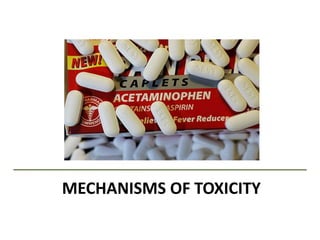
Acetaminophen
MECHANISMS OF TOXICITY
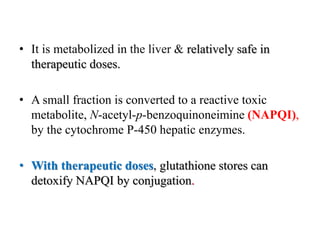
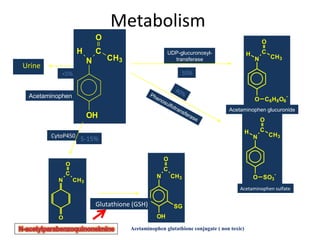
• It is metabolized in the liver & relatively safe in
therapeutic doses.
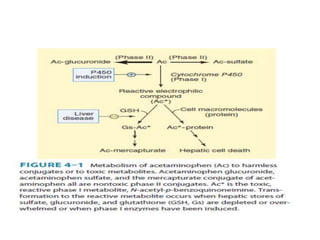
• A small fraction is converted to a reactive toxic
metabolite, N-acetyl-p-benzoquinoneimine (NAPQI),
by the cytochrome P-450 hepatic enzymes.
• With therapeutic doses, glutathione stores can
detoxify NAPQI by conjugation.
Metabolism
Acetaminophen glutathione conjugate ( non toxic)
Acetaminophen glucuronide
Urine
OH
N
H C
O
CH3
N
H C
O
CH3
O SO3
-
N
C
O
CH3
O
N
C
O
CH3
OH
SG
Acetaminophen
Acetaminophen sulfate
N
H C
O
CH3
O C6H8O6
-
UDP-glucuronosyl-
transferase
50%<5%
5-15%CytoP450
Glutathione (GSH)
Overdose!
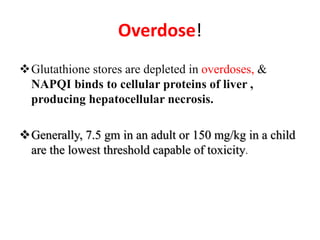
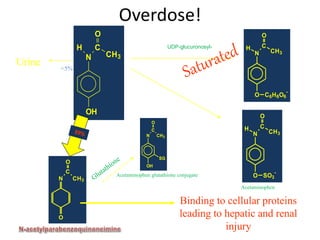
Glutathione stores are depleted in overdoses, &
NAPQI binds to cellular proteins of liver ,
producing hepatocellular necrosis.
Generally, 7.5 gm in an adult or 150 mg/kg in a child
are the lowest threshold capable of toxicity.
Overdose!
OH
N
H C
O
CH3
N
H C
O
CH3
O SO3
-
N
C
O
CH3
O
N
C
O
CH3
OH
SG
Acetaminophen
Acetaminophen sulfate
N
H C
O
CH3
O C6H8O6
-
UDP-glucuronosyl-
transferase
<5%
Acetaminophen glutathione conjugate
CytoP450
Urine
Binding to cellular proteins
leading to hepatic and renal
injury
NAPQI
Clinical features
• Initial symptoms include malaise, nausea and
vomiting, with preserved consciousness unless
another drug has also been taken.
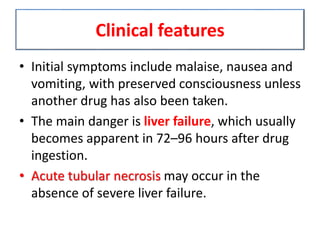
• The main danger is liver failure, which usually
becomes apparent in 72–96 hours after drug
ingestion.
• Acute tubular necrosis may occur in the
absence of severe liver failure.
Clinical evidence of toxicity
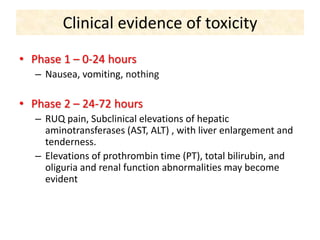
• Phase 1 – 0-24 hours
– Nausea, vomiting, nothing
• Phase 2 – 24-72 hours
– RUQ pain, Subclinical elevations of hepatic
aminotransferases (AST, ALT) , with liver enlargement and
tenderness.
– Elevations of prothrombin time (PT), total bilirubin, and
oliguria and renal function abnormalities may become
evident
• Phase 3 – 72-96 hours
– Hepatic necrosis, encephalopathy, coagulopathy, ATN
– Jaundice, confusion (hepatic encephalopathy), a marked
elevation in hepatic enzymes, hyperammonemia, and a
bleeding diathesis hypoglycemia, lactic acidosis, renal
failure 25%, death.
• Phase 4 – 4 days- 2 weeks
– If damage is not irreversible, complete resolution of
hepatic dysfunction will occur
Investigation
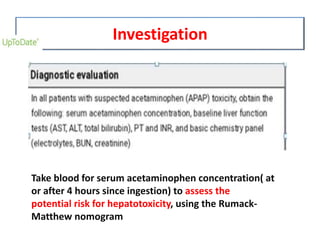
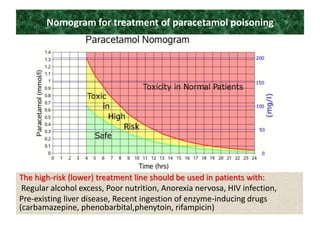
Take blood for serum acetaminophen concentration( at
or after 4 hours since ingestion) to assess the
potential risk for hepatotoxicity, using the Rumack-
Matthew nomogram
Management
 Immediate assessment of the patient's airway, breathing,
and hemodynamic status (ie, ABCs) is
critical, while considering and initiating treatment for
suspected acetaminophen overdose.
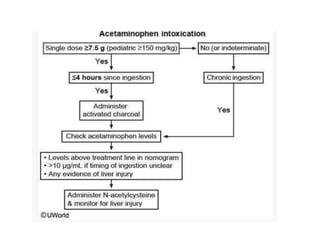
 Administer activated charcoal (AC) if the patient has a stable
mental and clinical status, patent airway, and presents to the
emergency department within 4 hour of ingestion.
 AC may be useful for coingestants beyond 4 hours.
 Check serum acetaminophen concentration
 Patients with acetaminophen concentrations below the
“possible” line for hepatotoxicity on the Rumack-Matthew
nomogram may be discharged home after they are medically
cleared. (the patient is asymptomatic and the investigations
are normal)
• If the ingestion occurred with intent to do self-harm, a
thorough psychosocial, psychological and/or psychiatric
evaluation is indicated before the patient can be discharged
safely from the medical care facility.
 Admit patients with acetaminophen concentrations above the
"possible" line on the Rumack-Matthew nomogram for
treatment with N-acetylcysteine (NAC).
Nomogram for treatment of paracetamol poisoning
The high-risk (lower) treatment line should be used in patients with:
Regular alcohol excess, Poor nutrition, Anorexia nervosa, HIV infection,
Pre-existing liver disease, Recent ingestion of enzyme-inducing drugs
(carbamazepine, phenobarbital,phenytoin, rifampicin)
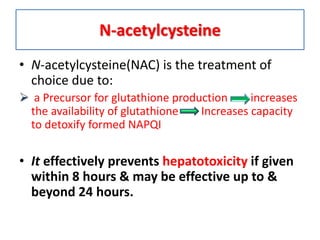
N-acetylcysteine
• N-acetylcysteine(NAC) is the treatment of
choice due to:
 a Precursor for glutathione production increases
the availability of glutathione Increases capacity
to detoxify formed NAPQI
• It effectively prevents hepatotoxicity if given
within 8 hours & may be effective up to &
beyond 24 hours.
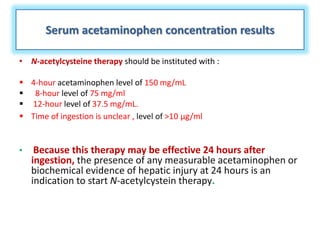
Serum acetaminophen concentration results
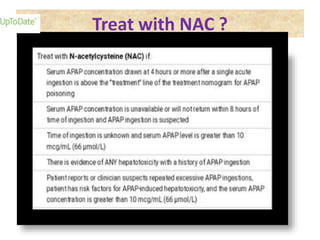
• N-acetylcysteine therapy should be instituted with :
 4-hour acetaminophen level of 150 mg/mL
 8-hour level of 75 mg/ml
 12-hour level of 37.5 mg/mL.
 Time of ingestion is unclear , level of >10 µg/ml
• Because this therapy may be effective 24 hours after
ingestion, the presence of any measurable acetaminophen or
biochemical evidence of hepatic injury at 24 hours is an
indication to start N-acetylcystein therapy.
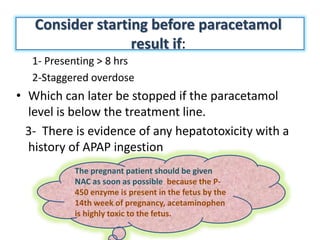
Consider starting before paracetamol
result if:
1- Presenting > 8 hrs
2-Staggered overdose
• Which can later be stopped if the paracetamol
level is below the treatment line.
3- There is evidence of any hepatotoxicity with a
history of APAP ingestion
The pregnant patient should be given
NAC as soon as possible because the P-
450 enzyme is present in the fetus by the
14th week of pregnancy, acetaminophen
is highly toxic to the fetus.
Treat with NAC ?
 Treat patients with evidence of hepatic failure,
metabolic acidosis, coagulopathy, and/or
encephalopathy in an intensive care unit (ICU).
 Liver transplantation should be considered in
individuals who develop acute liver failure due to
paracetamol poisoning.
Medication summary
• Activated charcoal (AC) and N-acetylcysteine
(NAC) are used in the treatment of
acetaminophen toxicity.
• Antiemetics are used to relieve nausea and
vomiting, which can result from both
acetaminophen toxicity and from AC and oral
NAC administration.
Salicylates ( Aspirin)
• Aspirin action are dose dependent used as :
• anti-inflammatory agent with high dose
(4000mg)
• analgesic and antipyitic agents with moderate
dose(650mg)
• prevent thrombosis low-dose aspirin (81mg) .
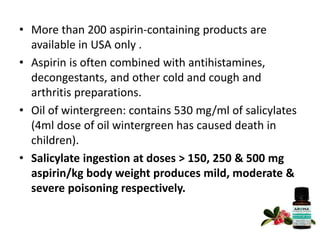
• More than 200 aspirin-containing products are
available in USA only .
• Aspirin is often combined with antihistamines,
decongestants, and other cold and cough and
arthritis preparations.
• Oil of wintergreen: contains 530 mg/ml of salicylates
(4ml dose of oil wintergreen has caused death in
children).
• Salicylate ingestion at doses > 150, 250 & 500 mg
aspirin/kg body weight produces mild, moderate &
severe poisoning respectively.
MECHANISMS OF TOXICITY
• Salicylates are rapidly and completely absorbed , but
distributed unevenly throughout body tissues after oral dose.
• Metabolism follows first-order kinetics (dose dependent) and
are conjugated with glycine & glucuronic acid to form
oxidized and conjugated metabolites.
• Renal clearance accounts for most of the compound’s
elimination and is enhanced from 2% to more than 80% as
pH and ionization increases.
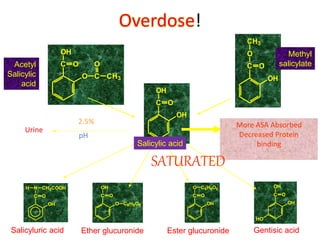
 In Overdose , metabolizing enzymes get saturated: switch from
first  zero order kinetics.
 Decrease in albumin binding at toxic levels.
 Urinary excretion is fixed.
 SA = weak acid:
 at physiologic pH most SA is ionized
 acidosis  more unionized SA
Overdose!
C O
OH
OH
HO
C O
O
OH
C6H9O6
C O
OH
O C6H9O6
C
NH CH2COOH
O
OH
C
OH
O
OH
C
O
CH3
O
OH
C
OH
O
O C
O
CH3
Salicyluric acid Ether glucuronide Ester glucuronide Gentisic acid
Acetyl
Salicylic
acid
Methyl
salicylate
2.5%
pH
Urine
More ASA Absorbed
Decreased Protein
bindingSalicylic acid
SATURATED
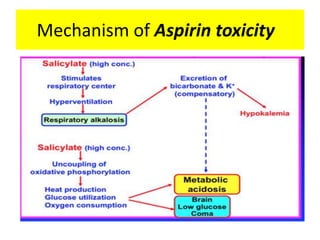
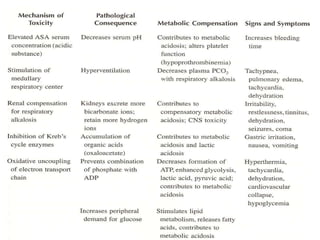
1-Acid-base balance disturbance
As salicylic acid levels rise and pH decrease, the
medullary respiratory center is stimulated resulting
in hyperventilation that going to cause respiratory
alkalosis.
• Prolonged high serum concentrations eventually
depress the respiratory center.
2-Respiratory alkalosis
• 1) Rapid cell buffering: The hydrogen ions are primarily derived
from intracellular buffers such as hemoglobin, protein and
phosphates.
• 2) Increased rate of bicarbonate excretion by the renal tubules as
an intracellular buffering mechanism.
• This Compensatory mechanisms of initial respiratory
alkalosis results in a metabolic acidosis
• Increased sodium and potassium loss accompany the initial renal
bicarbonate diuresis : hypokalemia
• Metabolic acidosis increases the plasma
concentration of protonated salicylate
• Thus worsening toxicity by allowing easy diffusion of
the drug across cell membranes Altered mental
status (AMS)
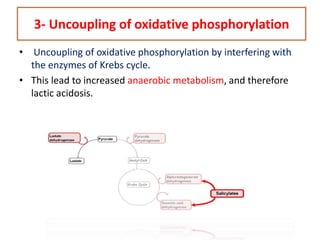
3- Uncoupling of oxidative phosphorylation
• Uncoupling of oxidative phosphorylation by interfering with
the enzymes of Krebs cycle.
• This lead to increased anaerobic metabolism, and therefore
lactic acidosis.
The inefficiency of anaerobic metabolism
results in
• Increased oxygen consumption, glucose use,
and heat production.
• Increased lipid metabolism, increases
production of ketone bodies.
• Depletion of hepatic glycogen.
• This results in fever, tachypnea, tachycardia,
and hypoglycemia.
Mechanism of Aspirin toxicity
Clinical presentation.
 GIT: nausea and vomiting (common), GIT hemorrhage, pancreatitis,
hepatitis
 Pulmonary: hyperventilation (common), pulmonary edema,
respiratory arrest, apnea.
 Auditory: ototoxicity, tinnitus (common when serum salicylates
exceed 30 mg/dl), deafness.
 Cardiovascular: tachycardia, dysrhythmias, ECG abnormalities due
to hypokalemia.
 Neurologic: CNS depression, seizures, encephalopathy, cerebral
edema (associate with severe cases).
 Hematologic: prolongation of prothrombin and bleeding times and
decrease platelets adhesiveness.
 Electrolytes: dehydration, hypokalemia, hypocalcaemia, acidemia
 Body temperature: increased (hyperthermia).
• Signs of serious salicylate poisoning include
metabolic acidosis, renal failure and CNS
effects such as agitation, confusion, coma
• Death can occur as a consequence of CNS
depression and cardiovascular collapse.
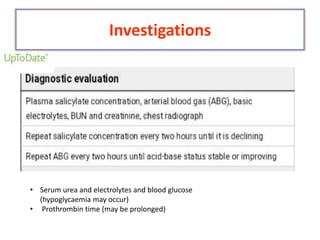
Investigations
• Serum urea and electrolytes and blood glucose
(hypoglycaemia may occur)
• Prothrombin time (may be prolonged)
Management
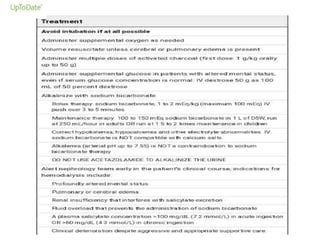
• There is no antidote for salicylate poisoning.
• Goal of treatment:
 Supportive care (oxygen supplement if needed)
G.I decontamination
Correct Dehydration
Correction of metabolic acidosis
Correct Hypokalemia
Correct Hypoglycemia
Correct Hyperthermia (external cooling )
GI decontamination
• Administration of oral activated charcoal and if
necessary gastric lavage (within 1-2 hr post ingestion
(no if > 12hrs))
• Whole-bowel irrigation is recommended to help
move the pills and charcoal through the intestinal
tract
• Enhanced elimination by sodium bicarbonate (PH
7.5) or hemodialysis are very effective methods
Extracorporeal methods
• Hemodialysis is required for any of the following:
• Seum levels >100mg/dl in acute intoxication.
• Serum levels > 60mg/dl in chronic intoxication.
• Persistent/progressive acidosis (is resistant
metabolic acidosis)
• Deteriorating level of consciousness
• Renal insufficiency
Correct Dehydration
• Usually treatment with parenteral fluids
Important to keep the patient hydrated to
maintain kidney function (renal excretion)
• Not overhydrated as it may contribute to
pulmonary edema.
• If patient has pulmonary edema will not
tolerate fluids load and must be considered
for dialysis.
Correction of metabolic acidosis
• Sodium bicarbonate is added to the i.v. fluids
to correct metabolic acidosis associated with
moderate to sever toxicity
• This will also rise the PH of the urine, so
enhance salicylate elimination
• Do not use acetazolamide for urine
alkalinization (acidify the serum)
Hypokalemia
• Potassium chloride is added to the IV fluids to
correct hypokalemia .
• Serum vitamin K levels should be closely monitored
“arrhythmias ”
Hypoglycemia
• Glucose is added to i.v. fluids to correct the
hypoglycemia and ketosis
• Note: Salicylate-poisoned patients may have
low brain glucose levels despite normal
measured serum glucose (Patient with altered
mental status)
Other procedures
• Diazepam for seizures
• Calcium supplement for hypocalcemic tetany
• Vitamin K1 for coagulation defects
Organophosphorus
• Organophosphorus (OP) compounds are widely used
as pesticides (e.g. malathion, fenthion), especially in
developing countries, and also exist as highly toxic
chemical warfare agents (e.g. sarin).
• Organophosphorous compounds contain carbon and
phosphorous acid derivatives.
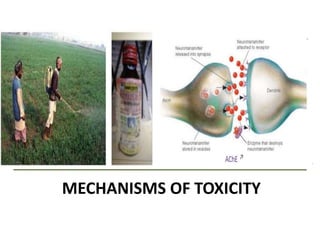
MECHANISMS OF TOXICITY
• These agents are well absorbed through the skin, lungs, and
GI.
• They bind to acetyl cholinesterase (AChE), also known as red
blood cell (RBC) acetyl cholinesterase or neural acetyl
cholinesterase, and render this enzyme non-functional.
• Incapable of degrading the neurotransmitter acetylcholine.
• Acetylcholine accumulate at neuromuscular junctions and
synapses.
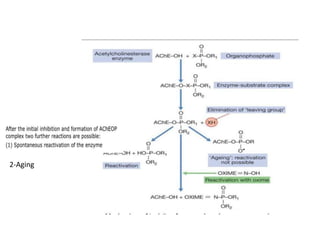
• After some period of time ,the acetylcholinestrase-
organophosphorus compound undergoes conformational
change, known as aging (loss of alkyl group + strengthening of
covalent bond)
• Which renders the enzyme irreversibly resistant to
reactivation by an antidotal oxime.
2-Aging
Signs and symptoms of OPC poisoning
• Four clinical syndromes have been described:
1.Acute cholinergic syndrome (most common)
Manifests in minutes to hours
2.Sub acute proximal weakness (Intermediate
syndrome) : occurs 24-96 hours
3.Organophosphate induced delayed neuropathy
(OPIDN): occur several weeks after exposure
4.Chronic organophosphate induced neuropsychiatric
disorder (COPIND)
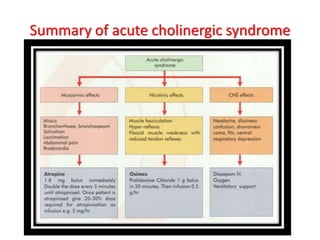
Acute cholinergic syndrome
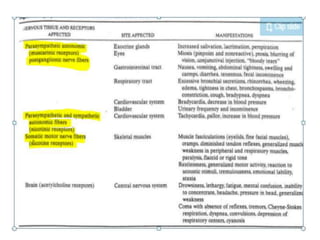
• Three broad categories:
(1) Muscarinic effects
(2) Nicotinic effects
(3) Central nervous system (CNS) effects.
Primary toxic effects involve the autonomic
nervous system, neuromuscular junction, and
central nervous system (CNS)
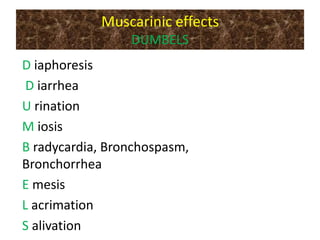
Muscarinic effects
DUMBELS
D iaphoresis
D iarrhea
U rination
M iosis
B radycardia, Bronchospasm,
Bronchorrhea
E mesis
L acrimation
S alivation
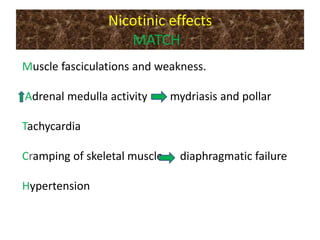
Nicotinic effects
MATCH
Muscle fasciculations and weakness.
Adrenal medulla activity mydriasis and pollar
Tachycardia
Cramping of skeletal muscle diaphragmatic failure
Hypertension
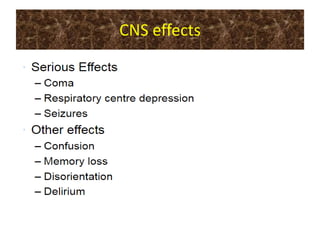
CNS effects
Investigation
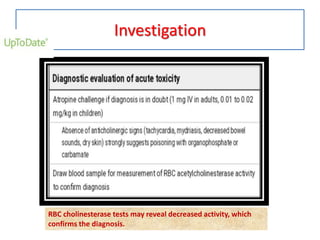
RBC cholinesterase tests may reveal decreased activity, which
confirms the diagnosis.
 Supportive : The airways should be cleared and
maintained& ensuring proper ventilatory support
 Decontamination: contaminated clothing should be
removed, eyes irrigated, skin washed and activated charcoal
given if within 1 hr of ingestion.
• The ECG, oxygen saturation, blood gases, temperature, urea
and electrolytes, amylase and glucose should be monitored
closely
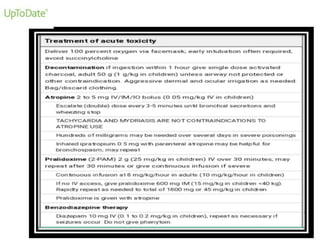
 Specific (atropine): Early use of sufficient doses of
atropine is potentially life-saving in patients with severe
toxicity.
• Atropine reverses the muscarinic features, dry the
excessive pulmonary secretions seen in patients with
respiratory distress.
•Atropine use requires cardiac monitoring& proper
oxygenation.
 Specific (Oximes):
In patients requiring atropine, an oxime such as pralidoxime if
available, should also be administered.
 This can reactivate phosphorylated AChE and prevent
nicotinic features and coma if given early.
 Benzodiazepines may be used to reduce agitation and
fasciculations, treat convulsions and sedate patients during
mechanical ventilation but should be given with caution and
after the starting of atropine .
Summary of acute cholinergic syndrome
References
 UpToDate Website
 Medscape website
 Davidson's principles and practice of medicine, book chapter.
 Essentials of Kumar and Clark's Clinical Medicine, book chapter.
drug poisoning/paracetamol

drug poisoning/paracetamol

  • 2.
    Poisoning Is very common,most poisonings being accidental or suicidal in nature (homicidal is now rare) Two main types of poisoning:  Those in the home from medicinal substances and domestic chemicals.  Those in agriculture and industry from a wide range of toxic substances.
  • 3.
  • 4.
    • Is oneof the most commonly used oral analgesics and antipyretics. • It has an excellent safety profile when administered in proper therapeutic doses, but hepatotoxicity can occur after overdose or when misused in at-risk populations. • In the United States, acetaminophen toxicity has replaced viral hepatitis as the most common cause of acute liver failure. Acetaminophen
  • 5.
  • 6.
    • It ismetabolized in the liver & relatively safe in therapeutic doses. • A small fraction is converted to a reactive toxic metabolite, N-acetyl-p-benzoquinoneimine (NAPQI), by the cytochrome P-450 hepatic enzymes. • With therapeutic doses, glutathione stores can detoxify NAPQI by conjugation.
  • 7.
    Metabolism Acetaminophen glutathione conjugate( non toxic) Acetaminophen glucuronide Urine OH N H C O CH3 N H C O CH3 O SO3 - N C O CH3 O N C O CH3 OH SG Acetaminophen Acetaminophen sulfate N H C O CH3 O C6H8O6 - UDP-glucuronosyl- transferase 50%<5% 5-15%CytoP450 Glutathione (GSH)
  • 8.
    Overdose! Glutathione stores aredepleted in overdoses, & NAPQI binds to cellular proteins of liver , producing hepatocellular necrosis. Generally, 7.5 gm in an adult or 150 mg/kg in a child are the lowest threshold capable of toxicity.
  • 9.
    Overdose! OH N H C O CH3 N H C O CH3 OSO3 - N C O CH3 O N C O CH3 OH SG Acetaminophen Acetaminophen sulfate N H C O CH3 O C6H8O6 - UDP-glucuronosyl- transferase <5% Acetaminophen glutathione conjugate CytoP450 Urine Binding to cellular proteins leading to hepatic and renal injury NAPQI
  • 11.
    Clinical features • Initialsymptoms include malaise, nausea and vomiting, with preserved consciousness unless another drug has also been taken. • The main danger is liver failure, which usually becomes apparent in 72–96 hours after drug ingestion. • Acute tubular necrosis may occur in the absence of severe liver failure.
  • 12.
    Clinical evidence oftoxicity • Phase 1 – 0-24 hours – Nausea, vomiting, nothing • Phase 2 – 24-72 hours – RUQ pain, Subclinical elevations of hepatic aminotransferases (AST, ALT) , with liver enlargement and tenderness. – Elevations of prothrombin time (PT), total bilirubin, and oliguria and renal function abnormalities may become evident
  • 13.
    • Phase 3– 72-96 hours – Hepatic necrosis, encephalopathy, coagulopathy, ATN – Jaundice, confusion (hepatic encephalopathy), a marked elevation in hepatic enzymes, hyperammonemia, and a bleeding diathesis hypoglycemia, lactic acidosis, renal failure 25%, death. • Phase 4 – 4 days- 2 weeks – If damage is not irreversible, complete resolution of hepatic dysfunction will occur
  • 14.
    Investigation Take blood forserum acetaminophen concentration( at or after 4 hours since ingestion) to assess the potential risk for hepatotoxicity, using the Rumack- Matthew nomogram
  • 15.
    Management  Immediate assessmentof the patient's airway, breathing, and hemodynamic status (ie, ABCs) is critical, while considering and initiating treatment for suspected acetaminophen overdose.  Administer activated charcoal (AC) if the patient has a stable mental and clinical status, patent airway, and presents to the emergency department within 4 hour of ingestion.  AC may be useful for coingestants beyond 4 hours.  Check serum acetaminophen concentration
  • 16.
     Patients withacetaminophen concentrations below the “possible” line for hepatotoxicity on the Rumack-Matthew nomogram may be discharged home after they are medically cleared. (the patient is asymptomatic and the investigations are normal) • If the ingestion occurred with intent to do self-harm, a thorough psychosocial, psychological and/or psychiatric evaluation is indicated before the patient can be discharged safely from the medical care facility.  Admit patients with acetaminophen concentrations above the "possible" line on the Rumack-Matthew nomogram for treatment with N-acetylcysteine (NAC).
  • 17.
    Nomogram for treatmentof paracetamol poisoning The high-risk (lower) treatment line should be used in patients with: Regular alcohol excess, Poor nutrition, Anorexia nervosa, HIV infection, Pre-existing liver disease, Recent ingestion of enzyme-inducing drugs (carbamazepine, phenobarbital,phenytoin, rifampicin)
  • 18.
    N-acetylcysteine • N-acetylcysteine(NAC) isthe treatment of choice due to:  a Precursor for glutathione production increases the availability of glutathione Increases capacity to detoxify formed NAPQI • It effectively prevents hepatotoxicity if given within 8 hours & may be effective up to & beyond 24 hours.
  • 19.
    Serum acetaminophen concentrationresults • N-acetylcysteine therapy should be instituted with :  4-hour acetaminophen level of 150 mg/mL  8-hour level of 75 mg/ml  12-hour level of 37.5 mg/mL.  Time of ingestion is unclear , level of >10 µg/ml • Because this therapy may be effective 24 hours after ingestion, the presence of any measurable acetaminophen or biochemical evidence of hepatic injury at 24 hours is an indication to start N-acetylcystein therapy.
  • 20.
    Consider starting beforeparacetamol result if: 1- Presenting > 8 hrs 2-Staggered overdose • Which can later be stopped if the paracetamol level is below the treatment line. 3- There is evidence of any hepatotoxicity with a history of APAP ingestion The pregnant patient should be given NAC as soon as possible because the P- 450 enzyme is present in the fetus by the 14th week of pregnancy, acetaminophen is highly toxic to the fetus.
  • 21.
  • 22.
     Treat patientswith evidence of hepatic failure, metabolic acidosis, coagulopathy, and/or encephalopathy in an intensive care unit (ICU).  Liver transplantation should be considered in individuals who develop acute liver failure due to paracetamol poisoning.
  • 23.
    Medication summary • Activatedcharcoal (AC) and N-acetylcysteine (NAC) are used in the treatment of acetaminophen toxicity. • Antiemetics are used to relieve nausea and vomiting, which can result from both acetaminophen toxicity and from AC and oral NAC administration.
  • 25.
    Salicylates ( Aspirin) •Aspirin action are dose dependent used as : • anti-inflammatory agent with high dose (4000mg) • analgesic and antipyitic agents with moderate dose(650mg) • prevent thrombosis low-dose aspirin (81mg) .
  • 26.
    • More than200 aspirin-containing products are available in USA only . • Aspirin is often combined with antihistamines, decongestants, and other cold and cough and arthritis preparations. • Oil of wintergreen: contains 530 mg/ml of salicylates (4ml dose of oil wintergreen has caused death in children). • Salicylate ingestion at doses > 150, 250 & 500 mg aspirin/kg body weight produces mild, moderate & severe poisoning respectively.
  • 27.
  • 28.
    • Salicylates arerapidly and completely absorbed , but distributed unevenly throughout body tissues after oral dose. • Metabolism follows first-order kinetics (dose dependent) and are conjugated with glycine & glucuronic acid to form oxidized and conjugated metabolites. • Renal clearance accounts for most of the compound’s elimination and is enhanced from 2% to more than 80% as pH and ionization increases.
  • 29.
     In Overdose, metabolizing enzymes get saturated: switch from first  zero order kinetics.  Decrease in albumin binding at toxic levels.  Urinary excretion is fixed.  SA = weak acid:  at physiologic pH most SA is ionized  acidosis  more unionized SA
  • 30.
    Overdose! C O OH OH HO C O O OH C6H9O6 CO OH O C6H9O6 C NH CH2COOH O OH C OH O OH C O CH3 O OH C OH O O C O CH3 Salicyluric acid Ether glucuronide Ester glucuronide Gentisic acid Acetyl Salicylic acid Methyl salicylate 2.5% pH Urine More ASA Absorbed Decreased Protein bindingSalicylic acid SATURATED
  • 31.
    1-Acid-base balance disturbance Assalicylic acid levels rise and pH decrease, the medullary respiratory center is stimulated resulting in hyperventilation that going to cause respiratory alkalosis. • Prolonged high serum concentrations eventually depress the respiratory center.
  • 32.
    2-Respiratory alkalosis • 1)Rapid cell buffering: The hydrogen ions are primarily derived from intracellular buffers such as hemoglobin, protein and phosphates. • 2) Increased rate of bicarbonate excretion by the renal tubules as an intracellular buffering mechanism. • This Compensatory mechanisms of initial respiratory alkalosis results in a metabolic acidosis • Increased sodium and potassium loss accompany the initial renal bicarbonate diuresis : hypokalemia
  • 33.
    • Metabolic acidosisincreases the plasma concentration of protonated salicylate • Thus worsening toxicity by allowing easy diffusion of the drug across cell membranes Altered mental status (AMS)
  • 34.
    3- Uncoupling ofoxidative phosphorylation • Uncoupling of oxidative phosphorylation by interfering with the enzymes of Krebs cycle. • This lead to increased anaerobic metabolism, and therefore lactic acidosis.
  • 35.
    The inefficiency ofanaerobic metabolism results in • Increased oxygen consumption, glucose use, and heat production. • Increased lipid metabolism, increases production of ketone bodies. • Depletion of hepatic glycogen. • This results in fever, tachypnea, tachycardia, and hypoglycemia.
  • 36.
  • 37.
    Clinical presentation.  GIT:nausea and vomiting (common), GIT hemorrhage, pancreatitis, hepatitis  Pulmonary: hyperventilation (common), pulmonary edema, respiratory arrest, apnea.  Auditory: ototoxicity, tinnitus (common when serum salicylates exceed 30 mg/dl), deafness.  Cardiovascular: tachycardia, dysrhythmias, ECG abnormalities due to hypokalemia.  Neurologic: CNS depression, seizures, encephalopathy, cerebral edema (associate with severe cases).  Hematologic: prolongation of prothrombin and bleeding times and decrease platelets adhesiveness.  Electrolytes: dehydration, hypokalemia, hypocalcaemia, acidemia  Body temperature: increased (hyperthermia).
  • 39.
    • Signs ofserious salicylate poisoning include metabolic acidosis, renal failure and CNS effects such as agitation, confusion, coma • Death can occur as a consequence of CNS depression and cardiovascular collapse.
  • 40.
    Investigations • Serum ureaand electrolytes and blood glucose (hypoglycaemia may occur) • Prothrombin time (may be prolonged)
  • 41.
    Management • There isno antidote for salicylate poisoning. • Goal of treatment:  Supportive care (oxygen supplement if needed) G.I decontamination Correct Dehydration Correction of metabolic acidosis Correct Hypokalemia Correct Hypoglycemia Correct Hyperthermia (external cooling )
  • 42.
    GI decontamination • Administrationof oral activated charcoal and if necessary gastric lavage (within 1-2 hr post ingestion (no if > 12hrs)) • Whole-bowel irrigation is recommended to help move the pills and charcoal through the intestinal tract • Enhanced elimination by sodium bicarbonate (PH 7.5) or hemodialysis are very effective methods
  • 43.
    Extracorporeal methods • Hemodialysisis required for any of the following: • Seum levels >100mg/dl in acute intoxication. • Serum levels > 60mg/dl in chronic intoxication. • Persistent/progressive acidosis (is resistant metabolic acidosis) • Deteriorating level of consciousness • Renal insufficiency
  • 44.
    Correct Dehydration • Usuallytreatment with parenteral fluids Important to keep the patient hydrated to maintain kidney function (renal excretion) • Not overhydrated as it may contribute to pulmonary edema. • If patient has pulmonary edema will not tolerate fluids load and must be considered for dialysis.
  • 45.
    Correction of metabolicacidosis • Sodium bicarbonate is added to the i.v. fluids to correct metabolic acidosis associated with moderate to sever toxicity • This will also rise the PH of the urine, so enhance salicylate elimination • Do not use acetazolamide for urine alkalinization (acidify the serum)
  • 46.
    Hypokalemia • Potassium chlorideis added to the IV fluids to correct hypokalemia . • Serum vitamin K levels should be closely monitored “arrhythmias ”
  • 47.
    Hypoglycemia • Glucose isadded to i.v. fluids to correct the hypoglycemia and ketosis • Note: Salicylate-poisoned patients may have low brain glucose levels despite normal measured serum glucose (Patient with altered mental status)
  • 48.
    Other procedures • Diazepamfor seizures • Calcium supplement for hypocalcemic tetany • Vitamin K1 for coagulation defects
  • 50.
    Organophosphorus • Organophosphorus (OP)compounds are widely used as pesticides (e.g. malathion, fenthion), especially in developing countries, and also exist as highly toxic chemical warfare agents (e.g. sarin). • Organophosphorous compounds contain carbon and phosphorous acid derivatives.
  • 51.
  • 52.
    • These agentsare well absorbed through the skin, lungs, and GI. • They bind to acetyl cholinesterase (AChE), also known as red blood cell (RBC) acetyl cholinesterase or neural acetyl cholinesterase, and render this enzyme non-functional. • Incapable of degrading the neurotransmitter acetylcholine. • Acetylcholine accumulate at neuromuscular junctions and synapses.
  • 53.
    • After someperiod of time ,the acetylcholinestrase- organophosphorus compound undergoes conformational change, known as aging (loss of alkyl group + strengthening of covalent bond) • Which renders the enzyme irreversibly resistant to reactivation by an antidotal oxime.
  • 54.
  • 55.
    Signs and symptomsof OPC poisoning • Four clinical syndromes have been described: 1.Acute cholinergic syndrome (most common) Manifests in minutes to hours 2.Sub acute proximal weakness (Intermediate syndrome) : occurs 24-96 hours 3.Organophosphate induced delayed neuropathy (OPIDN): occur several weeks after exposure 4.Chronic organophosphate induced neuropsychiatric disorder (COPIND)
  • 56.
    Acute cholinergic syndrome •Three broad categories: (1) Muscarinic effects (2) Nicotinic effects (3) Central nervous system (CNS) effects. Primary toxic effects involve the autonomic nervous system, neuromuscular junction, and central nervous system (CNS)
  • 57.
    Muscarinic effects DUMBELS D iaphoresis Diarrhea U rination M iosis B radycardia, Bronchospasm, Bronchorrhea E mesis L acrimation S alivation
  • 58.
    Nicotinic effects MATCH Muscle fasciculationsand weakness. Adrenal medulla activity mydriasis and pollar Tachycardia Cramping of skeletal muscle diaphragmatic failure Hypertension
  • 59.
  • 61.
    Investigation RBC cholinesterase testsmay reveal decreased activity, which confirms the diagnosis.
  • 62.
     Supportive :The airways should be cleared and maintained& ensuring proper ventilatory support  Decontamination: contaminated clothing should be removed, eyes irrigated, skin washed and activated charcoal given if within 1 hr of ingestion. • The ECG, oxygen saturation, blood gases, temperature, urea and electrolytes, amylase and glucose should be monitored closely
  • 63.
     Specific (atropine):Early use of sufficient doses of atropine is potentially life-saving in patients with severe toxicity. • Atropine reverses the muscarinic features, dry the excessive pulmonary secretions seen in patients with respiratory distress. •Atropine use requires cardiac monitoring& proper oxygenation.
  • 64.
     Specific (Oximes): Inpatients requiring atropine, an oxime such as pralidoxime if available, should also be administered.  This can reactivate phosphorylated AChE and prevent nicotinic features and coma if given early.  Benzodiazepines may be used to reduce agitation and fasciculations, treat convulsions and sedate patients during mechanical ventilation but should be given with caution and after the starting of atropine .
  • 66.
    Summary of acutecholinergic syndrome
  • 67.
    References  UpToDate Website Medscape website  Davidson's principles and practice of medicine, book chapter.  Essentials of Kumar and Clark's Clinical Medicine, book chapter.