Downloaded 1,723 times
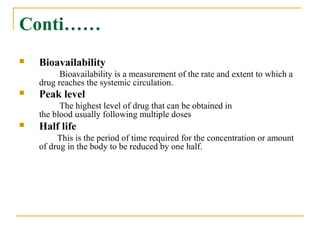
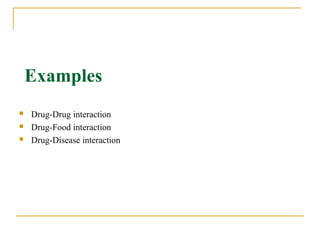
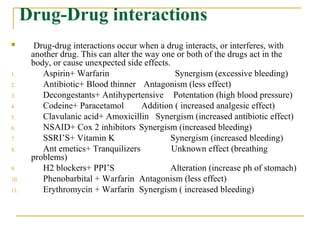
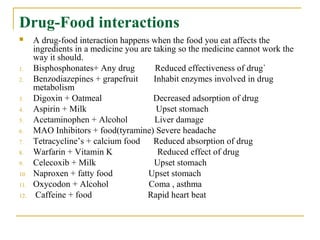
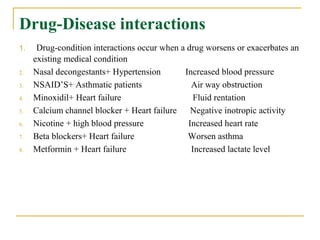

Drug interactions occur when two or more substances administered together alter their effects on the body. There are two main types of drug interactions - pharmacodynamic interactions, which involve drugs acting on the same receptors or tissues, and pharmacokinetic interactions, which alter a drug's absorption, distribution, metabolism, or excretion. Common examples of drug-drug interactions include aspirin increasing the effects of anticoagulants like warfarin and antibiotics affecting blood thinners. Food and disease can also interact with drugs. It is important for pharmacists to monitor for potential interactions and advise patients.


