Dr R P Singh
   Associate Director Extension,
G B Pant University of Agri. & Tech.
            Pantnagar
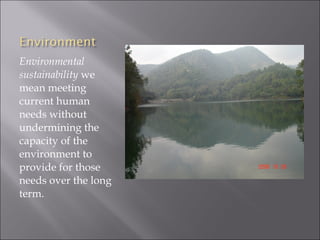
Environmental
sustainability we
mean meeting
current human
needs without
undermining the
capacity of the
environment to
provide for those
needs over the long
term.
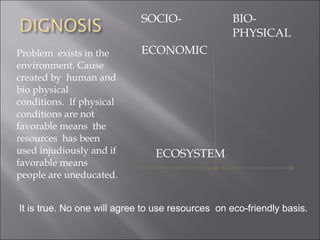
SOCIO-                BIO-
                                                   PHYSICAL
Problem exists in the        ECONOMIC
environment. Cause
created by human and
bio physical
conditions. If physical
conditions are not
favorable means the
resources has been
used injudiously and if         ECOSYSTEM
favorable means
people are uneducated.


It is true. No one will agree to use resources on eco-friendly basis.
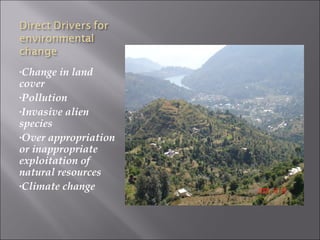
•Change   in land
cover
•Pollution

•Invasive alien
species
•Over appropriation
or inappropriate
exploitation of
natural resources
•Climate change
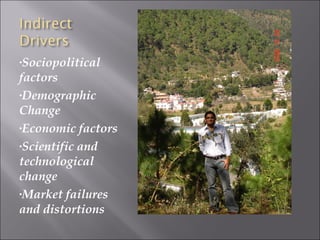
•Sociopolitical
factors
•Demographic
Change
•Economic factors

•Scientific and
technological
change
•Market failures
and distortions
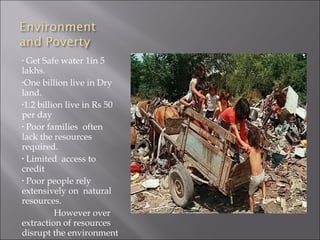
• Get Safe water 1in 5
lakhs.
•One billion live in Dry
land.
•1.2 billion live in Rs 50
per day
• Poor families often
lack the resources
required.
• Limited access to
credit
• Poor people rely
extensively on natural
resources.
          However over
extraction of resources
disrupt the environment
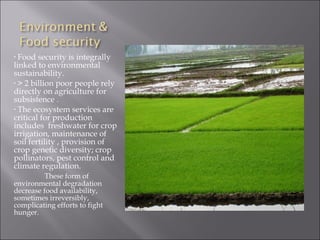
• Food security is integrally
linked to environmental
sustainability.
• > 2 billion poor people rely
directly on agriculture for
subsistence .
• The ecosystem services are
critical for production
includes freshwater for crop
irrigation, maintenance of
soil fertility , provision of
crop genetic diversity; crop
pollinators, pest control and
climate regulation.
          These form of
environmental degradation
decrease food availability,
sometimes irreversibly,
complicating efforts to fight
hunger.
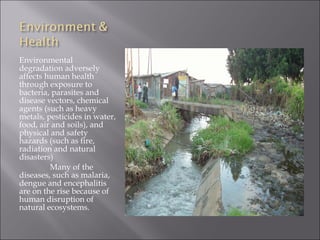
Environmental
degradation adversely
affects human health
through exposure to
bacteria, parasites and
disease vectors, chemical
agents (such as heavy
metals, pesticides in water,
food, air and soils), and
physical and safety
hazards (such as fire,
radiation and natural
disasters)
         Many of the
diseases, such as malaria,
dengue and encephalitis
are on the rise because of
human disruption of
natural ecosystems.
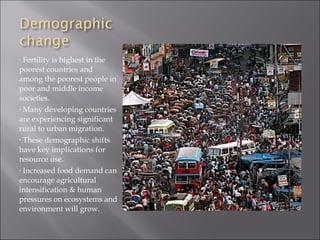
• Fertility is highest in the
poorest countries and
among the poorest people in
poor and middle income
societies.
• Many developing countries

are experiencing significant
rural to urban migration.
• These demographic shifts

have key implications for
resource use.
• Increased food demand can

encourage agricultural
intensification & human
pressures on ecosystems and
environment will grow.
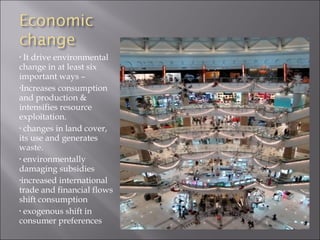
• It drive environmental
change in at least six
important ways –
•Increases consumption
and production &
intensifies resource
exploitation.
• changes in land cover,
its use and generates
waste.
• environmentally
damaging subsidies
•increased international
trade and financial flows
shift consumption
• exogenous shift in
consumer preferences
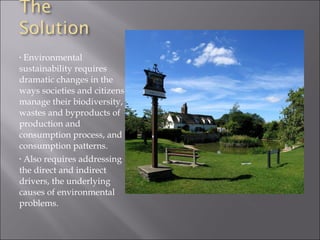
• Environmental
sustainability requires
dramatic changes in the
ways societies and citizens
manage their biodiversity,
wastes and byproducts of
production and
consumption process, and
consumption patterns.
• Also requires addressing

the direct and indirect
drivers, the underlying
causes of environmental
problems.
R P Singh
Associate Director Extension
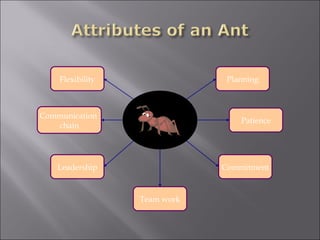
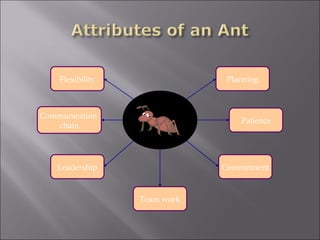
Flexibility                Planning


Communication
                                  Patience
   chain


    Leadership                Commitment


                  Team work
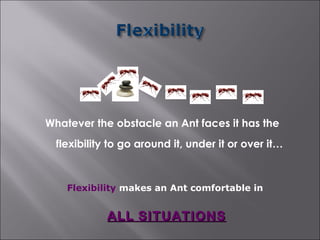
Whatever the obstacle an Ant faces it has the
  flexibility to go around it, under it or over it…


    Flexibility makes an Ant comfortable in


             ALL SITUATIONS
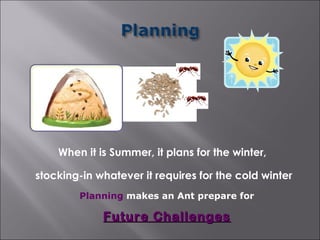
When it is Summer, it plans for the winter,

stocking-in whatever it requires for the cold winter
        Planning makes an Ant prepare for

             Future Challenges
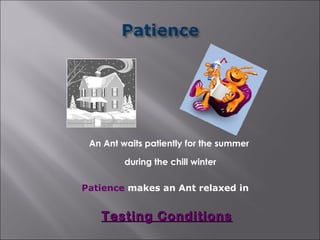
An Ant waits patiently for the summer

         during the chill winter

Patience makes an Ant relaxed in


   Testing Conditions
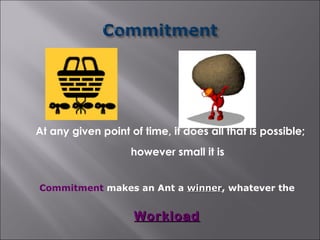
At any given point of time, it does all that is possible;
                    however small it is


Commitment makes an Ant a winner, whatever the
                          winner


                    Workload
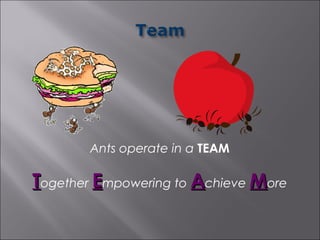
Ants operate in a TEAM

Together Empowering to Achieve More
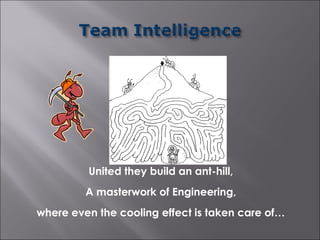
United they build an ant-hill,
         A masterwork of Engineering,
where even the cooling effect is taken care of…
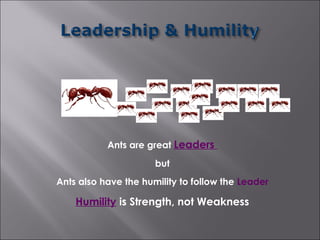
Ants are great Leaders
                      but
Ants also have the humility to follow the Leader

    Humility is Strength, not Weakness
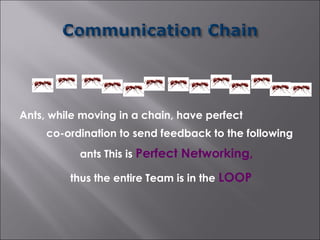
Ants, while moving in a chain, have perfect
     co-ordination to send feedback to the following
           ants This is Perfect Networking,

         thus the entire Team is in the LOOP
Flexibility                Planning


Communication
                                  Patience
   chain


    Leadership                Commitment


                  Team work
Don't Succumb to pressure.
     Remember that
        Pressure
       is what turns
   a lump of coal into a
       DIAMOND
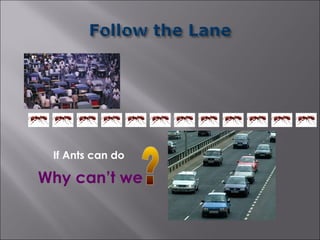
If Ants can do

Why can’t we
Train, recruit and retain environment experts
    Secure sufficient funding for environmental institutions.
    Reform government institutions and improve interagency coordination
    Improve governance and gender equality.
    Account for the cost of environmental degradation in national accounts.
    Introduce payment systems for ecosystem services and tax reform.
    Phase out environment damaging subsidies.
    Improve national and international regulatory framework.
    Establish mechanisms for science and technology advices.
    Train decision makers for environmental management.
    Provide public access to information.
    Improve extension, training and services.
    Science and technology must be at the center of any strategy for
       environmental sustainability.
Universities and other institutions of higher learning should apply
themselves directly to sustainability goals.
• Increase   use of sustainable agriculture techniques to
preserve natural assets.
• Increase real income of informal forest sector of atleast 200
percent by 2020.
• Protection and restoration of ecologically viable
representative areas of all major forest, shrub land and
pasture vegetation types and their biodiversity.
• Slowing fresh water degradation requires reducing
demand, especially in cropping systems; controlling
pollution; and protecting aquatic environments.
• Action should be taken to reduce exposure to toxic
chemicals and child mortality caused by indoor air pollution
and water born diseases.
THANK YOU

Climate change in social perspective

  • 1.
    Dr R PSingh Associate Director Extension, G B Pant University of Agri. & Tech. Pantnagar
  • 2.
    Environmental sustainability we mean meeting currenthuman needs without undermining the capacity of the environment to provide for those needs over the long term.
  • 3.
    SOCIO- BIO- PHYSICAL Problem exists in the ECONOMIC environment. Cause created by human and bio physical conditions. If physical conditions are not favorable means the resources has been used injudiously and if ECOSYSTEM favorable means people are uneducated. It is true. No one will agree to use resources on eco-friendly basis.
  • 4.
    •Change in land cover •Pollution •Invasive alien species •Over appropriation or inappropriate exploitation of natural resources •Climate change
  • 5.
  • 6.
    • Get Safewater 1in 5 lakhs. •One billion live in Dry land. •1.2 billion live in Rs 50 per day • Poor families often lack the resources required. • Limited access to credit • Poor people rely extensively on natural resources. However over extraction of resources disrupt the environment
  • 7.
    • Food securityis integrally linked to environmental sustainability. • > 2 billion poor people rely directly on agriculture for subsistence . • The ecosystem services are critical for production includes freshwater for crop irrigation, maintenance of soil fertility , provision of crop genetic diversity; crop pollinators, pest control and climate regulation. These form of environmental degradation decrease food availability, sometimes irreversibly, complicating efforts to fight hunger.
  • 8.
    Environmental degradation adversely affects humanhealth through exposure to bacteria, parasites and disease vectors, chemical agents (such as heavy metals, pesticides in water, food, air and soils), and physical and safety hazards (such as fire, radiation and natural disasters) Many of the diseases, such as malaria, dengue and encephalitis are on the rise because of human disruption of natural ecosystems.
  • 9.
    • Fertility ishighest in the poorest countries and among the poorest people in poor and middle income societies. • Many developing countries are experiencing significant rural to urban migration. • These demographic shifts have key implications for resource use. • Increased food demand can encourage agricultural intensification & human pressures on ecosystems and environment will grow.
  • 10.
    • It driveenvironmental change in at least six important ways – •Increases consumption and production & intensifies resource exploitation. • changes in land cover, its use and generates waste. • environmentally damaging subsidies •increased international trade and financial flows shift consumption • exogenous shift in consumer preferences
  • 11.
    • Environmental sustainability requires dramaticchanges in the ways societies and citizens manage their biodiversity, wastes and byproducts of production and consumption process, and consumption patterns. • Also requires addressing the direct and indirect drivers, the underlying causes of environmental problems.
  • 12.
    R P Singh AssociateDirector Extension
  • 13.
    Flexibility Planning Communication Patience chain Leadership Commitment Team work
  • 14.
    Whatever the obstaclean Ant faces it has the flexibility to go around it, under it or over it… Flexibility makes an Ant comfortable in ALL SITUATIONS
  • 15.
    When it isSummer, it plans for the winter, stocking-in whatever it requires for the cold winter Planning makes an Ant prepare for Future Challenges
  • 16.
    An Ant waitspatiently for the summer during the chill winter Patience makes an Ant relaxed in Testing Conditions
  • 17.
    At any givenpoint of time, it does all that is possible; however small it is Commitment makes an Ant a winner, whatever the winner Workload
  • 18.
    Ants operate ina TEAM Together Empowering to Achieve More
  • 19.
    United they buildan ant-hill, A masterwork of Engineering, where even the cooling effect is taken care of…
  • 20.
    Ants are greatLeaders but Ants also have the humility to follow the Leader Humility is Strength, not Weakness
  • 21.
    Ants, while movingin a chain, have perfect co-ordination to send feedback to the following ants This is Perfect Networking, thus the entire Team is in the LOOP
  • 22.
    Flexibility Planning Communication Patience chain Leadership Commitment Team work
  • 23.
    Don't Succumb topressure. Remember that Pressure is what turns a lump of coal into a DIAMOND
  • 24.
    If Ants cando Why can’t we
  • 25.
    Train, recruit andretain environment experts Secure sufficient funding for environmental institutions. Reform government institutions and improve interagency coordination Improve governance and gender equality. Account for the cost of environmental degradation in national accounts. Introduce payment systems for ecosystem services and tax reform. Phase out environment damaging subsidies. Improve national and international regulatory framework. Establish mechanisms for science and technology advices. Train decision makers for environmental management. Provide public access to information. Improve extension, training and services. Science and technology must be at the center of any strategy for environmental sustainability. Universities and other institutions of higher learning should apply themselves directly to sustainability goals.
  • 26.
    • Increase use of sustainable agriculture techniques to preserve natural assets. • Increase real income of informal forest sector of atleast 200 percent by 2020. • Protection and restoration of ecologically viable representative areas of all major forest, shrub land and pasture vegetation types and their biodiversity. • Slowing fresh water degradation requires reducing demand, especially in cropping systems; controlling pollution; and protecting aquatic environments. • Action should be taken to reduce exposure to toxic chemicals and child mortality caused by indoor air pollution and water born diseases.
  • 27.