Drought Risk Mitigation and Management 09 Aug’11Climate Change and Drought Scientific and Policy IssuesDr. N. SaiBhaskarReddyChief Executive Officer [CEO], GEOECOLOGY ENERGY ORGANISATION [GEO] http://e-geo.org_______________________________Center for Disaster Preparedness (CDP)Dr. MCR HRD Institute of AP
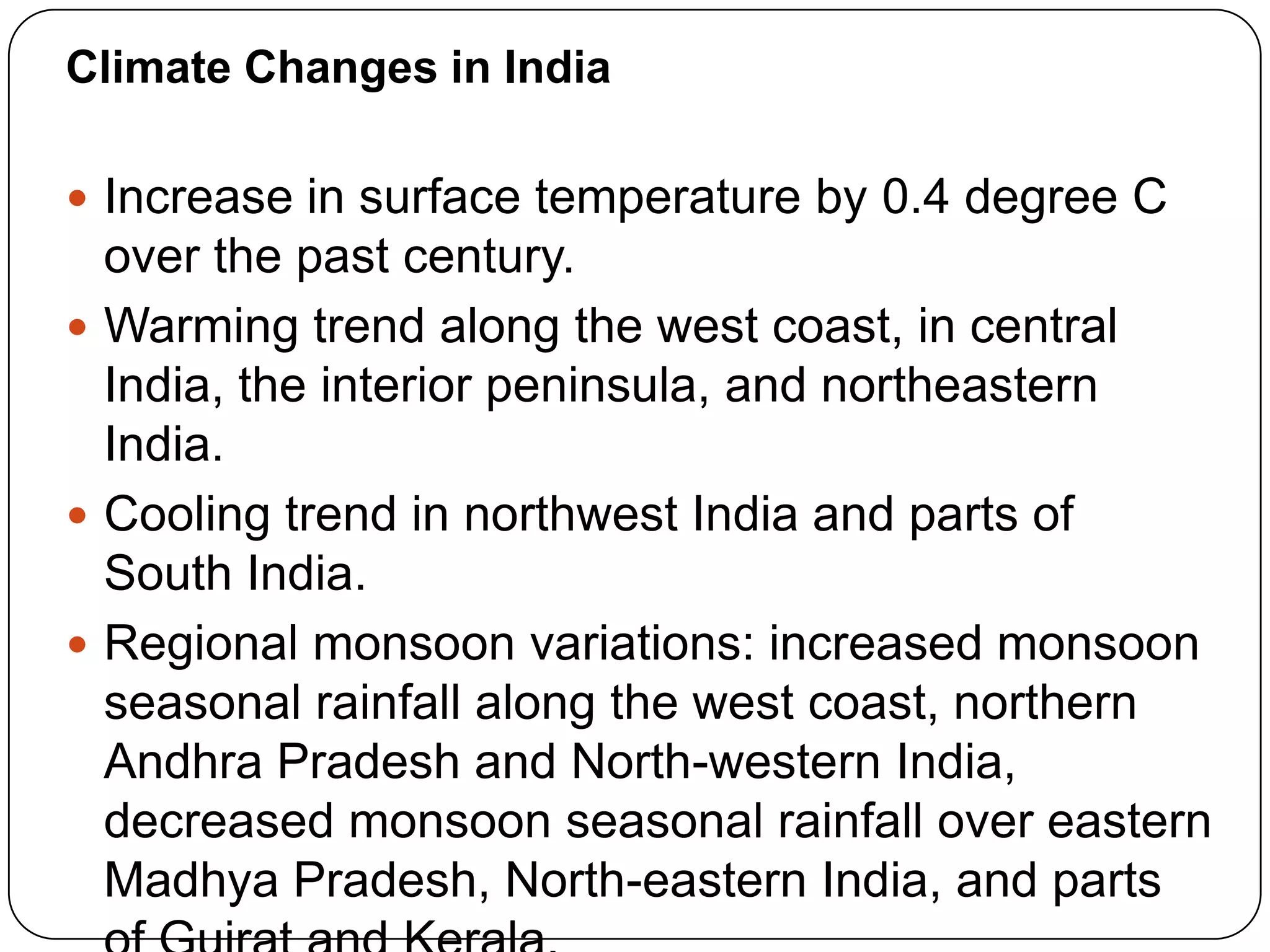
Climate Changes in IndiaIncrease in surface temperature by 0.4 degree C over the past century.  Warming trend along the west coast, in central India, the interior peninsula, and northeastern India.  Cooling trend in northwest India and parts of South India.Regional monsoon variations: increased monsoon seasonal rainfall along the west coast, northern Andhra Pradesh and North-western India, decreased monsoon seasonal rainfall over eastern Madhya Pradesh, North-eastern India, and parts of Gujrat and Kerala.
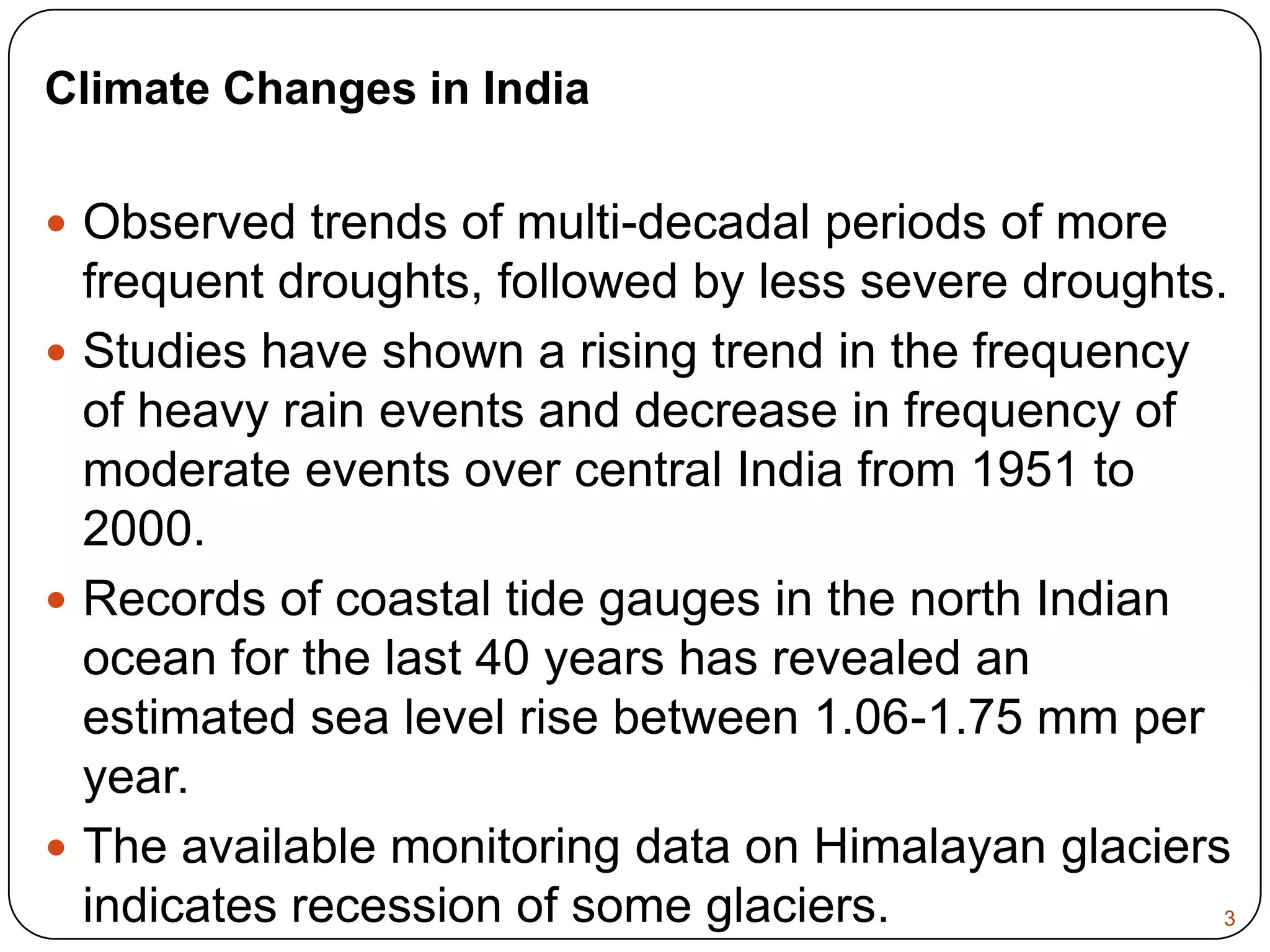
Climate Changes in IndiaObserved trends of multi-decadal periods of more frequent droughts, followed by less severe droughts. Studies have shown a rising trend in the frequency of heavy rain events and decrease in frequency of moderate events over central India from 1951 to 2000. Records of coastal tide gauges in the north Indian ocean for the last 40 years has revealed an estimated sea level rise between 1.06-1.75 mm per year. The available monitoring data on Himalayan glaciers indicates recession of some glaciers.3
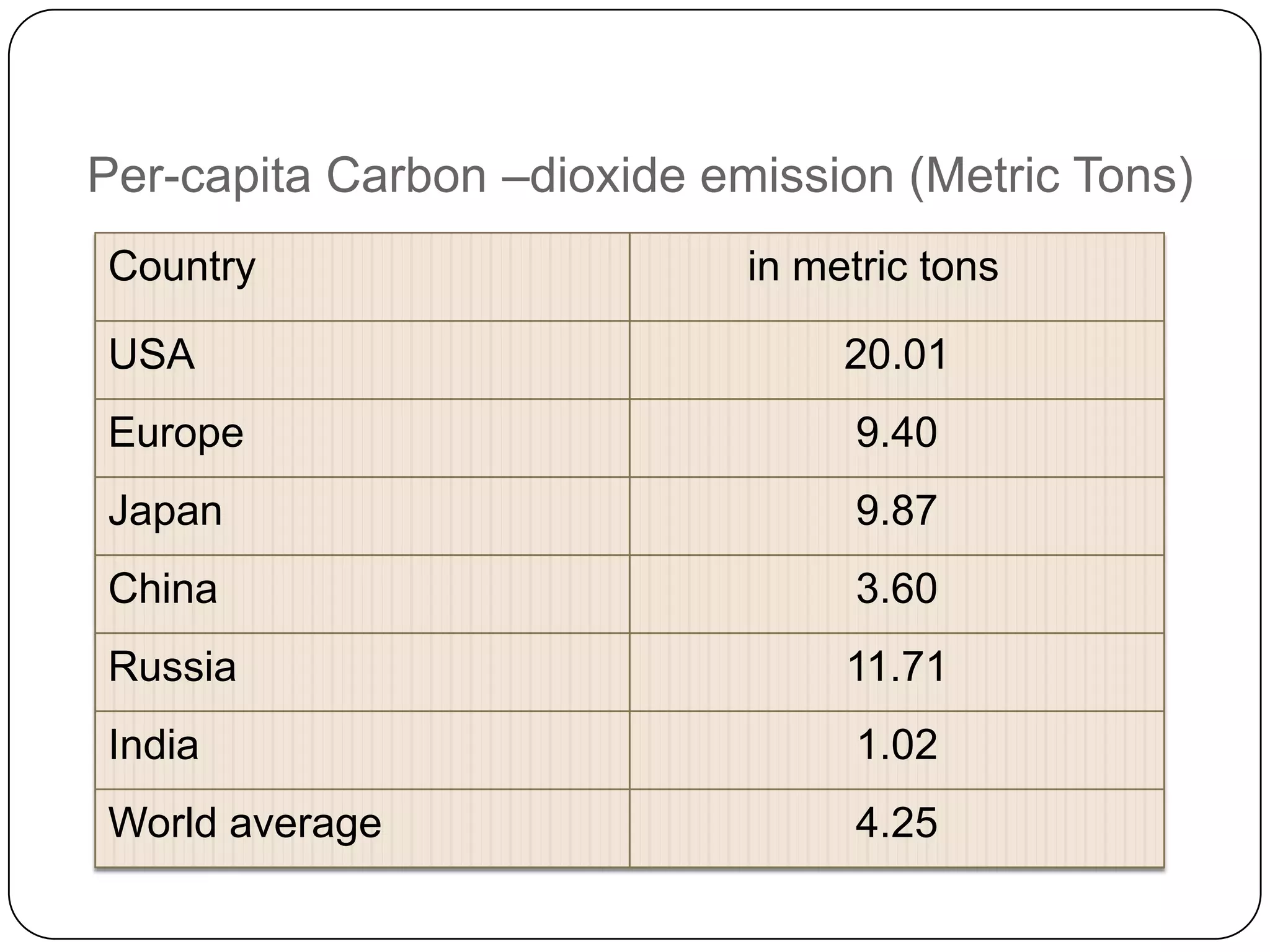
Per-capita Carbon –dioxide emission (Metric Tons)
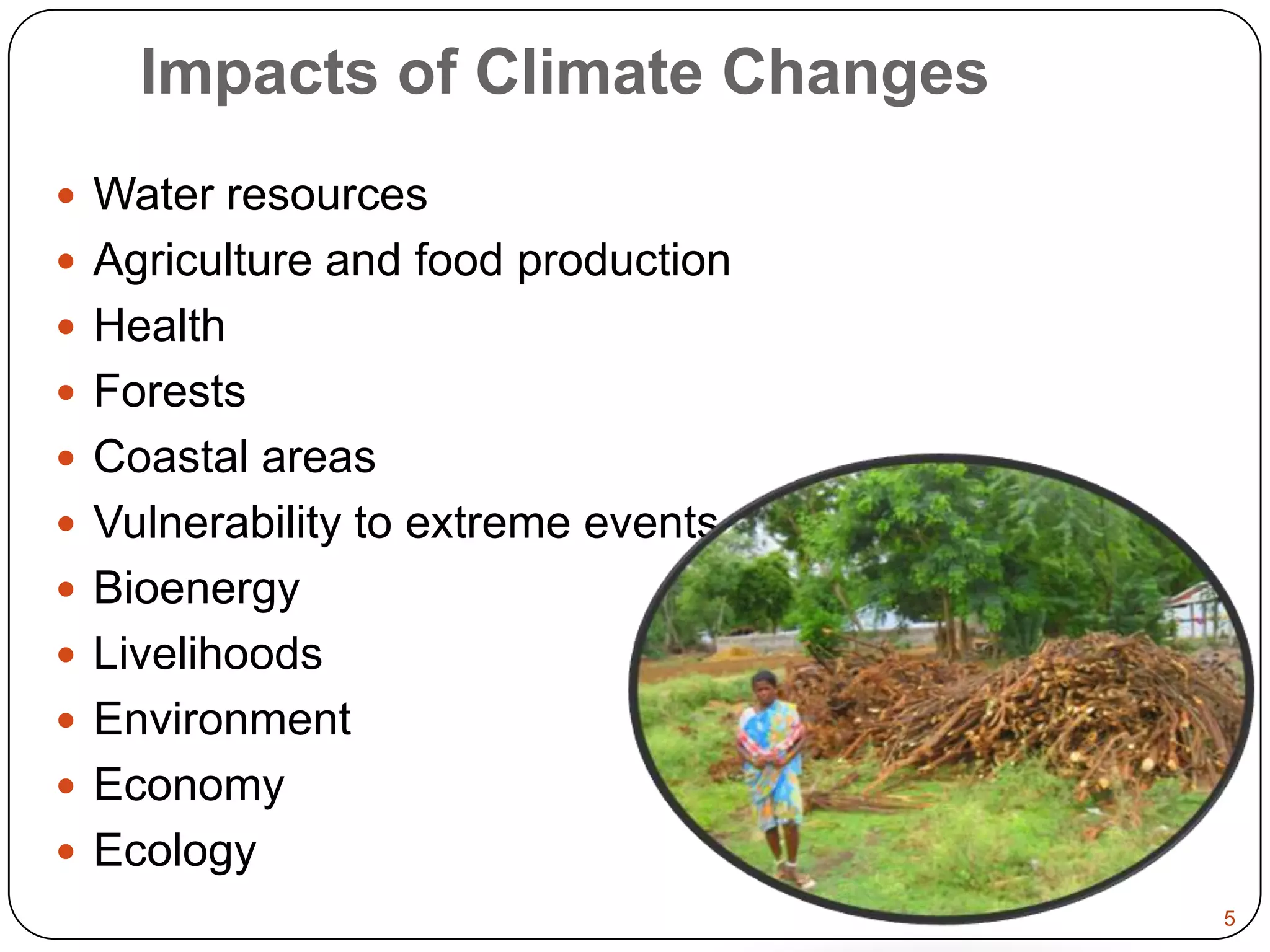
Impacts of Climate ChangesWater resourcesAgriculture and food productionHealthForestsCoastal areas Vulnerability to extreme eventsBioenergyLivelihoodsEnvironmentEconomyEcology5
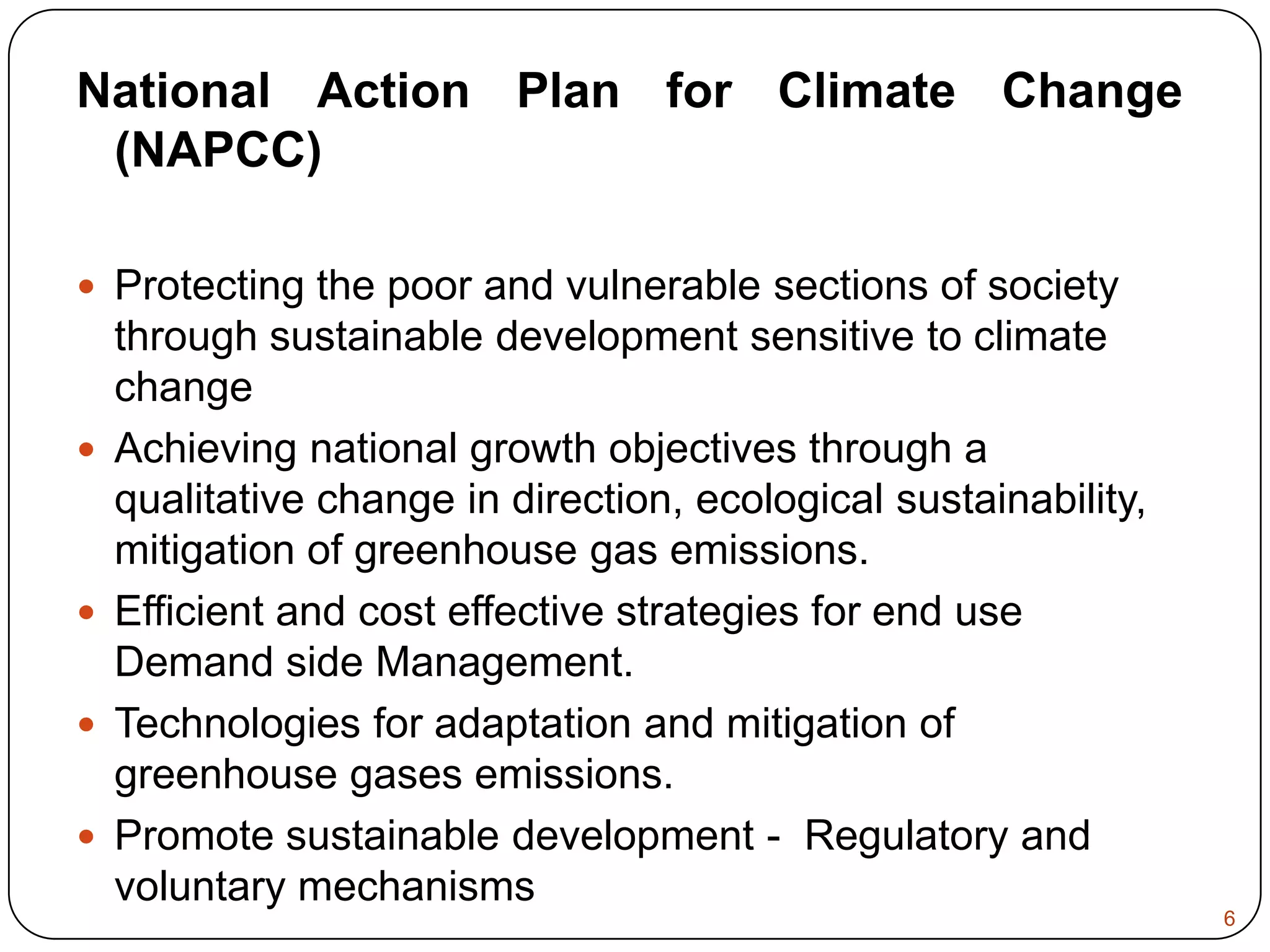
National Action Plan for Climate Change (NAPCC) Protecting the poor and vulnerable sections of society through sustainable development sensitive to climate changeAchieving national growth objectives through a qualitative change in direction, ecological sustainability, mitigation of greenhouse gas emissions.Efficient and cost effective strategies for end use Demand side Management.Technologies for adaptation and mitigation of greenhouse gases emissions.Promote sustainable development -  Regulatory and voluntary mechanisms 6
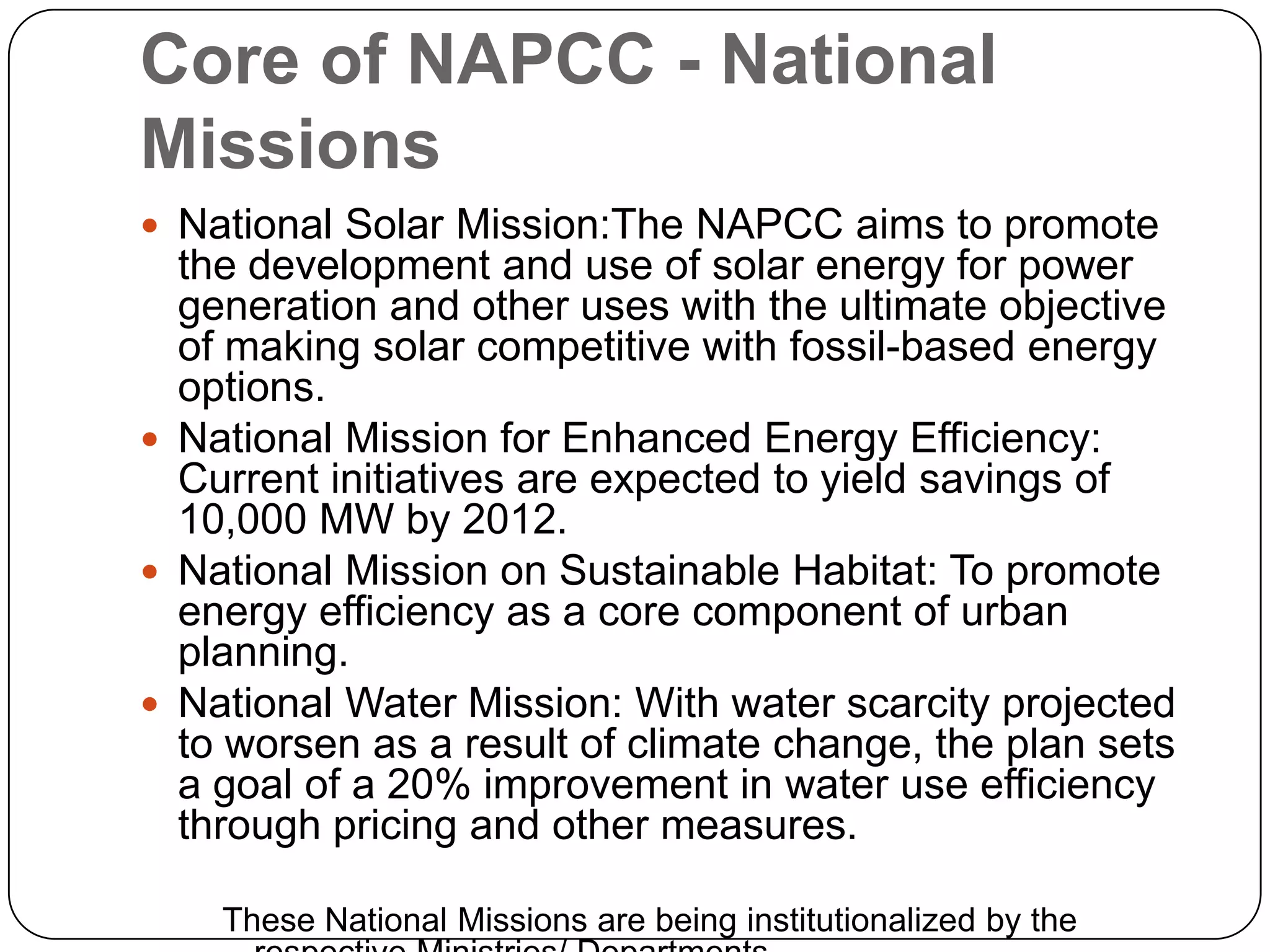
Core of NAPCC - National MissionsNational Solar Mission:TheNAPCC aims to promote the development and use of solar energy for power generation and other uses with the ultimate objective of making solar competitive with fossil-based energy options.National Mission for Enhanced Energy Efficiency: Current initiatives are expected to yield savings of 10,000 MW by 2012.National Mission on Sustainable Habitat: To promote energy efficiency as a core component of urban planning. National Water Mission: With water scarcity projected to worsen as a result of climate change, the plan sets a goal of a 20% improvement in water use efficiency through pricing and other measures.These National Missions are being institutionalized by the respective Ministries/ Departments.
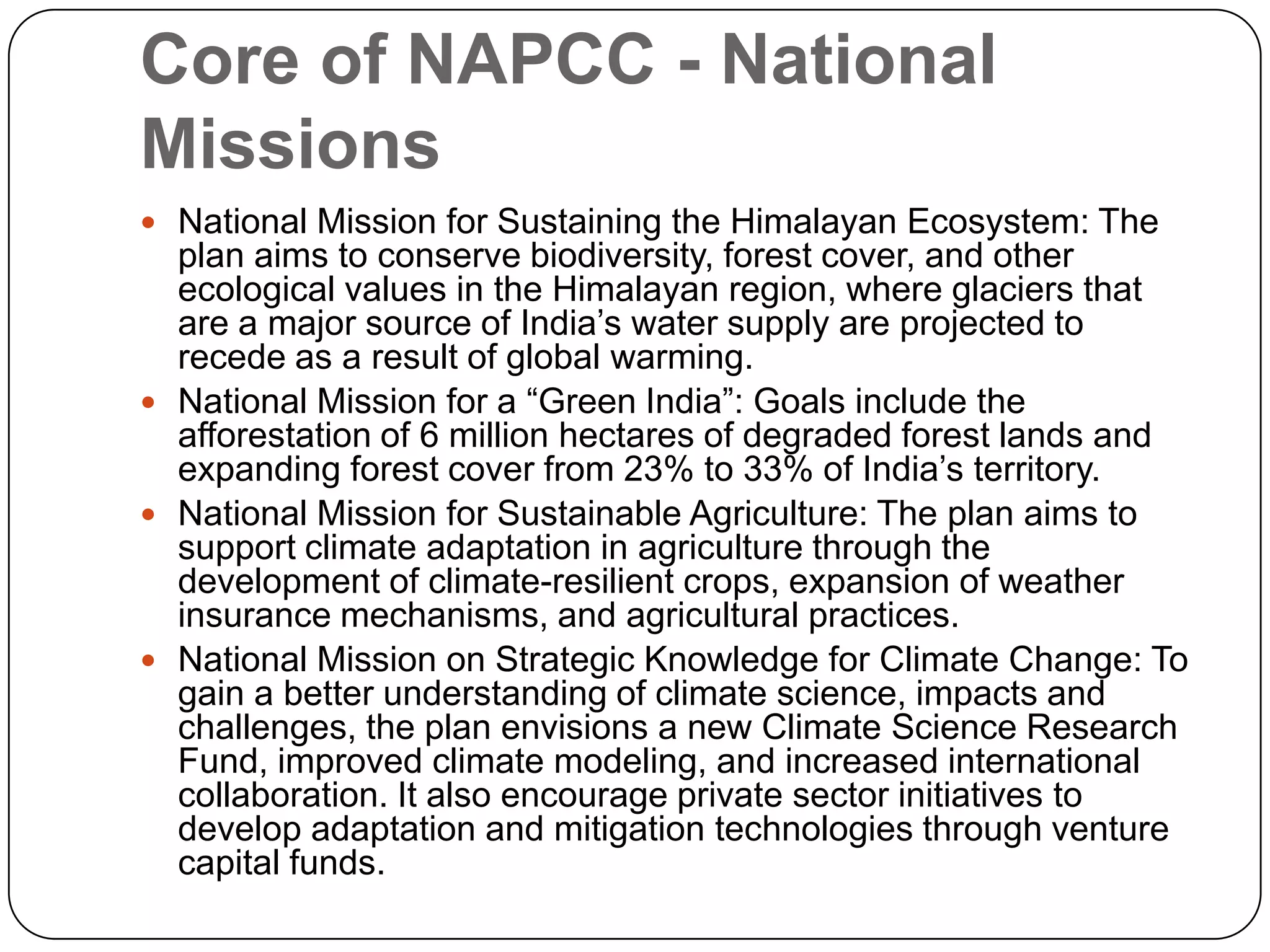
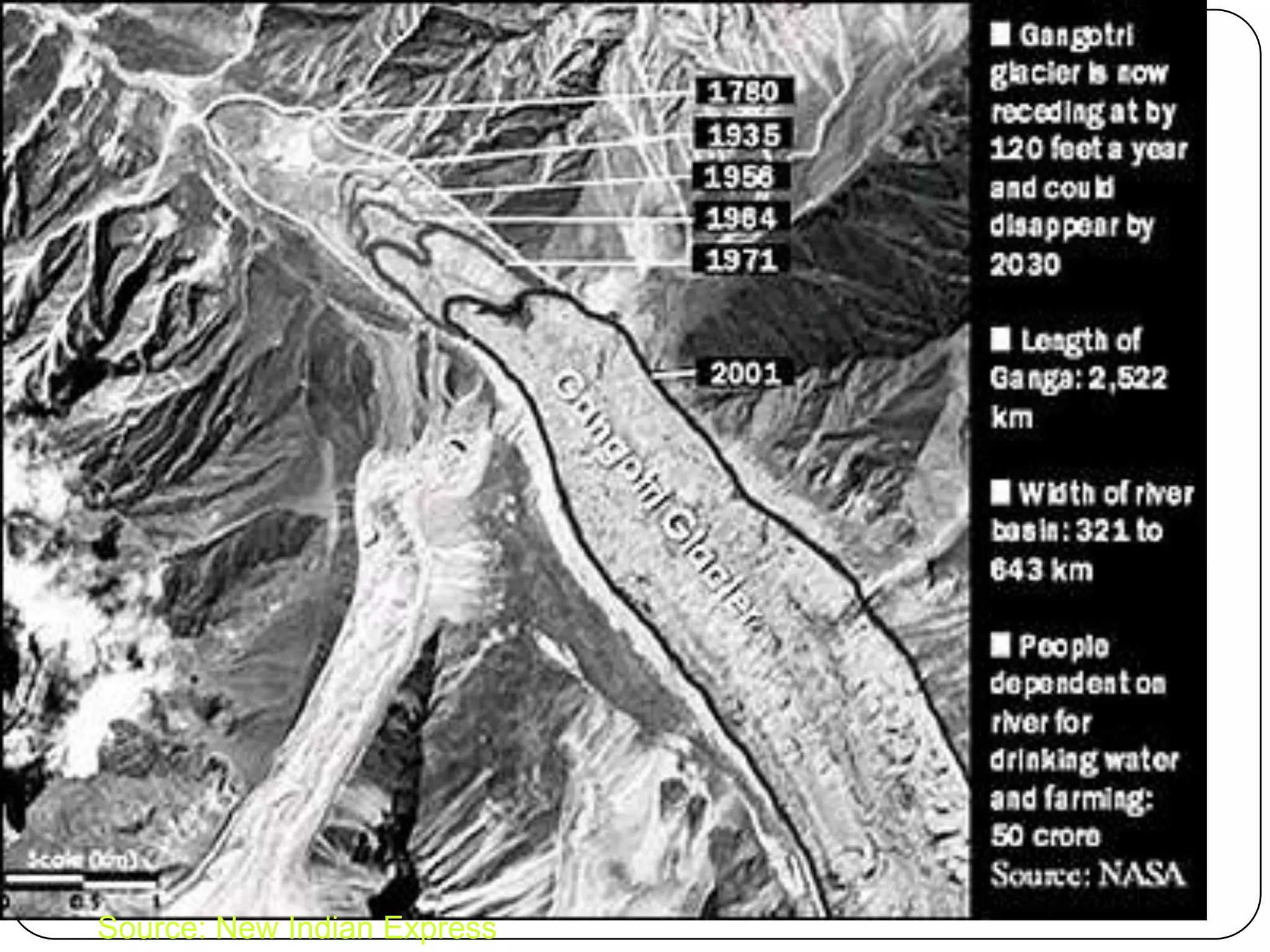
Core of NAPCC - National MissionsNational Mission for Sustaining the Himalayan Ecosystem: The plan aims to conserve biodiversity, forest cover, and other ecological values in the Himalayan region, where glaciers that are a major source of India’s water supply are projected to recede as a result of global warming.National Mission for a “Green India”: Goals include the afforestation of 6 million hectares of degraded forest lands and expanding forest cover from 23% to 33% of India’s territory.National Mission for Sustainable Agriculture: The plan aims to support climate adaptation in agriculture through the development of climate-resilient crops, expansion of weather insurance mechanisms, and agricultural practices.National Mission on Strategic Knowledge for Climate Change: To gain a better understanding of climate science, impacts and challenges, the plan envisions a new Climate Science Research Fund, improved climate modeling, and increased international collaboration. It also encourage private sector initiatives to develop adaptation and mitigation technologies through venture capital funds.
Source: New Indian Express
Climate Change will put additional stress in rural areas
Rural Livlihoods - ResourcesThe livelihoods of the rural poor are directly dependent on environmental resources.Are vulnerable to weather and climate variability
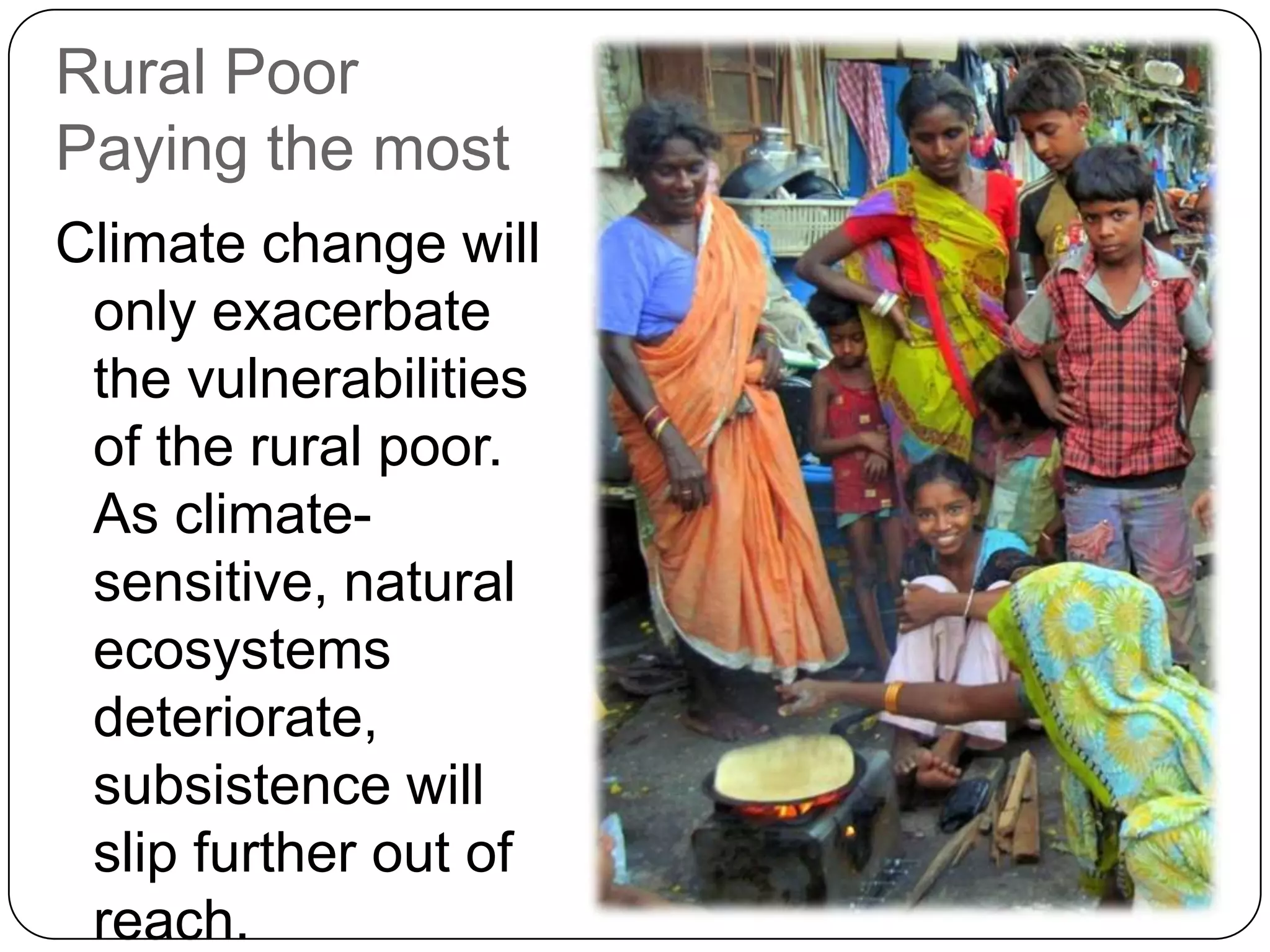
Rural Poor Paying the mostClimate change will only exacerbate the vulnerabilities of the rural poor.  As climate-sensitive, natural ecosystems deteriorate, subsistence will slip further out of reach.
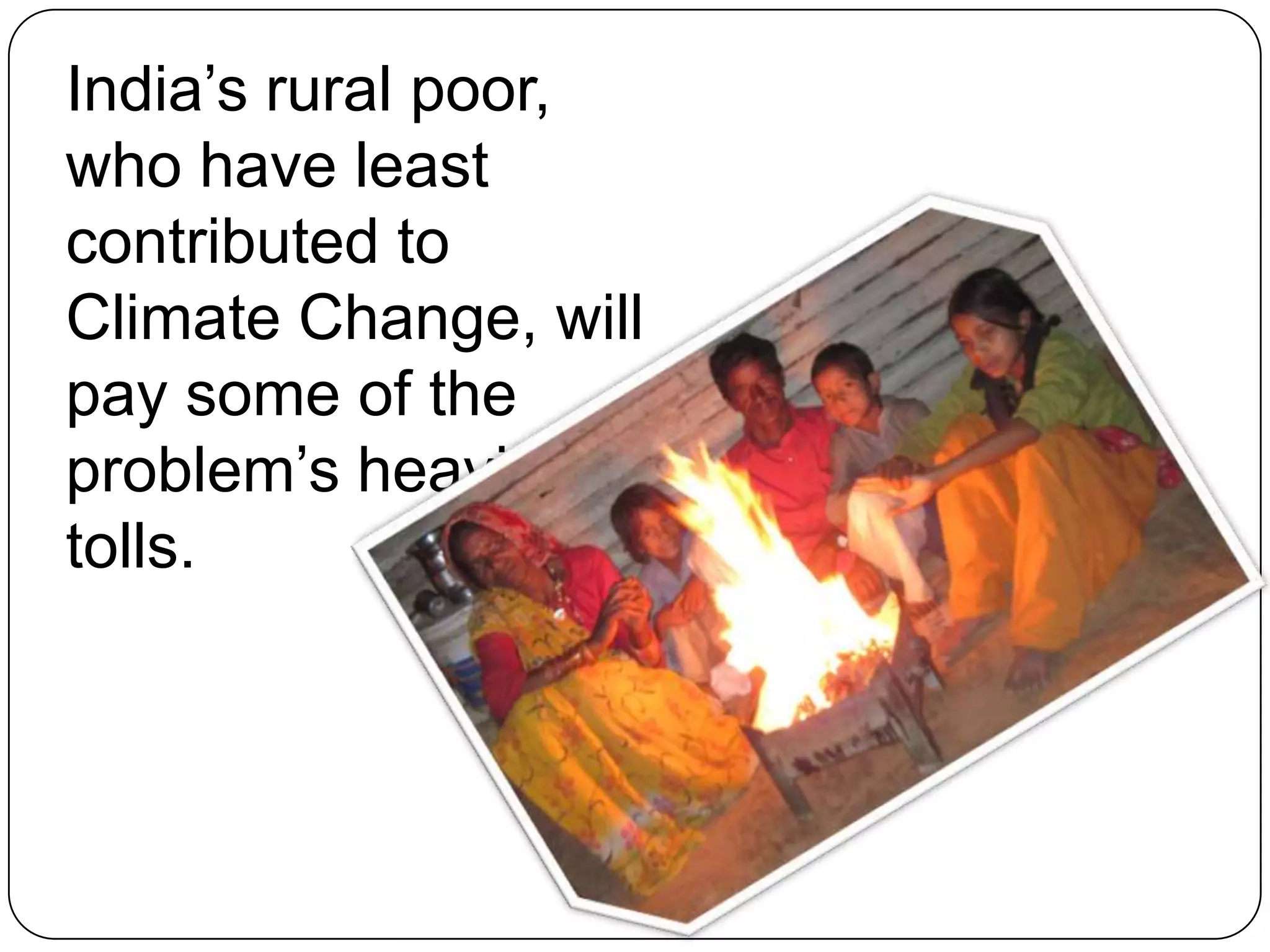
India’s rural poor, who have least contributed to Climate Change, will pay some of the problem’s heaviest tolls.
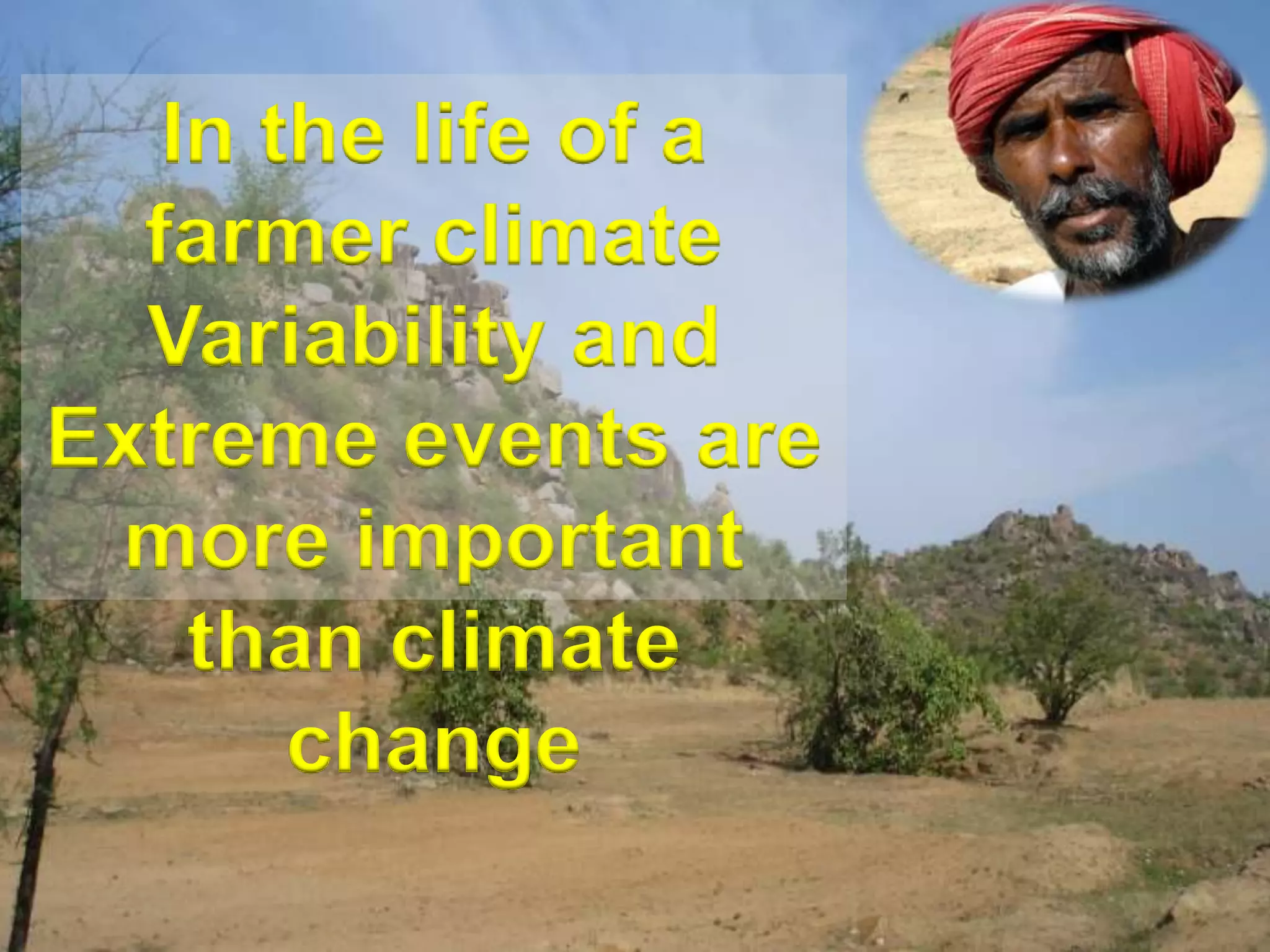
In the life of a farmer climate Variability and Extreme events are more important than climate change
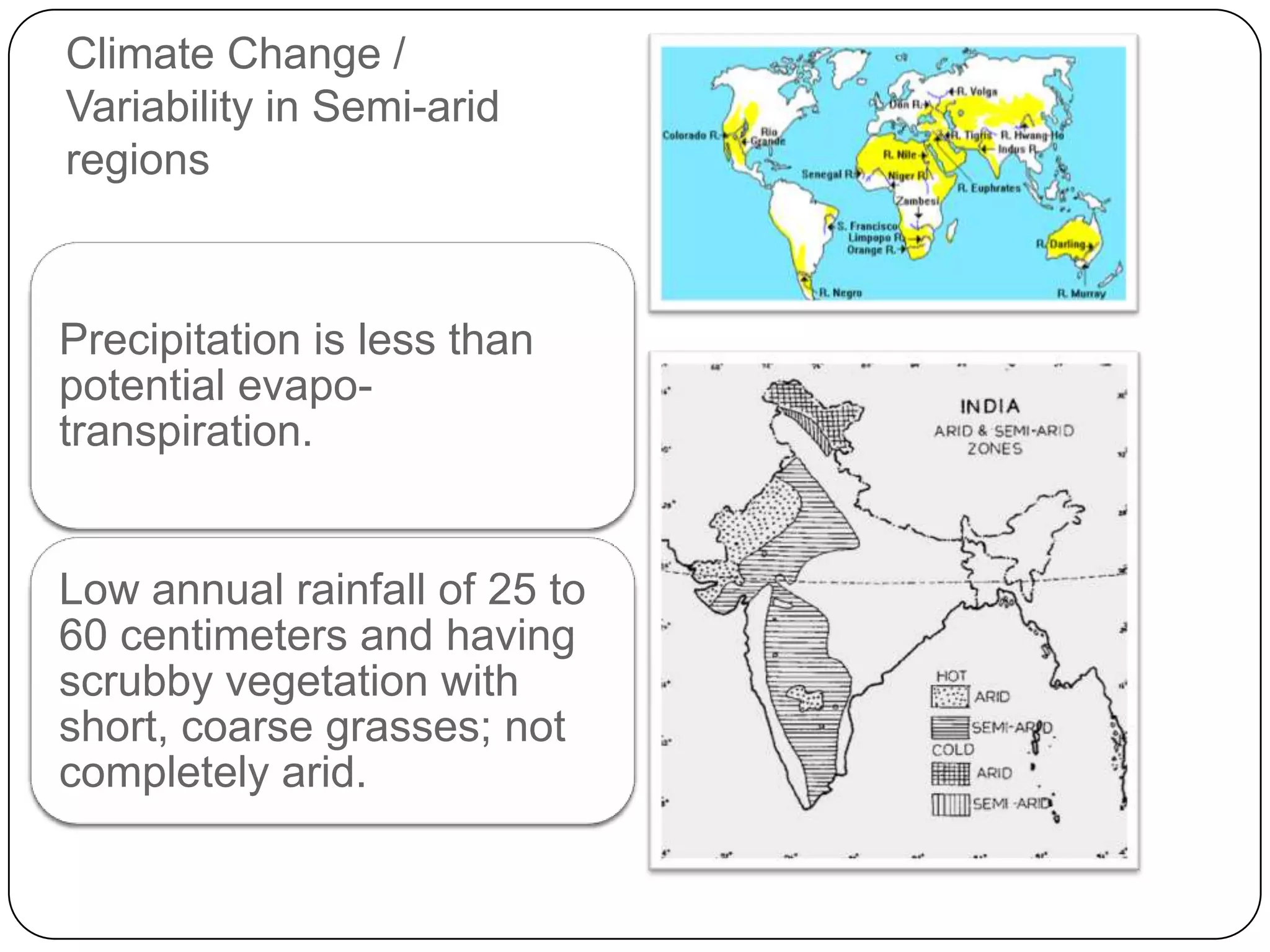
Climate Change / Variability in Semi-arid regions
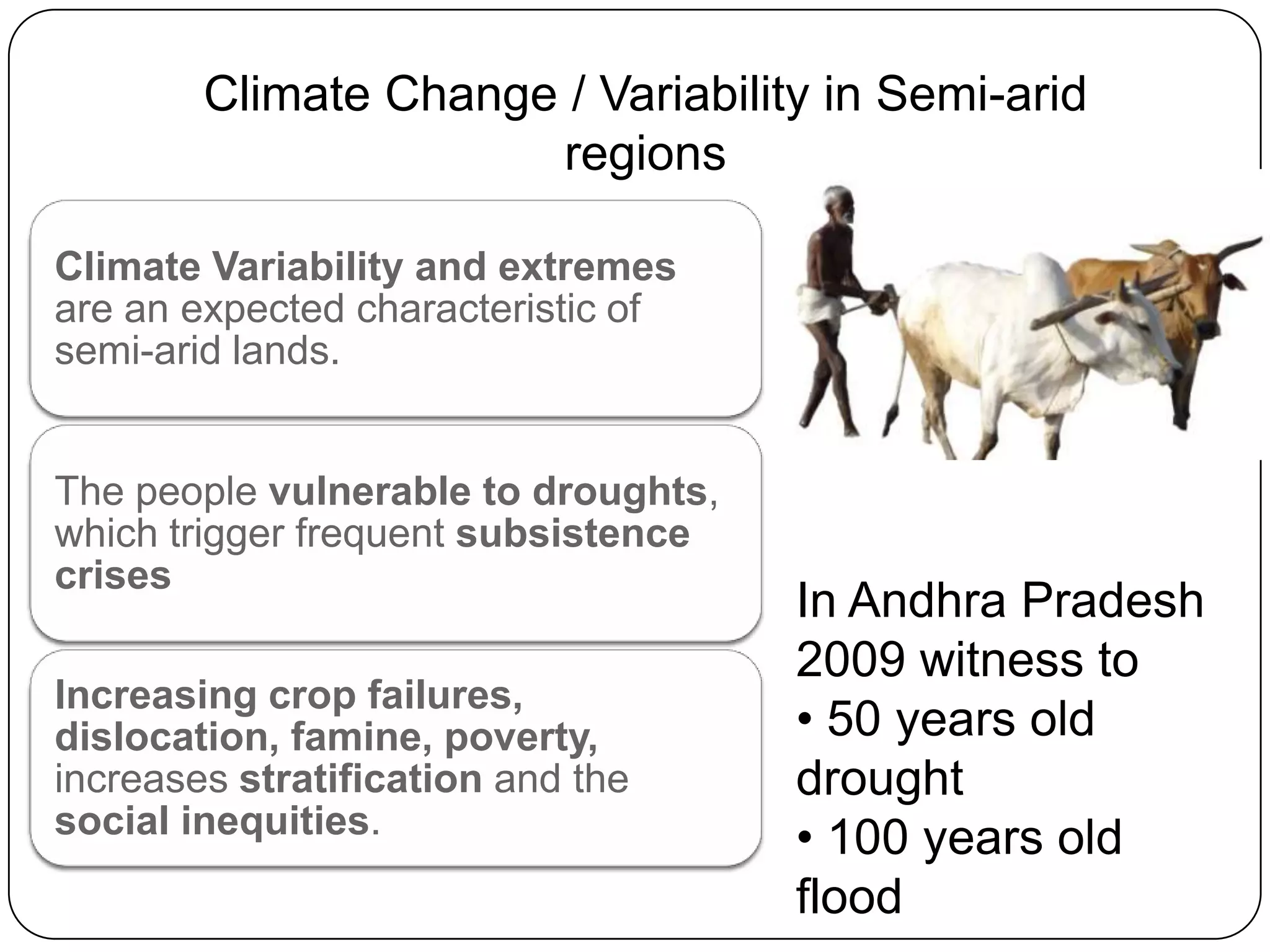
Climate Change / Variability in Semi-arid regions In Andhra Pradesh 2009 witness to 50 years old drought
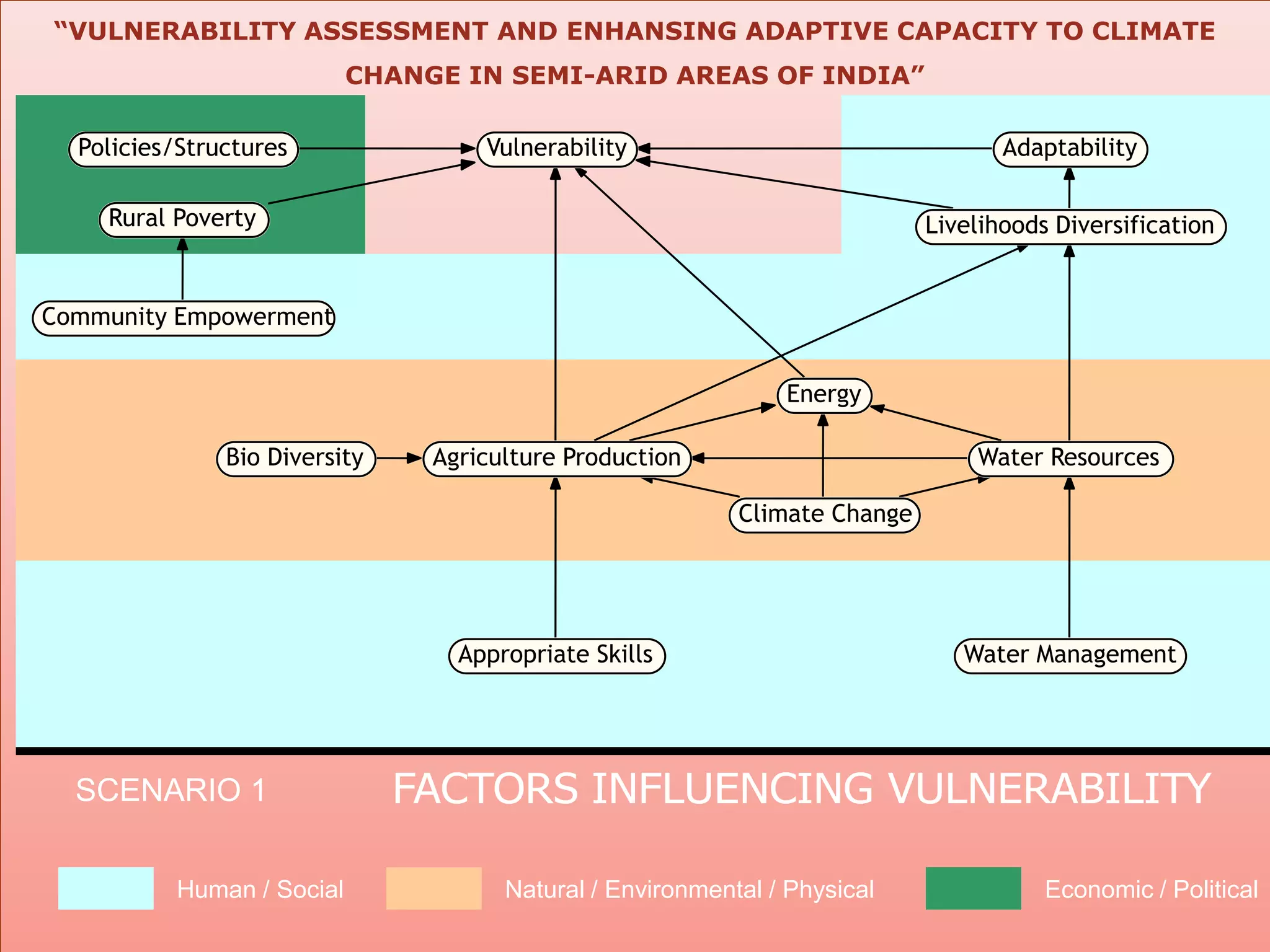
100 years old floodAFPRO17“VULNERABILITY ASSESSMENT AND ENHANSING ADAPTIVE CAPACITY TO CLIMATE CHANGE IN SEMI-ARID AREAS OF INDIA” Policies/StructuresVulnerabilityAdaptabilityRural PovertyLivelihoods DiversificationCommunity EmpowermentEnergyAgriculture ProductionWater ResourcesBio DiversitySCENARIO 1FACTORS INFLUENCING VULNERABILITYClimate ChangeHuman / SocialNatural / Environmental / PhysicalEconomic / PoliticalAppropriate SkillsWater Management
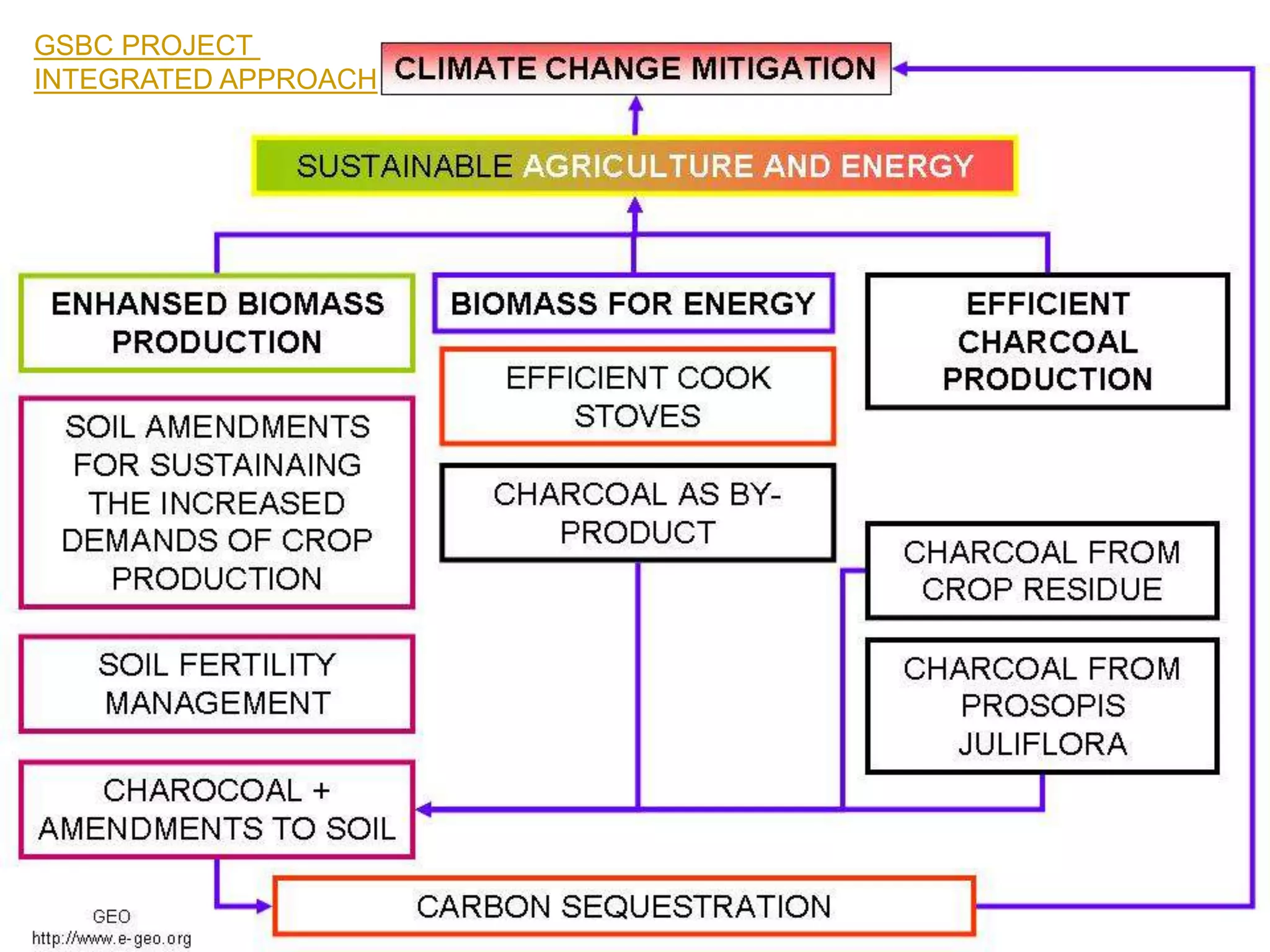
GSBC PROJECT INTEGRATED APPROACH
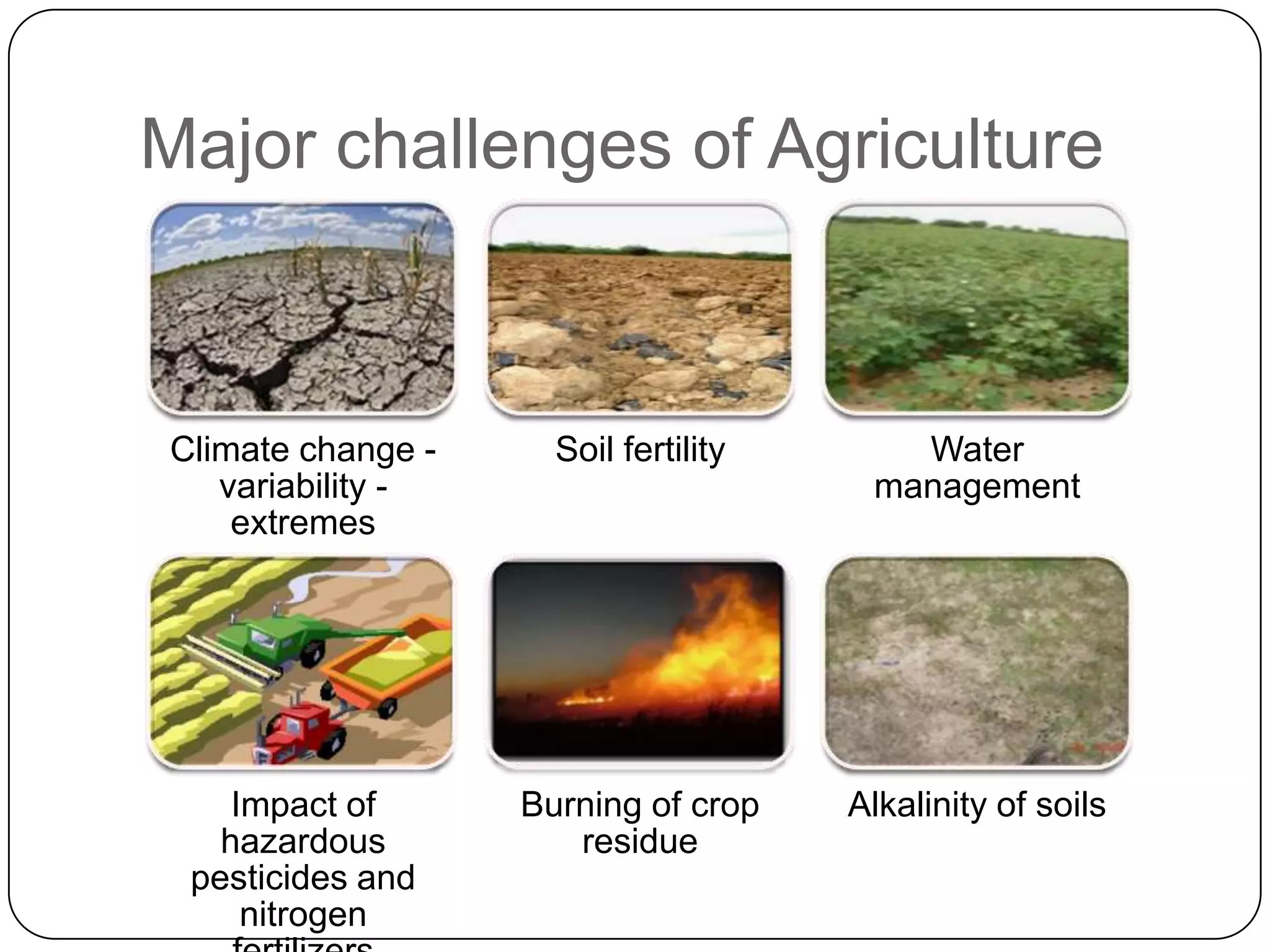
Major challenges of Agriculture
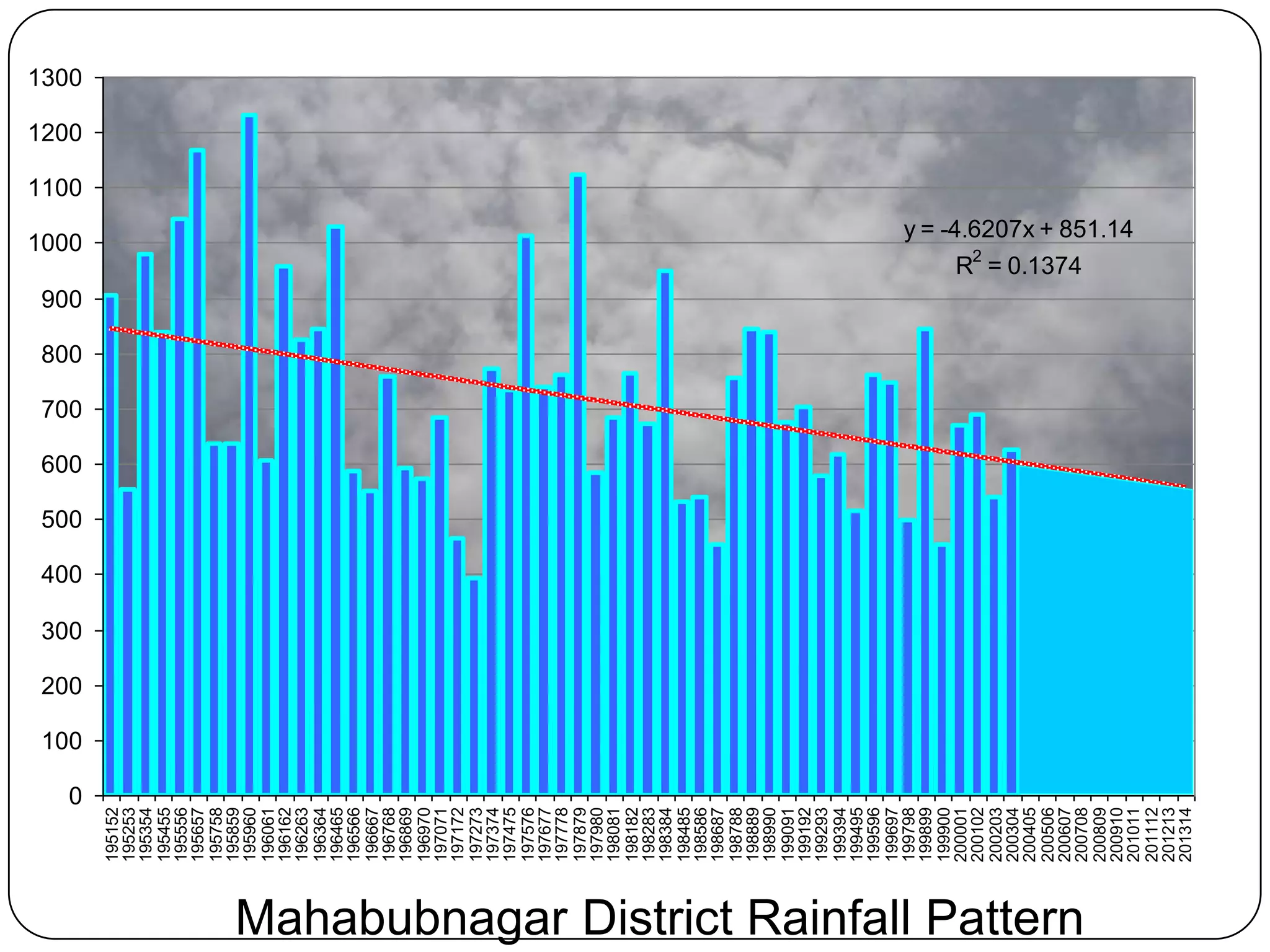
Mahabubnagar District Rainfall Pattern
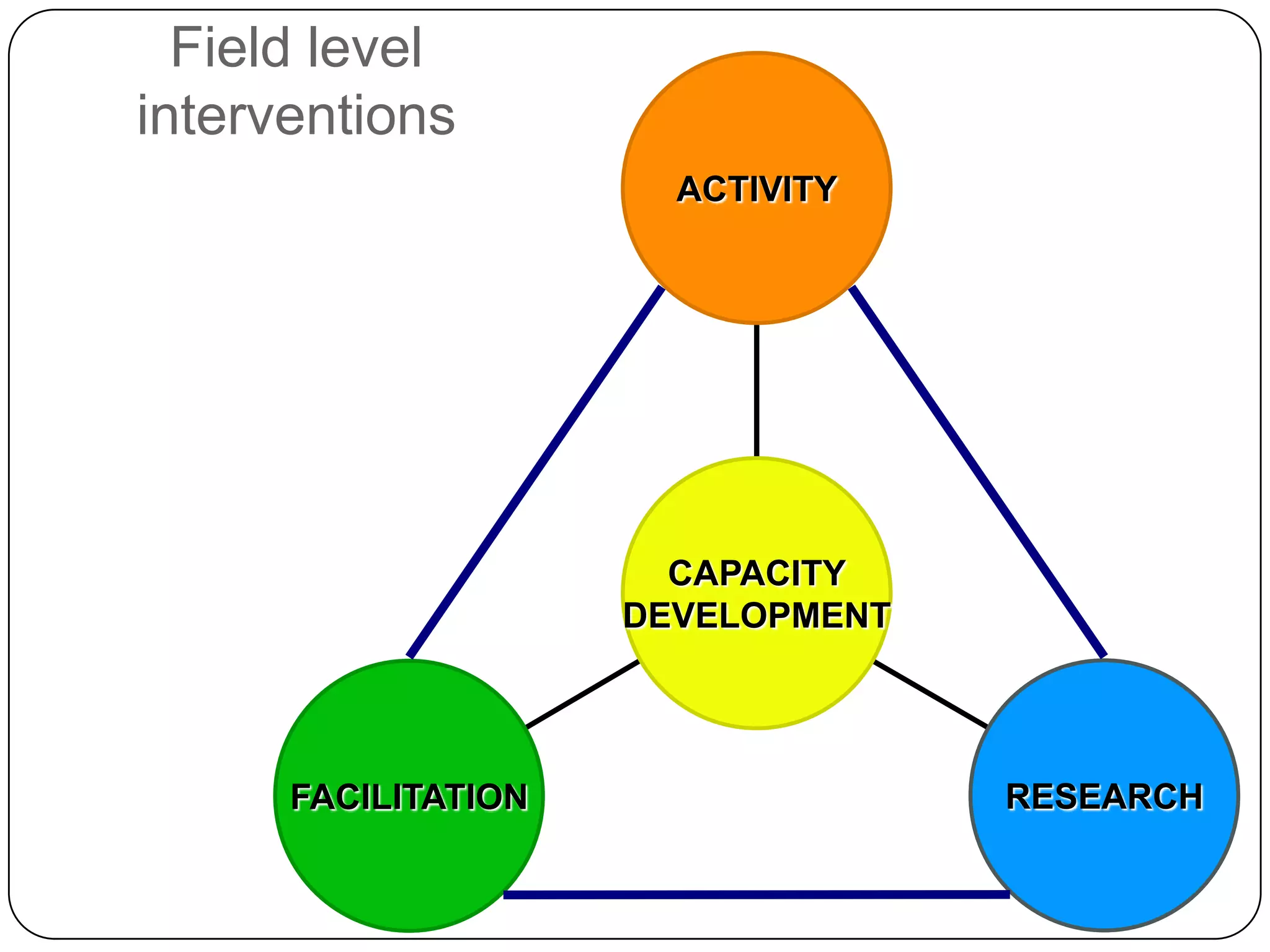
Field level interventionsACTIVITYCAPACITYDEVELOPMENTRESEARCHFACILITATION
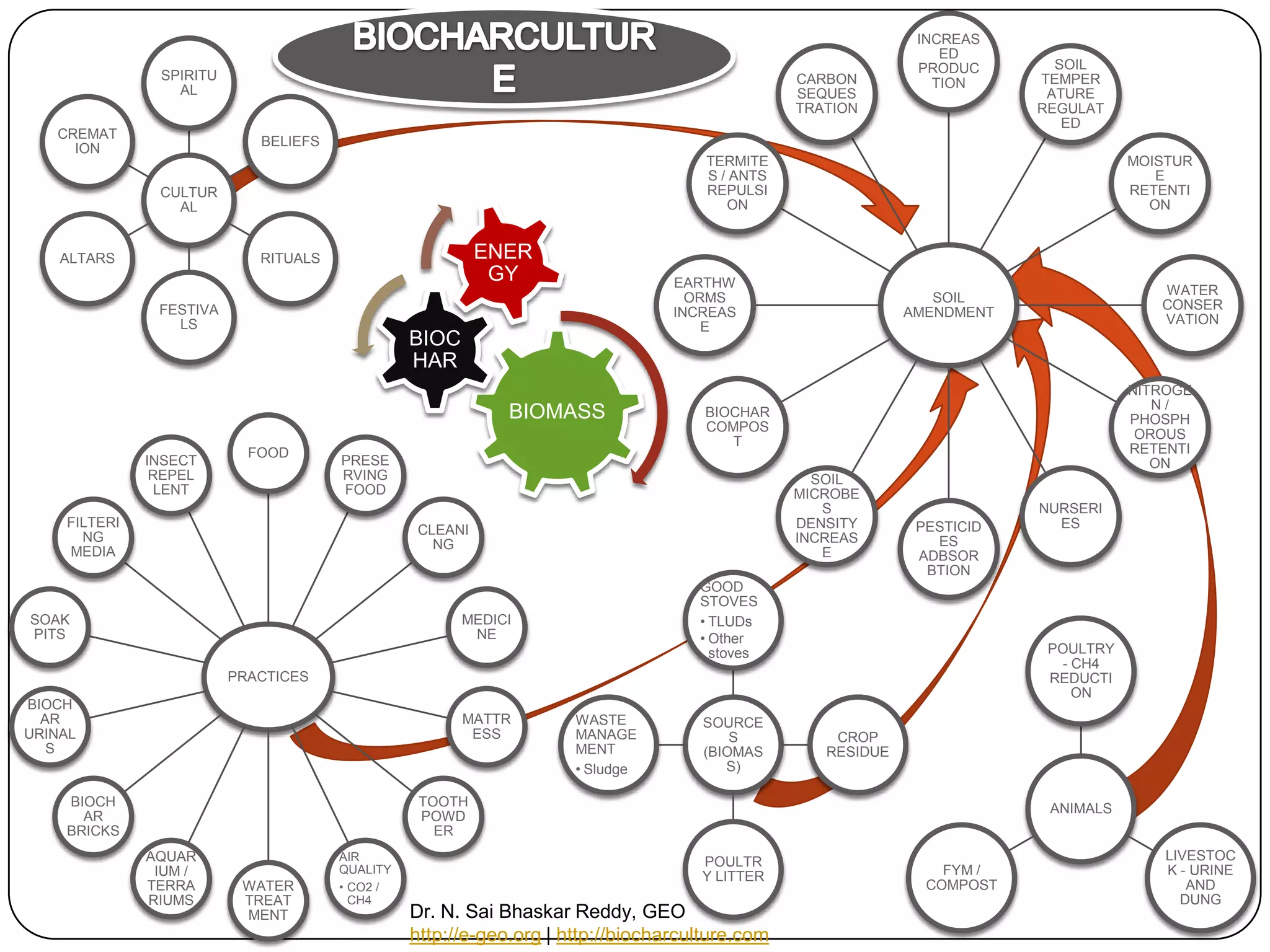
BIOCHARCULTUREDr. N. SaiBhaskar Reddy, GEOhttp://e-geo.org | http://biocharculture.com
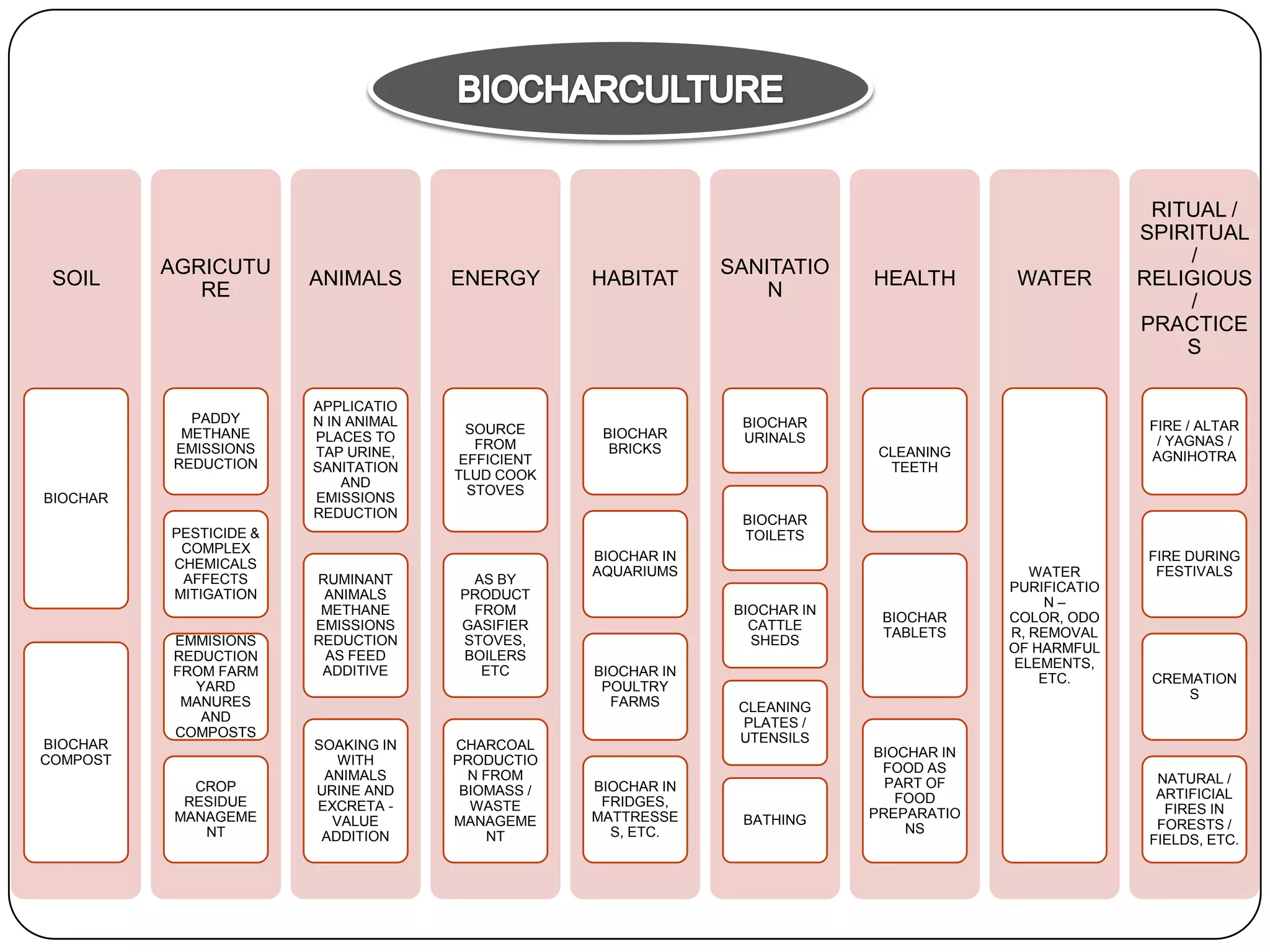
BIOCHARCULTURESOIL AGRICUTUREANIMALSENERGYHABITATSANITATIONHEALTHWATERRITUAL / SPIRITUAL / RELIGIOUS / PRACTICESBIOCHAR URINALSWATER PURIFICATION – COLOR, ODOR, REMOVAL OF HARMFUL ELEMENTS, ETC.PADDY METHANE EMISSIONS REDUCTIONBIOCHAR BRICKSFIRE / ALTAR / YAGNAS / AGNIHOTRAAPPLICATION IN ANIMAL PLACES TO TAP URINE, SANITATION AND EMISSIONS REDUCTIONSOURCE FROM EFFICIENT TLUD COOK STOVESCLEANING TEETHBIOCHARBIOCHAR TOILETSPESTICIDE & COMPLEX CHEMICALS AFFECTS MITIGATIONBIOCHAR IN AQUARIUMSFIRE DURING FESTIVALSRUMINANT ANIMALS METHANE EMISSIONS REDUCTION AS FEED ADDITIVEAS BY PRODUCT FROM GASIFIER STOVES, BOILERS ETCBIOCHAR TABLETSBIOCHAR IN CATTLE SHEDSEMMISIONS REDUCTION FROM FARM YARD MANURES AND COMPOSTSBIOCHAR IN POULTRY FARMSCREMATIONSBIOCHAR COMPOSTCLEANING PLATES / UTENSILSSOAKING IN WITH ANIMALS URINE AND EXCRETA - VALUE ADDITIONCHARCOAL PRODUCTION FROM BIOMASS / WASTE MANAGEMENTBIOCHAR IN FOOD AS PART OF FOOD PREPARATIONSCROP RESIDUE MANAGEMENTBIOCHAR IN FRIDGES, MATTRESSES, ETC.NATURAL / ARTIFICIAL FIRES IN FORESTS / FIELDS, ETC.BATHING
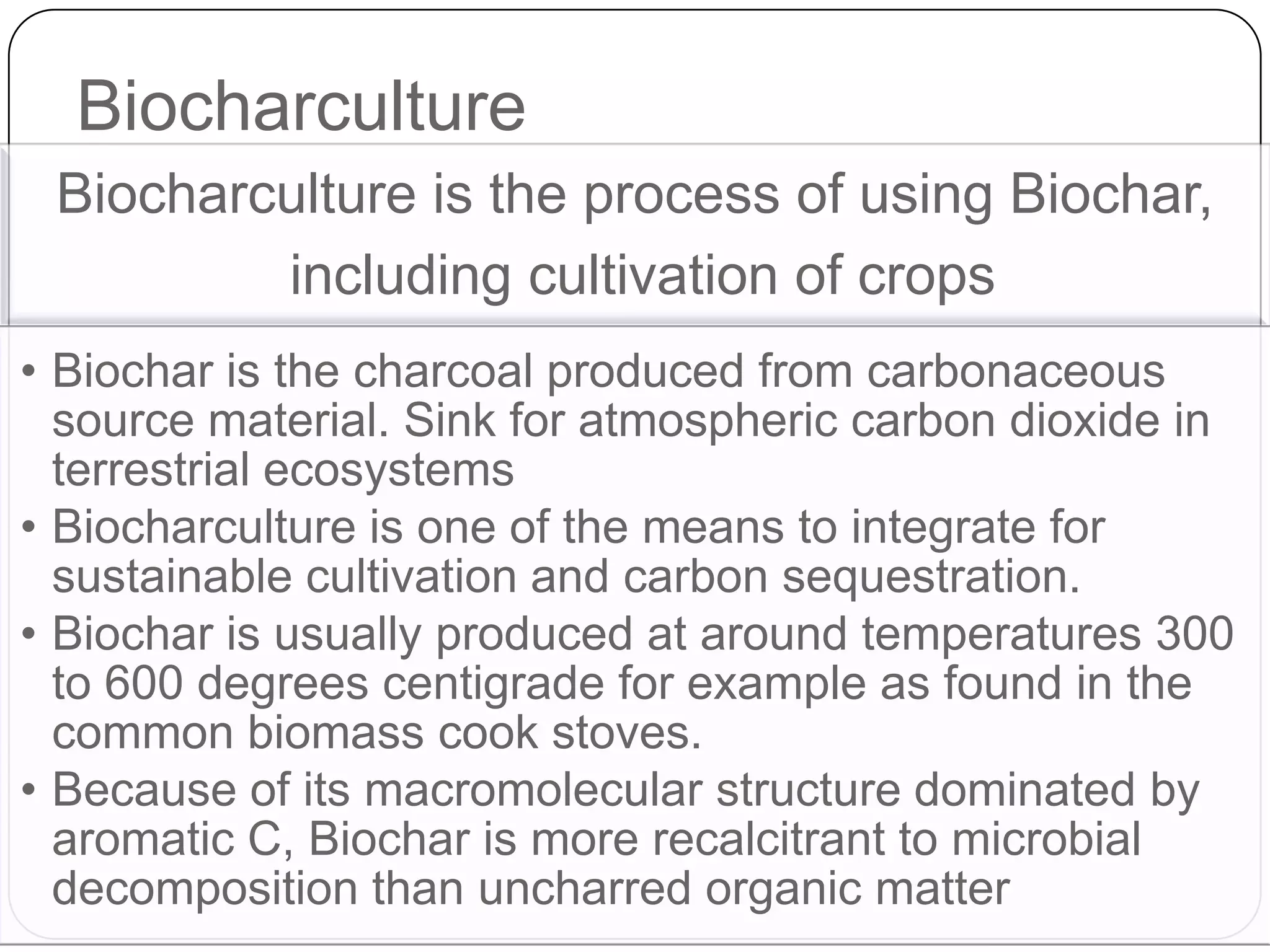
Biocharculture
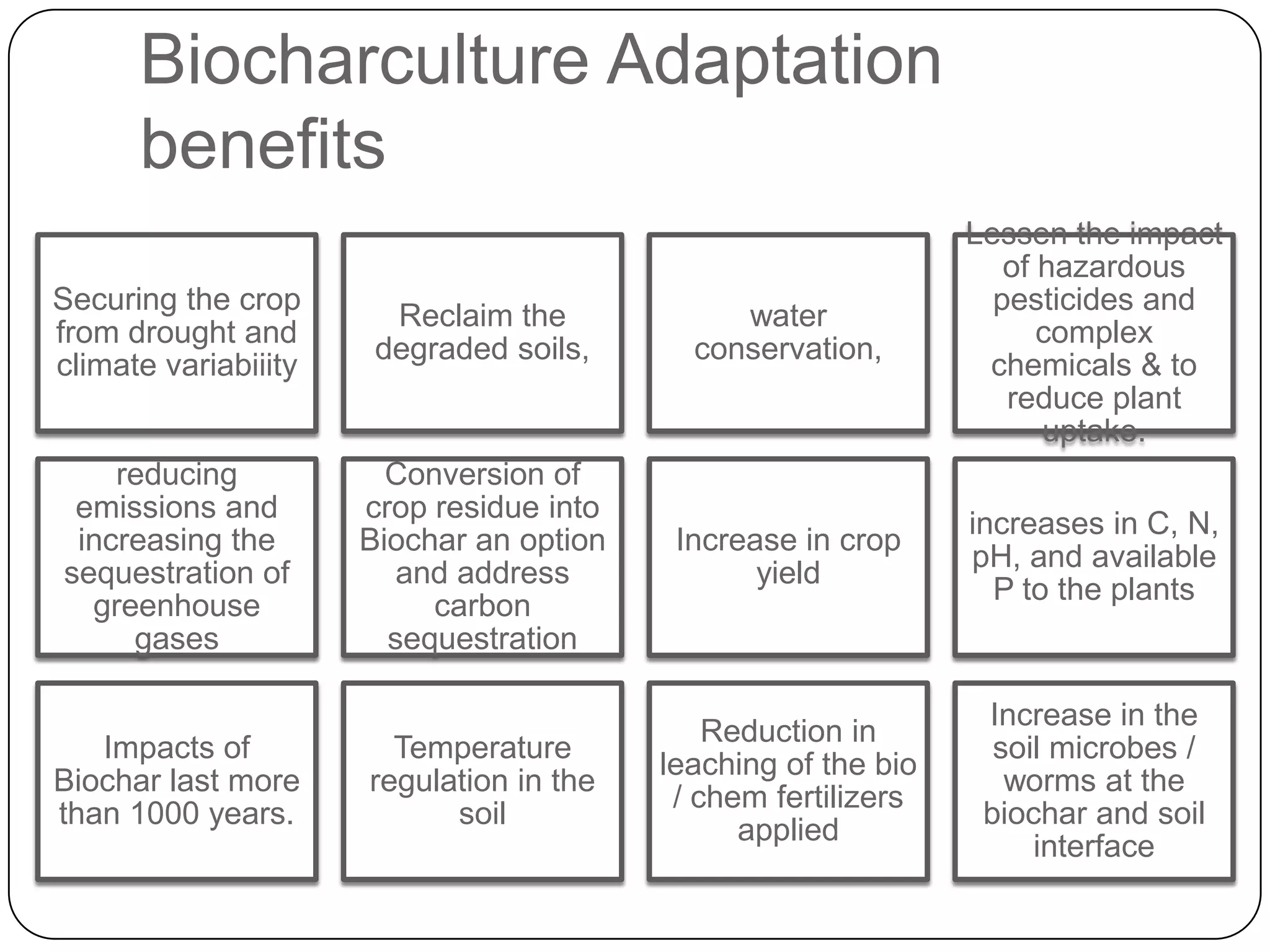
Biocharculture Adaptation benefits
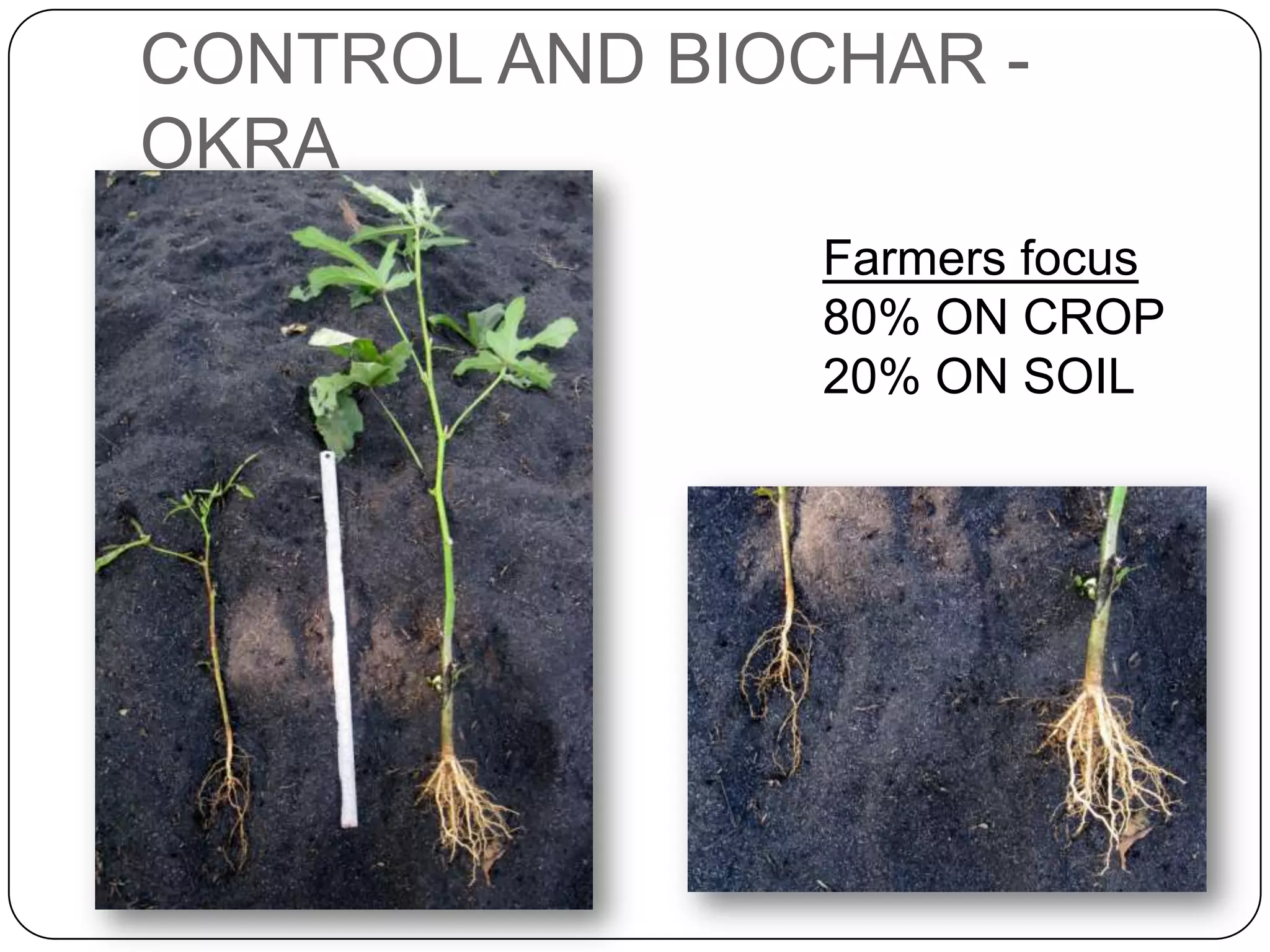
CONTROL AND BIOCHAR - OKRAFarmers focus80% ON CROP20% ON SOIL
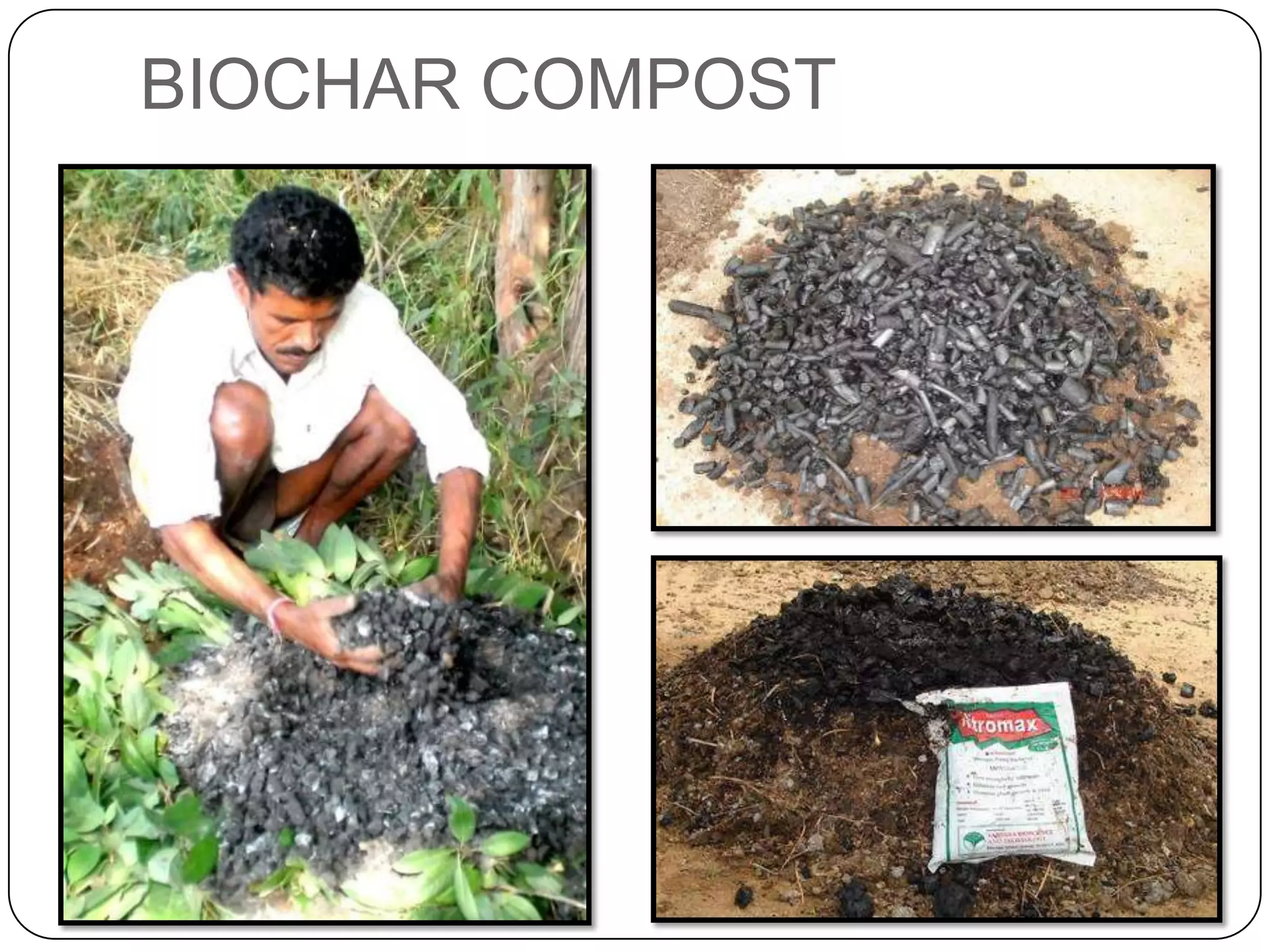
BIOCHAR COMPOST
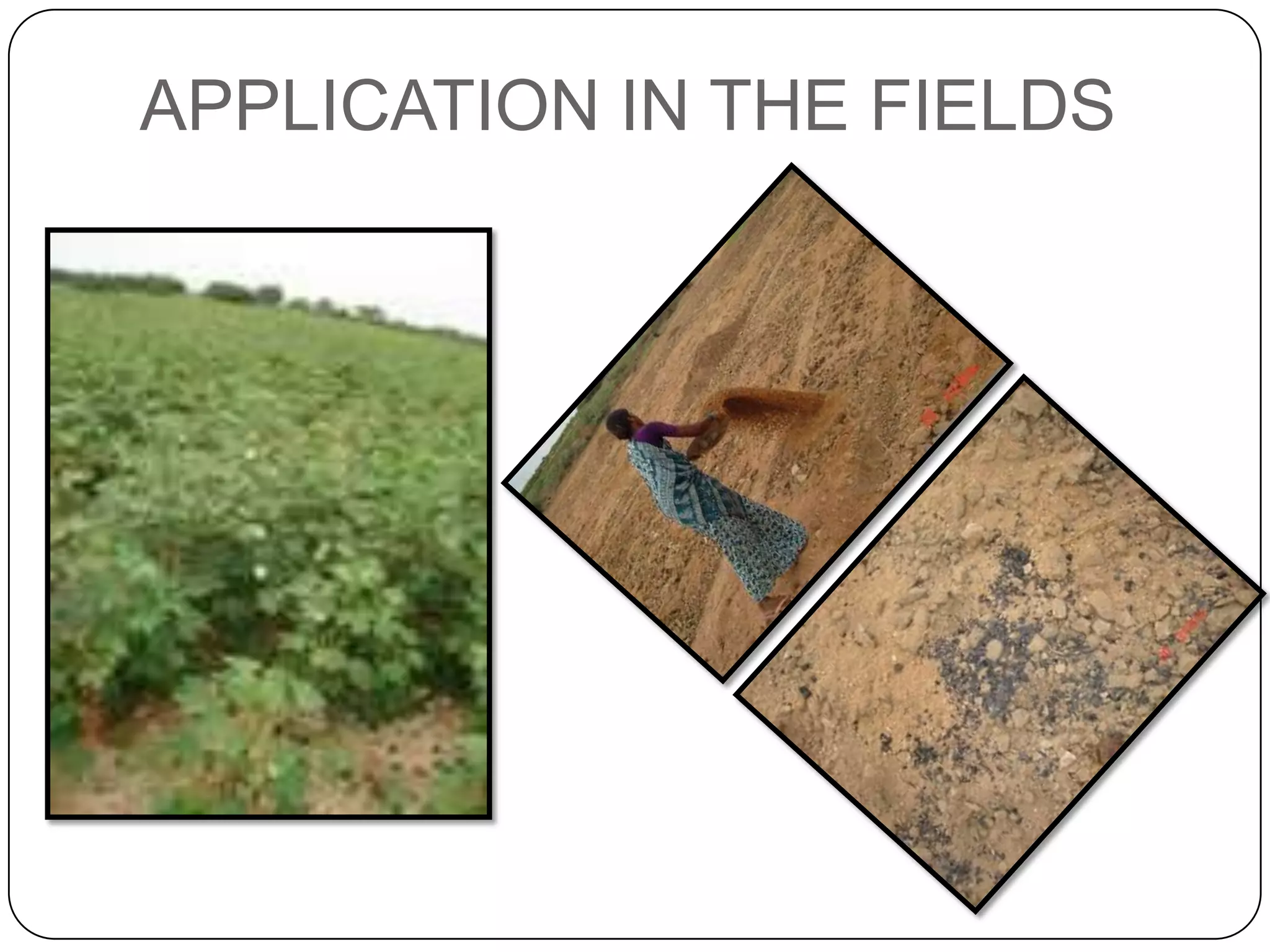
APPLICATION IN THE FIELDS
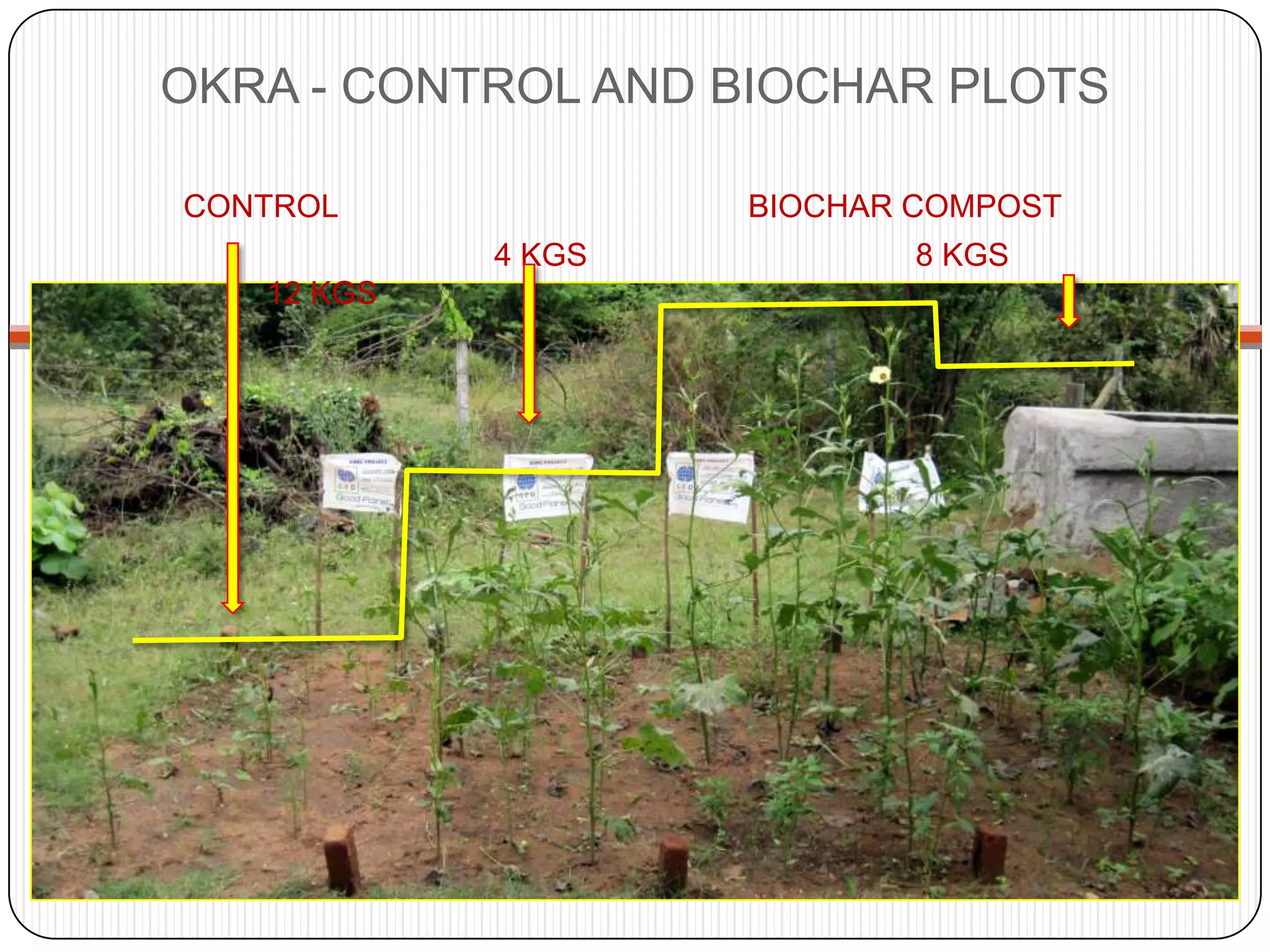
OKRA - CONTROL AND BIOCHAR PLOTS        CONTROL                  		BIOCHAR COMPOST		 	4 KGS      	                   8 KGS  		   12 KGS
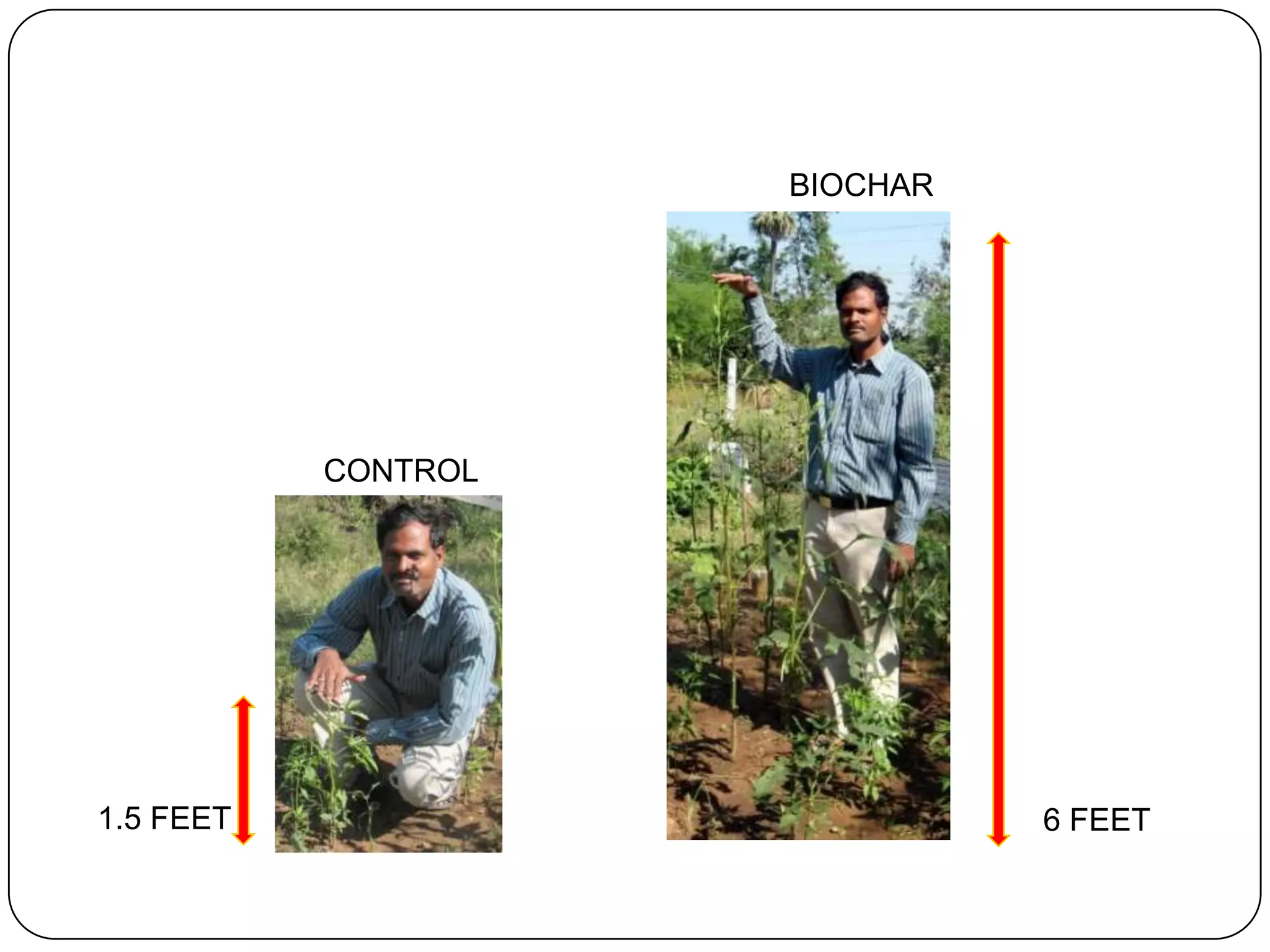
BIOCHARCONTROL1.5 FEET6 FEET
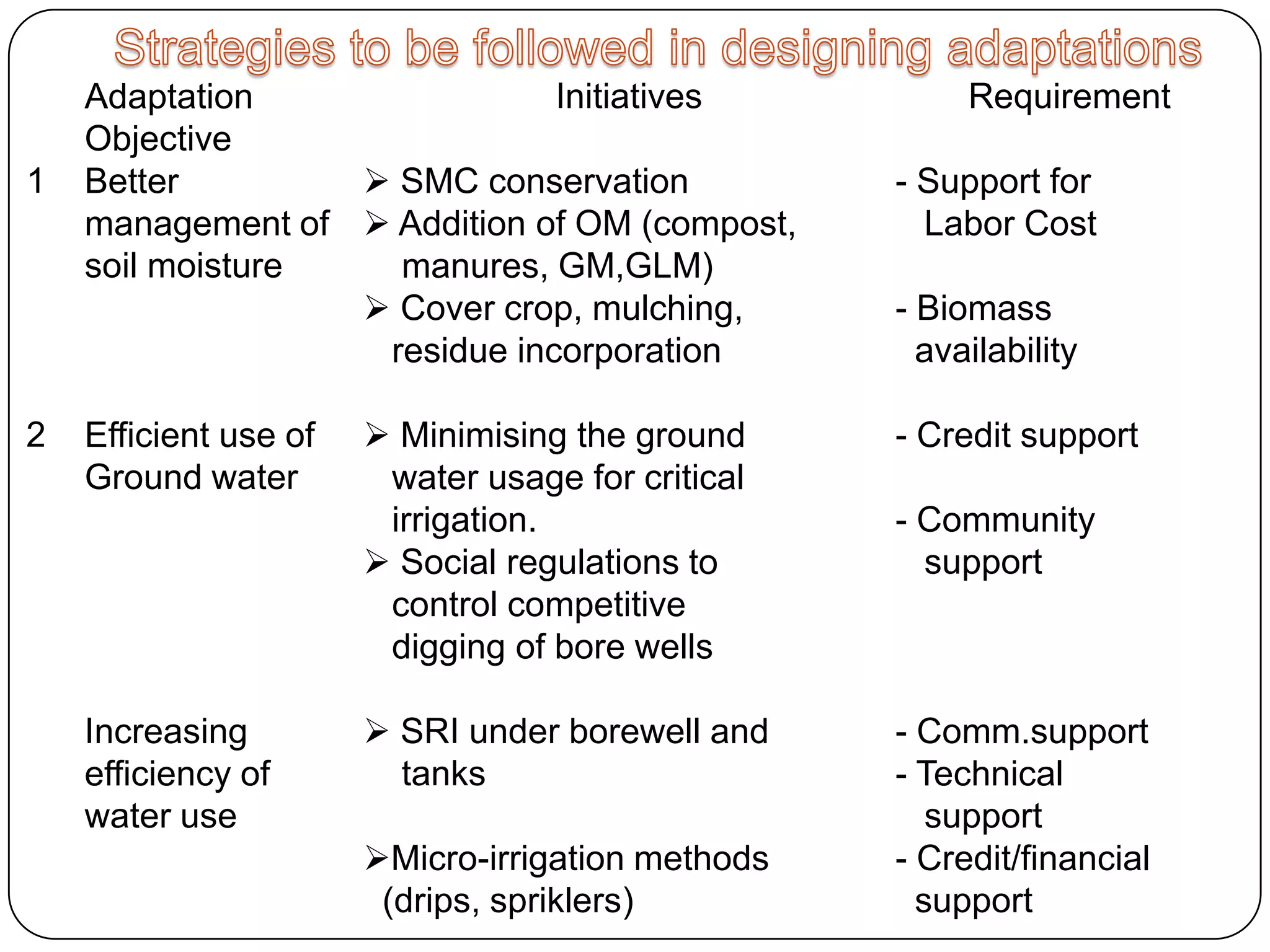
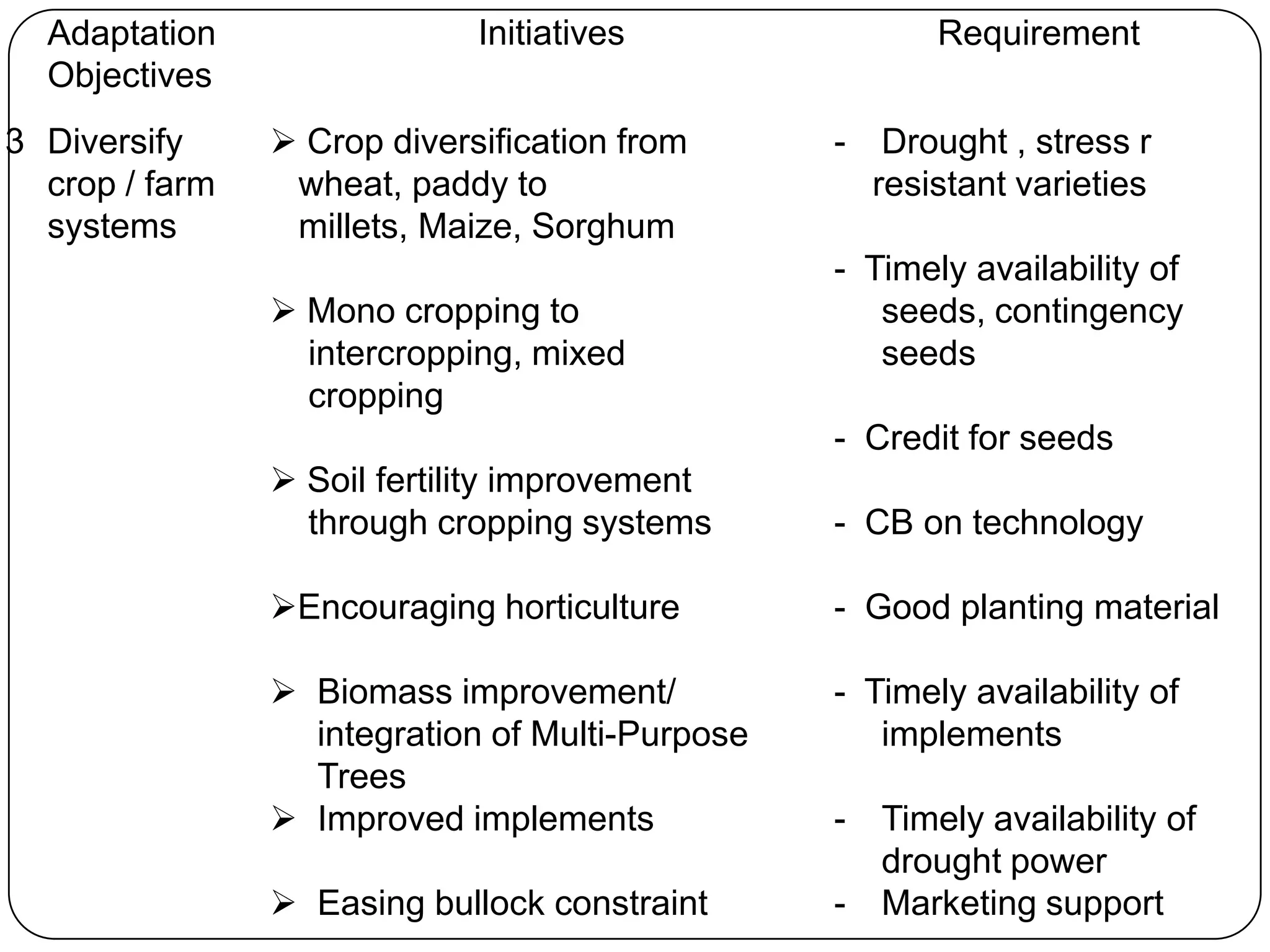
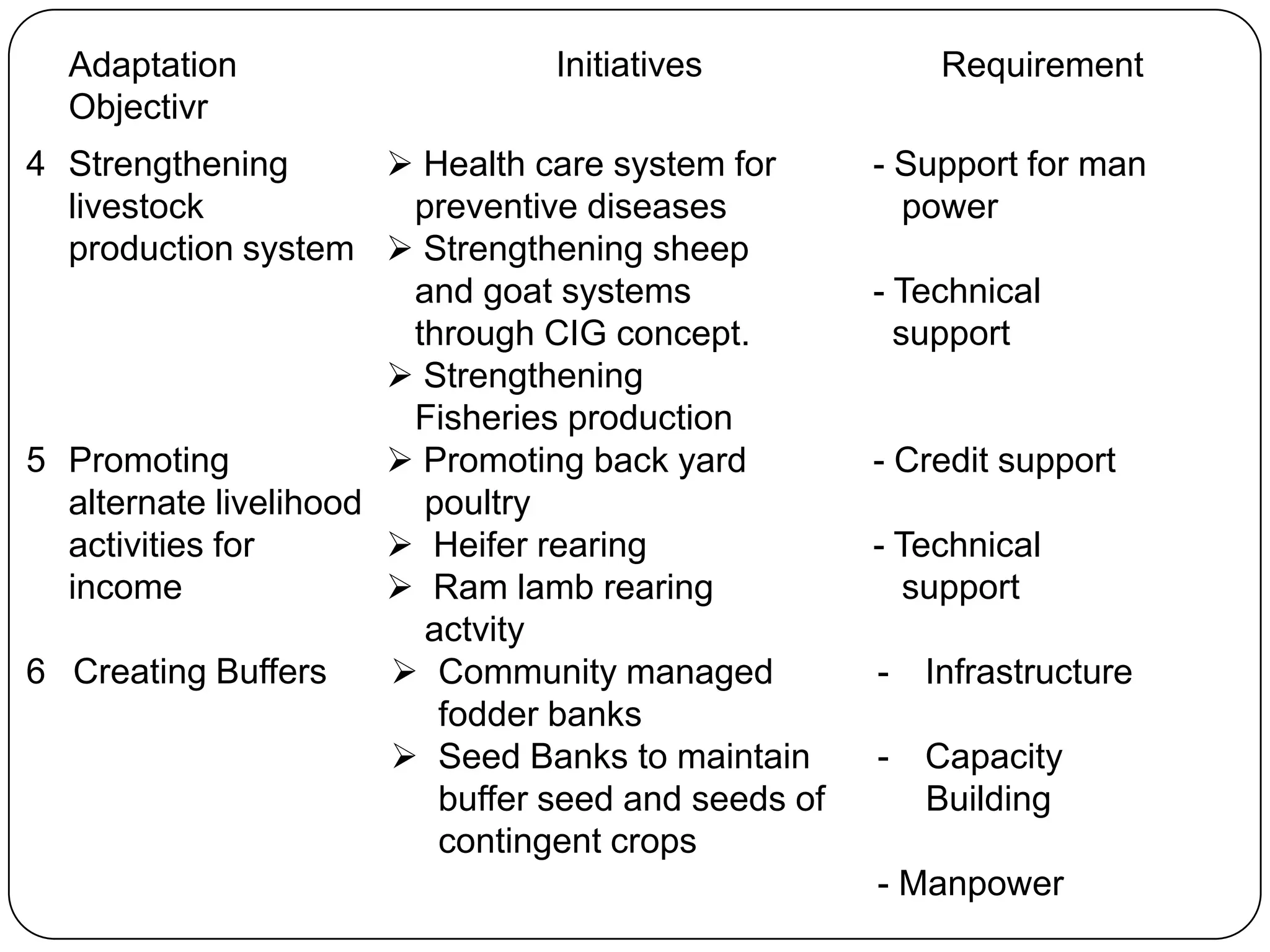
Strategies to be followed in designing adaptations
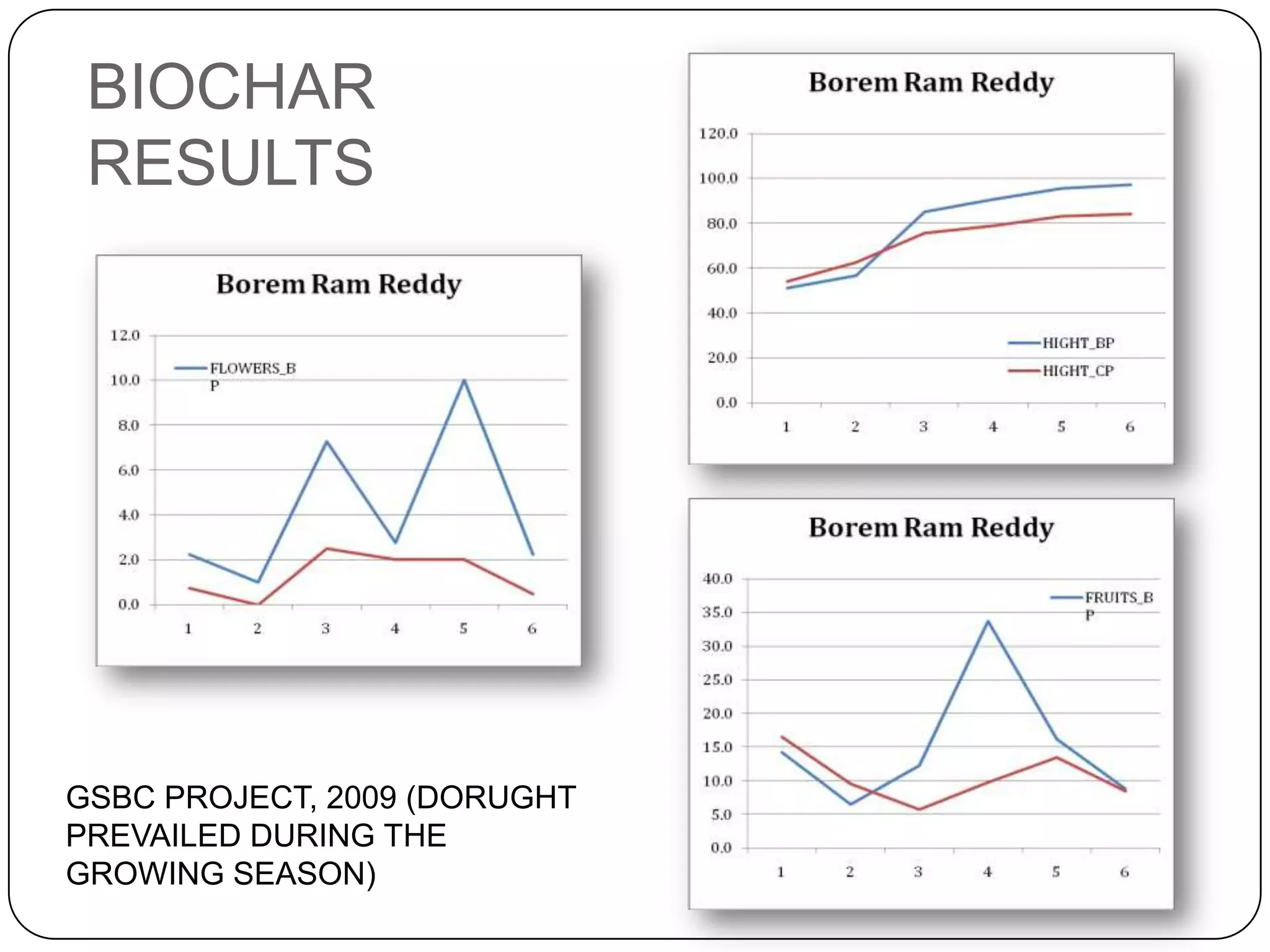
BIOCHAR RESULTSGSBC PROJECT, 2009 (DORUGHT PREVAILED DURING THE GROWING SEASON)
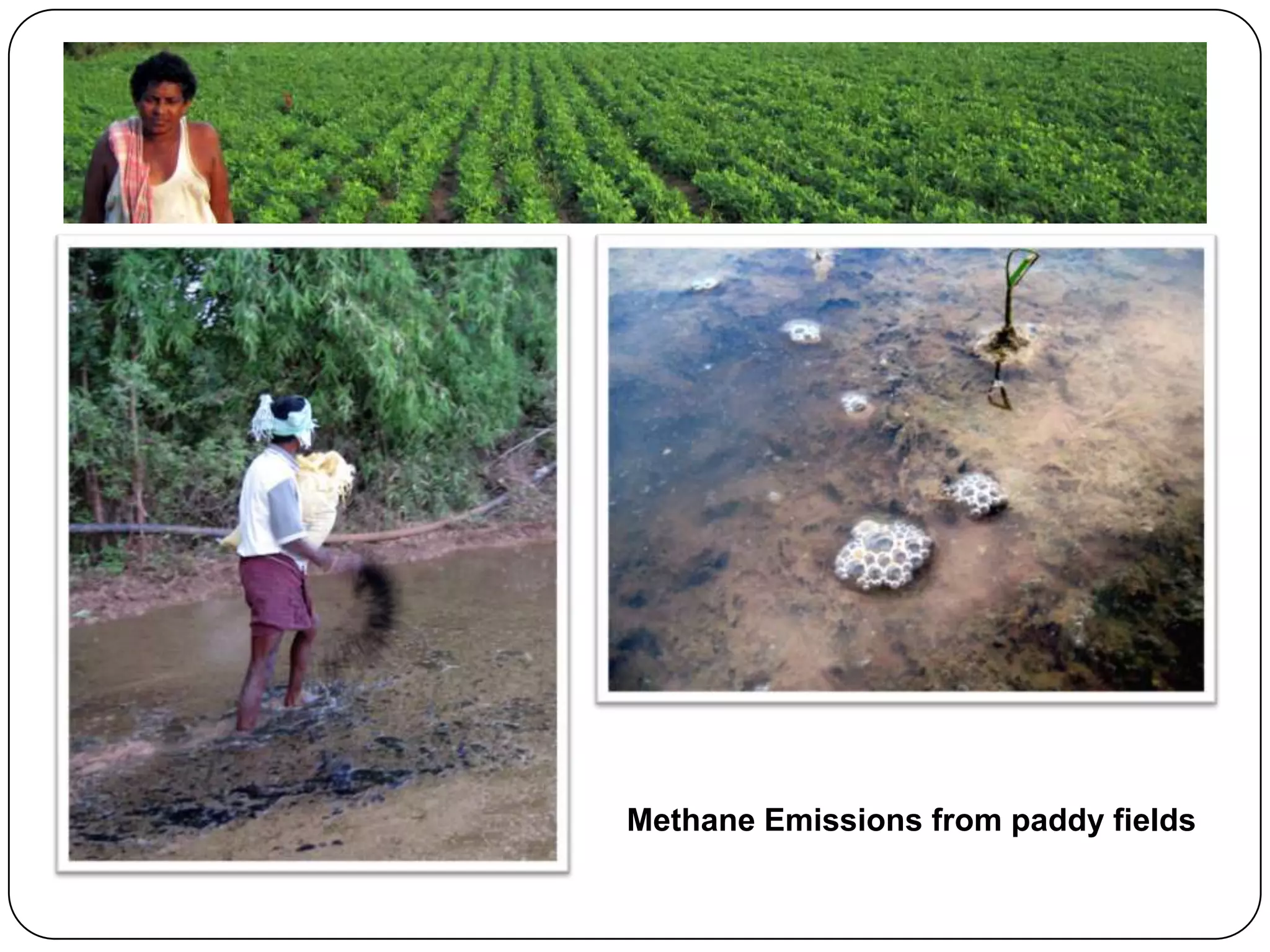
Methane Emissions from paddy fields
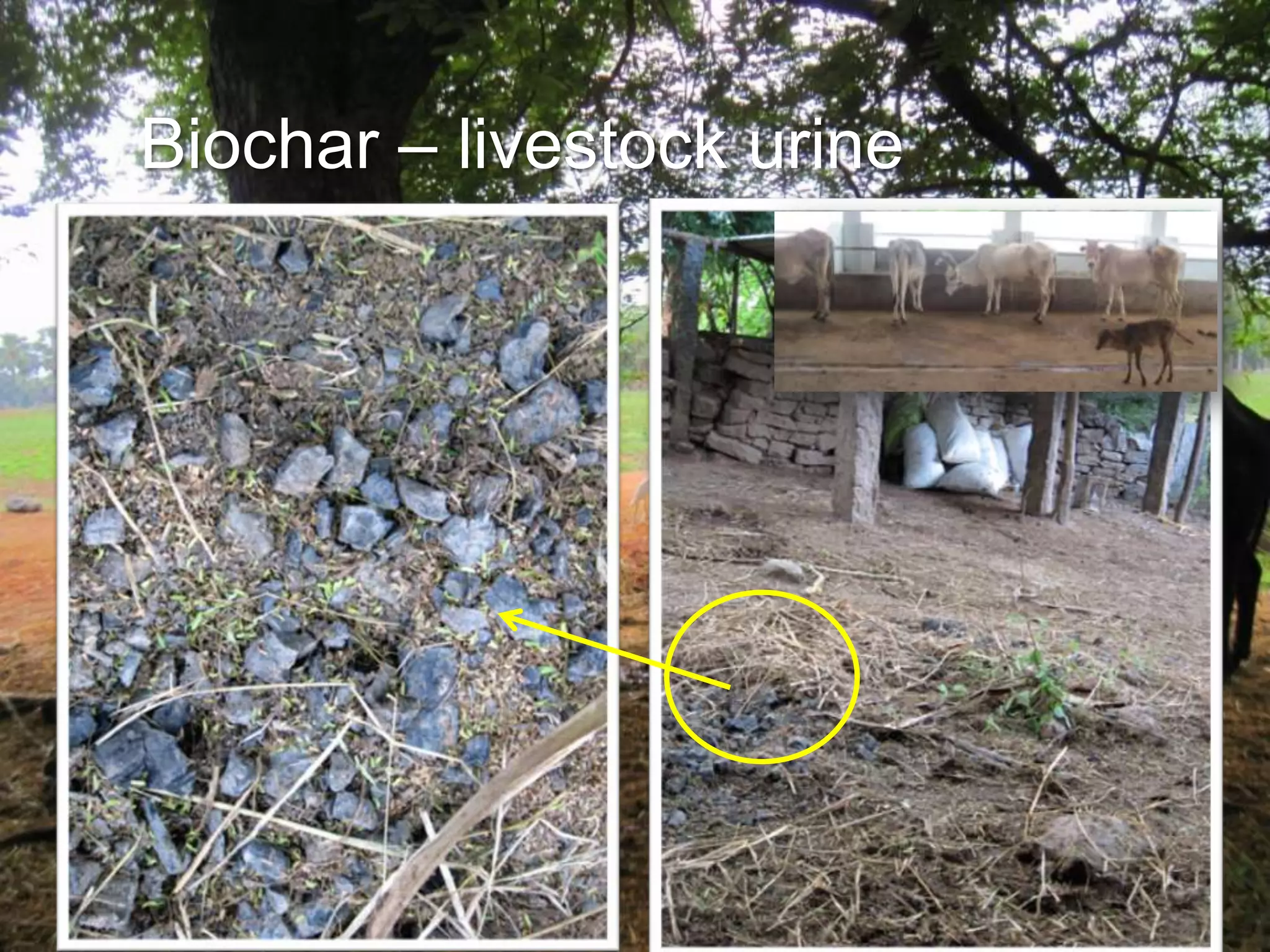
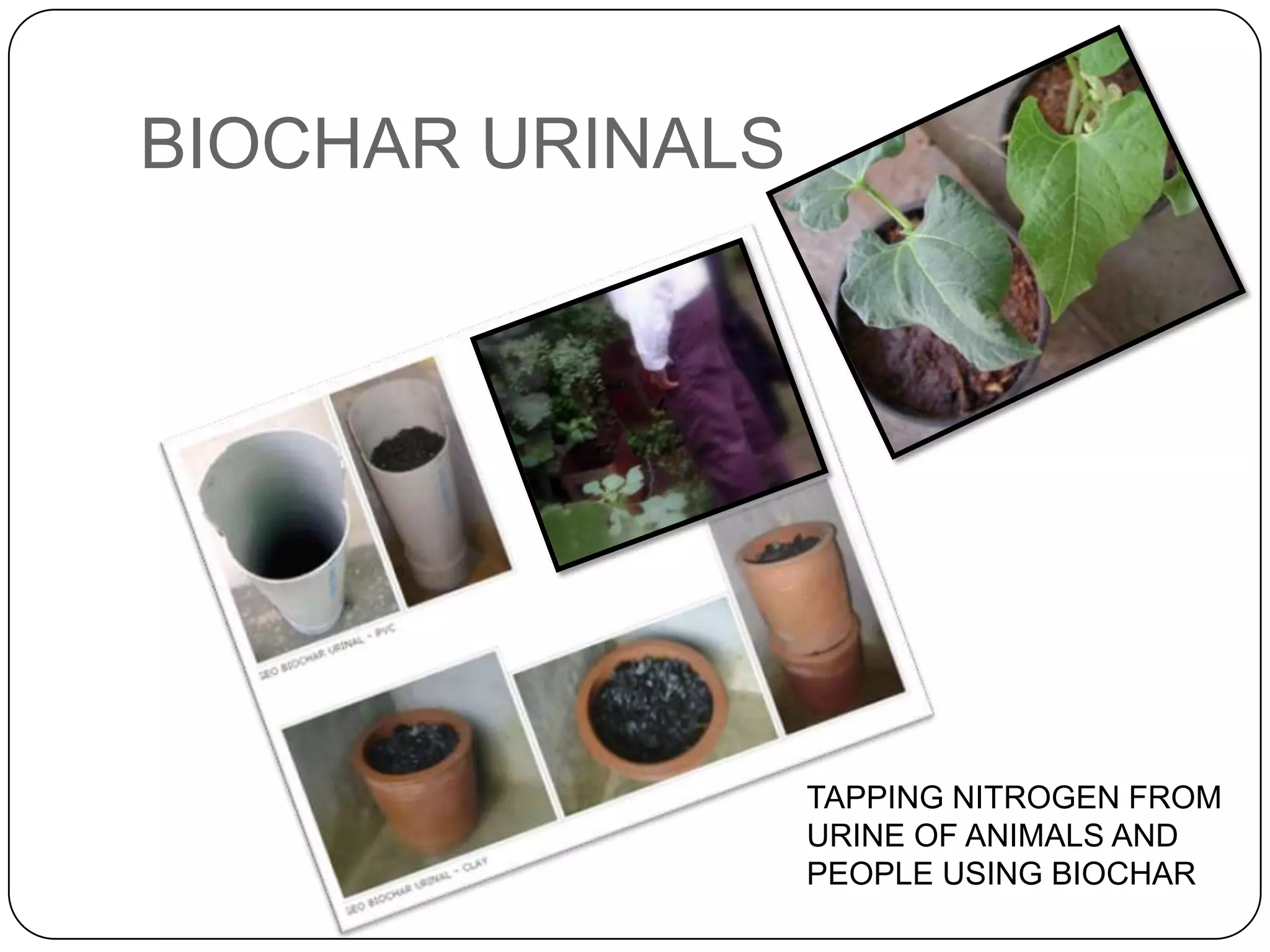
Biochar – livestock urine
BIOCHAR URINALSTAPPING NITROGEN FROM URINE OF ANIMALS AND PEOPLE USING BIOCHAR
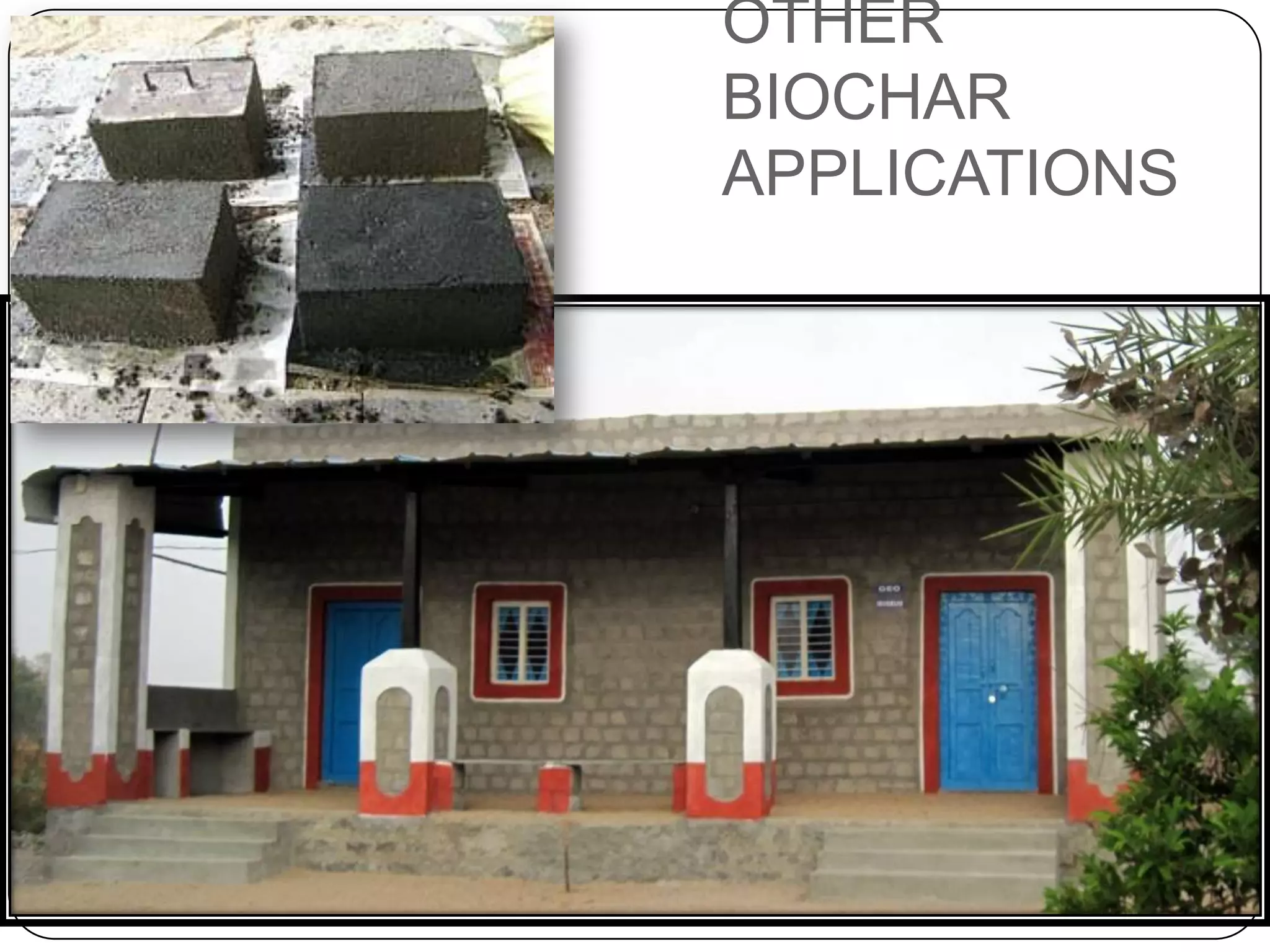
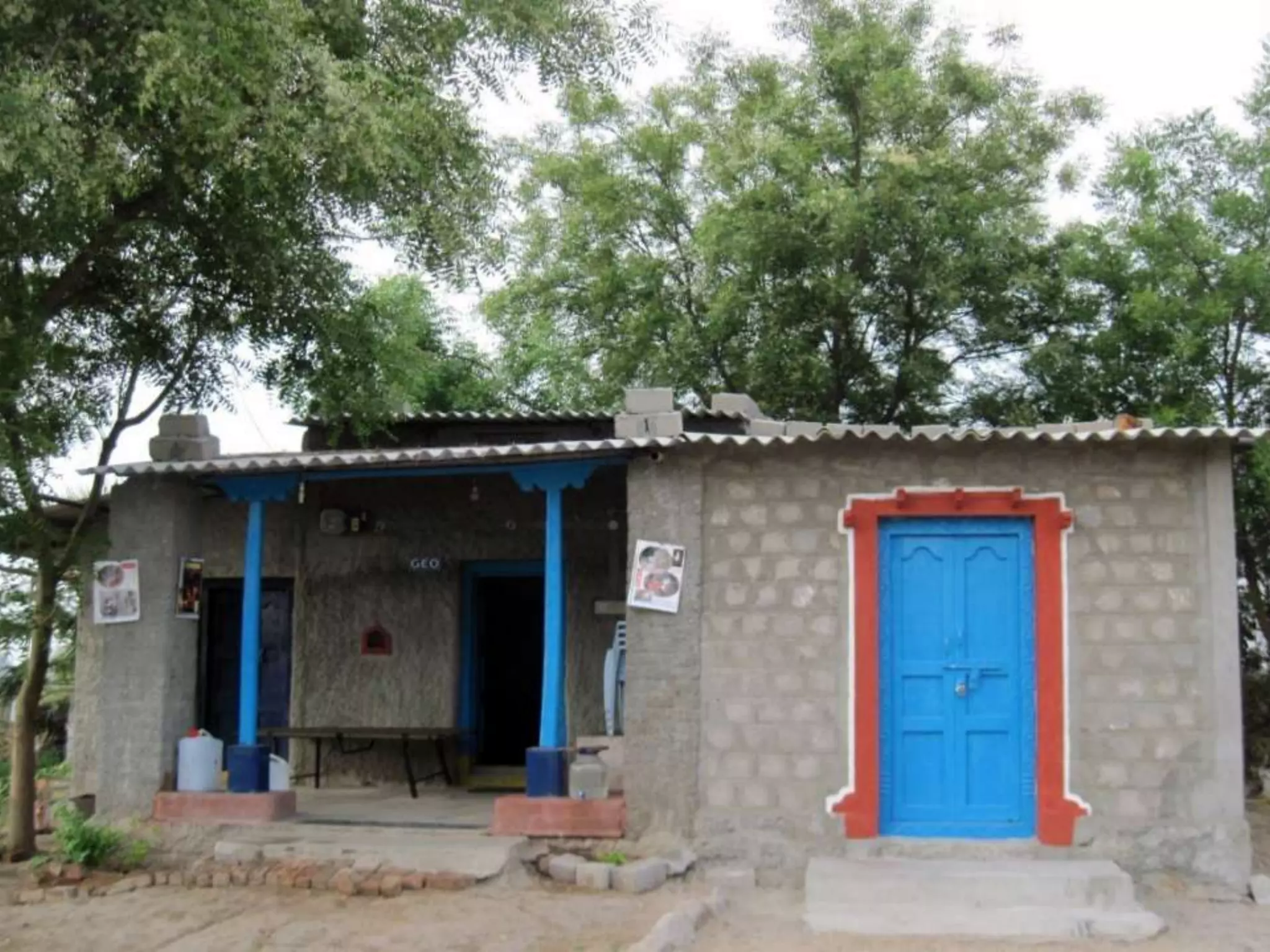
OTHER BIOCHAR APPLICATIONSBIOCHAR BRICKS, GREEN BUILDINGS
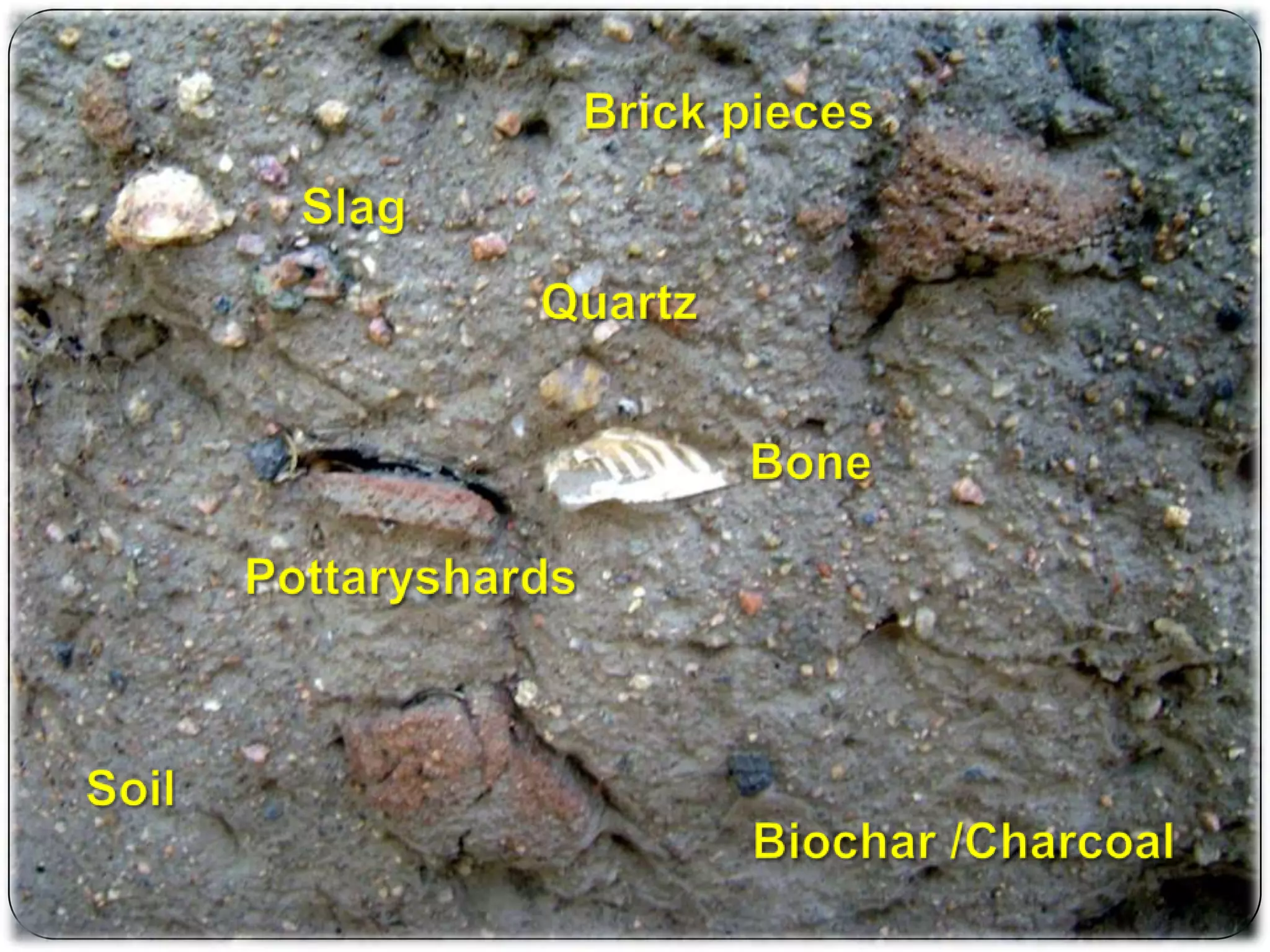
Brick piecesSlagQuartzBonePottaryshardsSoilBiochar /Charcoal
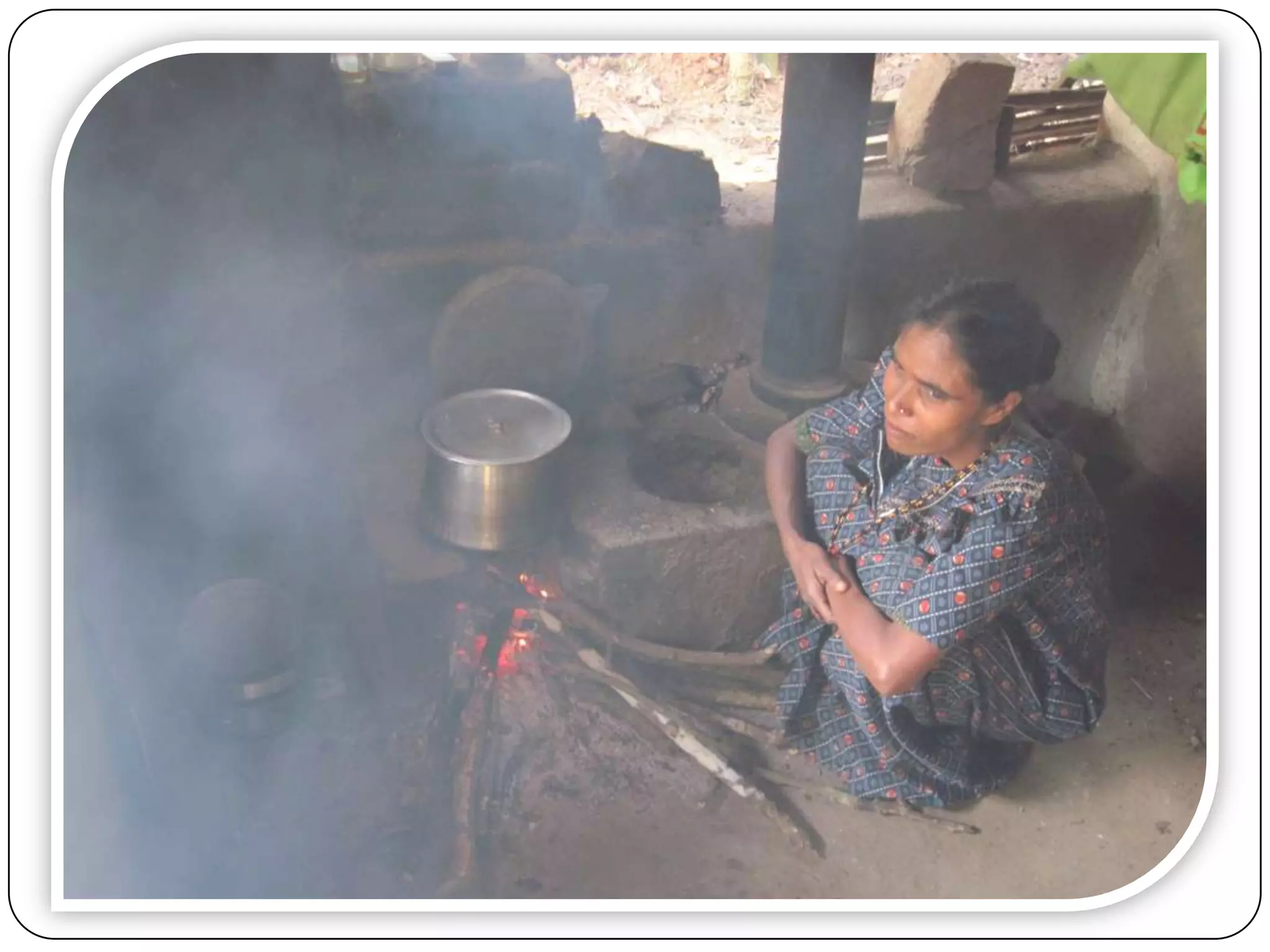
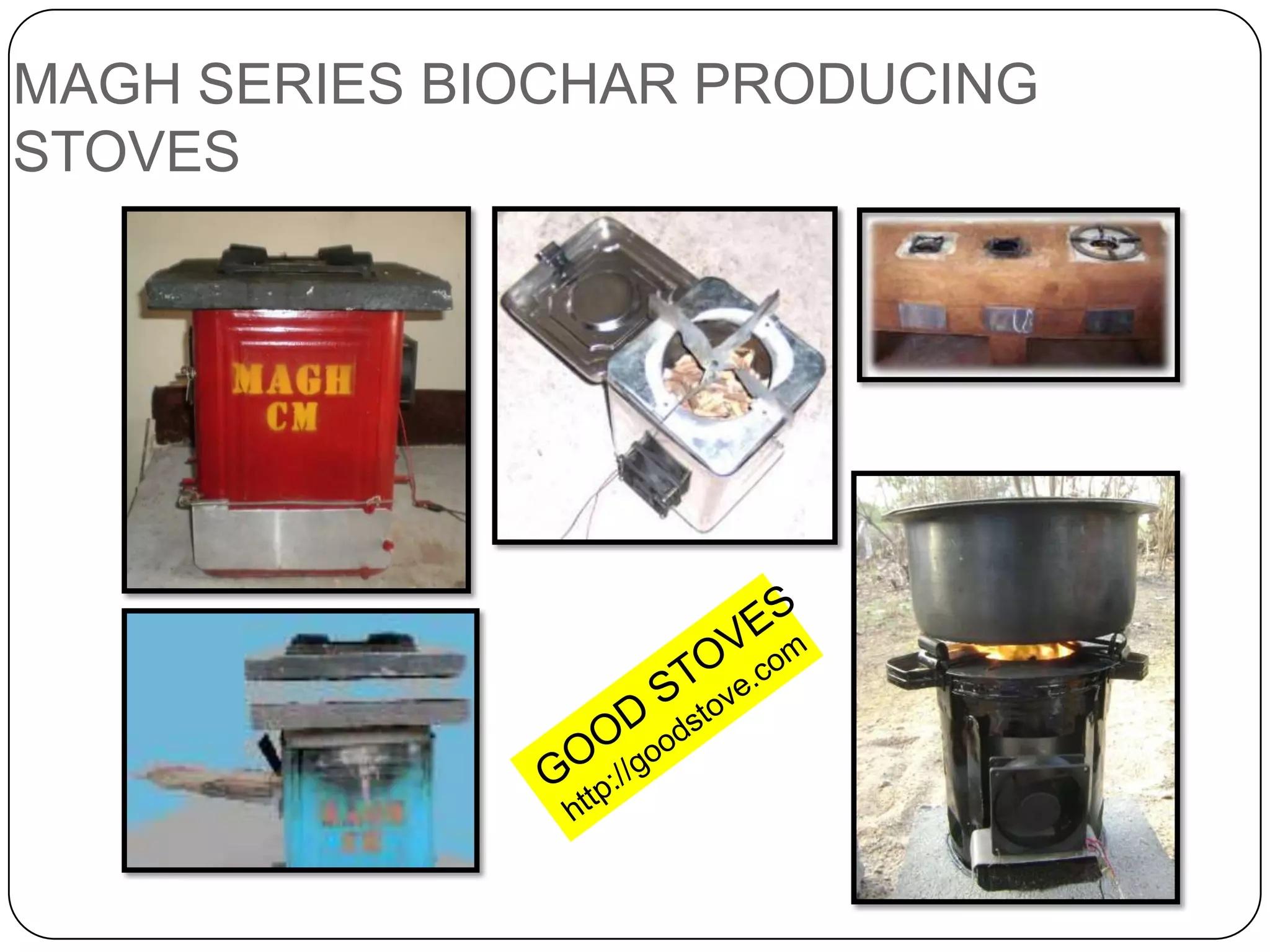
MAGH SERIES BIOCHAR PRODUCING STOVESGOOD STOVEShttp://goodstove.com
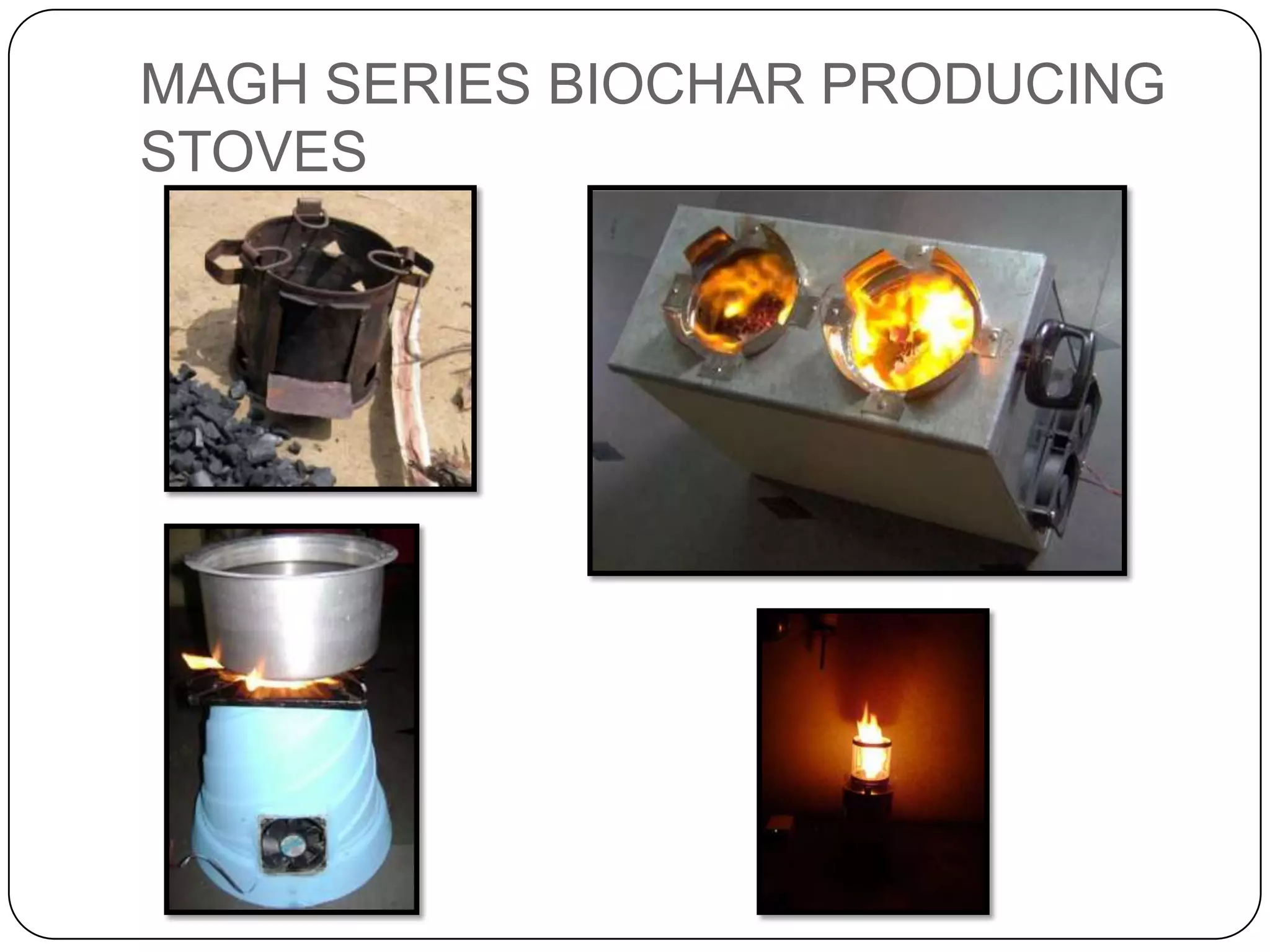
MAGH SERIES BIOCHAR PRODUCING STOVES
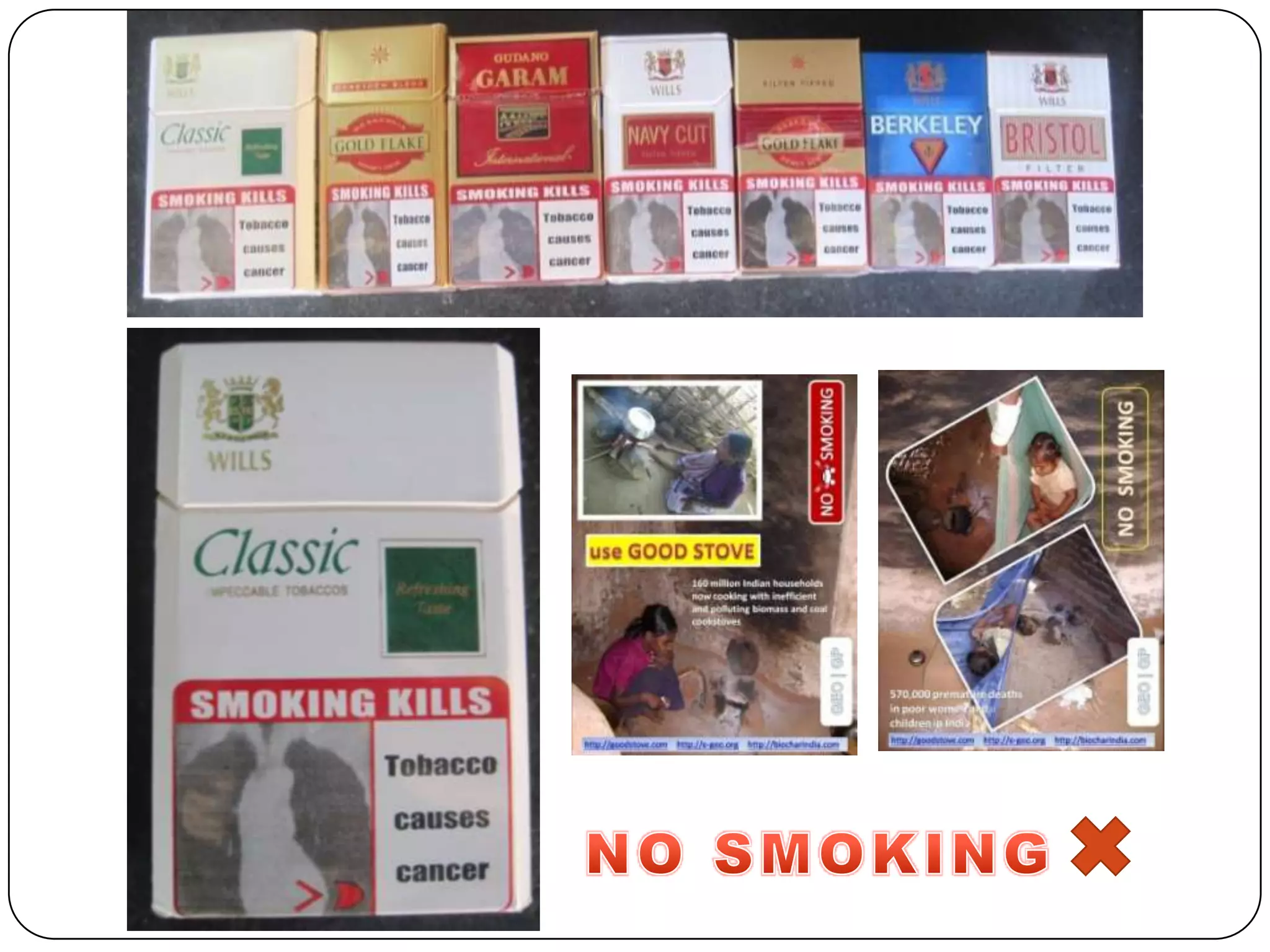
NO SMOKING
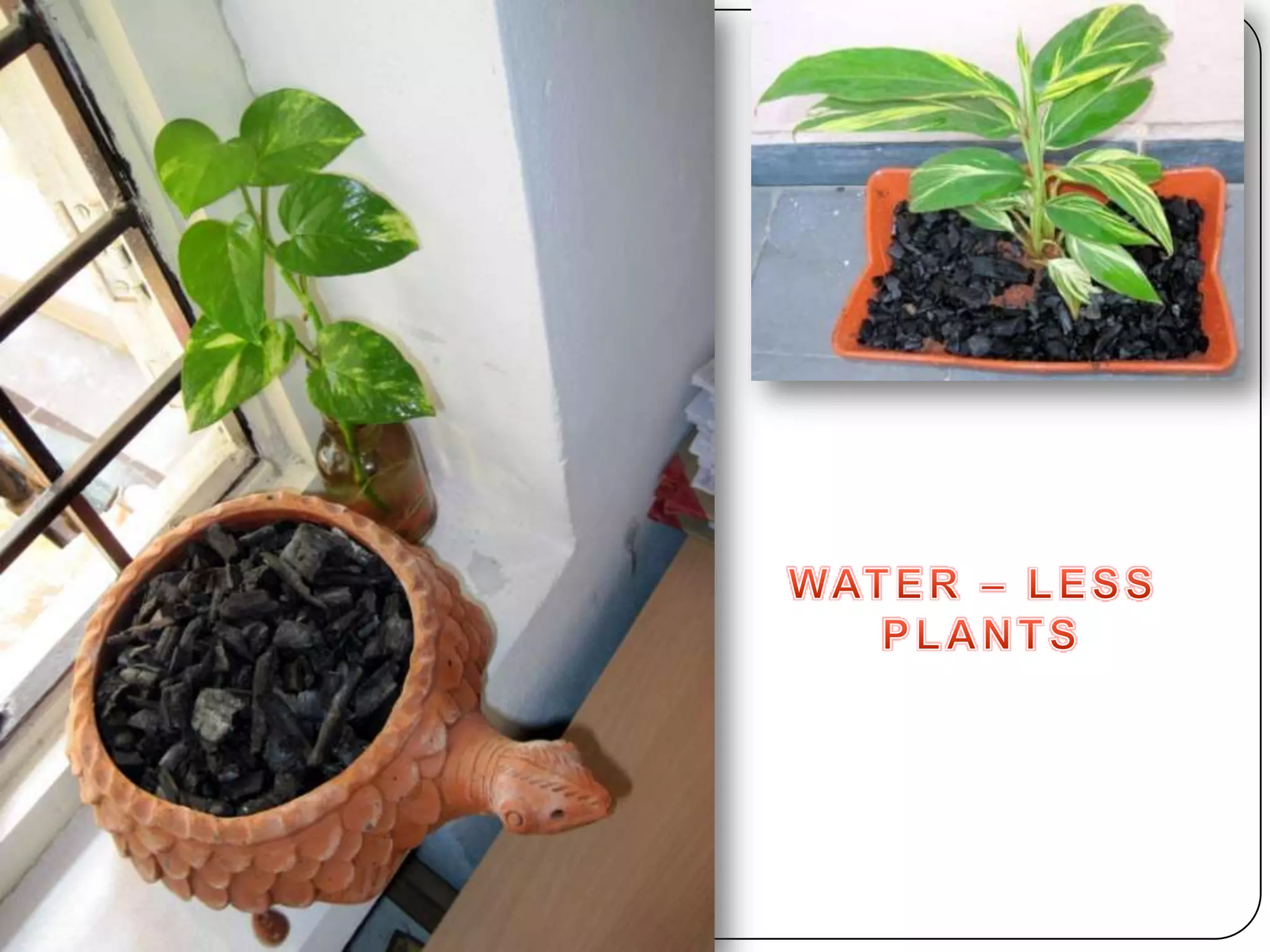
WATER – LESS PLANTS
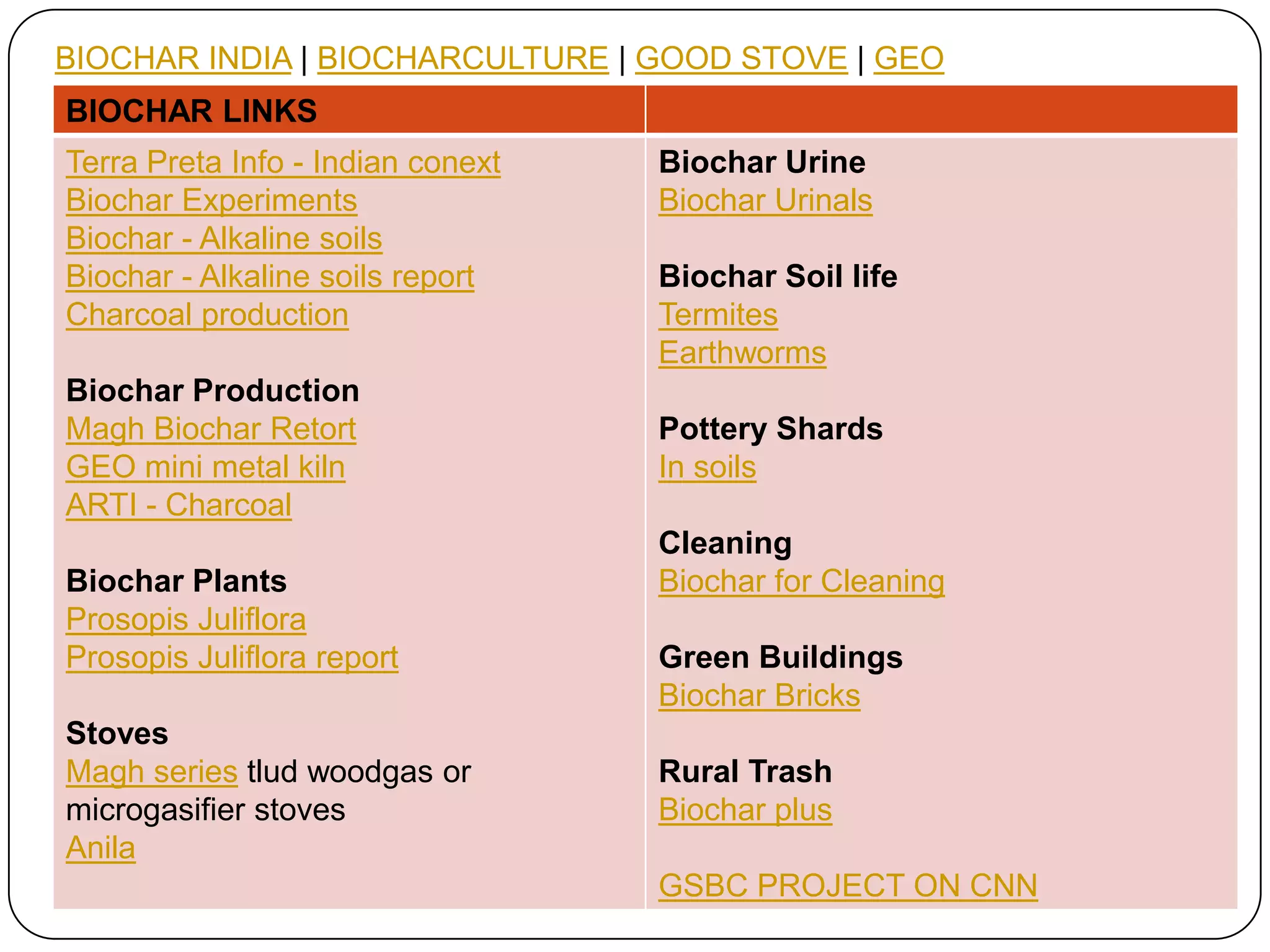
BIOCHAR INDIA | BIOCHARCULTURE | GOOD STOVE | GEO
Thank you..

Climate change policy drought

  • 1.
    Drought Risk Mitigationand Management 09 Aug’11Climate Change and Drought Scientific and Policy IssuesDr. N. SaiBhaskarReddyChief Executive Officer [CEO], GEOECOLOGY ENERGY ORGANISATION [GEO] http://e-geo.org_______________________________Center for Disaster Preparedness (CDP)Dr. MCR HRD Institute of AP
  • 2.
    Climate Changes inIndiaIncrease in surface temperature by 0.4 degree C over the past century. Warming trend along the west coast, in central India, the interior peninsula, and northeastern India. Cooling trend in northwest India and parts of South India.Regional monsoon variations: increased monsoon seasonal rainfall along the west coast, northern Andhra Pradesh and North-western India, decreased monsoon seasonal rainfall over eastern Madhya Pradesh, North-eastern India, and parts of Gujrat and Kerala.
  • 3.
    Climate Changes inIndiaObserved trends of multi-decadal periods of more frequent droughts, followed by less severe droughts. Studies have shown a rising trend in the frequency of heavy rain events and decrease in frequency of moderate events over central India from 1951 to 2000. Records of coastal tide gauges in the north Indian ocean for the last 40 years has revealed an estimated sea level rise between 1.06-1.75 mm per year. The available monitoring data on Himalayan glaciers indicates recession of some glaciers.3
  • 4.
    Per-capita Carbon –dioxideemission (Metric Tons)
  • 5.
    Impacts of ClimateChangesWater resourcesAgriculture and food productionHealthForestsCoastal areas Vulnerability to extreme eventsBioenergyLivelihoodsEnvironmentEconomyEcology5
  • 6.
    National Action Planfor Climate Change (NAPCC) Protecting the poor and vulnerable sections of society through sustainable development sensitive to climate changeAchieving national growth objectives through a qualitative change in direction, ecological sustainability, mitigation of greenhouse gas emissions.Efficient and cost effective strategies for end use Demand side Management.Technologies for adaptation and mitigation of greenhouse gases emissions.Promote sustainable development - Regulatory and voluntary mechanisms 6
  • 7.
    Core of NAPCC- National MissionsNational Solar Mission:TheNAPCC aims to promote the development and use of solar energy for power generation and other uses with the ultimate objective of making solar competitive with fossil-based energy options.National Mission for Enhanced Energy Efficiency: Current initiatives are expected to yield savings of 10,000 MW by 2012.National Mission on Sustainable Habitat: To promote energy efficiency as a core component of urban planning. National Water Mission: With water scarcity projected to worsen as a result of climate change, the plan sets a goal of a 20% improvement in water use efficiency through pricing and other measures.These National Missions are being institutionalized by the respective Ministries/ Departments.
  • 8.
    Core of NAPCC- National MissionsNational Mission for Sustaining the Himalayan Ecosystem: The plan aims to conserve biodiversity, forest cover, and other ecological values in the Himalayan region, where glaciers that are a major source of India’s water supply are projected to recede as a result of global warming.National Mission for a “Green India”: Goals include the afforestation of 6 million hectares of degraded forest lands and expanding forest cover from 23% to 33% of India’s territory.National Mission for Sustainable Agriculture: The plan aims to support climate adaptation in agriculture through the development of climate-resilient crops, expansion of weather insurance mechanisms, and agricultural practices.National Mission on Strategic Knowledge for Climate Change: To gain a better understanding of climate science, impacts and challenges, the plan envisions a new Climate Science Research Fund, improved climate modeling, and increased international collaboration. It also encourage private sector initiatives to develop adaptation and mitigation technologies through venture capital funds.
  • 9.
  • 10.
    Climate Change willput additional stress in rural areas
  • 11.
    Rural Livlihoods -ResourcesThe livelihoods of the rural poor are directly dependent on environmental resources.Are vulnerable to weather and climate variability
  • 12.
    Rural Poor Payingthe mostClimate change will only exacerbate the vulnerabilities of the rural poor. As climate-sensitive, natural ecosystems deteriorate, subsistence will slip further out of reach.
  • 13.
    India’s rural poor,who have least contributed to Climate Change, will pay some of the problem’s heaviest tolls.
  • 14.
    In the lifeof a farmer climate Variability and Extreme events are more important than climate change
  • 15.
    Climate Change /Variability in Semi-arid regions
  • 16.
    Climate Change /Variability in Semi-arid regions In Andhra Pradesh 2009 witness to 50 years old drought
  • 17.
    100 years oldfloodAFPRO17“VULNERABILITY ASSESSMENT AND ENHANSING ADAPTIVE CAPACITY TO CLIMATE CHANGE IN SEMI-ARID AREAS OF INDIA” Policies/StructuresVulnerabilityAdaptabilityRural PovertyLivelihoods DiversificationCommunity EmpowermentEnergyAgriculture ProductionWater ResourcesBio DiversitySCENARIO 1FACTORS INFLUENCING VULNERABILITYClimate ChangeHuman / SocialNatural / Environmental / PhysicalEconomic / PoliticalAppropriate SkillsWater Management
  • 18.
  • 19.
  • 20.
  • 22.
  • 23.
    BIOCHARCULTUREDr. N. SaiBhaskarReddy, GEOhttp://e-geo.org | http://biocharculture.com
  • 24.
    BIOCHARCULTURESOIL AGRICUTUREANIMALSENERGYHABITATSANITATIONHEALTHWATERRITUAL /SPIRITUAL / RELIGIOUS / PRACTICESBIOCHAR URINALSWATER PURIFICATION – COLOR, ODOR, REMOVAL OF HARMFUL ELEMENTS, ETC.PADDY METHANE EMISSIONS REDUCTIONBIOCHAR BRICKSFIRE / ALTAR / YAGNAS / AGNIHOTRAAPPLICATION IN ANIMAL PLACES TO TAP URINE, SANITATION AND EMISSIONS REDUCTIONSOURCE FROM EFFICIENT TLUD COOK STOVESCLEANING TEETHBIOCHARBIOCHAR TOILETSPESTICIDE & COMPLEX CHEMICALS AFFECTS MITIGATIONBIOCHAR IN AQUARIUMSFIRE DURING FESTIVALSRUMINANT ANIMALS METHANE EMISSIONS REDUCTION AS FEED ADDITIVEAS BY PRODUCT FROM GASIFIER STOVES, BOILERS ETCBIOCHAR TABLETSBIOCHAR IN CATTLE SHEDSEMMISIONS REDUCTION FROM FARM YARD MANURES AND COMPOSTSBIOCHAR IN POULTRY FARMSCREMATIONSBIOCHAR COMPOSTCLEANING PLATES / UTENSILSSOAKING IN WITH ANIMALS URINE AND EXCRETA - VALUE ADDITIONCHARCOAL PRODUCTION FROM BIOMASS / WASTE MANAGEMENTBIOCHAR IN FOOD AS PART OF FOOD PREPARATIONSCROP RESIDUE MANAGEMENTBIOCHAR IN FRIDGES, MATTRESSES, ETC.NATURAL / ARTIFICIAL FIRES IN FORESTS / FIELDS, ETC.BATHING
  • 25.
  • 26.
  • 27.
    CONTROL AND BIOCHAR- OKRAFarmers focus80% ON CROP20% ON SOIL
  • 28.
  • 29.
  • 30.
    OKRA - CONTROLAND BIOCHAR PLOTS CONTROL BIOCHAR COMPOST 4 KGS 8 KGS 12 KGS
  • 31.
  • 32.
    Strategies to befollowed in designing adaptations
  • 35.
    BIOCHAR RESULTSGSBC PROJECT,2009 (DORUGHT PREVAILED DURING THE GROWING SEASON)
  • 36.
  • 37.
  • 38.
    BIOCHAR URINALSTAPPING NITROGENFROM URINE OF ANIMALS AND PEOPLE USING BIOCHAR
  • 39.
    OTHER BIOCHAR APPLICATIONSBIOCHARBRICKS, GREEN BUILDINGS
  • 40.
  • 43.
    MAGH SERIES BIOCHARPRODUCING STOVESGOOD STOVEShttp://goodstove.com
  • 44.
    MAGH SERIES BIOCHARPRODUCING STOVES
  • 45.
  • 46.
  • 47.
    BIOCHAR INDIA |BIOCHARCULTURE | GOOD STOVE | GEO
  • 48.

Editor's Notes

  • #26 Biochar is a part of the solution for cotton crop sustainable cultivation, there is a need to create large scale awareness among the farmers to continue traditional best practices of Biochar application and also adopt appropriate best technologies for improving the fertility of the soils and their sustainability.