Introduction to
Human-
Environment
Systems
Human-environment systems refer to the complex and dynamic
interactions between human societies and the natural
environment. These systems encompass a wide range of factors,
from resource use and ecosystem services to the impact of
human activities on the planet.
Components of Human-Environment Systems
Natural Components
The natural components of
human-environment systems
include ecosystems, natural
resources, and the physical
environment, such as climate,
water, and land.
Human Components
The human components include
population, technology,
economic activities, social and
cultural factors, and institutions
that govern the use and
management of natural
resources.
Interactions
The interactions between these
natural and human components
shape the dynamics of human-
environment systems, leading to
both beneficial and detrimental
outcomes.
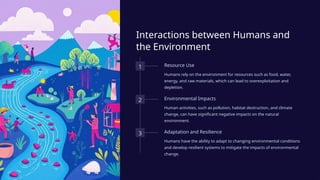
Interactions between Humans and
the Environment
1 Resource Use
Humans rely on the environment for resources such as food, water,
energy, and raw materials, which can lead to overexploitation and
depletion.
2 Environmental Impacts
Human activities, such as pollution, habitat destruction, and climate
change, can have significant negative impacts on the natural
environment.
3 Adaptation and Resilience
Humans have the ability to adapt to changing environmental conditions
and develop resilient systems to mitigate the impacts of environmental
change.
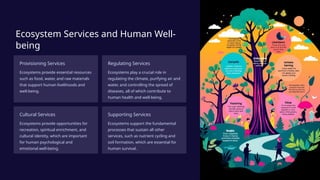
Ecosystem Services and Human Well-
being
Provisioning Services
Ecosystems provide essential resources
such as food, water, and raw materials
that support human livelihoods and
well-being.
Regulating Services
Ecosystems play a crucial role in
regulating the climate, purifying air and
water, and controlling the spread of
diseases, all of which contribute to
human health and well-being.
Cultural Services
Ecosystems provide opportunities for
recreation, spiritual enrichment, and
cultural identity, which are important
for human psychological and
emotional well-being.
Supporting Services
Ecosystems support the fundamental
processes that sustain all other
services, such as nutrient cycling and
soil formation, which are essential for
human survival.
Drivers of Environmental Change
1 Population Growth
Increasing human population and
urbanization lead to greater
demand for resources and more
intensive use of the environment.
2 Economic Development
Rapid economic growth and
industrialization often result in
increased resource consumption,
pollution, and environmental
degradation.
3 Technological Advancements
New technologies can have both
positive and negative impacts on
the environment, depending on
how they are developed and used.
4 Climate Change
Human-induced climate change is
a major driver of environmental
change, affecting ecosystems,
natural resources, and human
communities worldwide.
Sustainability Challenges in Human-
Environment Systems
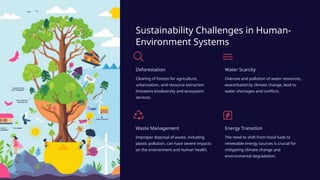
Deforestation
Clearing of forests for agriculture,
urbanization, and resource extraction
threatens biodiversity and ecosystem
services.
Water Scarcity
Overuse and pollution of water resources,
exacerbated by climate change, lead to
water shortages and conflicts.
Waste Management
Improper disposal of waste, including
plastic pollution, can have severe impacts
on the environment and human health.
Energy Transition
The need to shift from fossil fuels to
renewable energy sources is crucial for
mitigating climate change and
environmental degradation.
Adaptation and Resilience in Human-
Environment Systems
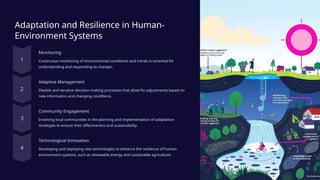
Monitoring
Continuous monitoring of environmental conditions and trends is essential for
understanding and responding to changes.
Adaptive Management
Flexible and iterative decision-making processes that allow for adjustments based on
new information and changing conditions.
Community Engagement
Involving local communities in the planning and implementation of adaptation
strategies to ensure their effectiveness and sustainability.
Technological Innovation
Developing and deploying new technologies to enhance the resilience of human-
environment systems, such as renewable energy and sustainable agriculture.
Governance and Policy Frameworks
International Agreements
Global treaties and conventions,
such as the Paris Agreement and
the Convention on Biological
Diversity, provide frameworks for
coordinated action on
environmental issues.
National Policies
Governments implement policies
and regulations to manage
natural resources, protect
ecosystems, and promote
sustainable development at the
national level.
Local Initiatives
Community-based projects and
programs can address specific
environmental challenges and
engage stakeholders at the local
level.
Technological Solutions for Sustainable Human-
Environment Systems
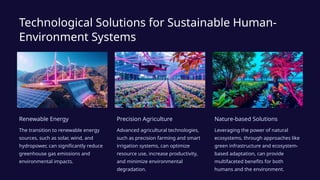
Renewable Energy
The transition to renewable energy
sources, such as solar, wind, and
hydropower, can significantly reduce
greenhouse gas emissions and
environmental impacts.
Precision Agriculture
Advanced agricultural technologies,
such as precision farming and smart
irrigation systems, can optimize
resource use, increase productivity,
and minimize environmental
degradation.
Nature-based Solutions
Leveraging the power of natural
ecosystems, through approaches like
green infrastructure and ecosystem-
based adaptation, can provide
multifaceted benefits for both
humans and the environment.
Conclusion and Future
Directions
Understanding and managing the complex interactions between
humans and the environment is crucial for ensuring the long-
term sustainability of our planet. By addressing the challenges
and embracing innovative solutions, we can work towards a
future where human well-being and environmental health
coexist in harmony.

Human Environment System PowerPoint Presentation.pptx

  • 1.
    Introduction to Human- Environment Systems Human-environment systemsrefer to the complex and dynamic interactions between human societies and the natural environment. These systems encompass a wide range of factors, from resource use and ecosystem services to the impact of human activities on the planet.
  • 2.
    Components of Human-EnvironmentSystems Natural Components The natural components of human-environment systems include ecosystems, natural resources, and the physical environment, such as climate, water, and land. Human Components The human components include population, technology, economic activities, social and cultural factors, and institutions that govern the use and management of natural resources. Interactions The interactions between these natural and human components shape the dynamics of human- environment systems, leading to both beneficial and detrimental outcomes.
  • 3.
    Interactions between Humansand the Environment 1 Resource Use Humans rely on the environment for resources such as food, water, energy, and raw materials, which can lead to overexploitation and depletion. 2 Environmental Impacts Human activities, such as pollution, habitat destruction, and climate change, can have significant negative impacts on the natural environment. 3 Adaptation and Resilience Humans have the ability to adapt to changing environmental conditions and develop resilient systems to mitigate the impacts of environmental change.
  • 4.
    Ecosystem Services andHuman Well- being Provisioning Services Ecosystems provide essential resources such as food, water, and raw materials that support human livelihoods and well-being. Regulating Services Ecosystems play a crucial role in regulating the climate, purifying air and water, and controlling the spread of diseases, all of which contribute to human health and well-being. Cultural Services Ecosystems provide opportunities for recreation, spiritual enrichment, and cultural identity, which are important for human psychological and emotional well-being. Supporting Services Ecosystems support the fundamental processes that sustain all other services, such as nutrient cycling and soil formation, which are essential for human survival.
  • 5.
    Drivers of EnvironmentalChange 1 Population Growth Increasing human population and urbanization lead to greater demand for resources and more intensive use of the environment. 2 Economic Development Rapid economic growth and industrialization often result in increased resource consumption, pollution, and environmental degradation. 3 Technological Advancements New technologies can have both positive and negative impacts on the environment, depending on how they are developed and used. 4 Climate Change Human-induced climate change is a major driver of environmental change, affecting ecosystems, natural resources, and human communities worldwide.
  • 6.
    Sustainability Challenges inHuman- Environment Systems Deforestation Clearing of forests for agriculture, urbanization, and resource extraction threatens biodiversity and ecosystem services. Water Scarcity Overuse and pollution of water resources, exacerbated by climate change, lead to water shortages and conflicts. Waste Management Improper disposal of waste, including plastic pollution, can have severe impacts on the environment and human health. Energy Transition The need to shift from fossil fuels to renewable energy sources is crucial for mitigating climate change and environmental degradation.
  • 7.
    Adaptation and Resiliencein Human- Environment Systems Monitoring Continuous monitoring of environmental conditions and trends is essential for understanding and responding to changes. Adaptive Management Flexible and iterative decision-making processes that allow for adjustments based on new information and changing conditions. Community Engagement Involving local communities in the planning and implementation of adaptation strategies to ensure their effectiveness and sustainability. Technological Innovation Developing and deploying new technologies to enhance the resilience of human- environment systems, such as renewable energy and sustainable agriculture.
  • 8.
    Governance and PolicyFrameworks International Agreements Global treaties and conventions, such as the Paris Agreement and the Convention on Biological Diversity, provide frameworks for coordinated action on environmental issues. National Policies Governments implement policies and regulations to manage natural resources, protect ecosystems, and promote sustainable development at the national level. Local Initiatives Community-based projects and programs can address specific environmental challenges and engage stakeholders at the local level.
  • 9.
    Technological Solutions forSustainable Human- Environment Systems Renewable Energy The transition to renewable energy sources, such as solar, wind, and hydropower, can significantly reduce greenhouse gas emissions and environmental impacts. Precision Agriculture Advanced agricultural technologies, such as precision farming and smart irrigation systems, can optimize resource use, increase productivity, and minimize environmental degradation. Nature-based Solutions Leveraging the power of natural ecosystems, through approaches like green infrastructure and ecosystem- based adaptation, can provide multifaceted benefits for both humans and the environment.
  • 10.
    Conclusion and Future Directions Understandingand managing the complex interactions between humans and the environment is crucial for ensuring the long- term sustainability of our planet. By addressing the challenges and embracing innovative solutions, we can work towards a future where human well-being and environmental health coexist in harmony.