




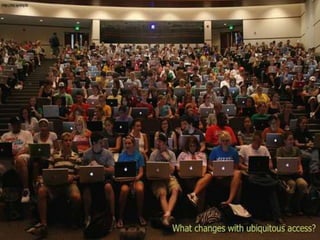








It's 2010: Technologies to Watch, and How to CopeStephen Abram, MLS, FSLASLA Click UniversityJanuary 17, 2010
Slides available soon on SlideShare& at Stephen’s Lighthouse blog
How dowe really feel about technology?
The BIG Insight“The Internet has now progressed to its infancy”Search, Social Networks, Learning, Commerce
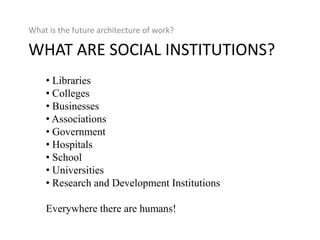
What is the future architecture of work?What are social institutions? Libraries
 Colleges
 Businesses
 Associations
 Government
 Hospitals
 School
 Universities
 Research and Development InstitutionsEverywhere there are humans!
How does knowledge transform?Librarians and Information Professionals supportTransformations not transactions.
So what are the tools That are normal?What is the future architecture of work?
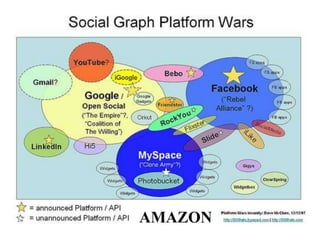
AMAZON
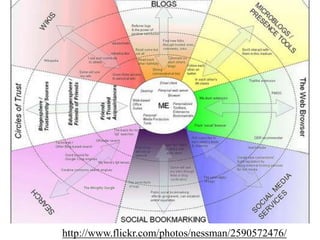
http://www.flickr.com/photos/nessman/2590572476/
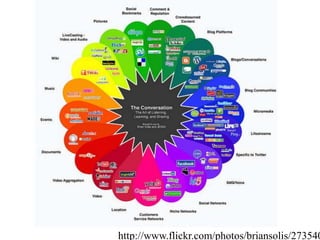
http://www.flickr.com/photos/briansolis/2735401175/
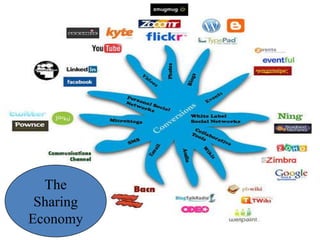
TheSharingEconomy
Collaboration SuiteWikis
Collaboration SuiteTagging
Collaboration SuiteThe Cloud
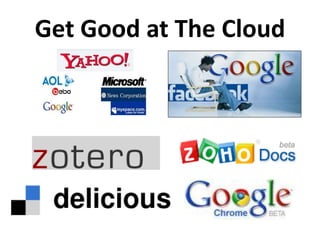
Get Good at The Cloud
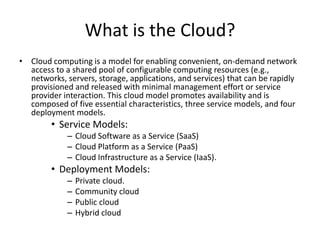
What is the Cloud?Cloud computing is a model for enabling convenient, on-demand network access to a shared pool of configurable computing resources (e.g., networks, servers, storage, applications, and services) that can be rapidly provisioned and released with minimal management effort or service provider interaction. This cloud model promotes availability and is composed of five essential characteristics, three service models, and four deployment models.Service Models: Cloud Software as a Service (SaaS)Cloud Platform as a Service (PaaS)Cloud Infrastructure as a Service (IaaS).Deployment Models:Private cloud. Community cloudPublic cloudHybrid cloud
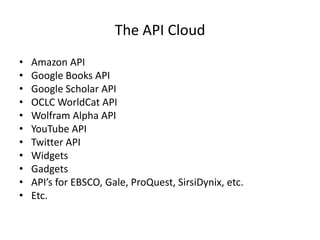
The API CloudAmazon APIGoogle Books APIGoogle Scholar APIOCLC WorldCat APIWolfram Alpha APIYouTube APITwitter APIWidgetsGadgetsAPI’s for EBSCO, Gale, ProQuest, SirsiDynix, etc.Etc.
Collaboration SuiteBlogs
Collaboration SuitePhotos
Collaboration SuiteSlideShare
Collaboration SuiteSocial Networks
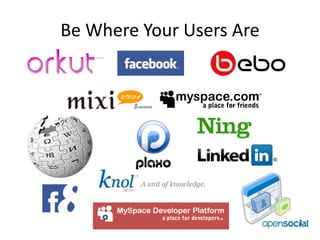
Be Where Your Users Are
Big Shifts What is happening in Technology
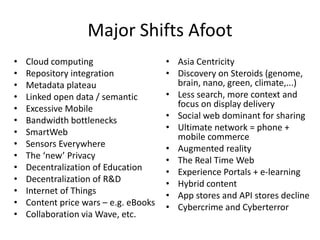
Major Shifts AfootCloud computingRepository integration Metadata plateauLinked open data / semanticExcessive MobileBandwidth bottlenecksSmartWebSensors EverywhereThe ‘new’ PrivacyDecentralization of EducationDecentralization of R&DInternet of ThingsContent price wars – e.g. eBooksCollaboration via Wave, etc.Asia CentricityDiscovery on Steroids (genome, brain, nano, green, climate,...)Less search, more context and focus on display deliverySocial web dominant for sharingUltimate network = phone + mobile commerceAugmented realityThe Real Time WebExperience Portals + e-learningHybrid contentApp stores and API stores declineCybercrime and Cyberterror
Shift Number 1The Transmogrifying Book and Periodical
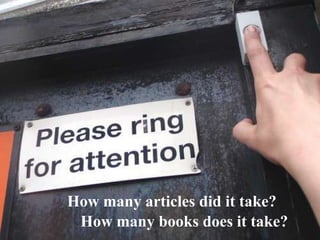
How many articles did it take?How many books does it take?
What is Driving the Need for Open?User ExpectationGenerational ChangeIT ArchitectureThe CloudAPI’sSocial MediaExperience trendsPersonalization
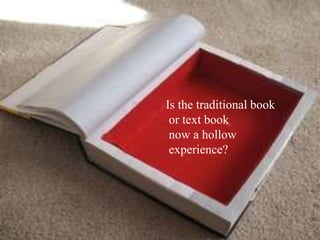
Is the traditional book or text book now a hollow experience?
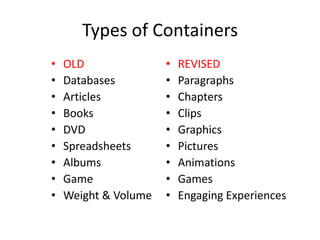
Old ContainersThese are not going away!But they are always physical and that results in compromisesPaper Books, magazines, periodicals, scholarly journals, coursepacks, DVDs, tape, video, cassette, photos, games, …They are losing market and mindshare.Especially in the discovery and learning space.
Traditional Experiences SchoolEureka ResearchShoppingElectionsReadingConcerts, EntertainmentMovies, Plays, TheatreAnd more and we don’t call it content!
New ContainersWhat are the new containers?The are mostly virtuale-courses, e-coursepacks, lessons, e-learning objects, video, music, podcast recordings, websites, portals, sessions, event, digital photo albums, etc.How do these fit into a positive transformational experience?
Types of ContainersOLDDatabasesArticlesBooksDVDSpreadsheetsAlbumsGameWeight & VolumeREVISEDParagraphsChaptersClipsGraphicsPicturesAnimationsGamesEngaging Experiences
Container SuccessFocus on the End User(s) in contextContent is not enoughFocus on the results of the Experience:Learning, Social, Entertainment, Community, Hobbies, etc.Collectors not collections, Learners not Teachers, Readers not authors, publishers or librarians, decisions not photocopiesIMPACT, Transformations, Results
Issues in Experience PublishingDesign for Use not clicksUnderstand TransitionsThe goal is Transformations not TransactionsLearning stylesTechnology adoption and penetrationLearning curvesMultiple intelligencesTarget market differencesTuning – e.g. Flesch-Kincaid, Lexiles, levelling, levelled readingTechnical issues like persistent content (persistent URLs, etc.) and deep linking, rights management, etc.
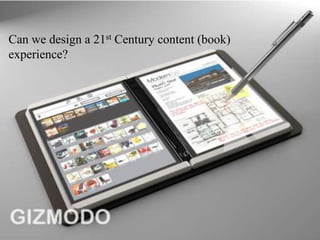
Can we design a 21st Century content (book) experience?
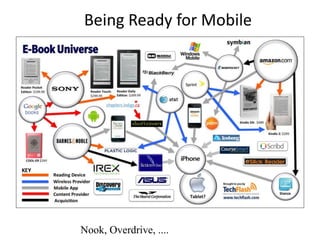
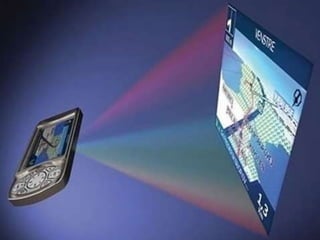
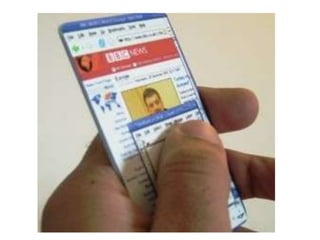
Being Ready for MobileNook, Overdrive, ....
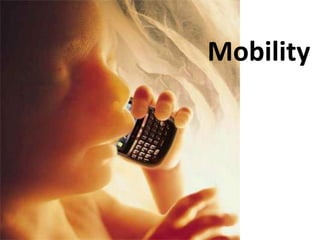
Mobility
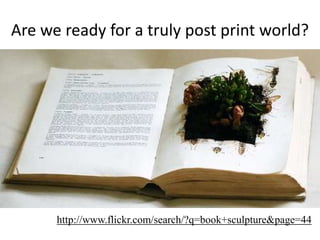
Are we ready for a truly post print world?http://www.flickr.com/search/?q=book+sculpture&page=44
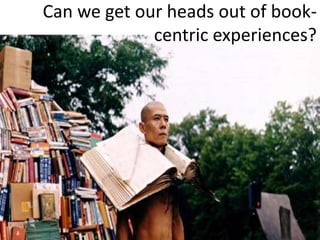
Can we get our heads out of book-centric experiences?
Will Reading Matter?Are your staff confusing books and reading?Audiobooks, Cengage and eBooks . . . And Google
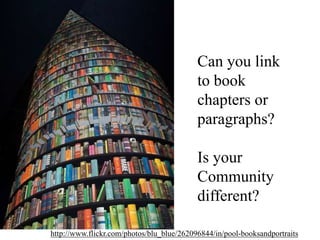
Can you link to book chapters or paragraphs?Is your Community different?http://www.flickr.com/photos/blu_blue/262096844/in/pool-booksandportraits
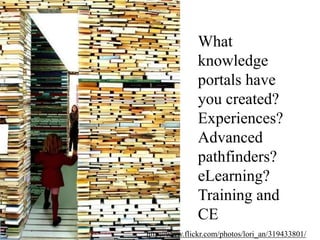
What knowledge portals have you created?Experiences?Advanced pathfinders?eLearning?Training and CEhttp://www.flickr.com/photos/lori_an/319433801/
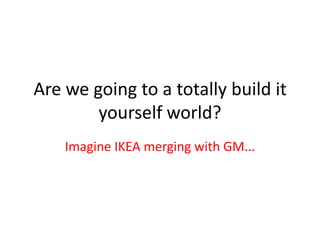
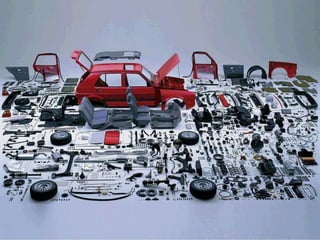
Are we going to a totally build it yourself world?Imagine IKEA merging with GM...
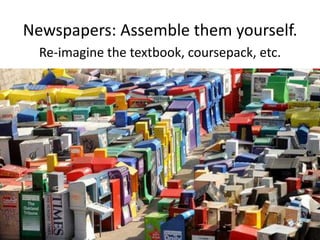
Newspapers: Assemble them yourself.Re-imagine the textbook, coursepack, etc.
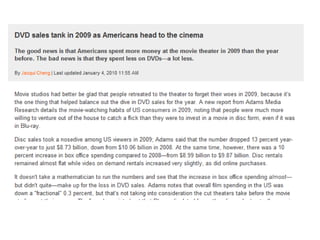
Shift Number 2Islands in the Stream: DVD, CD, and death thereof
What is the scariest scenario for libraries?I have an archaeology background . . .
Shift Number 3Smart Kids & Employees
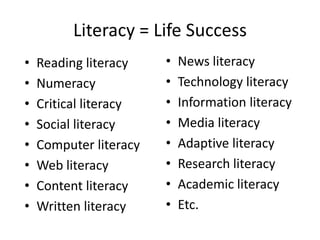
Literacy = Life SuccessNews literacyTechnology literacyInformation literacyMedia literacyAdaptive literacyResearch literacyAcademic literacyEtc.Reading literacyNumeracyCritical literacySocial literacyComputer literacyWeb literacyContent literacyWritten literacy
Play
Shift Number 4Mind Share and Libraries
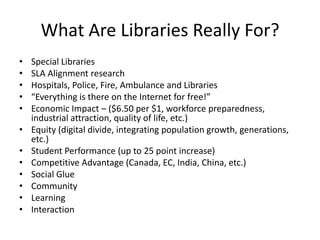
What Are Libraries Really For?Special LibrariesSLA Alignment researchHospitals, Police, Fire, Ambulance and Libraries“Everything is there on the Internet for free!”Economic Impact – ($6.50 per $1, workforce preparedness, industrial attraction, quality of life, etc.)Equity (digital divide, integrating population growth, generations, etc.)Student Performance (up to 25 point increase)Competitive Advantage (Canada, EC, India, China, etc.)Social GlueCommunityLearningInteraction
Shift Number 5Bricks, Clicks and Tricks: Physical Space
Bricks, Clicks and Tricks:Knowledge Commons
Comfort
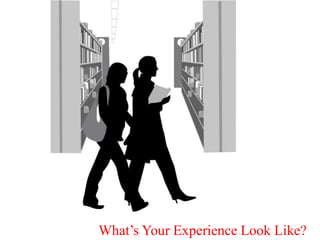
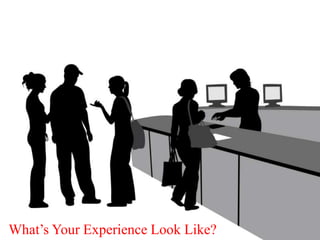
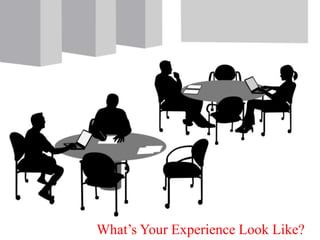
What’s Your Experience Look Like?
Shift Number 6Social Libraries
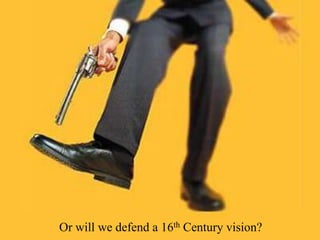
Or will we defend a 16th Century vision?
Community
Life
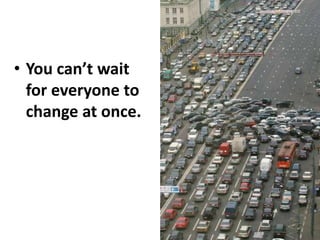
You can’t wait for everyone to change at once.
Shift Number 7Partnerships, CollaborationsCooperation
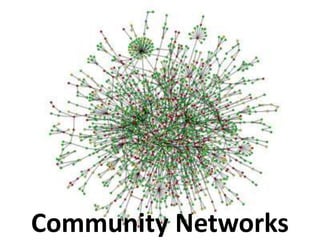
Community Networks
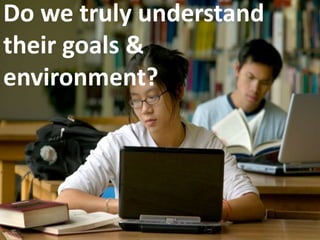
Do we truly understand their goals &environment?
Conversations
Relationships
What do libraries want?RelevanceMaking a Difference
Choose the pebbles you need to throw and aim now.
Make a Connection
Know their names!
Understand each Person
Shift Number8An E-learning World
You all know e-learning...Key strategies that must happen...There is an imperative that the library and institutional and provincial/national strategies align quick ly.Liaisons need to be prioritized over serviceSelf service needs to be thought throughNiche priorities over service for allOn demand content Copyright, etc.Puzzle experiments – i.e. How does the espresso book machine puzzle into our strategies
Shift Number 9A Volatile World(for you and your employer)
Shift Number 9InterdisciplinaryCross-disciplinaryMulti-disciplinary
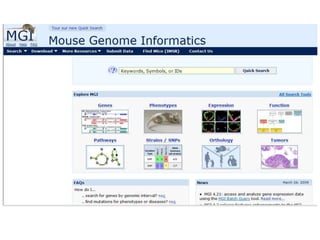
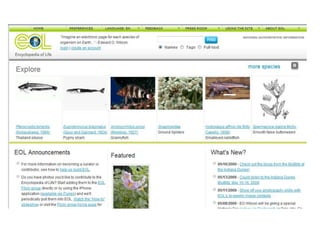
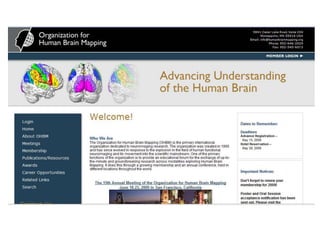
Discovery & Ideas
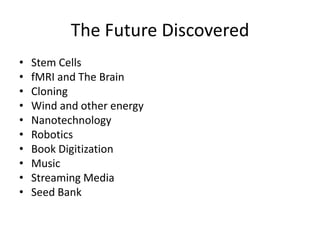
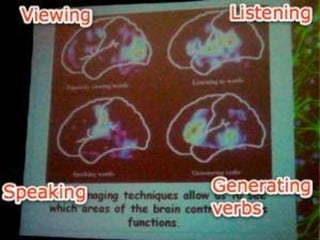
The Future DiscoveredStem CellsfMRI and The BrainCloningWind and other energyNanotechnologyRoboticsBook DigitizationMusicStreaming MediaSeed Bank
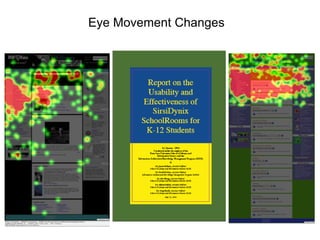
Eye Movement Changes
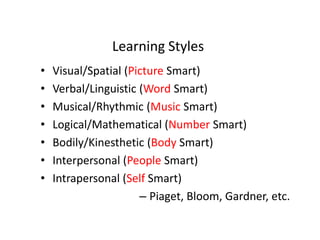
Learning StylesVisual/Spatial (Picture Smart)Verbal/Linguistic (Word Smart)Musical/Rhythmic (Music Smart)Logical/Mathematical (Number Smart)Bodily/Kinesthetic (Body Smart)Interpersonal (People Smart)Intrapersonal (Self Smart)Piaget, Bloom, Gardner, etc.
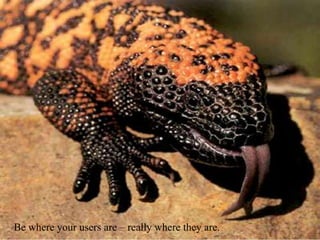
Be where your users are – really where they are.
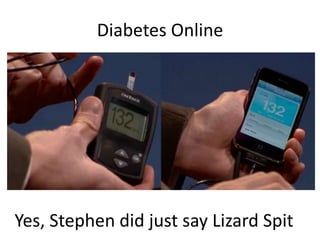
Diabetes OnlineYes, Stephen did just say Lizard Spit
VolatilityEspecially in Education and Research
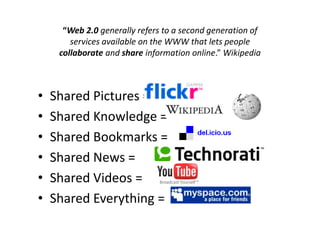
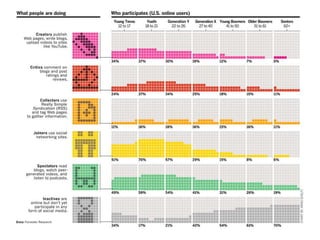
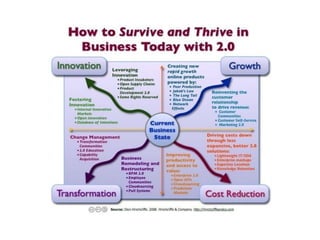
“Web 2.0 generally refers to a second generation of services available on the WWW that lets people collaborate and share information online.” WikipediaShared Pictures = Shared Knowledge =Shared Bookmarks =Shared News = Shared Videos =Shared Everything =
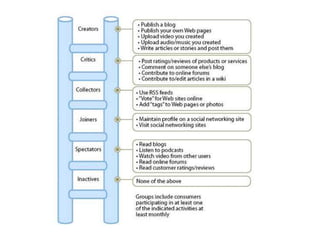
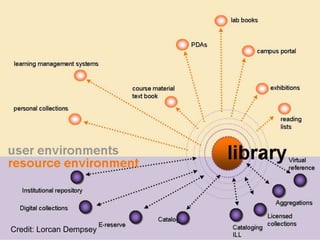
Credit: Lorcan Dempsey
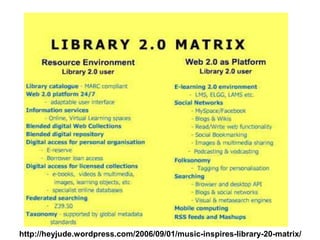
http://heyjude.wordpress.com/2006/09/01/music-inspires-library-20-matrix/

Click U2010