COMMUNITY
  IMPACT
Frankenbooks: Framing the
   Issues and Challenges
     Stephen Abram, MLS, FSLA
           Vice President
       Gale Cengage Learning
       SAOIM – June 8, 2012
Is this graphic correct? What’s wrong?
Is the book in your head?
Frankenbooks? Emotion? Morality?
The Physical Act of Reading
Think harder about book components!
Whose needs are met by e-books and e-libraries?
Deer in headlamps slide here.
Welcome

Questions for Today:

1.   What is REALLY happening with eBooks?
2.   Where is all this change taking us?
3.   Do people still value the book?
4.   What’s next?
5.   What is the role for librarians in our info-
     future?
There is no guarantee that the e-
 book scenario will play out to
         include libraries
What is an EXPERIENCE?

             What is a library experience?
What differentiates a library experience from a transaction?
  What differentiates college libraries from Google/Bing?
The Evolution
 of Answers
Why do people ask questions?
Is your library experience conceptually organized around answers and programs?
                     Or collections, technology and buildings?
Why do people ask questions?
   Who, What, When, Where
   How & Why
   Data – Information – Knowledge - Behavior
   To Learn or to Know
   To Acquire Information, Clarify, Tune
   To Decide, to Solve, to Choose, to Delay
   To Interview, Delve, Interact, Progress
   To Entertain or Socialize
   To Reduce Fear
   To Help, Aid, Cure, Be a Friend
   To Win A Bet
READING EXERCISE


 Why do people read?
Why do people read?
1.    To learn
2.    To engage in hearing other’s opinions (to agree or disagree or understand)
3.    To develop more knowledge about myself and develop as a whole person
4.    To be entertained and laugh, to engage and interact
5.    To address boredom and the inexorable progress of time
6.    To research and keep up-to-date
7.    To participate well in civil society (everything from news to voting)
8.    To be informed (and maybe smarter)
9.    To understand others (individually and culturally)
10.   To escape our day-to-day lives
11.   To stimulate the imagination and be inspired or spiritual
12.    To write and communicate better through reading others
13.    To teach
14.    To have something to talk about
15.   To connect with like-minded people
Books
Fiction
Non-Fiction
Encyclopedia
Reference
Directories
Dictionaries
Textbooks
Scholarly
Kiddy Lit
E-Learning
Mobility
Pottermore
 Harper Collins
 OverDrive
 Kindle Library e-books
 Advertising
 Malicious Links
 Vanity Press vs. self publishing
Skirmishes but Big Ones
 App Store Rules
 Porn – e.g. Sports Illustrated
 No Criticism rule
 Politicians’ apps
 Satire
 Pulitzer Prize winner
 Books as an app require approval
 Potential restraint of trade
 Who chooses?
 Censorship . . .?
What does all this mean?
 The Article level universe
 The Chapter and Paragraph Universe
 Integrated with Visuals – graphics and charts
 Integrated with ‘video’
 Integrated with Sound and Speech
 Integrated with social web
 Integrated with interaction and not just
  interactivity
 How would you enhance a book?
Device Issues
Borders Kobo, B&N Nook, Amazon Kindle, Apple iPad, Sony, etc. . . .
Mobility
Broadband
 You must clearly understand the latest US FCC
  Whitespace Broadband Decision – THIS IS
  TRANSFORMATIONAL and going global
 Local wired, mobile access ‘everywhere’ to the
  home and workplace
 Geo-awareness: GIS, GPS, GEO-IP, etc.
 Wireless as a business strategy (Starbucks)
 Mobile dominates
 Largest generation
•
          The Future Discovered
    Stem Cells
•   fMRI and The Brain
•   Cloning
•   Trucking and GPS
•   Wind and other energy
•   Nanotechnology
•   Robotics
•   Massive Book Digitization
•   Music
•   Translation
•   Streaming Media
•   Seed Bank
Interdisciplinary
Cross-disciplinary
Integrated
GAMIFICATION
Academic Libraries in The Future:
From collections to impact

                            Stephen Abram, MLS
                            Langara College
                            Vancouver, BC
                            Feb. 13, 2012
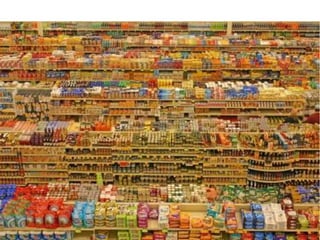
Grocery Stores
Grocery Stores
Grocery Stores
Cookbooks, Chefs . . .
Meals
You have the tools.
Stop Making it So Hard!
Context
• Information and Knowledge-based economy
• Globalization
• There is an education economy
• Stress on core markets (US)
• Changing knowledge about current crop of
  students (genome, eye
  tracking, gaming, IQ, ICT and social
  behaviours, etc.)
• Information ethics and copyright
Books
•   Reception of Reading and Experience
•   Fiction – paper, e-paper
•   Non-Fiction
•   Articles - disaggregation
•   Media – physical vs. streaming
•   Learning Objects
•   Stories vs. Pedagogy
Technology Context
•   Cloud (SaaS, PaaS, IaaS)
•   Laptops and Tablets
•   Mobility / Smartphones
•   Bandwidth (Wired, WiFi, Whitespace)
•   Learning Management Systems
•   Streaming video and audio vs. download
•   HTML5 and Apps – the battle
•   Advertising auction models and ‘product’
•   New(ish) Players
    (Amazon, Apple, G, B&N, Uni’s, states/provinces/
    nations)
The BASICS
• Containers for Pedagogy
• Created by Teams (e.g. 40,000 authors a year for
  Cengage alone) (yes that’s a lot of lawyers)
• Copyright and complicated layering of millions of
  rights (creators -
  pictures, graphics, video, tests, text, documents, e
  tc.)
• Serious Lawsuits:
  Feist, Texaco, LSUC, Tasini, NatGeo, Authors
  Guild, jStor, GBS, etc.
• Complex extension opportunities (links to
  articles, databases, library assistance, etc.)
Textbook Challenges
• Format Agnosticism
• Browsers: IE, Chrome, Firefox, Safari
• Devices: Macintosh, PC Desktops & Laptops
• Mobile: Laptops, Tablets (iPad, Fire, etc.)
• Mobile: Smartphones
  (iPhone, Blackberry, Android, Windows, etc.)
• Container: PDF, ePub, .mobi, Kindle, etc.
• Learning Management System: Blackboard /
  WebCT, D2L, Moodle, Sakai, etc.
• Purchasing (Amazon, B&N, Chegg, CengageBrain, Apple
  Store, University Textbook Store, etc.)
Should we tie students and
  professors to a specific and
proprietary device or operating
           system?
What is the priority?

         Price, Cost, Value, ROI
Managing or Mandating the Adoption Curve
         Learning and Progress
   Societal Impact = 17%, 40%, 70%?
Death of the Traditional Textbook?
•   Shallow pool innovation – e-copies
•   Open Access Textbooks?
•   Coursepacks and e-coursepacks?
•   Apple?
•   Google?
•   Etc.
What is Changing?
1. Componentization of pedagogy
2. Enhanced textbooks
   (tests, tracking, video, etc.)
3. Advanced e-learning
4. Ability to archive
5. The purchaser matrix (individual
   student, class, institutions, state/province/co
   untry)
6. Textbook boundaries (library links first…)
Pricing Models
•   Buy the print copy
•   Buy the exact electronic copy of the print
•   Buy both (bundling)
•   Rent the print or e-copy for a specified period
•   Create custom coursepacks in print or e-copy
•   Buy at the course level included in fee
•   Buy at the institution / enterprise level
•   Buy at the state/province level
•   Espresso Book Machines
•   Pay-per-use, micro-payments, ‘Square’ and phones
This era will see a Fundamental
  Reimagining the Textbook
   For the present there will be those
   who resist and the resisters will be
              the majority.
Thanks
                          Stephen Abram, MLS, FSLA
             VP strategic partnerships and markets
                            Cengage Learning (Gale)
                                 Cel: 416-669-4855
                     stephen.abram@cengage.com
                        Stephen.abram@gmail.com
                          Stephen’s Lighthouse Blog
                    http://stephenslighthouse.com
Facebook, Google+, LinkedIn, Plaxo : Stephen Abram
                 FourSquare, Path: Stephen Abram
                  Twitter, Quora, Yelp, etc.: sabram
                        SlideShare: StephenAbram1

Saoim ebooks

  • 1.
  • 2.
    Frankenbooks: Framing the Issues and Challenges Stephen Abram, MLS, FSLA Vice President Gale Cengage Learning SAOIM – June 8, 2012
  • 3.
    Is this graphiccorrect? What’s wrong?
  • 10.
    Is the bookin your head?
  • 11.
  • 14.
    The Physical Actof Reading
  • 15.
    Think harder aboutbook components!
  • 18.
    Whose needs aremet by e-books and e-libraries?
  • 21.
    Deer in headlampsslide here.
  • 22.
    Welcome Questions for Today: 1. What is REALLY happening with eBooks? 2. Where is all this change taking us? 3. Do people still value the book? 4. What’s next? 5. What is the role for librarians in our info- future?
  • 23.
    There is noguarantee that the e- book scenario will play out to include libraries
  • 24.
    What is anEXPERIENCE? What is a library experience? What differentiates a library experience from a transaction? What differentiates college libraries from Google/Bing?
  • 25.
  • 26.
    Why do peopleask questions? Is your library experience conceptually organized around answers and programs? Or collections, technology and buildings?
  • 27.
    Why do peopleask questions?  Who, What, When, Where  How & Why  Data – Information – Knowledge - Behavior  To Learn or to Know  To Acquire Information, Clarify, Tune  To Decide, to Solve, to Choose, to Delay  To Interview, Delve, Interact, Progress  To Entertain or Socialize  To Reduce Fear  To Help, Aid, Cure, Be a Friend  To Win A Bet
  • 28.
    READING EXERCISE Whydo people read?
  • 29.
    Why do peopleread? 1. To learn 2. To engage in hearing other’s opinions (to agree or disagree or understand) 3. To develop more knowledge about myself and develop as a whole person 4. To be entertained and laugh, to engage and interact 5. To address boredom and the inexorable progress of time 6. To research and keep up-to-date 7. To participate well in civil society (everything from news to voting) 8. To be informed (and maybe smarter) 9. To understand others (individually and culturally) 10. To escape our day-to-day lives 11. To stimulate the imagination and be inspired or spiritual 12. To write and communicate better through reading others 13. To teach 14. To have something to talk about 15. To connect with like-minded people
  • 31.
  • 32.
  • 33.
  • 34.
  • 35.
  • 36.
  • 37.
  • 38.
  • 39.
  • 40.
  • 41.
  • 43.
  • 52.
  • 54.
     Harper Collins OverDrive  Kindle Library e-books  Advertising  Malicious Links  Vanity Press vs. self publishing
  • 57.
    Skirmishes but BigOnes  App Store Rules  Porn – e.g. Sports Illustrated  No Criticism rule  Politicians’ apps  Satire  Pulitzer Prize winner  Books as an app require approval  Potential restraint of trade  Who chooses?  Censorship . . .?
  • 58.
    What does allthis mean?  The Article level universe  The Chapter and Paragraph Universe  Integrated with Visuals – graphics and charts  Integrated with ‘video’  Integrated with Sound and Speech  Integrated with social web  Integrated with interaction and not just interactivity  How would you enhance a book?
  • 59.
  • 60.
    Borders Kobo, B&NNook, Amazon Kindle, Apple iPad, Sony, etc. . . .
  • 65.
  • 66.
    Broadband  You mustclearly understand the latest US FCC Whitespace Broadband Decision – THIS IS TRANSFORMATIONAL and going global  Local wired, mobile access ‘everywhere’ to the home and workplace  Geo-awareness: GIS, GPS, GEO-IP, etc.  Wireless as a business strategy (Starbucks)  Mobile dominates  Largest generation
  • 68.
    The Future Discovered Stem Cells • fMRI and The Brain • Cloning • Trucking and GPS • Wind and other energy • Nanotechnology • Robotics • Massive Book Digitization • Music • Translation • Streaming Media • Seed Bank
  • 69.
  • 70.
  • 74.
    Academic Libraries inThe Future: From collections to impact Stephen Abram, MLS Langara College Vancouver, BC Feb. 13, 2012
  • 75.
  • 76.
  • 77.
  • 78.
  • 79.
  • 80.
  • 81.
  • 82.
  • 83.
    Context • Information andKnowledge-based economy • Globalization • There is an education economy • Stress on core markets (US) • Changing knowledge about current crop of students (genome, eye tracking, gaming, IQ, ICT and social behaviours, etc.) • Information ethics and copyright
  • 84.
    Books • Reception of Reading and Experience • Fiction – paper, e-paper • Non-Fiction • Articles - disaggregation • Media – physical vs. streaming • Learning Objects • Stories vs. Pedagogy
  • 85.
    Technology Context • Cloud (SaaS, PaaS, IaaS) • Laptops and Tablets • Mobility / Smartphones • Bandwidth (Wired, WiFi, Whitespace) • Learning Management Systems • Streaming video and audio vs. download • HTML5 and Apps – the battle • Advertising auction models and ‘product’ • New(ish) Players (Amazon, Apple, G, B&N, Uni’s, states/provinces/ nations)
  • 86.
    The BASICS • Containersfor Pedagogy • Created by Teams (e.g. 40,000 authors a year for Cengage alone) (yes that’s a lot of lawyers) • Copyright and complicated layering of millions of rights (creators - pictures, graphics, video, tests, text, documents, e tc.) • Serious Lawsuits: Feist, Texaco, LSUC, Tasini, NatGeo, Authors Guild, jStor, GBS, etc. • Complex extension opportunities (links to articles, databases, library assistance, etc.)
  • 87.
    Textbook Challenges • FormatAgnosticism • Browsers: IE, Chrome, Firefox, Safari • Devices: Macintosh, PC Desktops & Laptops • Mobile: Laptops, Tablets (iPad, Fire, etc.) • Mobile: Smartphones (iPhone, Blackberry, Android, Windows, etc.) • Container: PDF, ePub, .mobi, Kindle, etc. • Learning Management System: Blackboard / WebCT, D2L, Moodle, Sakai, etc. • Purchasing (Amazon, B&N, Chegg, CengageBrain, Apple Store, University Textbook Store, etc.)
  • 88.
    Should we tiestudents and professors to a specific and proprietary device or operating system?
  • 89.
    What is thepriority? Price, Cost, Value, ROI Managing or Mandating the Adoption Curve Learning and Progress Societal Impact = 17%, 40%, 70%?
  • 90.
    Death of theTraditional Textbook? • Shallow pool innovation – e-copies • Open Access Textbooks? • Coursepacks and e-coursepacks? • Apple? • Google? • Etc.
  • 91.
    What is Changing? 1.Componentization of pedagogy 2. Enhanced textbooks (tests, tracking, video, etc.) 3. Advanced e-learning 4. Ability to archive 5. The purchaser matrix (individual student, class, institutions, state/province/co untry) 6. Textbook boundaries (library links first…)
  • 92.
    Pricing Models • Buy the print copy • Buy the exact electronic copy of the print • Buy both (bundling) • Rent the print or e-copy for a specified period • Create custom coursepacks in print or e-copy • Buy at the course level included in fee • Buy at the institution / enterprise level • Buy at the state/province level • Espresso Book Machines • Pay-per-use, micro-payments, ‘Square’ and phones
  • 93.
    This era willsee a Fundamental Reimagining the Textbook For the present there will be those who resist and the resisters will be the majority.
  • 94.
    Thanks Stephen Abram, MLS, FSLA VP strategic partnerships and markets Cengage Learning (Gale) Cel: 416-669-4855 stephen.abram@cengage.com Stephen.abram@gmail.com Stephen’s Lighthouse Blog http://stephenslighthouse.com Facebook, Google+, LinkedIn, Plaxo : Stephen Abram FourSquare, Path: Stephen Abram Twitter, Quora, Yelp, etc.: sabram SlideShare: StephenAbram1

Editor's Notes

  • #2 IntroductionHi everyone – I’m Kathy Gawronski – Director of Marketing for Gale Cengage Learning Thank you for having me today to talk a bit about how libraries can tell their stories - the stories of how they transform lives in the communities they serve