Future Ready: Academic Libraries on the EdgeStephen Abram, MLSYale Library Research Education SymposiumNew Haven, CTJune 9, 2011
ChangeThese slides are available at Stephen’s Lighthouse blog
We Only Get So Many Once-in-a-Lifetime Chances To Do Great Things
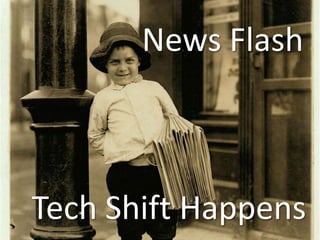
News Flash  “The Internet and technology have now progressed to their infancy”
News FlashNews FlashTech Shift Happens
Seth Godin on Decisions (June 8, 2011)Which of the four are getting in the way?
You don't know what to do
You don't know how to do it
You don't have the authority or the resources to do it
You're afraid
Once you figure out what's getting in the way, it's far easier to find the answer (or decide to work on a different problem).
Stuck is a state of mind, and it's curable.
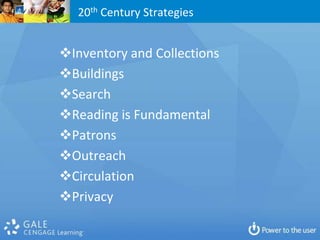
20th Century StrategiesInventory and Collections
Buildings
Search
Reading is Fundamental
Patrons
Outreach
Circulation
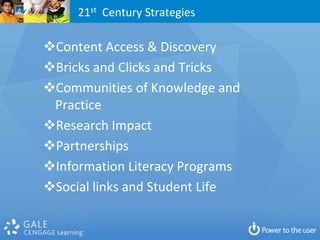
Privacy21st  Century StrategiesContent Access
Bricks and Clicks and Tricks
Communities of Knowledge and Practice
Research Impact
Partnerships
Information Literacy Programs
Social links and Student LifeWhat Are Libraries Really For?Community
Learning
Discovery
Progress
Research (Applied and Theoretical)
Cultural & Knowledge Custody
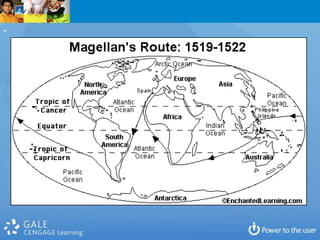
Economic Impact Columbus, Cook, Magellan and Libraries: Searching for the corners of the earth, the edge of the oceans and discovering dragons ...
-
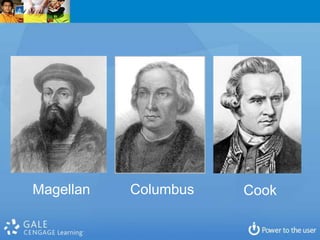
MagellanColumbusCook
Questions for Academic Libraries Today:Are the priorities right?Are learning, research, discovery changing materially and what is actually changing?Books. Meh.What is the role for librarians in the real future (that is not an extension of the past)?
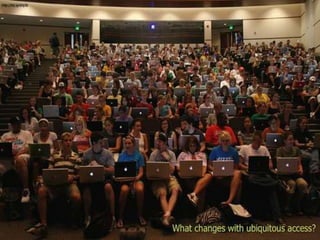
What has changed? Libraries at the heart of the campus? Nope.
 Students are focused at the lesson and event (essay, test, exam) level
 Researchers are connected beyond the host    institution.
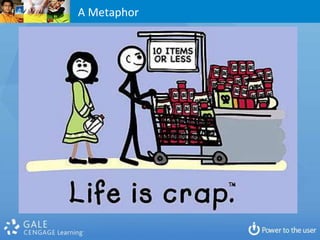
 Physical access and basic reading has already evolved to intellectual access with new competenciesA Metaphor
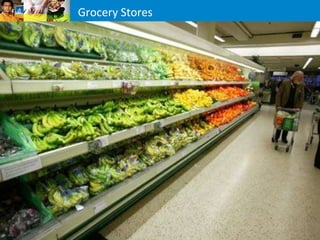
Grocery Stores
Grocery Stores
Grocery Stores
Cookbooks, Chefs . . .
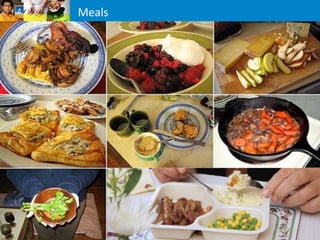
Meals
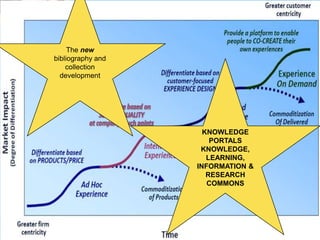
The new bibliography and collection developmentKNOWLEDGE PORTALSKNOWLEDGE,LEARNING,INFORMATION &RESEARCHCOMMONS
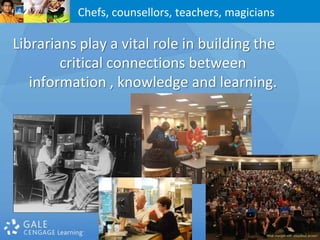
Chefs, counsellors, teachers, magiciansLibrarians play a vital role in building the critical connections between information , knowledge and learning.
Service MetaphorCafeterias
Take Out
 Private Dining Rooms
 Private Chefs
 VarietyCulture
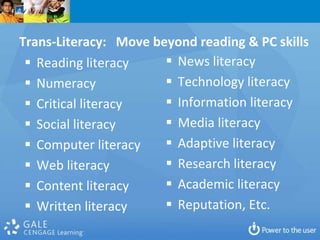
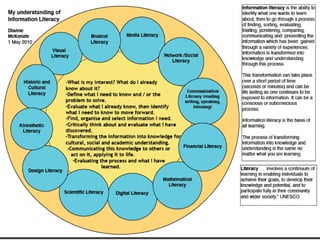
Trans-Literacy:   Move beyond reading & PC skills News literacy
Technology literacy
Information literacy
Media literacy
Adaptive literacy
Research literacy
Academic literacy
Reputation, Etc.
Reading literacy
Numeracy
Critical literacy
Social literacy
Computer literacy
Web literacy
Content literacy
Written literacyYou have the tools.
Stop Making it so Hard!
Steal This Idea
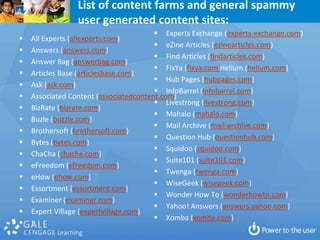
List of content farms and general spammy user generated content sites:All Experts (allexperts.com)
Answers (answers.com)
Answer Bag (answerbag.com)
Articles Base (articlesbase.com)
Ask (ask.com)
Associated Content (associatedcontent.com)
BizRate (bizrate.com)
Buzle (buzzle.com)
Brothersoft (brothersoft.com)
Bytes (bytes.com)
ChaCha (chacha.com)
eFreedom (efreedom.com)
eHow (ehow.com)
Essortment (essortment.com)
Examiner (examiner.com)
Expert Village (expertvillage.com)
)
Experts Exchange (experts-exchange.com)
eZine Articles (ezinearticles.com)
Find Articles (findarticles.com)
FixYa (fixya.com Helium (helium.com)
Hub Pages (hubpages.com)
InfoBarrel (infobarrel.com)
Livestrong (livestrong.com)
Mahalo (mahalo.com)
Mail Archive (mail-archive.com)
Question Hub (questionhub.com)
Squidoo (squidoo.com)
Suite101 (suite101.com)
Twenga (twenga.com)
WiseGeek (wisegeek.com)
Wonder How To (wonderhowto.com)
Yahoo! Answers (answers.yahoo.com)
Xomba (xomba.com)
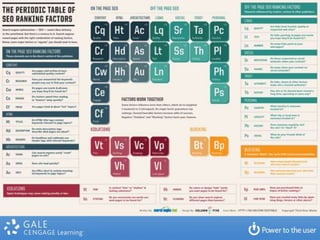
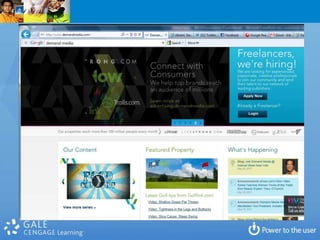
The nasty facts about Google &  Bing and  consumer search:SEO / SMOContent FarmsAdvertiser-drivenGeotaggingGOOG
Have Students Changed?
YES (duh!)
My son: Zachary
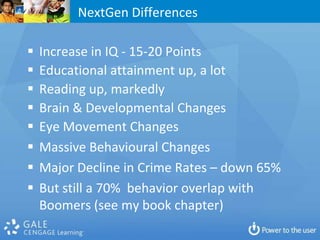
NextGen DifferencesIncrease in IQ - 15-20 Points
Educational attainment up, a lot
Reading up, markedly
Brain & Developmental Changes
Eye Movement Changes
Massive Behavioural Changes
Major Decline in Crime Rates – down 65%
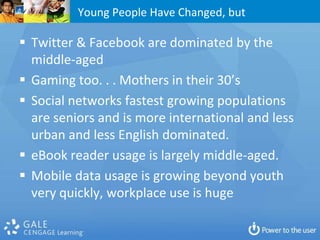
But still a 70%  behavior overlap with Boomers (see my book chapter)Young People Have Changed, butTwitter & Facebook are dominated by the middle-aged
Gaming too. . . Mothers in their 30’s
Social networks fastest growing populations are seniors and is more international and less urban and less English dominated.
eBook reader usage is largely middle-aged.
Mobile data usage is growing beyond youth very quickly, workplace use is huge
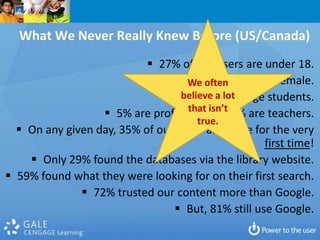
We often believe a lot that isn’t true.What We Never Really Knew Before (US/Canada)27% of our users are under 18.
59% are female.
29% are college students.
5% are professors and 6% are teachers.
On any given day, 35% of our users are there for the very first time!
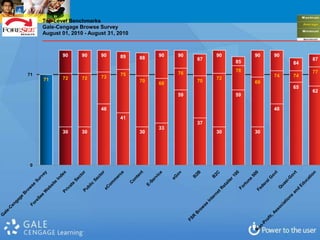
Only 29% found the databases via the library website.
59% found what they were looking for on their first search.
72% trusted our content more than Google.
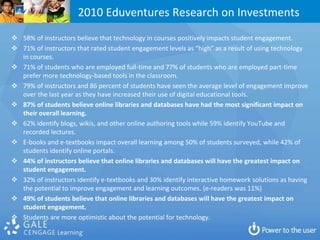
But, 81% still use Google.2010 Eduventures Research on Investments58% of instructors believe that technology in courses positively impacts student engagement.
71% of instructors that rated student engagement levels as “high” as a result of using technology in courses.
71% of students who are employed full-time and 77% of students who are employed part-time prefer more technology-based tools in the classroom.
79% of instructors and 86 percent of students have seen the average level of engagement improve over the last year as they have increased their use of digital educational tools.
87% of students believe online libraries and databases have had the most significant impact on their overall learning.
62% identify blogs, wikis, and other online authoring tools while 59% identify YouTube and recorded lectures.
E-books and e-textbooks impact overall learning among 50% of students surveyed, while 42% of students identify online portals.
44% of instructors believe that online libraries and databases will have the greatest impact on student engagement.

32% of instructors identify e-textbooks and 30% identify interactive homework solutions as having the potential to improve engagement and learning outcomes. (e-readers was 11%)
49% of students believe that online libraries and databases will have the greatest impact on student engagement.


Students are more optimistic about the potential for technology.

Yale 2011