The New Normal:
               Social Institutions and the Social Web

                                                        Stephen Abram, MLS
                                           San Jose State University SLIS
                                           Library 2.011 Global Conference
These slides are available at Stephen’s Lighthouse blog         Nov. 3, 2011
It’s just not that old....

“The term "Web 2.0" became synonymous with
  the emergence, over 2004-05, of social
  services like YouTube, MySpace, Facebook
  and Flickr. It was coined in 2004 by O'Reilly
  Media for the inaugural Web 2.0 Conference,
  held in October 2004. At the time, Web 2.0
  was meant to convey the beginning of a
  second major era in the Web; after the Dot
  Com collapse in 2001.”
“The Web as a ‘platform’.”
Is there still life in web
    tools for library
      strategies?
                  Yes, but . . .
Change: Are libraries
  Future Ready?
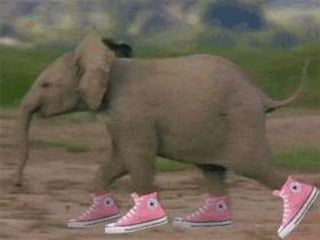
Reducing Suspense:
And the answer is . . . . MAYBE
Strategic Choice

Are there too many choices?
Will disagreements about the
future freeze the process?
se·duc·tion (s-dkshn) n.
        1. a. The act of seducing.
   b. The condition of being seduced.
  2. Something that seduces or has the
   qualities to seduce; an enticement.

  [Latin sducti, sductin-, from sductus, past
participle of sdcere, to lead astray : s-, apart;
see s(w)e- in Indo-European roots + dcere, to
  lead; see deuk- in Indo-European roots.]
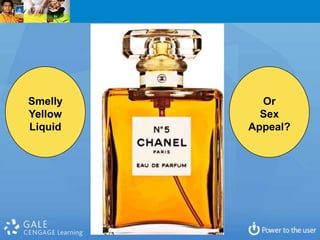
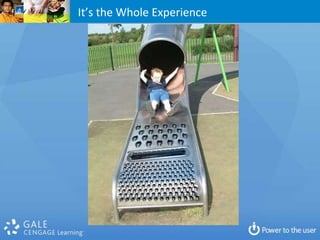
Smelly     Or
Yellow     Sex
Liquid   Appeal?
It’s the Whole Experience
News Flash
“The Internet and technology have
    now progressed to their infancy”
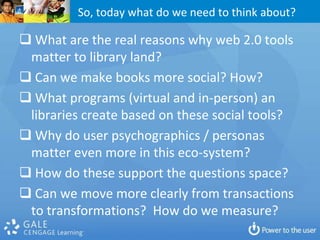
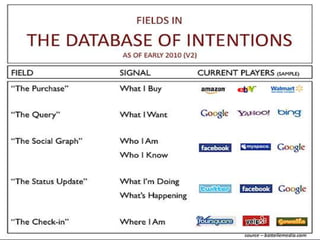
So, today what do we need to think about?

 What are the real reasons why web 2.0 tools
 matter to library land?
 Can we make books more social? How?
 What programs (virtual and in-person) an
 libraries create based on these social tools?
 Why do user psychographics / personas
 matter even more in this eco-system?
 How do these support the questions space?
 Can we move more clearly from transactions
 to transformations? How do we measure?
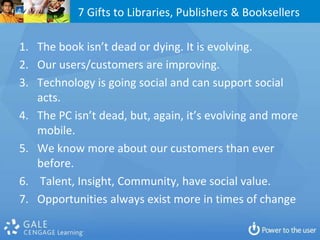
7 Gifts to Libraries, Publishers & Booksellers

1. The book isn’t dead or dying. It is evolving.
2. Our users/customers are improving.
3. Technology is going social and can support social
   acts.
4. The PC isn’t dead, but, again, it’s evolving and more
   mobile.
5. We know more about our customers than ever
   before.
6. Talent, Insight, Community, have social value.
7. Opportunities always exist more in times of change
Change can happen very fast
Gift #1
Making
Libraries Social
The Evolution
 of Books
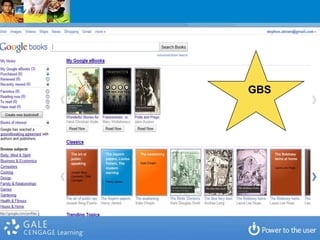
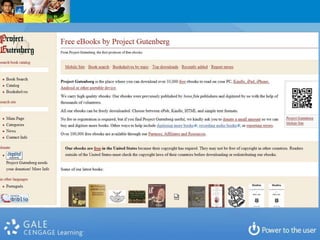
GBS
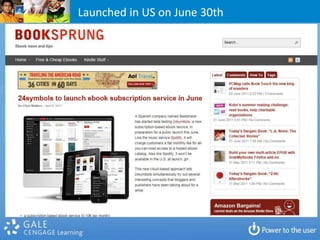
Launched in US on June 30th
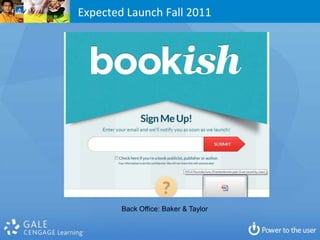
Expected Launch Fall 2011


        Back Office: Baker & Taylor
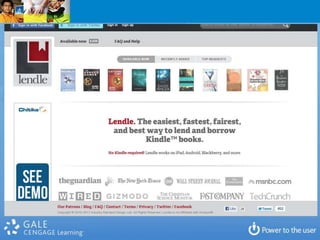
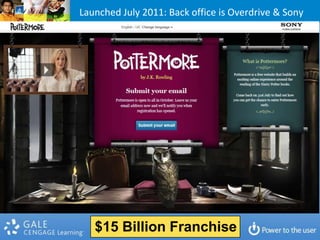
Launched July 2011: Back office is Overdrive & Sony


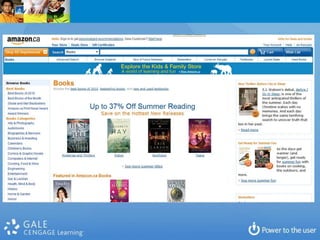
   $15 Billion Franchise
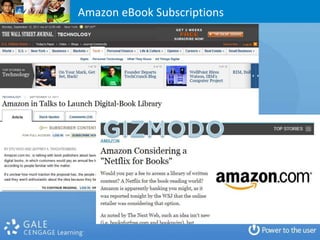
Amazon eBook Subscriptions
Can we frame the e-book issue so
that it can be addressed rationally?
Why do people read?
How do we socially aware web 2.0
    tools to the experience?
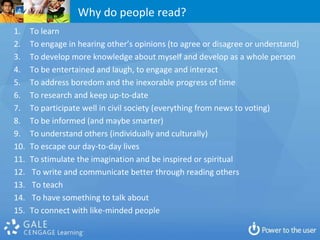
Why do people read?
1.    To learn
2.    To engage in hearing other’s opinions (to agree or disagree or understand)
3.    To develop more knowledge about myself and develop as a whole person
4.    To be entertained and laugh, to engage and interact
5.    To address boredom and the inexorable progress of time
6.    To research and keep up-to-date
7.    To participate well in civil society (everything from news to voting)
8.    To be informed (and maybe smarter)
9.    To understand others (individually and culturally)
10.   To escape our day-to-day lives
11.   To stimulate the imagination and be inspired or spiritual
12.   To write and communicate better through reading others
13.   To teach
14.   To have something to talk about
15.   To connect with like-minded people
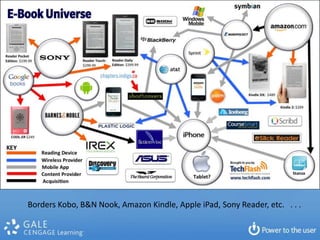
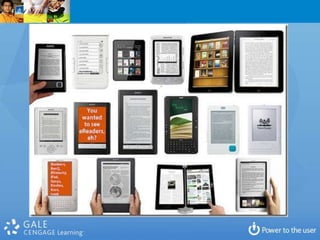
Borders Kobo, B&N Nook, Amazon Kindle, Apple iPad, Sony Reader, etc. . . .
Gift #2
How are libraries
different and how do we tell
  users? Content Spam
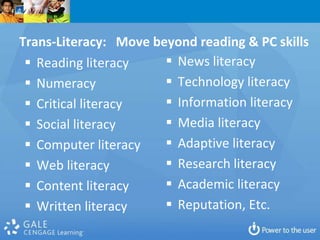
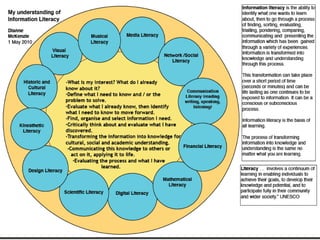
Trans-Literacy: Move beyond reading & PC skills
  Reading literacy     News literacy
  Numeracy             Technology literacy
  Critical literacy    Information literacy
  Social literacy      Media literacy
  Computer literacy    Adaptive literacy
  Web literacy         Research literacy
  Content literacy     Academic literacy
  Written literacy     Reputation, Etc.
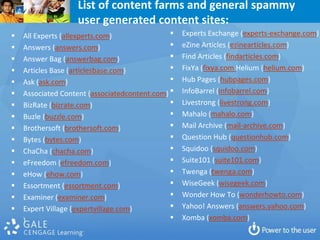
List of content farms and general spammy
                   user generated content sites:
   All Experts (allexperts.com)                  Experts Exchange (experts-exchange.com)
   Answers (answers.com)                         eZine Articles (ezinearticles.com)
   Answer Bag (answerbag.com)                    Find Articles (findarticles.com)
   Articles Base (articlesbase.com)              FixYa (fixya.com Helium (helium.com)
   Ask (ask.com)                                 Hub Pages (hubpages.com)
   Associated Content (associatedcontent.com)    InfoBarrel (infobarrel.com)
   BizRate (bizrate.com)                         Livestrong (livestrong.com)
   Buzle (buzzle.com)                            Mahalo (mahalo.com)
   Brothersoft (brothersoft.com)                 Mail Archive (mail-archive.com)
   Bytes (bytes.com)                             Question Hub (questionhub.com)
   ChaCha (chacha.com)                           Squidoo (squidoo.com)
   eFreedom (efreedom.com)                       Suite101 (suite101.com)
   eHow (ehow.com)                               Twenga (twenga.com)
   Essortment (essortment.com)                   WiseGeek (wisegeek.com)
   Examiner (examiner.com)                       Wonder How To (wonderhowto.com)
   Expert Village (expertvillage.com)            Yahoo! Answers (answers.yahoo.com)
   )                                             Xomba (xomba.com)
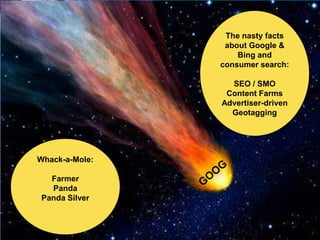
The nasty facts
                 about Google &
                    Bing and
                consumer search:

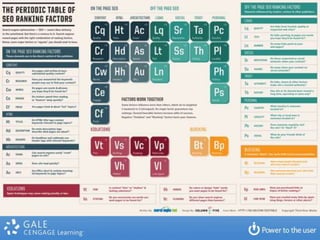
                  SEO / SMO
                 Content Farms
                Advertiser-driven
                  Geotagging


Whack-a-Mole:

  Farmer
  Panda
Panda Silver
Gift #3
The Evolution
 of Answers
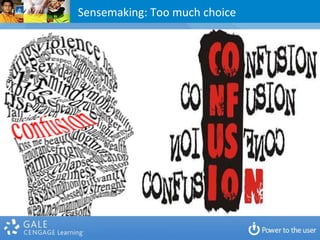
Sensemaking: Too much choice
Why do people ask questions?
What are your top 10-20 questions?
What is the service portfolio model
      that goes with those?
Driving the Knowledge Portal
alignment with User Behaviour
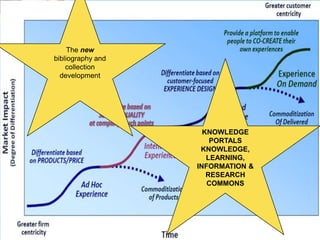
The new
bibliography and
    collection
  development


                     KNOWLEDGE
                       PORTALS
                    KNOWLEDGE,
                      LEARNING,
                   INFORMATION &
                      RESEARCH
                      COMMONS
What does all this mean?

   The Article level universe
   The Chapter and Paragraph Universe
   Integrated with Visuals – graphics and charts
   Integrated with ‘video’
   Integrated with Sound and Speech
   Integrated with social web
   Integrated with interaction and not just interactivity
   How would you enhance a book?
   How do Libraries play the game?
What Are Libraries Really For?

•   Community
•   Learning
•   Discovery
•   Progress
•   Research (Applied and Theoretical)
•   Cultural & Knowledge Custody / Conservation
•   Economic Impact
Questions for Libraries & Publishers Today:
1. Are our priorities right?
2. Are learning, research, discovery changing
   materially and what is actually changing?
3. Books. Meh.
4. What is the role of information and
   recreational reading in the real future (that is
   not an extension of the past)?
5. Are we for the 21st Century world that will be
   or the 20th Century one that was?
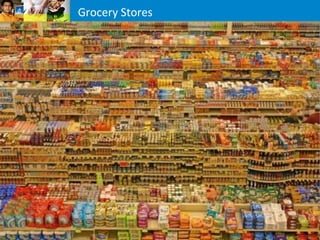
Grocery Stores
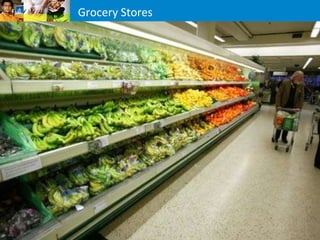
Grocery Stores
Grocery Stores
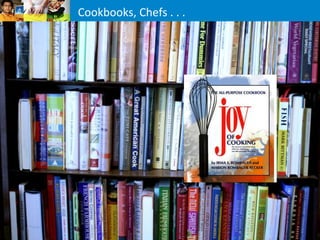
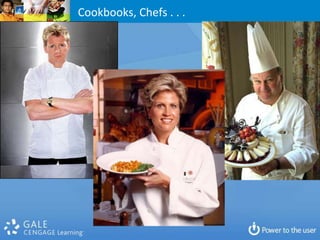
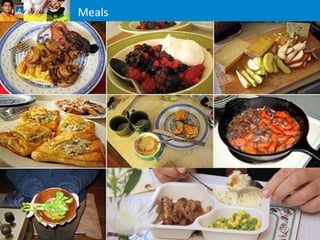
Cookbooks, Chefs . . .
Meals
My Point?
Meals are more social than grocery stores.
Gift #4
Mobility: Where
the Patron Is
Mobility
Gift #5
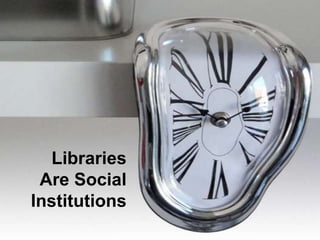
Libraries are
Social Institutions
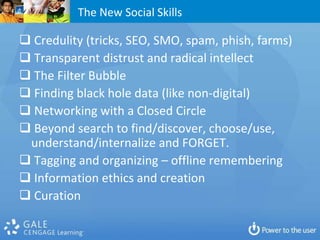
The New Social Skills

 Credulity (tricks, SEO, SMO, spam, phish, farms)
 Transparent distrust and radical intellect
 The Filter Bubble
 Finding black hole data (like non-digital)
 Networking with a Closed Circle
 Beyond search to find/discover, choose/use,
 understand/internalize and FORGET.
 Tagging and organizing – offline remembering
 Information ethics and creation
 Curation
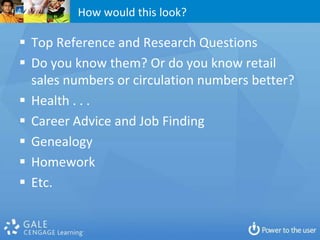
How would this look?

 Top Reference and Research Questions
 Do you know them? Or do you know retail
  sales numbers or circulation numbers better?
 Health . . .
 Career Advice and Job Finding
 Genealogy
 Homework
 Etc.
Libraries
 Are Social
Institutions
Summary

 End User Psychographic Centricity
 Focus on the Questions (Needs, CRM)
 Build or Buy Knowledge Portals (Meals)
 Emphasize Content Quality (not books)
 Expand Social Media Programs on Information
 Literacy
 Advocate and Align with the Listener
Tell Stories, Have users tell stories
 Invest in Strategic Analytics – Measurements of
 Impact, ROI and Value
 Collaborate vs. socialize
Stephen Abram, MLS, FSLA
VP strategic partnerships and markets
               Cengage Learning (Gale)
                     Cel: 416-669-4855
        stephen.abram@cengage.com
              Stephen’s Lighthouse Blog
       http://stephenslighthouse.com
Facebook or Google+: Stephen Abram
      LinkedIn / Plaxo: Stephen Abram
                        Twitter: sabram
           SlideShare: StephenAbram1

Sjsul web2.011

  • 1.
    The New Normal: Social Institutions and the Social Web Stephen Abram, MLS San Jose State University SLIS Library 2.011 Global Conference These slides are available at Stephen’s Lighthouse blog Nov. 3, 2011
  • 2.
    It’s just notthat old.... “The term "Web 2.0" became synonymous with the emergence, over 2004-05, of social services like YouTube, MySpace, Facebook and Flickr. It was coined in 2004 by O'Reilly Media for the inaugural Web 2.0 Conference, held in October 2004. At the time, Web 2.0 was meant to convey the beginning of a second major era in the Web; after the Dot Com collapse in 2001.” “The Web as a ‘platform’.”
  • 4.
    Is there stilllife in web tools for library strategies? Yes, but . . .
  • 5.
    Change: Are libraries Future Ready? Reducing Suspense: And the answer is . . . . MAYBE
  • 6.
    Strategic Choice Are theretoo many choices? Will disagreements about the future freeze the process?
  • 7.
    se·duc·tion (s-dkshn) n. 1. a. The act of seducing. b. The condition of being seduced. 2. Something that seduces or has the qualities to seduce; an enticement. [Latin sducti, sductin-, from sductus, past participle of sdcere, to lead astray : s-, apart; see s(w)e- in Indo-European roots + dcere, to lead; see deuk- in Indo-European roots.]
  • 8.
    Smelly Or Yellow Sex Liquid Appeal?
  • 9.
    It’s the WholeExperience
  • 12.
    News Flash “The Internetand technology have now progressed to their infancy”
  • 13.
    So, today whatdo we need to think about?  What are the real reasons why web 2.0 tools matter to library land?  Can we make books more social? How?  What programs (virtual and in-person) an libraries create based on these social tools?  Why do user psychographics / personas matter even more in this eco-system?  How do these support the questions space?  Can we move more clearly from transactions to transformations? How do we measure?
  • 14.
    7 Gifts toLibraries, Publishers & Booksellers 1. The book isn’t dead or dying. It is evolving. 2. Our users/customers are improving. 3. Technology is going social and can support social acts. 4. The PC isn’t dead, but, again, it’s evolving and more mobile. 5. We know more about our customers than ever before. 6. Talent, Insight, Community, have social value. 7. Opportunities always exist more in times of change
  • 21.
  • 22.
  • 23.
  • 24.
  • 27.
  • 28.
    Launched in USon June 30th
  • 30.
    Expected Launch Fall2011 Back Office: Baker & Taylor
  • 31.
    Launched July 2011:Back office is Overdrive & Sony $15 Billion Franchise
  • 32.
  • 33.
    Can we framethe e-book issue so that it can be addressed rationally?
  • 34.
    Why do peopleread? How do we socially aware web 2.0 tools to the experience?
  • 35.
    Why do peopleread? 1. To learn 2. To engage in hearing other’s opinions (to agree or disagree or understand) 3. To develop more knowledge about myself and develop as a whole person 4. To be entertained and laugh, to engage and interact 5. To address boredom and the inexorable progress of time 6. To research and keep up-to-date 7. To participate well in civil society (everything from news to voting) 8. To be informed (and maybe smarter) 9. To understand others (individually and culturally) 10. To escape our day-to-day lives 11. To stimulate the imagination and be inspired or spiritual 12. To write and communicate better through reading others 13. To teach 14. To have something to talk about 15. To connect with like-minded people
  • 38.
    Borders Kobo, B&NNook, Amazon Kindle, Apple iPad, Sony Reader, etc. . . .
  • 41.
  • 42.
    How are libraries differentand how do we tell users? Content Spam
  • 43.
    Trans-Literacy: Move beyondreading & PC skills  Reading literacy  News literacy  Numeracy  Technology literacy  Critical literacy  Information literacy  Social literacy  Media literacy  Computer literacy  Adaptive literacy  Web literacy  Research literacy  Content literacy  Academic literacy  Written literacy  Reputation, Etc.
  • 45.
    List of contentfarms and general spammy user generated content sites:  All Experts (allexperts.com)  Experts Exchange (experts-exchange.com)  Answers (answers.com)  eZine Articles (ezinearticles.com)  Answer Bag (answerbag.com)  Find Articles (findarticles.com)  Articles Base (articlesbase.com)  FixYa (fixya.com Helium (helium.com)  Ask (ask.com)  Hub Pages (hubpages.com)  Associated Content (associatedcontent.com)  InfoBarrel (infobarrel.com)  BizRate (bizrate.com)  Livestrong (livestrong.com)  Buzle (buzzle.com)  Mahalo (mahalo.com)  Brothersoft (brothersoft.com)  Mail Archive (mail-archive.com)  Bytes (bytes.com)  Question Hub (questionhub.com)  ChaCha (chacha.com)  Squidoo (squidoo.com)  eFreedom (efreedom.com)  Suite101 (suite101.com)  eHow (ehow.com)  Twenga (twenga.com)  Essortment (essortment.com)  WiseGeek (wisegeek.com)  Examiner (examiner.com)  Wonder How To (wonderhowto.com)  Expert Village (expertvillage.com)  Yahoo! Answers (answers.yahoo.com)  )  Xomba (xomba.com)
  • 47.
    The nasty facts about Google & Bing and consumer search: SEO / SMO Content Farms Advertiser-driven Geotagging Whack-a-Mole: Farmer Panda Panda Silver
  • 48.
  • 49.
  • 50.
  • 51.
    Why do peopleask questions?
  • 52.
    What are yourtop 10-20 questions? What is the service portfolio model that goes with those?
  • 53.
    Driving the KnowledgePortal alignment with User Behaviour
  • 54.
    The new bibliography and collection development KNOWLEDGE PORTALS KNOWLEDGE, LEARNING, INFORMATION & RESEARCH COMMONS
  • 57.
    What does allthis mean?  The Article level universe  The Chapter and Paragraph Universe  Integrated with Visuals – graphics and charts  Integrated with ‘video’  Integrated with Sound and Speech  Integrated with social web  Integrated with interaction and not just interactivity  How would you enhance a book?  How do Libraries play the game?
  • 58.
    What Are LibrariesReally For? • Community • Learning • Discovery • Progress • Research (Applied and Theoretical) • Cultural & Knowledge Custody / Conservation • Economic Impact
  • 59.
    Questions for Libraries& Publishers Today: 1. Are our priorities right? 2. Are learning, research, discovery changing materially and what is actually changing? 3. Books. Meh. 4. What is the role of information and recreational reading in the real future (that is not an extension of the past)? 5. Are we for the 21st Century world that will be or the 20th Century one that was?
  • 60.
  • 61.
  • 62.
  • 63.
  • 64.
  • 65.
  • 66.
    My Point? Meals aremore social than grocery stores.
  • 67.
  • 68.
  • 69.
  • 71.
  • 72.
  • 74.
    The New SocialSkills  Credulity (tricks, SEO, SMO, spam, phish, farms)  Transparent distrust and radical intellect  The Filter Bubble  Finding black hole data (like non-digital)  Networking with a Closed Circle  Beyond search to find/discover, choose/use, understand/internalize and FORGET.  Tagging and organizing – offline remembering  Information ethics and creation  Curation
  • 75.
    How would thislook?  Top Reference and Research Questions  Do you know them? Or do you know retail sales numbers or circulation numbers better?  Health . . .  Career Advice and Job Finding  Genealogy  Homework  Etc.
  • 76.
  • 78.
    Summary  End UserPsychographic Centricity  Focus on the Questions (Needs, CRM)  Build or Buy Knowledge Portals (Meals)  Emphasize Content Quality (not books)  Expand Social Media Programs on Information Literacy  Advocate and Align with the Listener Tell Stories, Have users tell stories  Invest in Strategic Analytics – Measurements of Impact, ROI and Value  Collaborate vs. socialize
  • 80.
    Stephen Abram, MLS,FSLA VP strategic partnerships and markets Cengage Learning (Gale) Cel: 416-669-4855 stephen.abram@cengage.com Stephen’s Lighthouse Blog http://stephenslighthouse.com Facebook or Google+: Stephen Abram LinkedIn / Plaxo: Stephen Abram Twitter: sabram SlideShare: StephenAbram1