Solid Waste
Introduction
DIPLOMA IN ENVIRONMENTAL HEALTH
Objectives
• Ability to define and differentiate between Solid
Waste and Hazardous Waste
• Ability to identify sources of Solid Waste and
Hazardous Waste
• Ability to identify composition of Solid Waste
and Hazardous Waste
• Ability to differentiate the properties of Solid
Waste and Hazardous Waste
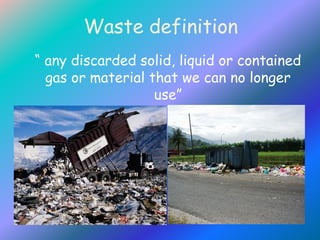
Waste definition
“ any discarded solid, liquid or contained
gas or material that we can no longer
use”
Solid waste definition
“ solid waste arose from unusable
residues in raw materials, leftovers,
rejects and scraps from process
operations. It is also regards to bring
negative economic value and suggested
it is cheaper to discard than use”
In the Malaysian Legislation,
Waste has been defined as any matter
prescibed to be scheduled waste, or any
matter whether in a solid, semi-solid or
liquid form, or in the form of gas or vapour
which is emitted, discharged or deposited
in the environment in such as volume,
composition or manner as to cause pollution
Act 672 Solid Waste and Public Cleaning
management Act 2007
• Solid waste include
– Any scrap material or other unwanted surplus
substances or rejects products arising from the
application of any process.
– Any substances required to be disposed of as being
broken, worn out, contaminated or otherwise
spoiled.
– Any other material that according to this Act or
any other written law is required by the authority
to be disposed of.
Urban Solid Waste
• Urban Waste can be defined in simple terms,
as the waste collected from the residential
and industrial areas of cities and towns.
• A waste management system consists of a
front-end (collection and transportation of
the waste) and a back-end (treatment,
segregation, recycling, and disposal of the
waste)
Rural Solid Waste
• In rural areas, examples of solid waste
include wastes from kitchens, gardens, cattle
sheds, agriculture, and materials such as
metal, paper, plastic, cloth, and so on.
• They are organic and inorganic materials with
no remaining economic value to the owner
produced by homes, commercial and industrial
establishments.
What is the difference between
urban and rural waste?
• When considering waste management of rural
and urban areas, urban areas produces more
wastes than rural one.
• The density of population in urban areas will
always result in large production of waste in a
locality where waste management become a
sever headache to the municipality.
Agricultural Waste
• Agricultural solid wastes are usually
generated through agricultural
activities involving preparation, production,
storage, processing and consumption of
agricultural produce, livestock and their
products.
Hazardous Waste
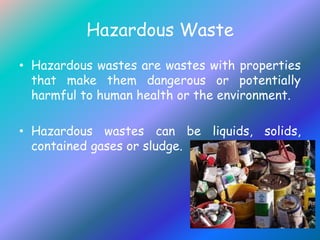
• Hazardous wastes are wastes with properties
that make them dangerous or potentially
harmful to human health or the environment.
• Hazardous wastes can be liquids, solids,
contained gases or sludge.
Types and Compositions
of Solid Waste
Residential
• Residences and homes where people live are some of the
major sources of solid waste.
• Garbage from these places include food wastes, plastics,
paper, glass, leather, cardboard, metals, yard wastes,
ashes and special wastes like bulky household items like
electronics, tires, batteries, old mattresses and used oil.
• Most homes have garbage bins where they can throw
away their solid wastes and later in the bin
• Industrial
• Industries are known to be one of the biggest
contributors of solid waste.
• They include light and heavy manufacturing
industries, construction sites, fabrication plants,
canning plants, power and chemical plants.
• These industries produce solid waste in form of
housekeeping wastes, food wastes, packaging wastes,
ashes, construction and demolition materials, special
wastes, as well as other hazardous wastes.
Commercial
• Commercial facilities and buildings are yet another
source of solid waste today.
• Commercial buildings and facilities in this case refer
to hotels, markets, restaurants, go downs, stores and
office buildings.
• Some of the solid wastes generated from these
places include plastics, food wastes, metals, paper,
glass, wood, cardboard materials, special wastes and
other hazardous wastes.
Institutional
• The institutional centers like schools, colleges,
prisons, military barracks and other
government centers also produce solid waste.
• Some of the common solid wastes obtained
from these places include glass, rubber waste,
plastics, food wastes, wood, paper, metals,
cardboard materials and electronics waste.
Construction and Demolition Areas
• Construction sites and demolition sites also contribute
to the solid waste problem.
• Construction sites include new construction sites for
buildings and roads, road repair sites, building
renovation sites and building demolition sites.
• Some of the solid wastes produced in these places
include steel materials, concrete, wood, plastics, rubber,
copper wires, dirt and glass.
Biomedical
• This refers to hospitals and biomedical equipment and
chemical manufacturing firms.
• In hospitals there are different types of solid wastes
produced.
• Some of these solid wastes include syringes,
bandages, used gloves, drugs, paper, plastics, food
waste and chemicals.
• All these require proper disposal or else they will
cause a huge problem to environment and the people
in these facilities.
LESSON 1.pdf
LESSON 1.pdf

LESSON 1.pdf

  • 1.
  • 2.
    Objectives • Ability todefine and differentiate between Solid Waste and Hazardous Waste • Ability to identify sources of Solid Waste and Hazardous Waste • Ability to identify composition of Solid Waste and Hazardous Waste • Ability to differentiate the properties of Solid Waste and Hazardous Waste
  • 3.
    Waste definition “ anydiscarded solid, liquid or contained gas or material that we can no longer use”
  • 4.
    Solid waste definition “solid waste arose from unusable residues in raw materials, leftovers, rejects and scraps from process operations. It is also regards to bring negative economic value and suggested it is cheaper to discard than use”
  • 5.
    In the MalaysianLegislation, Waste has been defined as any matter prescibed to be scheduled waste, or any matter whether in a solid, semi-solid or liquid form, or in the form of gas or vapour which is emitted, discharged or deposited in the environment in such as volume, composition or manner as to cause pollution
  • 6.
    Act 672 SolidWaste and Public Cleaning management Act 2007 • Solid waste include – Any scrap material or other unwanted surplus substances or rejects products arising from the application of any process. – Any substances required to be disposed of as being broken, worn out, contaminated or otherwise spoiled. – Any other material that according to this Act or any other written law is required by the authority to be disposed of.
  • 8.
    Urban Solid Waste •Urban Waste can be defined in simple terms, as the waste collected from the residential and industrial areas of cities and towns. • A waste management system consists of a front-end (collection and transportation of the waste) and a back-end (treatment, segregation, recycling, and disposal of the waste)
  • 9.
    Rural Solid Waste •In rural areas, examples of solid waste include wastes from kitchens, gardens, cattle sheds, agriculture, and materials such as metal, paper, plastic, cloth, and so on. • They are organic and inorganic materials with no remaining economic value to the owner produced by homes, commercial and industrial establishments.
  • 10.
    What is thedifference between urban and rural waste? • When considering waste management of rural and urban areas, urban areas produces more wastes than rural one. • The density of population in urban areas will always result in large production of waste in a locality where waste management become a sever headache to the municipality.
  • 11.
    Agricultural Waste • Agriculturalsolid wastes are usually generated through agricultural activities involving preparation, production, storage, processing and consumption of agricultural produce, livestock and their products.
  • 12.
    Hazardous Waste • Hazardouswastes are wastes with properties that make them dangerous or potentially harmful to human health or the environment. • Hazardous wastes can be liquids, solids, contained gases or sludge.
  • 13.
  • 14.
    Residential • Residences andhomes where people live are some of the major sources of solid waste. • Garbage from these places include food wastes, plastics, paper, glass, leather, cardboard, metals, yard wastes, ashes and special wastes like bulky household items like electronics, tires, batteries, old mattresses and used oil. • Most homes have garbage bins where they can throw away their solid wastes and later in the bin
  • 15.
    • Industrial • Industriesare known to be one of the biggest contributors of solid waste. • They include light and heavy manufacturing industries, construction sites, fabrication plants, canning plants, power and chemical plants. • These industries produce solid waste in form of housekeeping wastes, food wastes, packaging wastes, ashes, construction and demolition materials, special wastes, as well as other hazardous wastes.
  • 16.
    Commercial • Commercial facilitiesand buildings are yet another source of solid waste today. • Commercial buildings and facilities in this case refer to hotels, markets, restaurants, go downs, stores and office buildings. • Some of the solid wastes generated from these places include plastics, food wastes, metals, paper, glass, wood, cardboard materials, special wastes and other hazardous wastes.
  • 17.
    Institutional • The institutionalcenters like schools, colleges, prisons, military barracks and other government centers also produce solid waste. • Some of the common solid wastes obtained from these places include glass, rubber waste, plastics, food wastes, wood, paper, metals, cardboard materials and electronics waste.
  • 18.
    Construction and DemolitionAreas • Construction sites and demolition sites also contribute to the solid waste problem. • Construction sites include new construction sites for buildings and roads, road repair sites, building renovation sites and building demolition sites. • Some of the solid wastes produced in these places include steel materials, concrete, wood, plastics, rubber, copper wires, dirt and glass.
  • 19.
    Biomedical • This refersto hospitals and biomedical equipment and chemical manufacturing firms. • In hospitals there are different types of solid wastes produced. • Some of these solid wastes include syringes, bandages, used gloves, drugs, paper, plastics, food waste and chemicals. • All these require proper disposal or else they will cause a huge problem to environment and the people in these facilities.