10/25/2020
1
Post harvest treatment
Of
Fruits And Vegetables
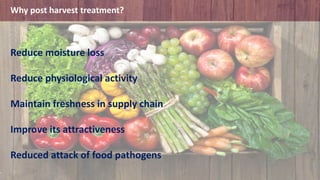
Why post harvest treatment?
Reduce moisture loss
Reduce physiological activity
Maintain freshness in supply chain
Improve its attractiveness
Reduced attack of food pathogens
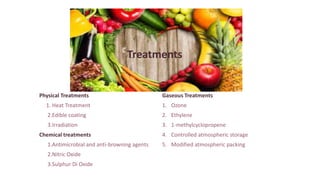
Physical Treatments
1. Heat Treatment
2.Edible coating
3.Irradiation
Chemical treatments
1.Antimicrobial and anti-browning agents
2.Nitric Oxide
3.Sulphur Di Oxide
Gaseous Treatments
1. Ozone
2. Ethylene
3. 1-methylcyclopropene
4. Controlled atmospheric storage
5. Modified atmospheric packing
Treatments
Heat treatment
Of
Fruits And Vegetables
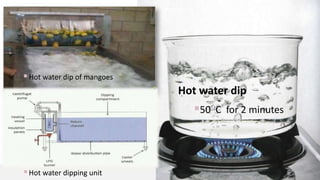
Hot water dip
50 C for 2 minutes
6
Hot water dip of mangoes
Hot water dipping unit
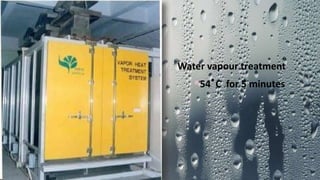
Water vapour treatment
54 C for 5 minutes
7
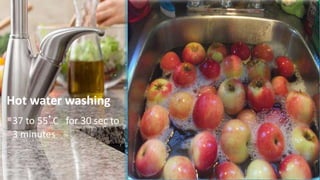
Hot water washing
37 to 55 C for 30 sec to
3 minutes
8
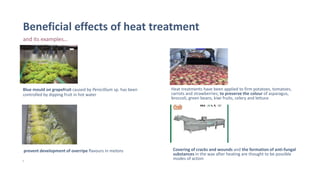
Beneficial effects of heat treatment
and its examples…
Blue mould on grapefruit caused by Penicillium sp. has been
controlled by dipping fruit in hot water
Heat treatments have been applied to firm potatoes, tomatoes,
carrots and strawberries; to preserve the colour of asparagus,
broccoli, green beans, kiwi fruits, celery and lettuce
prevent development of overripe flavours in melons Covering of cracks and wounds and the formation of anti-fungal
substances in the wax after heating are thought to be possible
modes of action9
Edible coating
On
Fruits And Vegetables
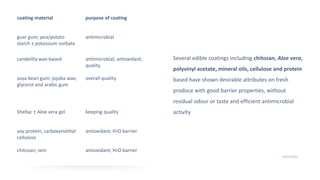
Several edible coatings including chitosan, Aloe vera,
polyvinyl acetate, mineral oils, cellulose and protein
based have shown desirable attributes on fresh
produce with good barrier properties, without
residual odour or taste and efficient antimicrobial
activity
11
10/25/2020
coating material purpose of coating
guar gum; pea/potato
starch ± potassium sorbate
antimicrobial
candelilla wax-based antimicrobial; antioxidant;
quality
soya bean gum; jojoba wax;
glycerol and arabic gum
overall quality
Shellac ± Aloe vera gel keeping quality
soy protein; carboxymethyl
cellulose
antioxidant; H2O barrier
chitosan; zein antioxidant; H2O barrier
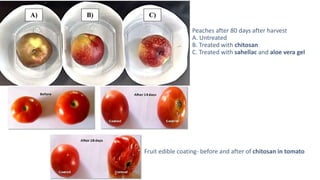
Peaches after 80 days after harvest
A. Untreated
B. Treated with chitosan
C. Treated with sahellac and aloe vera gel
Fruit edible coating- before and after of chitosan in tomato
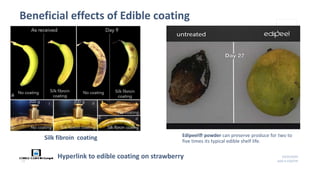
Beneficial effects of Edible coating
10/25/2020
ADD A FOOTER13
Hyperlink to edible coating on strawberry
Silk fibroin coating Edipeel℗ powder can preserve produce for two to
five times its typical edible shelf life.
Irradiation
Of
Fruits And Vegetables
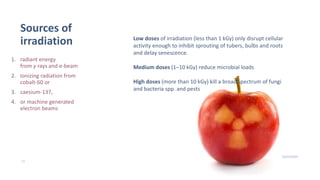
Sources of
irradiation
1. radiant energy
from γ rays and e-beam
2. Ionizing radiation from
cobalt-60 or
3. caesium-137,
4. or machine generated
electron beams
10/25/2020
15
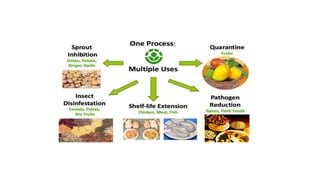
Low doses of irradiation (less than 1 kGy) only disrupt cellular
activity enough to inhibit sprouting of tubers, bulbs and roots
and delay senescence.
Medium doses (1–10 kGy) reduce microbial loads
High doses (more than 10 kGy) kill a broad spectrum of fungi
and bacteria spp. and pests
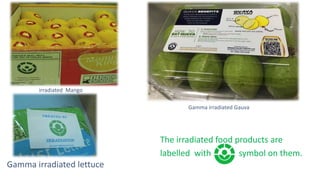
Gamma irradiated lettuce
The irradiated food products are
labelled with symbol on them.
Gamma irradiated Gauva
irradiated Mango
Chemical treatments
Of
Fruits And Vegetables
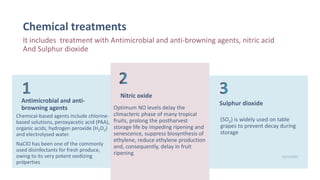
Chemical treatments
It includes treatment with Antimicrobial and anti-browning agents, nitric acid
And Sulphur dioxide
Antimicrobial and anti-
browning agents
Chemical-based agents include chlorine-
based solutions, peroxyacetic acid (PAA),
organic acids, hydrogen peroxide (H2O2)
and electrolysed water.
NaClO has been one of the commonly
used disinfectants for fresh produce,
owing to its very potent oxidizing
properties
Nitric oxide
Optimum NO levels delay the
climacteric phase of many tropical
fruits, prolong the postharvest
storage life by impeding ripening and
senescence, suppress biosynthesis of
ethylene, reduce ethylene production
and, consequently, delay in fruit
ripening
Sulphur dioxide
(SO2) is widely used on table
grapes to prevent decay during
storage
19
10/25/2020
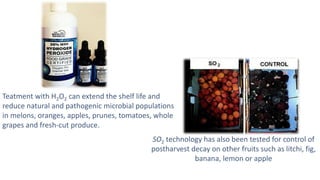
Teatment with H2O2 can extend the shelf life and
reduce natural and pathogenic microbial populations
in melons, oranges, apples, prunes, tomatoes, whole
grapes and fresh-cut produce.
SO2 technology has also been tested for control of
postharvest decay on other fruits such as litchi, fig,
banana, lemon or apple
10/25/2020
21
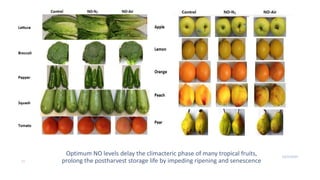
Optimum NO levels delay the climacteric phase of many tropical fruits,
prolong the postharvest storage life by impeding ripening and senescence
Gaseous treatments
It includes treatment with ozone, ethylene and 1-Methylcyclopropene
Ozone
Ozone rapidly attacks bacterial cell
walls and is more effective than
chlorine against the thick-walled
spores of plant pathogens and
animal parasites,
Ethylene
Triggering ripening, improving
fruit colour and quality in some
crops, such as bananas and
avocados, kiwifruit, persimmon,
tomato, mangoes, de-greening of
citrus fruit
1-Methylcyclopropene
1-MCP affects many ripening and
senescence processes including
pigment changes, softening and
cell wall metabolism, flavour and
aroma, and nutritional
properties.22
10/25/2020
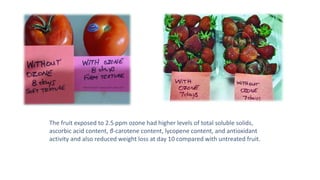
The fruit exposed to 2.5 ppm ozone had higher levels of total soluble solids,
ascorbic acid content, β-carotene content, lycopene content, and antioxidant
activity and also reduced weight loss at day 10 compared with untreated fruit.
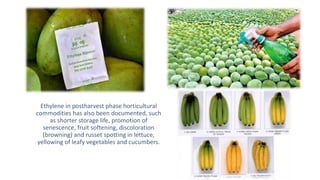
Ethylene in postharvest phase horticultural
commodities has also been documented, such
as shorter storage life, promotion of
senescence, fruit softening, discoloration
(browning) and russet spotting in lettuce,
yellowing of leafy vegetables and cucumbers.
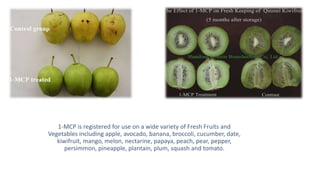
1-MCP is registered for use on a wide variety of Fresh Fruits and
Vegetables including apple, avocado, banana, broccoli, cucumber, date,
kiwifruit, mango, melon, nectarine, papaya, peach, pear, pepper,
persimmon, pineapple, plantain, plum, squash and tomato.
Thank you !
Thank you!
8073
• Bharath K B
8071
• Basavaraj
8069
• Beebiayisha jakati
8070
• Bhavani kumari
8072
• Brahmesh Reddy B R

Post harvest treatment

  • 1.
  • 2.
  • 3.
    Why post harvesttreatment? Reduce moisture loss Reduce physiological activity Maintain freshness in supply chain Improve its attractiveness Reduced attack of food pathogens
  • 4.
    Physical Treatments 1. HeatTreatment 2.Edible coating 3.Irradiation Chemical treatments 1.Antimicrobial and anti-browning agents 2.Nitric Oxide 3.Sulphur Di Oxide Gaseous Treatments 1. Ozone 2. Ethylene 3. 1-methylcyclopropene 4. Controlled atmospheric storage 5. Modified atmospheric packing Treatments
  • 5.
  • 6.
    Hot water dip 50C for 2 minutes 6 Hot water dip of mangoes Hot water dipping unit
  • 7.
  • 8.
    Hot water washing 37to 55 C for 30 sec to 3 minutes 8
  • 9.
    Beneficial effects ofheat treatment and its examples… Blue mould on grapefruit caused by Penicillium sp. has been controlled by dipping fruit in hot water Heat treatments have been applied to firm potatoes, tomatoes, carrots and strawberries; to preserve the colour of asparagus, broccoli, green beans, kiwi fruits, celery and lettuce prevent development of overripe flavours in melons Covering of cracks and wounds and the formation of anti-fungal substances in the wax after heating are thought to be possible modes of action9
  • 10.
  • 11.
    Several edible coatingsincluding chitosan, Aloe vera, polyvinyl acetate, mineral oils, cellulose and protein based have shown desirable attributes on fresh produce with good barrier properties, without residual odour or taste and efficient antimicrobial activity 11 10/25/2020 coating material purpose of coating guar gum; pea/potato starch ± potassium sorbate antimicrobial candelilla wax-based antimicrobial; antioxidant; quality soya bean gum; jojoba wax; glycerol and arabic gum overall quality Shellac ± Aloe vera gel keeping quality soy protein; carboxymethyl cellulose antioxidant; H2O barrier chitosan; zein antioxidant; H2O barrier
  • 12.
    Peaches after 80days after harvest A. Untreated B. Treated with chitosan C. Treated with sahellac and aloe vera gel Fruit edible coating- before and after of chitosan in tomato
  • 13.
    Beneficial effects ofEdible coating 10/25/2020 ADD A FOOTER13 Hyperlink to edible coating on strawberry Silk fibroin coating Edipeel℗ powder can preserve produce for two to five times its typical edible shelf life.
  • 14.
  • 15.
    Sources of irradiation 1. radiantenergy from γ rays and e-beam 2. Ionizing radiation from cobalt-60 or 3. caesium-137, 4. or machine generated electron beams 10/25/2020 15 Low doses of irradiation (less than 1 kGy) only disrupt cellular activity enough to inhibit sprouting of tubers, bulbs and roots and delay senescence. Medium doses (1–10 kGy) reduce microbial loads High doses (more than 10 kGy) kill a broad spectrum of fungi and bacteria spp. and pests
  • 17.
    Gamma irradiated lettuce Theirradiated food products are labelled with symbol on them. Gamma irradiated Gauva irradiated Mango
  • 18.
  • 19.
    Chemical treatments It includestreatment with Antimicrobial and anti-browning agents, nitric acid And Sulphur dioxide Antimicrobial and anti- browning agents Chemical-based agents include chlorine- based solutions, peroxyacetic acid (PAA), organic acids, hydrogen peroxide (H2O2) and electrolysed water. NaClO has been one of the commonly used disinfectants for fresh produce, owing to its very potent oxidizing properties Nitric oxide Optimum NO levels delay the climacteric phase of many tropical fruits, prolong the postharvest storage life by impeding ripening and senescence, suppress biosynthesis of ethylene, reduce ethylene production and, consequently, delay in fruit ripening Sulphur dioxide (SO2) is widely used on table grapes to prevent decay during storage 19 10/25/2020
  • 20.
    Teatment with H2O2can extend the shelf life and reduce natural and pathogenic microbial populations in melons, oranges, apples, prunes, tomatoes, whole grapes and fresh-cut produce. SO2 technology has also been tested for control of postharvest decay on other fruits such as litchi, fig, banana, lemon or apple
  • 21.
    10/25/2020 21 Optimum NO levelsdelay the climacteric phase of many tropical fruits, prolong the postharvest storage life by impeding ripening and senescence
  • 22.
    Gaseous treatments It includestreatment with ozone, ethylene and 1-Methylcyclopropene Ozone Ozone rapidly attacks bacterial cell walls and is more effective than chlorine against the thick-walled spores of plant pathogens and animal parasites, Ethylene Triggering ripening, improving fruit colour and quality in some crops, such as bananas and avocados, kiwifruit, persimmon, tomato, mangoes, de-greening of citrus fruit 1-Methylcyclopropene 1-MCP affects many ripening and senescence processes including pigment changes, softening and cell wall metabolism, flavour and aroma, and nutritional properties.22 10/25/2020
  • 23.
    The fruit exposedto 2.5 ppm ozone had higher levels of total soluble solids, ascorbic acid content, β-carotene content, lycopene content, and antioxidant activity and also reduced weight loss at day 10 compared with untreated fruit.
  • 24.
    Ethylene in postharvestphase horticultural commodities has also been documented, such as shorter storage life, promotion of senescence, fruit softening, discoloration (browning) and russet spotting in lettuce, yellowing of leafy vegetables and cucumbers.
  • 25.
    1-MCP is registeredfor use on a wide variety of Fresh Fruits and Vegetables including apple, avocado, banana, broccoli, cucumber, date, kiwifruit, mango, melon, nectarine, papaya, peach, pear, pepper, persimmon, pineapple, plantain, plum, squash and tomato.
  • 26.
    Thank you ! Thankyou! 8073 • Bharath K B 8071 • Basavaraj 8069 • Beebiayisha jakati 8070 • Bhavani kumari 8072 • Brahmesh Reddy B R