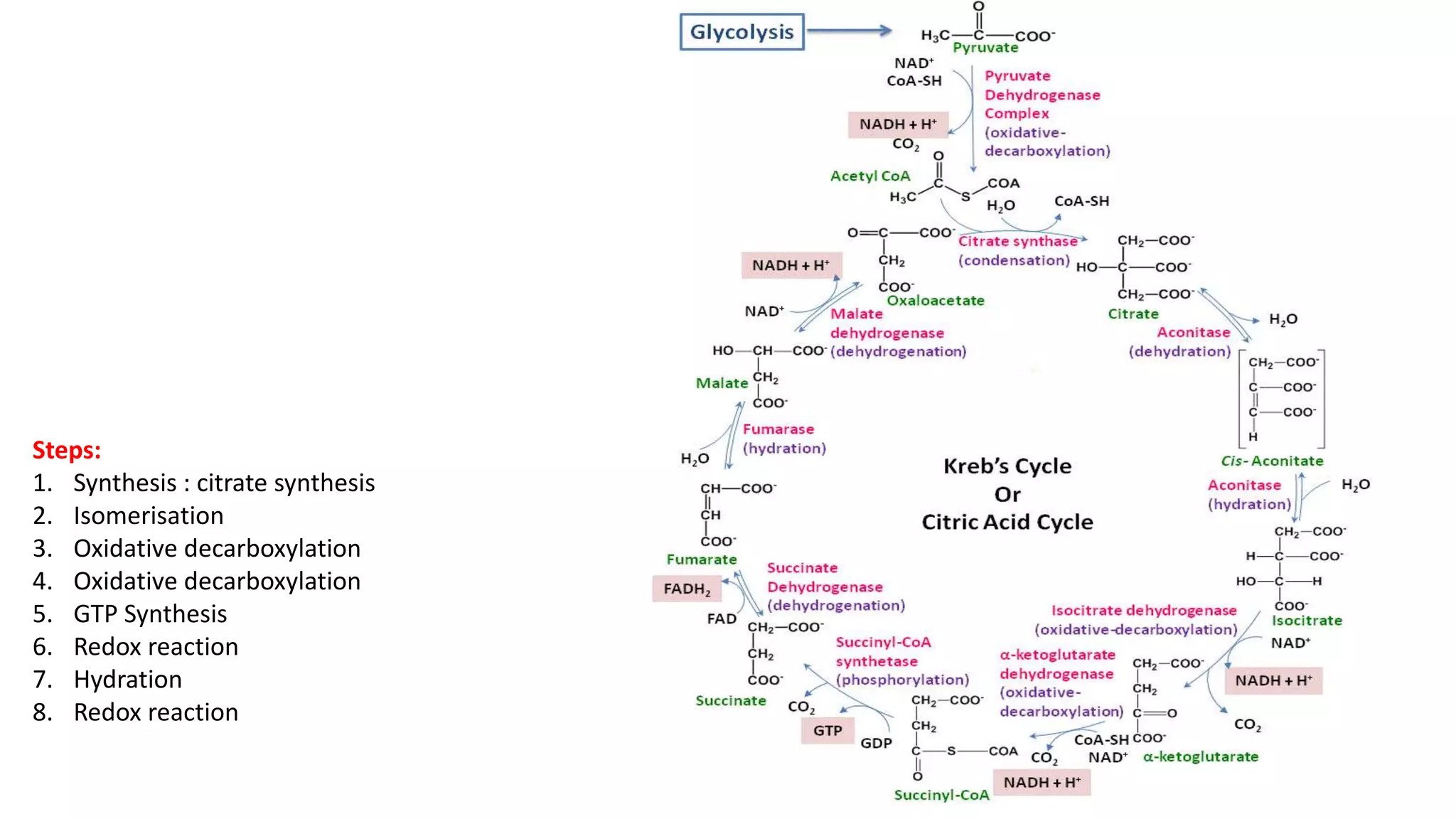
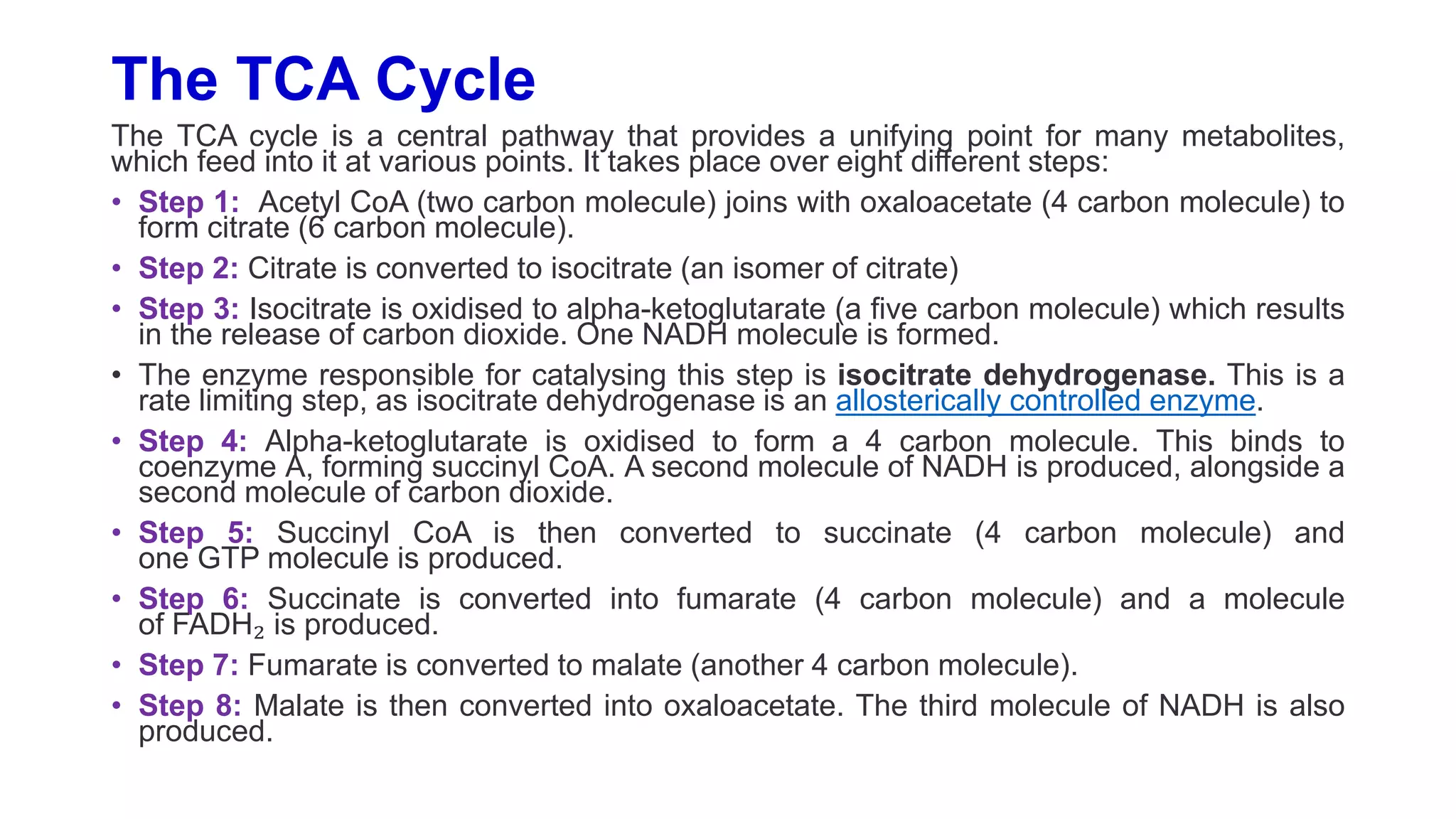
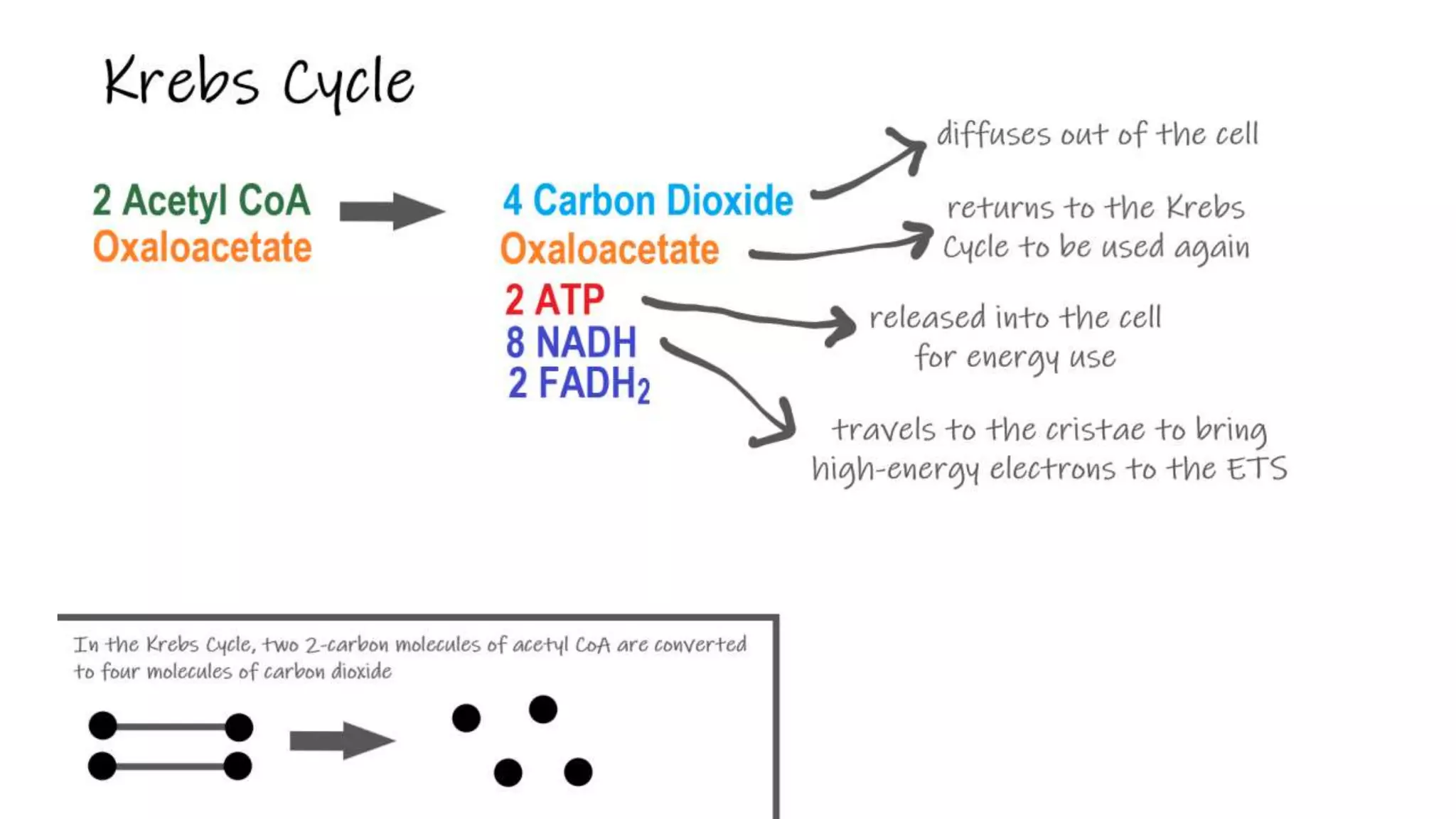
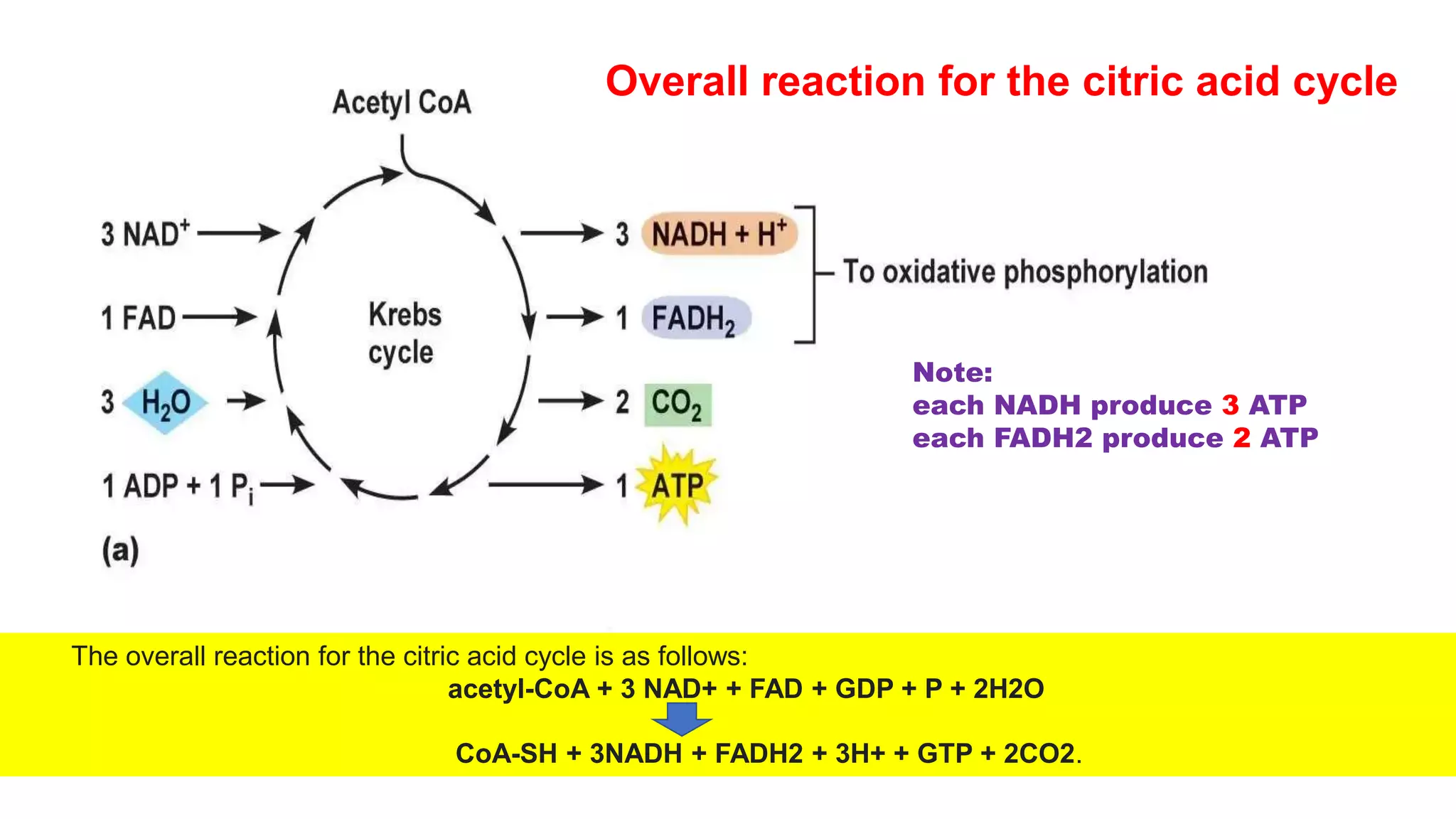
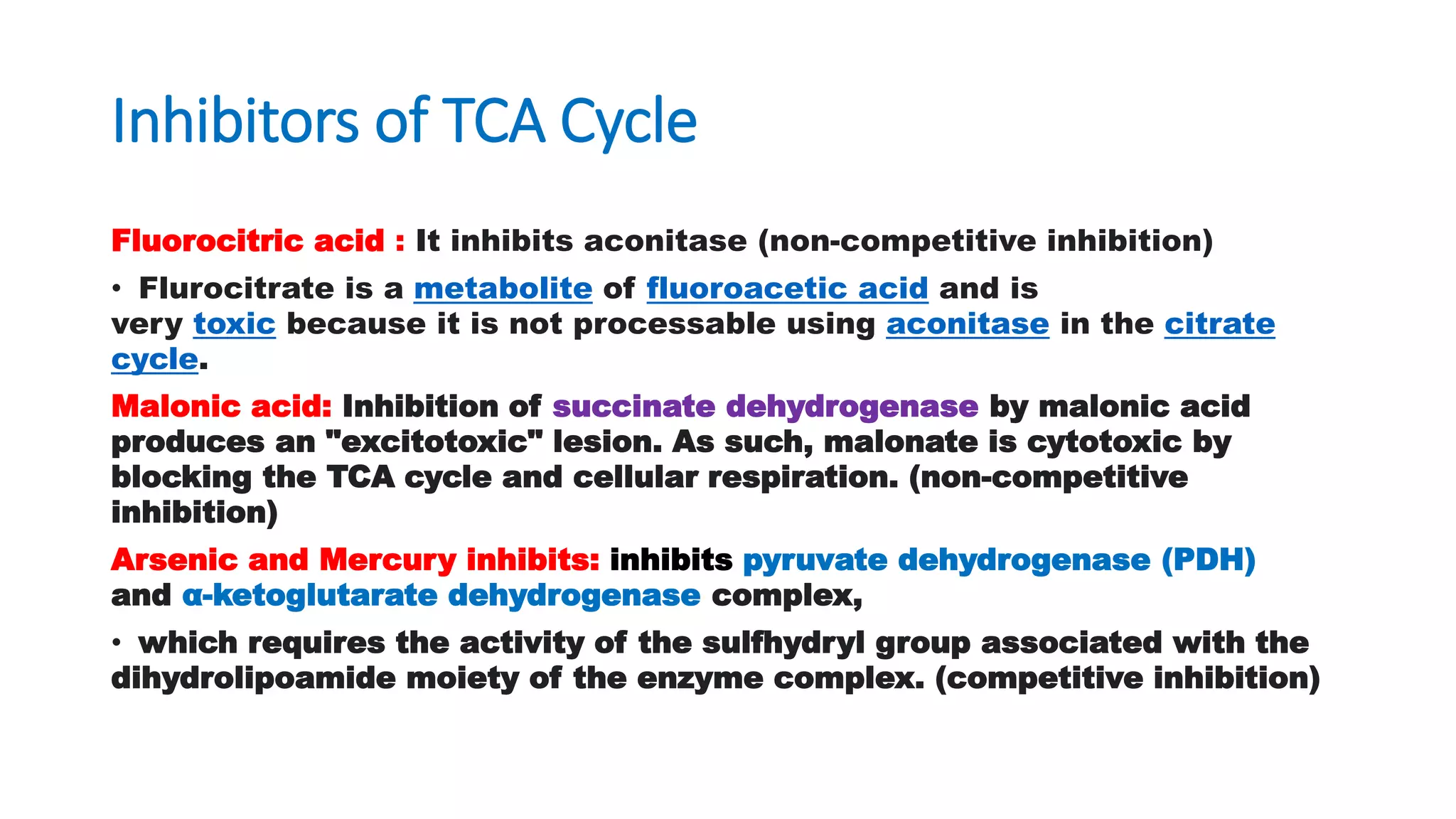
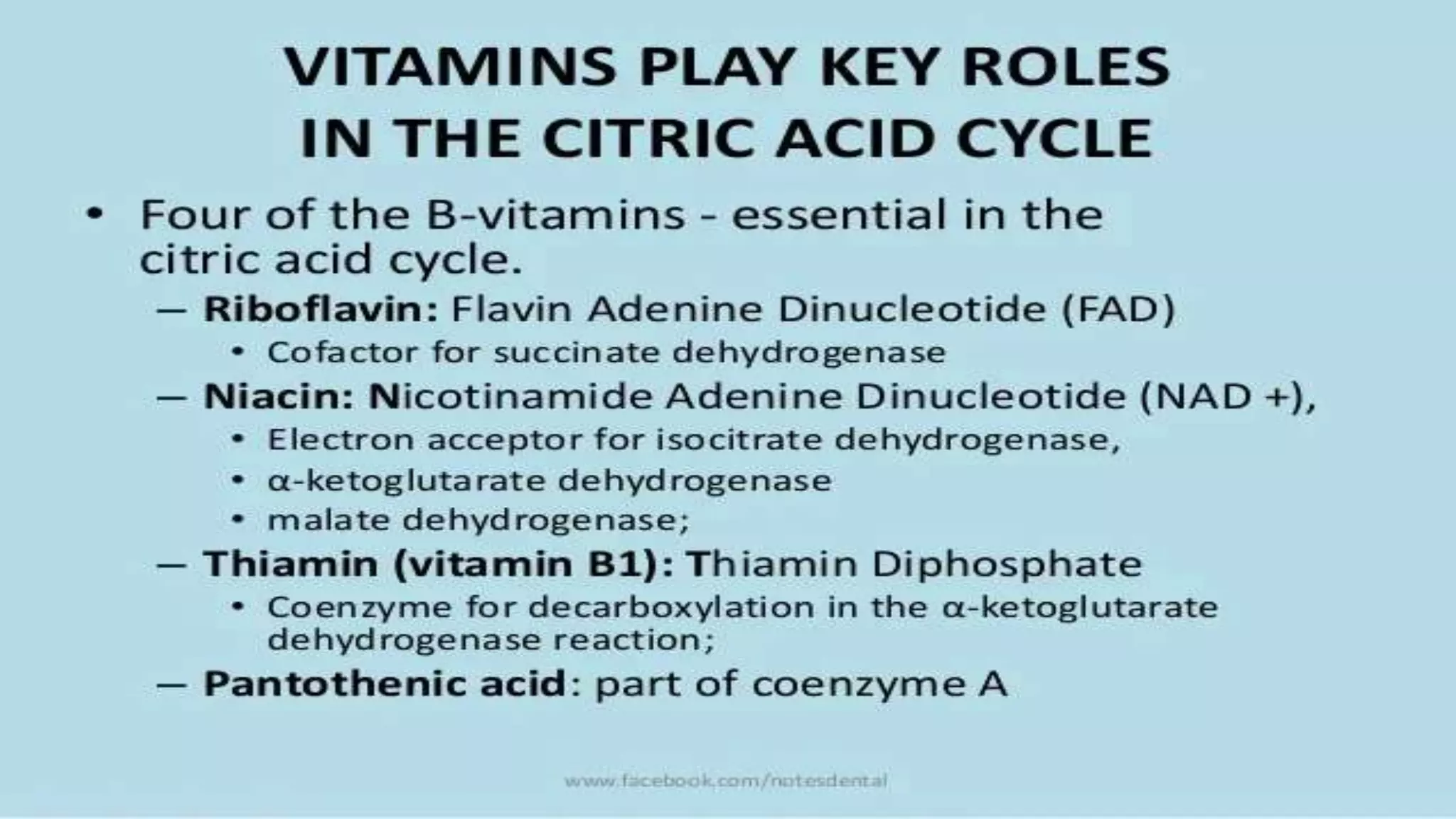
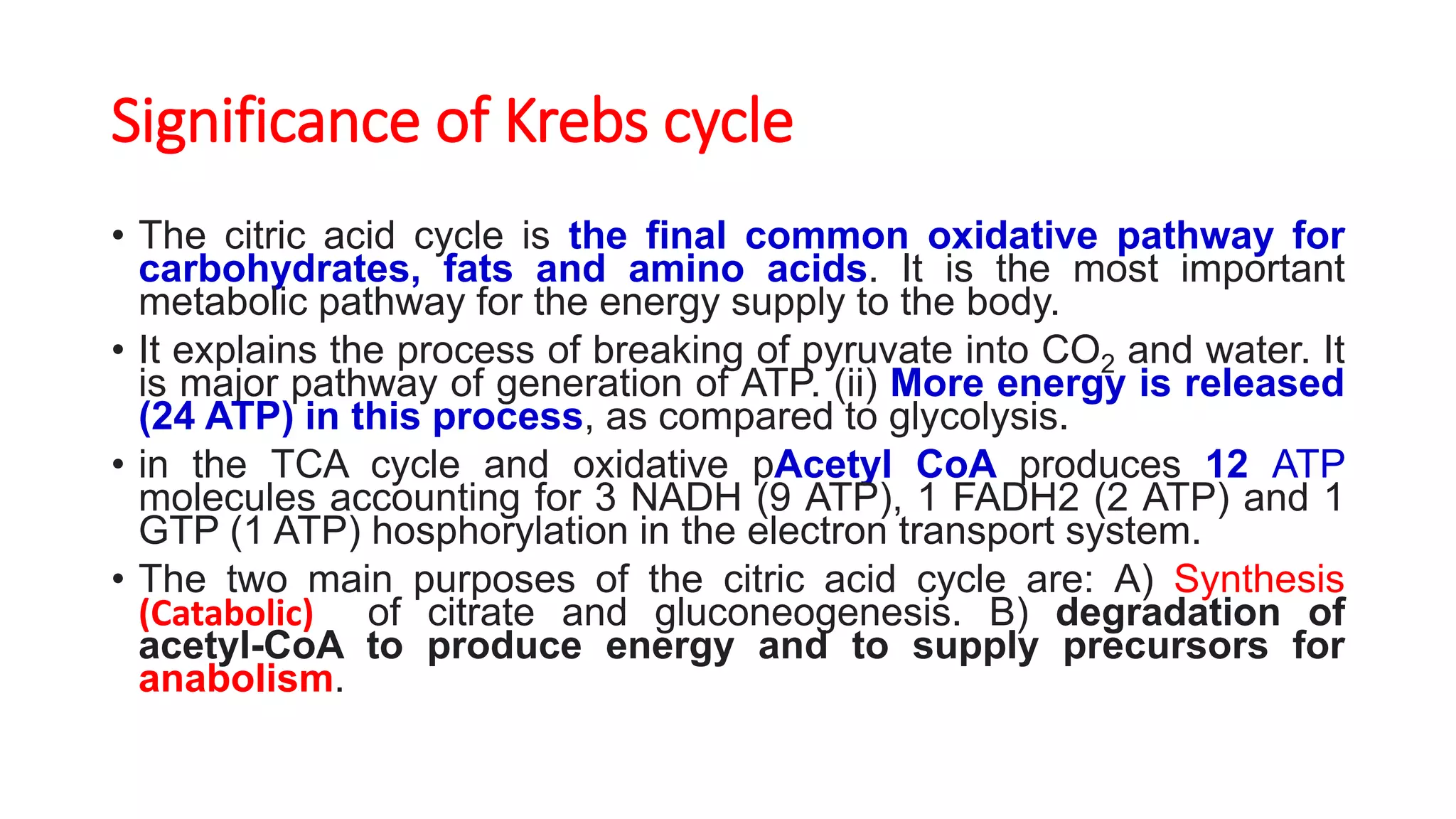
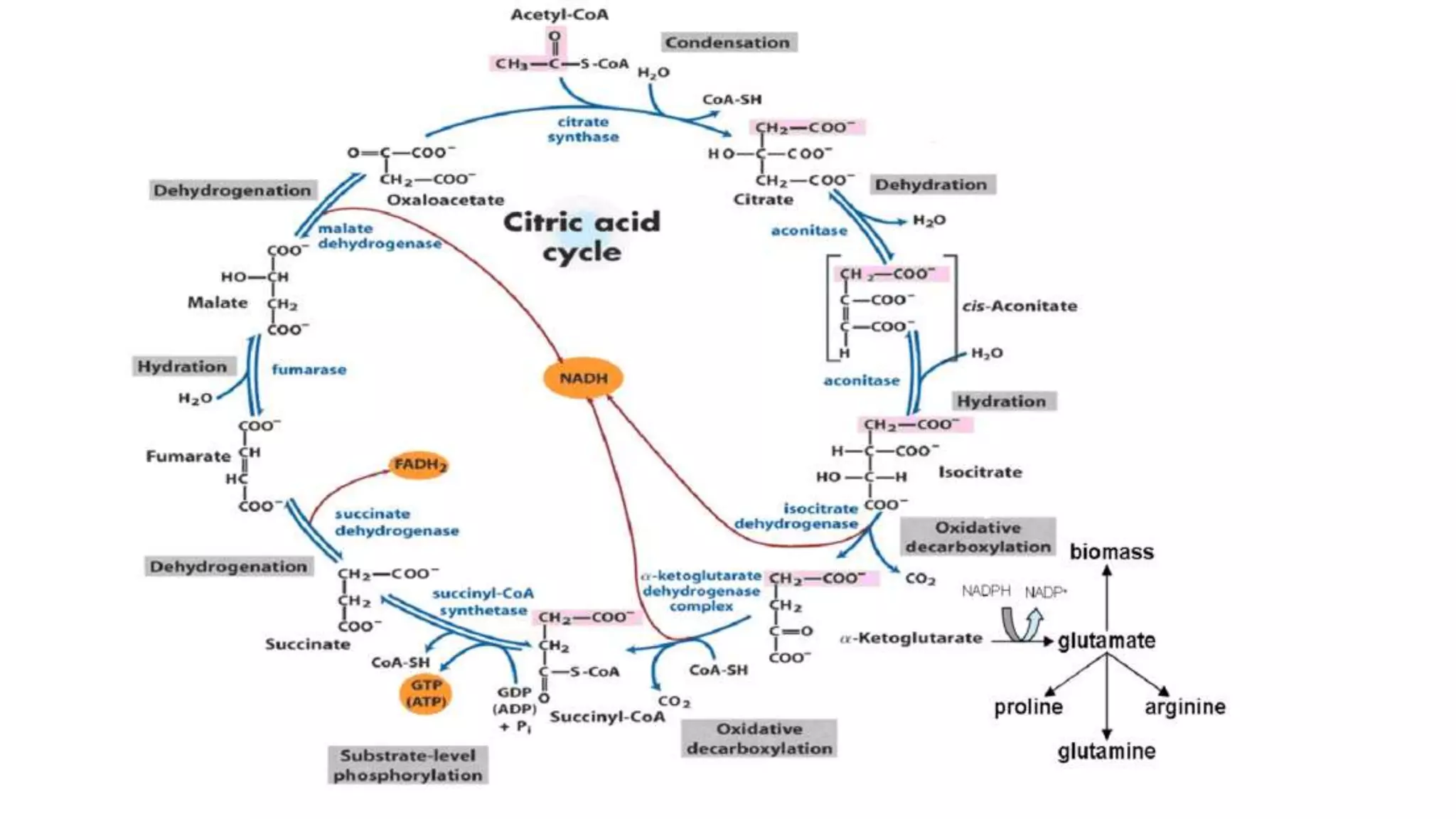
The citric acid cycle, also known as the Krebs cycle or TCA cycle, is a series of chemical reactions that generate energy through the oxidation of acetyl-CoA derived from carbohydrates, fats, and proteins. The cycle occurs in the matrix of mitochondria in eukaryotic cells and in the cytosol of prokaryotic cells. It involves 8 steps to oxidize acetyl-CoA completely, producing carbon dioxide, GTP, and the electron carriers NADH and FADH2 to be used in the electron transport chain to generate ATP. The cycle is an important source of energy and precursor molecules for biosynthesis in cells.