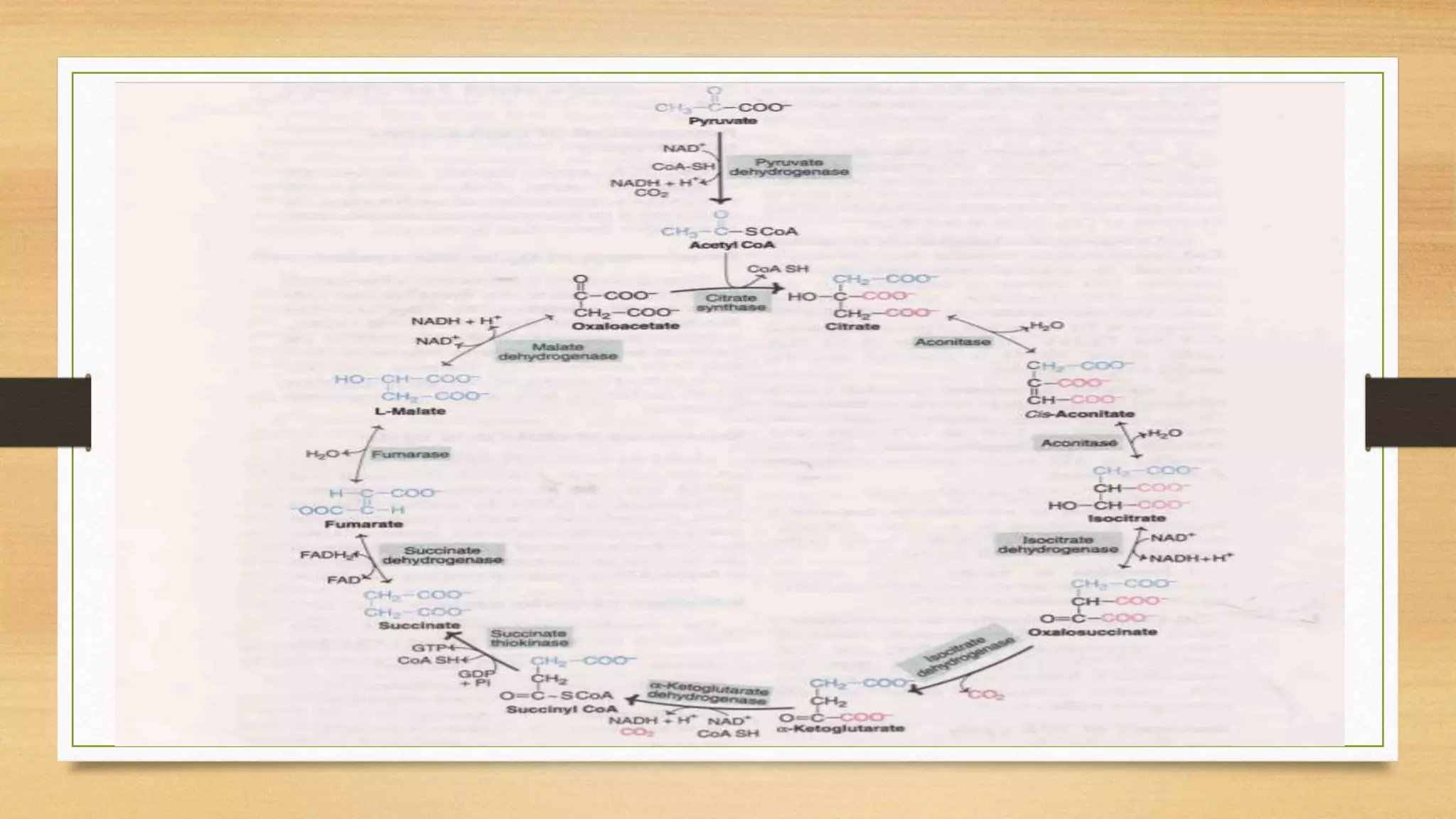
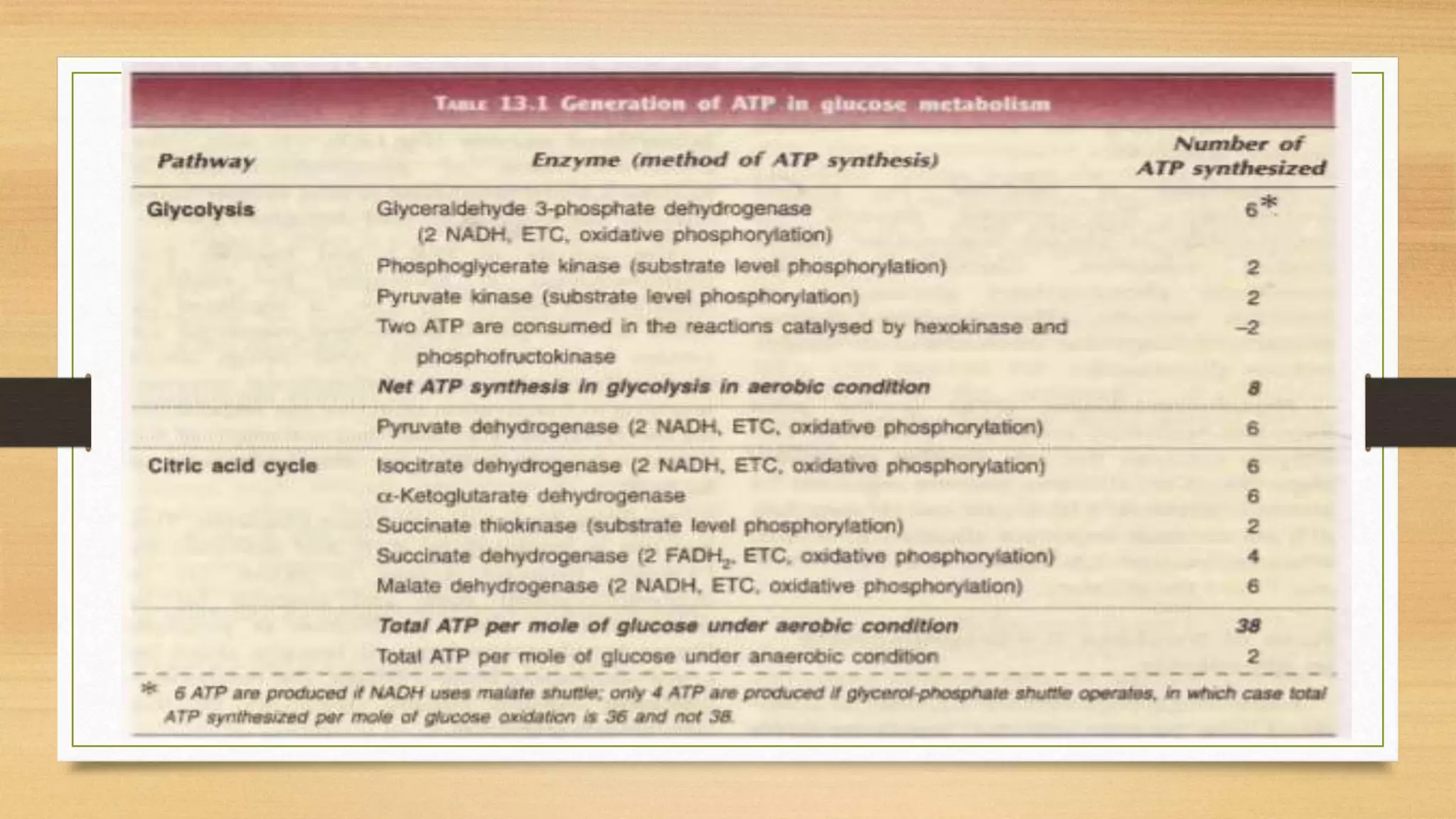
The citric acid cycle (Krebs cycle or TCA cycle) is the most important metabolic pathway for energy production in the body. It occurs in the mitochondrial matrix and involves the oxidation of acetyl-CoA derived from carbohydrates, fats, and proteins to produce carbon dioxide, water, and the electron carriers NADH and FADH2 to drive ATP production. The cycle generates 12 ATP per acetyl-CoA molecule oxidized and also provides precursors for various biosynthetic pathways. Key steps include the condensation of acetyl-CoA with oxaloacetate to form citrate, followed by oxidative decarboxylations and hydrations that regenerate oxaloacetate and release carbon dioxide