CIRCULATORY SYSTEM
Functions of the Circulatory System:
1. Distribute blood which carries food, wastes and oxygen.
2. Removes waste products.
Parts of the Circulatory System:
1. HEART – pump the blood throughout the body
2. BLOOD VESSELS – carries the blood
3. BLOOD
I. HEART – is a double pump with 4 chambers that contract in pairs
- a hollow organ made of cardiac muscle
- 2 nodes of nerve and muscle cells within in the heart stimulate it to beat
Each Heartbeat consists of:
1. DIASTOLE – muscle relaxes and blood flows into the atria and ventricles
2. SYSTOLE – ventricles contract pumping blood to the body.
II. BLOOD VESSELS
3 Types of Blood Vessels:
1. ARTERIES – carry blood away from the heart
- all of the arteries (except Pulmonary Artery) carry oxygenated blood.
2. VEINS – carry blood towards the heart
- all of the veins (except Pulmonary Vein) carry deoxygenated blood.
3. CAPPILARIES – smallest blood vessel;
- where arteries and veins meet
- where the exchange of gases between the blood and the other organs
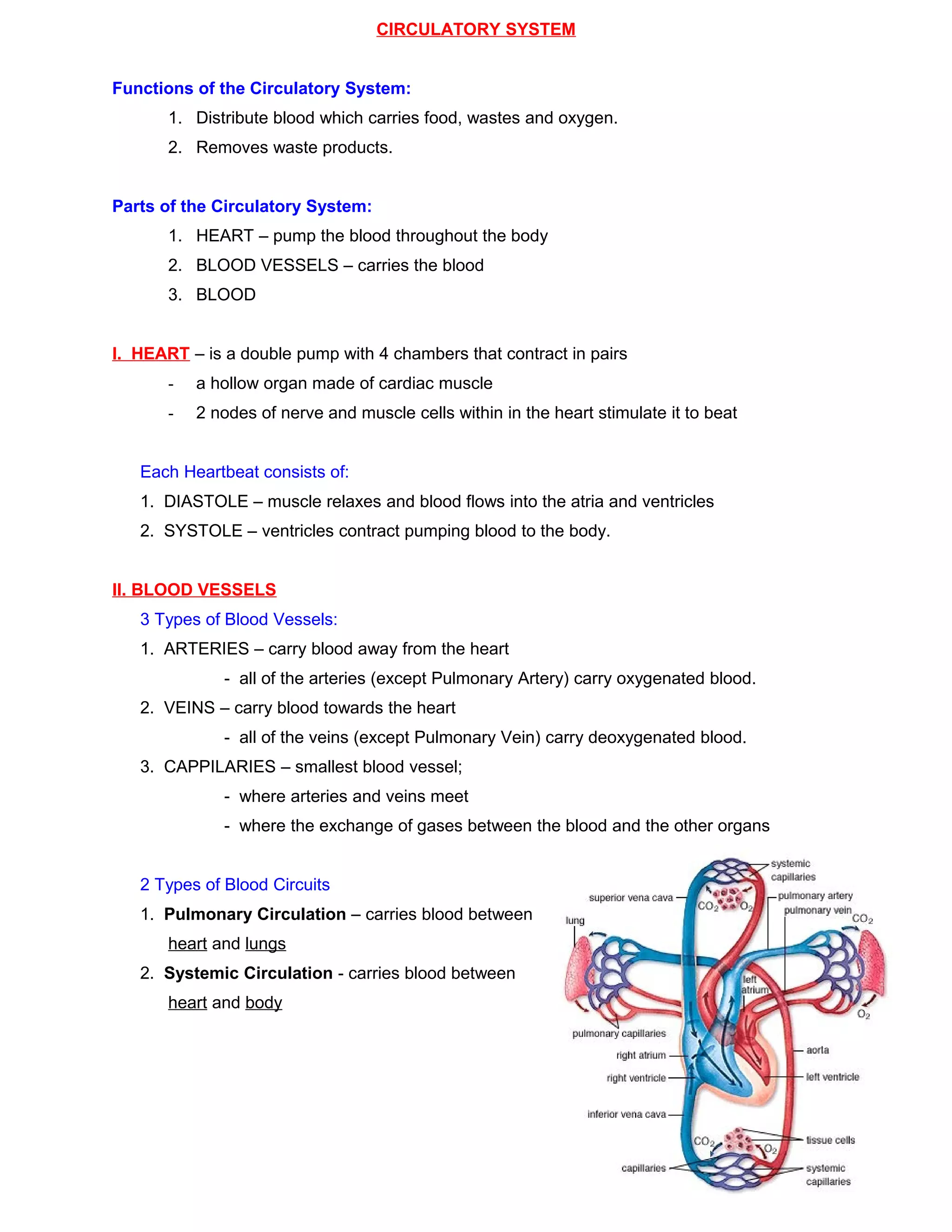
2 Types of Blood Circuits
1. Pulmonary Circulation – carries blood between
heart and lungs
2. Systemic Circulation - carries blood between
heart and body
III. BLOOD – carries oxygen, nutrients and hormones to the body’s cells and picks up wastes,
toxics for disposal and fights infections.
Blood Composition:
1. PLASMA (55%) – contains mostly water
2. BLOOD CELLS (45%)
a. RED BLOOD CELLS OR ERYTHROCYTES (43%) – carries oxygen;
 non-nucleated;
 Contains a protein called HEMOGLOBIN
 Cannot reproduce nor repair themselves
 Live about 3-4 months
 Brocken down in the spleen
 Iron returned to the bone marrow
b. WHITE BLOOD CELLS OR LEUKOCYTES (2%) – defends the body from
bacteria, viruses and other parasites;
 increase in number if there is an infection (or person is sick).
 Outnumbered 500 to 1 by Red blood cells
 Different types of WBC have different functions.
 Release antibodies to fight invaders
3. PLATELETS (2%) – help to form blood clots.
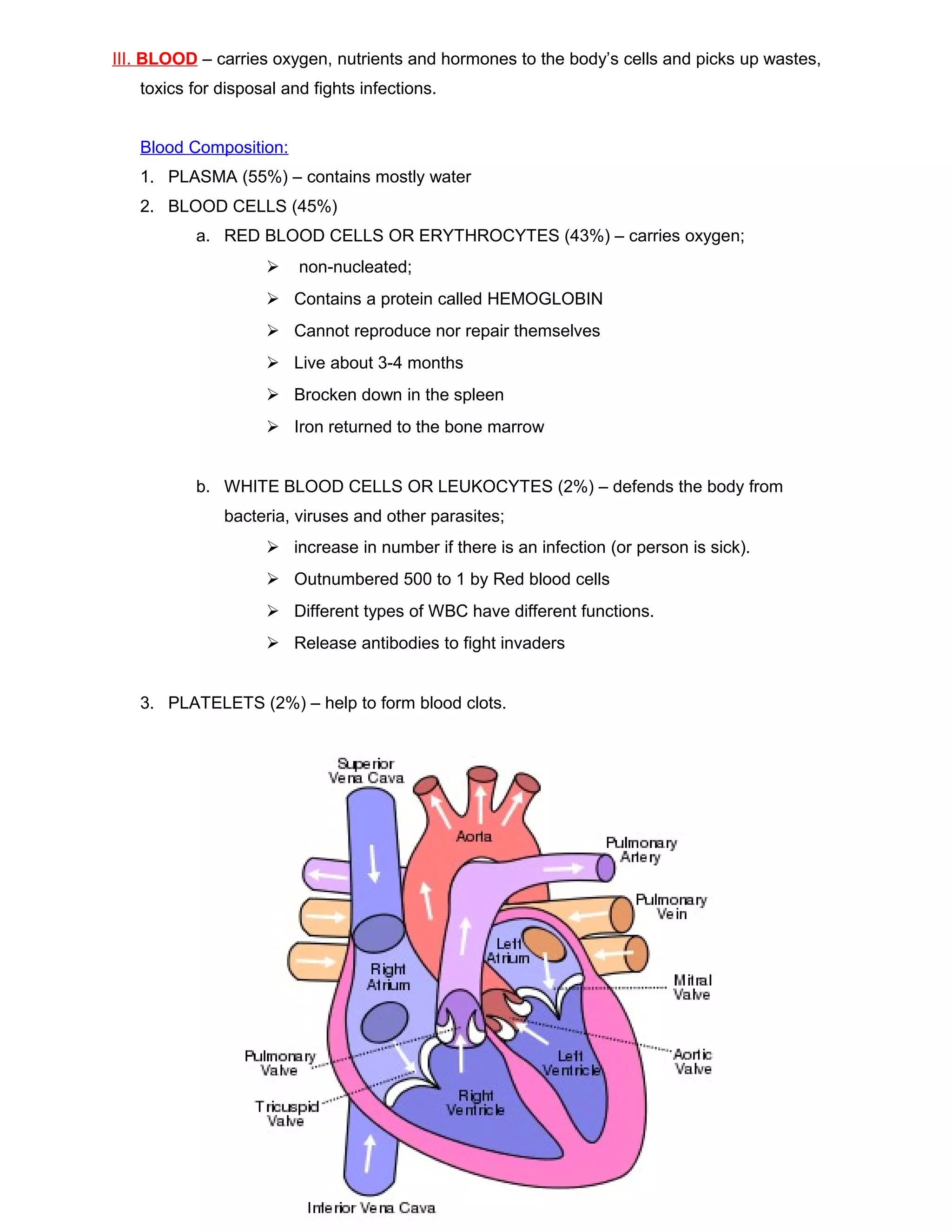
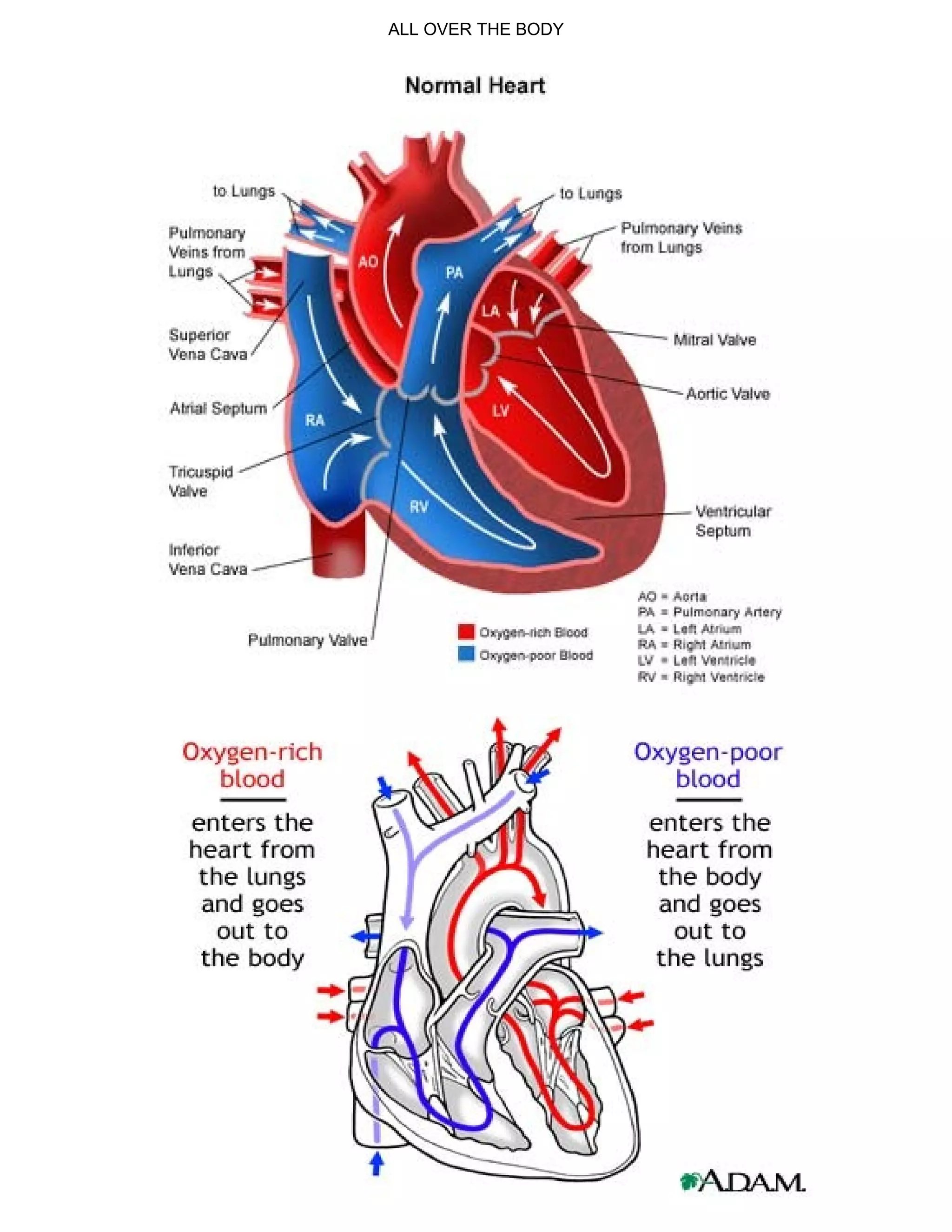
PATHWAY OF BLOOD THROUGH THE HEART
Deoxygenated (unoxygenated) blood enters the heart through the
SUPERIOR AND INFERIOR VENA CAVA
RIGHT ATRIUM
TRICUSPID VALVE
RIGHT VENTRICLE
SEMILUNAR VALVE (or Pulmonary Valve) and out of the heart
Blood enters the PULMONARY ARTERY
And enters the LEFT and RIGHT LUNG to get Oxygen
Oxygenated blood goes to the
PULMONARY VEIN
Enters the heart through the
LEFT ATRIUM
BICUSPID VALVE (or MITRAL VALVE)
LEFT VENTRICLE
AORTIC VALVE
Oxygenated blood leaves the heart through the
AORTA
ALL OVER THE BODY

Circulatory System Notes

  • 1.
    CIRCULATORY SYSTEM Functions ofthe Circulatory System: 1. Distribute blood which carries food, wastes and oxygen. 2. Removes waste products. Parts of the Circulatory System: 1. HEART – pump the blood throughout the body 2. BLOOD VESSELS – carries the blood 3. BLOOD I. HEART – is a double pump with 4 chambers that contract in pairs - a hollow organ made of cardiac muscle - 2 nodes of nerve and muscle cells within in the heart stimulate it to beat Each Heartbeat consists of: 1. DIASTOLE – muscle relaxes and blood flows into the atria and ventricles 2. SYSTOLE – ventricles contract pumping blood to the body. II. BLOOD VESSELS 3 Types of Blood Vessels: 1. ARTERIES – carry blood away from the heart - all of the arteries (except Pulmonary Artery) carry oxygenated blood. 2. VEINS – carry blood towards the heart - all of the veins (except Pulmonary Vein) carry deoxygenated blood. 3. CAPPILARIES – smallest blood vessel; - where arteries and veins meet - where the exchange of gases between the blood and the other organs 2 Types of Blood Circuits 1. Pulmonary Circulation – carries blood between heart and lungs 2. Systemic Circulation - carries blood between heart and body
  • 2.
    III. BLOOD –carries oxygen, nutrients and hormones to the body’s cells and picks up wastes, toxics for disposal and fights infections. Blood Composition: 1. PLASMA (55%) – contains mostly water 2. BLOOD CELLS (45%) a. RED BLOOD CELLS OR ERYTHROCYTES (43%) – carries oxygen;  non-nucleated;  Contains a protein called HEMOGLOBIN  Cannot reproduce nor repair themselves  Live about 3-4 months  Brocken down in the spleen  Iron returned to the bone marrow b. WHITE BLOOD CELLS OR LEUKOCYTES (2%) – defends the body from bacteria, viruses and other parasites;  increase in number if there is an infection (or person is sick).  Outnumbered 500 to 1 by Red blood cells  Different types of WBC have different functions.  Release antibodies to fight invaders 3. PLATELETS (2%) – help to form blood clots.
  • 3.
    PATHWAY OF BLOODTHROUGH THE HEART Deoxygenated (unoxygenated) blood enters the heart through the SUPERIOR AND INFERIOR VENA CAVA RIGHT ATRIUM TRICUSPID VALVE RIGHT VENTRICLE SEMILUNAR VALVE (or Pulmonary Valve) and out of the heart Blood enters the PULMONARY ARTERY And enters the LEFT and RIGHT LUNG to get Oxygen Oxygenated blood goes to the PULMONARY VEIN Enters the heart through the LEFT ATRIUM BICUSPID VALVE (or MITRAL VALVE) LEFT VENTRICLE AORTIC VALVE Oxygenated blood leaves the heart through the AORTA
  • 4.