PRATICAL ASSIGNMENT
COURSE CODE:-BED253 COURSE TITLE:- INTERNSHIP-II
SUBMITTED BY:-SNEHA THAKUR
ENROLLMENT NO:-07314402116 SUBMITTED TO:-MS. YAMINI BHANOT
TOPIC:-Develop a Multi-Media lesson using appropriate ICT resources .
GURU GOBIND SINGH INDRAPRASTHA UNIVERSITY
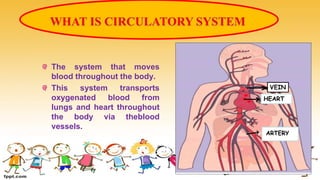
The system that moves
blood throughout the body.
This system transports
oxygenated blood from
lungs and heart throughout
the body via theblood
vessels.
VEIN
HEART
BLOOD
BLOOD
BLOOD VESSELS
BLOOD
BLOOD VESSELS
HEART
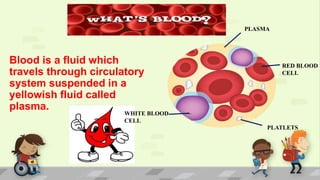
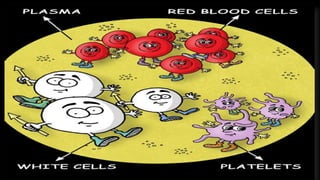
Blood is a fluid which
travels through circulatory
system suspended in a
yellowish fluid called
plasma.
PLASMA
RED BLOOD
CELL
PLATLETS
WHITE BLOOD
CELL
What does
blood do in
our body?
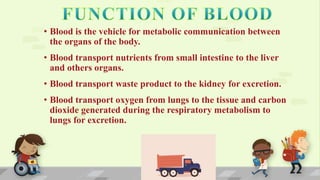
• Blood is the vehicle for metabolic communication between
the organs of the body.
• Blood transport nutrients from small intestine to the liver
and others organs.
• Blood transport waste product to the kidney for excretion.
• Blood transport oxygen from lungs to the tissue and carbon
dioxide generated during the respiratory metabolism to
lungs for excretion.
Do we all
have same
type of
blood?
No, We all
have different
blood group.
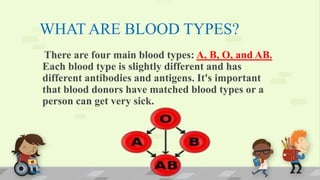
WHAT ARE BLOOD TYPES?
There are four main blood types: A, B, O, and AB.
Each blood type is slightly different and has
different antibodies and antigens. It's important
that blood donors have matched blood types or a
person can get very sick.
Today I will
find my blood
group from
Doctor Uncle
Do you know? O
blood group is
universal donor &
AB is universal
recipient.
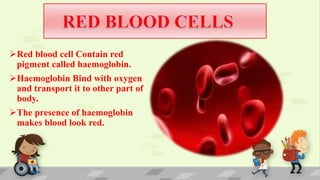
Red blood cell Contain red
pigment called haemoglobin.
Haemoglobin Bind with oxygen
and transport it to other part of
body.
The presence of haemoglobin
makes blood look red.
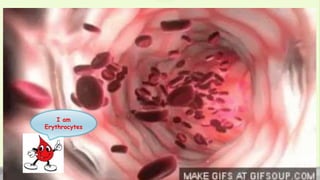
I am
Erythrocytes
The red colour of
RBC is due to
presence of
hemoglobin
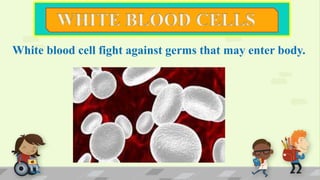
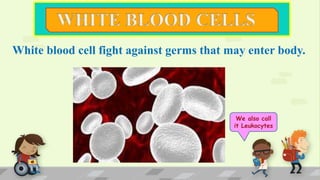
White blood cell fight against germs that may enter body.
We also call
it Leukocytes
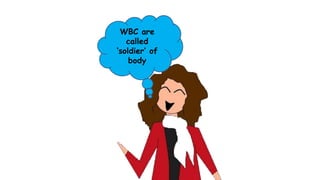
WBC are
called
‘soldier’ of
body
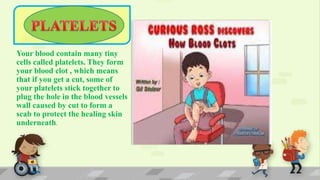
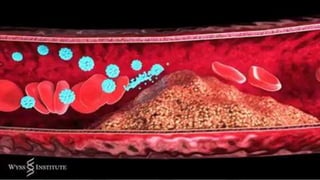
Your blood contain many tiny
cells called platelets. They form
your blood clot , which means
that if you get a cut, some of
your platelets stick together to
plug the hole in the blood vessels
wall caused by cut to form a
scab to protect the healing skin
underneath.
Your body has an astonishing network of living tubes
called blood vessels that transport vital supplies.
Altogether about 100,000km of blood vessels fits into
your body and keep your body cells working.
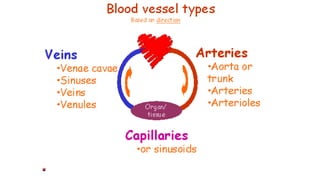
You have three types of blood vessels:-
Arteries
Veins
capillaries
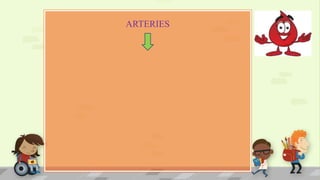
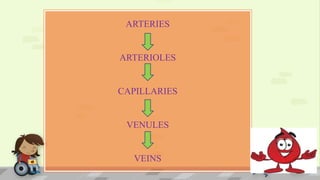
ARTERIES
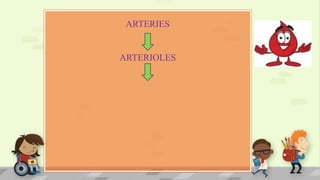
ARTERIES
ARTERIOLES
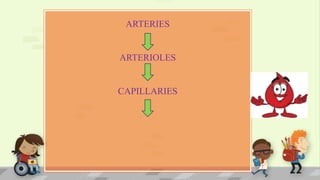
ARTERIES
ARTERIOLES
CAPILLARIES
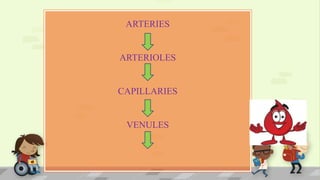
ARTERIES
ARTERIOLES
CAPILLARIES
VENULES
ARTERIES
ARTERIOLES
CAPILLARIES
VENULES
VEINS
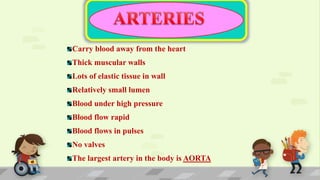
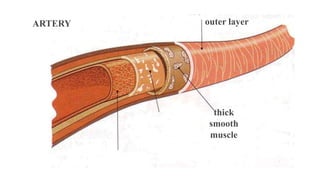
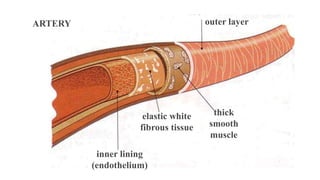
Carry blood away from the heart
Thick muscular walls
Lots of elastic tissue in wall
Relatively small lumen
Blood under high pressure
Blood flow rapid
Blood flows in pulses
No valves
The largest artery in the body is AORTA
ARTERY outer layer
ARTERY outer layer
thick
smooth
muscle
ARTERY outer layer
thick
smooth
muscle
elastic white
fibrous tissue
ARTERY outer layer
thick
smooth
muscle
elastic white
fibrous tissue
inner lining
(endothelium)
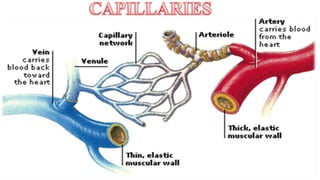
Link up arteries and veins in the tissues
No muscle
Wall made up of one cell thick
endothelium
Small lumen – just large enough for a red
blood cell to squeeze through
Pressure falls as blood passes along
capillary
Blood flowing is slowing down
No pulse
No valves
CAPILLARIES
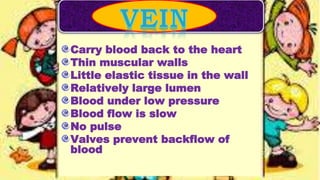
Carry blood back to the heart
Thin muscular walls
Little elastic tissue in the wall
Relatively large lumen
Blood under low pressure
Blood flow is slow
No pulse
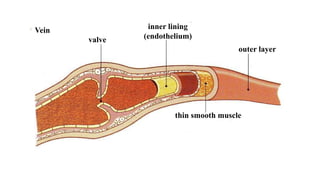
Valves prevent backflow of
blood
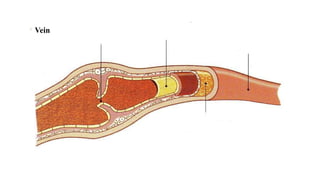
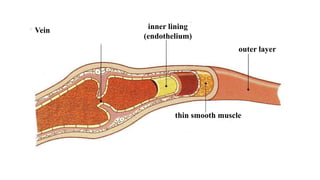
Vein
Vein
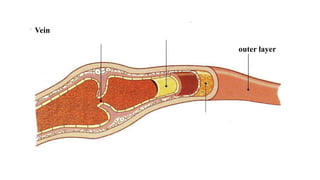
outer layer
Vein
outer layer
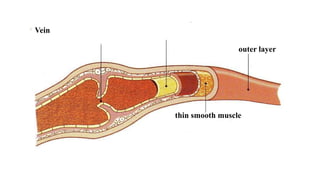
thin smooth muscle
Vein
outer layer
thin smooth muscle
inner lining
(endothelium)
Vein
outer layer
thin smooth muscle
inner lining
(endothelium)valve
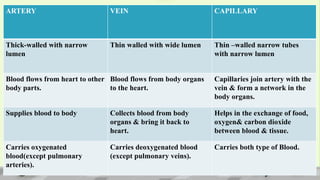
ARTERY VEIN CAPILLARY
Thick-walled with narrow
lumen
Thin walled with wide lumen Thin –walled narrow tubes
with narrow lumen
Blood flows from heart to other
body parts.
Blood flows from body organs
to the heart.
Capillaries join artery with the
vein & form a network in the
body organs.
Supplies blood to body Collects blood from body
organs & bring it back to
heart.
Helps in the exchange of food,
oxygen& carbon dioxide
between blood & tissue.
Carries oxygenated
blood(except pulmonary
arteries).
Carries deoxygenated blood
(except pulmonary veins).
Carries both type of Blood.
How does our body transport food,
Oxygen, carbon dioxide and waste?
Answer: through a fluid called
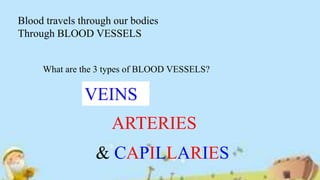
Blood travels through our bodies
Through BLOOD VESSELS
What are the 3 types of BLOOD VESSELS?
VEINS
ARTERIES
& CAPILLARIES
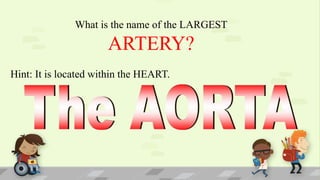
What is the name of the LARGEST
ARTERY?
Hint: It is located within the HEART.
human circulatory system

human circulatory system

  • 1.
    PRATICAL ASSIGNMENT COURSE CODE:-BED253COURSE TITLE:- INTERNSHIP-II SUBMITTED BY:-SNEHA THAKUR ENROLLMENT NO:-07314402116 SUBMITTED TO:-MS. YAMINI BHANOT TOPIC:-Develop a Multi-Media lesson using appropriate ICT resources . GURU GOBIND SINGH INDRAPRASTHA UNIVERSITY
  • 4.
    The system thatmoves blood throughout the body. This system transports oxygenated blood from lungs and heart throughout the body via theblood vessels. VEIN HEART
  • 6.
  • 7.
  • 8.
  • 9.
    Blood is afluid which travels through circulatory system suspended in a yellowish fluid called plasma. PLASMA RED BLOOD CELL PLATLETS WHITE BLOOD CELL
  • 10.
    What does blood doin our body?
  • 11.
    • Blood isthe vehicle for metabolic communication between the organs of the body. • Blood transport nutrients from small intestine to the liver and others organs. • Blood transport waste product to the kidney for excretion. • Blood transport oxygen from lungs to the tissue and carbon dioxide generated during the respiratory metabolism to lungs for excretion.
  • 12.
    Do we all havesame type of blood?
  • 13.
    No, We all havedifferent blood group.
  • 14.
    WHAT ARE BLOODTYPES? There are four main blood types: A, B, O, and AB. Each blood type is slightly different and has different antibodies and antigens. It's important that blood donors have matched blood types or a person can get very sick.
  • 15.
    Today I will findmy blood group from Doctor Uncle
  • 16.
    Do you know?O blood group is universal donor & AB is universal recipient.
  • 19.
    Red blood cellContain red pigment called haemoglobin. Haemoglobin Bind with oxygen and transport it to other part of body. The presence of haemoglobin makes blood look red.
  • 20.
  • 21.
    The red colourof RBC is due to presence of hemoglobin
  • 22.
    White blood cellfight against germs that may enter body.
  • 23.
    White blood cellfight against germs that may enter body. We also call it Leukocytes
  • 24.
  • 26.
    Your blood containmany tiny cells called platelets. They form your blood clot , which means that if you get a cut, some of your platelets stick together to plug the hole in the blood vessels wall caused by cut to form a scab to protect the healing skin underneath.
  • 27.
    Your body hasan astonishing network of living tubes called blood vessels that transport vital supplies. Altogether about 100,000km of blood vessels fits into your body and keep your body cells working. You have three types of blood vessels:- Arteries Veins capillaries
  • 30.
  • 31.
  • 32.
  • 33.
  • 34.
  • 35.
    Carry blood awayfrom the heart Thick muscular walls Lots of elastic tissue in wall Relatively small lumen Blood under high pressure Blood flow rapid Blood flows in pulses No valves The largest artery in the body is AORTA
  • 37.
  • 38.
  • 39.
  • 40.
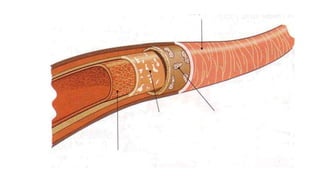
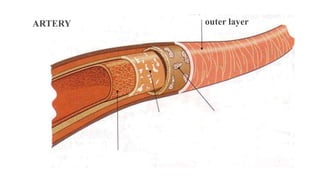
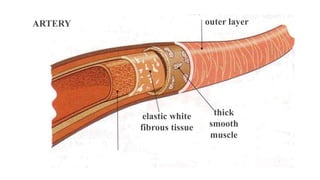
    ARTERY outer layer thick smooth muscle elasticwhite fibrous tissue inner lining (endothelium)
  • 41.
    Link up arteriesand veins in the tissues No muscle Wall made up of one cell thick endothelium Small lumen – just large enough for a red blood cell to squeeze through Pressure falls as blood passes along capillary Blood flowing is slowing down No pulse No valves CAPILLARIES
  • 43.
    Carry blood backto the heart Thin muscular walls Little elastic tissue in the wall Relatively large lumen Blood under low pressure Blood flow is slow No pulse Valves prevent backflow of blood
  • 44.
  • 45.
  • 46.
  • 47.
    Vein outer layer thin smoothmuscle inner lining (endothelium)
  • 48.
    Vein outer layer thin smoothmuscle inner lining (endothelium)valve
  • 50.
    ARTERY VEIN CAPILLARY Thick-walledwith narrow lumen Thin walled with wide lumen Thin –walled narrow tubes with narrow lumen Blood flows from heart to other body parts. Blood flows from body organs to the heart. Capillaries join artery with the vein & form a network in the body organs. Supplies blood to body Collects blood from body organs & bring it back to heart. Helps in the exchange of food, oxygen& carbon dioxide between blood & tissue. Carries oxygenated blood(except pulmonary arteries). Carries deoxygenated blood (except pulmonary veins). Carries both type of Blood.
  • 53.
    How does ourbody transport food, Oxygen, carbon dioxide and waste? Answer: through a fluid called
  • 54.
    Blood travels throughour bodies Through BLOOD VESSELS What are the 3 types of BLOOD VESSELS? VEINS ARTERIES & CAPILLARIES
  • 55.
    What is thename of the LARGEST ARTERY? Hint: It is located within the HEART.