


Chronic respiratory failure
SAMIR EL ANSARY
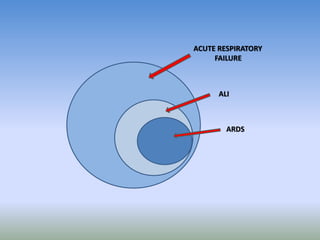
ACUTE RESPIRATORY
FAILURE
ALI
ARDS
Does the actual
diagnosis matter?
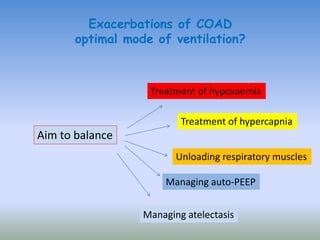
Exacerbations of COAD
optimal mode of ventilation?
Aim to balance
Treatment of hypoxaemia
Treatment of hypercapnia
Unloading respiratory muscles
Managing auto-PEEP
Managing atelectasis
Normalisation of milieu
Target is normalising
blood gases for that patient
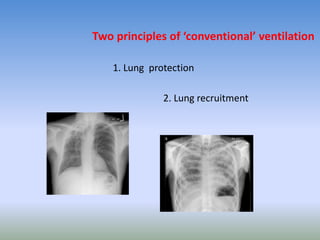
Two principles of ‘conventional’ ventilation
1. Lung protection
2. Lung recruitment
 Independent lung
ventilation
 Maintaining
spontaneous ventilation
 High frequency
ventilation
 Continuous positioning
therapy
 Prone positioning
 ECMO
 iNO
 Partial liquid ventilation
 Nebulised prostacyclin
 Surfactant
 Anti-inflammatory agents
 Anti-oxidants
 iLA
 i v salbutamol
 Carbon monoxide
 etc
 etc
Respiration
Combination of ventilation and perfusion
Separate out the ventilation (air in and out)
component usually and treat just that.
Respiratory failure
Components
1. Mechanical
2. Lack of functional lung tissue
3. Lack of blood supply
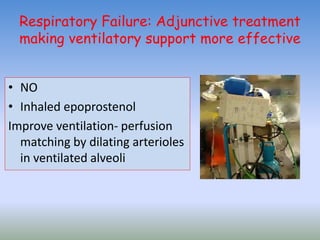
Respiratory Failure: Adjunctive treatment
making ventilatory support more effective
• NO
• Inhaled epoprostenol
Improve ventilation- perfusion
matching by dilating arterioles
in ventilated alveoli
Respiratory Failure:
Treatment recruiting functional but
non-functioning lung
•Pronation
•HFOV
HFOV
• High frequency (3-15Hz) oscillation
• Ventilation (1-4 ml / kg)
Theoretically meets goals of protective
ventilation and maintains constant lung
recruitment.
And...
Hypercapnia is almost inevitable....
hypoxia may not improve
There may not be recruitable lung tissue
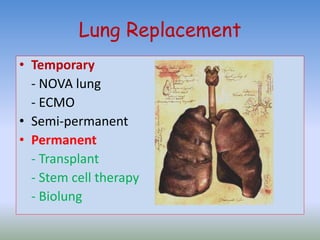
Lung Replacement
• Temporary
- NOVA lung
- ECMO
• Semi-permanent
• Permanent
- Transplant
- Stem cell therapy
- Biolung
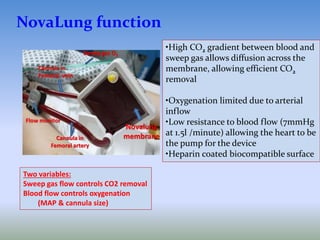
Two variables:
Sweep gas flow controls CO2 removal
Blood flow controls oxygenation
(MAP & cannula size)
Novalung
membraneCannula in
Femoral artery
Cannula in
Femoral vein
Flow monitor
Sweep gas O2
•High CO2 gradient between blood and
sweep gas allows diffusion across the
membrane, allowing efficient CO2
removal
•Oxygenation limited due to arterial
inflow
•Low resistance to blood flow (7mmHg
at 1.5l /minute) allowing the heart to be
the pump for the device
•Heparin coated biocompatible surface
NovaLung function
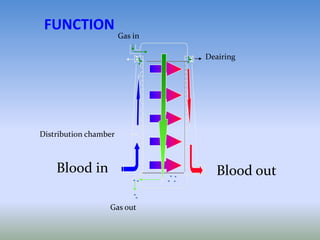
FUNCTION
Blood in Blood out
Deairing
Distribution chamber
Gas in
Gas out
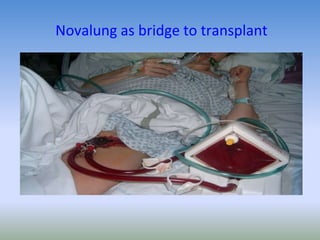
Novalung as bridge to transplant
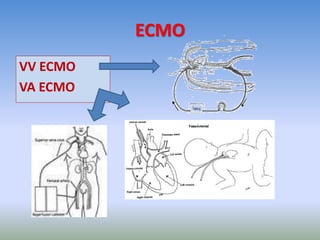
ECMO
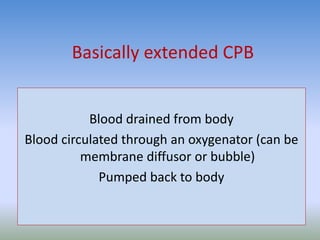
Basically extended CPB
Blood drained from body
Blood circulated through an oxygenator (can be
membrane diffusor or bubble)
Pumped back to body
ECMO
VV ECMO
VA ECMO
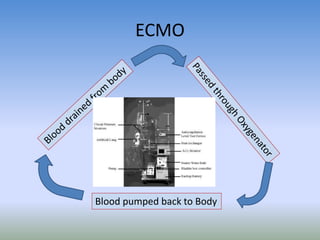
ECMO
Blood pumped back to Body
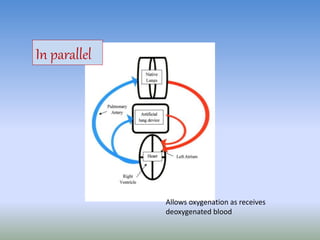
In parallel
Allows oxygenation as receives
deoxygenated blood
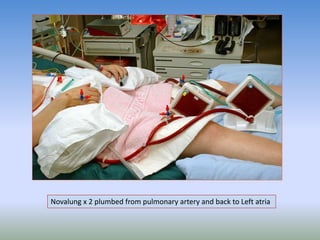
Novalung x 2 plumbed from pulmonary artery and back to Left atria
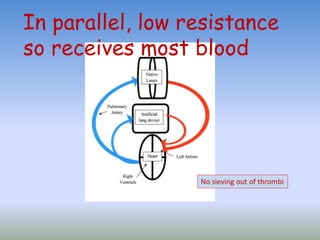
No sieving out of thrombi
In parallel, low resistance
so receives most blood
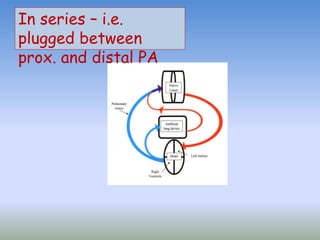
In series – i.e.
plugged between
prox. and distal PA
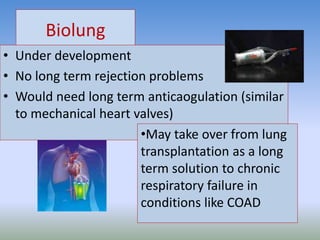
Biolung
• Under development
• No long term rejection problems
• Would need long term anticaogulation (similar
to mechanical heart valves)
•May take over from lung
transplantation as a long
term solution to chronic
respiratory failure in
conditions like COAD
Tissue Engineering?
Lung units consisting of
pulmonary epithelium and vascular
endothelium
If can build bone marrow
and tracheas, why not lungs?
Our approach at the moment
• Maximise protective ventilation using adjuncts
if appropriate; if hypoxic try oscillator
• Elevated CO2 – use NOVAlung first
• Continuing hypoxia – use VV ECMO
BUT MUST BE POTENTIALLY
REVERSIBLE & NOT JUST EXTENDING
DYING
GOOD LUCK
SAMIR EL ANSARY
ICU PROFESSOR
AIN SHAMS
CAIRO
elansarysamir@yahoo.com

Chronic respiratory failure 1