Chronic Obstructive Pulmonary Disease (COPD)
OR
Chronic Obstructive Airway Disease (COAD)
Dr P Mayurathan
Chronic Obstructive Pulmonary Disease
(Chronic Obstructive Airway Disease)
• Consists of mainly 2 diseases;
– Chronic Bronchitis
– Emphysema
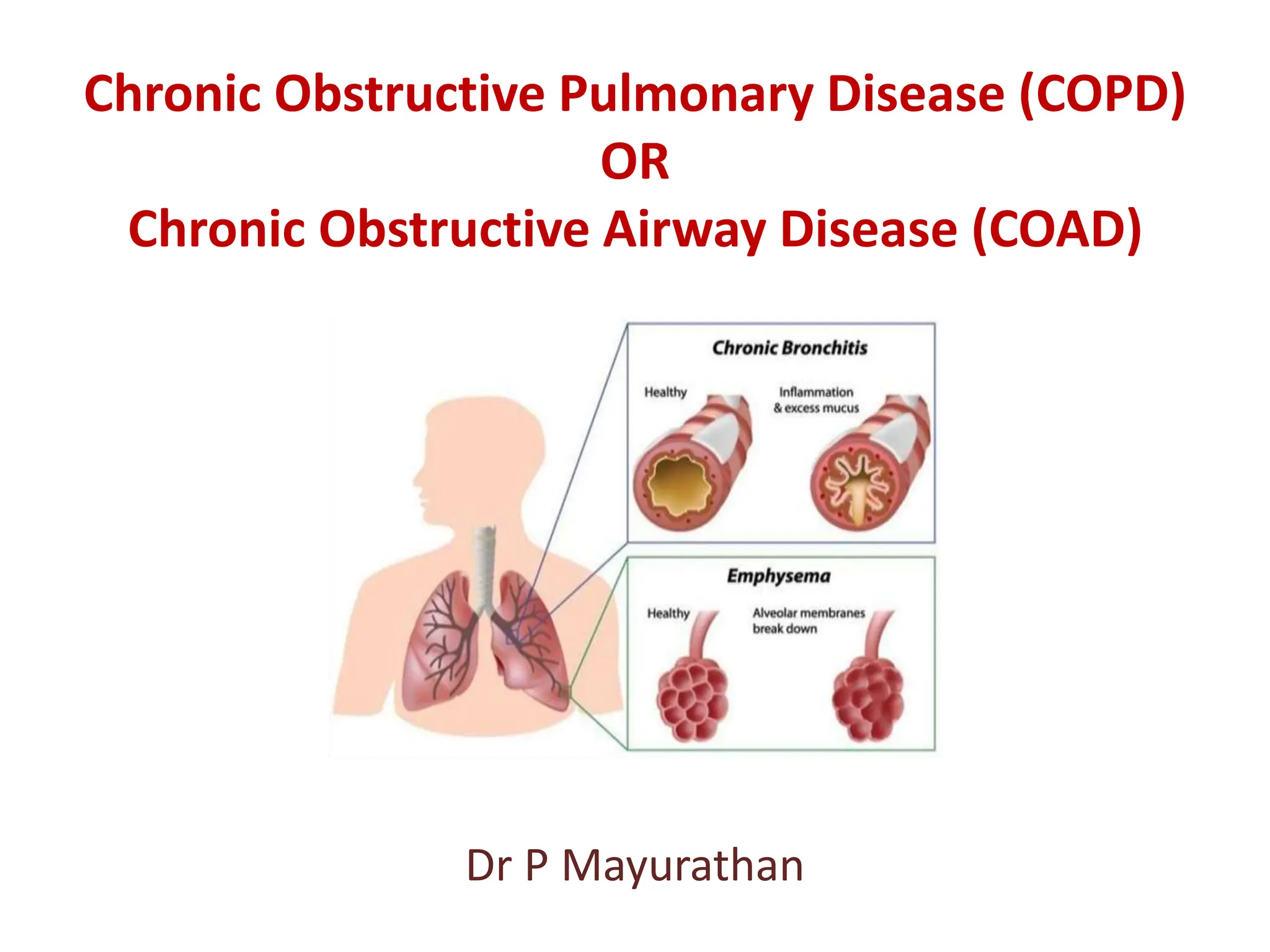
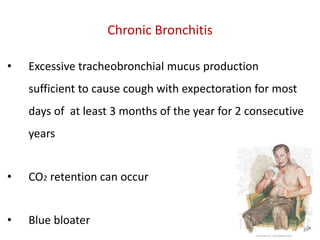
Chronic Bronchitis
• Excessive tracheobronchial mucus production
sufficient to cause cough with expectoration for most
days of at least 3 months of the year for 2 consecutive
years
• CO2 retention can occur
• Blue bloater
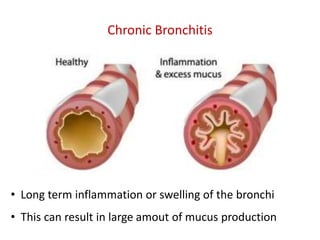
• Long term inflammation or swelling of the bronchi
• This can result in large amout of mucus production
Chronic Bronchitis
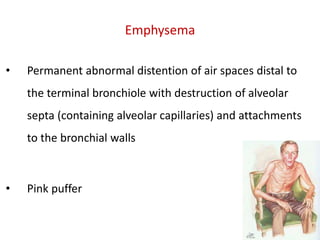
Emphysema
• Permanent abnormal distention of air spaces distal to
the terminal bronchiole with destruction of alveolar
septa (containing alveolar capillaries) and attachments
to the bronchial walls
• Pink puffer
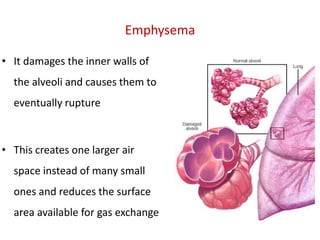
• It damages the inner walls of
the alveoli and causes them to
eventually rupture
• This creates one larger air
space instead of many small
ones and reduces the surface
area available for gas exchange
Emphysema
COPD
• Chronic airflow obstruction due to chronic bronchitis
and/or emphysema
• Degree of obstruction may be less when the patient is
free from respiratory infection and may improve with
bronchodilator drugs
• Significant obstruction is always present
Epidemiology of COPD
• Global and South Asian estimated prevalence are 11.7%
and 6-7% respectively
• 30% of smokers develop COPD
• 20% of adult males have COPD
• 15% of COPD patients are severely symptomatic
• 4th leading cause of death in USA and 6th leading cause of
death worldwide
Risk factors of COPD
• Smoking
• Nearly all patients with symptomatic COPD are current
or former smokers
• 10-20% of smokers will develop symptomatic COPD
• Occupational Exposures
• Dusts, gases, fumes
• Alpha1-antitrypsin deficiency
• Alpha1-antitrypsin is an important protease inhibitor
that usually prevents elastases from causing lung
destruction
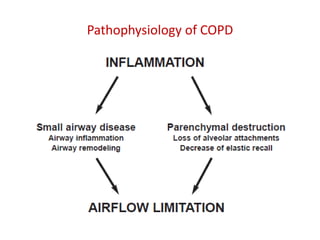
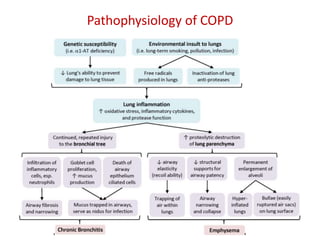
Pathophysiology of COPD
•  elastic recoil pressure  dynamic collapse of airways during
expiration ineffective cough mechanism and pursed lips
breathing (emphysema)
•  compliance (emphysema)
•  airway resistance
• Prolonged forced expiratory time
• Air trapping – RV and FRC elevated
• Hyperinflation –TLC elevated
Clinical features of COPD
• Chronic cough and sputum production - clear, white, yellow or
greenish
• Shortness of breath
• Wheezing
• Chest tightness
• Blueness of the lips or fingernail beds (cyanosis)
• Frequent respiratory infections
• Lack of energy
• Features of right heart failure due to cor-pulmonale
Medical Research Council (MRC) Dyspnoea Scale
for COPD patients
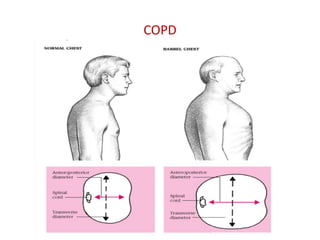
COPD
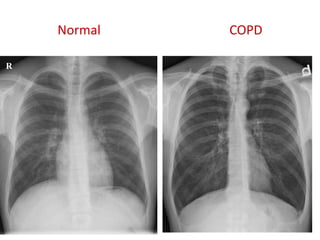
Normal COPD
R
GOLD (Global initiative for Chronic Obstructive Lung
Disease) Spirometric Classification of COPD
Treatment of COPD
• SMOKING CESSATION!
• Bronchodilators: β2 agonists
• Short acting - Salbutamol
• Long acting - Salmeterol
• Bronchodilators: Anti-cholinergic agents
• Short acting - Ipratropium
• Long acting - Tiotropium
• Methylxanthines (Theophylline)
• Has anti-inflammatory affect, and improves respiratory muscle function, stimulates
the respiratory center, and promotes bronchodilation
• Adverse effects include anxiety, tremors, insomnia, nausea, cardiac arrhythmia, and
seizures
• Inhaled corticosteroids
• Beclomethasone, Fluticasone, Budesonide
• Combination of Inhaled corticosteroid and long-acting -agonist
• Fluticasone + Salmeterol
• Oral Corticosteroids
Treatment of COPD
Oxygen Therapy
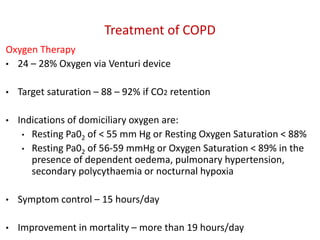
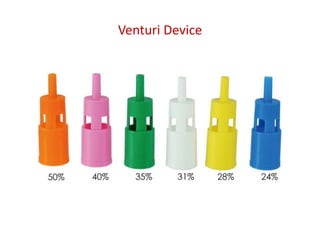
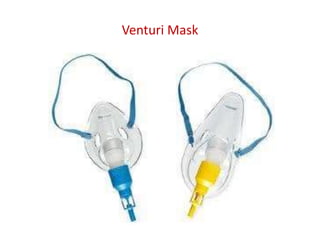
• 24 – 28% Oxygen via Venturi device
• Target saturation – 88 – 92% if CO2 retention
• Indications of domiciliary oxygen are:
• Resting Pa02 of < 55 mm Hg or Resting Oxygen Saturation < 88%
• Resting Pa02 of 56-59 mmHg or Oxygen Saturation < 89% in the
presence of dependent oedema, pulmonary hypertension,
secondary polycythaemia or nocturnal hypoxia
• Symptom control – 15 hours/day
• Improvement in mortality – more than 19 hours/day
Venturi Device
Venturi Mask
Treatment of COPD
• Pulmonary Rehabilitation
• Proper dietary modification
• Pneumococcal and influenza vaccination
• Chest physiotherapy with postural drainage
• Other physical fitness exercises
• Surgery
• Bullectomy
• Lung volume reduction surgery
• Double lung transplantation/heart-lung transplantation
Asthma – COPD Overlap
• When patients have features of both asthma and COPD
• Spirometry is essential for confirming persistent airflow
limitation or variable airflow obstruction
• For patients with features of both asthma and COPD
– Treat as asthma.
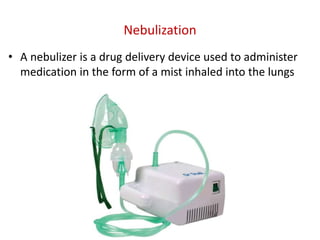
Nebulization
• A nebulizer is a drug delivery device used to administer
medication in the form of a mist inhaled into the lungs
Inhalers
• Mainly 2 types;
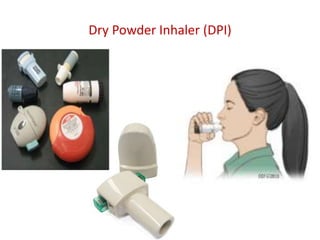
– Dry Powder Inhaler (DPI)
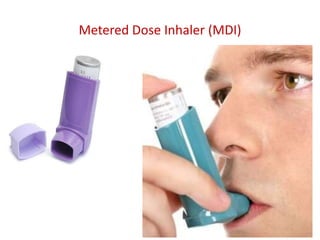
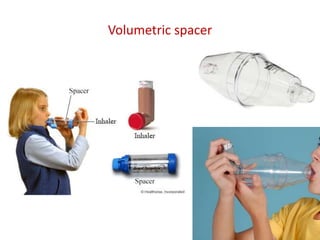
– Metered Dose Inhaler (MDI) with or without volumetric
spacer
Dry Powder Inhaler (DPI)
Metered Dose Inhaler (MDI)
Volumetric spacer

Chronic Obstructive Pulmonary Disease / COPD

  • 1.
    Chronic Obstructive PulmonaryDisease (COPD) OR Chronic Obstructive Airway Disease (COAD) Dr P Mayurathan
  • 2.
    Chronic Obstructive PulmonaryDisease (Chronic Obstructive Airway Disease) • Consists of mainly 2 diseases; – Chronic Bronchitis – Emphysema
  • 3.
    Chronic Bronchitis • Excessivetracheobronchial mucus production sufficient to cause cough with expectoration for most days of at least 3 months of the year for 2 consecutive years • CO2 retention can occur • Blue bloater
  • 4.
    • Long terminflammation or swelling of the bronchi • This can result in large amout of mucus production Chronic Bronchitis
  • 5.
    Emphysema • Permanent abnormaldistention of air spaces distal to the terminal bronchiole with destruction of alveolar septa (containing alveolar capillaries) and attachments to the bronchial walls • Pink puffer
  • 6.
    • It damagesthe inner walls of the alveoli and causes them to eventually rupture • This creates one larger air space instead of many small ones and reduces the surface area available for gas exchange Emphysema
  • 7.
    COPD • Chronic airflowobstruction due to chronic bronchitis and/or emphysema • Degree of obstruction may be less when the patient is free from respiratory infection and may improve with bronchodilator drugs • Significant obstruction is always present
  • 8.
    Epidemiology of COPD •Global and South Asian estimated prevalence are 11.7% and 6-7% respectively • 30% of smokers develop COPD • 20% of adult males have COPD • 15% of COPD patients are severely symptomatic • 4th leading cause of death in USA and 6th leading cause of death worldwide
  • 9.
    Risk factors ofCOPD • Smoking • Nearly all patients with symptomatic COPD are current or former smokers • 10-20% of smokers will develop symptomatic COPD • Occupational Exposures • Dusts, gases, fumes • Alpha1-antitrypsin deficiency • Alpha1-antitrypsin is an important protease inhibitor that usually prevents elastases from causing lung destruction
  • 10.
  • 11.
  • 12.
    Pathophysiology of COPD • elastic recoil pressure  dynamic collapse of airways during expiration ineffective cough mechanism and pursed lips breathing (emphysema) •  compliance (emphysema) •  airway resistance • Prolonged forced expiratory time • Air trapping – RV and FRC elevated • Hyperinflation –TLC elevated
  • 13.
    Clinical features ofCOPD • Chronic cough and sputum production - clear, white, yellow or greenish • Shortness of breath • Wheezing • Chest tightness • Blueness of the lips or fingernail beds (cyanosis) • Frequent respiratory infections • Lack of energy • Features of right heart failure due to cor-pulmonale
  • 14.
    Medical Research Council(MRC) Dyspnoea Scale for COPD patients
  • 15.
  • 16.
  • 18.
    GOLD (Global initiativefor Chronic Obstructive Lung Disease) Spirometric Classification of COPD
  • 19.
    Treatment of COPD •SMOKING CESSATION! • Bronchodilators: β2 agonists • Short acting - Salbutamol • Long acting - Salmeterol • Bronchodilators: Anti-cholinergic agents • Short acting - Ipratropium • Long acting - Tiotropium • Methylxanthines (Theophylline) • Has anti-inflammatory affect, and improves respiratory muscle function, stimulates the respiratory center, and promotes bronchodilation • Adverse effects include anxiety, tremors, insomnia, nausea, cardiac arrhythmia, and seizures • Inhaled corticosteroids • Beclomethasone, Fluticasone, Budesonide • Combination of Inhaled corticosteroid and long-acting -agonist • Fluticasone + Salmeterol • Oral Corticosteroids
  • 20.
    Treatment of COPD OxygenTherapy • 24 – 28% Oxygen via Venturi device • Target saturation – 88 – 92% if CO2 retention • Indications of domiciliary oxygen are: • Resting Pa02 of < 55 mm Hg or Resting Oxygen Saturation < 88% • Resting Pa02 of 56-59 mmHg or Oxygen Saturation < 89% in the presence of dependent oedema, pulmonary hypertension, secondary polycythaemia or nocturnal hypoxia • Symptom control – 15 hours/day • Improvement in mortality – more than 19 hours/day
  • 21.
  • 22.
  • 23.
    Treatment of COPD •Pulmonary Rehabilitation • Proper dietary modification • Pneumococcal and influenza vaccination • Chest physiotherapy with postural drainage • Other physical fitness exercises • Surgery • Bullectomy • Lung volume reduction surgery • Double lung transplantation/heart-lung transplantation
  • 24.
    Asthma – COPDOverlap • When patients have features of both asthma and COPD • Spirometry is essential for confirming persistent airflow limitation or variable airflow obstruction • For patients with features of both asthma and COPD – Treat as asthma.
  • 25.
    Nebulization • A nebulizeris a drug delivery device used to administer medication in the form of a mist inhaled into the lungs
  • 26.
    Inhalers • Mainly 2types; – Dry Powder Inhaler (DPI) – Metered Dose Inhaler (MDI) with or without volumetric spacer
  • 27.
  • 28.
  • 29.