 Super-vasmol poisoning is emerging as a
major cause of suicidal poisoning in India…as
it is a cheap ,freely available hair dye
 It contains potential toxins like PPD which can
result in multiorgan dysfunction
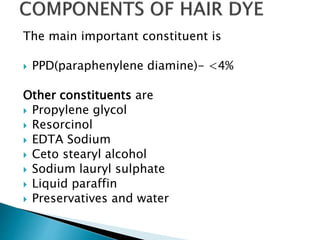
The main important constituent is
 PPD(paraphenylene diamine)- <4%
Other constituents are
 Propylene glycol
 Resorcinol
 EDTA Sodium
 Ceto stearyl alcohol
 Sodium lauryl sulphate
 Liquid paraffin
 Preservatives and water
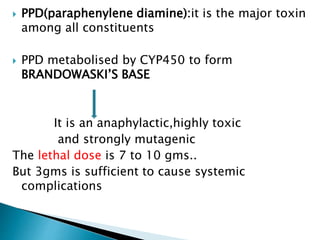
 PPD(paraphenylene diamine):it is the major toxin
among all constituents
 PPD metabolised by CYP450 to form
BRANDOWASKI’S BASE
It is an anaphylactic,highly toxic
and strongly mutagenic
The lethal dose is 7 to 10 gms..
But 3gms is sufficient to cause systemic
complications
It produces both local and systemic effects.
Systemic effects occurs in two phases:
 Phase 1
Acute presentation (4-6hrs):cervicofacial
edema,airway obstruction,gastritis and severe
vomiting.
 Phase 2
Subacute presentation withARF,rhabdomyolysis
and hemolysis.
Hepatitis.
Hyperkelemia,hypocalcemia,hyperphosphatemia.
Severe metabolic acidosis
 Even 5 to 10 ml super vasmol can cause
laryngeal edema due to direct toxic effect of
PPD on membranes..
 No specific antidote available for PPD,hence
management is only symptomatic &
supportive .
 Development of pneumothorax is reported
following laryngeal edema
Intense inspiratory effort secondary to
laryngeal edema leading to overdistension of
alveoli.
Local effects of PPD:
• Skin iritation
• Contact dermatitis
• Chemosis,lacrimation and exopthalmous
• Permanent blindness
 Chronic hair dye use is associated with non-
Hodgkin’s lymphoma,multiple myeloma,acute
leukemia,and bladder cancer
 Resorcinol-
it causes methemoglobinemia and
renal toxicity
 EDTA sodium-
it causes hypocalcemia
 Propylene glycol-
it is ass. with hyperosmolarity, CNS depression,
arrythmias
it is nephotoxic and results in high anion
gap metabolic acidosis and acute renal failure.
 In addition to these a few hair dyes also
contain Lead acetate and Bismuth sulphate
which causes CKD and Acute interstitial
nephritis respectively..
1.Angioedema or Cervicofacial edema:
 Early manifestation (within 4-6 hours) include
respiratory distress due to swelling of upper
airway and angioedema
 Angioedema is immunologically
mediated,anatomically limited,nonpitting edema.
 It is an abrupt swelling of the dermis and
subcutis
 STAGING OF ANGIOEDEMA:
This is to predict airway risk at presentation.
Stage 1 - Facial and lip edema
Stage 2 - soft palate edema
Stage 3 - Lingual edema
Stage 4 - Laryngeal edema
2.RHABDOMYOLYSIS:
 Symptoms are back pain,limb
pain,generalised myalgias
 Acute muscle necrosis is the cause for
tenderness and local edema of muscles
 The initial sign of rhabdomyolysis is the
appearance of cola-colored urine
 There is dissolution of striated muscle fibres, with
leakage of muscle Enzymes,myoglobin,
potassium,calcium and other intracellular
constituents.
 CK levels are the most sensitive indicators of
myocyte injury.
3.RENAL FAILURE:
 It testifies to the severity of intoxication.
 The causes are
Toxic injury
Myoglobinuria
Hemoglobinuria
Hypovolemia
Propylene glycol is also a nephrotoxic
4.MYOCARDITIS:
It is due to rhabdomyolysis of myocardium
It is reported in 15% of cases with mortality
rate of 29%.
Ventricular arrythmias,sudden cardiac death
5.Neurological:convulsions
Cause of death:
Respiratory obstuction
Renal failure
Arrythmias
ARDS
 Treatment is aimed at rapid identification of
potentially life-threatening complications and
prevention of renal failure
 GASTRIC LAVAGE: is useful if the
patient presents within 1 hour of ingestion but
contraindicated if airway protective reflex is lost.
 Airway protection is the most important
consideration with laryngeaal edema…it should
be ensured with timely endotracheal intubation
or tracheostomy.
 Steroids – hydrocortisone 200mg stat f/b
100mg every 6th hourly.
If not responded to hydrocortisone ,
methyl prednisolone 125mg iv infusion given
6th hourly
 In the event of life threatening reaction
involving urticaria with angioedema or
laryngeal edema Epinephrine may be neded
to stabilise the patient
 Aggressive fluid resuscitation
with isotonic fluids to restore the renal
perfusion and increase renal flow is necessary
to prevent AKI
 Dialysis support may be life saving when
oliguria develops.
 Myocarditis requires continous cardiac
monitoring in order to timely intervene life-
threatening arrythmias and sudden cardiac
death.
 Alkaline diuresis- using isotonic
saline,sodium bicarbonate and diuretics
 Sodabicarb 20meq 8th hourly
 In conclusion,hair dye poisoning is a life-
threatening emergency which requires
emergency resuscitation and aggressive
management of anaphylaxis
 Preventing renal failure is a very important
goal,since its occurrence is associated with
high mortality and increase in ICU stay
 The time of development of renal failure is
uncertain and hence all patients should be
monitored in hospital for renal failure
complications…
Supervasmol

Supervasmol

  • 2.
     Super-vasmol poisoningis emerging as a major cause of suicidal poisoning in India…as it is a cheap ,freely available hair dye  It contains potential toxins like PPD which can result in multiorgan dysfunction
  • 3.
    The main importantconstituent is  PPD(paraphenylene diamine)- <4% Other constituents are  Propylene glycol  Resorcinol  EDTA Sodium  Ceto stearyl alcohol  Sodium lauryl sulphate  Liquid paraffin  Preservatives and water
  • 4.
     PPD(paraphenylene diamine):itis the major toxin among all constituents  PPD metabolised by CYP450 to form BRANDOWASKI’S BASE It is an anaphylactic,highly toxic and strongly mutagenic The lethal dose is 7 to 10 gms.. But 3gms is sufficient to cause systemic complications
  • 5.
    It produces bothlocal and systemic effects. Systemic effects occurs in two phases:  Phase 1 Acute presentation (4-6hrs):cervicofacial edema,airway obstruction,gastritis and severe vomiting.  Phase 2 Subacute presentation withARF,rhabdomyolysis and hemolysis. Hepatitis. Hyperkelemia,hypocalcemia,hyperphosphatemia. Severe metabolic acidosis
  • 6.
     Even 5to 10 ml super vasmol can cause laryngeal edema due to direct toxic effect of PPD on membranes..  No specific antidote available for PPD,hence management is only symptomatic & supportive .  Development of pneumothorax is reported following laryngeal edema Intense inspiratory effort secondary to laryngeal edema leading to overdistension of alveoli.
  • 7.
    Local effects ofPPD: • Skin iritation • Contact dermatitis • Chemosis,lacrimation and exopthalmous • Permanent blindness
  • 8.
     Chronic hairdye use is associated with non- Hodgkin’s lymphoma,multiple myeloma,acute leukemia,and bladder cancer
  • 9.
     Resorcinol- it causesmethemoglobinemia and renal toxicity  EDTA sodium- it causes hypocalcemia  Propylene glycol- it is ass. with hyperosmolarity, CNS depression, arrythmias it is nephotoxic and results in high anion gap metabolic acidosis and acute renal failure.
  • 10.
     In additionto these a few hair dyes also contain Lead acetate and Bismuth sulphate which causes CKD and Acute interstitial nephritis respectively..
  • 11.
    1.Angioedema or Cervicofacialedema:  Early manifestation (within 4-6 hours) include respiratory distress due to swelling of upper airway and angioedema  Angioedema is immunologically mediated,anatomically limited,nonpitting edema.  It is an abrupt swelling of the dermis and subcutis
  • 12.
     STAGING OFANGIOEDEMA: This is to predict airway risk at presentation. Stage 1 - Facial and lip edema Stage 2 - soft palate edema Stage 3 - Lingual edema Stage 4 - Laryngeal edema
  • 13.
    2.RHABDOMYOLYSIS:  Symptoms areback pain,limb pain,generalised myalgias  Acute muscle necrosis is the cause for tenderness and local edema of muscles
  • 14.
     The initialsign of rhabdomyolysis is the appearance of cola-colored urine  There is dissolution of striated muscle fibres, with leakage of muscle Enzymes,myoglobin, potassium,calcium and other intracellular constituents.  CK levels are the most sensitive indicators of myocyte injury.
  • 15.
    3.RENAL FAILURE:  Ittestifies to the severity of intoxication.  The causes are Toxic injury Myoglobinuria Hemoglobinuria Hypovolemia Propylene glycol is also a nephrotoxic
  • 16.
    4.MYOCARDITIS: It is dueto rhabdomyolysis of myocardium It is reported in 15% of cases with mortality rate of 29%. Ventricular arrythmias,sudden cardiac death 5.Neurological:convulsions
  • 17.
    Cause of death: Respiratoryobstuction Renal failure Arrythmias ARDS
  • 18.
     Treatment isaimed at rapid identification of potentially life-threatening complications and prevention of renal failure  GASTRIC LAVAGE: is useful if the patient presents within 1 hour of ingestion but contraindicated if airway protective reflex is lost.  Airway protection is the most important consideration with laryngeaal edema…it should be ensured with timely endotracheal intubation or tracheostomy.
  • 19.
     Steroids –hydrocortisone 200mg stat f/b 100mg every 6th hourly. If not responded to hydrocortisone , methyl prednisolone 125mg iv infusion given 6th hourly
  • 20.
     In theevent of life threatening reaction involving urticaria with angioedema or laryngeal edema Epinephrine may be neded to stabilise the patient
  • 21.
     Aggressive fluidresuscitation with isotonic fluids to restore the renal perfusion and increase renal flow is necessary to prevent AKI
  • 22.
     Dialysis supportmay be life saving when oliguria develops.  Myocarditis requires continous cardiac monitoring in order to timely intervene life- threatening arrythmias and sudden cardiac death.
  • 23.
     Alkaline diuresis-using isotonic saline,sodium bicarbonate and diuretics  Sodabicarb 20meq 8th hourly
  • 24.
     In conclusion,hairdye poisoning is a life- threatening emergency which requires emergency resuscitation and aggressive management of anaphylaxis  Preventing renal failure is a very important goal,since its occurrence is associated with high mortality and increase in ICU stay  The time of development of renal failure is uncertain and hence all patients should be monitored in hospital for renal failure complications…