By
Ajinkya M Kadu
M.Sc. - 1
 What are Chromosomes?
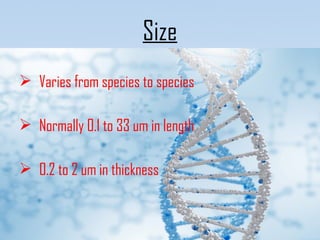
 Size
 Shape
 Structure
 Centromere
 Structure of X & Y chromosome
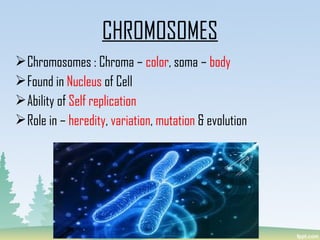
Chromosomes : Chroma – color, soma – body
Found in Nucleus of Cell
Ability of Self replication
Role in – heredity, variation, mutation & evolution
CHROMOSOMES
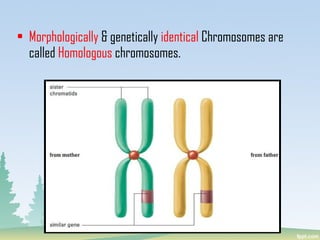
• Morphologically & genetically identical Chromosomes are
called Homologous chromosomes.
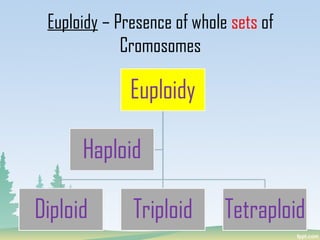
Euploidy – Presence of whole sets of
Cromosomes
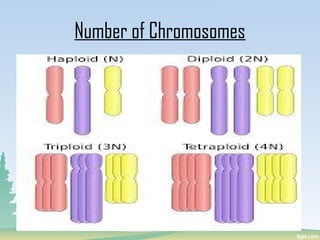
Number of Chromosomes
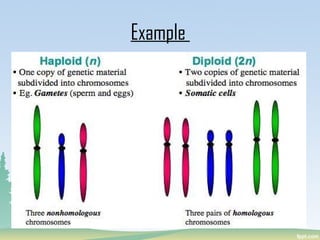
Example
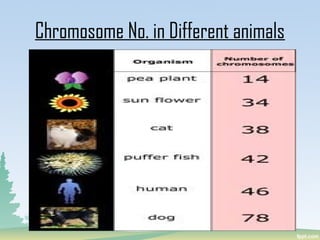
Chromosome No. in Different animals
 Varies from species to species
 Normally 0.1 to 33 um in length
 0.2 to 2 um in thickness
Size
Depends on stage of Cell Division
In Interphase = less condensed
In Metaphase = max. condensation & appear short
Shape
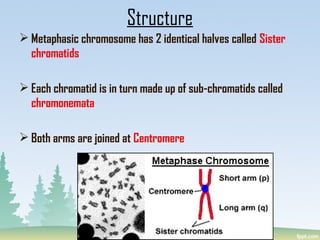
 Metaphasic chromosome has 2 identical halves called Sister
chromatids
 Each chromatid is in turn made up of sub-chromatids called
chromonemata
 Both arms are joined at Centromere
Structure
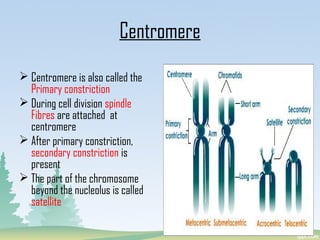
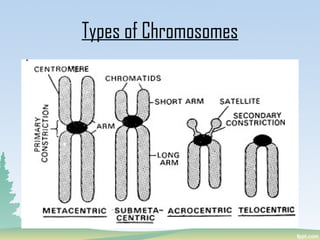
 Centromere is also called the
Primary constriction
 During cell division spindle
Fibres are attached at
centromere
 After primary constriction,
secondary constriction is
present
 The part of the chromosome
beyond the nucleolus is called
satellite
Centromere
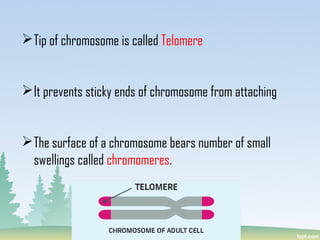
Tip of chromosome is called Telomere
It prevents sticky ends of chromosome from attaching
The surface of a chromosome bears number of small
swellings called chromomeres.
Types of Chromosomes
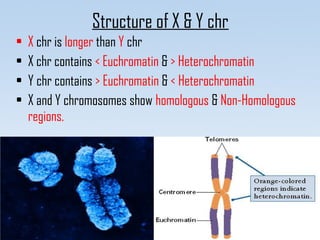
• X chr is longer than Y chr
• X chr contains < Euchromatin & > Heterochromatin
• Y chr contains > Euchromatin & < Heterochromatin
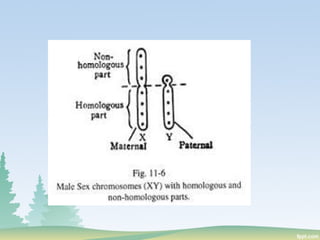
• X and Y chromosomes show homologous & Non-Homologous
regions.
Structure of X & Y chr
REFRENCE
• Human Chromosomes by Orlando J. Miller
• Chromosome biology by R. Appels
• http://www.chromodisorder.org/CDO/
• http://www.genome.gov/26524120
• http://www.youtube.com/watch?v=zf7tbymrv9 o
• http://www.johnkyrk.com/chromosomestructu
re.html
Structure of chromosomes final

Structure of chromosomes final

  • 1.
  • 2.
     What areChromosomes?  Size  Shape  Structure  Centromere  Structure of X & Y chromosome
  • 3.
    Chromosomes : Chroma– color, soma – body Found in Nucleus of Cell Ability of Self replication Role in – heredity, variation, mutation & evolution CHROMOSOMES
  • 4.
    • Morphologically &genetically identical Chromosomes are called Homologous chromosomes.
  • 5.
    Euploidy – Presenceof whole sets of Cromosomes
  • 6.
  • 7.
  • 8.
    Chromosome No. inDifferent animals
  • 9.
     Varies fromspecies to species  Normally 0.1 to 33 um in length  0.2 to 2 um in thickness Size
  • 10.
    Depends on stageof Cell Division In Interphase = less condensed In Metaphase = max. condensation & appear short Shape
  • 11.
     Metaphasic chromosomehas 2 identical halves called Sister chromatids  Each chromatid is in turn made up of sub-chromatids called chromonemata  Both arms are joined at Centromere Structure
  • 12.
     Centromere isalso called the Primary constriction  During cell division spindle Fibres are attached at centromere  After primary constriction, secondary constriction is present  The part of the chromosome beyond the nucleolus is called satellite Centromere
  • 13.
    Tip of chromosomeis called Telomere It prevents sticky ends of chromosome from attaching The surface of a chromosome bears number of small swellings called chromomeres.
  • 14.
  • 15.
    • X chris longer than Y chr • X chr contains < Euchromatin & > Heterochromatin • Y chr contains > Euchromatin & < Heterochromatin • X and Y chromosomes show homologous & Non-Homologous regions. Structure of X & Y chr
  • 17.
    REFRENCE • Human Chromosomesby Orlando J. Miller • Chromosome biology by R. Appels • http://www.chromodisorder.org/CDO/ • http://www.genome.gov/26524120 • http://www.youtube.com/watch?v=zf7tbymrv9 o • http://www.johnkyrk.com/chromosomestructu re.html

Editor's Notes

  • #2 By Ajinkya M Kadu M.Sc - 1
  • #6 Euploidy – Presence of whole sets of Cromosomes