1
Chlorophyll
Chandrima Shrivastava
13FET1001
S.Y. B. Tech (Food Engineering and Technology)
Institute of Chemical Technology, Mumbai
2
I. INTRODUCTION
The green pigments of photosynthetic organisms are known collectively as the chlorophylls.
The term chlorophyll derives from the Greek words chloros, meaning "green" and phyllon,
meaning "leaf". The basis of chlorophyll is a macrocycle containing four pyrrole rings and
Mg2+
ion in the centre. The side chains contain hydrocarbon radicals of various lengths and
saturations, and oxygen-containing functional groups.
In most green plants, chlorophyll a and b are in the ratio 3:1. These compounds are found in
the chloroplasts of photosynthetic tissues and are located in the thylakoids, the
photochemically active biomembranes.
Chlorophyll c is found together with chlorophyll a in marine algae, dinoflagellates, and
marine diatoms.1, 2 Chlorophyll d was discovered to be a minor constituent of red algae
(Rhodophyta) by Manning and Strain.3
Chlorophyll f is a type form of chlorophyll that absorbs further in the red (infrared light) than
other chlorophylls. It is a relatively new discovery and chlorophyll f is made by unnamed
filamentous bacterium.4
II. FOOD SOURCES
Chlorophyll is present in all green plants, most of the algae and cyanobacteria. Chlorophyll is
abundant in leafy green vegetables and generally to a lesser extent in fruits. In spinach,
chlorophyll can be as high as 1% on a dry weight basis. Chlorophyll a is abundantly found in
Chlorella and Spirulina. Chlorella is called ‘Emerald food’ due to its extremely high
chlorophyll content, which is around 7% of the biomass. Chlorophyll is found in green
leaves, fresh herbs, blue-green algae, sprouts, wheatgrass, green vegetables & fruits, sea
vegetables - seaweeds.
3
III. STRUCTURE
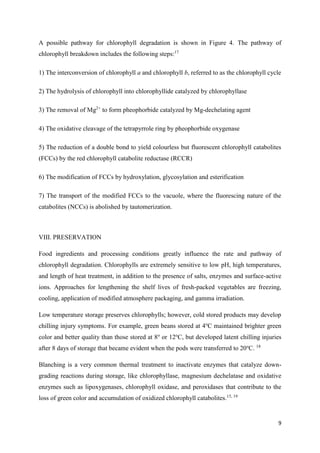
Both chlorophylls a and b are derivatives of dihydroporphyrin chelated with a centrally
located magnesium atom. Chlorophyll b differs from chlorophyll a only in one of the
functional groups bonded to the porphyrin (a -CHO group in place of a -CH3 group).
Chlorophyll c is closely related to chlorophylls a and b, and chlorophyll d is similar to
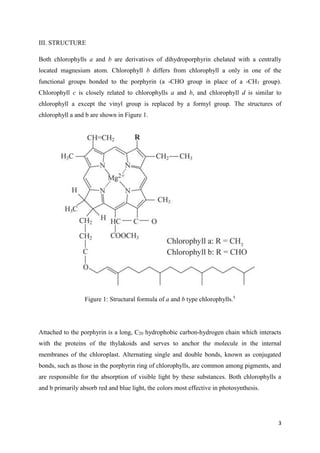
chlorophyll a except the vinyl group is replaced by a formyl group. The structures of
chlorophyll a and b are shown in Figure 1.
Figure 1: Structural formula of a and b type chlorophylls.5
Attached to the porphyrin is a long, C20 hydrophobic carbon-hydrogen chain which interacts
with the proteins of the thylakoids and serves to anchor the molecule in the internal
membranes of the chloroplast. Alternating single and double bonds, known as conjugated
bonds, such as those in the porphyrin ring of chlorophylls, are common among pigments, and
are responsible for the absorption of visible light by these substances. Both chlorophylls a
and b primarily absorb red and blue light, the colors most effective in photosynthesis.
4
IV. CHEMISTRY
Chlorophyll contains a fully conjugated tetrapyrrole system (18 -electrons), and therefore
absorbs light in the visible range. It is the main structural unit of photosynthetic light-trapping
devices of green plants, which are nanosized supramolecular complexes containing up to
several hundred pigments from the protein environment. The main function of chlorophyll is
to absorb light, transform the light energy into electronic one and pass it to neighbouring
molecules by van-der Waals (dipole-dipole) interactions. The chain of chlorophyll transmits
electron energy to the photosynthetic reaction centre, where it is used for charge separation
and subsequent redox reactions. Chlorophylls are also contained in the reaction centres of
green plants, where they play the role of the primary electron donor. 6
In purple and green bacteria, bacteriochlorophyll perform the functions of chlorophyll.
Unlike chlorophyll, they have one or two pyrrole rings partially hydrogenated, due to which
they absorb light of longer wavelength than chlorophylls.
Chlorophyll derivatives:
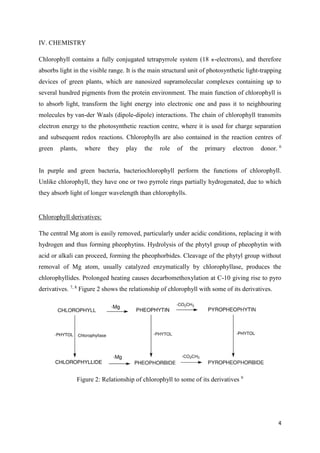
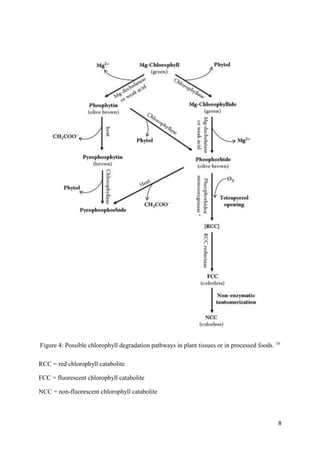
The central Mg atom is easily removed, particularly under acidic conditions, replacing it with
hydrogen and thus forming pheophytins. Hydrolysis of the phytyl group of pheophytin with
acid or alkali can proceed, forming the pheophorbides. Cleavage of the phytyl group without
removal of Mg atom, usually catalyzed enzymatically by chlorophyllase, produces the
chlorophyllides. Prolonged heating causes decarbomethoxylation at C-10 giving rise to pyro
derivatives. 7, 8
Figure 2 shows the relationship of chlorophyll with some of its derivatives.
Figure 2: Relationship of chlorophyll to some of its derivatives 9
5
Chlorophyll as a photoreceptor:
Chlorophyll a and b are very effective photoreceptors because they contain a network of
alternating single and double bonds, and the orbitals can delocalise stabilising the structure.
Such delocalised polyenes have very strong absorption bands in the visible regions of the
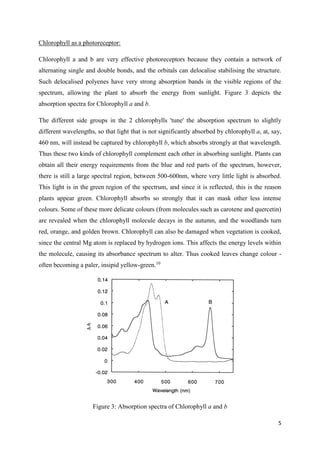
spectrum, allowing the plant to absorb the energy from sunlight. Figure 3 depicts the
absorption spectra for Chlorophyll a and b.
The different side groups in the 2 chlorophylls 'tune' the absorption spectrum to slightly
different wavelengths, so that light that is not significantly absorbed by chlorophyll a, at, say,
460 nm, will instead be captured by chlorophyll b, which absorbs strongly at that wavelength.
Thus these two kinds of chlorophyll complement each other in absorbing sunlight. Plants can
obtain all their energy requirements from the blue and red parts of the spectrum, however,
there is still a large spectral region, between 500-600nm, where very little light is absorbed.
This light is in the green region of the spectrum, and since it is reflected, this is the reason
plants appear green. Chlorophyll absorbs so strongly that it can mask other less intense
colours. Some of these more delicate colours (from molecules such as carotene and quercetin)
are revealed when the chlorophyll molecule decays in the autumn, and the woodlands turn
red, orange, and golden brown. Chlorophyll can also be damaged when vegetation is cooked,
since the central Mg atom is replaced by hydrogen ions. This affects the energy levels within
the molecule, causing its absorbance spectrum to alter. Thus cooked leaves change colour -
often becoming a paler, insipid yellow-green.10
Figure 3: Absorption spectra of Chlorophyll a and b
6
V. ALTERATIONS DURING FOOD PROCESSING
Colour is a major quality attribute of vegetable products. The most common alteration that
occurs in green vegetables is the conversion of chlorophylls to pheophytins, causing a
dramatic color change from bright green to olive brown.11, 12, 13
This conversion is enhanced
by extended heat treatment and is dependent upon the amount of acids formed during
processing and storage. Mild heat treatment, such as in vegetable blanching, induces the
formation of the C-10 epimers producing chlorophyll a’ and b’. During prolonged heat
treatment, such as in canning, almost all chlorophylls are converted to pheophytins and
pheophytin epimers.14
In some canned products, pyropheophytins were determined as the
predominant chlorophyll derivatives. The mechanism for chlorophyll decomposition during
canning is a two-step process: Chlorophyll  Pheophytin  Pyropheophytin
Generally, total destruction of chlorophylls results in the formation of pheophytins and
pyropheophytins. The pH of the product decreases with heat treatment, inducing further
pheophytinization. The extent of pheophytin formation was considered to be related to the
severity of the heat treatment.
In addition to the effects of pH, heat and metal complexes, other causes for the
decomposition of chlorophyll in foods have been suggested. In fermented products, such as
cucumbers (and wild rice), chlorophyllides and pheophorbides are produced in addition to the
pheophytins. The presence of pyropheophytin is attributed to the heat generated during
fermentation.
VI. STABILITY
Chlorophylls can be destabilised by high temperatures depending on the pH of the
environment. In an alkaline solution (pH 9), chlorophyll remains stable, but in an acidic
solution (pH 3) it is highly unstable. When plant material is heated, i.e. cooked, the plant cell
membranes break down and cause acid to be released, thus decreasing the pH of the
surrounding solution. The magnesium ion located at the centre of the porphin ring is normally
stable and difficult to remove, but at lower pH, the Mg2+
ion is displaced by two H+
ions,
resulting in formation of an olive brown pheophytin comlpex.
The heat induced cellular degradation can also predispose the chlorophyll pigments to photo-
degradation in which they chemically decompose in the presence of light.
7
VII. DEGRADATION
Despite the importance of chlorophyll decomposition as a measure of ripening and quality,
the biochemistry of this process remains a biological enigma. Essentially, the process
involves release of chlorophyll from its protein complex followed by dephytlization and
possibly pheophytinization. Oxidation of the ring structure to chlorins occurs and ultimately
colorless end products form. Chlorophylls are degraded in the chloroplast by enzyme-
catalyzed process via pheophorbide a and the red chlorophyll catabolite (RCC) to give
primary fluorescent chlorophyll catabolites (pFCC, or its Cl-epimer, epipFCC). pFCCs are
modified further by unidentified hydroxylating enzymes. When carrying a free propionic acid
group, FCCs are transported into the vacuole where they isomerize by a spontaneous acid
catalyzed reaction to the corresponding nonfluorescent chlorophyll catabolites (NCCs).
EXAMPLES OF CHLOROPHYLL DEGRADARION 15
Fruit maturation (on or off the plant):
 Ripening of tomatoes (chlorophyll  colorless compounds); induced by ethylene
 De-greening of bananas (chlorophyll  colorless compounds); induced by ethylene
 De-greening of lemons and oranges (chlorophyll  colorless compounds); induced
by ethylene
Processing:
 Canning of peas [chlorophyll  pheophytin (olive brown)]; induced by heat
 Brining of olives [chlorophyll  pheophytin (olive brown)  pheophorbide (olive
brown) and chlorophyll  chlorophyllide (blue green)  pheophorbide]; induced by
acid and chlorophyllase
 Blanching of snap beans, turnip greens and okra [chlorophyll  pheophytin (olive
brown)]; induced by heat
 Coleslaw processing [chlorophyll  pheophytin (olive brown)  pheophorbide
(olive brown)]; induced by acid and chlorophyllase
Senescence:
 Ready-to-eat salads (chlorophyll  colorless compounds); induced by ethylene
 Stored cabbage heads (chlorophyll  colorless compounds); induced by ethylene
8
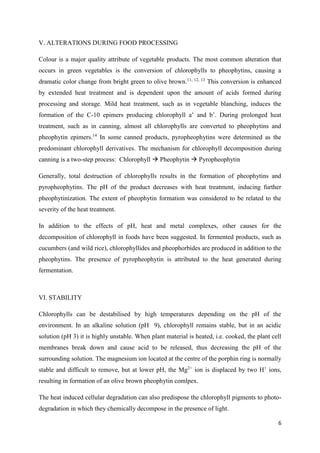
Figure 4: Possible chlorophyll degradation pathways in plant tissues or in processed foods. 16
RCC = red chlorophyll catabolite
FCC = fluorescent chlorophyll catabolite
NCC = non-fluorescent chlorophyll catabolite
9
A possible pathway for chlorophyll degradation is shown in Figure 4. The pathway of
chlorophyll breakdown includes the following steps:17
1) The interconversion of chlorophyll a and chlorophyll b, referred to as the chlorophyll cycle
2) The hydrolysis of chlorophyll into chlorophyllide catalyzed by chlorophyllase
3) The removal of Mg2+
to form pheophorbide catalyzed by Mg-dechelating agent
4) The oxidative cleavage of the tetrapyrrole ring by pheophorbide oxygenase
5) The reduction of a double bond to yield colourless but fluorescent chlorophyll catabolites
(FCCs) by the red chlorophyll catabolite reductase (RCCR)
6) The modification of FCCs by hydroxylation, glycosylation and esterification
7) The transport of the modified FCCs to the vacuole, where the fluorescing nature of the
catabolites (NCCs) is abolished by tautomerization.
VIII. PRESERVATION
Food ingredients and processing conditions greatly influence the rate and pathway of
chlorophyll degradation. Chlorophylls are extremely sensitive to low pH, high temperatures,
and length of heat treatment, in addition to the presence of salts, enzymes and surface-active
ions. Approaches for lengthening the shelf lives of fresh-packed vegetables are freezing,
cooling, application of modified atmosphere packaging, and gamma irradiation.
Low temperature storage preserves chlorophylls; however, cold stored products may develop
chilling injury symptoms. For example, green beans stored at 4o
C maintained brighter green
color and better quality than those stored at 8o
or 12o
C, but developed latent chilling injuries
after 8 days of storage that became evident when the pods were transferred to 20o
C. 18
Blanching is a very common thermal treatment to inactivate enzymes that catalyze down-
grading reactions during storage, like chlorophyllase, magnesium dechelatase and oxidative
enzymes such as lipoxygenases, chlorophyll oxidase, and peroxidases that contribute to the
loss of green color and accumulation of oxidized chlorophyll catabolites.15, 19
10
Although blanching produces a reduction of the concentrations of oxygen in plant tissues and
thus better retention of pigments initially, the acidic medium progressively promotes the
replacement of the centrally located magnesium ion from the chlorophyll molecule by two
atoms of hydrogen, producing pheophytins after prolonged storage. Additionally,
photoxidation and other oxidative reactions seem to be involved in later stages of the
degreening process by contact with oxidized lipids in the presence of oxygen.20
Irradiation is an effective method of reducing microbial contamination. Treatment with
gamma radiation in combination with storage at 8o
or 10o
C was efficient for bacterial
decontamination and elimination of potential pathogens without altering sensory attributes
like color. The advantage of irradiation is that it causes fewer changes to the sensory
attributes than blanching, application of fumigants, steam, microwaves, and other
treatments.15
The loss of chlorophylls to pheophytins can be retarded when the moisture content of
vegetables is reduced or the water activity is lowered. At lower activities, the chlorophylls are
bound in nonreactive compartments, or the water is not available for the reaction to form
pheophytins. The addition of agents like KMnO4, which absorbs ethylene, and sorbitol, which
reduces water activity may avoid water loss and diffusion of volatile off-flavors and odors
produced during storage under anaerobic conditions.
Generally, brighter-green vegetables are viewed as more appealing than darker coloured
ones; by reducing cooking time and boiling vegetables with the pan lid off to allow the
escape of volatile acids, the production of pheophytin and discoloration can be minimised.21
Adding a small amount of sodium bicarbonate (NaHCO3) to the water during boiling may
also help to keep the vegetables green as this raises the pH. This results in the formation of
chlorophyllin that has an unrealistic bright color and the texture of the vegetable is extremely
mushy. Mushiness can be prevented by the addition of calcium acetate or any other calcium
salt which will prevent breakdown of the hemicellulose in the alkaline medium
A patented process using Zn2+
or Cu2+
salts can retain the bright green color of vegetables.
These ions substitute for Mg2+
atom in chlorophyll and form zinc or copper complexes of
chlorophyll derivatives.
11
In canned peas, the acidity of the plant cells leads to loss of green color. Artificial colorants
such as tartrazine and green S (dyes) are added to restore the color. A derivative of
chlorophyll, sodium copper chlorophyllin gives an acceptable blue-green color to canned
peas. Though copper is toxic, the concentration level is too low to be a toxic hazard.22
In the process of pickling green vegetables like cucumbers, green mangoes, string beans,
ampalya, etc., lactic acid is produced by fermentation when the materials are soaked in weak
vinegar or acetic acid. Under this process, chlorophyll is broken up into phycophytin with the
alteration of the color from green to yellowish or brownish or greyish green, which tend to
lower the grade of the finished product. However, if these materials are soaked in a solution
of one part per million of copper salt before pickling, the green pigment is retained.
During heat treatment, chlorophyll degrades to pheophytin, which in turn decomposes to
other degradation products. Both chlorophyll and pheophytin conversion can be minimized
by the addition of maillard reaction products (MRPs) to improve the colour stability.23
Gibberellic acid (GA) is used to maintain fresh product activity in many agricultural
commodities. It increases fruit firmness, and enhances storage and shelf-life of fruits and
vegetables. Since chlorophyll degradation is delayed in GA-treated crops (Lers et al., 1998),
leafy vegetables such as parsley and celery maintain their green color longer in storage.24
IX. TECHNOLOGY AND ADVANCEMENTS
(A) Production of Chlorophyll Using Algae
The cyanobacterium Spirulina platensis is an alternative source of the pigment chlorophyll,
which is used as a natural color in food, cosmetic, and pharmaceutical products. This micro
alga presents one of the highest chlorophyll contents found in nature, corresponding to 1.15%
of its biomass.
Chlorophyll is generally produced by Spirulina using fermentation process. It has been shown
that the composition of the cultivation medium, cellular age, and light intensity are the main
factors influencing chlorophyll content in S platensis biomass. Research studies suggest an
inverse relationship between light intensity and chlorophyll content. Chlorophyll can be
extracted from the algal cells using dimethyl sulfoxide. Chlorophyll production from
Chlorella can be carried out in open ponds as well as fermenters. 25
12
(B) Artificial Leaf:
The organic chemist responsible for this achievement was Robert Burns Woodward, from the
Converse Memorial Laboratory at Harvard University. “Artificial trees” replicate the
photosynthesis process to create hydrocarbon fuel directly from sunlight. This could help
offset the emission of CO2 from fossil fuels, and create an unlimited supply of fuel for
transport. 26
Solar cells that mimic nature have been created at North Carolina State University where
water-gel-based artificial leaves containing chlorophyll produce electricity. They extracted
chlorophyll from leaves and trapped it in a transparent jelly. They put tiny electrodes made of
carbon nanotubes in this jelly. When sunlight falls on chlorophyll, it seizes a photon and
releases an electron. The electron is carried away by the carbon nanotubes to make electricity.
This electricity can drive a cell in which water is split to form hydrogen and oxygen.
(C) The Importance of Chlorophyll as a Water Quality Parameter
The measurement and distribution of the phytoplankton population enables researchers to
draw conclusions about a water body’s health, composition, and ecological status. Monitoring
chlorophyll levels is a direct way of tracking algal growth. Surface waters that have high
chlorophyll levels are typically high in nutrients, generally phosphorus and nitrogen. These
nutrients cause the algae bloom, leading to depletion in dissolved oxygen levels - a primary
cause of most fish kills. High levels of nitrogen and phosphorus indicate pollution from man-
made sources, such as septic system leakage, poorly functioning wastewater treatment plants,
or fertilizer runoff. There are various techniques to measure chlorophyll, including
spectrophotometry, high performance liquid chromatography (HPLC), and fluorometry.27
(D) Chlorophyll-based Phototransistor:
Chlorophyll is one of the most efficient light-absorbing materials known to science. Shao-Yu
Chen at the Institute of Atomic and Molecular Sciences in Taiwan has incorporated
chlorophyll into graphene transistors to make light-activated switches. The new
phototransistor design is relatively simple. It consists of two gold electrodes connected by a
sheet of graphene. The graphene is then covered by a layer of chlorophyll using a method
known as drop casting. This involves placing a drop of liquid containing chlorophyll on top
13
of the graphene and letting it evaporate. When the chlorophyll is zapped by light of certain
frequencies, the current increases dramatically as the light causes chlorophyll to release
electrons into the graphene and this increases the current that flows. 28
(E) Infrared chlorophyll to boost solar cells:
Stromatolites are among the most primitive of life forms. Their cyanobacteria contain a
newly discovered form of chlorophyll, the fifth known, which absorbs sunlight in the red and
infrared part of the spectrum. It could be harnessed to help solar cells convert more light into
electricity. Min Chen of the University of Sydney in Australia found a completely new type
of chlorophyll – chlorophyll f – made by an as-yet unnamed filamentous bacterium.
Because over half of the light from the sun comes in at infrared wavelengths, the makers of
photovoltaic panels have been working on ways to extend the section of the spectrum that
solar cells can absorb to beyond red.29
(F) Chlorophyll can help prevent cancer:
According to a recent study at Oregon State University, chlorophyll and its derivative,
chlorophyllin in green vegetables offers protection against cancer when tested against the
modest carcinogen exposure levels most likely to be found in the environment. It binds with
and sequesters carcinogens within the gastrointestinal tract until they are eliminated from the
body. 30
14
REFERENCES
1. Dougherty, R.C., Strain, H.H., Svec, W.A., Uphams, R.A., and Katz, J.J., The structure
properties and distribution of chlorophyll c, J. Am. Chem. Soc., 92, 2826, 1970.
2. Dougherty, R.C., Strain, H.H., Svec, W.A., Uphams, R.A., and Katz, J.J., Structure of
chlorophyll c, J. Am. Chem. Soc., 88, 5037, 1966.
3. Manning, W.M. and Strain, H.H., Chlorophyll d, a green pigment of red algae, J. Biol.
Chem., 151, 1, 1943
4. http://www.newscientist.com/article/dn19338-infrared-chlorophyll-could-boost-solar-
cells.html
5. Jackson, A.H., Structure, properties and distribution of chlorophylls, in Chemistry and
Biochemistry of Plant Pigments, Vol. 2, 2nd ed., Goodwin, T.W., Ed., Academic Press,
New York, 1976, 1.
6. Eremin Vadim V., http://eng.thesaurus.rusnano.com/wiki/article1955
7. Pennington, F. C., Strain, H.H., Svec, W.A., and Katz, J., Preparation and properties of
pyrochlorophyll a, methyl pyrochlorophyllide a, pyropheophytin a, and methyl
pyropheophorbide a derived from chlorophyll by carbomethoxylation, J. Am. Chem.
Soc., 86, 1418, 1964.
8. Schwartz, S.J., von Elbe, J.H., and Lindsay, R.C., Influence of processing on the
pigmentation of wild rice grain, J. Agric. Food Chem., 31, 349, 1983.
9. Jackson, A.H., Structure, properties and distribution of chlorophylls, in Chemistry and
Biochemistry of Plant Pigments, Vol. 2, 2nd ed., Goodwin, T.W., Ed., Academic Press,
New York, 1976, 1.
10. May, P., School of Chemistry, University of Bristol,
http://www.chm.bris.ac.uk/motm/chlorophyll/chlorophyll_h.htm
11. Campbell, H., Undesirable color change in frozen peas stored at insufficiently low
temperature, Food Res., 2, 55, 1937.
12. Gold, H.J. and Weckel, K.G., Degradation of chlorophyll to pheophytin during
sterilization of canned peas by heat, food Technol., 13, 281, 1959.
13. Mackinney, G. and Weast, C., Color changes in green vegetables, Ind. Eng. Chem., 32,
392, 1940.
14. Robertson, G.L., Changes in the chlorophyll and pheophytin concentrations of kiwifruit
during processing and storage, Food Chem., 17, 25, 1985.
15
15. Heaton, J.W. and Marangoni, A.G., Chlorophyll degradation in processed foods and
senescent plant tissues, Trends Food Sci. Technol., 7, 8, 1996.
16. Carmen Socaciu, Food Colorants: Chemical and Functional Properties.
17. Damaraju, S., Schlicke, H., Alawady, A.E., The degradation pathway of Chlorophyll,
http://www2.hu-
berlin.de/biologie/plantphys/index.php?option=com_content&view=article&id=63
18. Monreal, M., De Ancos, B., and Cano, M.P., Influence of critical storage temperatures on
degradative pathways of pigments in green beans (Phaseolus vulgaris C vs. Perona and
Boby), J. Agric. Food Chem., 47, 19, 1999.
19. Lopez-Ayerra, B., Murcia, M.A., and Garcia-Carmona, F., Lipid peroxidation and
chlorophylllevels in spinace during refrigerated storage and after industrial processing,
Food Chem., 61, 113, 1998.
20. Maharaj, V. and Sankat, C.K., Quality changes in dehydrates dasheen leaves: effects of
blanching pre-treatments and drying conditions, Food Res. Intl., 29, 563, 1996.
21. Food Chemistry, Chemistry for the IB Diploma, Cambridge University Press 2011.
22. Sivasankar B., Food processing and preservation.
23. Kumar R., Rajamanickam R., Nadanasabapathi S., Effect of Maillard Reaction Products
(MRP) on Chlorophyll Stability in Green Peas.
24. Klein J.D., Goldschmidt E.E., Hormonal Regulation of Ripening and Senescence
Phenomena.
25. http://www.oilgae.com/non_fuel_products/chlorophyll.html
26. http://sciencelens.co.nz/2012/06/27/synthesis-of-chlorophyll/
27. http://www.ysi.com/media/pdfs/T606-The-Basics-of-Chlorophyll-Measurement.pdf
28. http://www.technologyreview.com/view/516161/materials-scientists-build-chlorophyll-
based-phototransistor/
29. http://www.newscientist.com/article/dn19338-infrared-chlorophyll-could-boost-solar-
cells.html
30. Tammie J. McQuistan, Michael T. Simonich, M. Margaret Pratt, Cliff B. Pereira, Jerry
D. Hendricks, Roderick H. Dashwood, David E. Williams, George S. Bailey. Cancer
chemoprevention by dietary chlorophylls: A 12,000-animal dose–dose matrix biomarker
and tumor study. Food and Chemical Toxicology, 2012.

Chlorophyll

  • 1.
    1 Chlorophyll Chandrima Shrivastava 13FET1001 S.Y. B.Tech (Food Engineering and Technology) Institute of Chemical Technology, Mumbai
  • 2.
    2 I. INTRODUCTION The greenpigments of photosynthetic organisms are known collectively as the chlorophylls. The term chlorophyll derives from the Greek words chloros, meaning "green" and phyllon, meaning "leaf". The basis of chlorophyll is a macrocycle containing four pyrrole rings and Mg2+ ion in the centre. The side chains contain hydrocarbon radicals of various lengths and saturations, and oxygen-containing functional groups. In most green plants, chlorophyll a and b are in the ratio 3:1. These compounds are found in the chloroplasts of photosynthetic tissues and are located in the thylakoids, the photochemically active biomembranes. Chlorophyll c is found together with chlorophyll a in marine algae, dinoflagellates, and marine diatoms.1, 2 Chlorophyll d was discovered to be a minor constituent of red algae (Rhodophyta) by Manning and Strain.3 Chlorophyll f is a type form of chlorophyll that absorbs further in the red (infrared light) than other chlorophylls. It is a relatively new discovery and chlorophyll f is made by unnamed filamentous bacterium.4 II. FOOD SOURCES Chlorophyll is present in all green plants, most of the algae and cyanobacteria. Chlorophyll is abundant in leafy green vegetables and generally to a lesser extent in fruits. In spinach, chlorophyll can be as high as 1% on a dry weight basis. Chlorophyll a is abundantly found in Chlorella and Spirulina. Chlorella is called ‘Emerald food’ due to its extremely high chlorophyll content, which is around 7% of the biomass. Chlorophyll is found in green leaves, fresh herbs, blue-green algae, sprouts, wheatgrass, green vegetables & fruits, sea vegetables - seaweeds.
  • 3.
    3 III. STRUCTURE Both chlorophyllsa and b are derivatives of dihydroporphyrin chelated with a centrally located magnesium atom. Chlorophyll b differs from chlorophyll a only in one of the functional groups bonded to the porphyrin (a -CHO group in place of a -CH3 group). Chlorophyll c is closely related to chlorophylls a and b, and chlorophyll d is similar to chlorophyll a except the vinyl group is replaced by a formyl group. The structures of chlorophyll a and b are shown in Figure 1. Figure 1: Structural formula of a and b type chlorophylls.5 Attached to the porphyrin is a long, C20 hydrophobic carbon-hydrogen chain which interacts with the proteins of the thylakoids and serves to anchor the molecule in the internal membranes of the chloroplast. Alternating single and double bonds, known as conjugated bonds, such as those in the porphyrin ring of chlorophylls, are common among pigments, and are responsible for the absorption of visible light by these substances. Both chlorophylls a and b primarily absorb red and blue light, the colors most effective in photosynthesis.
  • 4.
    4 IV. CHEMISTRY Chlorophyll containsa fully conjugated tetrapyrrole system (18 -electrons), and therefore absorbs light in the visible range. It is the main structural unit of photosynthetic light-trapping devices of green plants, which are nanosized supramolecular complexes containing up to several hundred pigments from the protein environment. The main function of chlorophyll is to absorb light, transform the light energy into electronic one and pass it to neighbouring molecules by van-der Waals (dipole-dipole) interactions. The chain of chlorophyll transmits electron energy to the photosynthetic reaction centre, where it is used for charge separation and subsequent redox reactions. Chlorophylls are also contained in the reaction centres of green plants, where they play the role of the primary electron donor. 6 In purple and green bacteria, bacteriochlorophyll perform the functions of chlorophyll. Unlike chlorophyll, they have one or two pyrrole rings partially hydrogenated, due to which they absorb light of longer wavelength than chlorophylls. Chlorophyll derivatives: The central Mg atom is easily removed, particularly under acidic conditions, replacing it with hydrogen and thus forming pheophytins. Hydrolysis of the phytyl group of pheophytin with acid or alkali can proceed, forming the pheophorbides. Cleavage of the phytyl group without removal of Mg atom, usually catalyzed enzymatically by chlorophyllase, produces the chlorophyllides. Prolonged heating causes decarbomethoxylation at C-10 giving rise to pyro derivatives. 7, 8 Figure 2 shows the relationship of chlorophyll with some of its derivatives. Figure 2: Relationship of chlorophyll to some of its derivatives 9
  • 5.
    5 Chlorophyll as aphotoreceptor: Chlorophyll a and b are very effective photoreceptors because they contain a network of alternating single and double bonds, and the orbitals can delocalise stabilising the structure. Such delocalised polyenes have very strong absorption bands in the visible regions of the spectrum, allowing the plant to absorb the energy from sunlight. Figure 3 depicts the absorption spectra for Chlorophyll a and b. The different side groups in the 2 chlorophylls 'tune' the absorption spectrum to slightly different wavelengths, so that light that is not significantly absorbed by chlorophyll a, at, say, 460 nm, will instead be captured by chlorophyll b, which absorbs strongly at that wavelength. Thus these two kinds of chlorophyll complement each other in absorbing sunlight. Plants can obtain all their energy requirements from the blue and red parts of the spectrum, however, there is still a large spectral region, between 500-600nm, where very little light is absorbed. This light is in the green region of the spectrum, and since it is reflected, this is the reason plants appear green. Chlorophyll absorbs so strongly that it can mask other less intense colours. Some of these more delicate colours (from molecules such as carotene and quercetin) are revealed when the chlorophyll molecule decays in the autumn, and the woodlands turn red, orange, and golden brown. Chlorophyll can also be damaged when vegetation is cooked, since the central Mg atom is replaced by hydrogen ions. This affects the energy levels within the molecule, causing its absorbance spectrum to alter. Thus cooked leaves change colour - often becoming a paler, insipid yellow-green.10 Figure 3: Absorption spectra of Chlorophyll a and b
  • 6.
    6 V. ALTERATIONS DURINGFOOD PROCESSING Colour is a major quality attribute of vegetable products. The most common alteration that occurs in green vegetables is the conversion of chlorophylls to pheophytins, causing a dramatic color change from bright green to olive brown.11, 12, 13 This conversion is enhanced by extended heat treatment and is dependent upon the amount of acids formed during processing and storage. Mild heat treatment, such as in vegetable blanching, induces the formation of the C-10 epimers producing chlorophyll a’ and b’. During prolonged heat treatment, such as in canning, almost all chlorophylls are converted to pheophytins and pheophytin epimers.14 In some canned products, pyropheophytins were determined as the predominant chlorophyll derivatives. The mechanism for chlorophyll decomposition during canning is a two-step process: Chlorophyll  Pheophytin  Pyropheophytin Generally, total destruction of chlorophylls results in the formation of pheophytins and pyropheophytins. The pH of the product decreases with heat treatment, inducing further pheophytinization. The extent of pheophytin formation was considered to be related to the severity of the heat treatment. In addition to the effects of pH, heat and metal complexes, other causes for the decomposition of chlorophyll in foods have been suggested. In fermented products, such as cucumbers (and wild rice), chlorophyllides and pheophorbides are produced in addition to the pheophytins. The presence of pyropheophytin is attributed to the heat generated during fermentation. VI. STABILITY Chlorophylls can be destabilised by high temperatures depending on the pH of the environment. In an alkaline solution (pH 9), chlorophyll remains stable, but in an acidic solution (pH 3) it is highly unstable. When plant material is heated, i.e. cooked, the plant cell membranes break down and cause acid to be released, thus decreasing the pH of the surrounding solution. The magnesium ion located at the centre of the porphin ring is normally stable and difficult to remove, but at lower pH, the Mg2+ ion is displaced by two H+ ions, resulting in formation of an olive brown pheophytin comlpex. The heat induced cellular degradation can also predispose the chlorophyll pigments to photo- degradation in which they chemically decompose in the presence of light.
  • 7.
    7 VII. DEGRADATION Despite theimportance of chlorophyll decomposition as a measure of ripening and quality, the biochemistry of this process remains a biological enigma. Essentially, the process involves release of chlorophyll from its protein complex followed by dephytlization and possibly pheophytinization. Oxidation of the ring structure to chlorins occurs and ultimately colorless end products form. Chlorophylls are degraded in the chloroplast by enzyme- catalyzed process via pheophorbide a and the red chlorophyll catabolite (RCC) to give primary fluorescent chlorophyll catabolites (pFCC, or its Cl-epimer, epipFCC). pFCCs are modified further by unidentified hydroxylating enzymes. When carrying a free propionic acid group, FCCs are transported into the vacuole where they isomerize by a spontaneous acid catalyzed reaction to the corresponding nonfluorescent chlorophyll catabolites (NCCs). EXAMPLES OF CHLOROPHYLL DEGRADARION 15 Fruit maturation (on or off the plant):  Ripening of tomatoes (chlorophyll  colorless compounds); induced by ethylene  De-greening of bananas (chlorophyll  colorless compounds); induced by ethylene  De-greening of lemons and oranges (chlorophyll  colorless compounds); induced by ethylene Processing:  Canning of peas [chlorophyll  pheophytin (olive brown)]; induced by heat  Brining of olives [chlorophyll  pheophytin (olive brown)  pheophorbide (olive brown) and chlorophyll  chlorophyllide (blue green)  pheophorbide]; induced by acid and chlorophyllase  Blanching of snap beans, turnip greens and okra [chlorophyll  pheophytin (olive brown)]; induced by heat  Coleslaw processing [chlorophyll  pheophytin (olive brown)  pheophorbide (olive brown)]; induced by acid and chlorophyllase Senescence:  Ready-to-eat salads (chlorophyll  colorless compounds); induced by ethylene  Stored cabbage heads (chlorophyll  colorless compounds); induced by ethylene
  • 8.
    8 Figure 4: Possiblechlorophyll degradation pathways in plant tissues or in processed foods. 16 RCC = red chlorophyll catabolite FCC = fluorescent chlorophyll catabolite NCC = non-fluorescent chlorophyll catabolite
  • 9.
    9 A possible pathwayfor chlorophyll degradation is shown in Figure 4. The pathway of chlorophyll breakdown includes the following steps:17 1) The interconversion of chlorophyll a and chlorophyll b, referred to as the chlorophyll cycle 2) The hydrolysis of chlorophyll into chlorophyllide catalyzed by chlorophyllase 3) The removal of Mg2+ to form pheophorbide catalyzed by Mg-dechelating agent 4) The oxidative cleavage of the tetrapyrrole ring by pheophorbide oxygenase 5) The reduction of a double bond to yield colourless but fluorescent chlorophyll catabolites (FCCs) by the red chlorophyll catabolite reductase (RCCR) 6) The modification of FCCs by hydroxylation, glycosylation and esterification 7) The transport of the modified FCCs to the vacuole, where the fluorescing nature of the catabolites (NCCs) is abolished by tautomerization. VIII. PRESERVATION Food ingredients and processing conditions greatly influence the rate and pathway of chlorophyll degradation. Chlorophylls are extremely sensitive to low pH, high temperatures, and length of heat treatment, in addition to the presence of salts, enzymes and surface-active ions. Approaches for lengthening the shelf lives of fresh-packed vegetables are freezing, cooling, application of modified atmosphere packaging, and gamma irradiation. Low temperature storage preserves chlorophylls; however, cold stored products may develop chilling injury symptoms. For example, green beans stored at 4o C maintained brighter green color and better quality than those stored at 8o or 12o C, but developed latent chilling injuries after 8 days of storage that became evident when the pods were transferred to 20o C. 18 Blanching is a very common thermal treatment to inactivate enzymes that catalyze down- grading reactions during storage, like chlorophyllase, magnesium dechelatase and oxidative enzymes such as lipoxygenases, chlorophyll oxidase, and peroxidases that contribute to the loss of green color and accumulation of oxidized chlorophyll catabolites.15, 19
  • 10.
    10 Although blanching producesa reduction of the concentrations of oxygen in plant tissues and thus better retention of pigments initially, the acidic medium progressively promotes the replacement of the centrally located magnesium ion from the chlorophyll molecule by two atoms of hydrogen, producing pheophytins after prolonged storage. Additionally, photoxidation and other oxidative reactions seem to be involved in later stages of the degreening process by contact with oxidized lipids in the presence of oxygen.20 Irradiation is an effective method of reducing microbial contamination. Treatment with gamma radiation in combination with storage at 8o or 10o C was efficient for bacterial decontamination and elimination of potential pathogens without altering sensory attributes like color. The advantage of irradiation is that it causes fewer changes to the sensory attributes than blanching, application of fumigants, steam, microwaves, and other treatments.15 The loss of chlorophylls to pheophytins can be retarded when the moisture content of vegetables is reduced or the water activity is lowered. At lower activities, the chlorophylls are bound in nonreactive compartments, or the water is not available for the reaction to form pheophytins. The addition of agents like KMnO4, which absorbs ethylene, and sorbitol, which reduces water activity may avoid water loss and diffusion of volatile off-flavors and odors produced during storage under anaerobic conditions. Generally, brighter-green vegetables are viewed as more appealing than darker coloured ones; by reducing cooking time and boiling vegetables with the pan lid off to allow the escape of volatile acids, the production of pheophytin and discoloration can be minimised.21 Adding a small amount of sodium bicarbonate (NaHCO3) to the water during boiling may also help to keep the vegetables green as this raises the pH. This results in the formation of chlorophyllin that has an unrealistic bright color and the texture of the vegetable is extremely mushy. Mushiness can be prevented by the addition of calcium acetate or any other calcium salt which will prevent breakdown of the hemicellulose in the alkaline medium A patented process using Zn2+ or Cu2+ salts can retain the bright green color of vegetables. These ions substitute for Mg2+ atom in chlorophyll and form zinc or copper complexes of chlorophyll derivatives.
  • 11.
    11 In canned peas,the acidity of the plant cells leads to loss of green color. Artificial colorants such as tartrazine and green S (dyes) are added to restore the color. A derivative of chlorophyll, sodium copper chlorophyllin gives an acceptable blue-green color to canned peas. Though copper is toxic, the concentration level is too low to be a toxic hazard.22 In the process of pickling green vegetables like cucumbers, green mangoes, string beans, ampalya, etc., lactic acid is produced by fermentation when the materials are soaked in weak vinegar or acetic acid. Under this process, chlorophyll is broken up into phycophytin with the alteration of the color from green to yellowish or brownish or greyish green, which tend to lower the grade of the finished product. However, if these materials are soaked in a solution of one part per million of copper salt before pickling, the green pigment is retained. During heat treatment, chlorophyll degrades to pheophytin, which in turn decomposes to other degradation products. Both chlorophyll and pheophytin conversion can be minimized by the addition of maillard reaction products (MRPs) to improve the colour stability.23 Gibberellic acid (GA) is used to maintain fresh product activity in many agricultural commodities. It increases fruit firmness, and enhances storage and shelf-life of fruits and vegetables. Since chlorophyll degradation is delayed in GA-treated crops (Lers et al., 1998), leafy vegetables such as parsley and celery maintain their green color longer in storage.24 IX. TECHNOLOGY AND ADVANCEMENTS (A) Production of Chlorophyll Using Algae The cyanobacterium Spirulina platensis is an alternative source of the pigment chlorophyll, which is used as a natural color in food, cosmetic, and pharmaceutical products. This micro alga presents one of the highest chlorophyll contents found in nature, corresponding to 1.15% of its biomass. Chlorophyll is generally produced by Spirulina using fermentation process. It has been shown that the composition of the cultivation medium, cellular age, and light intensity are the main factors influencing chlorophyll content in S platensis biomass. Research studies suggest an inverse relationship between light intensity and chlorophyll content. Chlorophyll can be extracted from the algal cells using dimethyl sulfoxide. Chlorophyll production from Chlorella can be carried out in open ponds as well as fermenters. 25
  • 12.
    12 (B) Artificial Leaf: Theorganic chemist responsible for this achievement was Robert Burns Woodward, from the Converse Memorial Laboratory at Harvard University. “Artificial trees” replicate the photosynthesis process to create hydrocarbon fuel directly from sunlight. This could help offset the emission of CO2 from fossil fuels, and create an unlimited supply of fuel for transport. 26 Solar cells that mimic nature have been created at North Carolina State University where water-gel-based artificial leaves containing chlorophyll produce electricity. They extracted chlorophyll from leaves and trapped it in a transparent jelly. They put tiny electrodes made of carbon nanotubes in this jelly. When sunlight falls on chlorophyll, it seizes a photon and releases an electron. The electron is carried away by the carbon nanotubes to make electricity. This electricity can drive a cell in which water is split to form hydrogen and oxygen. (C) The Importance of Chlorophyll as a Water Quality Parameter The measurement and distribution of the phytoplankton population enables researchers to draw conclusions about a water body’s health, composition, and ecological status. Monitoring chlorophyll levels is a direct way of tracking algal growth. Surface waters that have high chlorophyll levels are typically high in nutrients, generally phosphorus and nitrogen. These nutrients cause the algae bloom, leading to depletion in dissolved oxygen levels - a primary cause of most fish kills. High levels of nitrogen and phosphorus indicate pollution from man- made sources, such as septic system leakage, poorly functioning wastewater treatment plants, or fertilizer runoff. There are various techniques to measure chlorophyll, including spectrophotometry, high performance liquid chromatography (HPLC), and fluorometry.27 (D) Chlorophyll-based Phototransistor: Chlorophyll is one of the most efficient light-absorbing materials known to science. Shao-Yu Chen at the Institute of Atomic and Molecular Sciences in Taiwan has incorporated chlorophyll into graphene transistors to make light-activated switches. The new phototransistor design is relatively simple. It consists of two gold electrodes connected by a sheet of graphene. The graphene is then covered by a layer of chlorophyll using a method known as drop casting. This involves placing a drop of liquid containing chlorophyll on top
  • 13.
    13 of the grapheneand letting it evaporate. When the chlorophyll is zapped by light of certain frequencies, the current increases dramatically as the light causes chlorophyll to release electrons into the graphene and this increases the current that flows. 28 (E) Infrared chlorophyll to boost solar cells: Stromatolites are among the most primitive of life forms. Their cyanobacteria contain a newly discovered form of chlorophyll, the fifth known, which absorbs sunlight in the red and infrared part of the spectrum. It could be harnessed to help solar cells convert more light into electricity. Min Chen of the University of Sydney in Australia found a completely new type of chlorophyll – chlorophyll f – made by an as-yet unnamed filamentous bacterium. Because over half of the light from the sun comes in at infrared wavelengths, the makers of photovoltaic panels have been working on ways to extend the section of the spectrum that solar cells can absorb to beyond red.29 (F) Chlorophyll can help prevent cancer: According to a recent study at Oregon State University, chlorophyll and its derivative, chlorophyllin in green vegetables offers protection against cancer when tested against the modest carcinogen exposure levels most likely to be found in the environment. It binds with and sequesters carcinogens within the gastrointestinal tract until they are eliminated from the body. 30
  • 14.
    14 REFERENCES 1. Dougherty, R.C.,Strain, H.H., Svec, W.A., Uphams, R.A., and Katz, J.J., The structure properties and distribution of chlorophyll c, J. Am. Chem. Soc., 92, 2826, 1970. 2. Dougherty, R.C., Strain, H.H., Svec, W.A., Uphams, R.A., and Katz, J.J., Structure of chlorophyll c, J. Am. Chem. Soc., 88, 5037, 1966. 3. Manning, W.M. and Strain, H.H., Chlorophyll d, a green pigment of red algae, J. Biol. Chem., 151, 1, 1943 4. http://www.newscientist.com/article/dn19338-infrared-chlorophyll-could-boost-solar- cells.html 5. Jackson, A.H., Structure, properties and distribution of chlorophylls, in Chemistry and Biochemistry of Plant Pigments, Vol. 2, 2nd ed., Goodwin, T.W., Ed., Academic Press, New York, 1976, 1. 6. Eremin Vadim V., http://eng.thesaurus.rusnano.com/wiki/article1955 7. Pennington, F. C., Strain, H.H., Svec, W.A., and Katz, J., Preparation and properties of pyrochlorophyll a, methyl pyrochlorophyllide a, pyropheophytin a, and methyl pyropheophorbide a derived from chlorophyll by carbomethoxylation, J. Am. Chem. Soc., 86, 1418, 1964. 8. Schwartz, S.J., von Elbe, J.H., and Lindsay, R.C., Influence of processing on the pigmentation of wild rice grain, J. Agric. Food Chem., 31, 349, 1983. 9. Jackson, A.H., Structure, properties and distribution of chlorophylls, in Chemistry and Biochemistry of Plant Pigments, Vol. 2, 2nd ed., Goodwin, T.W., Ed., Academic Press, New York, 1976, 1. 10. May, P., School of Chemistry, University of Bristol, http://www.chm.bris.ac.uk/motm/chlorophyll/chlorophyll_h.htm 11. Campbell, H., Undesirable color change in frozen peas stored at insufficiently low temperature, Food Res., 2, 55, 1937. 12. Gold, H.J. and Weckel, K.G., Degradation of chlorophyll to pheophytin during sterilization of canned peas by heat, food Technol., 13, 281, 1959. 13. Mackinney, G. and Weast, C., Color changes in green vegetables, Ind. Eng. Chem., 32, 392, 1940. 14. Robertson, G.L., Changes in the chlorophyll and pheophytin concentrations of kiwifruit during processing and storage, Food Chem., 17, 25, 1985.
  • 15.
    15 15. Heaton, J.W.and Marangoni, A.G., Chlorophyll degradation in processed foods and senescent plant tissues, Trends Food Sci. Technol., 7, 8, 1996. 16. Carmen Socaciu, Food Colorants: Chemical and Functional Properties. 17. Damaraju, S., Schlicke, H., Alawady, A.E., The degradation pathway of Chlorophyll, http://www2.hu- berlin.de/biologie/plantphys/index.php?option=com_content&view=article&id=63 18. Monreal, M., De Ancos, B., and Cano, M.P., Influence of critical storage temperatures on degradative pathways of pigments in green beans (Phaseolus vulgaris C vs. Perona and Boby), J. Agric. Food Chem., 47, 19, 1999. 19. Lopez-Ayerra, B., Murcia, M.A., and Garcia-Carmona, F., Lipid peroxidation and chlorophylllevels in spinace during refrigerated storage and after industrial processing, Food Chem., 61, 113, 1998. 20. Maharaj, V. and Sankat, C.K., Quality changes in dehydrates dasheen leaves: effects of blanching pre-treatments and drying conditions, Food Res. Intl., 29, 563, 1996. 21. Food Chemistry, Chemistry for the IB Diploma, Cambridge University Press 2011. 22. Sivasankar B., Food processing and preservation. 23. Kumar R., Rajamanickam R., Nadanasabapathi S., Effect of Maillard Reaction Products (MRP) on Chlorophyll Stability in Green Peas. 24. Klein J.D., Goldschmidt E.E., Hormonal Regulation of Ripening and Senescence Phenomena. 25. http://www.oilgae.com/non_fuel_products/chlorophyll.html 26. http://sciencelens.co.nz/2012/06/27/synthesis-of-chlorophyll/ 27. http://www.ysi.com/media/pdfs/T606-The-Basics-of-Chlorophyll-Measurement.pdf 28. http://www.technologyreview.com/view/516161/materials-scientists-build-chlorophyll- based-phototransistor/ 29. http://www.newscientist.com/article/dn19338-infrared-chlorophyll-could-boost-solar- cells.html 30. Tammie J. McQuistan, Michael T. Simonich, M. Margaret Pratt, Cliff B. Pereira, Jerry D. Hendricks, Roderick H. Dashwood, David E. Williams, George S. Bailey. Cancer chemoprevention by dietary chlorophylls: A 12,000-animal dose–dose matrix biomarker and tumor study. Food and Chemical Toxicology, 2012.