MATTER MANIFEST IN TWO WAYS:
1.Physical change – matter changes in states
2.Chemical change – matter undergoes chemical
reaction
PHYSICAL CHANGE
Matter can change or transform from one sate to another.
Appearance, from, shape, or size may be altered but the composition stays the
same or it does not change into a new substance.
Example:
Water cycle
Dying a plain white t-shirt into new colors
Doing haircut
Molding clays into different characters or animals
PHYSICAL CHANGE
There 4 types of physical change: MELTING, SOLIDIFICATION, EVAPORATION,
CONDENSATION, AND SUBLIMATION.
Water cycle is an example.
Water (liquid) from different
bodies of water will evaporate
when there is heat from the sun,
turning it to vapor (gas).
When precipitation happened,
water falls back to the Earth
either as liquid (rain), or solid
(hail, snow, or sleet)
 Changes from solid to liquid state
 It happens when there is heat applied
or there is higher temperature around
the substance.
 Different solids have different melting
points.
 Example:
 Ice cubes placed in the table turns
into water
 Chocolate bars left in a room
temperature melts
 Changes from Liquid to gas state
 It happens when there is an increase
in temperature.
 Different liquids have different boiling
points.
 Example:
 Boiling water (the smoke or steam
is known as vapor)
 Wet floor (due to the heat around,
the water present in the floor
disappear
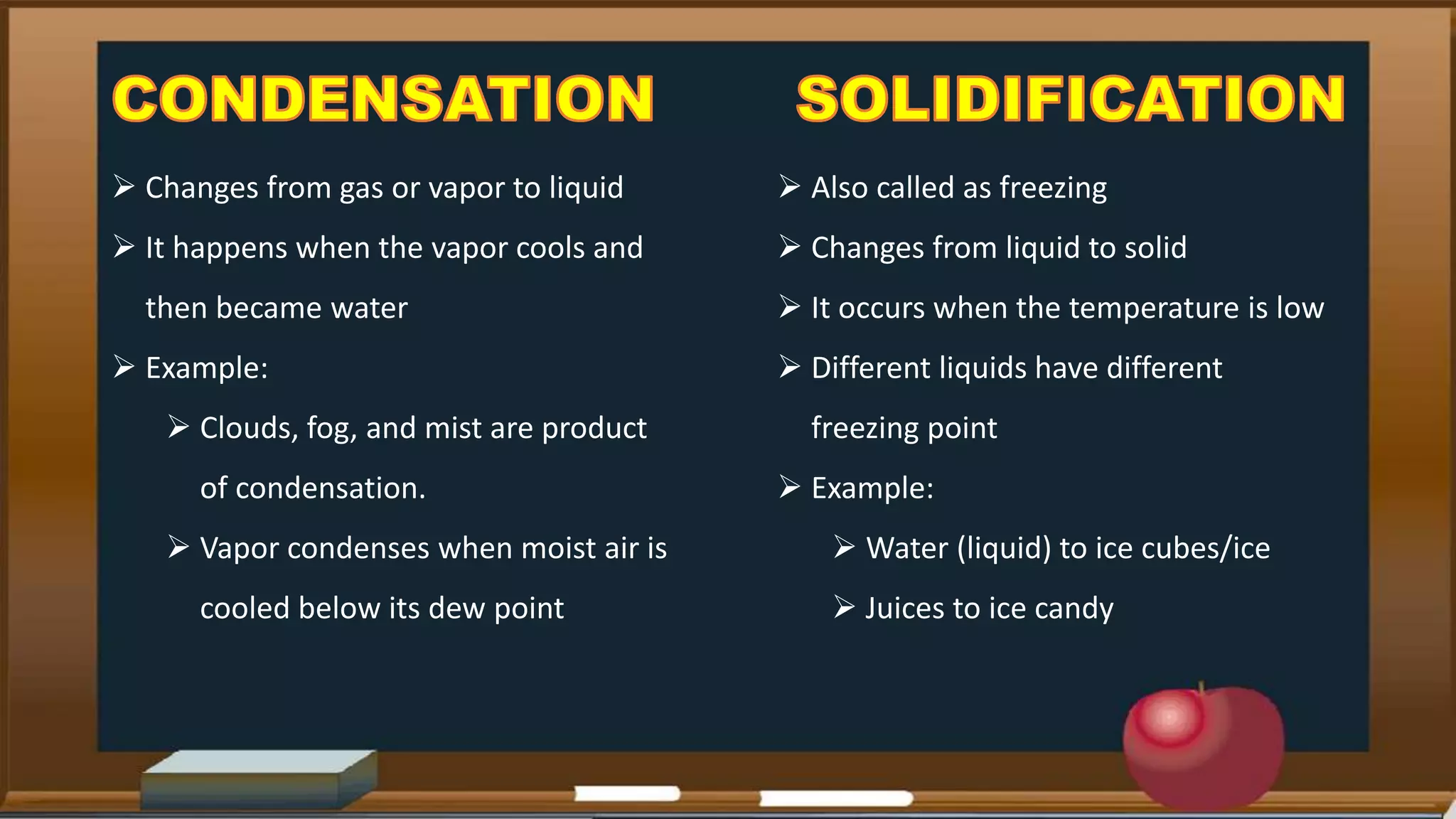
 Changes from gas or vapor to liquid
 It happens when the vapor cools and
then became water
 Example:
 Clouds, fog, and mist are product
of condensation.
 Vapor condenses when moist air is
cooled below its dew point
 Also called as freezing
 Changes from liquid to solid
 It occurs when the temperature is low
 Different liquids have different
freezing point
 Example:
 Water (liquid) to ice cubes/ice
 Juices to ice candy
Changes from solid to gas
Example:
Naphthalene balls or moth balls (used to ward off insects) – it is a small and
marble-like balls inside the cabinets. When it is being left exposed it changes
its sizes, became smaller as time pass by.
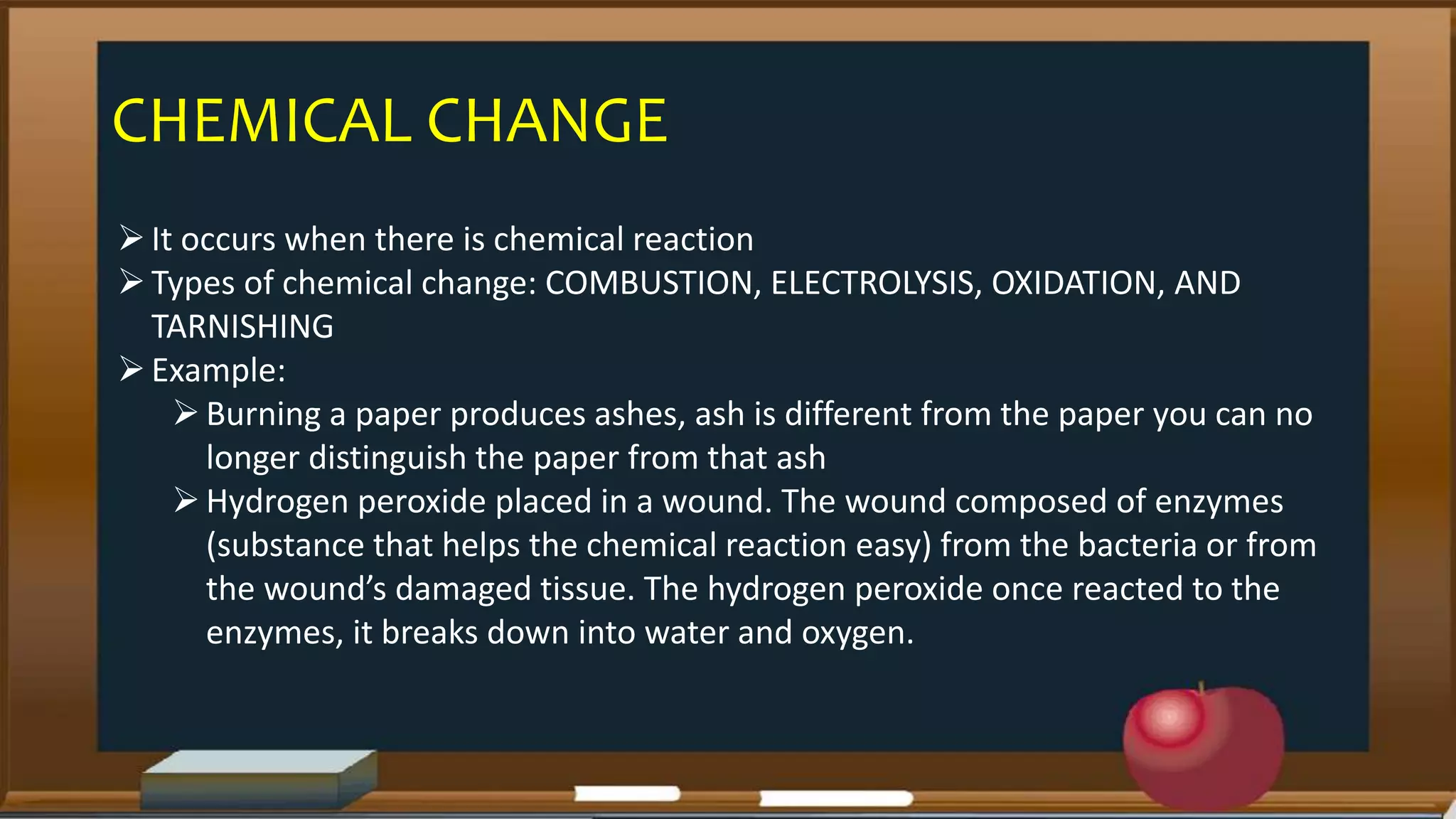
CHEMICAL CHANGE
It occurs when there is chemical reaction
Types of chemical change: COMBUSTION, ELECTROLYSIS, OXIDATION, AND
TARNISHING
Example:
Burning a paper produces ashes, ash is different from the paper you can no
longer distinguish the paper from that ash
Hydrogen peroxide placed in a wound. The wound composed of enzymes
(substance that helps the chemical reaction easy) from the bacteria or from
the wound’s damaged tissue. The hydrogen peroxide once reacted to the
enzymes, it breaks down into water and oxygen.
Chemical reaction that occurs when oxygen gas reacts with a flammable
substance to create heat and light.
Common combustion reaction happens between fuel and oxygen.
Fuel is any flammable substance that stores energy in the form of heat and
light. Example: gas, oil, and crude.
Fuels is used for cars, it burns with oxygen and releases energy, and that
energy is released as powers that start up vehicles.
Process of using electricity to break a compound into simpler elements or
substances,
Electric current is applied on a material forces its bonded elements or
components to break.
Example:
Car tank is filled with water, water is composed of hydrogen and oxygen.
Electric current from the car’s engine applies water to separate hydrogen
and oxygen.
A fuel cell converts the hydrogen into electricity that is powerful enough to
run a car.
Reaction occurs when an inflammable substance is exposed to oxygen and this
results in a change in the chemical properties of substance.
Example:
When iron/any metal is exposed to moisture and oxygen, the iron contents
react with oxygen forming iron oxide. Iron oxide is a reddish substance that is
commonly called as rust.
Occurs when bright metal is exposed to a nonmetal, usually oxygen, sulfur
dioxide, or hydrogen sulfide, it produces dark color.
Unlike rusting, tarnishing affects only the top layer of an object.
Example:
Silver tarnishes (reaction between oxygen and hydrogen sulfide, produces
black film over the shiny surface of silver object.

Chemical change

  • 2.
    MATTER MANIFEST INTWO WAYS: 1.Physical change – matter changes in states 2.Chemical change – matter undergoes chemical reaction
  • 3.
    PHYSICAL CHANGE Matter canchange or transform from one sate to another. Appearance, from, shape, or size may be altered but the composition stays the same or it does not change into a new substance. Example: Water cycle Dying a plain white t-shirt into new colors Doing haircut Molding clays into different characters or animals
  • 4.
    PHYSICAL CHANGE There 4types of physical change: MELTING, SOLIDIFICATION, EVAPORATION, CONDENSATION, AND SUBLIMATION. Water cycle is an example. Water (liquid) from different bodies of water will evaporate when there is heat from the sun, turning it to vapor (gas). When precipitation happened, water falls back to the Earth either as liquid (rain), or solid (hail, snow, or sleet)
  • 5.
     Changes fromsolid to liquid state  It happens when there is heat applied or there is higher temperature around the substance.  Different solids have different melting points.  Example:  Ice cubes placed in the table turns into water  Chocolate bars left in a room temperature melts  Changes from Liquid to gas state  It happens when there is an increase in temperature.  Different liquids have different boiling points.  Example:  Boiling water (the smoke or steam is known as vapor)  Wet floor (due to the heat around, the water present in the floor disappear
  • 6.
     Changes fromgas or vapor to liquid  It happens when the vapor cools and then became water  Example:  Clouds, fog, and mist are product of condensation.  Vapor condenses when moist air is cooled below its dew point  Also called as freezing  Changes from liquid to solid  It occurs when the temperature is low  Different liquids have different freezing point  Example:  Water (liquid) to ice cubes/ice  Juices to ice candy
  • 7.
    Changes from solidto gas Example: Naphthalene balls or moth balls (used to ward off insects) – it is a small and marble-like balls inside the cabinets. When it is being left exposed it changes its sizes, became smaller as time pass by.
  • 8.
    CHEMICAL CHANGE It occurswhen there is chemical reaction Types of chemical change: COMBUSTION, ELECTROLYSIS, OXIDATION, AND TARNISHING Example: Burning a paper produces ashes, ash is different from the paper you can no longer distinguish the paper from that ash Hydrogen peroxide placed in a wound. The wound composed of enzymes (substance that helps the chemical reaction easy) from the bacteria or from the wound’s damaged tissue. The hydrogen peroxide once reacted to the enzymes, it breaks down into water and oxygen.
  • 9.
    Chemical reaction thatoccurs when oxygen gas reacts with a flammable substance to create heat and light. Common combustion reaction happens between fuel and oxygen. Fuel is any flammable substance that stores energy in the form of heat and light. Example: gas, oil, and crude. Fuels is used for cars, it burns with oxygen and releases energy, and that energy is released as powers that start up vehicles.
  • 10.
    Process of usingelectricity to break a compound into simpler elements or substances, Electric current is applied on a material forces its bonded elements or components to break. Example: Car tank is filled with water, water is composed of hydrogen and oxygen. Electric current from the car’s engine applies water to separate hydrogen and oxygen. A fuel cell converts the hydrogen into electricity that is powerful enough to run a car.
  • 11.
    Reaction occurs whenan inflammable substance is exposed to oxygen and this results in a change in the chemical properties of substance. Example: When iron/any metal is exposed to moisture and oxygen, the iron contents react with oxygen forming iron oxide. Iron oxide is a reddish substance that is commonly called as rust.
  • 12.
    Occurs when brightmetal is exposed to a nonmetal, usually oxygen, sulfur dioxide, or hydrogen sulfide, it produces dark color. Unlike rusting, tarnishing affects only the top layer of an object. Example: Silver tarnishes (reaction between oxygen and hydrogen sulfide, produces black film over the shiny surface of silver object.