By Dr. Deo Neha
Different Techniques & Tools of
Evaluation
Examination Observation
Introspection /
Self reporting
Projective Sociometric
Written
Oral
Practical
Anecdotal
record
Rating scale
Checklist
Problem
inventory
Personality
inventory
Rorshaque
ink blot
Essay,
drawing a
picture, doll
play, diary
Interest
inventory etc.
Guess who?
Interview
Completion-
sentence,
story
Sociogram
TAT
Quantitative
Research
Evaluation
Qualitative
Research
Observation
Observational Research
Survey Research
Experimental Research
Using group of people
determine cause-and-
effect relationships.
CASUAL
Asking individuals
about attitudes,
preferences or buying
behaviors.
DESCRIPTIVE
Gathering data by observing
people, Action & situation.
EXPLORATORY
Check list
 A prepared list of behaviors or items.
 The presence or absence by checking yes or no.
 A prepared list of items which are relevant to the
problem being studied.
 Responses are a matter of fact & not the judgment.
When to use a check list?-
 To evaluate skill.
 To evaluate any aspect of behavior.
 To evaluate any object prepared by a student.
 To count the number times each behavior occurs.
 To observe any ongoing process.
 To observe any infrastructure.
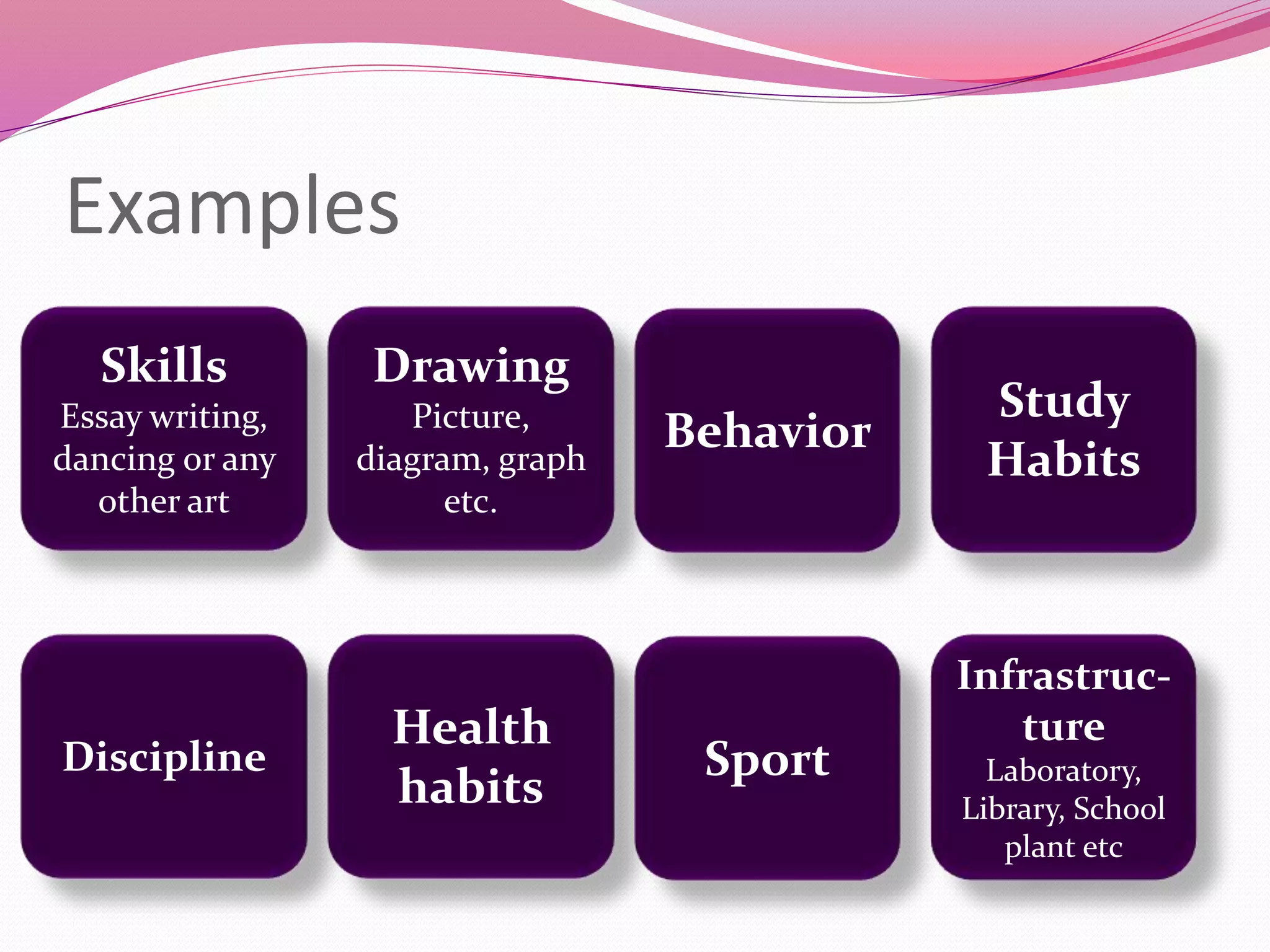
Examples
Skills
Essay writing,
dancing or any
other art
Drawing
Picture,
diagram, graph
etc.
Behavior
Study
Habits
Discipline
Health
habits
Sport
Infrastruc-
ture
Laboratory,
Library, School
plant etc
Uses of check list
 Easy to prepare.
 Data can be gathered from a relatively large number of
sample.
 Precise data can be collected.
 Quick record of ongoing process can be collected .
 Relatively cheap.
 Can be made reliable.
Limitations of check list
 Comparative study cannot be done.
 If it is not prepared precisely & critically,
comprehensive observation cannot be done.
Characteristics of a good
observation
Observers should be objective & free from their biases.
Observations should be checked & verified by
repetition or comparison.
Observations should be collected in such a way as to
make sure that they are valid & reliable.
Characteristics of a good
observation
It should be carefully planned, systematic & perceptive.
Observers should be aware of the wholeness of what is
observed.
Observers should separate the facts from
interpretation of facts.
Observations should be carefully & expertly recorded.
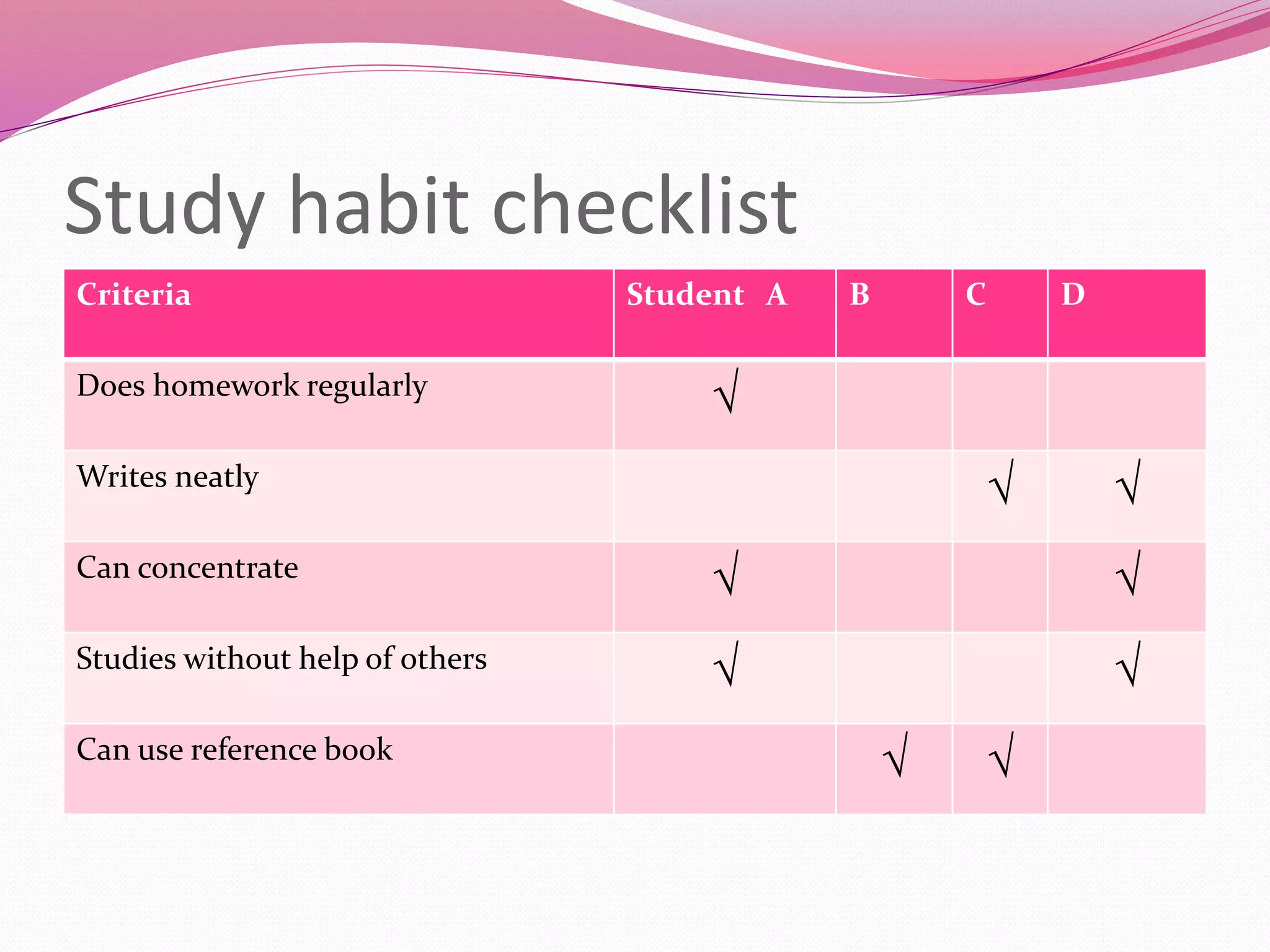
Study habit checklist
Criteria Student A B C D
Does homework regularly
√
Writes neatly
√ √
Can concentrate
√ √
Studies without help of others
√ √
Can use reference book
√ √
Rating
Scale
Score
cards
Scaled
specimen
Thank You.

Checklist as a tool of data collection -by Dr. Neha Deo

  • 1.
  • 2.
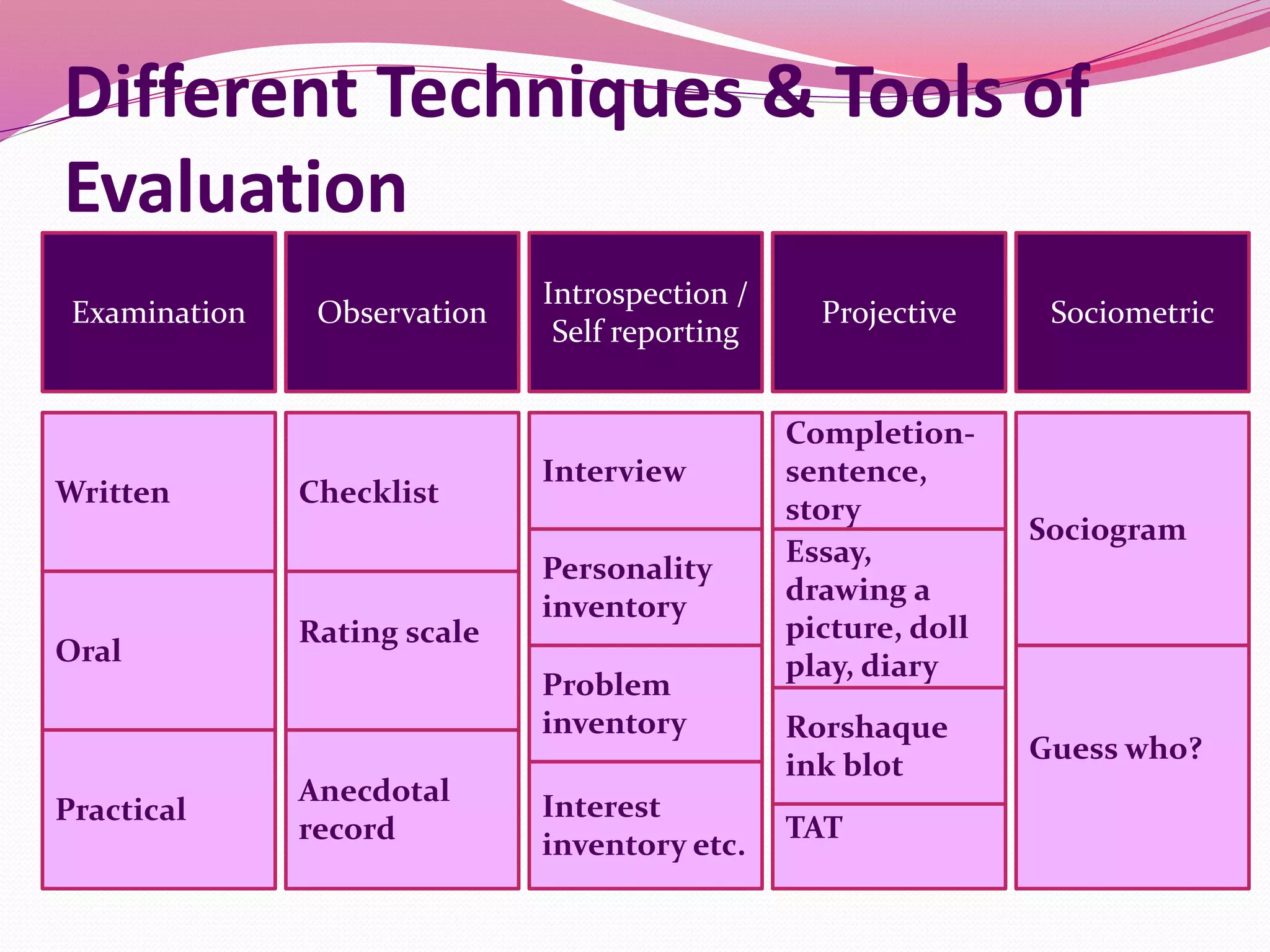
    Different Techniques &Tools of Evaluation Examination Observation Introspection / Self reporting Projective Sociometric Written Oral Practical Anecdotal record Rating scale Checklist Problem inventory Personality inventory Rorshaque ink blot Essay, drawing a picture, doll play, diary Interest inventory etc. Guess who? Interview Completion- sentence, story Sociogram TAT
  • 3.
  • 4.
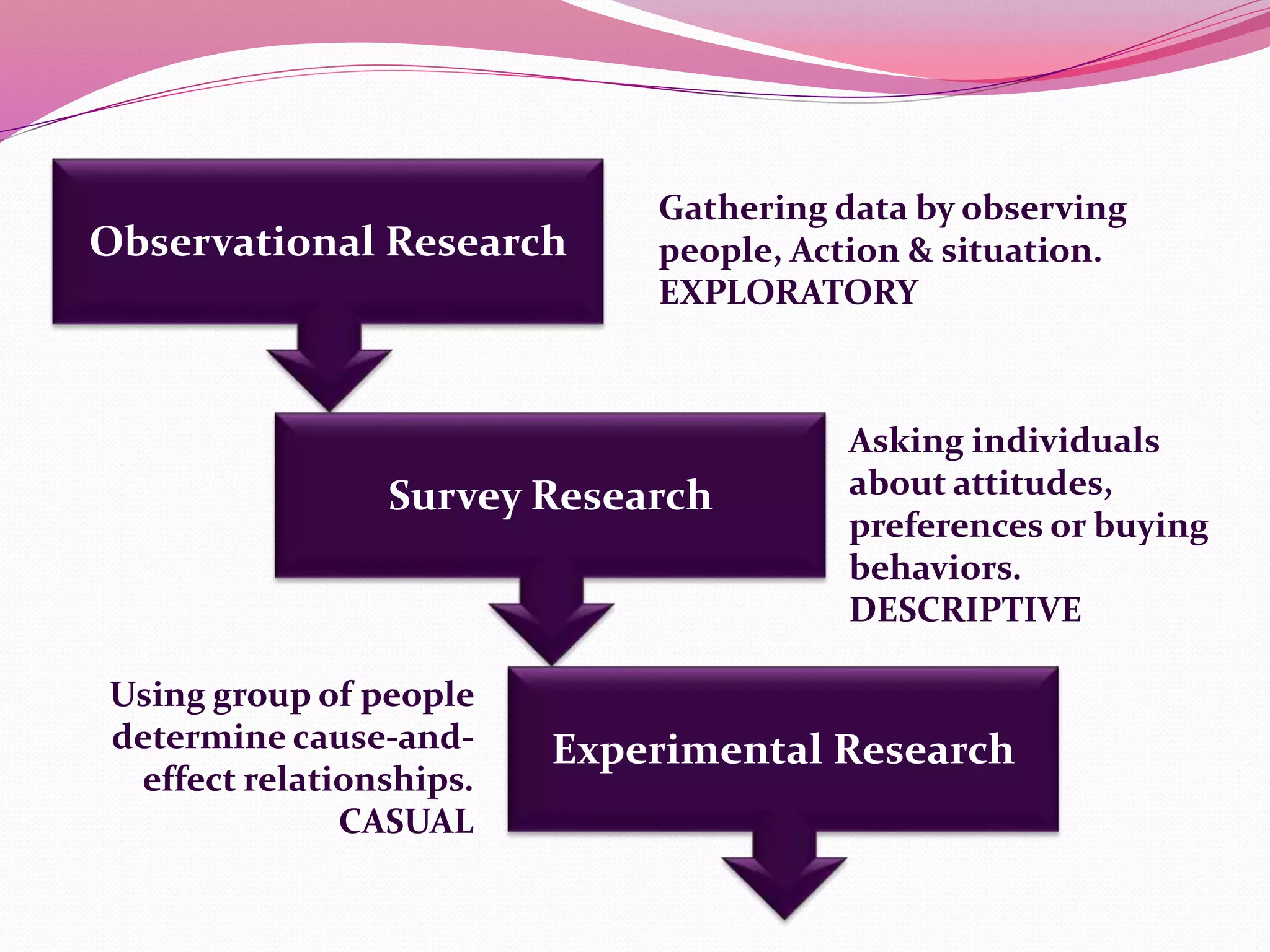
    Observational Research Survey Research ExperimentalResearch Using group of people determine cause-and- effect relationships. CASUAL Asking individuals about attitudes, preferences or buying behaviors. DESCRIPTIVE Gathering data by observing people, Action & situation. EXPLORATORY
  • 5.
    Check list  Aprepared list of behaviors or items.  The presence or absence by checking yes or no.  A prepared list of items which are relevant to the problem being studied.  Responses are a matter of fact & not the judgment.
  • 6.
    When to usea check list?-  To evaluate skill.  To evaluate any aspect of behavior.  To evaluate any object prepared by a student.  To count the number times each behavior occurs.  To observe any ongoing process.  To observe any infrastructure.
  • 7.
    Examples Skills Essay writing, dancing orany other art Drawing Picture, diagram, graph etc. Behavior Study Habits Discipline Health habits Sport Infrastruc- ture Laboratory, Library, School plant etc
  • 8.
    Uses of checklist  Easy to prepare.  Data can be gathered from a relatively large number of sample.  Precise data can be collected.  Quick record of ongoing process can be collected .  Relatively cheap.  Can be made reliable.
  • 9.
    Limitations of checklist  Comparative study cannot be done.  If it is not prepared precisely & critically, comprehensive observation cannot be done.
  • 10.
    Characteristics of agood observation Observers should be objective & free from their biases. Observations should be checked & verified by repetition or comparison. Observations should be collected in such a way as to make sure that they are valid & reliable.
  • 11.
    Characteristics of agood observation It should be carefully planned, systematic & perceptive. Observers should be aware of the wholeness of what is observed. Observers should separate the facts from interpretation of facts. Observations should be carefully & expertly recorded.
  • 12.
    Study habit checklist CriteriaStudent A B C D Does homework regularly √ Writes neatly √ √ Can concentrate √ √ Studies without help of others √ √ Can use reference book √ √
  • 13.
  • 14.