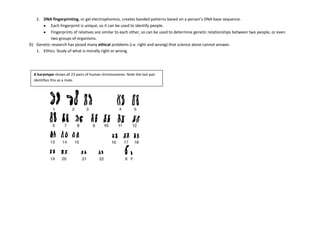
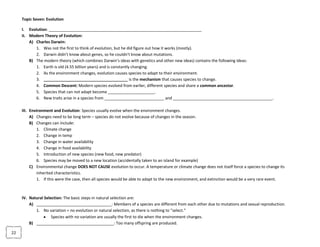
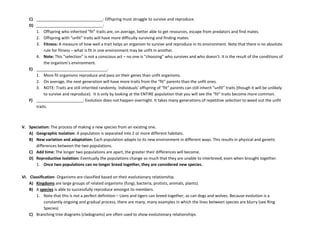
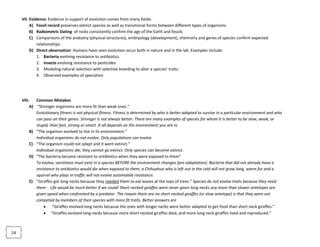
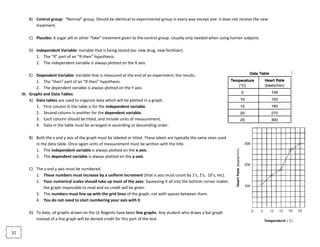
What you absolutely need to know for the Regents Exam!<br />The LE Exam consists of approximately 70-75 questions worth a total of 85 points. The exam is broken down into 4 parts:<br />Part A: General knowledge multiple choice questions (30 points)<br />Part B: A mix of multiple choice and short answer, dealing with the application of knowledge. So far, Part B has always required students to draw a graph. (25 points)<br />Part C: Short answer questions dealing with your ability to apply material learned in the course to real world situations. (15 points)<br />Part D: Multiple choice and short answer, pertaining to the 4 NYS labs performed during the school year. (15 points)<br />The state requires all answers to be recorded in such a way that they cannot be tampered with. As such, all answers on the test must be written in permanent pen, and mistakes may not be “scribbled out.”<br />LE Regents Exam TopicsTopic One: Chemistry of Living Things (p2-4)Topic Two: The Cell (p5-6)Topic Three: Nutrition, Photosynthesis and Respiration (p7-9)Topic Four: Human Body (p10-15)Topic Five: Reproduction (p16-18)Topic Six: Genetics (p19-22)Topic Seven: Evolution (p23-27)Topic Eight: Ecology (p28-33)Topic Nine: Experiments and Labs (p34-36)Topic Ten: State Labs (37-40)<br />Topic One: Chemistry of Living Things<br />All living things must maintain homeostasis in order to stay alive.
Homeostasis: A balanced state in an organism’s body.
Failure to maintain homeostasis results in disease or death.
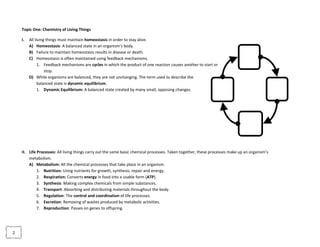
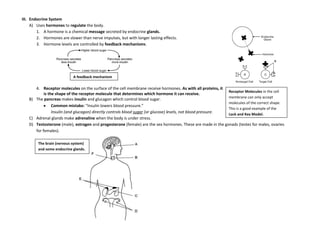
Homeostasis is often maintained using feedback mechanisms.
Feedback mechanisms are cycles in which the product of one reaction causes another to start or stop.
While organisms are balanced, they are not unchanging. The term used to describe the balanced state is dynamic equilibrium.
Dynamic Equilibrium: A balanced state created by many small, opposing changes.
Life Processes: All living things carry out the same basic chemical processes. Taken together, these processes make up an organism’s metabolism.
Metabolism: All the chemical processes that take place in an organism.
Nutrition: Using nutrients for growth, synthesis, repair and energy.
Respiration: Converts energy in food into a usable form (ATP).
Synthesis: Making complex chemicals from simple substances.
Transport: Absorbing and distributing materials throughout the body.
Regulation: The control and coordination of life processes.
Excretion: Removing of wastes produced by metabolic activities.
Reproduction: Passes on genes to offspring.
Inorganic Chemicals:  Simple compounds
Water ( H2O) : Most common substance in all living things (about 60% of body mass)
Needed for chemical reactions ( which won’t happen in “dry” conditions)
Dissolves other molecules into solution, allowing them to be transported through the body.
Oxygen (O2): Needed by most (not all) organisms for cellular respiration.
Released by plants and algae as a waste product of photosynthesis.
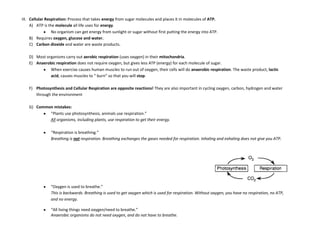
Aerobic respiration: Process that uses oxygen to extract energy from glucose (sugar). Used by most organisms.
Anaerobic respiration: Process that extracts energy from glucose without using oxygen.  Gives less energy, so only used by some simple organisms (some bacteria, yeast). These organisms do not need to breathe in oxygen.
Carbon Dioxide (CO2):
With water, used by plants to make glucose (photosynthesis).
Waste product of aerobic respiration.
Nitrogen (N2):
Most common gas in air (70%)
Needed to make protein.
Converted into nitrates by soil bacteria. Nitrates are absorbed by plants and then eaten by animals.
Excreted as waste in urine.
Acids and Bases:
Measured by the pH scale
pH can affect rates of chemical reactions; for example, digestive enzymes work fastest in acidic environments, which is why we make stomach acid (hydrochloric acid, or HCl).
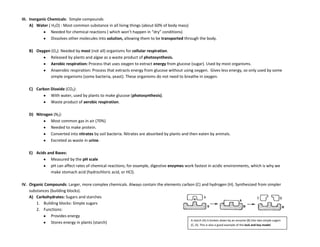
5038725293370Organic Compounds: Larger, more complex chemicals. Always contain the elements carbon (C) and hydrogen (H). Synthesized from simpler substances (building blocks).

Biology - Dunleavy Regents Review Revision

  • 1.
    What you absolutelyneed to know for the Regents Exam!<br />The LE Exam consists of approximately 70-75 questions worth a total of 85 points. The exam is broken down into 4 parts:<br />Part A: General knowledge multiple choice questions (30 points)<br />Part B: A mix of multiple choice and short answer, dealing with the application of knowledge. So far, Part B has always required students to draw a graph. (25 points)<br />Part C: Short answer questions dealing with your ability to apply material learned in the course to real world situations. (15 points)<br />Part D: Multiple choice and short answer, pertaining to the 4 NYS labs performed during the school year. (15 points)<br />The state requires all answers to be recorded in such a way that they cannot be tampered with. As such, all answers on the test must be written in permanent pen, and mistakes may not be “scribbled out.”<br />LE Regents Exam TopicsTopic One: Chemistry of Living Things (p2-4)Topic Two: The Cell (p5-6)Topic Three: Nutrition, Photosynthesis and Respiration (p7-9)Topic Four: Human Body (p10-15)Topic Five: Reproduction (p16-18)Topic Six: Genetics (p19-22)Topic Seven: Evolution (p23-27)Topic Eight: Ecology (p28-33)Topic Nine: Experiments and Labs (p34-36)Topic Ten: State Labs (37-40)<br />Topic One: Chemistry of Living Things<br />All living things must maintain homeostasis in order to stay alive.
  • 2.
    Homeostasis: A balancedstate in an organism’s body.
  • 3.
    Failure to maintainhomeostasis results in disease or death.
  • 4.
    Homeostasis is oftenmaintained using feedback mechanisms.
  • 5.
    Feedback mechanisms arecycles in which the product of one reaction causes another to start or stop.
  • 6.
    While organisms arebalanced, they are not unchanging. The term used to describe the balanced state is dynamic equilibrium.
  • 7.
    Dynamic Equilibrium: Abalanced state created by many small, opposing changes.
  • 8.
    Life Processes: Allliving things carry out the same basic chemical processes. Taken together, these processes make up an organism’s metabolism.
  • 9.
    Metabolism: All thechemical processes that take place in an organism.
  • 10.
    Nutrition: Using nutrientsfor growth, synthesis, repair and energy.
  • 11.
    Respiration: Converts energyin food into a usable form (ATP).
  • 12.
    Synthesis: Making complexchemicals from simple substances.
  • 13.
    Transport: Absorbing anddistributing materials throughout the body.
  • 14.
    Regulation: The controland coordination of life processes.
  • 15.
    Excretion: Removing ofwastes produced by metabolic activities.
  • 16.
    Reproduction: Passes ongenes to offspring.
  • 17.
    Inorganic Chemicals: Simple compounds
  • 18.
    Water ( H2O): Most common substance in all living things (about 60% of body mass)
  • 19.
    Needed for chemicalreactions ( which won’t happen in “dry” conditions)
  • 20.
    Dissolves other moleculesinto solution, allowing them to be transported through the body.
  • 21.
    Oxygen (O2): Neededby most (not all) organisms for cellular respiration.
  • 22.
    Released by plantsand algae as a waste product of photosynthesis.
  • 23.
    Aerobic respiration: Processthat uses oxygen to extract energy from glucose (sugar). Used by most organisms.
  • 24.
    Anaerobic respiration: Processthat extracts energy from glucose without using oxygen. Gives less energy, so only used by some simple organisms (some bacteria, yeast). These organisms do not need to breathe in oxygen.
  • 25.
  • 26.
    With water, usedby plants to make glucose (photosynthesis).
  • 27.
    Waste product ofaerobic respiration.
  • 28.
  • 29.
    Most common gasin air (70%)
  • 30.
  • 31.
    Converted into nitratesby soil bacteria. Nitrates are absorbed by plants and then eaten by animals.
  • 32.
  • 33.
  • 34.
  • 35.
    pH can affectrates of chemical reactions; for example, digestive enzymes work fastest in acidic environments, which is why we make stomach acid (hydrochloric acid, or HCl).
  • 36.
    5038725293370Organic Compounds: Larger,more complex chemicals. Always contain the elements carbon (C) and hydrogen (H). Synthesized from simpler substances (building blocks).