
Charles Demuth
THE LIFE AND PAINTINGS OF CHARLES DEMUTH
CREATED BY: BRUCEBLACKART.COM
Charles Demuth, (1883 – 1935)
is best know for the style of art
he created called, precsicionism.
This poetic style blends cubist
ideas with realism to create
striking graphic works. He was
introduced to photrapher Alfred
Stieglitz through his friend
Marsden Hartley. Stieglitz
arranged a one man show for
him in 1926 at his
gallery, Intimate Gallery.
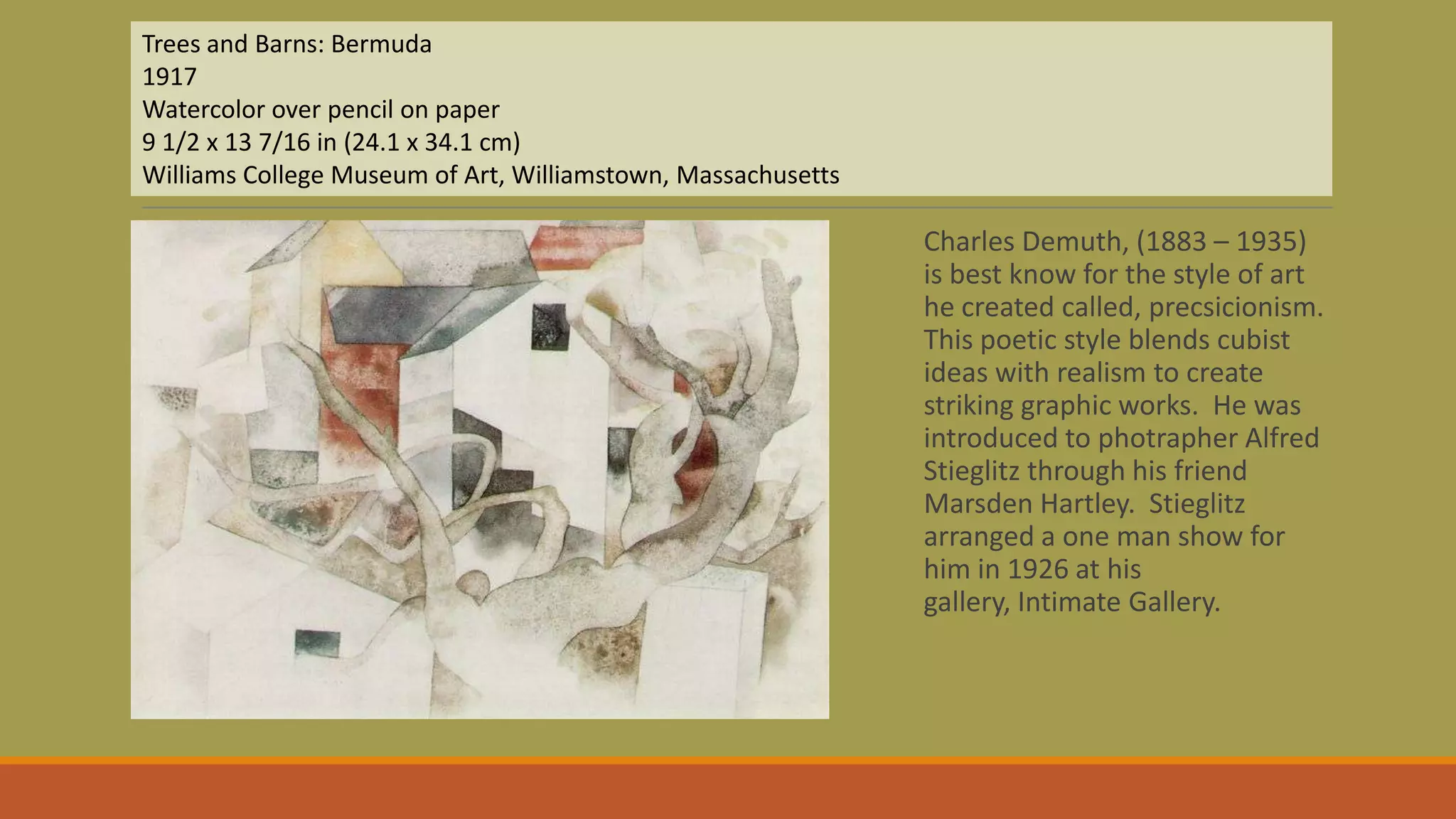
Trees and Barns: Bermuda
1917
Watercolor over pencil on paper
9 1/2 x 13 7/16 in (24.1 x 34.1 cm)
Williams College Museum of Art, Williamstown, Massachusetts
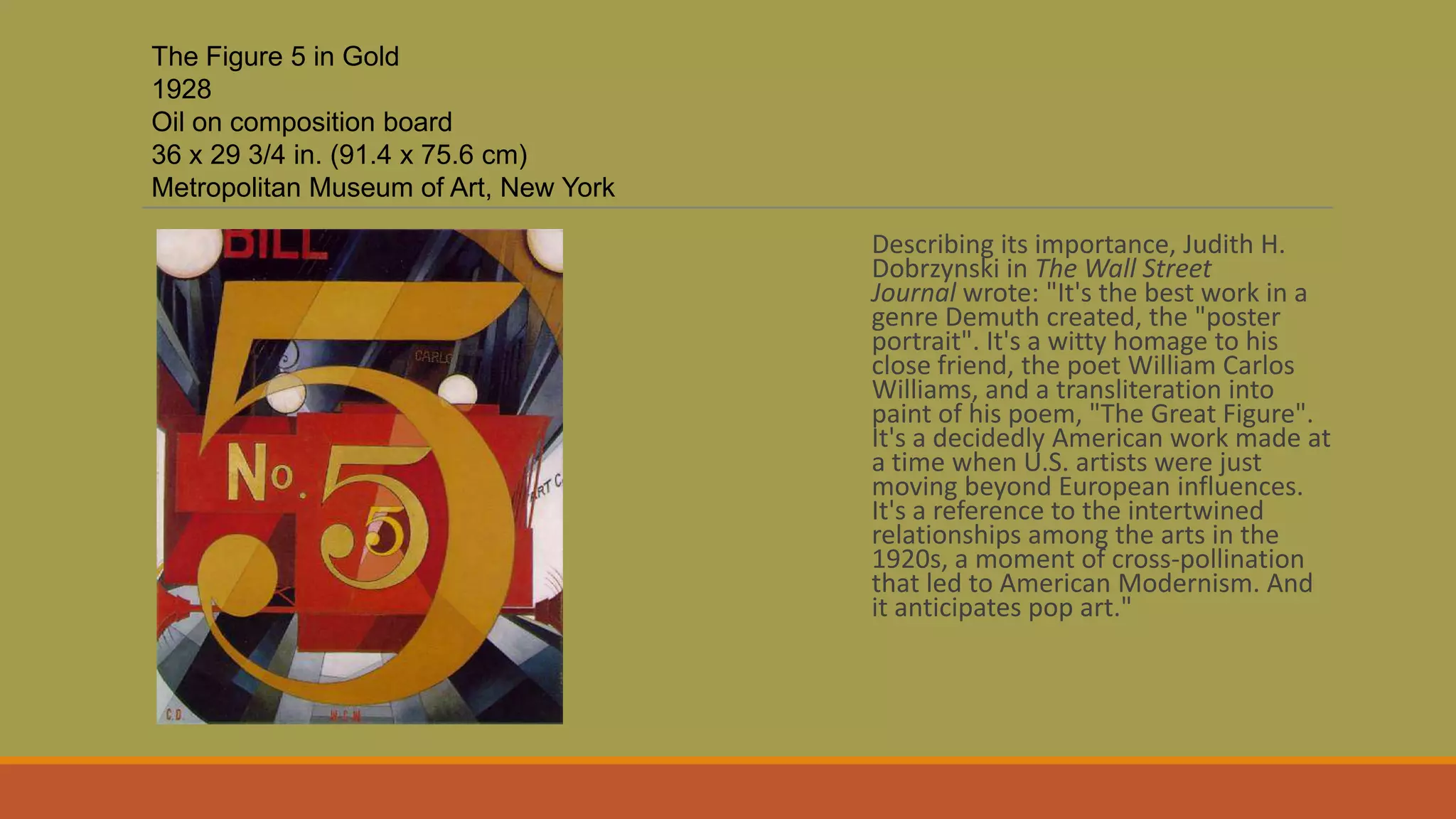
Describing its importance, Judith H.
Dobrzynski in The Wall Street
Journal wrote: "It's the best work in a
genre Demuth created, the "poster
portrait". It's a witty homage to his
close friend, the poet William Carlos
Williams, and a transliteration into
paint of his poem, "The Great Figure".
It's a decidedly American work made at
a time when U.S. artists were just
moving beyond European influences.
It's a reference to the intertwined
relationships among the arts in the
1920s, a moment of cross-pollination
that led to American Modernism. And
it anticipates pop art."
The Figure 5 in Gold
1928
Oil on composition board
36 x 29 3/4 in. (91.4 x 75.6 cm)
Metropolitan Museum of Art, New York
"The Great Figure," by his friend
William Carlos Williams:
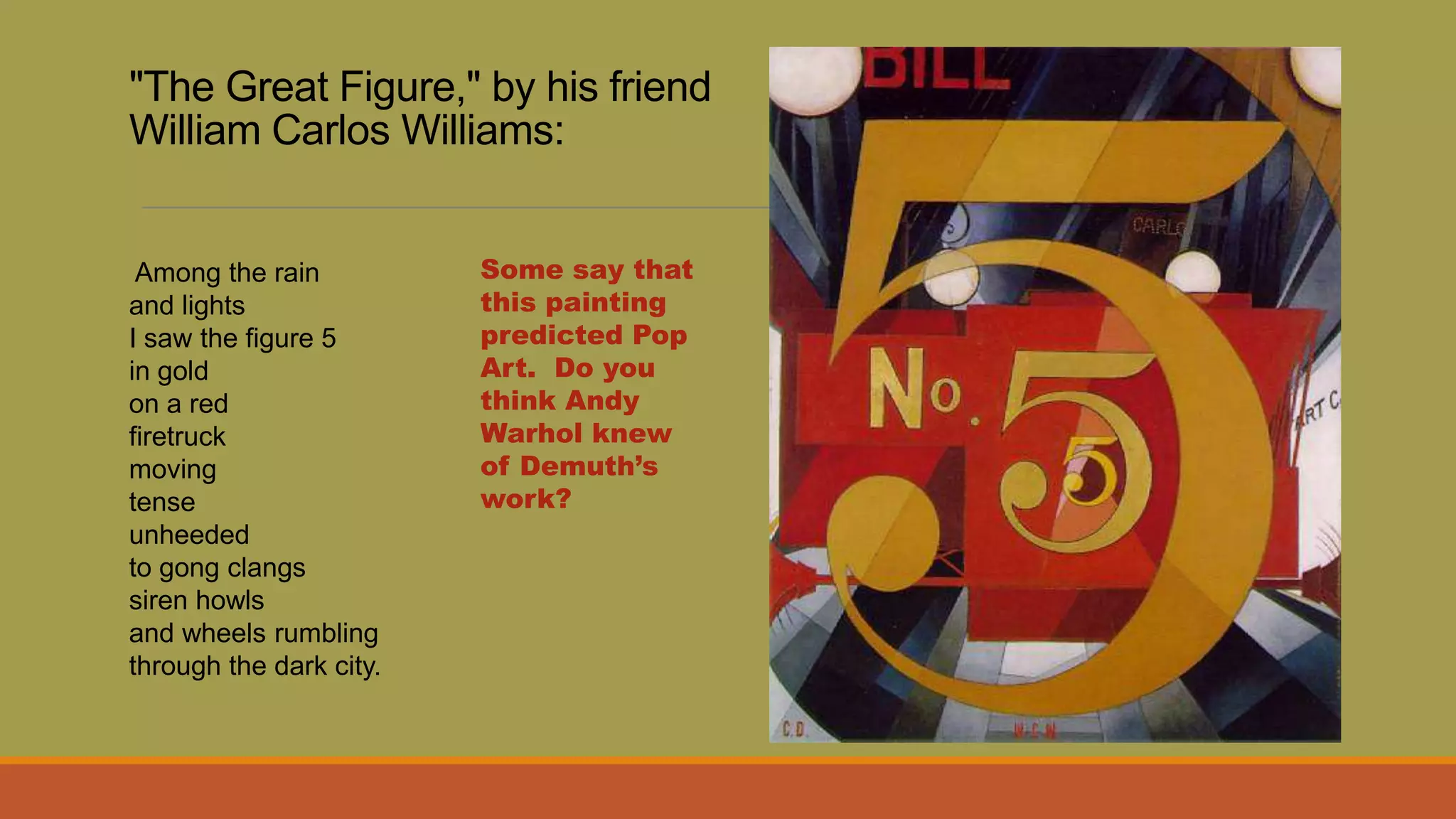
Among the rain
and lights
I saw the figure 5
in gold
on a red
firetruck
moving
tense
unheeded
to gong clangs
siren howls
and wheels rumbling
through the dark city.
Some say that
this painting
predicted Pop
Art. Do you
think Andy
Warhol knew
of Demuth’s
work?
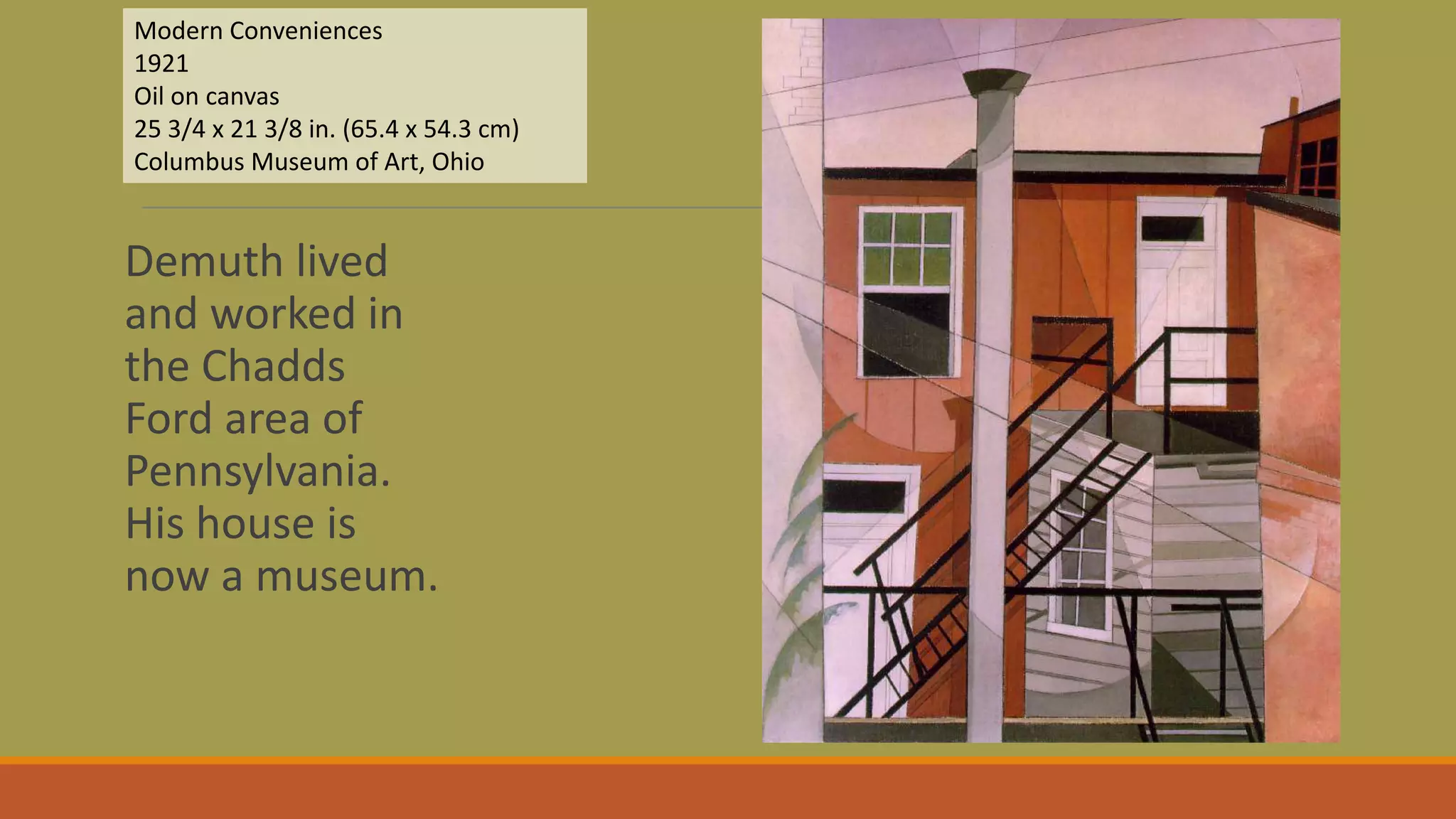
Demuth lived
and worked in
the Chadds
Ford area of
Pennsylvania.
His house is
now a museum.
Modern Conveniences
1921
Oil on canvas
25 3/4 x 21 3/8 in. (65.4 x 54.3 cm)
Columbus Museum of Art, Ohio
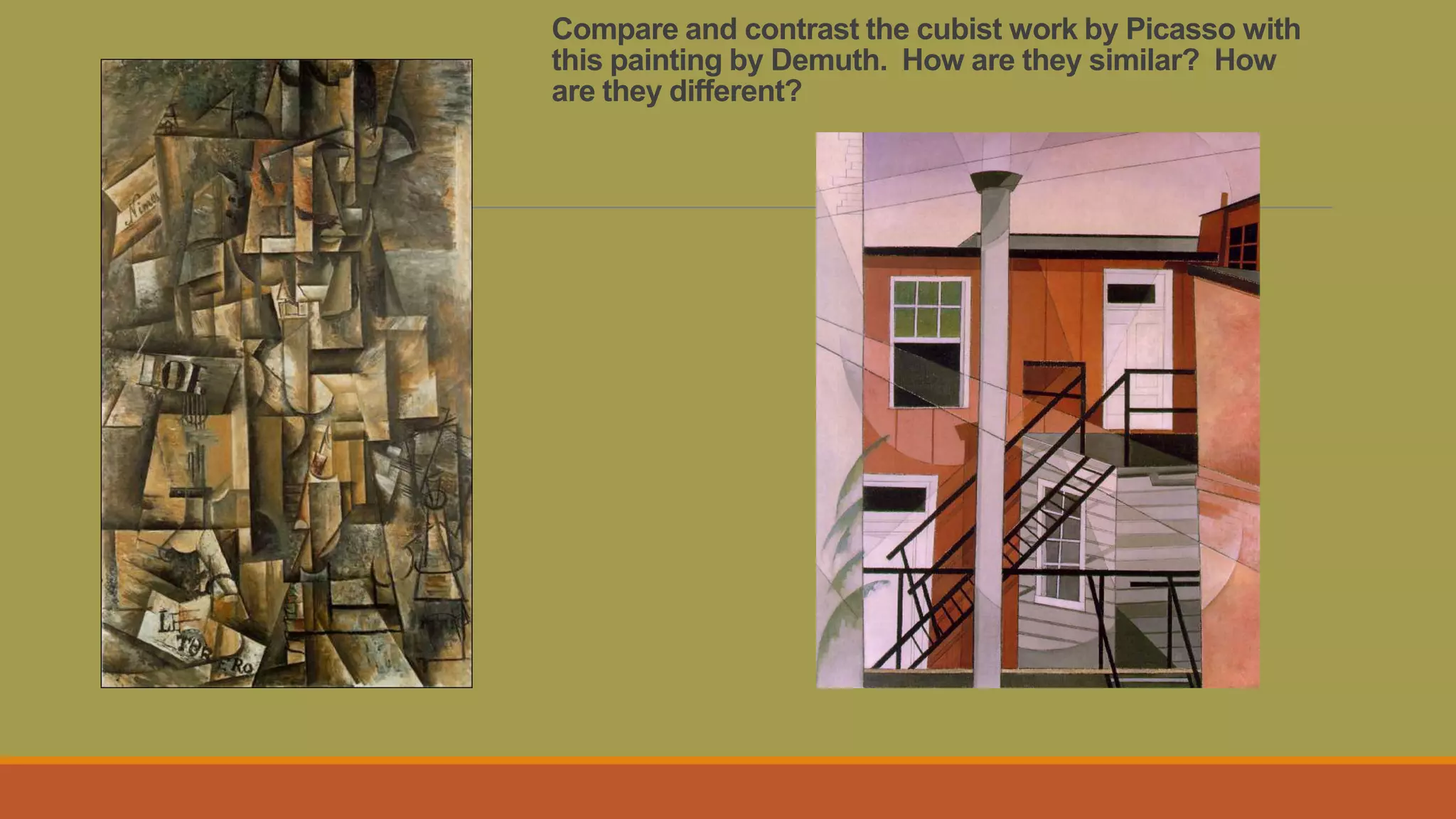
Compare and contrast the cubist work by Picasso with
this painting by Demuth. How are they similar? How
are they different?
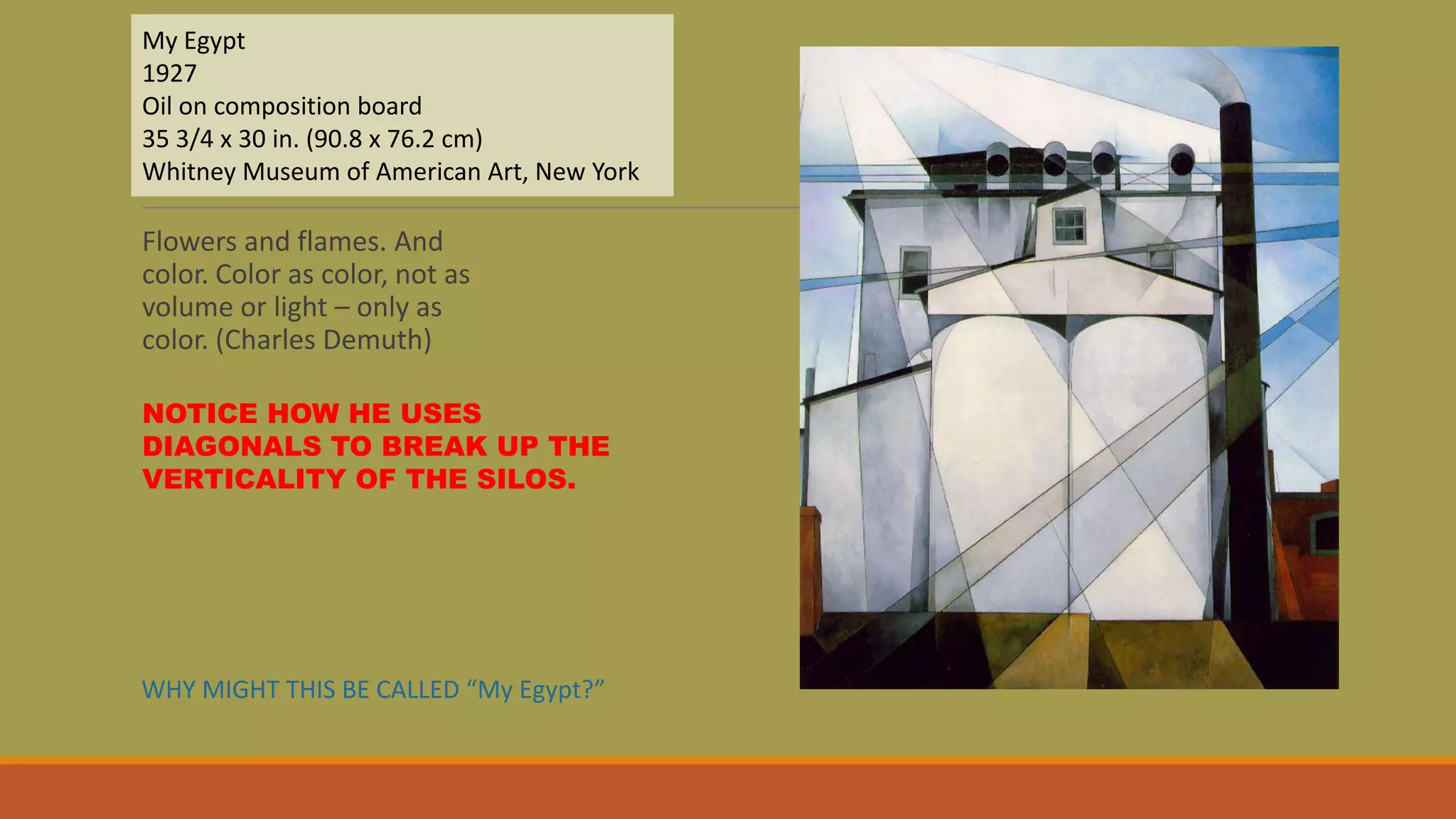
Flowers and flames. And
color. Color as color, not as
volume or light – only as
color. (Charles Demuth)
My Egypt
1927
Oil on composition board
35 3/4 x 30 in. (90.8 x 76.2 cm)
Whitney Museum of American Art, New York
NOTICE HOW HE USES
DIAGONALS TO BREAK UP THE
VERTICALITY OF THE SILOS.
WHY MIGHT THIS BE CALLED “My Egypt?”
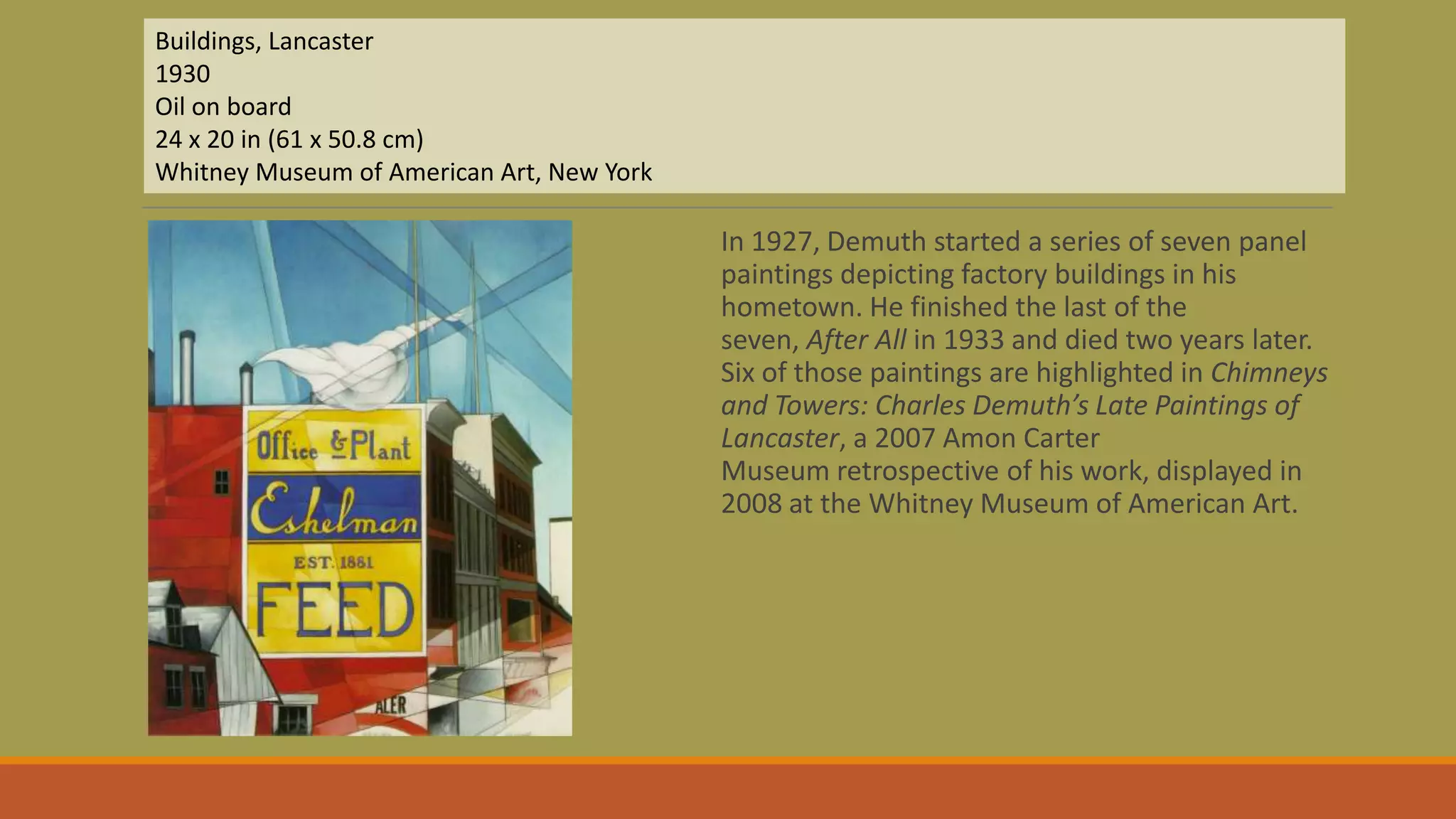
In 1927, Demuth started a series of seven panel
paintings depicting factory buildings in his
hometown. He finished the last of the
seven, After All in 1933 and died two years later.
Six of those paintings are highlighted in Chimneys
and Towers: Charles Demuth’s Late Paintings of
Lancaster, a 2007 Amon Carter
Museum retrospective of his work, displayed in
2008 at the Whitney Museum of American Art.
Buildings, Lancaster
1930
Oil on board
24 x 20 in (61 x 50.8 cm)
Whitney Museum of American Art, New York
Demuth suffered either an injury
when he was four years old or may
have had polio or tuberculosis of
the hip that left him with a marked
limp and required him to use a
cane. He later
developed diabetes and was one of
the first people in the United
States to receive insulin. He spent
most of his life in frail health, and
he died in Lancaster at the age 51
of complications from diabetes.
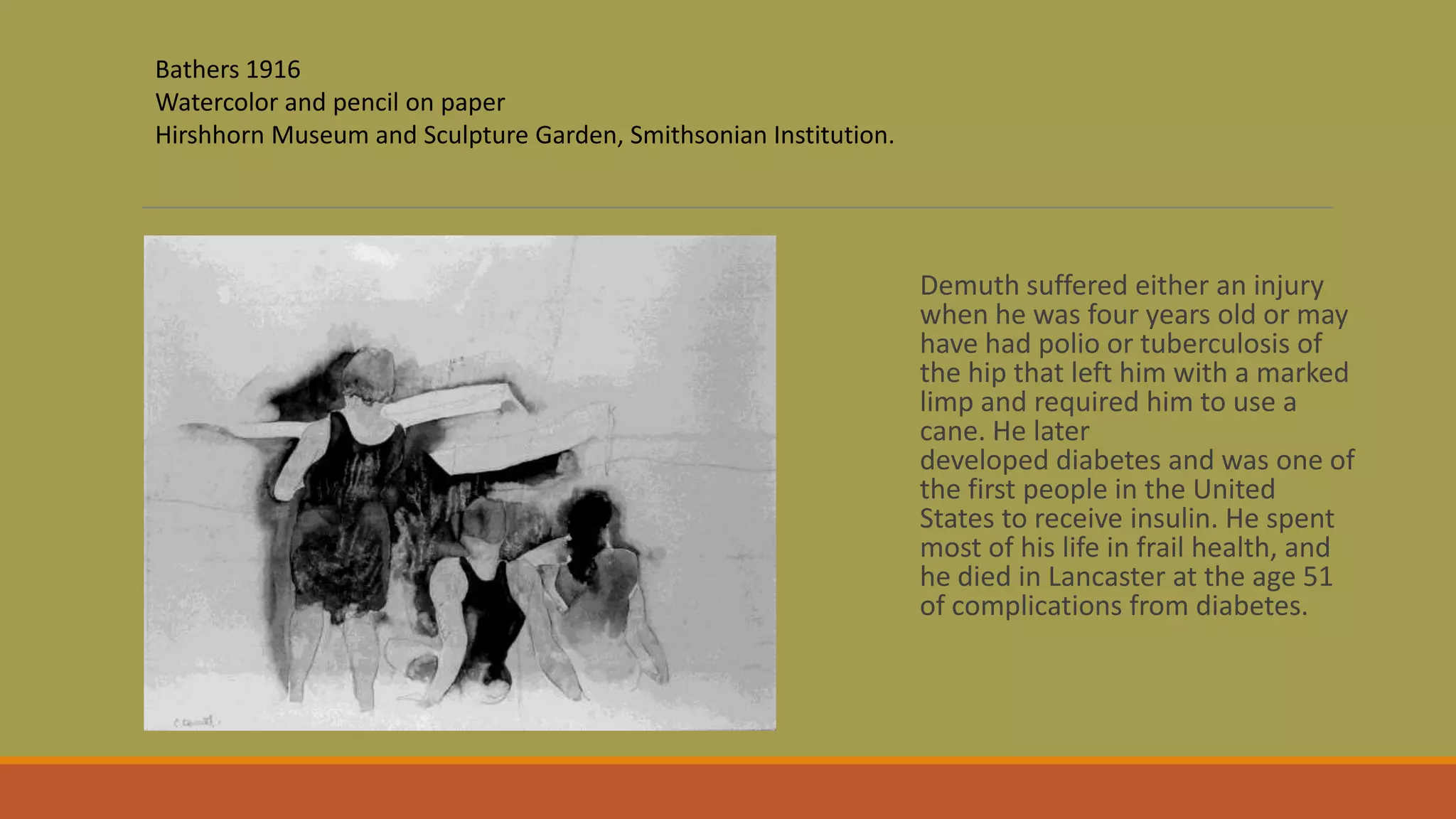
Bathers 1916
Watercolor and pencil on paper
Hirshhorn Museum and Sculpture Garden, Smithsonian Institution.
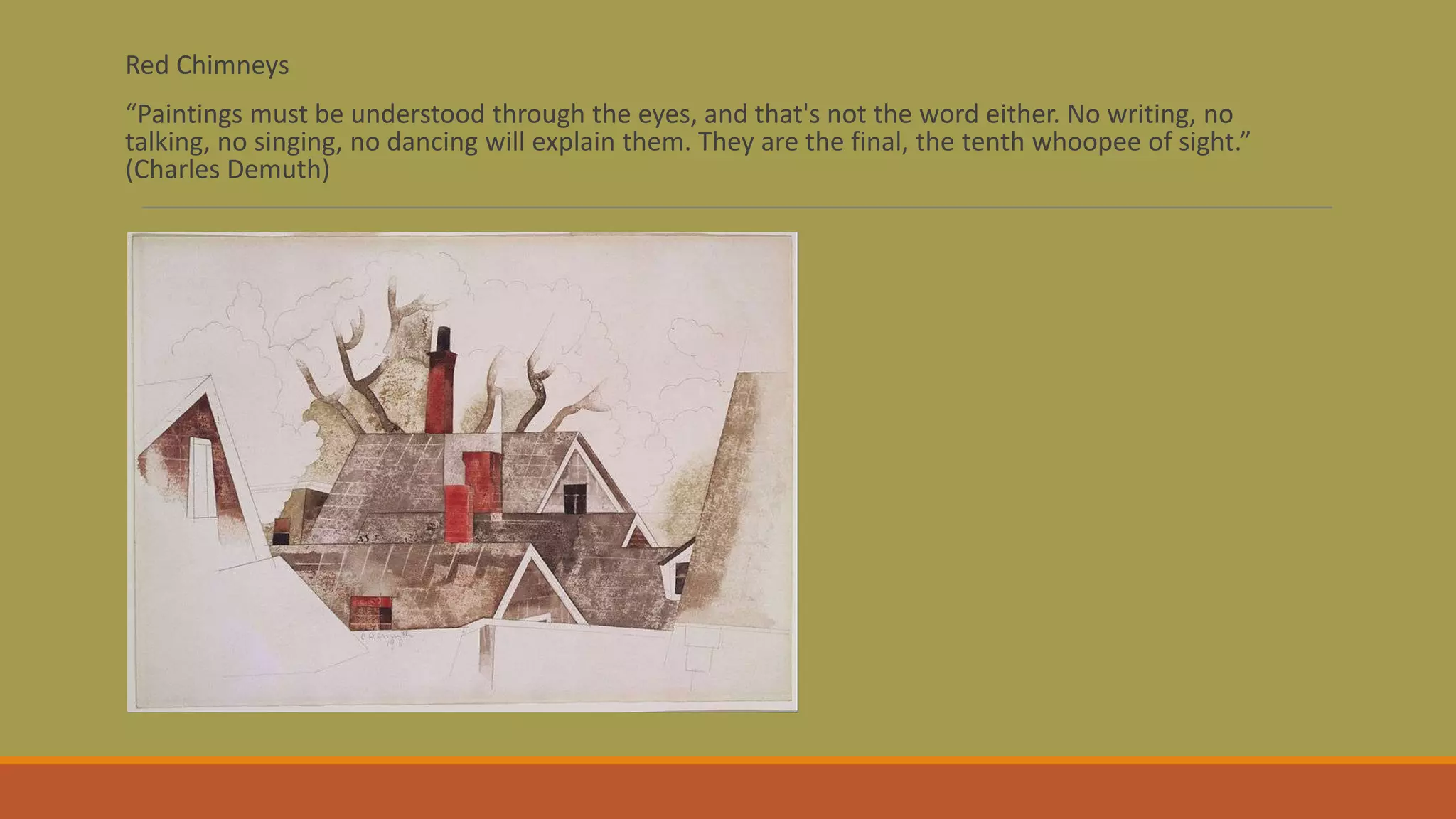
Red Chimneys
“Paintings must be understood through the eyes, and that's not the word either. No writing, no
talking, no singing, no dancing will explain them. They are the final, the tenth whoopee of sight.”
(Charles Demuth)
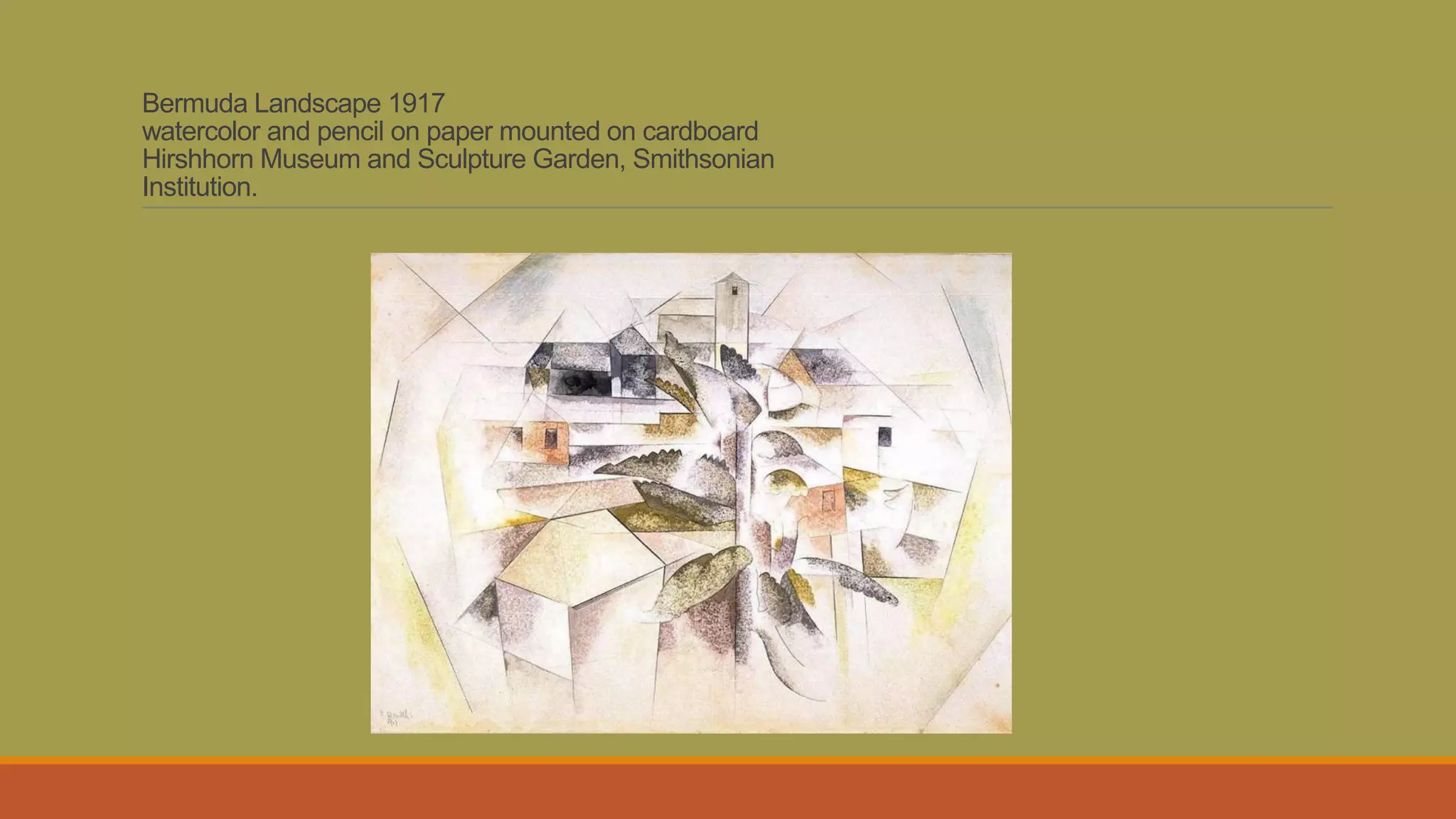
Bermuda Landscape 1917
watercolor and pencil on paper mounted on cardboard
Hirshhorn Museum and Sculpture Garden, Smithsonian
Institution.
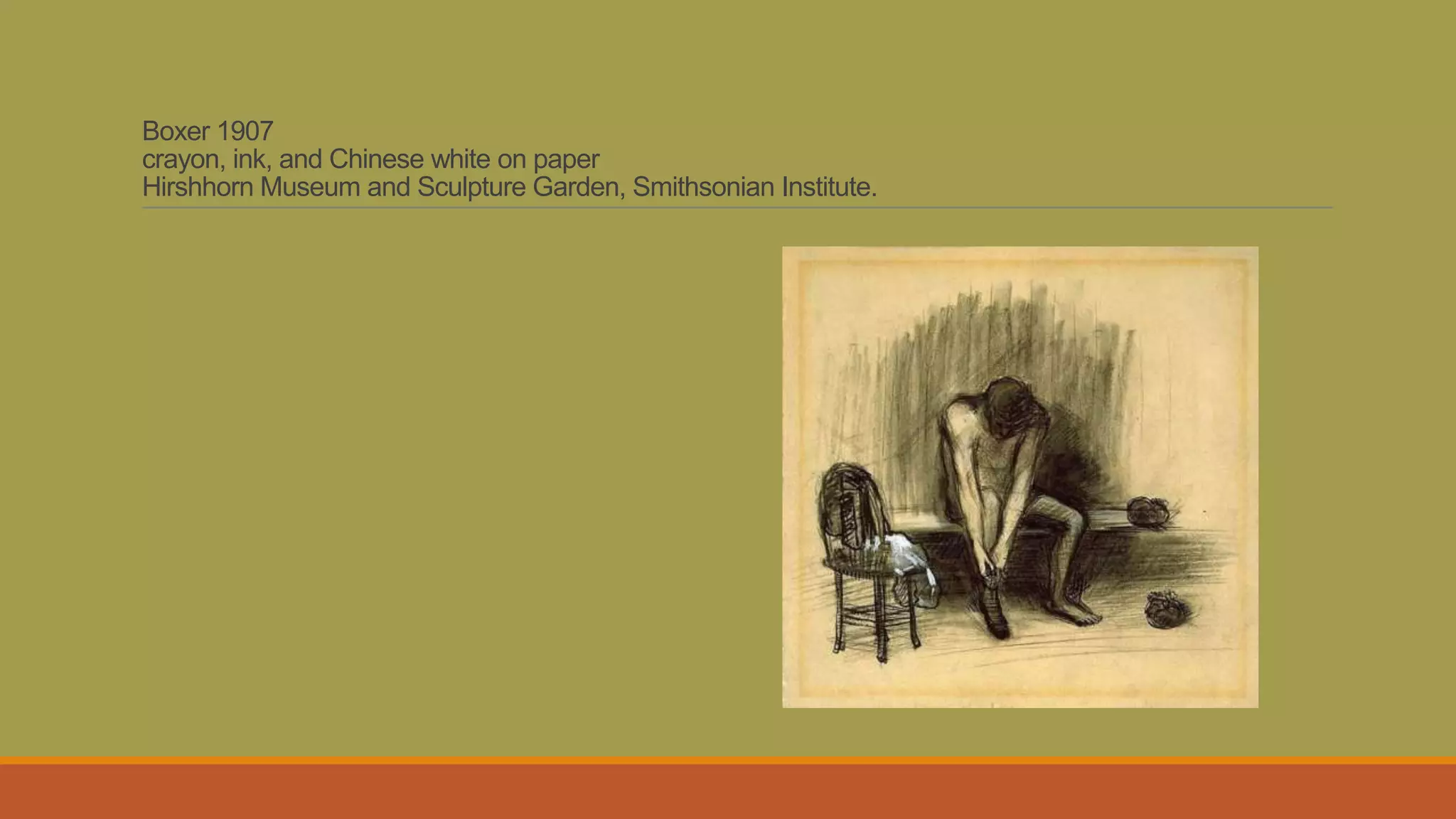
Boxer 1907
crayon, ink, and Chinese white on paper
Hirshhorn Museum and Sculpture Garden, Smithsonian Institute.
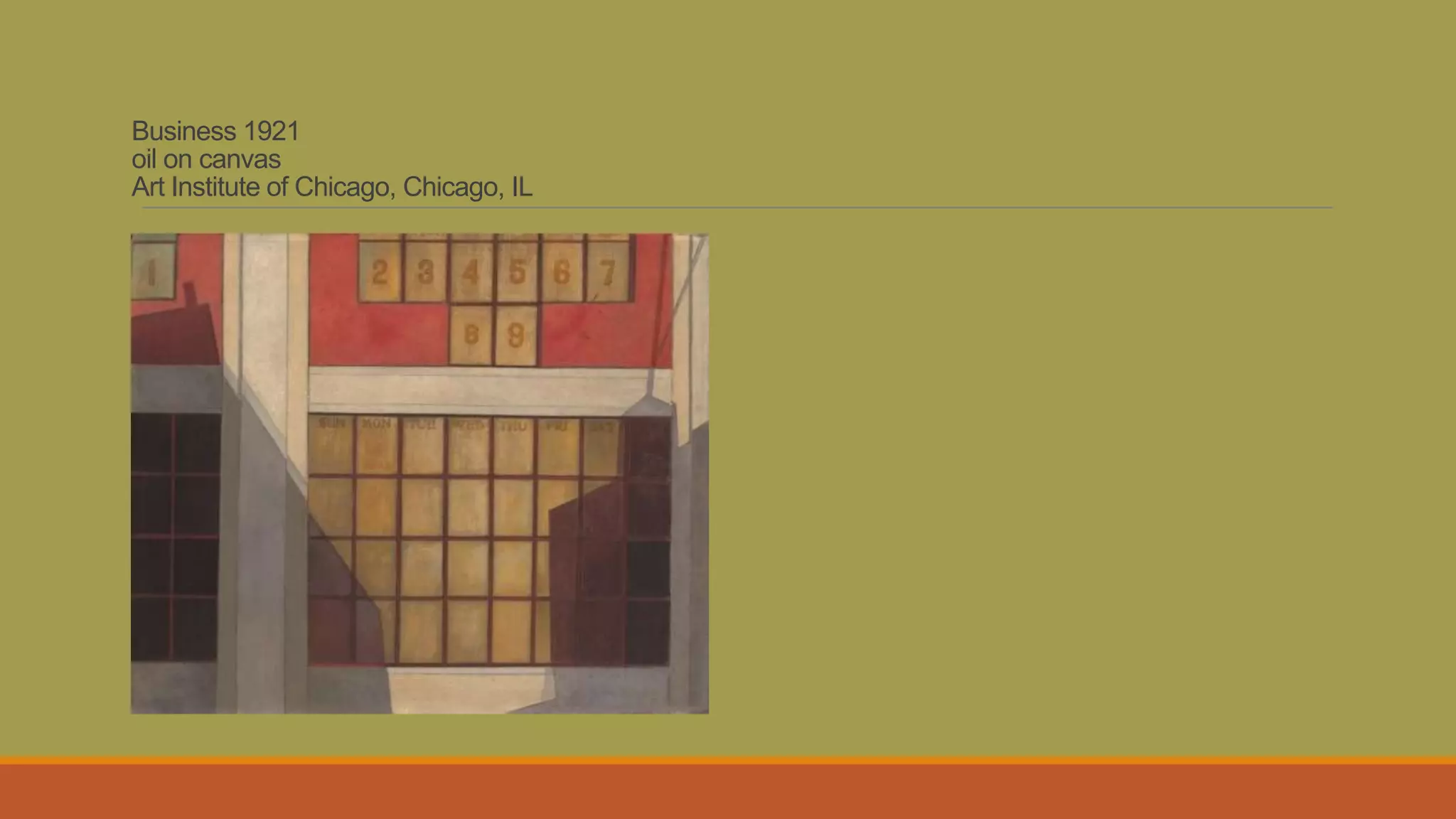
Business 1921
oil on canvas
Art Institute of Chicago, Chicago, IL
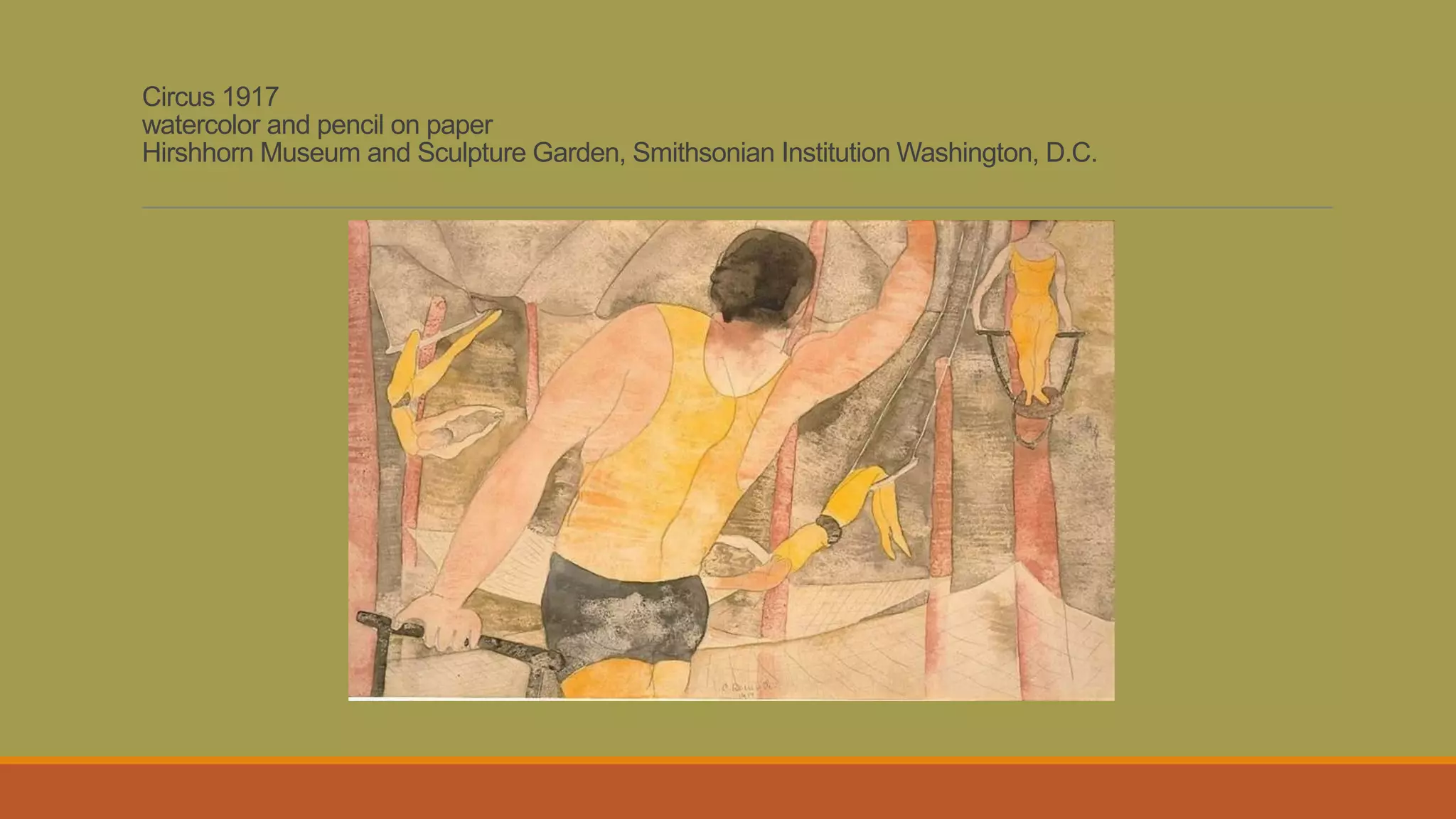
Circus 1917
watercolor and pencil on paper
Hirshhorn Museum and Sculpture Garden, Smithsonian Institution Washington, D.C.
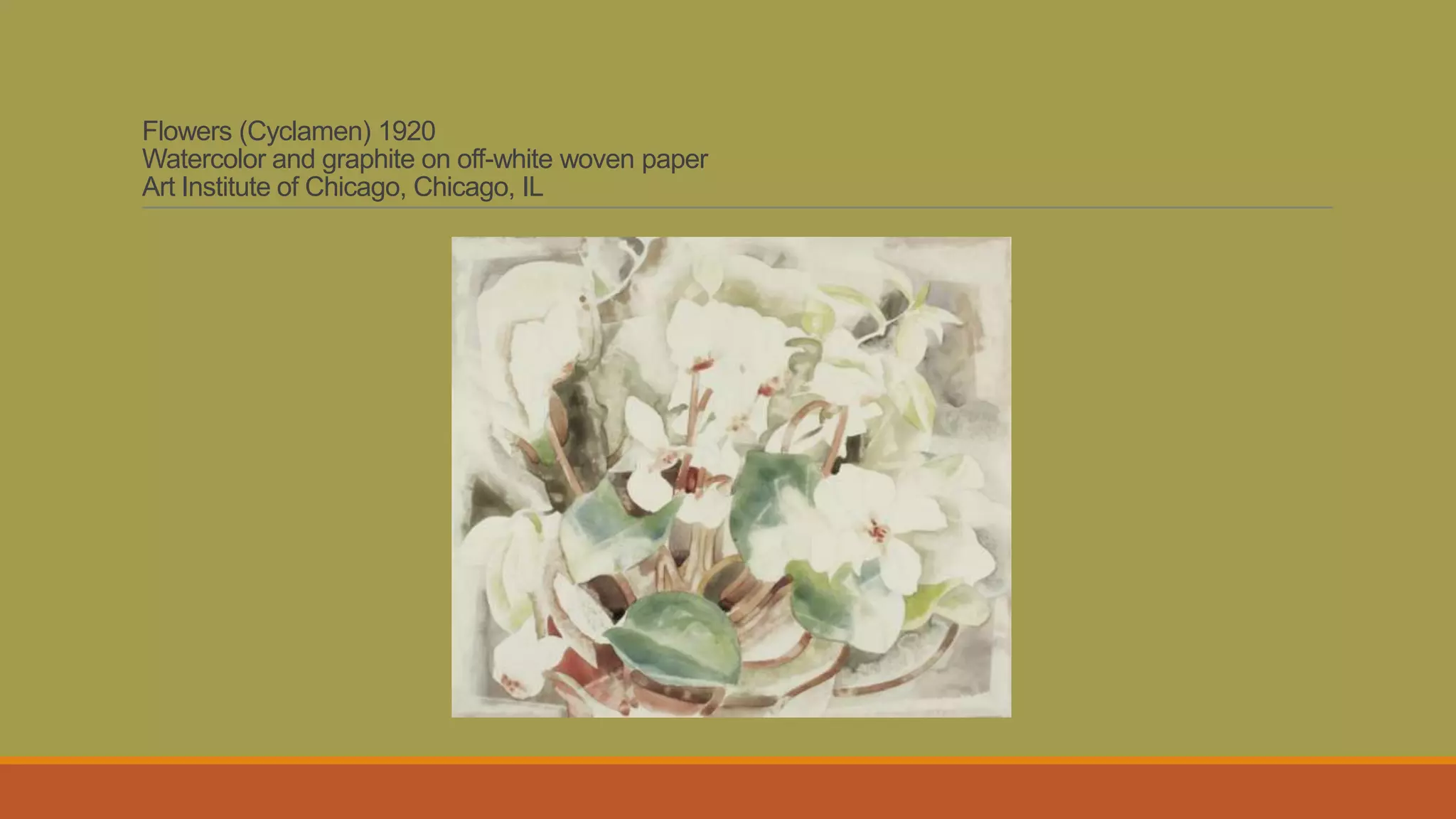
Flowers (Cyclamen) 1920
Watercolor and graphite on off-white woven paper
Art Institute of Chicago, Chicago, IL
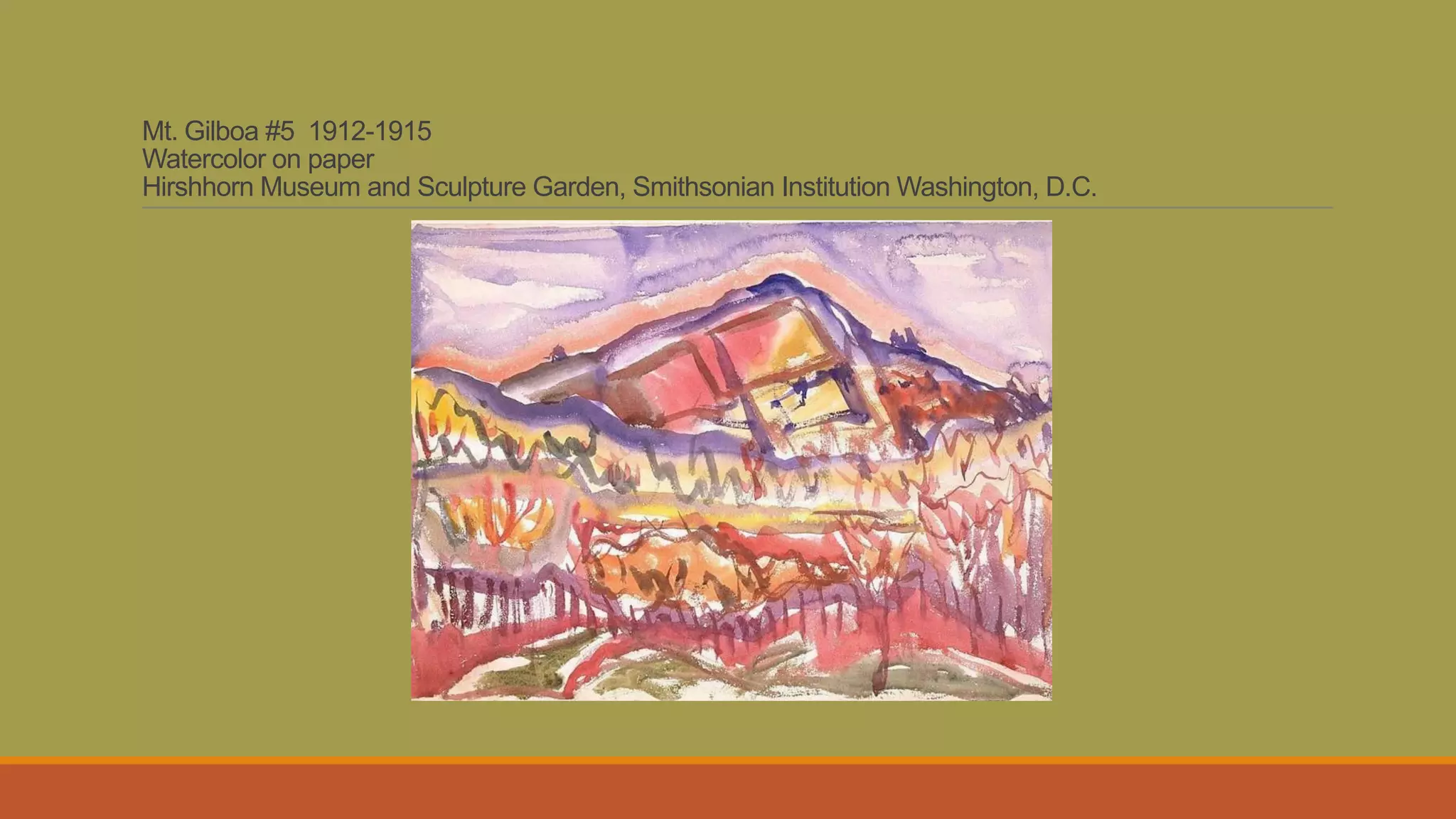
Mt. Gilboa #5 1912-1915
Watercolor on paper
Hirshhorn Museum and Sculpture Garden, Smithsonian Institution Washington, D.C.
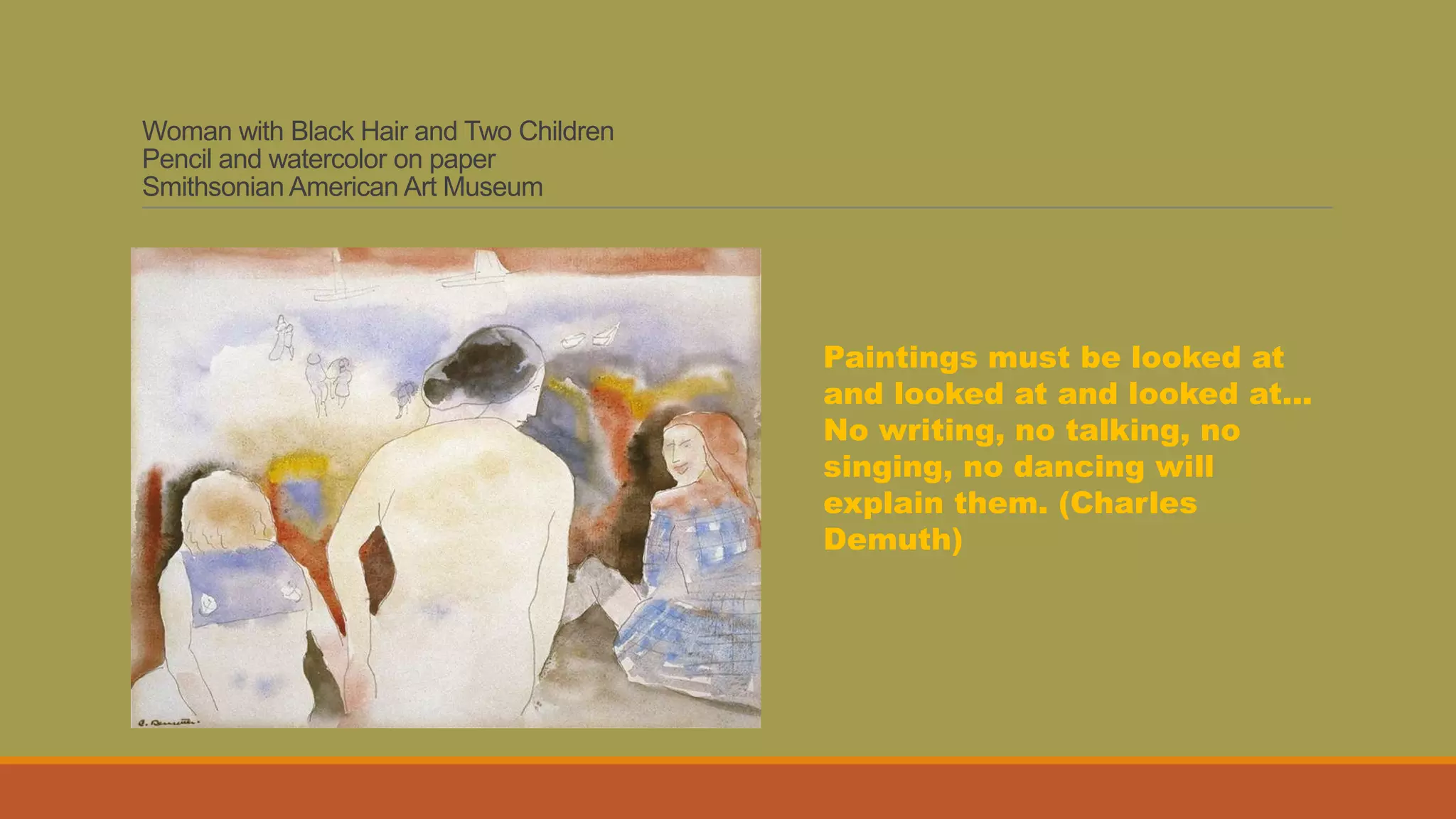
Woman with Black Hair and Two Children
Pencil and watercolor on paper
Smithsonian American Art Museum
Paintings must be looked at
and looked at and looked at...
No writing, no talking, no
singing, no dancing will
explain them. (Charles
Demuth)
END OF SLIDE SHOW
This slide show was created by:
bruceblackart.com

Charles Demuth

  • 1.
    Charles Demuth THE LIFEAND PAINTINGS OF CHARLES DEMUTH CREATED BY: BRUCEBLACKART.COM
  • 2.
    Charles Demuth, (1883– 1935) is best know for the style of art he created called, precsicionism. This poetic style blends cubist ideas with realism to create striking graphic works. He was introduced to photrapher Alfred Stieglitz through his friend Marsden Hartley. Stieglitz arranged a one man show for him in 1926 at his gallery, Intimate Gallery. Trees and Barns: Bermuda 1917 Watercolor over pencil on paper 9 1/2 x 13 7/16 in (24.1 x 34.1 cm) Williams College Museum of Art, Williamstown, Massachusetts
  • 3.
    Describing its importance,Judith H. Dobrzynski in The Wall Street Journal wrote: "It's the best work in a genre Demuth created, the "poster portrait". It's a witty homage to his close friend, the poet William Carlos Williams, and a transliteration into paint of his poem, "The Great Figure". It's a decidedly American work made at a time when U.S. artists were just moving beyond European influences. It's a reference to the intertwined relationships among the arts in the 1920s, a moment of cross-pollination that led to American Modernism. And it anticipates pop art." The Figure 5 in Gold 1928 Oil on composition board 36 x 29 3/4 in. (91.4 x 75.6 cm) Metropolitan Museum of Art, New York
  • 4.
    "The Great Figure,"by his friend William Carlos Williams: Among the rain and lights I saw the figure 5 in gold on a red firetruck moving tense unheeded to gong clangs siren howls and wheels rumbling through the dark city. Some say that this painting predicted Pop Art. Do you think Andy Warhol knew of Demuth’s work?
  • 5.
    Demuth lived and workedin the Chadds Ford area of Pennsylvania. His house is now a museum. Modern Conveniences 1921 Oil on canvas 25 3/4 x 21 3/8 in. (65.4 x 54.3 cm) Columbus Museum of Art, Ohio
  • 6.
    Compare and contrastthe cubist work by Picasso with this painting by Demuth. How are they similar? How are they different?
  • 7.
    Flowers and flames.And color. Color as color, not as volume or light – only as color. (Charles Demuth) My Egypt 1927 Oil on composition board 35 3/4 x 30 in. (90.8 x 76.2 cm) Whitney Museum of American Art, New York NOTICE HOW HE USES DIAGONALS TO BREAK UP THE VERTICALITY OF THE SILOS. WHY MIGHT THIS BE CALLED “My Egypt?”
  • 8.
    In 1927, Demuthstarted a series of seven panel paintings depicting factory buildings in his hometown. He finished the last of the seven, After All in 1933 and died two years later. Six of those paintings are highlighted in Chimneys and Towers: Charles Demuth’s Late Paintings of Lancaster, a 2007 Amon Carter Museum retrospective of his work, displayed in 2008 at the Whitney Museum of American Art. Buildings, Lancaster 1930 Oil on board 24 x 20 in (61 x 50.8 cm) Whitney Museum of American Art, New York
  • 9.
    Demuth suffered eitheran injury when he was four years old or may have had polio or tuberculosis of the hip that left him with a marked limp and required him to use a cane. He later developed diabetes and was one of the first people in the United States to receive insulin. He spent most of his life in frail health, and he died in Lancaster at the age 51 of complications from diabetes. Bathers 1916 Watercolor and pencil on paper Hirshhorn Museum and Sculpture Garden, Smithsonian Institution.
  • 10.
    Red Chimneys “Paintings mustbe understood through the eyes, and that's not the word either. No writing, no talking, no singing, no dancing will explain them. They are the final, the tenth whoopee of sight.” (Charles Demuth)
  • 11.
    Bermuda Landscape 1917 watercolorand pencil on paper mounted on cardboard Hirshhorn Museum and Sculpture Garden, Smithsonian Institution.
  • 12.
    Boxer 1907 crayon, ink,and Chinese white on paper Hirshhorn Museum and Sculpture Garden, Smithsonian Institute.
  • 13.
    Business 1921 oil oncanvas Art Institute of Chicago, Chicago, IL
  • 14.
    Circus 1917 watercolor andpencil on paper Hirshhorn Museum and Sculpture Garden, Smithsonian Institution Washington, D.C.
  • 15.
    Flowers (Cyclamen) 1920 Watercolorand graphite on off-white woven paper Art Institute of Chicago, Chicago, IL
  • 16.
    Mt. Gilboa #51912-1915 Watercolor on paper Hirshhorn Museum and Sculpture Garden, Smithsonian Institution Washington, D.C.
  • 17.
    Woman with BlackHair and Two Children Pencil and watercolor on paper Smithsonian American Art Museum Paintings must be looked at and looked at and looked at... No writing, no talking, no singing, no dancing will explain them. (Charles Demuth)
  • 18.
    END OF SLIDESHOW This slide show was created by: bruceblackart.com