Jake Genrich, Eric Duprey, Jordan Diedrick
   Began in early 1940’s, and is still practiced
    today
   Post World War II
   US emotionally traumatized by the war, and
    have mixed feelings built up inside.
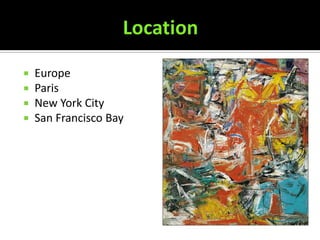
   Europe
   Paris
   New York City
   San Francisco Bay
   Cubism
     ▪ 1st Modern art movement
     ▪ Abstract qualities

   Surrealism
     ▪ Paintings without realistic traits
     ▪ Artist revealing feelings
     ▪ Spontaneous or automatic creation
   Energetic and dynamic
   Depicting movement
   Process of creation is emphasized
   No obvious focal point
   All driven from emotions
   Inspiring rather than beautiful
   Focus on color fields: especially bold color
   “Impulsive Art”
   Action painting
   No empty canvas
   Large Format
   Complex
   Artists seen as troublemakers and rebellious
   Provoked questions of “What is art?”
   Artwork from direct expression of artists’
    conscious
   Emotional intensity from extreme feelings
    due to the aftermath of the war (Trauma-
    based)
   Hesitant to accept this artwork unlike any
    other
   Critics didn’t approve at first because they
    didn’t know how to respond
   Later became fans of the main 3 artists, but
    looked down upon those following
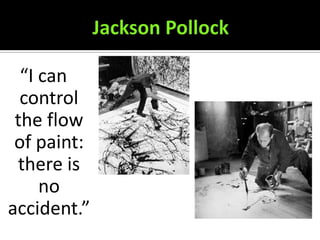
“I can
  control
 the flow
 of paint:
 there is
     no
accident.”
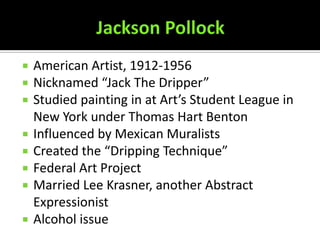
   American Artist, 1912-1956
   Nicknamed “Jack The Dripper”
   Studied painting in at Art’s Student League in
    New York under Thomas Hart Benton
   Influenced by Mexican Muralists
   Created the “Dripping Technique”
   Federal Art Project
   Married Lee Krasner, another Abstract
    Expressionist
   Alcohol issue
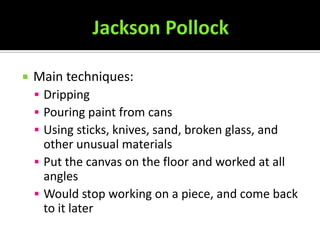
   Main techniques:
     Dripping
     Pouring paint from cans
     Using sticks, knives, sand, broken glass, and
      other unusual materials
     Put the canvas on the floor and worked at all
      angles
     Would stop working on a piece, and come back
      to it later
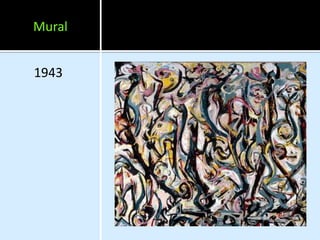
Mural


1943
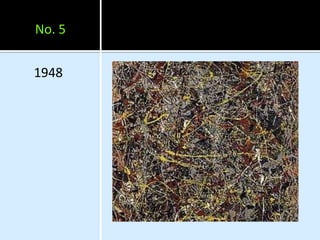
No. 5


1948
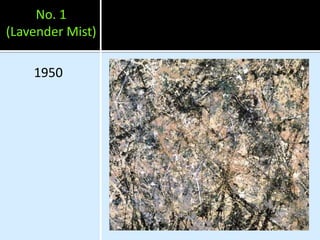
No. 1
(Lavender Mist)

    1950
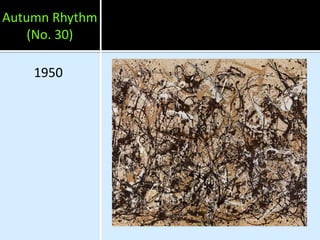
Autumn Rhythm
    (No. 30)

    1950
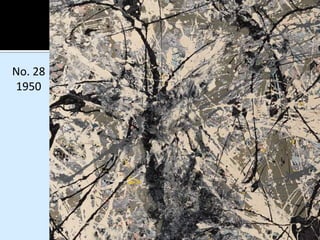
No. 28
1950
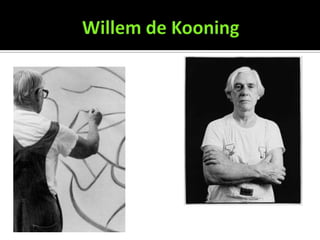
   Dutch American painter 1904-1997
   Studied at the Rotterdam Academy of Fine
    Arts and Techniques
   Immigrated to the U.S. in 1926
   Worked illegally as a commercial
    artist, window dresser, sign painter, and
    carpenter in New York.
   Married to Elaine de Kooning who was also an
    abstract expressionist.
   Main Techniques
     Main style was “Action-Painting”
     Spontaneous brushwork
     Used a lot of abstract shapes to represent real
      world items
     Used human figures and landscapes as the
      spotlight of his work
     Would stop working on a piece, and come back to
      it later
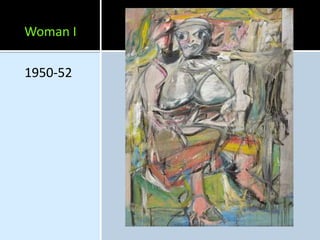
Woman I

1950-52
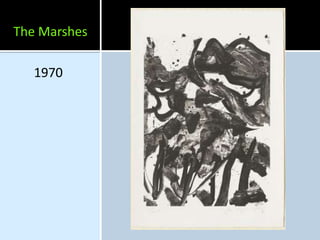
The Marshes

   1970
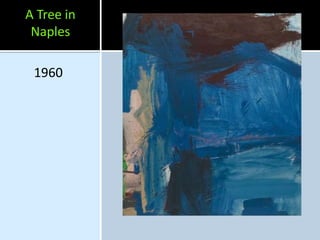
A Tree in
 Naples

 1960
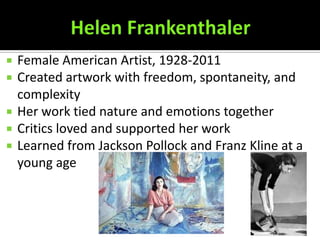
   Female American Artist, 1928-2011
   Created artwork with freedom, spontaneity, and
    complexity
   Her work tied nature and emotions together
   Critics loved and supported her work
   Learned from Jackson Pollock and Franz Kline at a
    young age
   Main Techniques
     Invented the “Soak-Stain” technique
     Color Field Painting
     Enjoyed woodcut
     Altered Pollock’s drip techniques and applied them
      to her art
     Gave her art a “flat” look with minimal depth
     Used natural landscapes for inspiration in her work
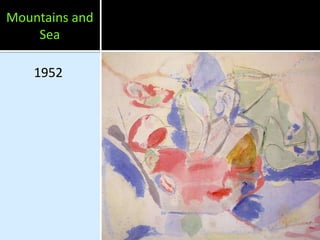
Mountains and
    Sea

    1952
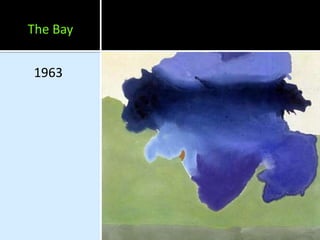
The Bay


1963
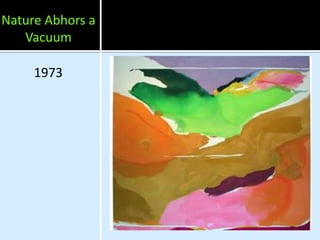
Nature Abhors a
   Vacuum

     1973
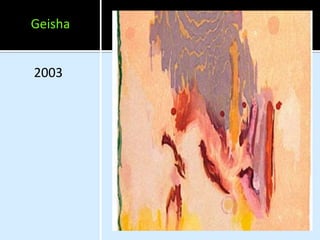
Geisha


2003
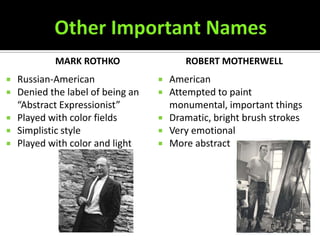
MARK ROTHKO                   ROBERT MOTHERWELL
   Russian-American                  American
   Denied the label of being an      Attempted to paint
    “Abstract Expressionist”           monumental, important things
   Played with color fields          Dramatic, bright brush strokes
   Simplistic style                  Very emotional
   Played with color and light       More abstract
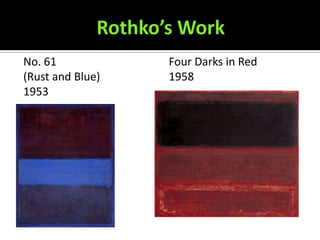
No. 61            Four Darks in Red
(Rust and Blue)   1958
1953
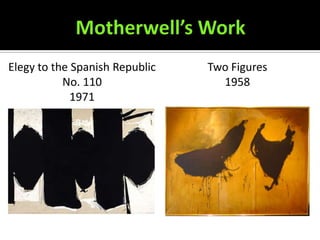
Elegy to the Spanish Republic   Two Figures
           No. 110                1958
             1971
   Methods and themes remained influential
   Affected upcoming artists
   Led the way for movements such as pop art,
    minimalism, etc

Abstract Expressionism

  • 1.
    Jake Genrich, EricDuprey, Jordan Diedrick
  • 2.
    Began in early 1940’s, and is still practiced today  Post World War II  US emotionally traumatized by the war, and have mixed feelings built up inside.
  • 3.
    Europe  Paris  New York City  San Francisco Bay
  • 4.
    Cubism ▪ 1st Modern art movement ▪ Abstract qualities  Surrealism ▪ Paintings without realistic traits ▪ Artist revealing feelings ▪ Spontaneous or automatic creation
  • 5.
    Energetic and dynamic  Depicting movement  Process of creation is emphasized  No obvious focal point  All driven from emotions  Inspiring rather than beautiful
  • 6.
    Focus on color fields: especially bold color  “Impulsive Art”  Action painting  No empty canvas  Large Format  Complex
  • 7.
    Artists seen as troublemakers and rebellious  Provoked questions of “What is art?”  Artwork from direct expression of artists’ conscious  Emotional intensity from extreme feelings due to the aftermath of the war (Trauma- based)
  • 8.
    Hesitant to accept this artwork unlike any other  Critics didn’t approve at first because they didn’t know how to respond  Later became fans of the main 3 artists, but looked down upon those following
  • 9.
    “I can control the flow of paint: there is no accident.”
  • 10.
    American Artist, 1912-1956  Nicknamed “Jack The Dripper”  Studied painting in at Art’s Student League in New York under Thomas Hart Benton  Influenced by Mexican Muralists  Created the “Dripping Technique”  Federal Art Project  Married Lee Krasner, another Abstract Expressionist  Alcohol issue
  • 11.
    Main techniques:  Dripping  Pouring paint from cans  Using sticks, knives, sand, broken glass, and other unusual materials  Put the canvas on the floor and worked at all angles  Would stop working on a piece, and come back to it later
  • 12.
  • 13.
  • 14.
  • 15.
    Autumn Rhythm (No. 30) 1950
  • 16.
  • 18.
    Dutch American painter 1904-1997  Studied at the Rotterdam Academy of Fine Arts and Techniques  Immigrated to the U.S. in 1926  Worked illegally as a commercial artist, window dresser, sign painter, and carpenter in New York.  Married to Elaine de Kooning who was also an abstract expressionist.
  • 19.
    Main Techniques  Main style was “Action-Painting”  Spontaneous brushwork  Used a lot of abstract shapes to represent real world items  Used human figures and landscapes as the spotlight of his work  Would stop working on a piece, and come back to it later
  • 20.
  • 21.
  • 22.
    A Tree in Naples 1960
  • 23.
    Female American Artist, 1928-2011  Created artwork with freedom, spontaneity, and complexity  Her work tied nature and emotions together  Critics loved and supported her work  Learned from Jackson Pollock and Franz Kline at a young age
  • 24.
    Main Techniques  Invented the “Soak-Stain” technique  Color Field Painting  Enjoyed woodcut  Altered Pollock’s drip techniques and applied them to her art  Gave her art a “flat” look with minimal depth  Used natural landscapes for inspiration in her work
  • 25.
  • 26.
  • 27.
    Nature Abhors a Vacuum 1973
  • 28.
  • 29.
    MARK ROTHKO ROBERT MOTHERWELL  Russian-American  American  Denied the label of being an  Attempted to paint “Abstract Expressionist” monumental, important things  Played with color fields  Dramatic, bright brush strokes  Simplistic style  Very emotional  Played with color and light  More abstract
  • 30.
    No. 61 Four Darks in Red (Rust and Blue) 1958 1953
  • 31.
    Elegy to theSpanish Republic Two Figures No. 110 1958 1971
  • 32.
    Methods and themes remained influential  Affected upcoming artists  Led the way for movements such as pop art, minimalism, etc