Surrealism
             Zoe Irvin,
    Kyra Neumann, and Sarah Uhlian


1
2
Preceding Art: Dada
     Dada 1916-1923
       Anti-everything
       Protesting WWI
       Desired to provoke public controversy
       One rule: never follow any known rules
       Key people: Tristan Tzara and Marcel
        Duchamp
     WWI scattered DADA painters
     After the war:
       Returned to Paris where Dada activities
3       continued
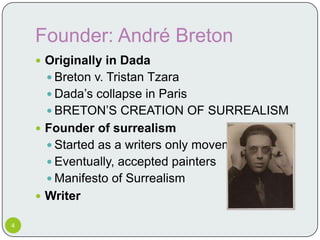
Founder: André Breton
     Originally in Dada
      Breton v. Tristan Tzara
      Dada’s collapse in Paris
      BRETON’S CREATION OF SURREALISM
     Founder of surrealism
      Started as a writers only movement
      Eventually, accepted painters
      Manifesto of Surrealism
     Writer

4
Influences of WWI
     Social
       Change in the status of women
       Fear of another world war
       WWI made luxuries impossible
     Economic
       Inflation from war
     Political
       Entire map of Europe changed
       A plethora of new ideologies

5
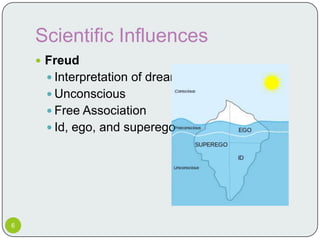
Scientific Influences
     Freud
      Interpretation of dreams
      Unconscious
      Free Association
      Id, ego, and superego


6
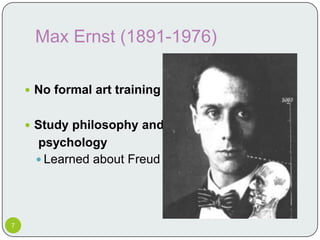
Max Ernst (1891-1976)

     No formal art training


     Study philosophy and
     psychology
      Learned about Freud


7
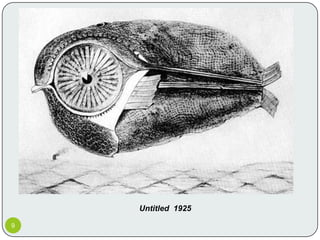
Max Ernst (1891-1976)
     frottage and grattage
     Emphasis
       Contact between materials
       Transforming everyday materials
         to create an idea of your consciousness
       Led to automatism
     Influenced abstract expressionism


8
Untitled 1925

9
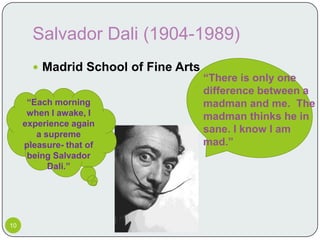
Salvador Dali (1904-1989)
        Madrid School of Fine Arts
                                      “There is only one
                                      difference between a
      “Each morning                   madman and me. The
      when I awake, I                 madman thinks he in
     experience again
        a supreme
                                      sane. I know I am
     pleasure- that of                mad.”
      being Salvador
           Dali.”


10
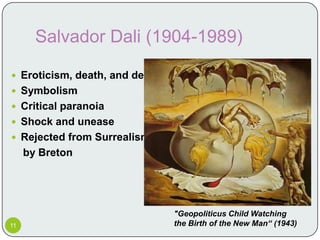
Salvador Dali (1904-1989)

 Eroticism, death, and decay
 Symbolism
 Critical paranoia
 Shock and unease
 Rejected from Surrealism
     by Breton


                                "Geopoliticus Child Watching
11                              the Birth of the New Man“ (1943)
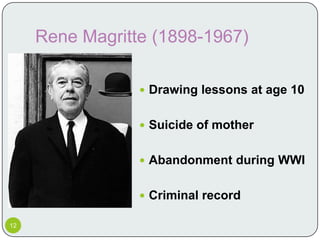
Rene Magritte (1898-1967)

                  Drawing lessons at age 10


                  Suicide of mother


                  Abandonment during WWI


                  Criminal record

12
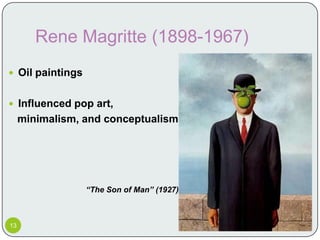
Rene Magritte (1898-1967)
 Oil paintings


 Influenced pop art,
     minimalism, and conceptualism


                  “The Son of Man” (1927)


13
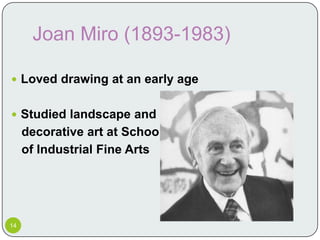
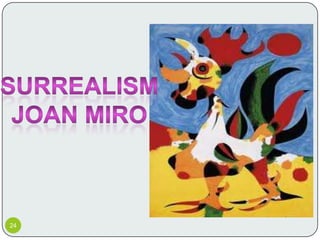
Joan Miro (1893-1983)

 Loved drawing at an early age


 Studied landscape and
     decorative art at School
     of Industrial Fine Arts


14
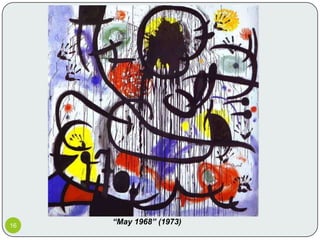
Joan Miro (1893-1983)
      Limited palette
        Bold and expressive colors
      Partial surrealist
      Influenced color field
      painting within abstract expressionism


15
16
     “May 1968” (1973)
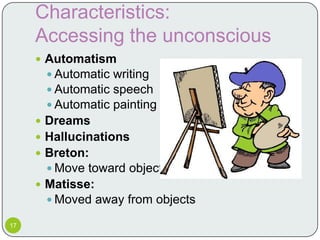
Characteristics:
     Accessing the unconscious
      Automatism
        Automatic writing
        Automatic speech
        Automatic painting
      Dreams
      Hallucinations
      Breton:
        Move toward objects
      Matisse:
        Moved away from objects

17
Characteristics
      Desired to portray basic drives
        Highlighting abuse of the female body
      Juxtaposition
        Reality and fantasy
      Limited by society
        Rebelling rational ideals of society
      Politics
        Left-wing
        Anti-capitalism

18
Critiques
      Freud
       Surrealists failed to access the unconscious
       Untrained use of psychoanalysis
       They deceived themselves
      Feminists
       fundamentally a male movement
       adopts archaic attitudes toward women
         Stereotypes, sexist norms, objects of
         desire, and of mystery

19
Reactions
        wary to support surrealists
           lack of using Freud’s conditions
        “What lacunae has this expansion been
         made possible?”
        surrealism played on Marxism and
         psychoanalysis
        obsessed with women and madness
                                             “The surrealists were not
                                             good with women. That is
      “Surrealism is a wonder, a wonder
                                              why, although I thought
     intricately woven from the everyday
                                               they were wonderful, I
      as if wonder itself could be a self-
                                             had to give them up in the
       sustaining more of perception.”
20                                                     end.”
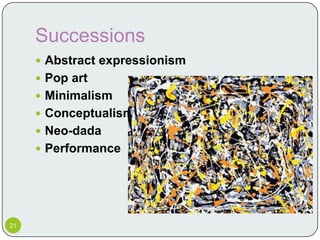
Successions
      Abstract expressionism
      Pop art
      Minimalism
      Conceptualism
      Neo-dada
      Performance


21
So what?
      Brought attention to unnecessary planning in
       art
      Seen today
        Advertisements
        Film
        Fashion photography


22
23
24
25
26
27
28
29
30
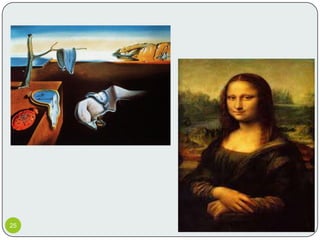
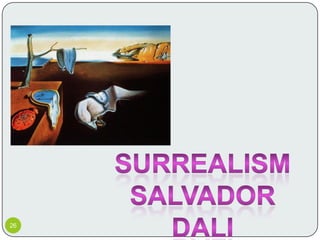
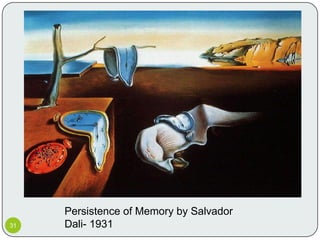
Persistence of Memory by Salvador
31   Dali- 1931
32
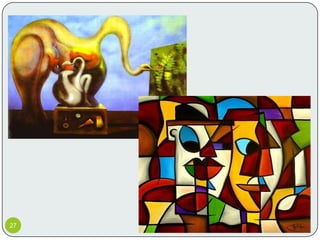
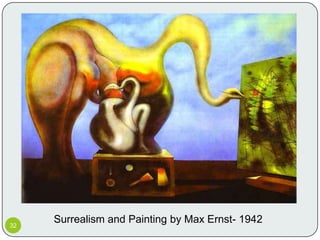
     Surrealism and Painting by Max Ernst- 1942
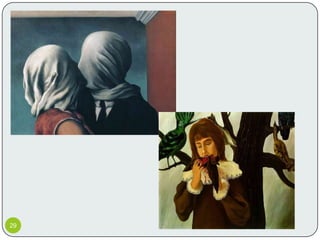
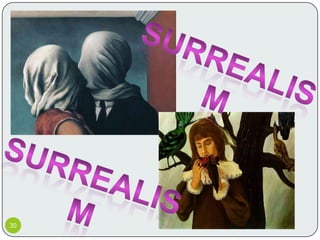
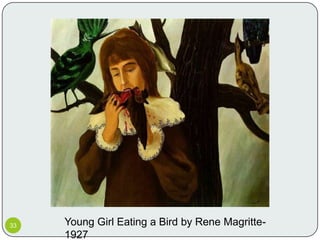
33   Young Girl Eating a Bird by Rene Magritte-
     1927
Surrealism
              Zoe Irvin,
     Kyra Neumann, and Sarah Uhlian


34

Surrealism powerpoint final

  • 1.
    Surrealism Zoe Irvin, Kyra Neumann, and Sarah Uhlian 1
  • 2.
  • 3.
    Preceding Art: Dada  Dada 1916-1923  Anti-everything  Protesting WWI  Desired to provoke public controversy  One rule: never follow any known rules  Key people: Tristan Tzara and Marcel Duchamp  WWI scattered DADA painters  After the war:  Returned to Paris where Dada activities 3 continued
  • 4.
    Founder: André Breton  Originally in Dada  Breton v. Tristan Tzara  Dada’s collapse in Paris  BRETON’S CREATION OF SURREALISM  Founder of surrealism  Started as a writers only movement  Eventually, accepted painters  Manifesto of Surrealism  Writer 4
  • 5.
    Influences of WWI  Social  Change in the status of women  Fear of another world war  WWI made luxuries impossible  Economic  Inflation from war  Political  Entire map of Europe changed  A plethora of new ideologies 5
  • 6.
    Scientific Influences  Freud  Interpretation of dreams  Unconscious  Free Association  Id, ego, and superego 6
  • 7.
    Max Ernst (1891-1976)  No formal art training  Study philosophy and psychology  Learned about Freud 7
  • 8.
    Max Ernst (1891-1976)  frottage and grattage  Emphasis  Contact between materials  Transforming everyday materials to create an idea of your consciousness  Led to automatism  Influenced abstract expressionism 8
  • 9.
  • 10.
    Salvador Dali (1904-1989)  Madrid School of Fine Arts “There is only one difference between a “Each morning madman and me. The when I awake, I madman thinks he in experience again a supreme sane. I know I am pleasure- that of mad.” being Salvador Dali.” 10
  • 11.
    Salvador Dali (1904-1989) Eroticism, death, and decay  Symbolism  Critical paranoia  Shock and unease  Rejected from Surrealism by Breton "Geopoliticus Child Watching 11 the Birth of the New Man“ (1943)
  • 12.
    Rene Magritte (1898-1967)  Drawing lessons at age 10  Suicide of mother  Abandonment during WWI  Criminal record 12
  • 13.
    Rene Magritte (1898-1967) Oil paintings  Influenced pop art, minimalism, and conceptualism “The Son of Man” (1927) 13
  • 14.
    Joan Miro (1893-1983) Loved drawing at an early age  Studied landscape and decorative art at School of Industrial Fine Arts 14
  • 15.
    Joan Miro (1893-1983)  Limited palette  Bold and expressive colors  Partial surrealist  Influenced color field painting within abstract expressionism 15
  • 16.
    16 “May 1968” (1973)
  • 17.
    Characteristics: Accessing the unconscious  Automatism  Automatic writing  Automatic speech  Automatic painting  Dreams  Hallucinations  Breton:  Move toward objects  Matisse:  Moved away from objects 17
  • 18.
    Characteristics  Desired to portray basic drives  Highlighting abuse of the female body  Juxtaposition  Reality and fantasy  Limited by society  Rebelling rational ideals of society  Politics  Left-wing  Anti-capitalism 18
  • 19.
    Critiques  Freud  Surrealists failed to access the unconscious  Untrained use of psychoanalysis  They deceived themselves  Feminists  fundamentally a male movement  adopts archaic attitudes toward women  Stereotypes, sexist norms, objects of desire, and of mystery 19
  • 20.
    Reactions  wary to support surrealists  lack of using Freud’s conditions  “What lacunae has this expansion been made possible?”  surrealism played on Marxism and psychoanalysis  obsessed with women and madness “The surrealists were not good with women. That is “Surrealism is a wonder, a wonder why, although I thought intricately woven from the everyday they were wonderful, I as if wonder itself could be a self- had to give them up in the sustaining more of perception.” 20 end.”
  • 21.
    Successions  Abstract expressionism  Pop art  Minimalism  Conceptualism  Neo-dada  Performance 21
  • 22.
    So what?  Brought attention to unnecessary planning in art  Seen today  Advertisements  Film  Fashion photography 22
  • 23.
  • 24.
  • 25.
  • 26.
  • 27.
  • 28.
  • 29.
  • 30.
  • 31.
    Persistence of Memoryby Salvador 31 Dali- 1931
  • 32.
    32 Surrealism and Painting by Max Ernst- 1942
  • 33.
    33 Young Girl Eating a Bird by Rene Magritte- 1927
  • 34.
    Surrealism Zoe Irvin, Kyra Neumann, and Sarah Uhlian 34