Downloaded 42 times




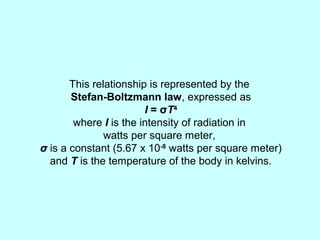
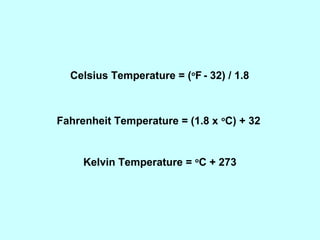
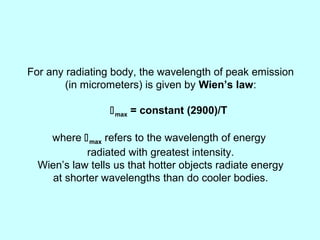
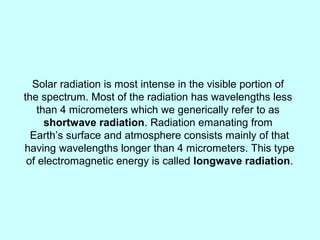
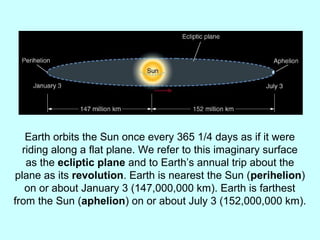
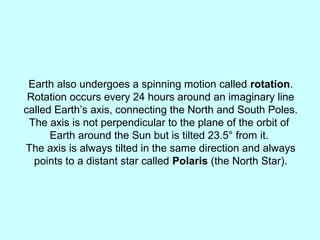
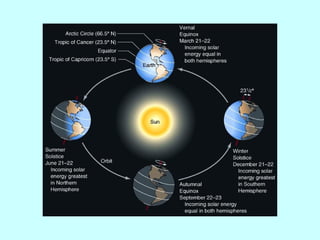
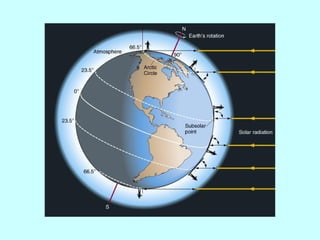
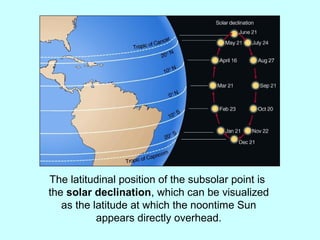


1) The Earth orbits the sun once every 365 days and its axis is tilted at an angle of 23.5 degrees. This tilt and rotation cause the seasons by changing the amount of direct sunlight different parts of the Earth receive over the course of a year. 2) The maximum tilt toward the sun occurs on June 21st in the Northern Hemisphere and December 21st in the Southern Hemisphere, corresponding to the summer and winter solstices. 3) On the equinoxes in March and September, both hemispheres receive equal amounts of sunlight and day and night are equal lengths.


