WHY RAD?
WHY IS RAD IMPERATIVE FOR MODERN APP
DEVELOPMENT
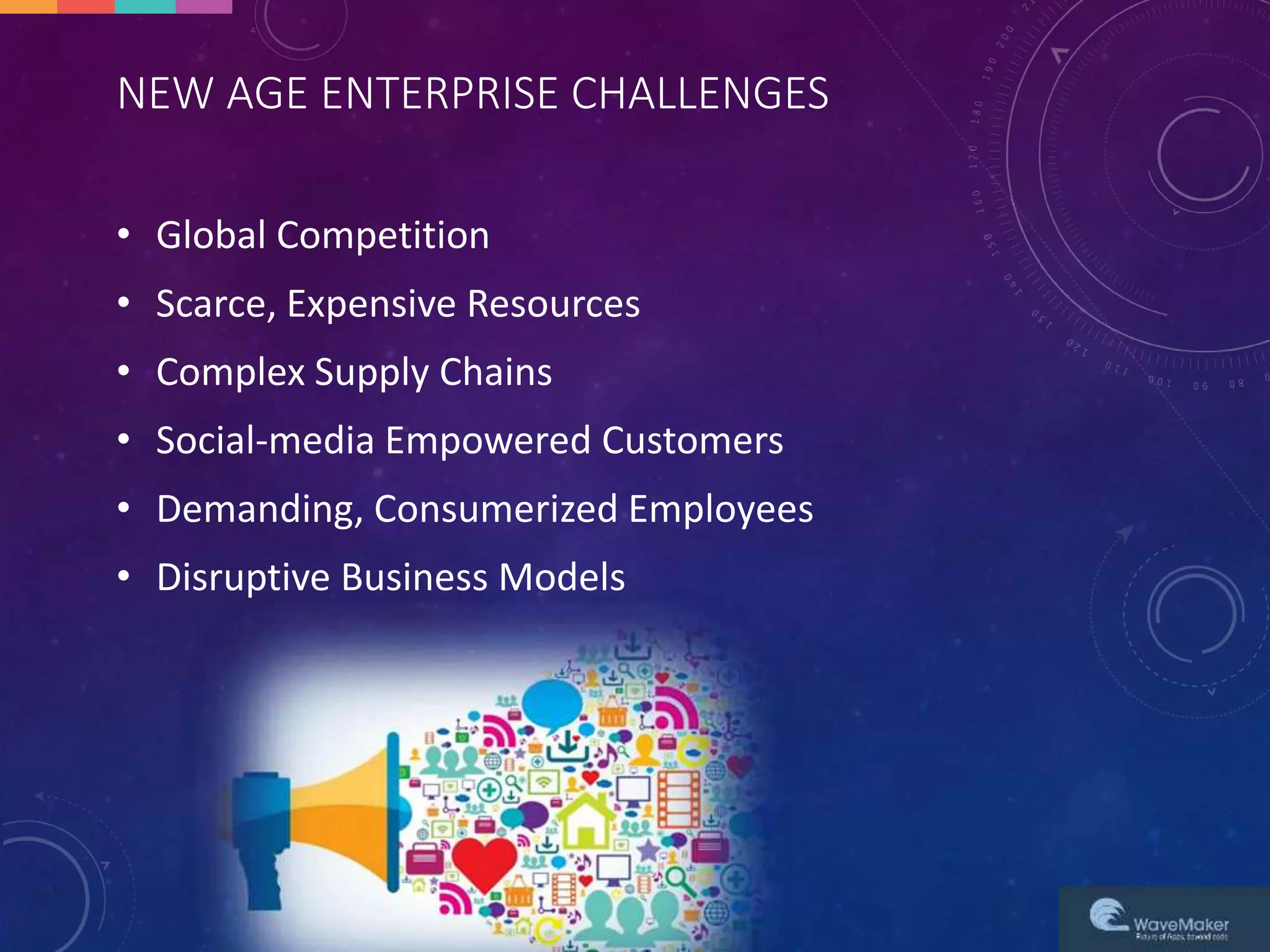
NEW AGE ENTERPRISE CHALLENGES
• Global Competition
• Scarce, Expensive Resources
• Complex Supply Chains
• Social-media Empowered Customers
• Demanding, Consumerized Employees
• Disruptive Business Models
SUCCESSFUL ENTERPRISES
• Enable Agility to Keep Up
• Democratize Decision Making
• Foster Innovation Throughout the Organization
IBM CIO Study – Successful Companies…
• Build a workplace strategy and roadmap
that drives innovation and productivity
• Enable secure anytime, anywhere access
instead of restricting usage
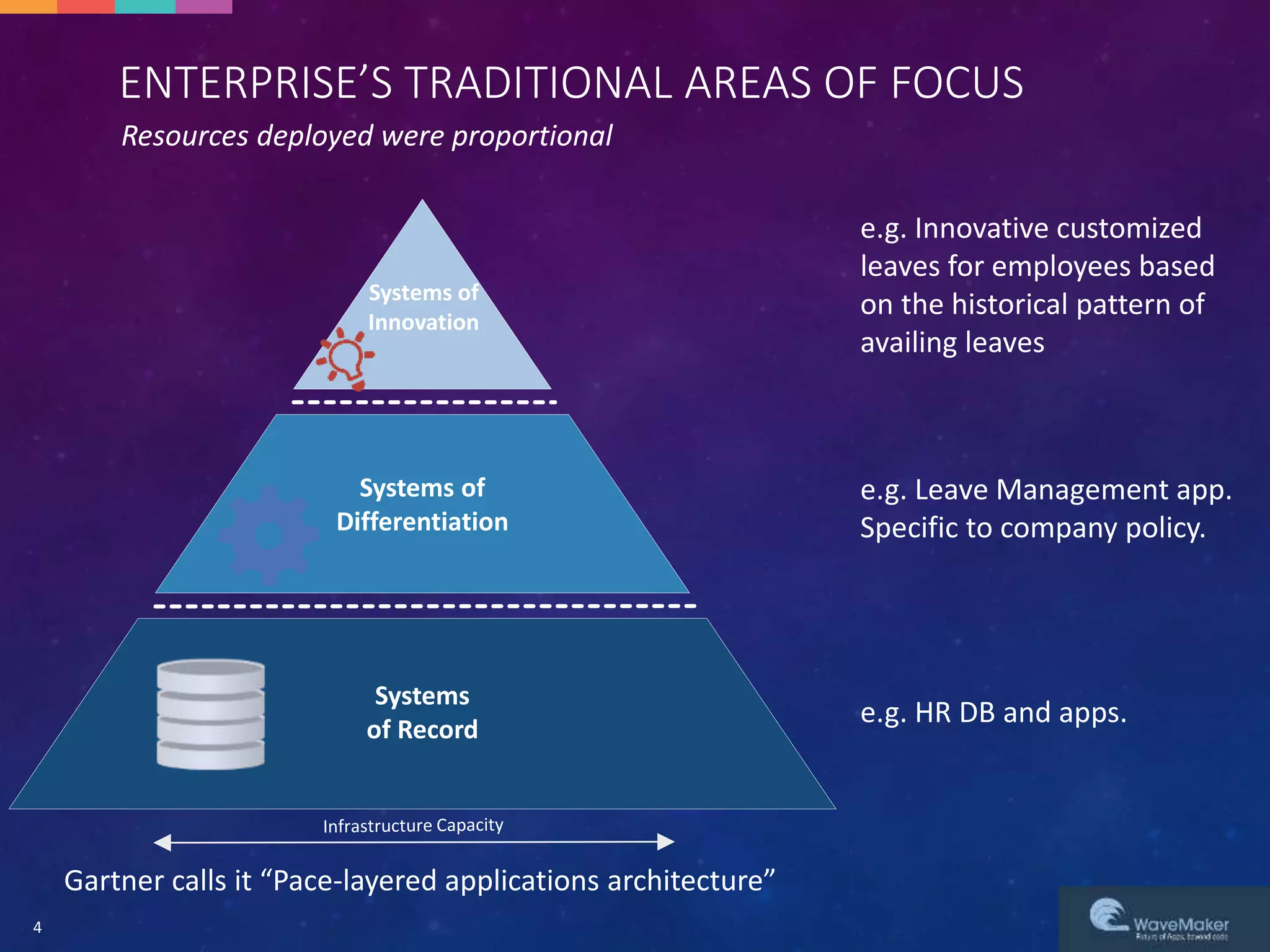
ENTERPRISE’S TRADITIONAL AREAS OF FOCUS
4
Systems of
Innovation
Systems of
Differentiation
Systems
of Record
Gartner calls it “Pace-layered applications architecture”
Resources deployed were proportional
e.g. HR DB and apps.
e.g. Leave Management app.
Specific to company policy.
e.g. Innovative customized
leaves for employees based
on the historical pattern of
availing leaves
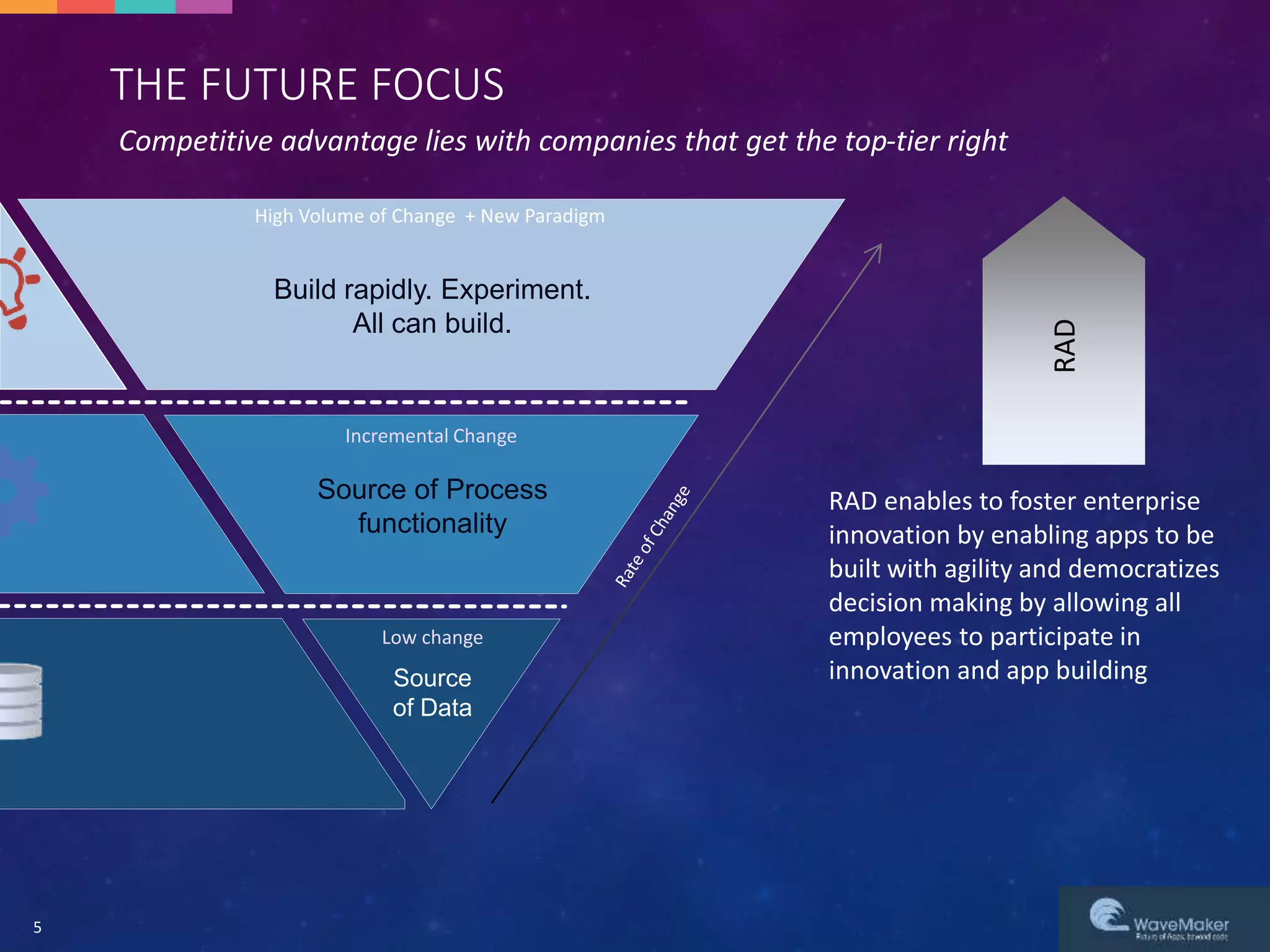
THE FUTURE FOCUS
5
Low change
Incremental Change
High Volume of Change + New Paradigm
RAD
Source
of Data
Source of Process
functionality
Build rapidly. Experiment.
All can build.
Source
of Data
Competitive advantage lies with companies that get the top-tier right
RAD enables to foster enterprise
innovation by enabling apps to be
built with agility and democratizes
decision making by allowing all
employees to participate in
innovation and app building
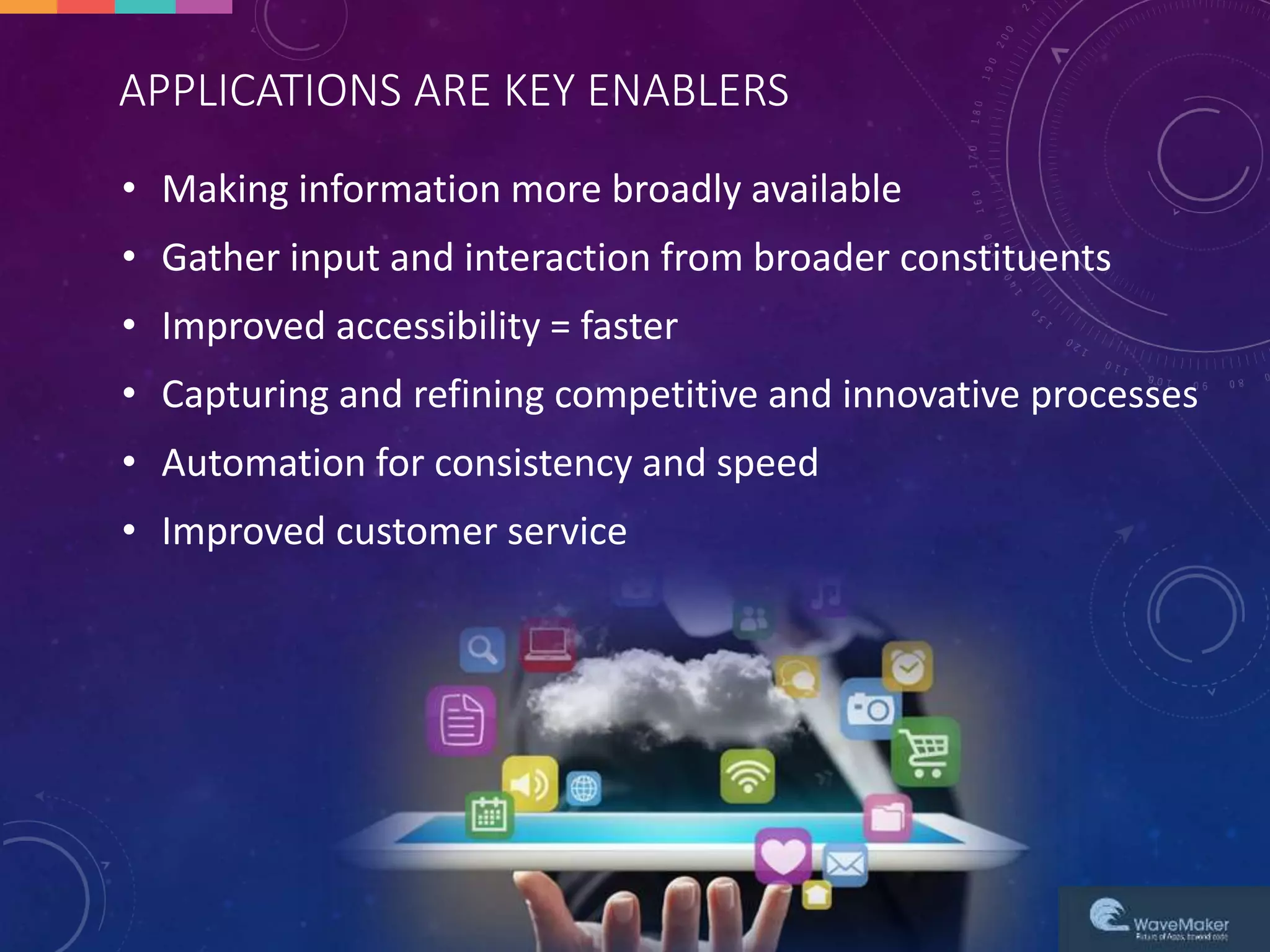
APPLICATIONS ARE KEY ENABLERS
• Making information more broadly available
• Gather input and interaction from broader constituents
• Improved accessibility = faster
• Capturing and refining competitive and innovative processes
• Automation for consistency and speed
• Improved customer service
WHAT ARE THE USER'S EXPECTATIONS FROM AN APP?
A typical user wants the app to:
• Be always available on multiple devices
• Be customized and personalized
• Be fast and engaging
• Be Connected and social
• Provide integrated experiences without any hassle
• Have good looking UI
7
WHAT ARE ENTERPRISE'S EXPECTATIONS?
• Be secure, scalable and easily maintainable
• Be available anytime, anywhere, and anyplace
• Have agility
• Involve Business Users
• Have lower TCO
8
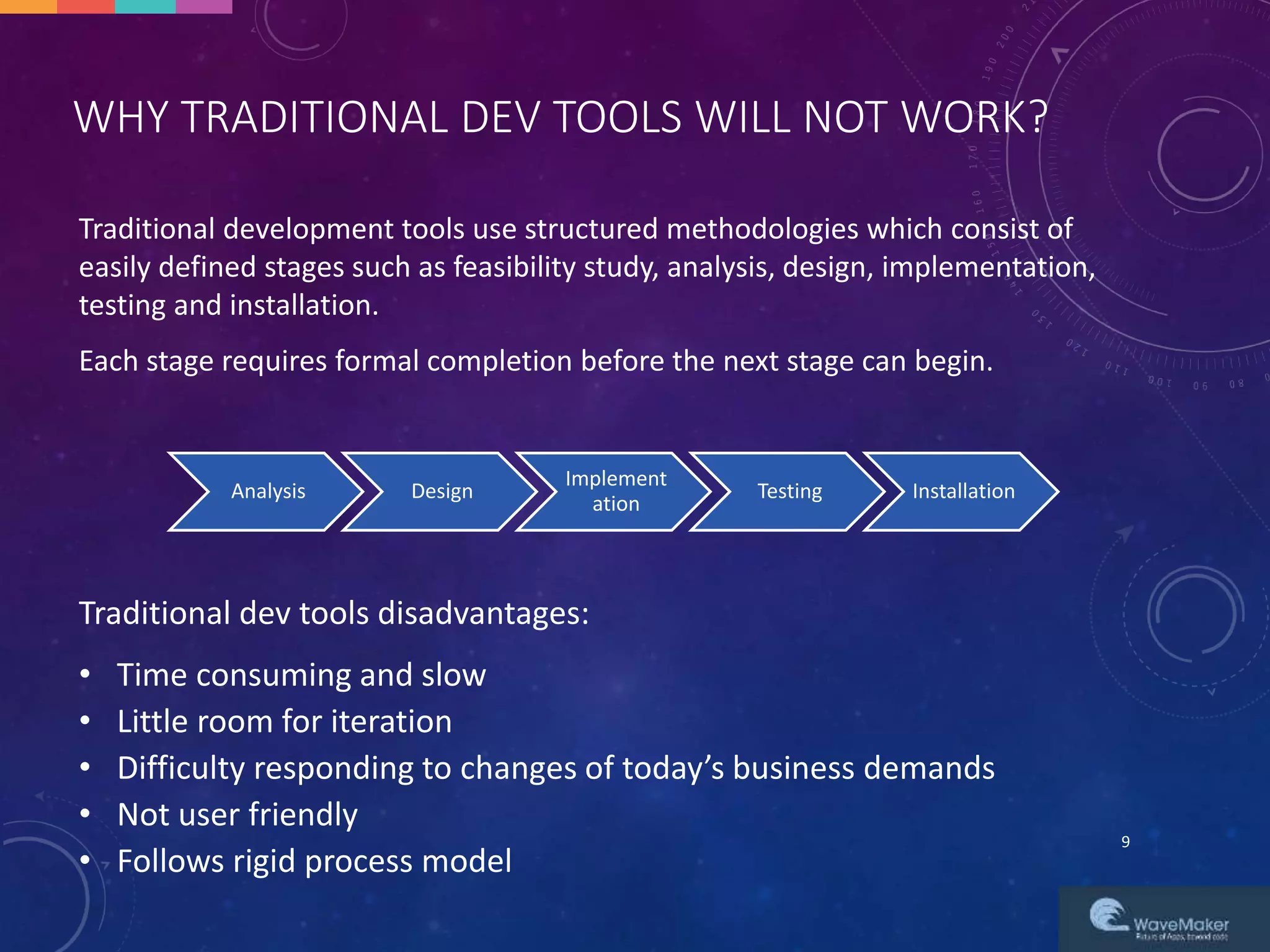
WHY TRADITIONAL DEV TOOLS WILL NOT WORK?
Traditional development tools use structured methodologies which consist of
easily defined stages such as feasibility study, analysis, design, implementation,
testing and installation.
Each stage requires formal completion before the next stage can begin.
9
Analysis Design
Implement
ation
Testing Installation
Traditional dev tools disadvantages:
• Time consuming and slow
• Little room for iteration
• Difficulty responding to changes of today’s business demands
• Not user friendly
• Follows rigid process model
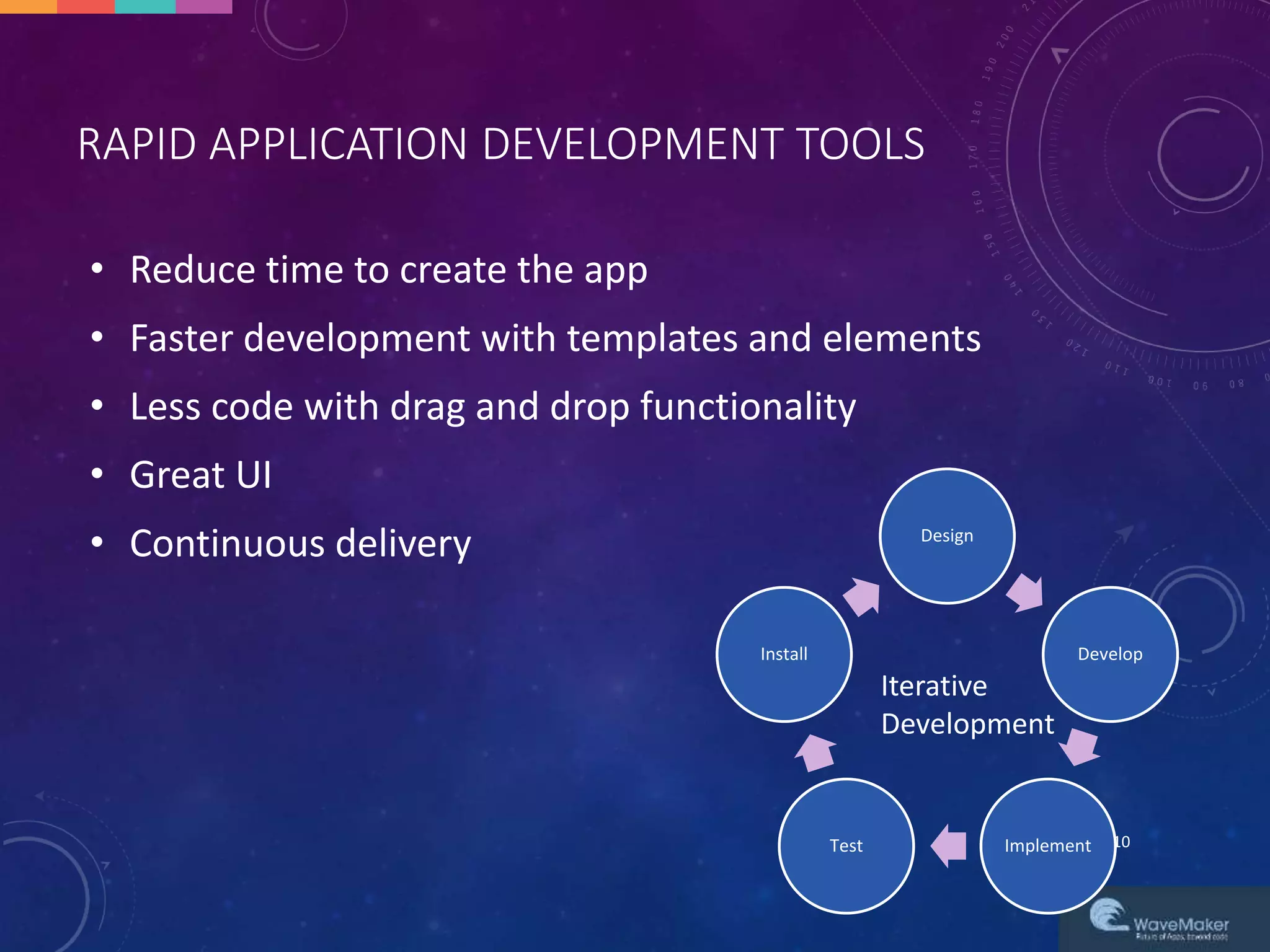
RAPID APPLICATION DEVELOPMENT TOOLS
10
• Reduce time to create the app
• Faster development with templates and elements
• Less code with drag and drop functionality
• Great UI
• Continuous delivery Design
Develop
ImplementTest
Install
Iterative
Development
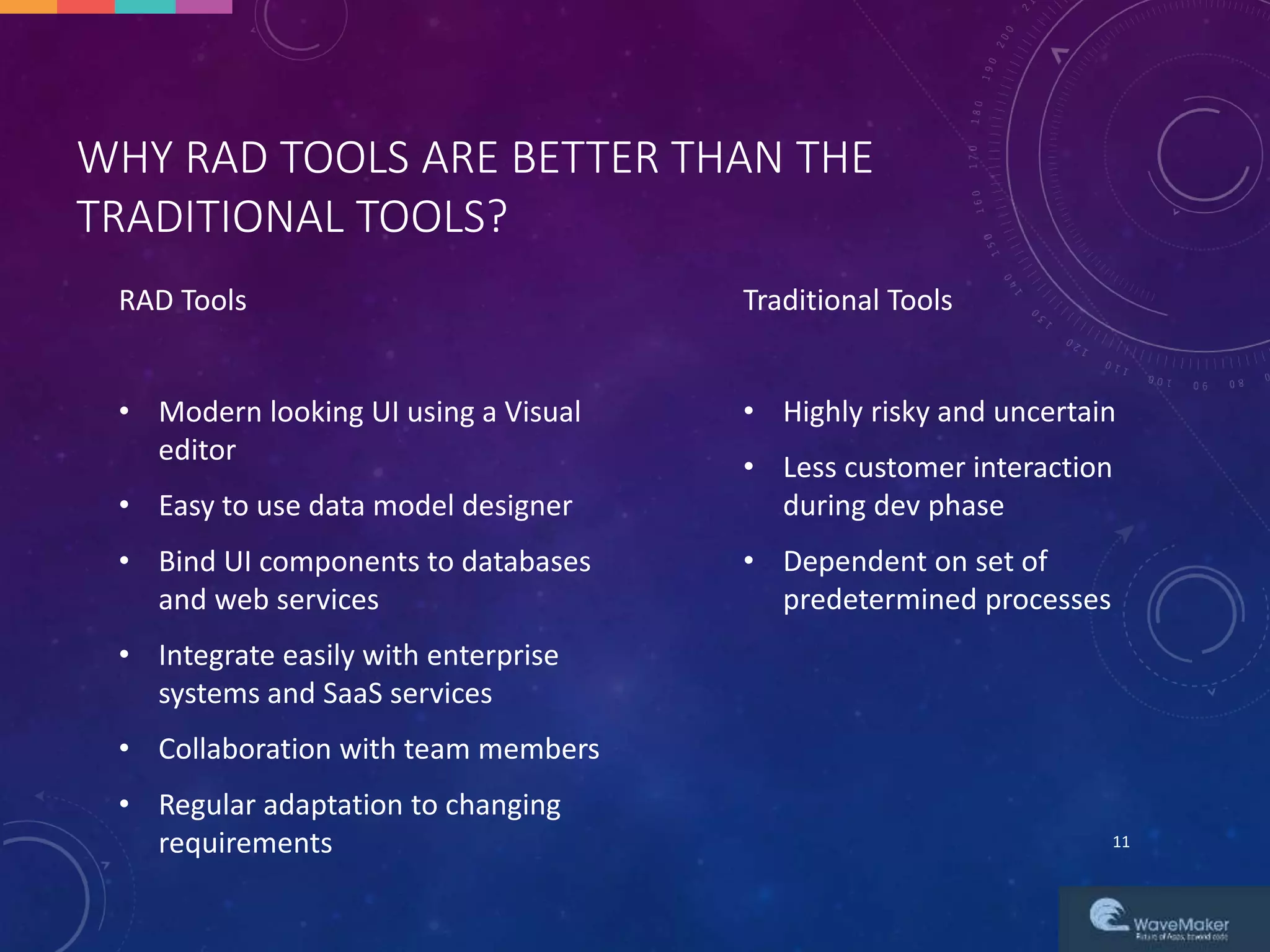
WHY RAD TOOLS ARE BETTER THAN THE
TRADITIONAL TOOLS?
11
Traditional Tools
• Highly risky and uncertain
• Less customer interaction
during dev phase
• Dependent on set of
predetermined processes
RAD Tools
• Modern looking UI using a Visual
editor
• Easy to use data model designer
• Bind UI components to databases
and web services
• Integrate easily with enterprise
systems and SaaS services
• Collaboration with team members
• Regular adaptation to changing
requirements
THANK YOU
12
Start your free trial today at
www.wavemakeronline.com

Why is RAD imperative for modern app development

  • 1.
    WHY RAD? WHY ISRAD IMPERATIVE FOR MODERN APP DEVELOPMENT
  • 2.
    NEW AGE ENTERPRISECHALLENGES • Global Competition • Scarce, Expensive Resources • Complex Supply Chains • Social-media Empowered Customers • Demanding, Consumerized Employees • Disruptive Business Models
  • 3.
    SUCCESSFUL ENTERPRISES • EnableAgility to Keep Up • Democratize Decision Making • Foster Innovation Throughout the Organization IBM CIO Study – Successful Companies… • Build a workplace strategy and roadmap that drives innovation and productivity • Enable secure anytime, anywhere access instead of restricting usage
  • 4.
    ENTERPRISE’S TRADITIONAL AREASOF FOCUS 4 Systems of Innovation Systems of Differentiation Systems of Record Gartner calls it “Pace-layered applications architecture” Resources deployed were proportional e.g. HR DB and apps. e.g. Leave Management app. Specific to company policy. e.g. Innovative customized leaves for employees based on the historical pattern of availing leaves
  • 5.
    THE FUTURE FOCUS 5 Lowchange Incremental Change High Volume of Change + New Paradigm RAD Source of Data Source of Process functionality Build rapidly. Experiment. All can build. Source of Data Competitive advantage lies with companies that get the top-tier right RAD enables to foster enterprise innovation by enabling apps to be built with agility and democratizes decision making by allowing all employees to participate in innovation and app building
  • 6.
    APPLICATIONS ARE KEYENABLERS • Making information more broadly available • Gather input and interaction from broader constituents • Improved accessibility = faster • Capturing and refining competitive and innovative processes • Automation for consistency and speed • Improved customer service
  • 7.
    WHAT ARE THEUSER'S EXPECTATIONS FROM AN APP? A typical user wants the app to: • Be always available on multiple devices • Be customized and personalized • Be fast and engaging • Be Connected and social • Provide integrated experiences without any hassle • Have good looking UI 7
  • 8.
    WHAT ARE ENTERPRISE'SEXPECTATIONS? • Be secure, scalable and easily maintainable • Be available anytime, anywhere, and anyplace • Have agility • Involve Business Users • Have lower TCO 8
  • 9.
    WHY TRADITIONAL DEVTOOLS WILL NOT WORK? Traditional development tools use structured methodologies which consist of easily defined stages such as feasibility study, analysis, design, implementation, testing and installation. Each stage requires formal completion before the next stage can begin. 9 Analysis Design Implement ation Testing Installation Traditional dev tools disadvantages: • Time consuming and slow • Little room for iteration • Difficulty responding to changes of today’s business demands • Not user friendly • Follows rigid process model
  • 10.
    RAPID APPLICATION DEVELOPMENTTOOLS 10 • Reduce time to create the app • Faster development with templates and elements • Less code with drag and drop functionality • Great UI • Continuous delivery Design Develop ImplementTest Install Iterative Development
  • 11.
    WHY RAD TOOLSARE BETTER THAN THE TRADITIONAL TOOLS? 11 Traditional Tools • Highly risky and uncertain • Less customer interaction during dev phase • Dependent on set of predetermined processes RAD Tools • Modern looking UI using a Visual editor • Easy to use data model designer • Bind UI components to databases and web services • Integrate easily with enterprise systems and SaaS services • Collaboration with team members • Regular adaptation to changing requirements
  • 12.
    THANK YOU 12 Start yourfree trial today at www.wavemakeronline.com

Editor's Notes

  • #4 http://www-935.ibm.com/services/us/en/it-services/workplace-services/flexible-workplace/
  • #5 Systems of Record — Established packaged applications or legacy homegrown systems that support core transaction processing and manage the organization's critical master data. The rate of change is low, because the processes are well-established and common to most organizations, and often are subject to regulatory requirements. Systems of Differentiation — Applications that enable unique company processes or industry-specific capabilities. They have a medium life cycle (one to three years), but need to be reconfigured frequently to accommodate changing business practices or customer requirements. Systems of Innovation — New applications that are built on an ad hoc basis to address new business requirements or opportunities. These are typically short life cycle projects (zero to 12 months) using departmental or outside resources and consumer-grade technologies.