Globalization has increased the challenges of international business for governments, organizations, and institutions. International management is becoming more important in academia due to this. International business involves commercial transactions between parties in two or more countries, including imports and exports of goods, services, technology, and capital. Globalization extends relationships and interdependencies among nations through international business. Firms engage in international business to expand sales into new markets, access resources like labor and materials in other countries, and minimize risks through diversification.
Introduction to globalization's impact on management and business, highlighting the challenge and increasing academic importance of international management.
International business comprises all transactions across country borders including imports and exports of goods, services, technology, and capital.
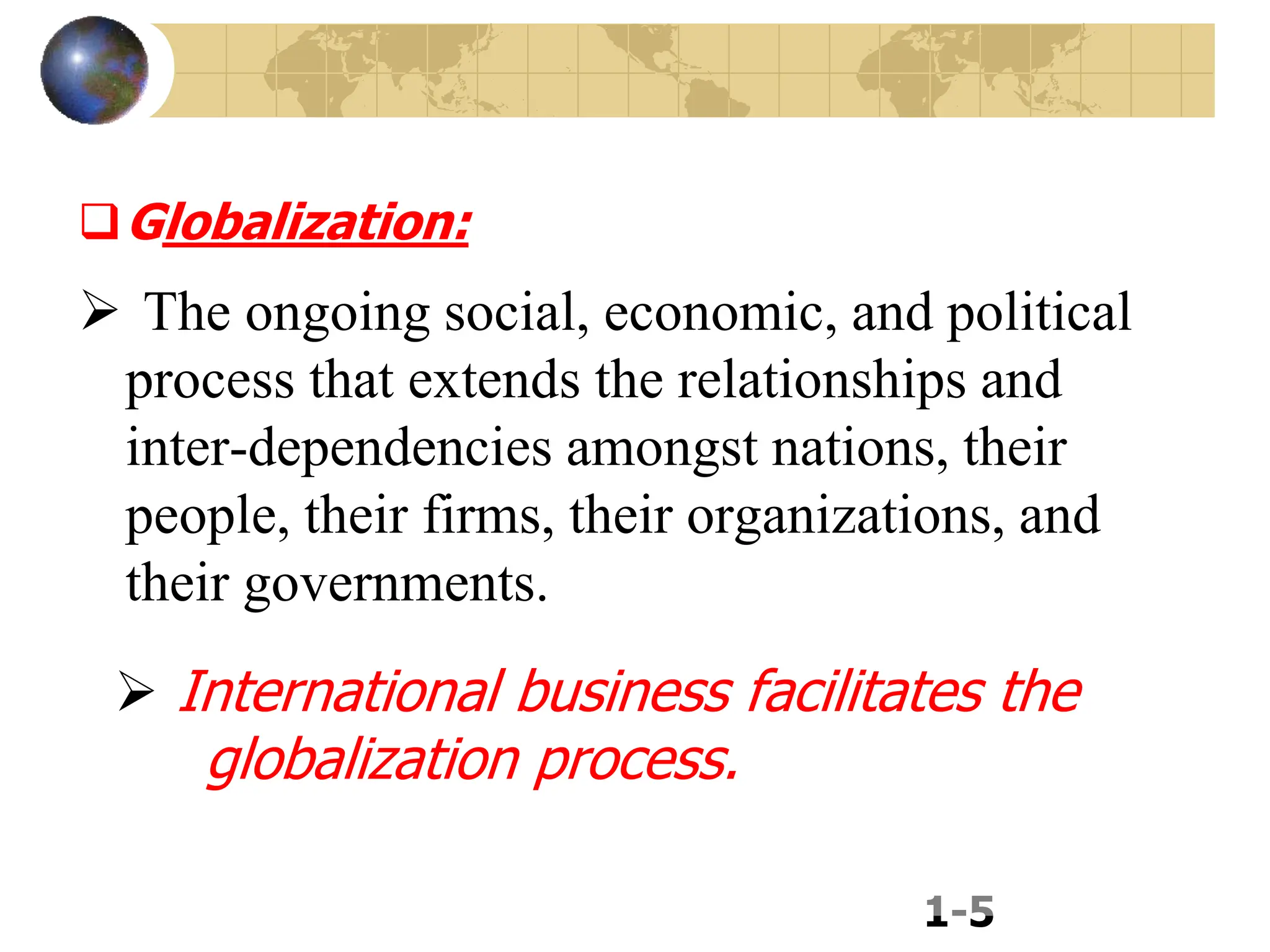
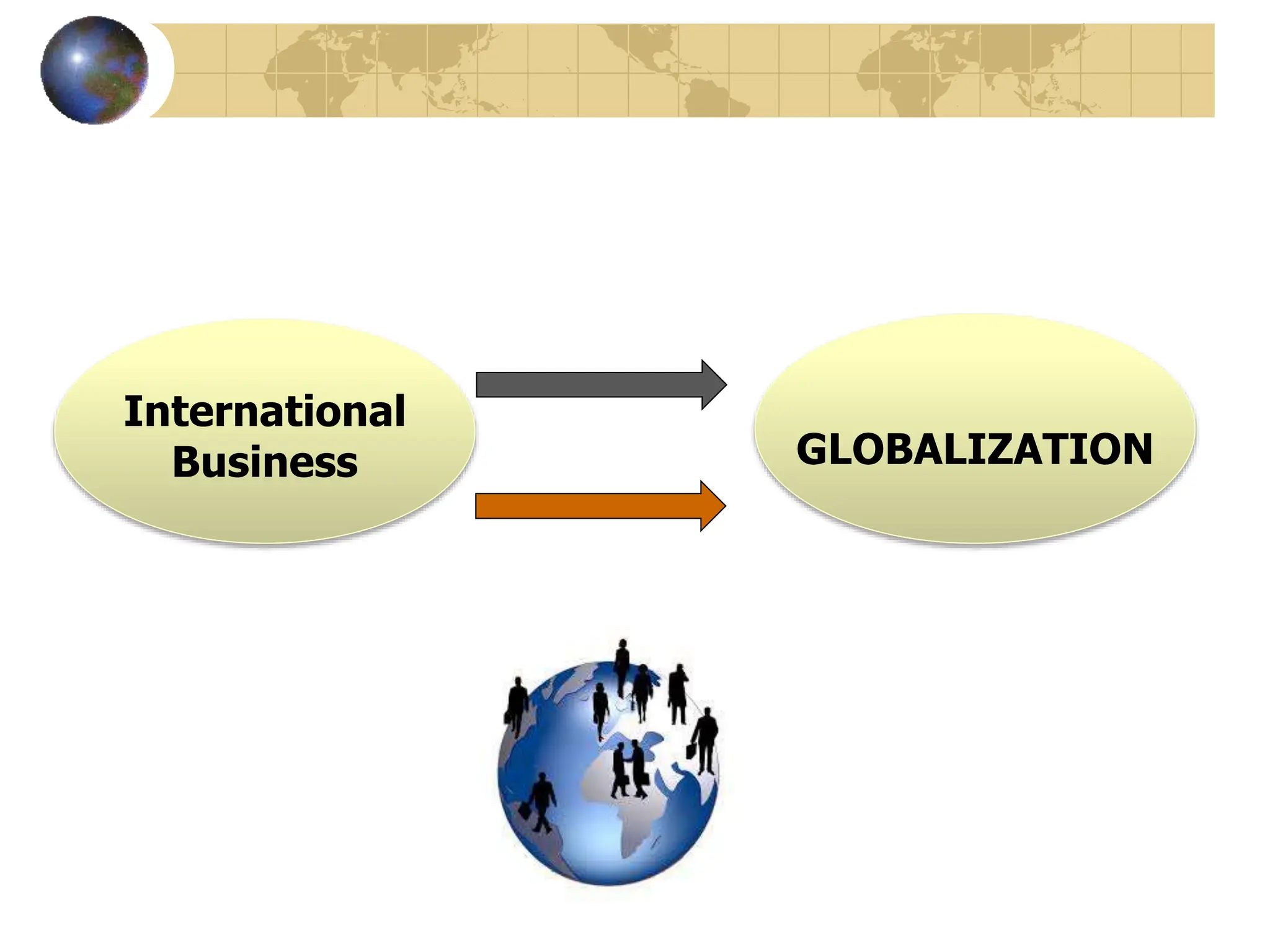
Globalization is a social, economic, and political process that fosters interdependencies among nations, facilitated by international business.
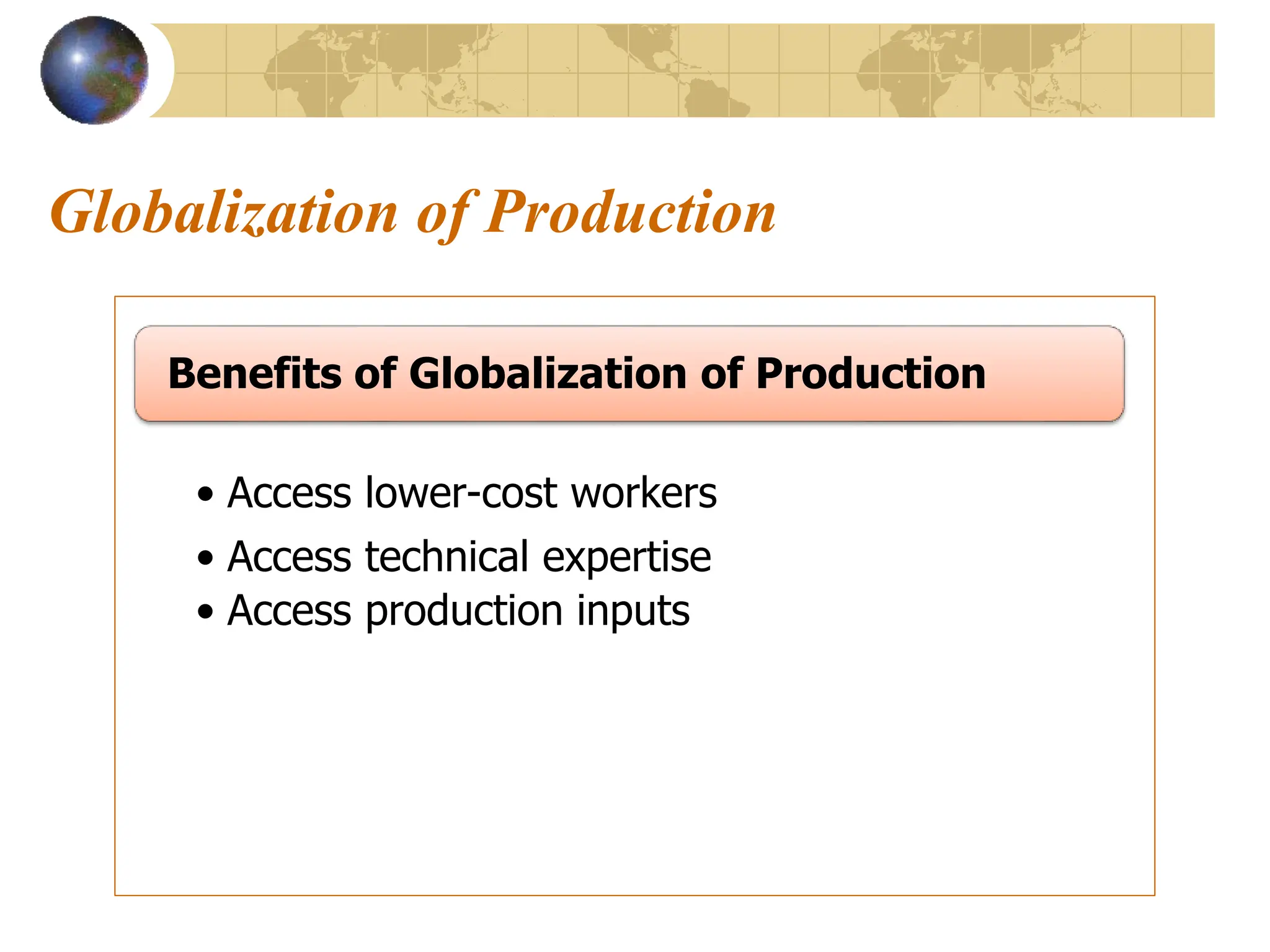
Globalization creates opportunities, reduces marketing costs, and provides access to lower-cost labor and technical expertise.
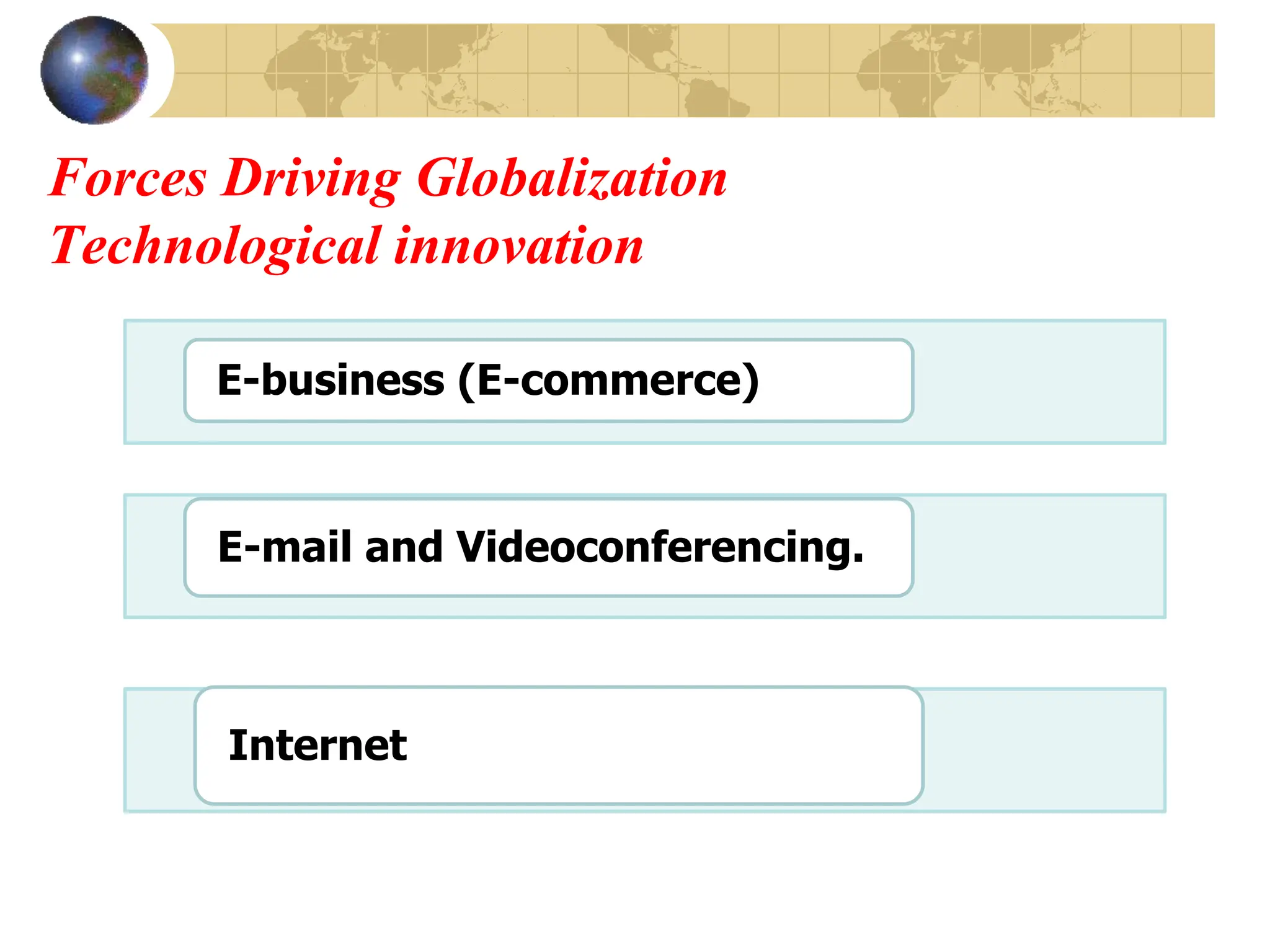
Key forces driving globalization include technological innovation, e-business, internet, and the involvement of multinational corporations.
As firms go global, understanding international markets becomes crucial due to varying consumer tastes and legal systems.
International business strategies must adapt to local conditions, influenced by technology, consumer demands, and political climates.
Options for conducting international business include exporting, licensing, joint ventures, and managing cross-border operations.
Firms engage in international business to expand sales, acquire resources, and minimize risk through diversification.
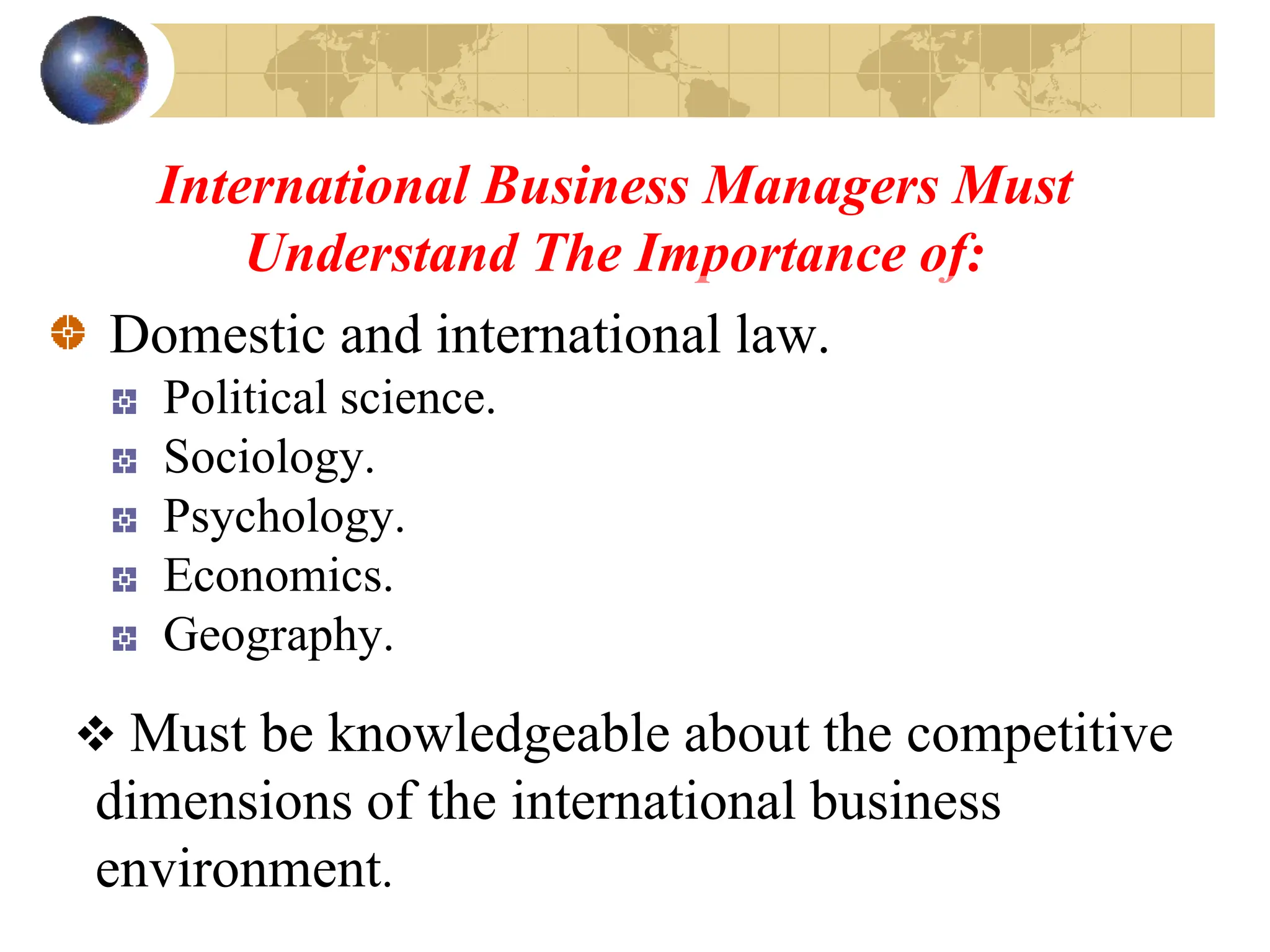
International business managers must possess specialized knowledge in law, political science, and cultural dynamics.
International managers require skills for handling cross-cultural processes and navigating the complexities of global operations.
Introduction
The international dimensionof management
and business due mainly to Globalization has
become a major challenge to governments,
institutions and Organizations.
This helps explain why the area of
international management (IM) is becoming
more important within the academic setting.
3.
3
What is InternationalBusiness?
International business: all commercial
transactions between parties in two or more
countries.
o These transactions include the transfer of
goods, services, technology, and capital to other
countries, and involves exports and imports.
4.
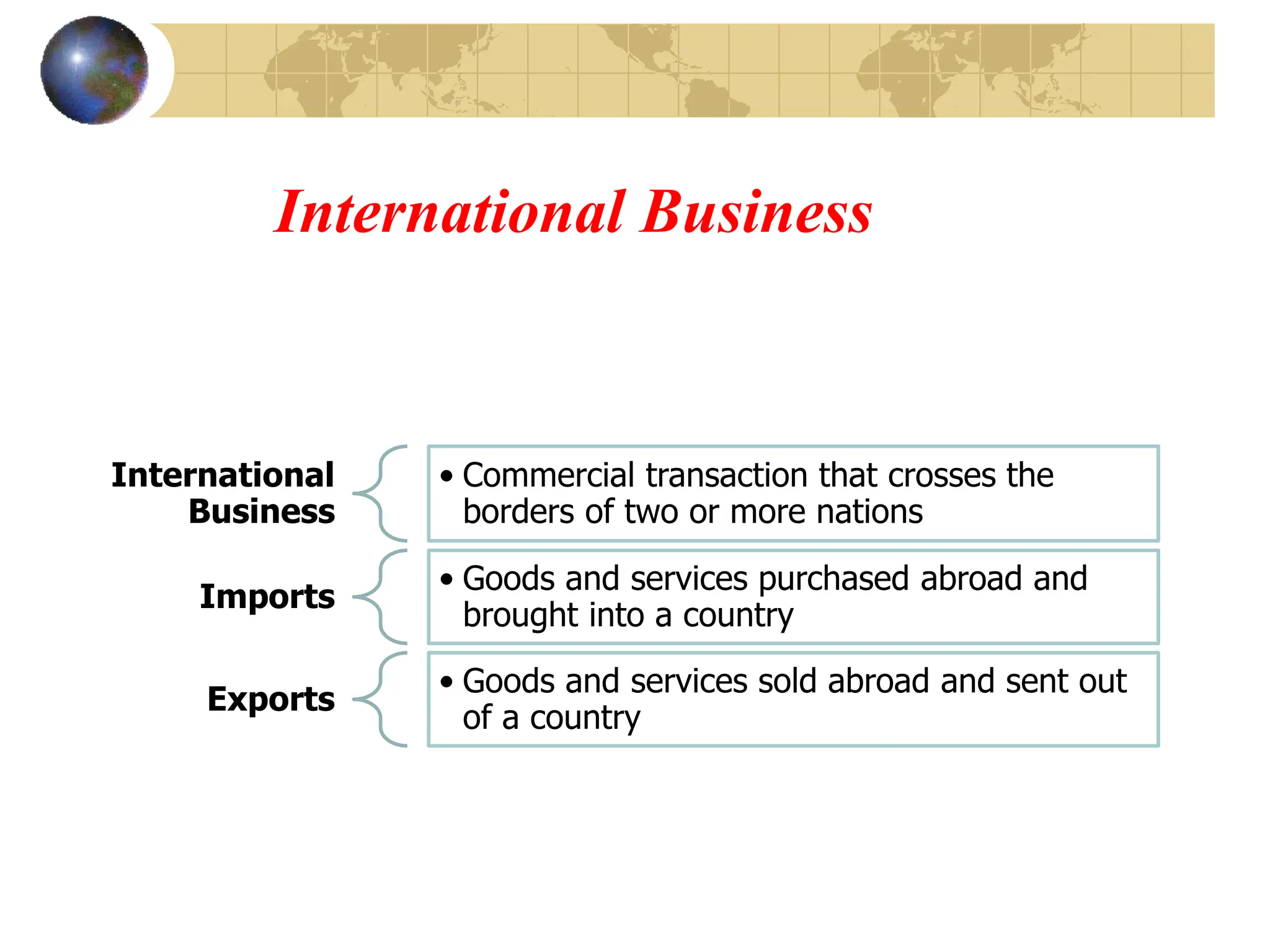
International Business
International
Business
• Commercialtransaction that crosses the
borders of two or more nations
Imports
• Goods and services purchased abroad and
brought into a country
Exports
• Goods and services sold abroad and sent out
of a country
5.
1-5
Globalization:
The ongoingsocial, economic, and political
process that extends the relationships and
inter-dependencies amongst nations, their
people, their firms, their organizations, and
their governments.
International business facilitates the
globalization process.
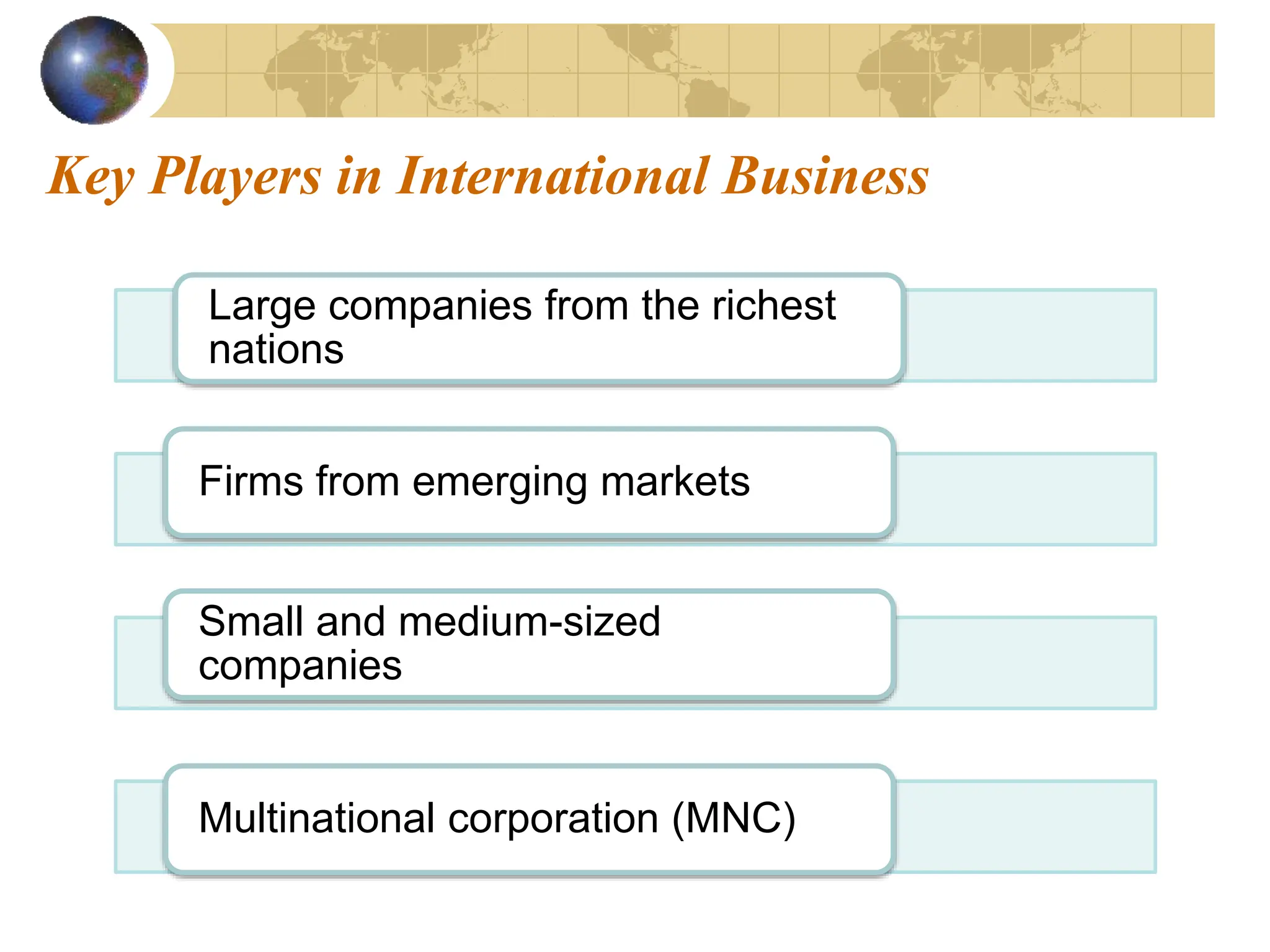
Key Players inInternational Business
Large companies from the richest
nations
Firms from emerging markets
Small and medium-sized
companies
Multinational corporation (MNC)
11.
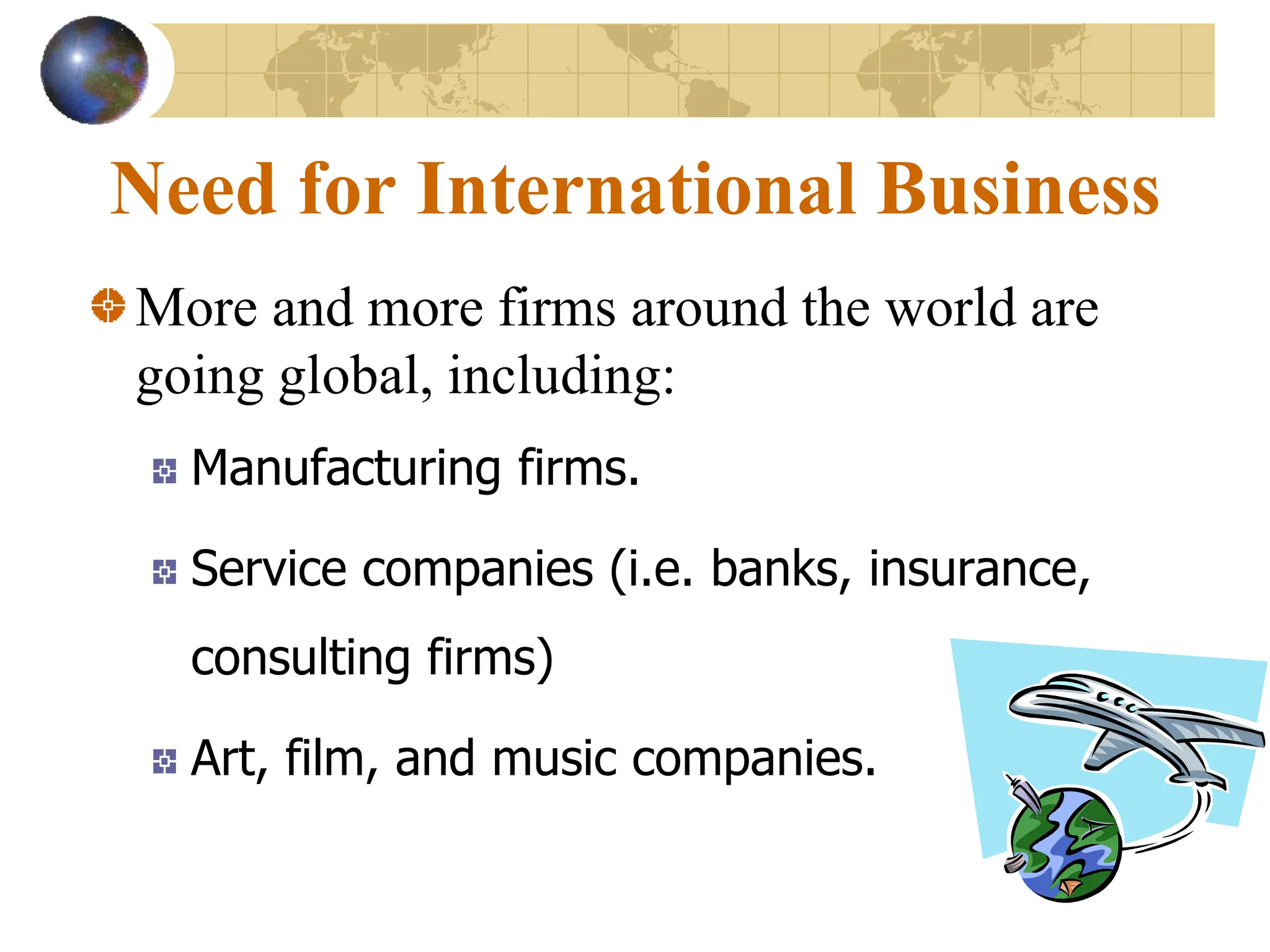
Need for InternationalBusiness
More and more firms around the world are
going global, including:
Manufacturing firms.
Service companies (i.e. banks, insurance,
consulting firms)
Art, film, and music companies.
12.
12
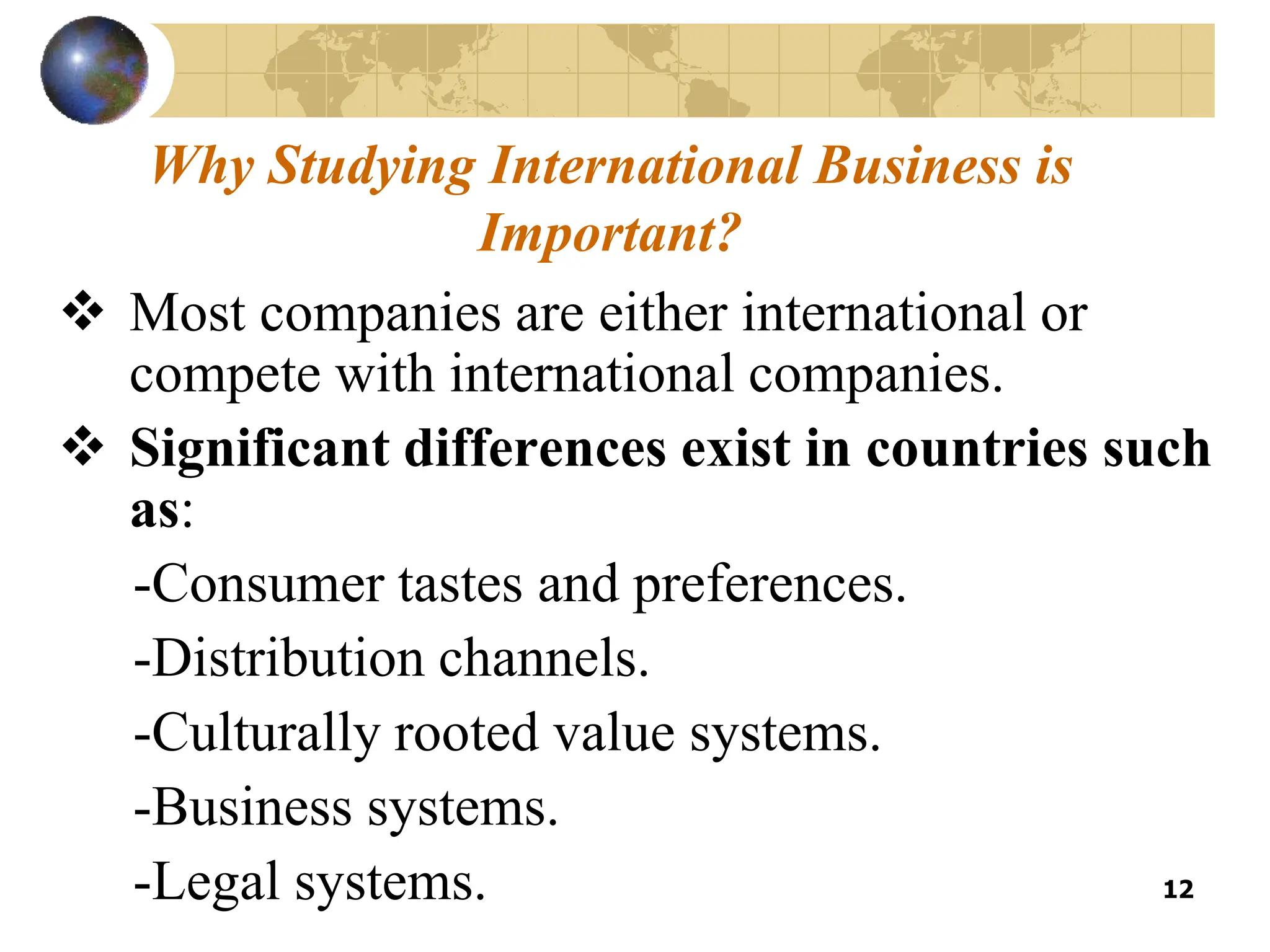
Why Studying InternationalBusiness is
Important?
Most companies are either international or
compete with international companies.
Significant differences exist in countries such
as:
-Consumer tastes and preferences.
-Distribution channels.
-Culturally rooted value systems.
-Business systems.
-Legal systems.
13.
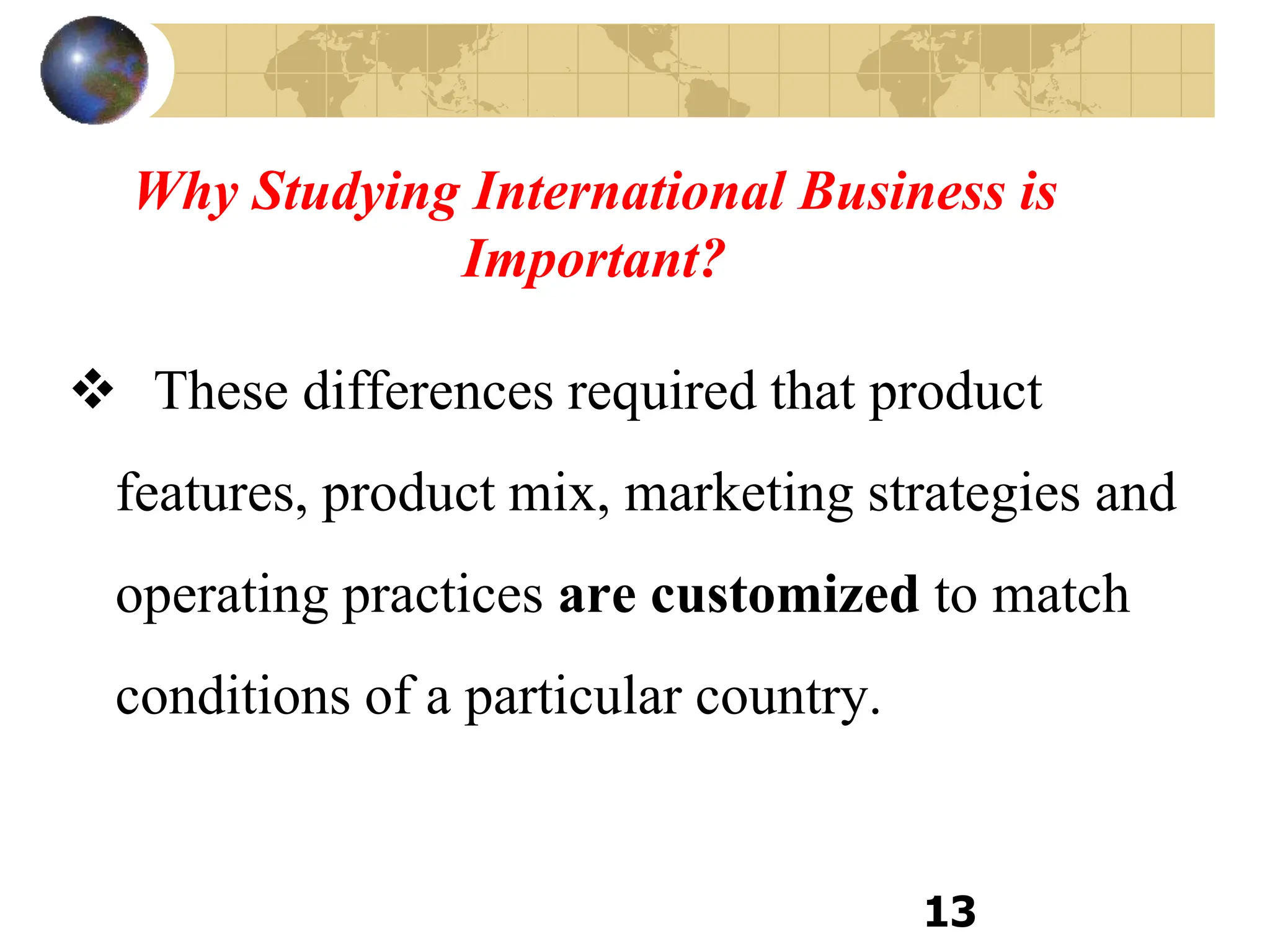
Why Studying InternationalBusiness is
Important?
These differences required that product
features, product mix, marketing strategies and
operating practices are customized to match
conditions of a particular country.
13
14.
Factors Contributing toFast Growth of
International Business
1. Increase in and expansion of technology.
2. Development of services that support
international business.
3. Growing consumer pressures.
4. Increased global competition.
5. Changing political situations.
6. Expanded cross-national cooperation.
15.
An international businesshas many options
for doing business, it includes:
Exporting and importing goods and services.
Giving license to produce goods in the host
country.
Starting a joint venture with a company.
Opening a branch for producing & distributing
goods in the host country.
Providing managerial services to companies in the
host country.
16.
International business iseither private or
governmental business relationships conducted
across political boundaries of the country .
It may be for profit or non-profit oriented.
This combine selling and buying goods/services
across political boundaries of the country, and
it generally require to deal with multinational
operations across national borders.
17.
Reasons That FirmsEngage in
International Business:
1. To expand sales:
• Ericsson [Sweden]
• Nestlé [Switzerland]
• IBM [USA]
• Sony [Japan]
18.
1-18
2. To acquireresources:
• Products components.
• Foreign capital.
• Technologies.
• Information.
3. To minimize risk:
• Diversify suppliers across countries.
• Competitors’ advantages.
19.
What is InternationalBusiness
Management ?
International Business Management :
The management of business operations for an
organization that conducts business in more than
one country.
International management requires knowledge and
skills more than normal business expertise, such as
familiarity with the business regulations of the nations
in which the organization operates, understanding of
local customs and laws.
20.
International Business ManagersMust
Understand The Importance of:
Domestic and international law.
Political science.
Sociology.
Psychology.
Economics.
Geography.
Must be knowledgeable about the competitive
dimensions of the international business
environment.
21.
International Business Managersshould have
the knowledge and the skills to manage and
handle cross-cultural processes, stakeholders,
the capability to conduct transactions that may
involve multiple currencies and environments
in a right way.
International Business Managers
22.
1-22
Implications/Conclusions
Managing an internationalbusiness differs from
managing a domestic business because of :
1. Countries and cultures are different.
2. International business operations are more
complex than domestic operations.
3. From one country to another, a company’s
relative competitiveness will vary because of the
differences in the local and foreign competitors
that are present.


![Reasons That Firms Engage in
International Business:
1. To expand sales:
• Ericsson [Sweden]
• Nestlé [Switzerland]
• IBM [USA]
• Sony [Japan]](https://image.slidesharecdn.com/chapter-1-240321130917-f6a9b60a/75/chapter-1-International-business-ppt-17-2048.jpg)