Chapter 8: Islamic ArtAP Art HistoryMagister Ricard
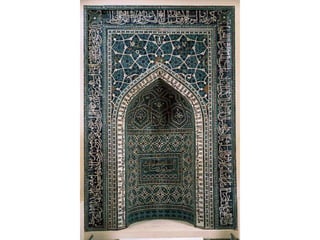
Key IdeasChief building of worship is the mosqueWorship is directed to Mecca through an arch called a mihrabDue to religious law, calligraphy is most prized art form as pictorial representations are not allowedIslamic textiles are treasured as great works of woven art
Historical BackgroundIslam was founded during the 7th century by Muhammad Originally al-Amin merchant from MeccaThe Qur'an is the word of Allah sent to Muhammad by an angelMuhammad died in 632 AD,Four of his followers became caliphs (“successor”)
Historical BackgroundBy 750 AD, Islam spread to North Africa, Middle East, Central Asia, Spain, and IndiaCaliphates conquered neighboring landsFrom 700’s to 1400’s Muslims were leading merchantsThey used coins and kept detailed records
Historical BackgroundAs trade increased, cities grewCities on trade routes (Baghdad, Cairo, Damascus) became centers of government and learningMade contributions to math, astronomy, chemistry, medicinePreserved writings of ancient Greek thinkers
Historical BackgroundAfter the Mongols sack of Baghdad in 1258, Islam splitEast: South and Central Asia, Iran and TurkeyWest: Near East and Arabic Peninsula, North Africa, parts of Sicily and SpainTwo major forms exist: Shiite and Sunni
Five Pillars of IslamThere is no God besides Allah and Mohammed is his prophet (Shahadah)Must pray 5 times a day (Salat – consists of 5 prayers)Give to the poor (Zakat)Fasting during the month of Ramadan (Sawm)A pilgrimage to Mecca once in their life (Hajj)
Patronage of Islamic ArtMost patronage is by rulers and social eliteItems of value (textiles, metalwork, ceramics) produced for an art marketCalligraphy was most popular art formCalligraphers were more respected artists in IslamStarted off anonymousBy 13th-14th century, signed examples appearApprenticeship was main form of training
Islamic ArchitectureChapter 8
Key Features of Islamic ArchitectureMosques were oriented towards MeccaThe qiblah (direction to Mecca) marked by mihrabMinarets served to call for prayerConsisted of a base, shaft, internal staircase, galleryMosques can either be hypostyle or centrally planned
Islamic ArtChapter 8
Characteristics of Islamic Art
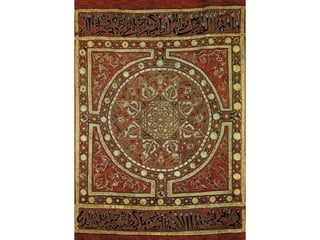
Characteristics of Islamic ArtUsed only a straightedge and compassArtwork encompassed high level math; high order thinking and geometryThe universe demonstrates intelligent design, based on logic, or mind of divinityPatterns radiate from a central pointPrayer rugs highly regarded; featured geometric designs
Characteristics of Islamic ArtIslamic art is intellectualNot emotional, but expresses awe and divine harmonyImages are avoided (aniconism); due to the tradition of Muhammad removing images from the Kaaba
Chapter 8 Islamic Art

Chapter 8 Islamic Art

  • 1.
    Chapter 8: IslamicArtAP Art HistoryMagister Ricard
  • 3.
    Key IdeasChief buildingof worship is the mosqueWorship is directed to Mecca through an arch called a mihrabDue to religious law, calligraphy is most prized art form as pictorial representations are not allowedIslamic textiles are treasured as great works of woven art
  • 4.
    Historical BackgroundIslam wasfounded during the 7th century by Muhammad Originally al-Amin merchant from MeccaThe Qur'an is the word of Allah sent to Muhammad by an angelMuhammad died in 632 AD,Four of his followers became caliphs (“successor”)
  • 5.
    Historical BackgroundBy 750AD, Islam spread to North Africa, Middle East, Central Asia, Spain, and IndiaCaliphates conquered neighboring landsFrom 700’s to 1400’s Muslims were leading merchantsThey used coins and kept detailed records
  • 6.
    Historical BackgroundAs tradeincreased, cities grewCities on trade routes (Baghdad, Cairo, Damascus) became centers of government and learningMade contributions to math, astronomy, chemistry, medicinePreserved writings of ancient Greek thinkers
  • 7.
    Historical BackgroundAfter theMongols sack of Baghdad in 1258, Islam splitEast: South and Central Asia, Iran and TurkeyWest: Near East and Arabic Peninsula, North Africa, parts of Sicily and SpainTwo major forms exist: Shiite and Sunni
  • 8.
    Five Pillars ofIslamThere is no God besides Allah and Mohammed is his prophet (Shahadah)Must pray 5 times a day (Salat – consists of 5 prayers)Give to the poor (Zakat)Fasting during the month of Ramadan (Sawm)A pilgrimage to Mecca once in their life (Hajj)
  • 10.
    Patronage of IslamicArtMost patronage is by rulers and social eliteItems of value (textiles, metalwork, ceramics) produced for an art marketCalligraphy was most popular art formCalligraphers were more respected artists in IslamStarted off anonymousBy 13th-14th century, signed examples appearApprenticeship was main form of training
  • 11.
  • 12.
    Key Features ofIslamic ArchitectureMosques were oriented towards MeccaThe qiblah (direction to Mecca) marked by mihrabMinarets served to call for prayerConsisted of a base, shaft, internal staircase, galleryMosques can either be hypostyle or centrally planned
  • 24.
  • 25.
  • 26.
    Characteristics of IslamicArtUsed only a straightedge and compassArtwork encompassed high level math; high order thinking and geometryThe universe demonstrates intelligent design, based on logic, or mind of divinityPatterns radiate from a central pointPrayer rugs highly regarded; featured geometric designs
  • 27.
    Characteristics of IslamicArtIslamic art is intellectualNot emotional, but expresses awe and divine harmonyImages are avoided (aniconism); due to the tradition of Muhammad removing images from the Kaaba

Editor's Notes

  • #27 [Point out fractal theory, quantum theory, and the idea of a holographic universe. All of these ideas were known to Islamic mystics who believed the true nature of the universe was revealed in this form – much like Pythagoreans. - Ricard]
  • #28 [Point out fractal theory, quantum theory, and the idea of a holographic universe. All of these ideas were known to Islamic mystics who believed the true nature of the universe was revealed in this form – much like Pythagoreans. - Ricard]The Kaaba was the a cubical shrine built for God by Abraham but full of idols due to pilgrimage. Muhammad removed the idols. This example was followed by later Muslims who discouraged the use of images but instead chose non-representational ornaments using complex geometric designs.