1
Chapter – 5
Hypothesis Formulation
2
Contents
 Hypothesis – meaning, stage and sources
 Characteristics of hypothesis
 Approaches -Null Hypothesis and
Alternative Hypothesis
 Concern of researchers
 Some examples of objectives and
hypotheses in the field of rural research
3
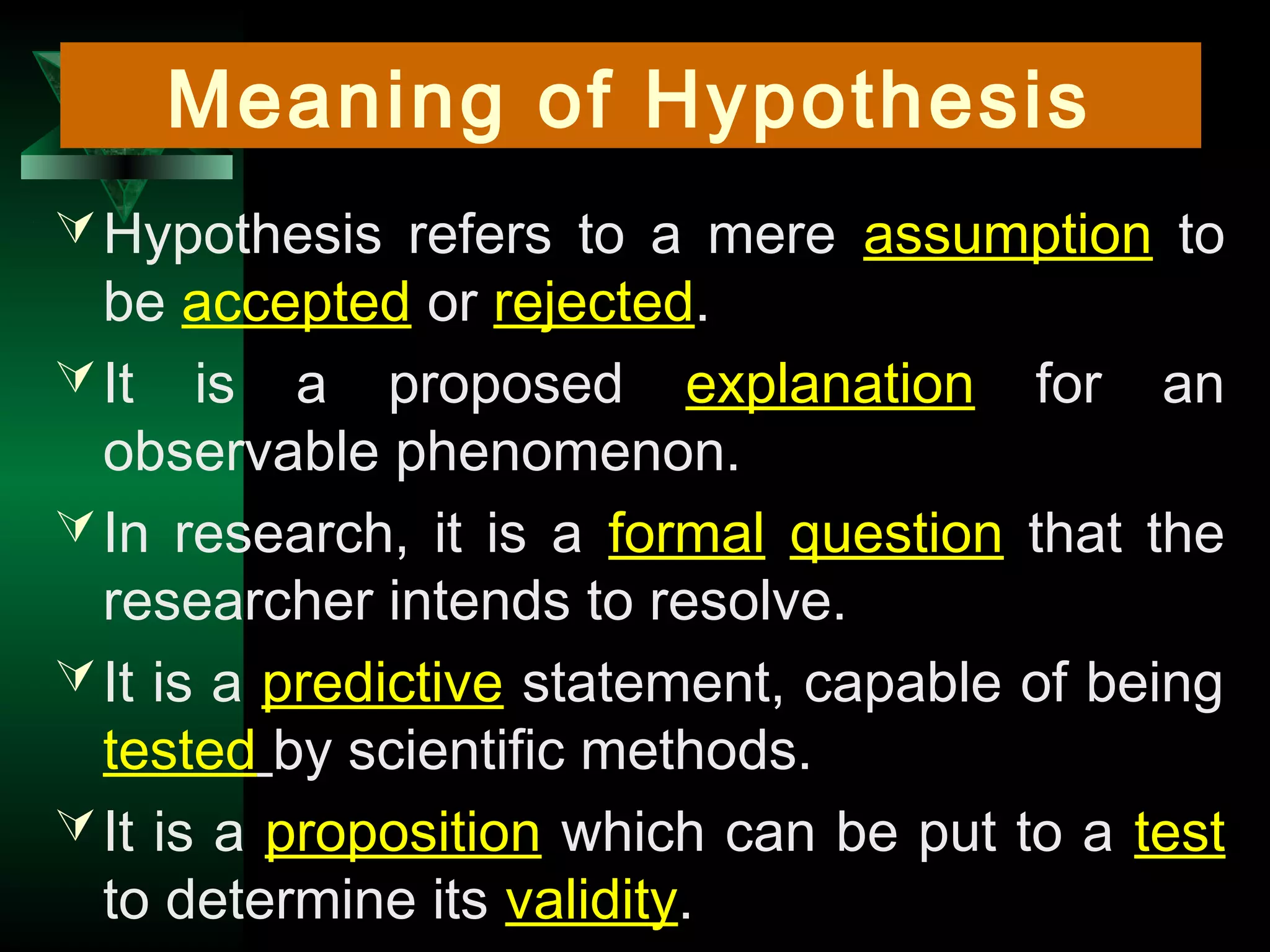
Hypothesis refers to a mere assumption to
be accepted or rejected.
It is a proposed explanation for an
observable phenomenon.
In research, it is a formal question that the
researcher intends to resolve.
It is a predictive statement, capable of being
tested by scientific methods.
It is a proposition which can be put to a test
to determine its validity.
Meaning of Hypothesis
4
 Hypotheses are formulated on the
knowledge acquired through literature
survey – conceptual and empirical.
Stage of Formulation of
Hypotheses
5
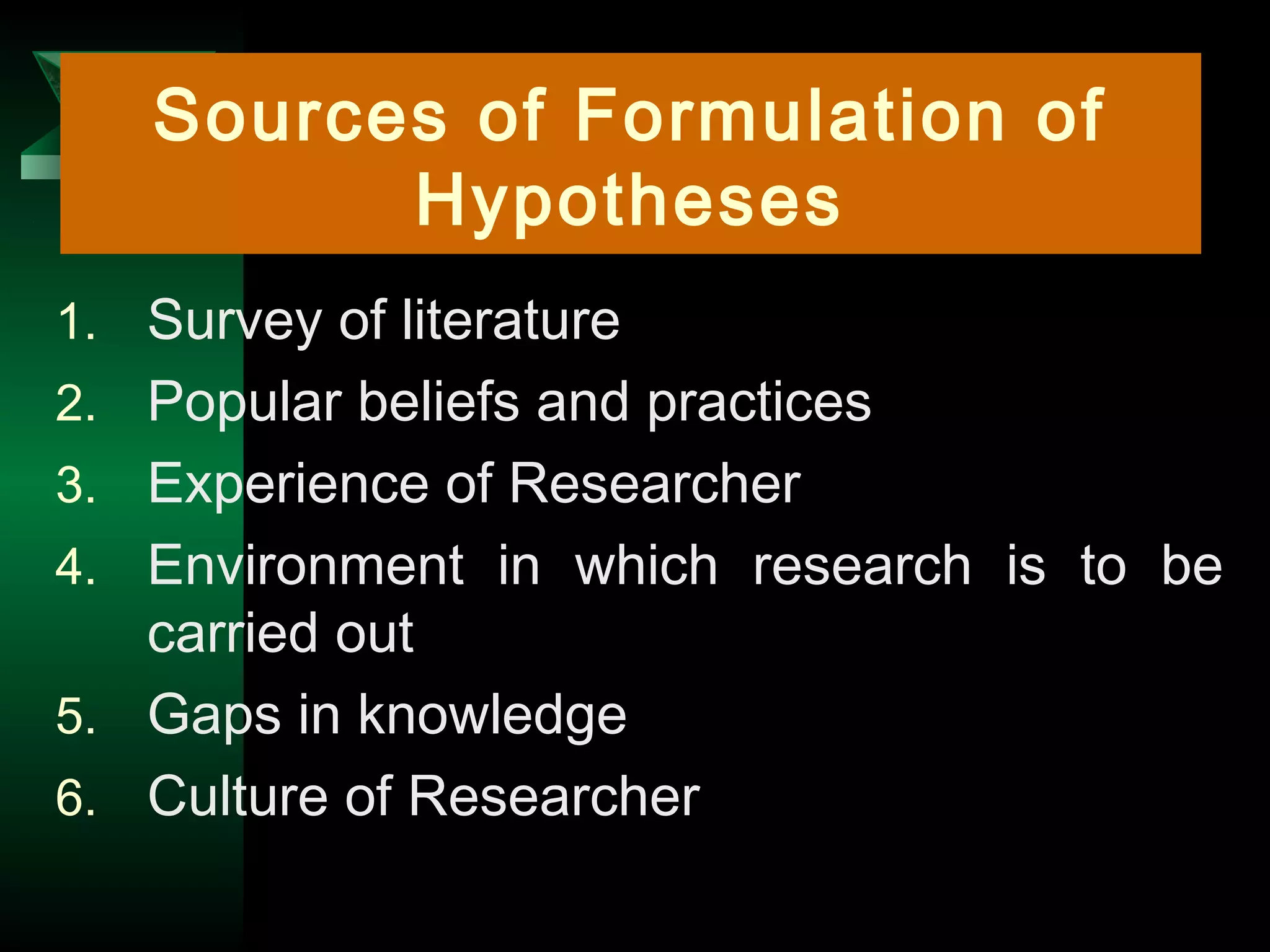
1. Survey of literature
2. Popular beliefs and practices
3. Experience of Researcher
4. Environment in which research is to be
carried out
5. Gaps in knowledge
6. Culture of Researcher
Sources of Formulation of
Hypotheses
6
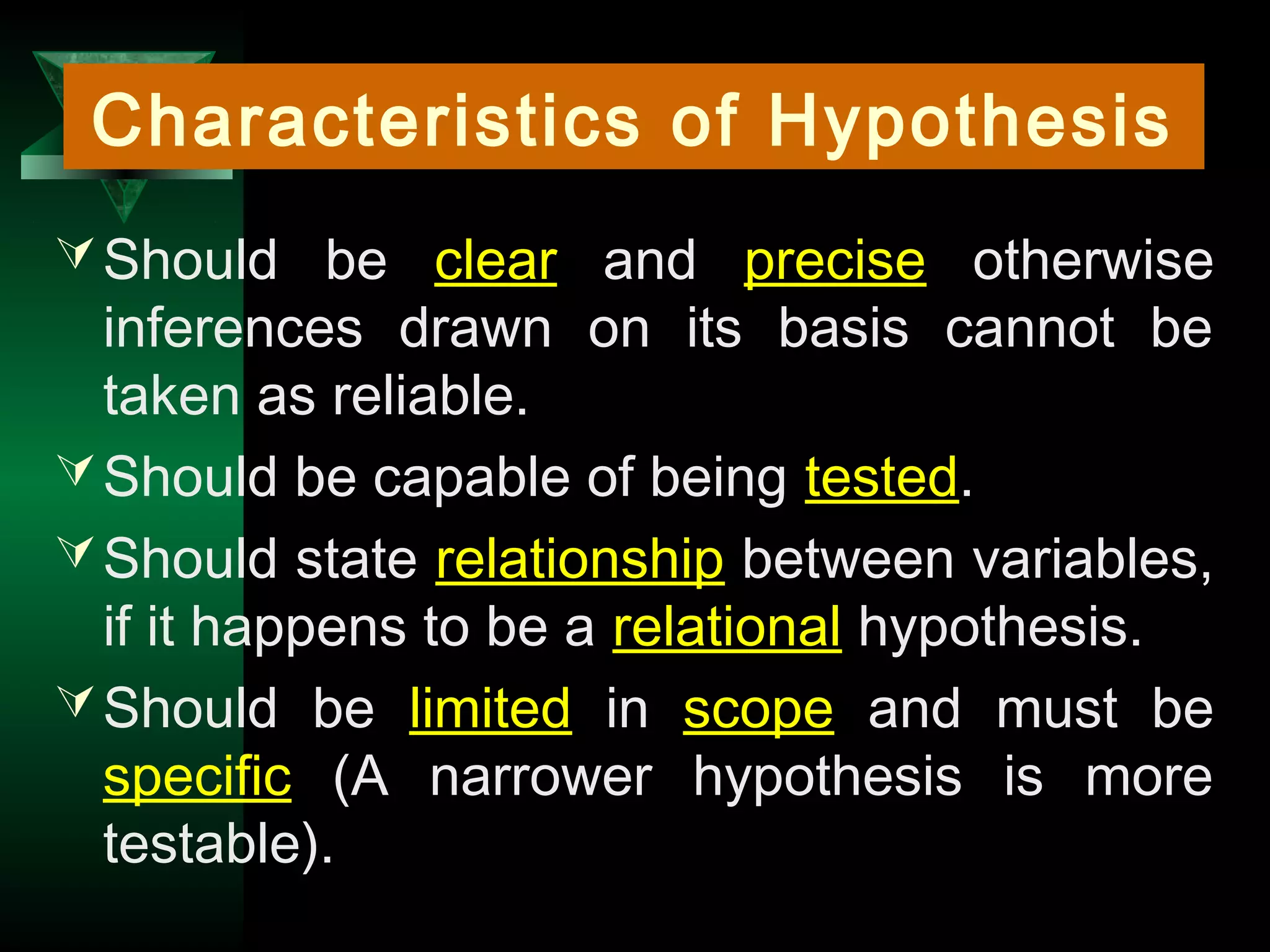
Should be clear and precise otherwise
inferences drawn on its basis cannot be
taken as reliable.
Should be capable of being tested.
Should state relationship between variables,
if it happens to be a relational hypothesis.
Should be limited in scope and must be
specific (A narrower hypothesis is more
testable).
Characteristics of Hypothesis
7
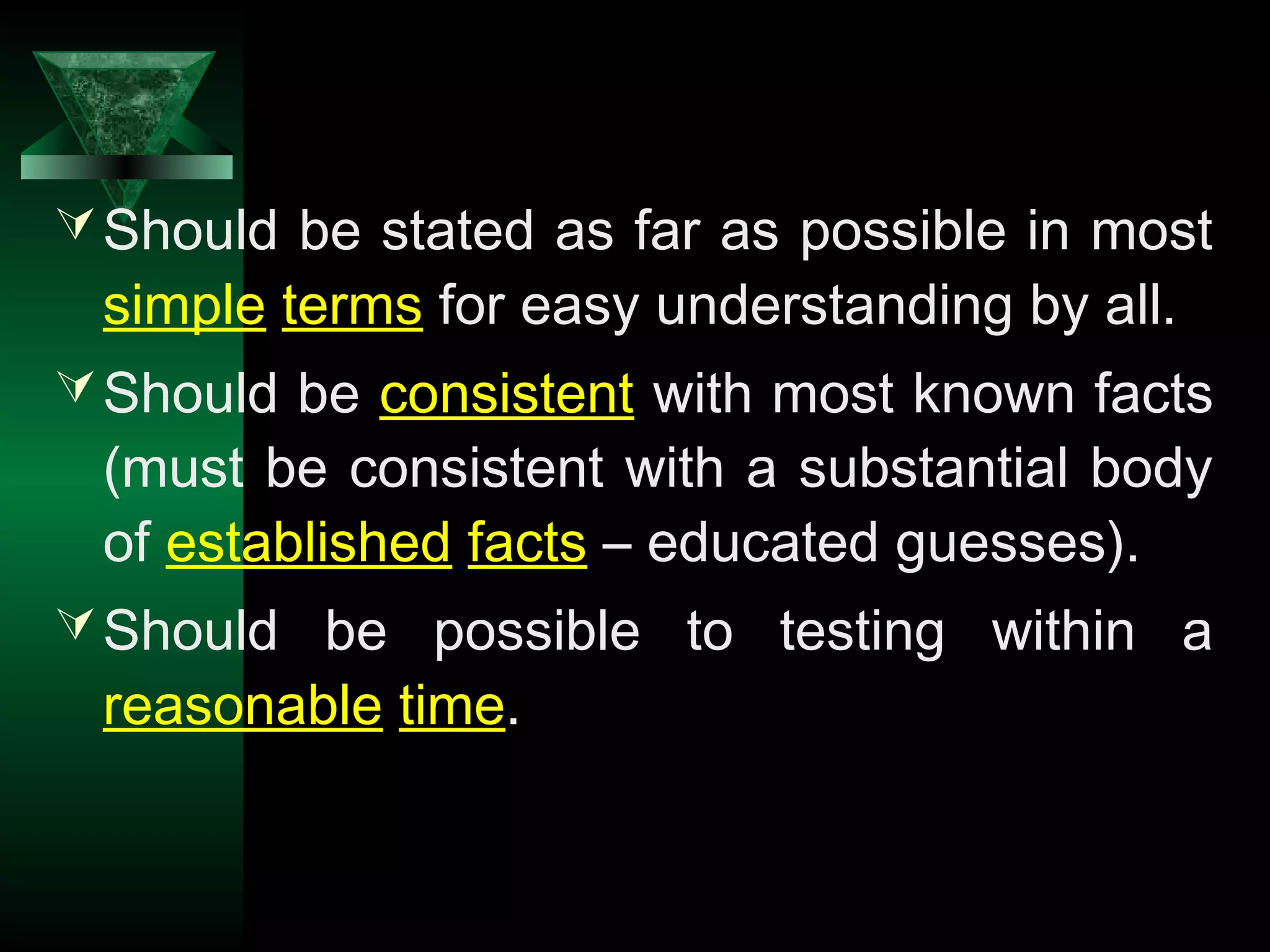
Should be stated as far as possible in most
simple terms for easy understanding by all.
Should be consistent with most known facts
(must be consistent with a substantial body
of established facts – educated guesses).
Should be possible to testing within a
reasonable time.
8
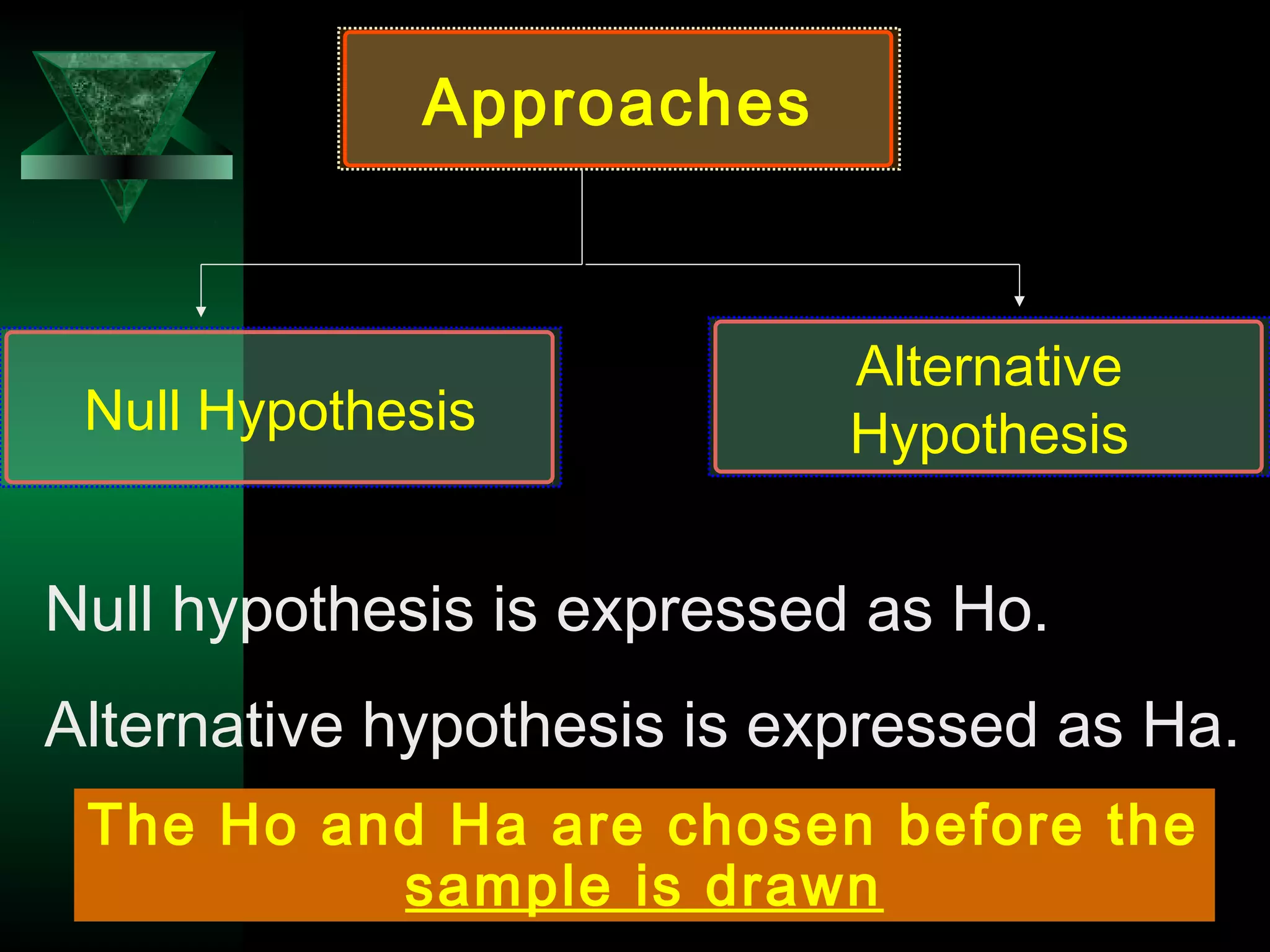
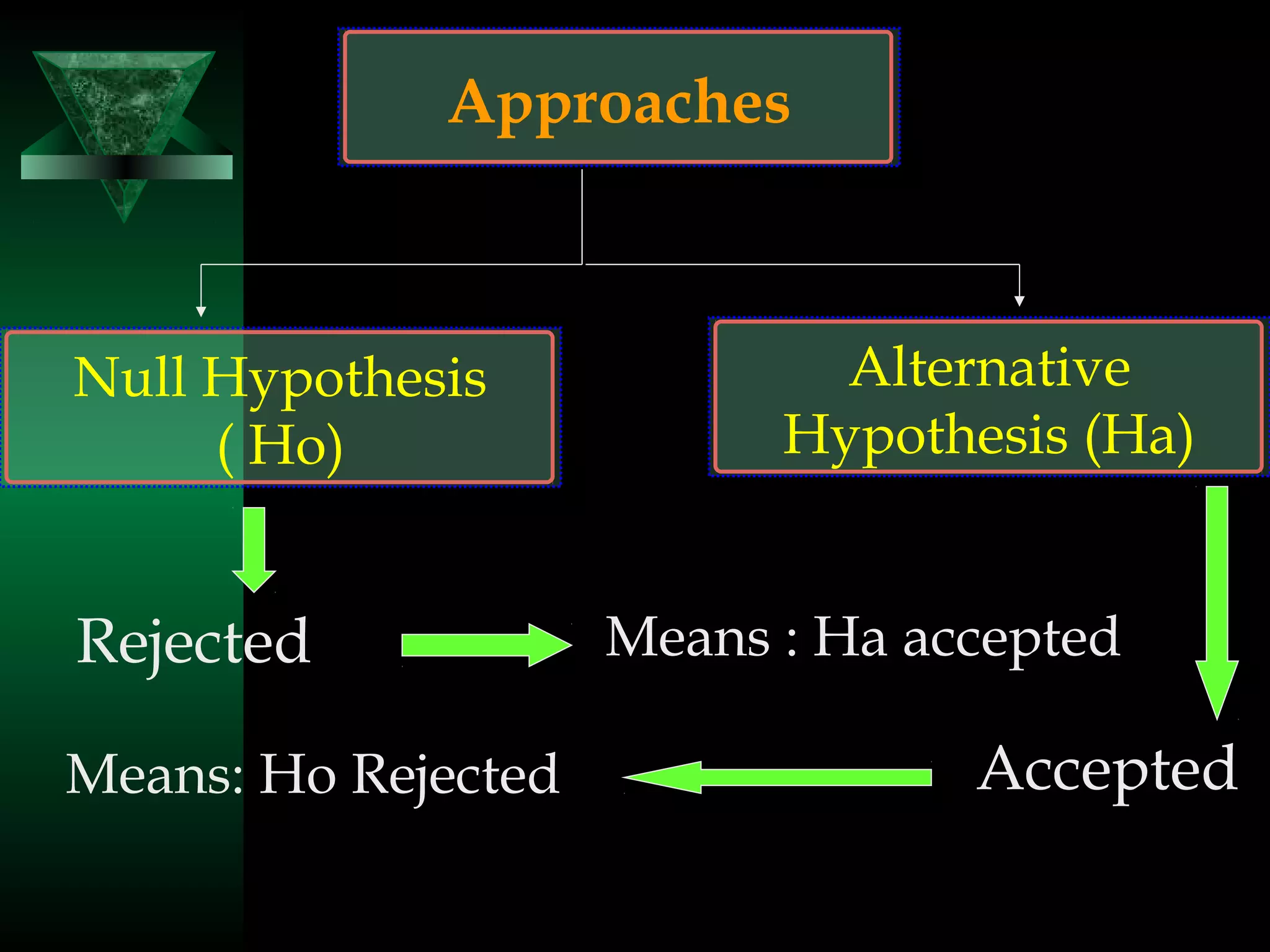
Approaches
Null Hypothesis
Alternative
Hypothesis
Null hypothesis is expressed as Ho.
Alternative hypothesis is expressed as Ha.
The Ho and Ha are chosen before the
sample is drawn
9
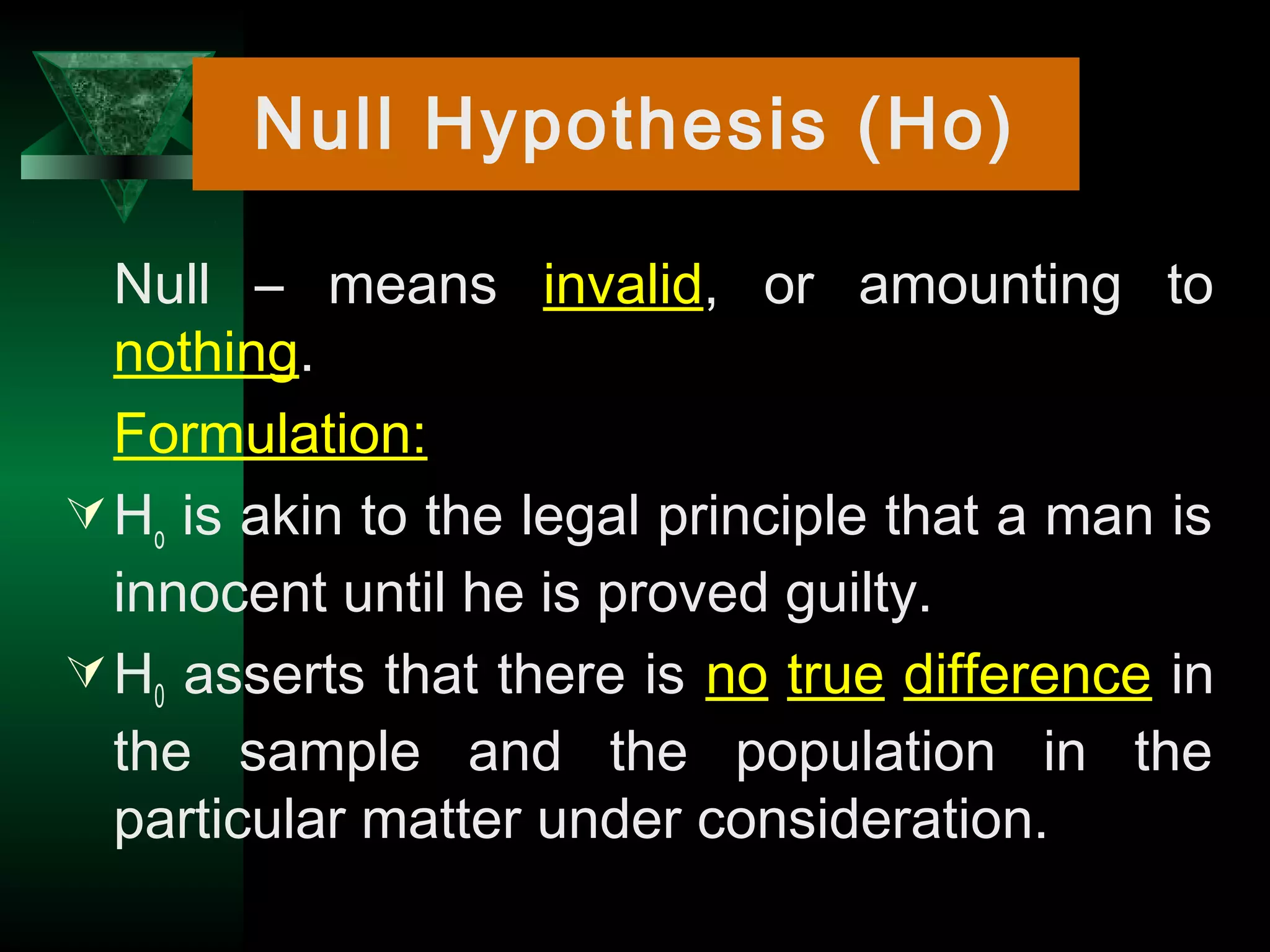
Null – means invalid, or amounting to
nothing.
Formulation:
Ho is akin to the legal principle that a man is
innocent until he is proved guilty.
H0 asserts that there is no true difference in
the sample and the population in the
particular matter under consideration.
Null Hypothesis (Ho)
10
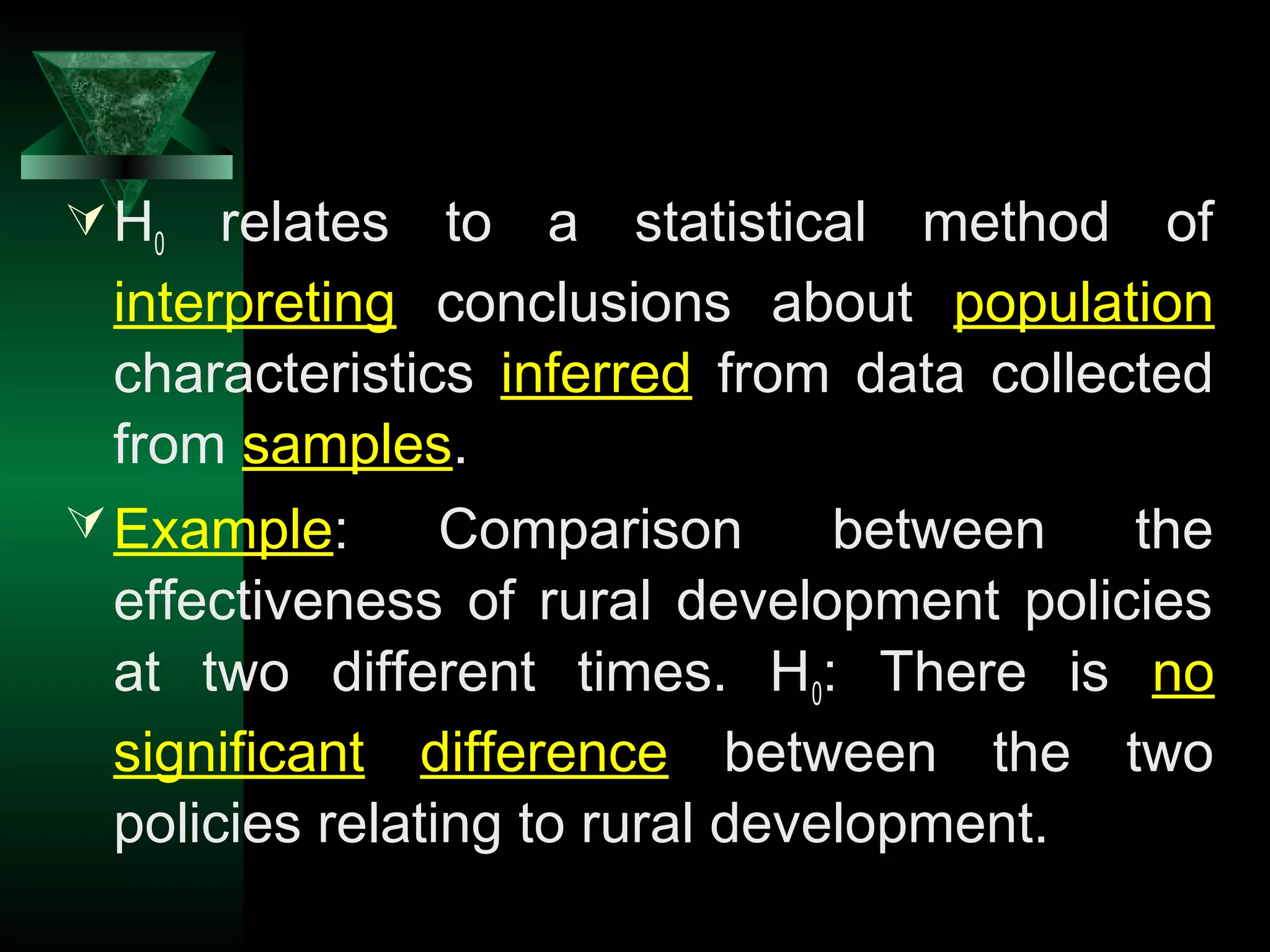
H0 relates to a statistical method of
interpreting conclusions about population
characteristics inferred from data collected
from samples.
Example: Comparison between the
effectiveness of rural development policies
at two different times. H0: There is no
significant difference between the two
policies relating to rural development.
11
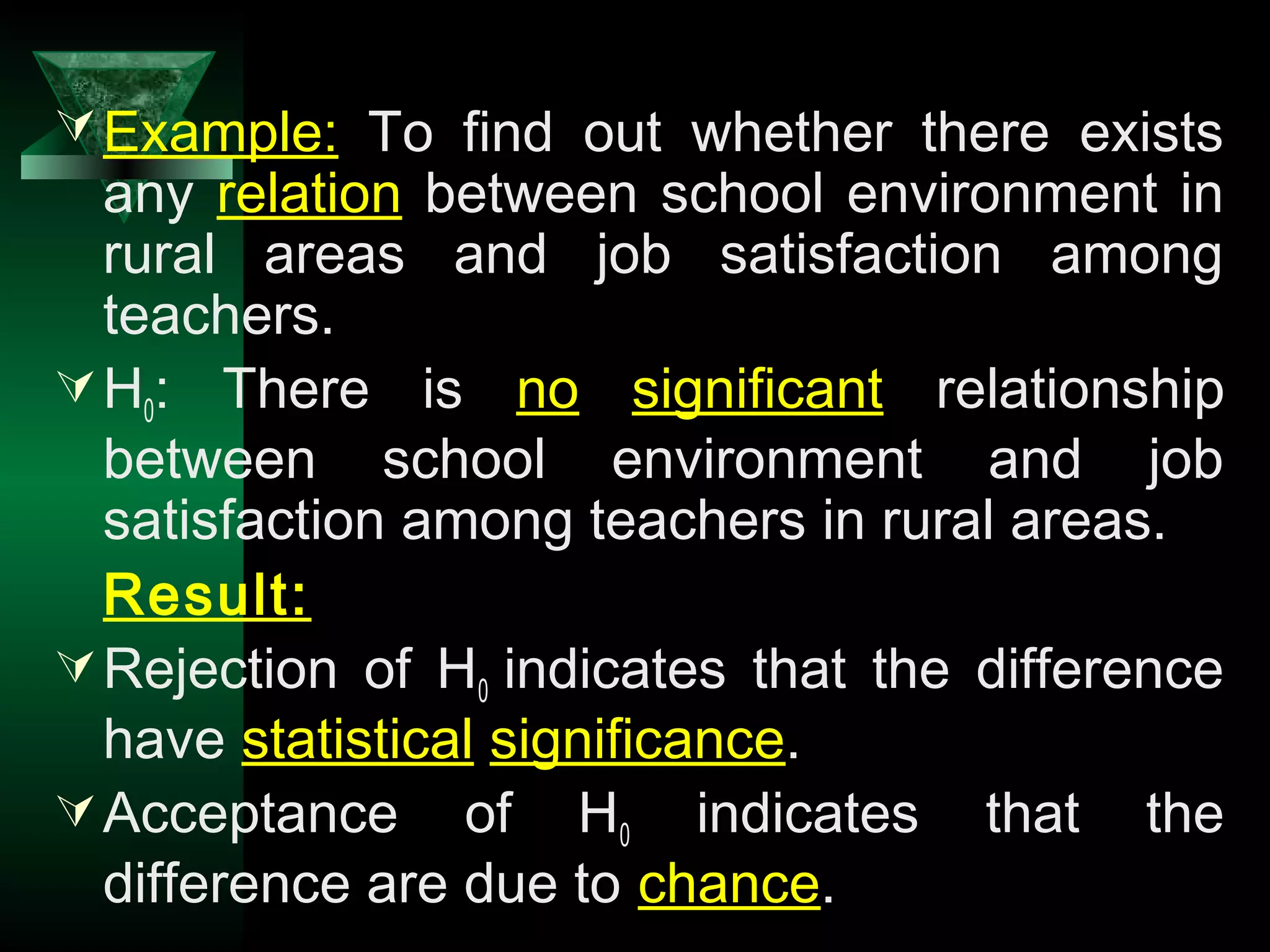
Example: To find out whether there exists
any relation between school environment in
rural areas and job satisfaction among
teachers.
H0: There is no significant relationship
between school environment and job
satisfaction among teachers in rural areas.
Result:
Rejection of H0 indicates that the difference
have statistical significance.
Acceptance of H0 indicates that the
difference are due to chance.
12
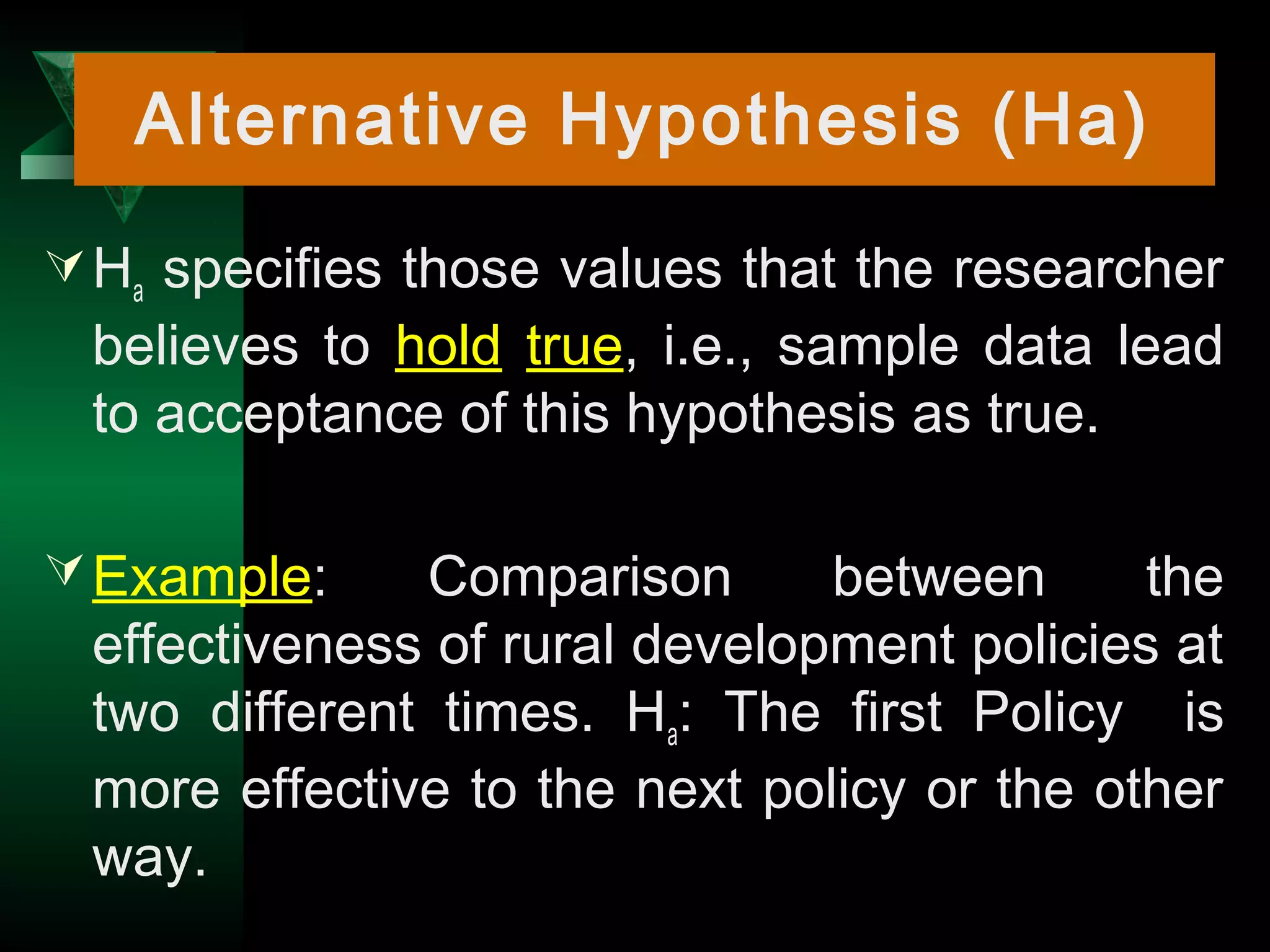
Ha specifies those values that the researcher
believes to hold true, i.e., sample data lead
to acceptance of this hypothesis as true.
Example: Comparison between the
effectiveness of rural development policies at
two different times. Ha: The first Policy is
more effective to the next policy or the other
way.
Alternative Hypothesis (Ha)
13
Approaches
Null Hypothesis
( Ho)
Alternative
Hypothesis (Ha)
Rejected Means : Ha accepted
AcceptedMeans: Ho Rejected
14
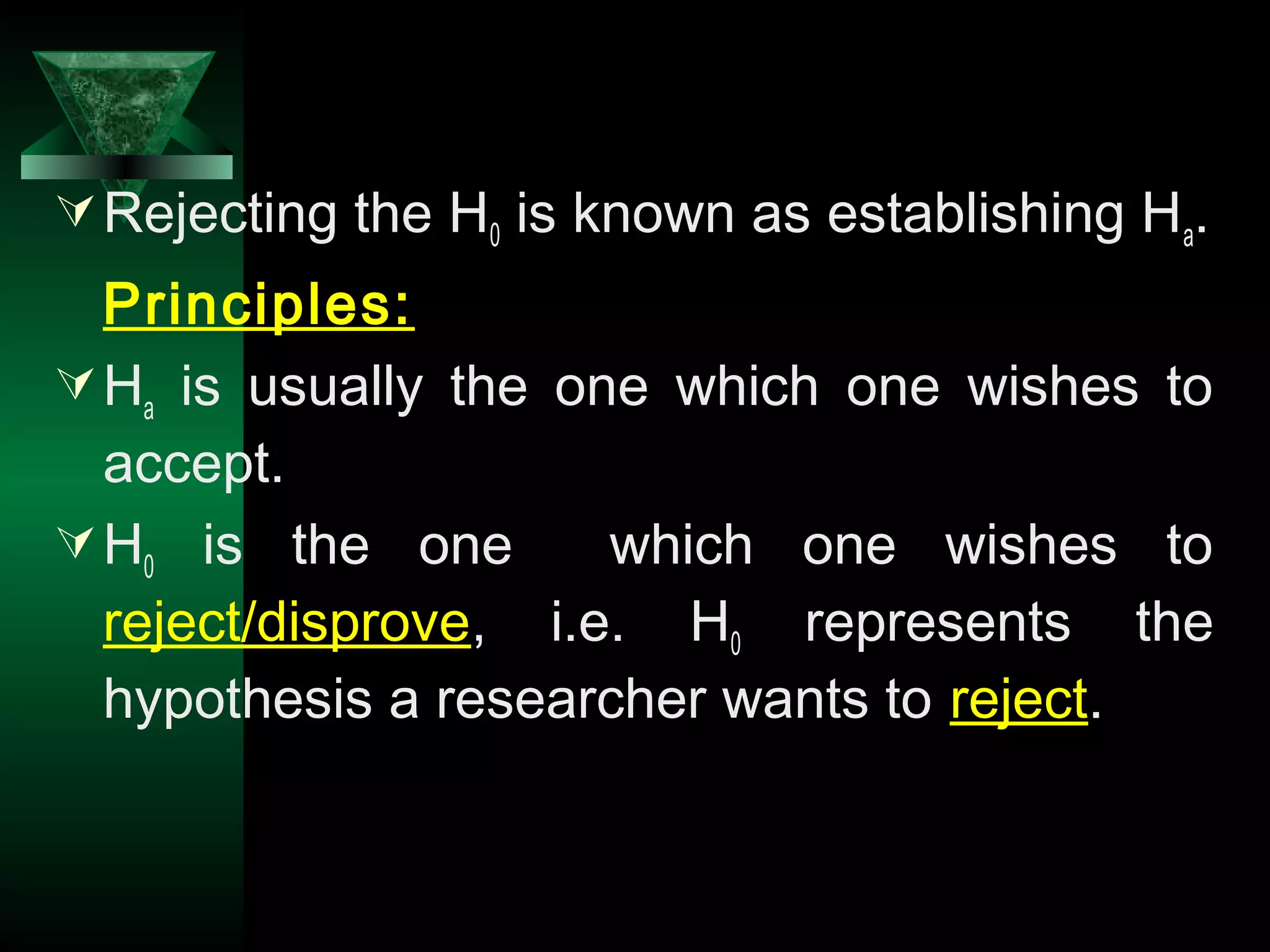
Rejecting the H0 is known as establishing Ha.
Principles:
Ha is usually the one which one wishes to
accept.
H0 is the one which one wishes to
reject/disprove, i.e. H0 represents the
hypothesis a researcher wants to reject.
15
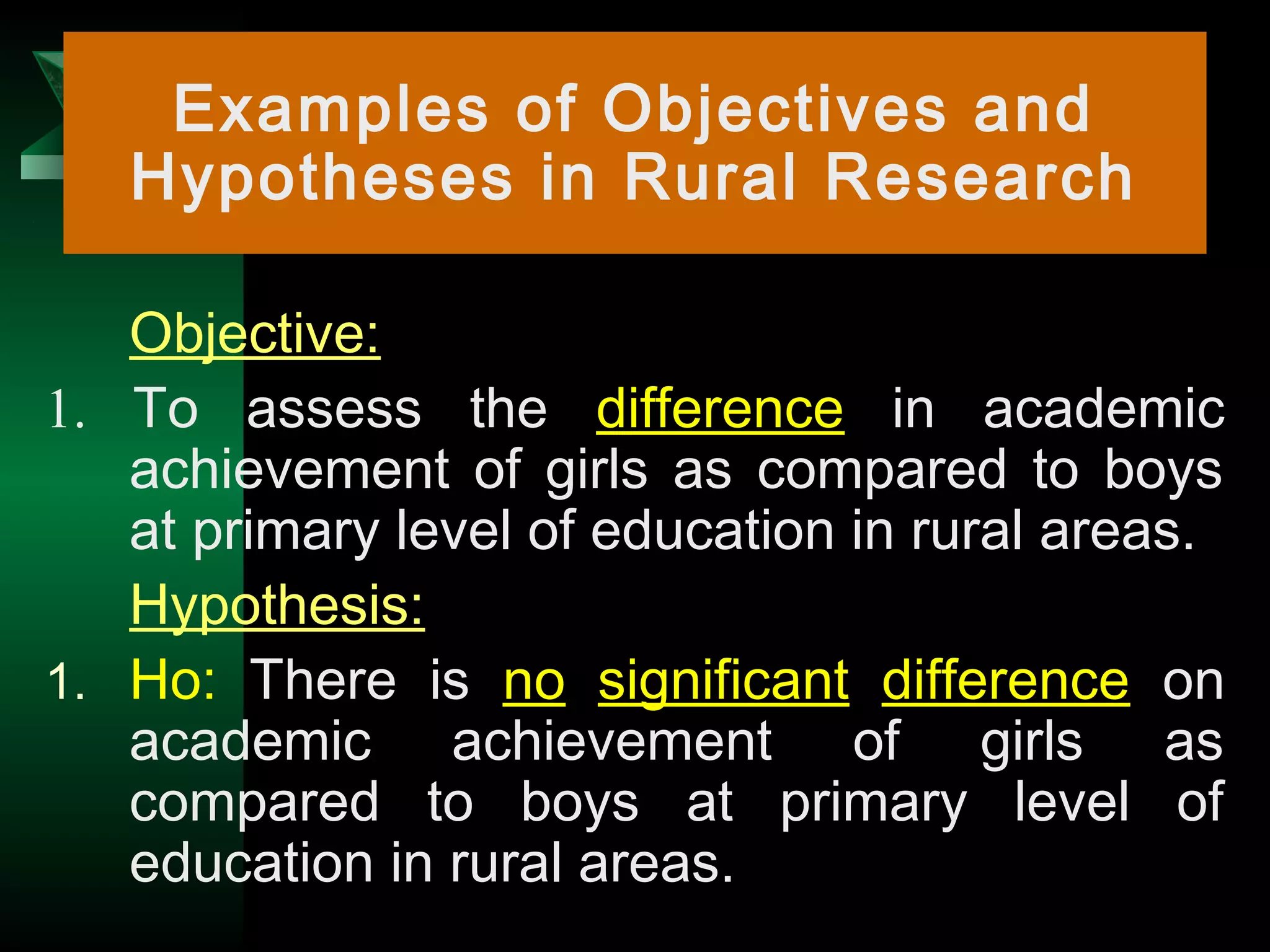
Objective:
1. To assess the difference in academic
achievement of girls as compared to boys
at primary level of education in rural areas.
Hypothesis:
1. Ho: There is no significant difference on
academic achievement of girls as
compared to boys at primary level of
education in rural areas.
Examples of Objectives and
Hypotheses in Rural Research
16
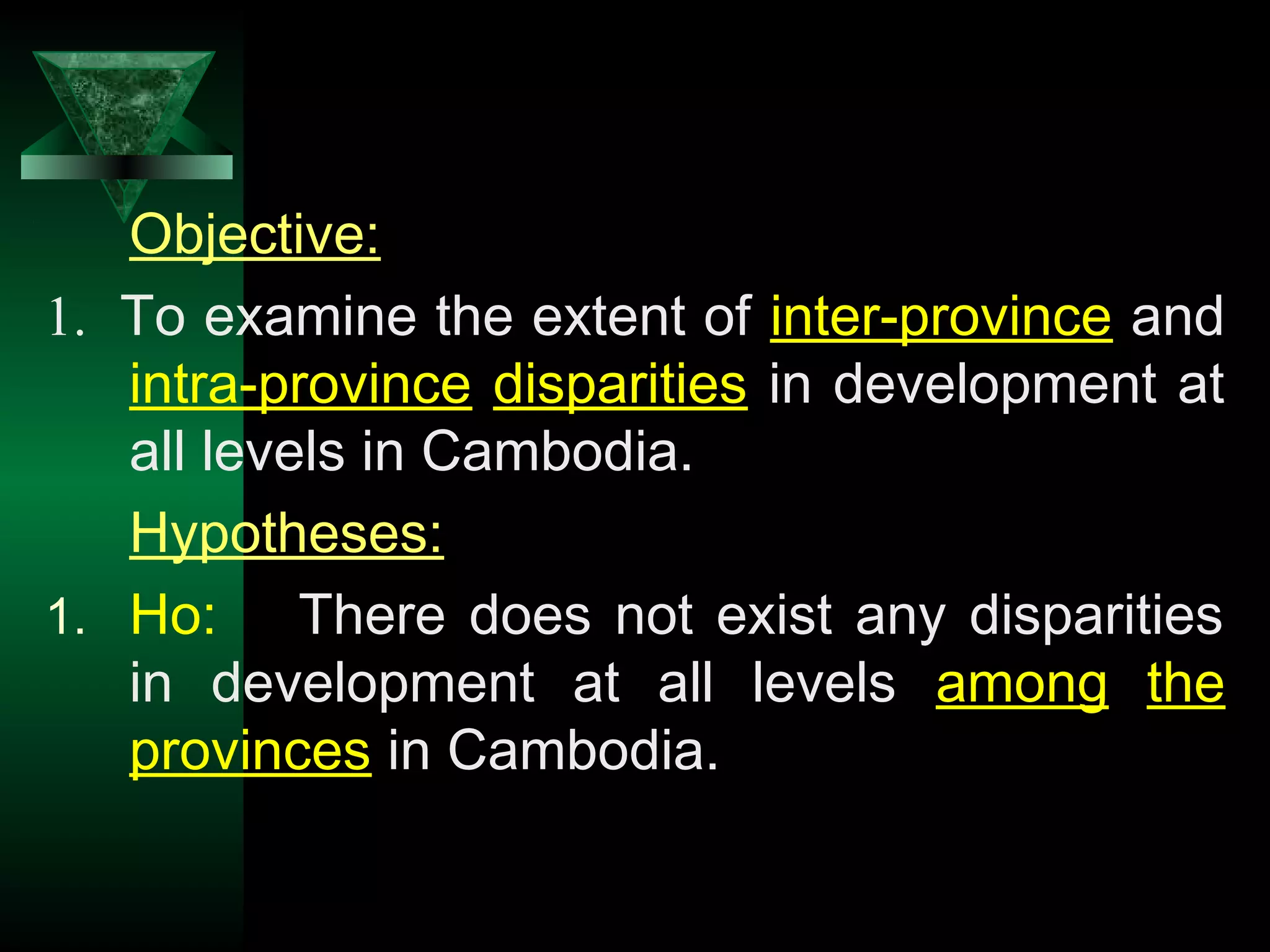
Objective:
1. To examine the extent of inter-province and
intra-province disparities in development at
all levels in Cambodia.
Hypotheses:
1. Ho: There does not exist any disparities
in development at all levels among the
provinces in Cambodia.
17
Hypothesis:
2. Ho: There does not exist any disparities in
development at all levels among the
districts within a province in Cambodia.
3. Ho: There does not exist any disparities in
development at all levels among the
communes within a district in Cambodia.
(One objective but many hypotheses)
18
Individual Quiz and Discussion

Chapter 5 (hypothesis formulation)

  • 1.
  • 2.
    2 Contents  Hypothesis –meaning, stage and sources  Characteristics of hypothesis  Approaches -Null Hypothesis and Alternative Hypothesis  Concern of researchers  Some examples of objectives and hypotheses in the field of rural research
  • 3.
    3 Hypothesis refers toa mere assumption to be accepted or rejected. It is a proposed explanation for an observable phenomenon. In research, it is a formal question that the researcher intends to resolve. It is a predictive statement, capable of being tested by scientific methods. It is a proposition which can be put to a test to determine its validity. Meaning of Hypothesis
  • 4.
    4  Hypotheses areformulated on the knowledge acquired through literature survey – conceptual and empirical. Stage of Formulation of Hypotheses
  • 5.
    5 1. Survey ofliterature 2. Popular beliefs and practices 3. Experience of Researcher 4. Environment in which research is to be carried out 5. Gaps in knowledge 6. Culture of Researcher Sources of Formulation of Hypotheses
  • 6.
    6 Should be clearand precise otherwise inferences drawn on its basis cannot be taken as reliable. Should be capable of being tested. Should state relationship between variables, if it happens to be a relational hypothesis. Should be limited in scope and must be specific (A narrower hypothesis is more testable). Characteristics of Hypothesis
  • 7.
    7 Should be statedas far as possible in most simple terms for easy understanding by all. Should be consistent with most known facts (must be consistent with a substantial body of established facts – educated guesses). Should be possible to testing within a reasonable time.
  • 8.
    8 Approaches Null Hypothesis Alternative Hypothesis Null hypothesisis expressed as Ho. Alternative hypothesis is expressed as Ha. The Ho and Ha are chosen before the sample is drawn
  • 9.
    9 Null – meansinvalid, or amounting to nothing. Formulation: Ho is akin to the legal principle that a man is innocent until he is proved guilty. H0 asserts that there is no true difference in the sample and the population in the particular matter under consideration. Null Hypothesis (Ho)
  • 10.
    10 H0 relates toa statistical method of interpreting conclusions about population characteristics inferred from data collected from samples. Example: Comparison between the effectiveness of rural development policies at two different times. H0: There is no significant difference between the two policies relating to rural development.
  • 11.
    11 Example: To findout whether there exists any relation between school environment in rural areas and job satisfaction among teachers. H0: There is no significant relationship between school environment and job satisfaction among teachers in rural areas. Result: Rejection of H0 indicates that the difference have statistical significance. Acceptance of H0 indicates that the difference are due to chance.
  • 12.
    12 Ha specifies thosevalues that the researcher believes to hold true, i.e., sample data lead to acceptance of this hypothesis as true. Example: Comparison between the effectiveness of rural development policies at two different times. Ha: The first Policy is more effective to the next policy or the other way. Alternative Hypothesis (Ha)
  • 13.
    13 Approaches Null Hypothesis ( Ho) Alternative Hypothesis(Ha) Rejected Means : Ha accepted AcceptedMeans: Ho Rejected
  • 14.
    14 Rejecting the H0is known as establishing Ha. Principles: Ha is usually the one which one wishes to accept. H0 is the one which one wishes to reject/disprove, i.e. H0 represents the hypothesis a researcher wants to reject.
  • 15.
    15 Objective: 1. To assessthe difference in academic achievement of girls as compared to boys at primary level of education in rural areas. Hypothesis: 1. Ho: There is no significant difference on academic achievement of girls as compared to boys at primary level of education in rural areas. Examples of Objectives and Hypotheses in Rural Research
  • 16.
    16 Objective: 1. To examinethe extent of inter-province and intra-province disparities in development at all levels in Cambodia. Hypotheses: 1. Ho: There does not exist any disparities in development at all levels among the provinces in Cambodia.
  • 17.
    17 Hypothesis: 2. Ho: Theredoes not exist any disparities in development at all levels among the districts within a province in Cambodia. 3. Ho: There does not exist any disparities in development at all levels among the communes within a district in Cambodia. (One objective but many hypotheses)
  • 18.