Esophagus
QAP20704
Dr. Mohanad
 Pharynx is an incomplete
striated muscular tube.
 It is a funnel-shaped
passageway leading from
the oral and nasal cavities in
the head to the esophagus
and larynx.
 The pharynx chamber serves
both respiratory and
digestive functions.
Pharynx
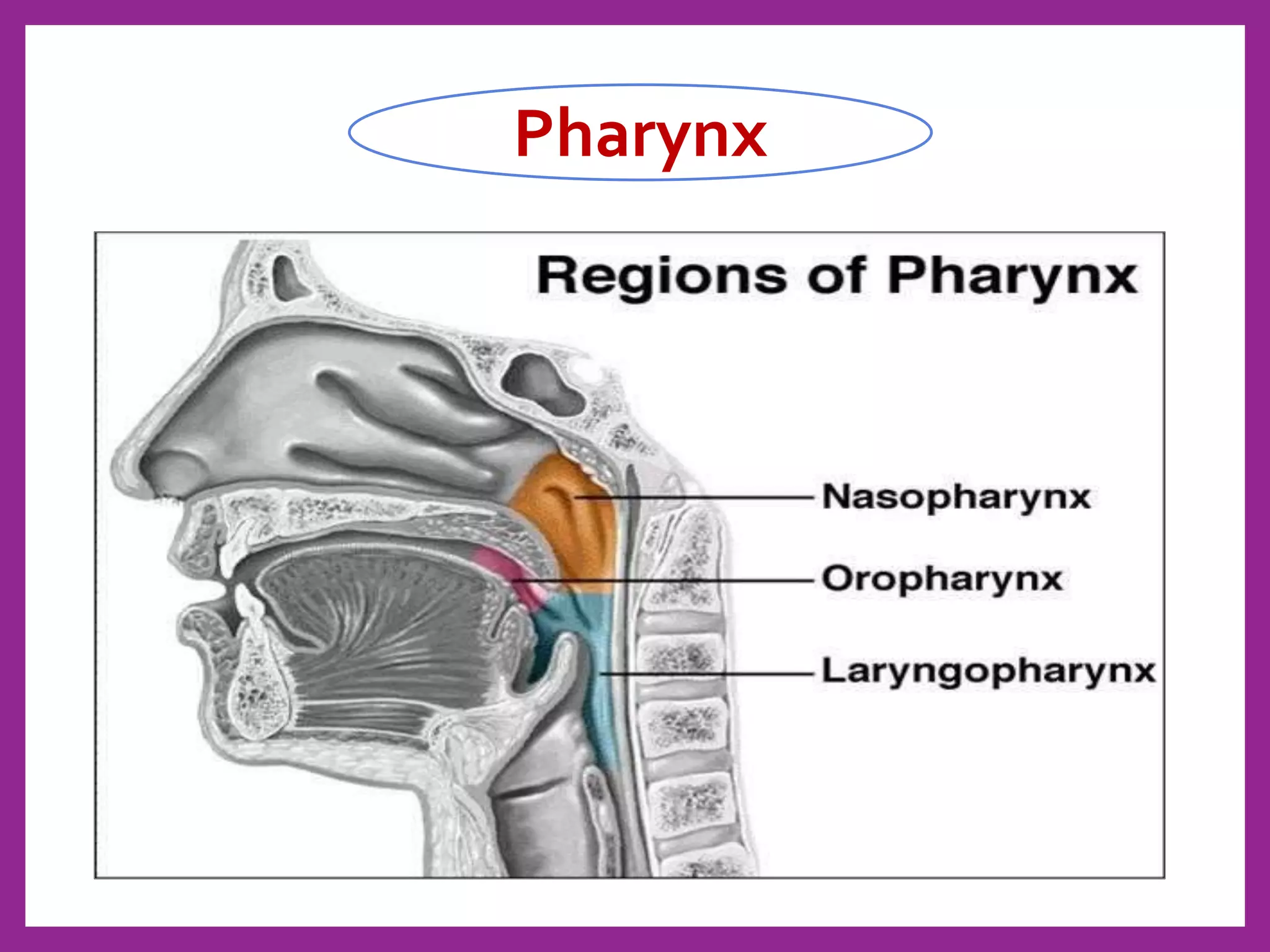
 The pharynx is divided into
three regions.The
nasopharynx, oropharynx,
and the laryngopharynx.
 The mucosa is composed of
stratified squamous
epithelium which is supplied
with mucus producing
glands.
Pharynx
Pharynx
 The muscles of the
pharynx consist of 2
skeletal muscle layers.
 The inner longitudinal
layer.
 The outer circular layer.
Muscle of Pharynx
Circular layer
1. Superiorpharyngeal
Constrictors Muscle
2. Middlepharyngeal
Constrictors Muscle
3. Inferior Pharyngeal
Constrictors Muscle
Innervation =Vagus
nerve [X]
Muscle of Pharynx
3 longitudinal muscles :
 Stylopharyngeus
Muscle
 Salpingopharyngeus
Muscle
 Palatopharyngeus
Muscle
Muscle of Pharynx
Blood is supplied to
pharynx by:
1. Ascending pharyngeal,
2. Tonsillar branches of
3. Facial arteries
4. Branches of maxillary
and lingual arteries .
Blood supply of Pharynx
 Motor: Pharyngeal
branch of the Vagus
nerve
 Sensory:
 Nasal pharynx:The
maxillary nerve (V2)
 Oral pharynx:The
glossopharyngeal nerve
 Laryngeal pharynx:The
internal laryngeal branch
of the Vagus nerve
Nerve supply of Pharynx
 The esophagus is a muscular
tube that connects the
pharynx to the stomach.
 Its about ten inches (25 cm).
 It passes into the abdomen
through an opening in the
diaphragm called the
oesophageal hiatus and
joins the stomach.
Esophagus
o The esophagus lies posterior to the
larynx, trachea and the heart In
front of the vertebral column.
o It begins in the neck at the lower
border of the cricoid cartilage,
opposite the sixth cervical vertebra
(C6)
o Descends along the front of the
vertebral column, through the
superior then posterior mediastina,
passes through the diaphragm, and,
entering the abdomen, ends at the
cardiac orifice of the stomach,
opposite the eleventh thoracic
vertebra (T11).
Esophagus
1) Cervical part
2) Thoracic part
3) Abdominal part
Esophagus Parts
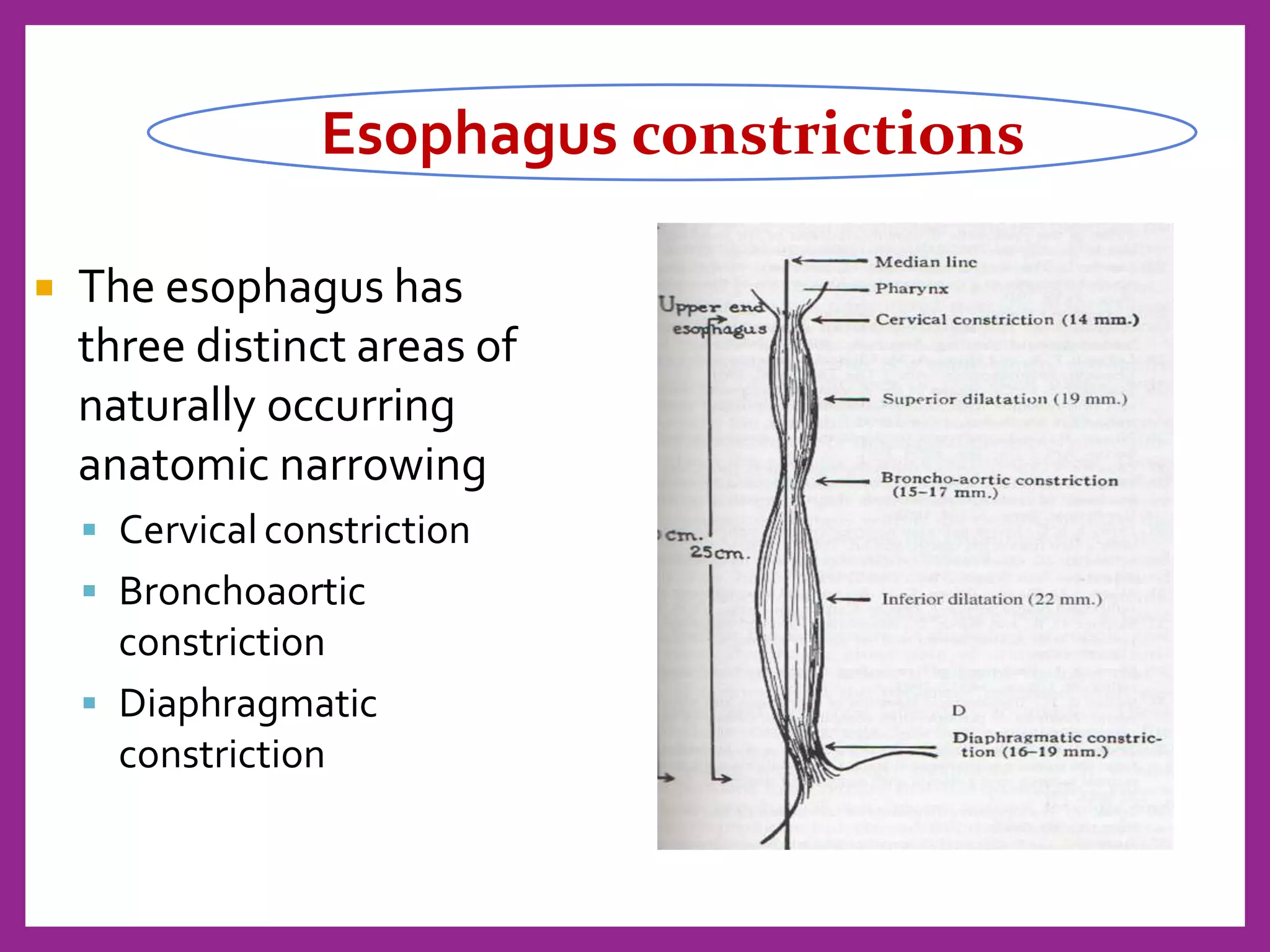
 The esophagus has
three distinct areas of
naturally occurring
anatomic narrowing
 Cervical constriction
 Bronchoaortic
constriction
 Diaphragmatic
constriction
Esophagus constrictions
LES (functional sphincter)
 3-5 cm zone of increased pressure at lower
end ofesophagus
 Relaxes with swallowing
 Contracts thereafter in sequence with
transmitted pressure increases – prevents reflux
 Sphincter tone provided by intrinsic
myogenic activity
 Sphincter relaxation due to neural activity
Diaphragm muscles relax,
opening the passageway.
Longitudinal muscle
Esophagus muscles relax,
opening the passageway.
Esophagus
Esophagus muscles contract,
squeezing on the inside.
Diaphragm muscles contract,
squeezing on the outside.
When the circular muscles of a sphincter contract, the
passage closes; when they relax, the passage opens.
Circular muscle
Stomach
Esophagus Histology
Secretes mucous, transports food – no enzymes produced, no
absorption
Mucosa: Stratified squamous epithelium; protection against wear
and tear
lamina propria:
Submucosa: moderately dense CT with blood, nerve, lymph
vessels & lymphoid follicles; rich in elastic fibers
Muscularis divided in thirds
 Superior 1/3 skeletal muscle
 Middle 1/3 skeletal and smooth muscle
 Inferior 1/3 smooth muscle
 2 Sphincters – upper esophageal sphincter (UES) regulates
movement into esophagus, lower esophageal sphincter (LES)
regulates movement into stomach
Adventitia: Consist of loose C.T no serosa – attaches to
surroundings
copyright (your organization) 2003 17
 Cervical part
:Bronchial artery.
 Thoracic part
:Thoracic aorta.
 Abdominal part
:Left gastric artery
and Left inferior
phrenic artery.
Blood Supply
 Cervical part: into the
inferior thyroid vein.
 Thorax part : into the
azygous system of
vein and hemiazygos
vein.
 Abdominal part :into
the left gastric vein
which empties into the
portal vein.
Venous Drainage
 Cervical part: drains into
paratracheal and
internal jugular nodes.
 The thorax part : drains
to mediastinal nodes.
 Abdominal part: drains
to nodes around aorta
and celiac axis
Lymphatic Drainage
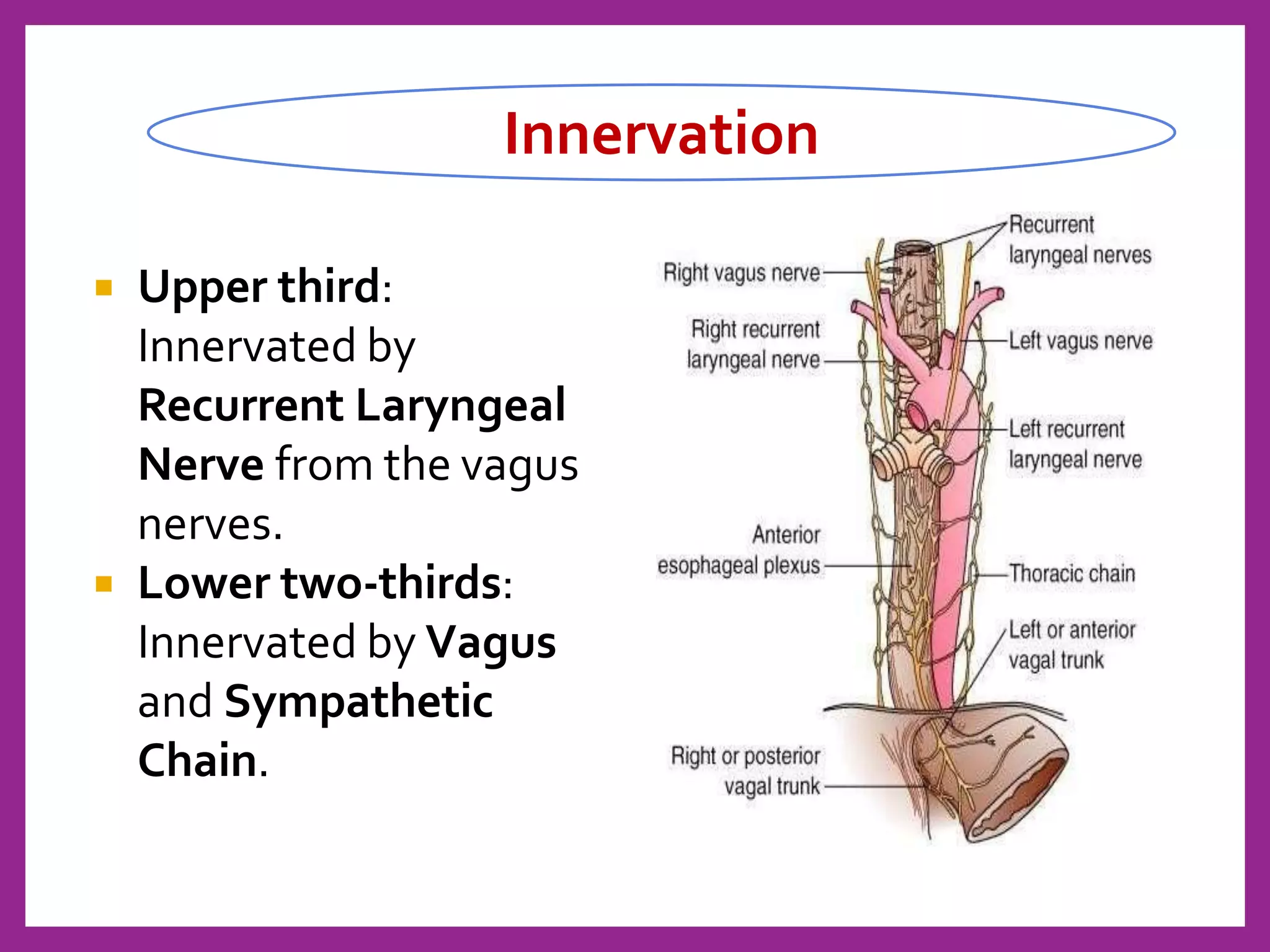
 Upper third:
Innervated by
Recurrent Laryngeal
Nerve from the vagus
nerves.
 Lower two-thirds:
Innervated by Vagus
and Sympathetic
Chain.
Innervation
Physiology of
Swallowing
 Primary peristalsis –
progressive, triggeredby
voluntary swallowing.
 Secondary
peristalsis: progressive,
generatedby distention
or irritation usually from
bolus not traversing
through the esophagus.
 Tertiary peristalsis –
Tertiary waves are
defined as contractions
which occur
simultaneously at
different levels of the
oesophagus
THANKYOU

Chapter 3-pharynx +esophagus

  • 1.
  • 2.
     Pharynx isan incomplete striated muscular tube.  It is a funnel-shaped passageway leading from the oral and nasal cavities in the head to the esophagus and larynx.  The pharynx chamber serves both respiratory and digestive functions. Pharynx
  • 3.
     The pharynxis divided into three regions.The nasopharynx, oropharynx, and the laryngopharynx.  The mucosa is composed of stratified squamous epithelium which is supplied with mucus producing glands. Pharynx
  • 4.
  • 5.
     The musclesof the pharynx consist of 2 skeletal muscle layers.  The inner longitudinal layer.  The outer circular layer. Muscle of Pharynx
  • 6.
    Circular layer 1. Superiorpharyngeal ConstrictorsMuscle 2. Middlepharyngeal Constrictors Muscle 3. Inferior Pharyngeal Constrictors Muscle Innervation =Vagus nerve [X] Muscle of Pharynx
  • 7.
    3 longitudinal muscles:  Stylopharyngeus Muscle  Salpingopharyngeus Muscle  Palatopharyngeus Muscle Muscle of Pharynx
  • 8.
    Blood is suppliedto pharynx by: 1. Ascending pharyngeal, 2. Tonsillar branches of 3. Facial arteries 4. Branches of maxillary and lingual arteries . Blood supply of Pharynx
  • 9.
     Motor: Pharyngeal branchof the Vagus nerve  Sensory:  Nasal pharynx:The maxillary nerve (V2)  Oral pharynx:The glossopharyngeal nerve  Laryngeal pharynx:The internal laryngeal branch of the Vagus nerve Nerve supply of Pharynx
  • 10.
     The esophagusis a muscular tube that connects the pharynx to the stomach.  Its about ten inches (25 cm).  It passes into the abdomen through an opening in the diaphragm called the oesophageal hiatus and joins the stomach. Esophagus
  • 11.
    o The esophaguslies posterior to the larynx, trachea and the heart In front of the vertebral column. o It begins in the neck at the lower border of the cricoid cartilage, opposite the sixth cervical vertebra (C6) o Descends along the front of the vertebral column, through the superior then posterior mediastina, passes through the diaphragm, and, entering the abdomen, ends at the cardiac orifice of the stomach, opposite the eleventh thoracic vertebra (T11). Esophagus
  • 12.
    1) Cervical part 2)Thoracic part 3) Abdominal part Esophagus Parts
  • 13.
     The esophagushas three distinct areas of naturally occurring anatomic narrowing  Cervical constriction  Bronchoaortic constriction  Diaphragmatic constriction Esophagus constrictions
  • 14.
    LES (functional sphincter) 3-5 cm zone of increased pressure at lower end ofesophagus  Relaxes with swallowing  Contracts thereafter in sequence with transmitted pressure increases – prevents reflux  Sphincter tone provided by intrinsic myogenic activity  Sphincter relaxation due to neural activity
  • 15.
    Diaphragm muscles relax, openingthe passageway. Longitudinal muscle Esophagus muscles relax, opening the passageway. Esophagus Esophagus muscles contract, squeezing on the inside. Diaphragm muscles contract, squeezing on the outside. When the circular muscles of a sphincter contract, the passage closes; when they relax, the passage opens. Circular muscle Stomach
  • 16.
    Esophagus Histology Secretes mucous,transports food – no enzymes produced, no absorption Mucosa: Stratified squamous epithelium; protection against wear and tear lamina propria: Submucosa: moderately dense CT with blood, nerve, lymph vessels & lymphoid follicles; rich in elastic fibers Muscularis divided in thirds  Superior 1/3 skeletal muscle  Middle 1/3 skeletal and smooth muscle  Inferior 1/3 smooth muscle  2 Sphincters – upper esophageal sphincter (UES) regulates movement into esophagus, lower esophageal sphincter (LES) regulates movement into stomach Adventitia: Consist of loose C.T no serosa – attaches to surroundings
  • 17.
  • 18.
     Cervical part :Bronchialartery.  Thoracic part :Thoracic aorta.  Abdominal part :Left gastric artery and Left inferior phrenic artery. Blood Supply
  • 19.
     Cervical part:into the inferior thyroid vein.  Thorax part : into the azygous system of vein and hemiazygos vein.  Abdominal part :into the left gastric vein which empties into the portal vein. Venous Drainage
  • 20.
     Cervical part:drains into paratracheal and internal jugular nodes.  The thorax part : drains to mediastinal nodes.  Abdominal part: drains to nodes around aorta and celiac axis Lymphatic Drainage
  • 21.
     Upper third: Innervatedby Recurrent Laryngeal Nerve from the vagus nerves.  Lower two-thirds: Innervated by Vagus and Sympathetic Chain. Innervation
  • 22.
    Physiology of Swallowing  Primaryperistalsis – progressive, triggeredby voluntary swallowing.  Secondary peristalsis: progressive, generatedby distention or irritation usually from bolus not traversing through the esophagus.  Tertiary peristalsis – Tertiary waves are defined as contractions which occur simultaneously at different levels of the oesophagus
  • 23.