Chapter 2.
Classification of
Computer
Reference : Sunrise Computer Science XI
Lecture by : Er. Ashish K.C
Classifications:
- Is done based on capacities and uses.
● Classification on the basis of work
● Classification on the basis of purpose
● Classification on the basis of size
● Classification on the basis of brand
● Classification on the basis of model
2
On the basis of work:
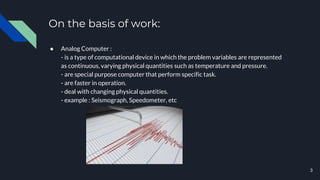
● Analog Computer :
- is a type of computational device in which the problem variables are represented
as continuous, varying physical quantities such as temperature and pressure.
- are special purpose computer that perform specific task.
- are faster in operation.
- deal with changing physical quantities.
- example : Seismograph, Speedometer, etc
3
Digital Computer:
- Is an electronic computing machine that uses binary digits 0 and 1 to represent all forms
of instruction internally in digital form.
- Works on discontinuous data.
4
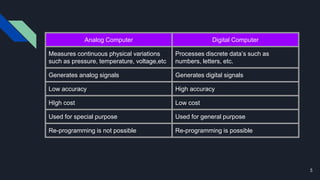
Analog Computer Digital Computer
Measures continuous physical variations
such as pressure, temperature, voltage,etc
Processes discrete data’s such as
numbers, letters, etc.
Generates analog signals Generates digital signals
Low accuracy High accuracy
HIgh cost Low cost
Used for special purpose Used for general purpose
Re-programming is not possible Re-programming is possible
5
Hybrid Computer:
- Contain the features of analog and digital computer.
- Inputs analog signal convert them into digital form.
- Used in Flight management, ICU, monitor in petrol pumps, industries, etc.
6
On the basis of purpose:
● Specific purpose :
- designed to perform specific task only.
- most analog computers are specific purpose computers.
- reprogramming not possible.
- trained personal required to operate.
● General purpose :
- designed to perform many task.
- used generally everywhere and everyone.
- computers at home and offices are general purpose computers.
7
On the basis of size:
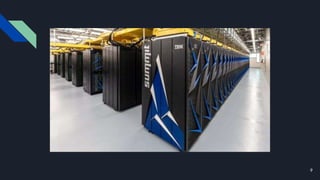
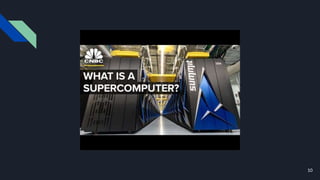
● Super Computer:
- most powerful computers in the world.
- huge in size, have highest processing speed and most expensive.
- used to process large amount of data to solve complicated scientific
problems.
- can perform more than one trillion calculations per second.
- can handle thousands of users at same time.
- used in automobile industries, aerospace, meteorological, weather
forecasting, etc
- example: CRAY-1, CRAY-2, etc
8
9
10
Mainframe computer:
- are larger in size, have higher processing speed.
- Have large storage capacity nad expensive than mini computers.
- Have multi processors so thousands of users can use single mainframe
computer at time.
- Are specially used as servers on the world wide web.
- Are used in banks, airlines, universities, etc
- Example: IBM 1401, CDC 6600, etc
11
12
Mini Computers:
- Are medium sized computers which are more powerful than micro
computers.
- Have high processing speed and higher cost than micro computers.
- Hundreds of user can use the mini computer at a same time.
- Are commonly used as server in a network.
- Are used in business, education and many other fields.
- Example: PDP-11
13
Micro Computer
- Are general purpose computers
- Small sized computer which use microprocessor as their CPU.
- Are single user computers because they are designed to be used by one
person at a time.
- Micro computers support networking environment, internet system and
advanced software.
14
Types of micro computer:
● Desktop Computer
● Laptop Computer
● Handheld Computer
15
On the basis of brand
● IBM PC
● IBM compatible
● Apple/Macintosh
16
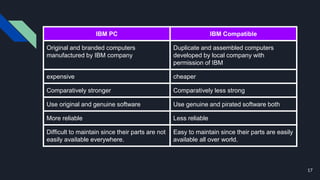
IBM PC IBM Compatible
Original and branded computers
manufactured by IBM company
Duplicate and assembled computers
developed by local company with
permission of IBM
expensive cheaper
Comparatively stronger Comparatively less strong
Use original and genuine software Use genuine and pirated software both
More reliable Less reliable
Difficult to maintain since their parts are not
easily available everywhere.
Easy to maintain since their parts are easily
available all over world.
17
IBM PC Apple/Macintosh
Use both GUI and CUI programs Uses only GUI programs
Are manufactured by IBM company USA Are manufactured by Apple Corporation
USA
Mouse or pointing device is optional to use Mouse or pointing device is compulsory
VDU and CPU are separated VDU and CPU are attached together
Comparatively less expensive Comparatively more expensive
18
On the basis of Model:
● XT computers:
- Extended Computers
- uses 8086 or 8088 microprocessor
- have processing speed 4.77 MHz
- comparatively slower and less flexible than other models
- cannot support GUI based programs and software.
19
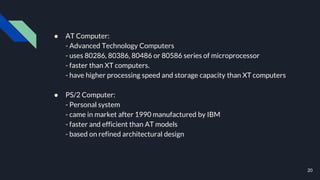
● AT Computer:
- Advanced Technology Computers
- uses 80286, 80386, 80486 or 80586 series of microprocessor
- faster than XT computers.
- have higher processing speed and storage capacity than XT computers
● PS/2 Computer:
- Personal system
- came in market after 1990 manufactured by IBM
- faster and efficient than AT models
- based on refined architectural design
20
Mobile Computing:
● The process of using the latest portable computing technology that
allows us to use and access internet and other application services while
moving.
● Small and portable handheld computing devices and advanced mobile
phones are popularly used.
● Mobile computing devices : PDA, Smart phone, Blackberry, Iphone,
Tablet, HSPDA ( High speed packet data access) and other 3G-4G
mobiles, etc
● Are portable, handy and support latest technologies such as virtual
network, Wi-Fi, Cloud storage, etc.
21

Chapter 2. classification of computer

  • 1.
    Chapter 2. Classification of Computer Reference: Sunrise Computer Science XI Lecture by : Er. Ashish K.C
  • 2.
    Classifications: - Is donebased on capacities and uses. ● Classification on the basis of work ● Classification on the basis of purpose ● Classification on the basis of size ● Classification on the basis of brand ● Classification on the basis of model 2
  • 3.
    On the basisof work: ● Analog Computer : - is a type of computational device in which the problem variables are represented as continuous, varying physical quantities such as temperature and pressure. - are special purpose computer that perform specific task. - are faster in operation. - deal with changing physical quantities. - example : Seismograph, Speedometer, etc 3
  • 4.
    Digital Computer: - Isan electronic computing machine that uses binary digits 0 and 1 to represent all forms of instruction internally in digital form. - Works on discontinuous data. 4
  • 5.
    Analog Computer DigitalComputer Measures continuous physical variations such as pressure, temperature, voltage,etc Processes discrete data’s such as numbers, letters, etc. Generates analog signals Generates digital signals Low accuracy High accuracy HIgh cost Low cost Used for special purpose Used for general purpose Re-programming is not possible Re-programming is possible 5
  • 6.
    Hybrid Computer: - Containthe features of analog and digital computer. - Inputs analog signal convert them into digital form. - Used in Flight management, ICU, monitor in petrol pumps, industries, etc. 6
  • 7.
    On the basisof purpose: ● Specific purpose : - designed to perform specific task only. - most analog computers are specific purpose computers. - reprogramming not possible. - trained personal required to operate. ● General purpose : - designed to perform many task. - used generally everywhere and everyone. - computers at home and offices are general purpose computers. 7
  • 8.
    On the basisof size: ● Super Computer: - most powerful computers in the world. - huge in size, have highest processing speed and most expensive. - used to process large amount of data to solve complicated scientific problems. - can perform more than one trillion calculations per second. - can handle thousands of users at same time. - used in automobile industries, aerospace, meteorological, weather forecasting, etc - example: CRAY-1, CRAY-2, etc 8
  • 9.
  • 10.
  • 11.
    Mainframe computer: - arelarger in size, have higher processing speed. - Have large storage capacity nad expensive than mini computers. - Have multi processors so thousands of users can use single mainframe computer at time. - Are specially used as servers on the world wide web. - Are used in banks, airlines, universities, etc - Example: IBM 1401, CDC 6600, etc 11
  • 12.
  • 13.
    Mini Computers: - Aremedium sized computers which are more powerful than micro computers. - Have high processing speed and higher cost than micro computers. - Hundreds of user can use the mini computer at a same time. - Are commonly used as server in a network. - Are used in business, education and many other fields. - Example: PDP-11 13
  • 14.
    Micro Computer - Aregeneral purpose computers - Small sized computer which use microprocessor as their CPU. - Are single user computers because they are designed to be used by one person at a time. - Micro computers support networking environment, internet system and advanced software. 14
  • 15.
    Types of microcomputer: ● Desktop Computer ● Laptop Computer ● Handheld Computer 15
  • 16.
    On the basisof brand ● IBM PC ● IBM compatible ● Apple/Macintosh 16
  • 17.
    IBM PC IBMCompatible Original and branded computers manufactured by IBM company Duplicate and assembled computers developed by local company with permission of IBM expensive cheaper Comparatively stronger Comparatively less strong Use original and genuine software Use genuine and pirated software both More reliable Less reliable Difficult to maintain since their parts are not easily available everywhere. Easy to maintain since their parts are easily available all over world. 17
  • 18.
    IBM PC Apple/Macintosh Useboth GUI and CUI programs Uses only GUI programs Are manufactured by IBM company USA Are manufactured by Apple Corporation USA Mouse or pointing device is optional to use Mouse or pointing device is compulsory VDU and CPU are separated VDU and CPU are attached together Comparatively less expensive Comparatively more expensive 18
  • 19.
    On the basisof Model: ● XT computers: - Extended Computers - uses 8086 or 8088 microprocessor - have processing speed 4.77 MHz - comparatively slower and less flexible than other models - cannot support GUI based programs and software. 19
  • 20.
    ● AT Computer: -Advanced Technology Computers - uses 80286, 80386, 80486 or 80586 series of microprocessor - faster than XT computers. - have higher processing speed and storage capacity than XT computers ● PS/2 Computer: - Personal system - came in market after 1990 manufactured by IBM - faster and efficient than AT models - based on refined architectural design 20
  • 21.
    Mobile Computing: ● Theprocess of using the latest portable computing technology that allows us to use and access internet and other application services while moving. ● Small and portable handheld computing devices and advanced mobile phones are popularly used. ● Mobile computing devices : PDA, Smart phone, Blackberry, Iphone, Tablet, HSPDA ( High speed packet data access) and other 3G-4G mobiles, etc ● Are portable, handy and support latest technologies such as virtual network, Wi-Fi, Cloud storage, etc. 21