U.S. in World
    War I


By: Rumana, Ivanna, Michael and
Marcjan
System of Alliances
 By 1914, Europe was split into two hostile
  alliance systems.
 Such a situation contains inherent dangers.
  Counting on the support of its allies, a
  country might pursue a more reckless
  course.
 Furthermore, a conflict between two states
  might spark a chain reaction that draws in
  the other countries, transforming a limited
  war into a general war.
System of Alliances
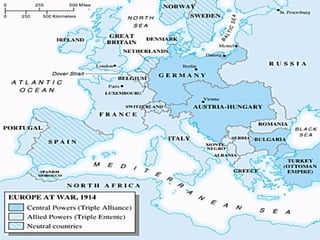
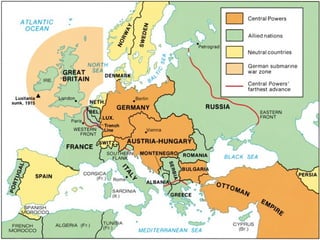
   Europe was broken into two hostile camps: the
    Triple Entente of France, Russia, and Britain and
    the Triple Alliance of Germany, Austria-Hungary,
    and Italy (would drop out and be replaced by the
    Ottoman Empire).
   The costly arms race and the maintenance of large
    standing armies by all states except Britain served
    to increase fear and suspicion between the
    alliances.
   Countries in Europe had become war machines
    linked to one another through a web of diplomatic
    alliances---the chaos just needed to be set in order
The Drift toward War:
        The Balkan Wars
   A series of wars in the Balkans strained
    relations between Austria-Hungary and Serbia.
   On June 28, 1914, Archduke Francis
    Ferdinand, heir to the throne of Austria-
    Hungary, was assassinated while making a
    state visit to Sarajevo, the capital of Bosnia.
    Gavrilo Princip, a young revolutionary assassin
    from Bosnia, was linked to the Serbian army.
   Austria-Hungary decided to use the
    assassination as a pretext to crush Serbia.
The Drift toward War:
       The Balkan Wars
   Seeking a military solution rather than a
    diplomatic one, Austria presented a list of
    ultimatums to Serbia that it could not possibly
    meet.
      When Serbia could not agree to all of the
       demands, Austria-Hungary mobilized its army.
   Germany pledged to support Austria, believing
    that a war with Russia was inevitable anyway;
    Italy did not, thus breaking the Triple Alliance.
   On July 28, 1914, Austria declared war on
    Serbia. Russia, with the assurance of French
    support, began to mobilize its army.
The Schlieffen Plan

   German plan to avoid defeat from Russia by
    taking out France first and then fight Russians.
      Smash France in 30 days before Russia
       could respond with troops
      Go through Belgium to surround French
       troops, defeat the French and then rush to
       Poland front on the German rail system to
       face Russia
      Once Russia began to mobilize, Germany
       had to attack France.
World War I

   Russia wanted to stop 15 days into the 30 day
    time table/Germany did not want to risk it
   On August 1, 1914, Germany declared war on
    Russia and implemented the Schlieffen Plan.
   Once they invaded Belgium (August 4, 1914)
    on their way to France, Great Britain joined
    the war.
War as Celebration
   Everyone believed that it would be a short war.
       (6 weeks)
   News of war was greeted by most Europeans
    with great enthusiasm and with outpourings of
    patriotism and nationalism.
   For decades, state-directed education had
    indoctrinated youth with nationalist attitudes,
    beliefs, and myths designed to promote social
    cohesion.
   Thus, Europe marched off to war with great
    joy, anticipating a great adventure and national
    glory.
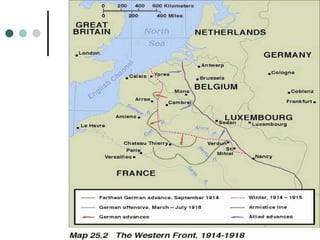
Stalemate
   The war quickly became a stalemate.
       Trench warfare led to this stalemate --- Defense was
        as strong or stronger than offense (military tactics
        had not kept up with military technology)
       New military technology (machine guns, aerial
        bombing, poison gas, flame throwers, land mines,
        armored tanks)
       Yet European armies had prepared only for
        offensive warfare.
   Throughout the war we would see armies go “over
    the top” out of the trenches in an offensive.
       The result was mass carnage with very little
        advancement.
Stalemate
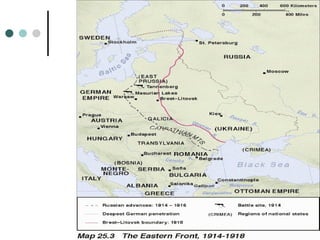
   The Germans could not quickly secure victory
    over the French, however, because the
    Russian army mobilized faster than anticipated
    and the Germans had to divert troops to the
    Eastern Front.
       The Germans had great success against the
        Russians; however, the resources needed to
        fight on the Eastern Front ensured that the
        stalemate on the Western front would continue.
   The result was a deadlock that neither side
    could break.
Empire at War
   The horrors of war reached across continents.
   The sprawling Ottoman Empire battled British-
    and Russian-led forces in Egypt, Iraq, and the
    Caucasus.
   In East Asia, Japan declared war on Germany
    and seized German possessions in China.
   The British and French conscripted colonial
    subjects:
       India: 1 million soldiers to Allies. (60,000 died)
       Africa: more than 1 million soldiers, 3 million
        transported goods. (150,000 died)
       Australia, New Zealand, and Canada: Over 1 million.
U.S.
        Involvement
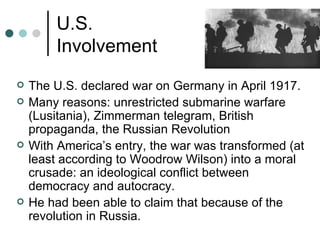
   The U.S. declared war on Germany in April 1917.
   Many reasons: unrestricted submarine warfare
    (Lusitania), Zimmerman telegram, British
    propaganda, the Russian Revolution
   With America’s entry, the war was transformed (at
    least according to Woodrow Wilson) into a moral
    crusade: an ideological conflict between
    democracy and autocracy.
   He had been able to claim that because of the
    revolution in Russia.
Armistice:
          November 11, 1918
   In March 1918, Russians sign separate peace with Germans
    (Treaty of Brest-Litovsk)
      With Russia out of the war, the Germans prepared for a
       decisive offensive before the U.S. could land sufficient
       troops in France to help the Allies.
   A war of attrition now favored the Allies, who could count on
    American supplies and manpower.
      Without an immediate and decisive victory, Germany
       could not win the war.
   The offensive failed. Fearing an Allied invasion of Germany,
    Kaiser William II abdicates and flees to Holland. A new
    German Republic is organized that signed an armistice on
    November 11, 1918, ending the hostilities.
Cost of the war

   15 million people were killed.
       About 1/3 of the soldiers that fought in the
        war were wounded.
   The economic cost was severe.
     Estimates put the damage at about 100
      trillion modern U.S. dollars.
     The European economy was left in
      shambles and the U.S. emerged as the
      dominant world economic power.
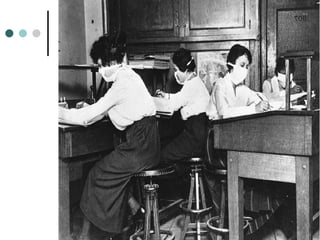
The Spanish Flu
           (Influenza)1918
   Struck in the trenches of the western front and then
    flourished when soldiers returned home.
   It became the greatest public health disaster of modern
    history
       The pandemic killed between 22 and 30 million people
        worldwide, or roughly twice as many as had died during
        the fighting
       In Spain, it killed roughly 40 percent of the population (8
        million), thus giving it the name of the Spanish Influenza.
       British colonial troops carried it to India where it killed 12
        million.
       No disease, plague, war, famine, or natural catastrophe in
        world history had killed so many people in such a short
        time.
The End

U.S. in World War I

  • 1.
    U.S. in World War I By: Rumana, Ivanna, Michael and Marcjan
  • 2.
    System of Alliances By 1914, Europe was split into two hostile alliance systems.  Such a situation contains inherent dangers. Counting on the support of its allies, a country might pursue a more reckless course.  Furthermore, a conflict between two states might spark a chain reaction that draws in the other countries, transforming a limited war into a general war.
  • 3.
    System of Alliances  Europe was broken into two hostile camps: the Triple Entente of France, Russia, and Britain and the Triple Alliance of Germany, Austria-Hungary, and Italy (would drop out and be replaced by the Ottoman Empire).  The costly arms race and the maintenance of large standing armies by all states except Britain served to increase fear and suspicion between the alliances.  Countries in Europe had become war machines linked to one another through a web of diplomatic alliances---the chaos just needed to be set in order
  • 5.
    The Drift towardWar: The Balkan Wars  A series of wars in the Balkans strained relations between Austria-Hungary and Serbia.  On June 28, 1914, Archduke Francis Ferdinand, heir to the throne of Austria- Hungary, was assassinated while making a state visit to Sarajevo, the capital of Bosnia. Gavrilo Princip, a young revolutionary assassin from Bosnia, was linked to the Serbian army.  Austria-Hungary decided to use the assassination as a pretext to crush Serbia.
  • 6.
    The Drift towardWar: The Balkan Wars  Seeking a military solution rather than a diplomatic one, Austria presented a list of ultimatums to Serbia that it could not possibly meet.  When Serbia could not agree to all of the demands, Austria-Hungary mobilized its army.  Germany pledged to support Austria, believing that a war with Russia was inevitable anyway; Italy did not, thus breaking the Triple Alliance.  On July 28, 1914, Austria declared war on Serbia. Russia, with the assurance of French support, began to mobilize its army.
  • 7.
    The Schlieffen Plan  German plan to avoid defeat from Russia by taking out France first and then fight Russians.  Smash France in 30 days before Russia could respond with troops  Go through Belgium to surround French troops, defeat the French and then rush to Poland front on the German rail system to face Russia  Once Russia began to mobilize, Germany had to attack France.
  • 9.
    World War I  Russia wanted to stop 15 days into the 30 day time table/Germany did not want to risk it  On August 1, 1914, Germany declared war on Russia and implemented the Schlieffen Plan.  Once they invaded Belgium (August 4, 1914) on their way to France, Great Britain joined the war.
  • 10.
    War as Celebration  Everyone believed that it would be a short war.  (6 weeks)  News of war was greeted by most Europeans with great enthusiasm and with outpourings of patriotism and nationalism.  For decades, state-directed education had indoctrinated youth with nationalist attitudes, beliefs, and myths designed to promote social cohesion.  Thus, Europe marched off to war with great joy, anticipating a great adventure and national glory.
  • 11.
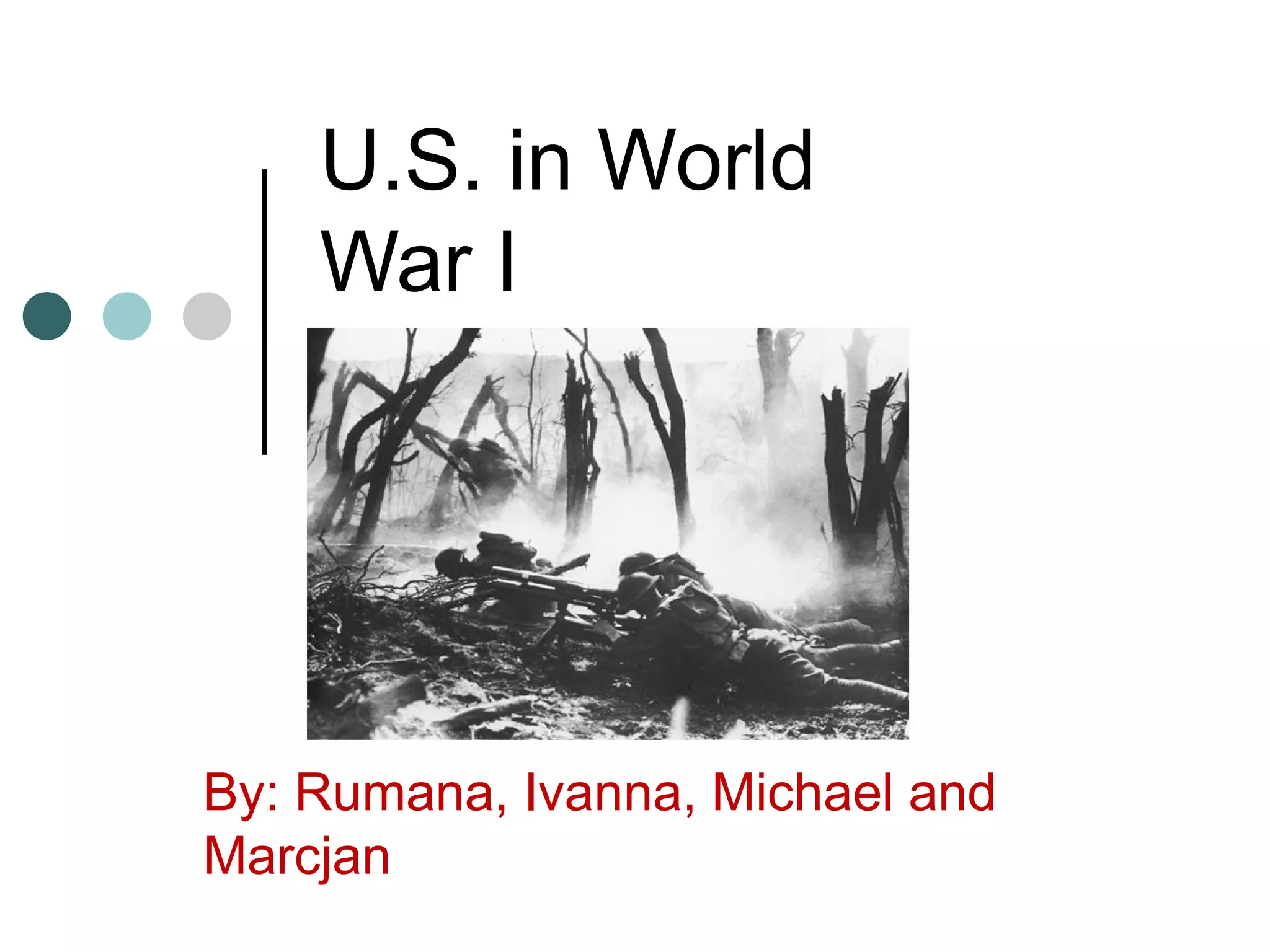
    Stalemate  The war quickly became a stalemate.  Trench warfare led to this stalemate --- Defense was as strong or stronger than offense (military tactics had not kept up with military technology)  New military technology (machine guns, aerial bombing, poison gas, flame throwers, land mines, armored tanks)  Yet European armies had prepared only for offensive warfare.  Throughout the war we would see armies go “over the top” out of the trenches in an offensive.  The result was mass carnage with very little advancement.
  • 13.
    Stalemate  The Germans could not quickly secure victory over the French, however, because the Russian army mobilized faster than anticipated and the Germans had to divert troops to the Eastern Front.  The Germans had great success against the Russians; however, the resources needed to fight on the Eastern Front ensured that the stalemate on the Western front would continue.  The result was a deadlock that neither side could break.
  • 15.
    Empire at War  The horrors of war reached across continents.  The sprawling Ottoman Empire battled British- and Russian-led forces in Egypt, Iraq, and the Caucasus.  In East Asia, Japan declared war on Germany and seized German possessions in China.  The British and French conscripted colonial subjects:  India: 1 million soldiers to Allies. (60,000 died)  Africa: more than 1 million soldiers, 3 million transported goods. (150,000 died)  Australia, New Zealand, and Canada: Over 1 million.
  • 16.
    U.S. Involvement  The U.S. declared war on Germany in April 1917.  Many reasons: unrestricted submarine warfare (Lusitania), Zimmerman telegram, British propaganda, the Russian Revolution  With America’s entry, the war was transformed (at least according to Woodrow Wilson) into a moral crusade: an ideological conflict between democracy and autocracy.  He had been able to claim that because of the revolution in Russia.
  • 17.
    Armistice: November 11, 1918  In March 1918, Russians sign separate peace with Germans (Treaty of Brest-Litovsk)  With Russia out of the war, the Germans prepared for a decisive offensive before the U.S. could land sufficient troops in France to help the Allies.  A war of attrition now favored the Allies, who could count on American supplies and manpower.  Without an immediate and decisive victory, Germany could not win the war.  The offensive failed. Fearing an Allied invasion of Germany, Kaiser William II abdicates and flees to Holland. A new German Republic is organized that signed an armistice on November 11, 1918, ending the hostilities.
  • 18.
    Cost of thewar  15 million people were killed.  About 1/3 of the soldiers that fought in the war were wounded.  The economic cost was severe.  Estimates put the damage at about 100 trillion modern U.S. dollars.  The European economy was left in shambles and the U.S. emerged as the dominant world economic power.
  • 19.
    The Spanish Flu (Influenza)1918  Struck in the trenches of the western front and then flourished when soldiers returned home.  It became the greatest public health disaster of modern history  The pandemic killed between 22 and 30 million people worldwide, or roughly twice as many as had died during the fighting  In Spain, it killed roughly 40 percent of the population (8 million), thus giving it the name of the Spanish Influenza.  British colonial troops carried it to India where it killed 12 million.  No disease, plague, war, famine, or natural catastrophe in world history had killed so many people in such a short time.
  • 21.