
Database and Direct Response
Marketing
Anisa
Osariana
201080016
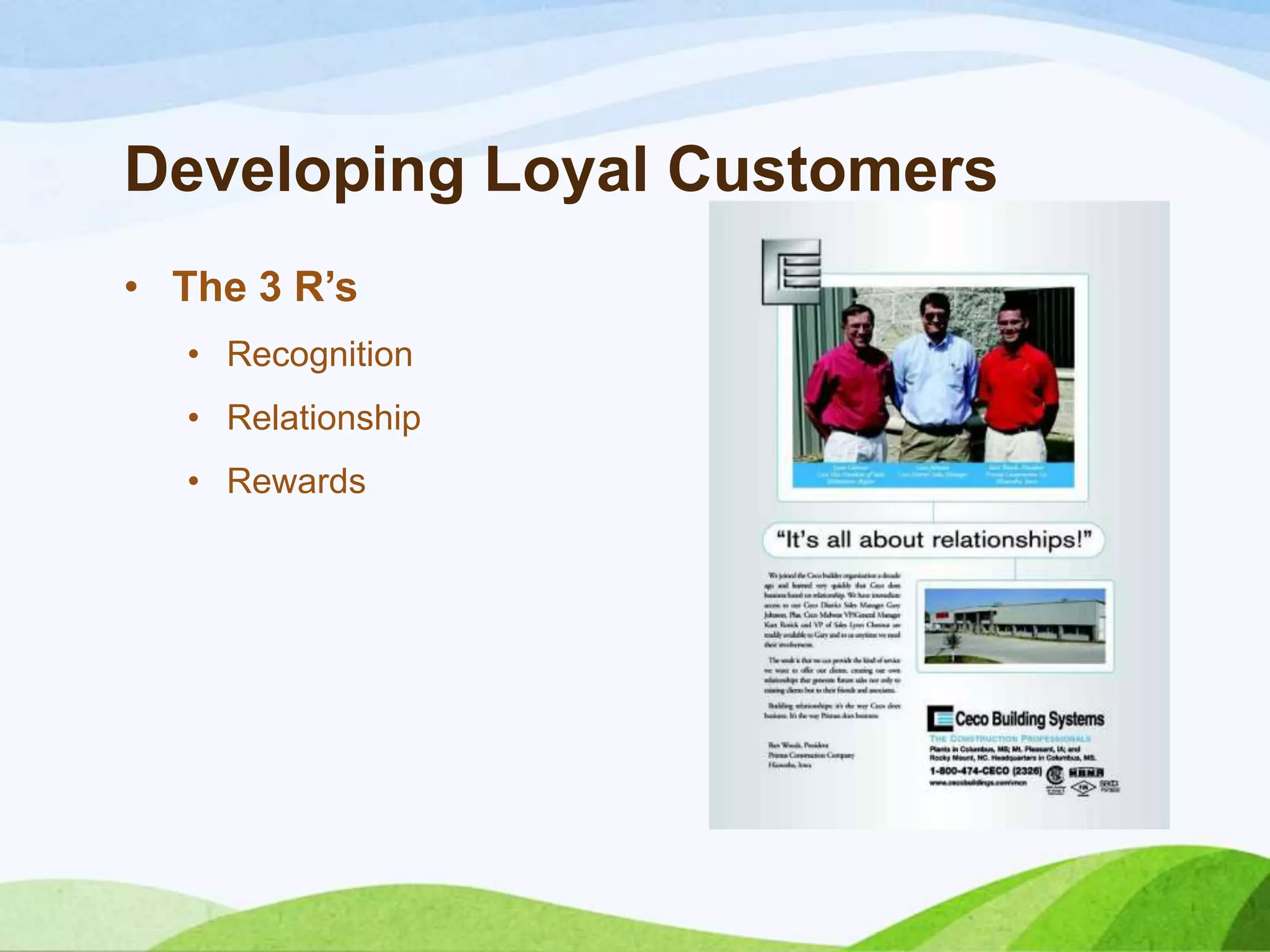
Developing Loyal Customers
• The 3 R’s
• Recognition
• Relationship
• Rewards
Database Marketing
Building relationships
Database Analytics
• Data-Driven Programs
• Data-Driven
Communications
• Direct Response
Marketing
Identifying customers
DATABASE
Tasks in Database Marketing
•Building a data warehouse
•Database coding and analysis
•Data mining
•Data-driven marketing communications
•Data-driven marketing programs
Building the Data Warehouse
•Operational database
•Customer transactions
•Follows accounting rules
•Marketing database
•Current customer information
•Former customer information
•Prospect information
Marketing Data Warehouse
•Customer names and addresses
•E-mail addresses
•Record of visits to the firm’s Web site
•History of every purchase transaction
•History of customer interactions
•Inquiries
•Complaints
•Returns
Marketing Data Warehouse
• Customer survey results
• Preferences and profiles
supplied by the customer
• Response history from
marketing campaigns
• Appended data
• Demographic and
psychographic data
(Knowledge Base
Marketing or Claritas)
• Geocoding
(CACI Coder Plus)
• Database coding through
customer analyses
• Lifetime value
• Customer segment
cluster
• RFM (recency, frequency,
monetary) analysis
Database Coding and Analysis
•Personalized communications
•Marketing campaigns
•Common forms of coding
•Lifetime value analysis
•Customer Clusters
Lifetime Value Analysis
• Represents the profit revenue of a customer
throughout the lifetime of the relationship
• Individual lifetime value
• Customer segment lifetime value
• Key figures
•Revenue and costs
•Retention rate
•Visits or purchases per time period
Data Mining
• Building profiles of
customer groups
• Preparing models that
predict future purchase
behavior
• Drives
• Marketing
communications
• Marketing programs
Why the Internet is Important in
Customer Communications
• Low cost
• Available 24/7.
• Metric analysis
• If the message was read
• Time it was read
• How much time was spent
• Customers access to additional information
• Build a bond with customers.
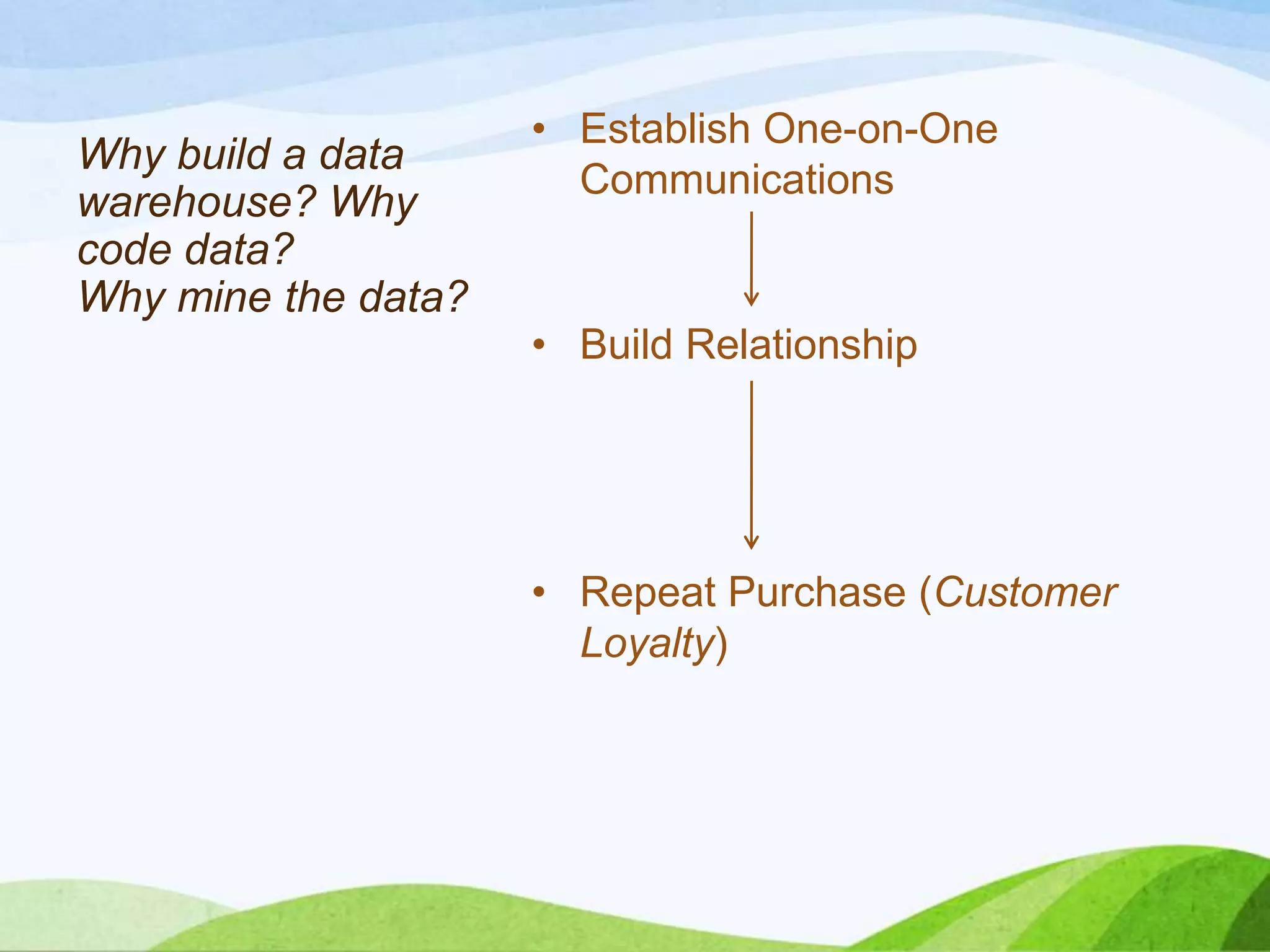
Why build a data
warehouse? Why
code data?
Why mine the data?
• Establish One-on-One
Communications
• Build Relationship
• Repeat Purchase (Customer
Loyalty)
Database-Driven
Communications
• Identification codes
• Customer IDs/passwords
• Personalized greetings
• After-sale communications
• Customer profile information
• In-bound telemarketing
• Trawling
Database-Driven Marketing
Programs
• Permission marketing
• Frequency/loyalty
programs
• Customer relationship
management
Steps in Building a Permission
Marketing Program
• Obtain permission
• Offer a curriculum over time
• Reinforce incentives to continue the relationship
• Increase level of permission
• Leverage the permission to benefit both parties
Successful Permission Marketing
• Ensure recipients have granted permission
• Make e-mails relevant
• Customize program by tracking member activity
• Empowerment
• Reciprocity
Frequency Program Objectives
• Maintain sales, margins, or profits
• Increase loyalty of existing customers
• Induce cross-selling to existing customers
• Differentiate a parity brand
• Preempt the entry of a new brand
• Preempt or match a competitor’s program
Frequency Program
Goals
• Develop customer
loyalty
• Matching or
preempting the
competition
• Target higher income
households
Principles
• Design the program to
enhance the value of the
product.
• Calculate the full cost of
the program.
• Design a program that
maximizes the
customer’s motivation to
make the next purchase.
Customer Relationship
Management
• Database technology
• Customize products
• Customize communications
• Many CRM programs failed
• Built on two primary metrics
• Lifetime value
• Share of customer
Steps to Develop
Customer Relationship Management
• Identify the company’s customers
• Differentiate customers in terms of needs and value
• Lifetime value
• Share of customer
• Interact with customers
• Improve cost efficiency
• Enhance effectiveness of interaction
• Customize goods or services
Customer Relationship
Management Reasons for Failure
• Implemented before a solid customer strategy is
created
• Rolling out a CRM program before changing the
organization to match the CRM program
• Becoming technology driven rather than customer
driven
• Customers feel like they are being stalked instead
of being wooed
Direct Response Marketing
• Direct Response
Marketing is the
targeting of products to
customers without the
use of other channel
members
• Direct Marketing
Association
• Prospecting 60%
• Customer retention
40%
Direct Mail
• Most common form of
direct marketing
• Types of lists
• Response list
• Compiled list
• Advantages
• Target mailings
(consumer, b-to-b)
• Measurable
• Driver of online sales
• Disadvantages
• Clutter
• Costs
• Digital direct-to-press
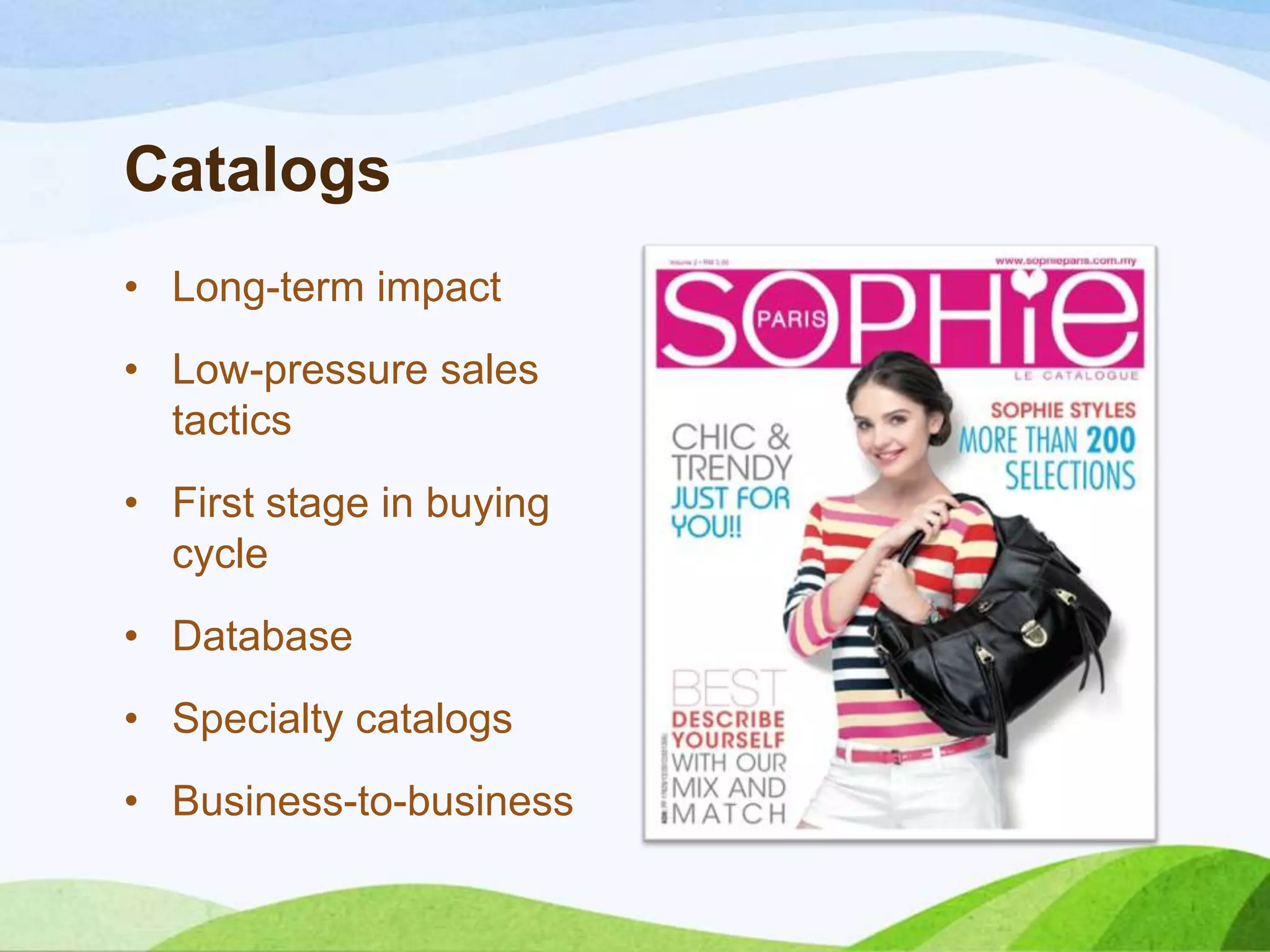
Catalogs
• Long-term impact
• Low-pressure sales
tactics
• First stage in buying
cycle
• Database
• Specialty catalogs
• Business-to-business
Direct Response Marketing
Direct Response Media
• Television
• Radio
• Magazines
• Newspapers
Internet
• Direct response to ads
• Cost-effective
• Builds relationships
• Personalization of
communication
• Customization of offer
• Search engine ads
Direct Response Marketing
Direct Sales
• In the consumer sector,
several companies use
direct sales
• The sales person
contacts friends,
relatives, coworkers, and
others and provide them
with small catalogs or
marketing brochures
Telemarketing
• Inbound telemarketing
• Cross-selling
• Outbound
telemarketing
• Cold calling
• Database
• Prospects
Personal Selling
• Personal selling offers a face-to-face opportunity to
build relationship with consumers
• Personal selling should not be limited to simply
making sales, but an additional objective should be
to develop longer-term relationship with customers
Personal Selling
• Generating leads
• Qualifying prospect
• Knowledge acquisition
• Sales presentation
• Handling objectives
• Sales closing
• Follow-up
THANK YOU

Chapter 11 Database and Direct Response Marketing and Personal Selling

  • 1.
    Database and DirectResponse Marketing Anisa Osariana 201080016
  • 2.
    Developing Loyal Customers •The 3 R’s • Recognition • Relationship • Rewards
  • 3.
    Database Marketing Building relationships DatabaseAnalytics • Data-Driven Programs • Data-Driven Communications • Direct Response Marketing Identifying customers DATABASE
  • 4.
    Tasks in DatabaseMarketing •Building a data warehouse •Database coding and analysis •Data mining •Data-driven marketing communications •Data-driven marketing programs
  • 5.
    Building the DataWarehouse •Operational database •Customer transactions •Follows accounting rules •Marketing database •Current customer information •Former customer information •Prospect information
  • 6.
    Marketing Data Warehouse •Customernames and addresses •E-mail addresses •Record of visits to the firm’s Web site •History of every purchase transaction •History of customer interactions •Inquiries •Complaints •Returns
  • 7.
    Marketing Data Warehouse •Customer survey results • Preferences and profiles supplied by the customer • Response history from marketing campaigns • Appended data • Demographic and psychographic data (Knowledge Base Marketing or Claritas) • Geocoding (CACI Coder Plus) • Database coding through customer analyses • Lifetime value • Customer segment cluster • RFM (recency, frequency, monetary) analysis
  • 8.
    Database Coding andAnalysis •Personalized communications •Marketing campaigns •Common forms of coding •Lifetime value analysis •Customer Clusters
  • 9.
    Lifetime Value Analysis •Represents the profit revenue of a customer throughout the lifetime of the relationship • Individual lifetime value • Customer segment lifetime value • Key figures •Revenue and costs •Retention rate •Visits or purchases per time period
  • 10.
    Data Mining • Buildingprofiles of customer groups • Preparing models that predict future purchase behavior • Drives • Marketing communications • Marketing programs
  • 11.
    Why the Internetis Important in Customer Communications • Low cost • Available 24/7. • Metric analysis • If the message was read • Time it was read • How much time was spent • Customers access to additional information • Build a bond with customers.
  • 12.
    Why build adata warehouse? Why code data? Why mine the data? • Establish One-on-One Communications • Build Relationship • Repeat Purchase (Customer Loyalty)
  • 13.
    Database-Driven Communications • Identification codes •Customer IDs/passwords • Personalized greetings • After-sale communications • Customer profile information • In-bound telemarketing • Trawling
  • 14.
    Database-Driven Marketing Programs • Permissionmarketing • Frequency/loyalty programs • Customer relationship management
  • 15.
    Steps in Buildinga Permission Marketing Program • Obtain permission • Offer a curriculum over time • Reinforce incentives to continue the relationship • Increase level of permission • Leverage the permission to benefit both parties
  • 16.
    Successful Permission Marketing •Ensure recipients have granted permission • Make e-mails relevant • Customize program by tracking member activity • Empowerment • Reciprocity
  • 17.
    Frequency Program Objectives •Maintain sales, margins, or profits • Increase loyalty of existing customers • Induce cross-selling to existing customers • Differentiate a parity brand • Preempt the entry of a new brand • Preempt or match a competitor’s program
  • 18.
    Frequency Program Goals • Developcustomer loyalty • Matching or preempting the competition • Target higher income households Principles • Design the program to enhance the value of the product. • Calculate the full cost of the program. • Design a program that maximizes the customer’s motivation to make the next purchase.
  • 19.
    Customer Relationship Management • Databasetechnology • Customize products • Customize communications • Many CRM programs failed • Built on two primary metrics • Lifetime value • Share of customer
  • 20.
    Steps to Develop CustomerRelationship Management • Identify the company’s customers • Differentiate customers in terms of needs and value • Lifetime value • Share of customer • Interact with customers • Improve cost efficiency • Enhance effectiveness of interaction • Customize goods or services
  • 21.
    Customer Relationship Management Reasonsfor Failure • Implemented before a solid customer strategy is created • Rolling out a CRM program before changing the organization to match the CRM program • Becoming technology driven rather than customer driven • Customers feel like they are being stalked instead of being wooed
  • 22.
    Direct Response Marketing •Direct Response Marketing is the targeting of products to customers without the use of other channel members • Direct Marketing Association • Prospecting 60% • Customer retention 40%
  • 23.
    Direct Mail • Mostcommon form of direct marketing • Types of lists • Response list • Compiled list • Advantages • Target mailings (consumer, b-to-b) • Measurable • Driver of online sales • Disadvantages • Clutter • Costs • Digital direct-to-press
  • 24.
    Catalogs • Long-term impact •Low-pressure sales tactics • First stage in buying cycle • Database • Specialty catalogs • Business-to-business
  • 25.
    Direct Response Marketing DirectResponse Media • Television • Radio • Magazines • Newspapers Internet • Direct response to ads • Cost-effective • Builds relationships • Personalization of communication • Customization of offer • Search engine ads
  • 26.
    Direct Response Marketing DirectSales • In the consumer sector, several companies use direct sales • The sales person contacts friends, relatives, coworkers, and others and provide them with small catalogs or marketing brochures Telemarketing • Inbound telemarketing • Cross-selling • Outbound telemarketing • Cold calling • Database • Prospects
  • 27.
    Personal Selling • Personalselling offers a face-to-face opportunity to build relationship with consumers • Personal selling should not be limited to simply making sales, but an additional objective should be to develop longer-term relationship with customers
  • 28.
    Personal Selling • Generatingleads • Qualifying prospect • Knowledge acquisition • Sales presentation • Handling objectives • Sales closing • Follow-up
  • 29.