CUSTOMER
RELATIONSHIP
MANAGEMENT
Chapter 11
by Jennifer Read & Janelle
Rogers
CHAPTER OVERVIEW
 What is Customer Relationship Management (CRM)?
 What is Customer Loyalty?
 The CRM Process Cycle
 Collecting Customer Data
 Customer Database
 Identifying Information
 Customer Privacy & CRM Programs
 Analyzing Customer Data & Identifying Target Customers
 Developing CRM Programs
 Implementing CRM Programs
WHAT IS CUSTOMER
RELATIONSHIP
MANAGEMENT
(CRM)?
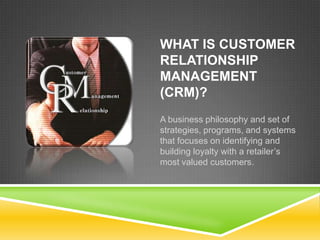
A business philosophy and set of
strategies, programs, and systems
that focuses on identifying and
building loyalty with a retailer’s
most valued customers.
CUSTOMER RELATIONSHIP
MANAGEMENT GOAL
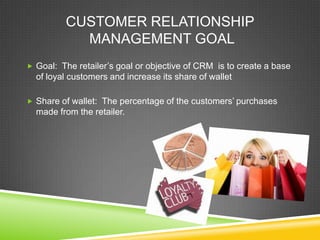
 Goal: The retailer’s goal or objective of CRM is to create a base
of loyal customers and increase its share of wallet
 Share of wallet: The percentage of the customers’ purchases
made from the retailer.
CUSTOMER LOYALTY
What is customer
loyalty?
Customers who are committed to
purchasing merchandise and services
from the retailer and will resist the
activities of competitors attempting to
attract their patronage.
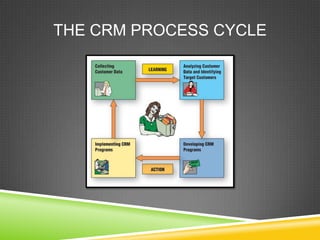
THE CRM PROCESS CYCLE
COLLECTING CUSTOMER DATA
Set-Up a Customer Database to include:
• Transactions
• Customer Contacts
• Customer Preferences
• Descriptive Information
• Responses to Marketing Activities
IDENTIFYING INFORMATION
Four ways retailers can obtain customer data:
• Ask customers for identifying information
• Use biometrics to identify customers
• Offer frequent shopper programs
• Connect Internet and store purchasing data
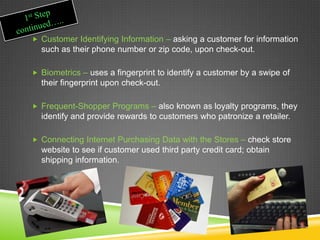
 Customer Identifying Information – asking a customer for information
such as their phone number or zip code, upon check-out.
 Biometrics – uses a fingerprint to identify a customer by a swipe of
their fingerprint upon check-out.
 Frequent-Shopper Programs – also known as loyalty programs, they
identify and provide rewards to customers who patronize a retailer.
 Connecting Internet Purchasing Data with the Stores – check store
website to see if customer used third party credit card; obtain
shipping information.
PRIVACY & CRM PROGRAMS
Privacy Concerns:
• Control over personal information when engaging in
marketplace transactions
• Knowledge about the collection and use of personal
information
• Cookies – text files that identify online visitors when
they return to a web site.
PROTECTING
CUSTOMER PRIVACY
• Opt In – Retailers must get consumers to agree
to share their personal information.
• Opt Out – Consumers can decide not to share
their personal information.
FAIR INFORMATION PRACTICES
Fair information practices set by the Federal
Trade Commission:
• Notice and Awareness
• Choice/Consent
• Access/Participation
• Integrity/Security
• Enforcement/Redress
ANALYZING CUSTOMER DATA &
IDENTIFYING TARGET CUSTOMERS
Retail Analytics: Statistical techniques/models to
find patterns in customer purchase data.
• Market Basket Analysis – Type of retail analytics that
focuses on the basket of products purchased.
Identifying the Best & Most Profitable
Customers
• Customer Lifetime Value – The expected contribution
from customers to the retailer’s profits.
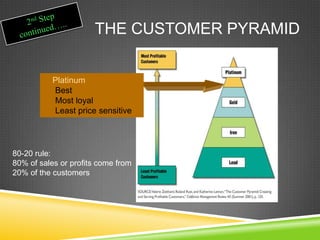
THE CUSTOMER PYRAMID
Platinum
Best
Most loyal
Least price sensitive
80-20 rule:
80% of sales or profits come from
20% of the customers
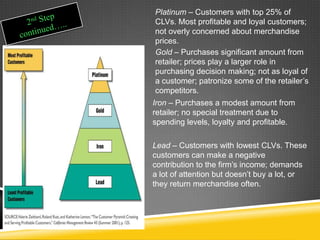
Platinum – Customers with top 25% of
CLVs. Most profitable and loyal customers;
not overly concerned about merchandise
prices.
Gold – Purchases significant amount from
retailer; prices play a larger role in
purchasing decision making; not as loyal of
a customer; patronize some of the retailer’s
competitors.
Iron – Purchases a modest amount from
retailer; no special treatment due to
spending levels, loyalty and profitable.
Lead – Customers with lowest CLVs. These
customers can make a negative
contribution to the firm’s income; demands
a lot of attention but doesn’t buy a lot, or
they return merchandise often.
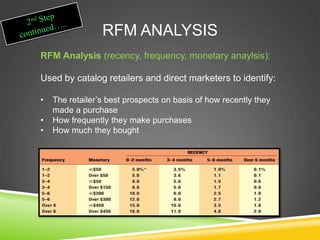
RFM ANALYSIS
RFM Analysis (recency, frequency, monetary anaylsis):
Used by catalog retailers and direct marketers to identify:
• The retailer’s best prospects on basis of how recently they
made a purchase
• How frequently they make purchases
• How much they bought
DEVELOPING CRM PROGRAMS
Customer Retention
 Frequent-Shoppers Programs
 Special Customer Services
 Personalization
 Community
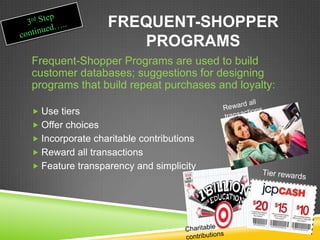
FREQUENT-SHOPPER
PROGRAMS
Frequent-Shopper Programs are used to build
customer databases; suggestions for designing
programs that build repeat purchases and loyalty:
 Use tiers
 Offer choices
 Incorporate charitable contributions
 Reward all transactions
 Feature transparency and simplicity
SPECIAL CUSTOMER SERVICES
Retailers who provide “high-quality” customer service to
its best customers.
 Private parties
 Exclusive offers
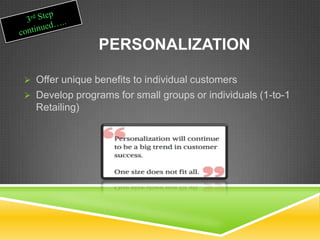
PERSONALIZATION
 Offer unique benefits to individual customers
 Develop programs for small groups or individuals (1-to-1
Retailing)
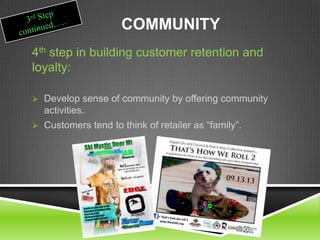
COMMUNITY
4th step in building customer retention and
loyalty:
 Develop sense of community by offering community
activities.
 Customers tend to think of retailer as “family”.
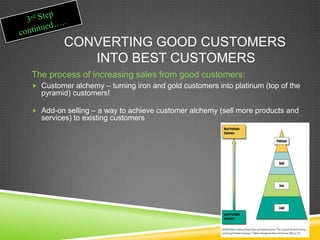
CONVERTING GOOD CUSTOMERS
INTO BEST CUSTOMERS
The process of increasing sales from good customers:
 Customer alchemy – turning iron and gold customers into platinum (top of the
pyramid) customers!
 Add-on selling – a way to achieve customer alchemy (sell more products and
services) to existing customers
DEALING WITH
UNPROFITABLE CUSTOMERS
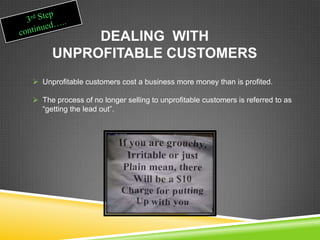
 Unprofitable customers cost a business more money than is profited.
 The process of no longer selling to unprofitable customers is referred to as
“getting the lead out”.
IMPLEMENTING CRM PROGRAMS
To effectively implement CRM programs, coordination is required between the
Human Resources, Marketing, IT, Store Operations, and the Management
Team.

Chapter 11 Customer Relationship Management

  • 1.
  • 2.
    CHAPTER OVERVIEW  Whatis Customer Relationship Management (CRM)?  What is Customer Loyalty?  The CRM Process Cycle  Collecting Customer Data  Customer Database  Identifying Information  Customer Privacy & CRM Programs  Analyzing Customer Data & Identifying Target Customers  Developing CRM Programs  Implementing CRM Programs
  • 3.
    WHAT IS CUSTOMER RELATIONSHIP MANAGEMENT (CRM)? Abusiness philosophy and set of strategies, programs, and systems that focuses on identifying and building loyalty with a retailer’s most valued customers.
  • 4.
    CUSTOMER RELATIONSHIP MANAGEMENT GOAL Goal: The retailer’s goal or objective of CRM is to create a base of loyal customers and increase its share of wallet  Share of wallet: The percentage of the customers’ purchases made from the retailer.
  • 5.
    CUSTOMER LOYALTY What iscustomer loyalty? Customers who are committed to purchasing merchandise and services from the retailer and will resist the activities of competitors attempting to attract their patronage.
  • 7.
  • 8.
    COLLECTING CUSTOMER DATA Set-Upa Customer Database to include: • Transactions • Customer Contacts • Customer Preferences • Descriptive Information • Responses to Marketing Activities
  • 9.
    IDENTIFYING INFORMATION Four waysretailers can obtain customer data: • Ask customers for identifying information • Use biometrics to identify customers • Offer frequent shopper programs • Connect Internet and store purchasing data
  • 10.
     Customer IdentifyingInformation – asking a customer for information such as their phone number or zip code, upon check-out.  Biometrics – uses a fingerprint to identify a customer by a swipe of their fingerprint upon check-out.  Frequent-Shopper Programs – also known as loyalty programs, they identify and provide rewards to customers who patronize a retailer.  Connecting Internet Purchasing Data with the Stores – check store website to see if customer used third party credit card; obtain shipping information.
  • 11.
    PRIVACY & CRMPROGRAMS Privacy Concerns: • Control over personal information when engaging in marketplace transactions • Knowledge about the collection and use of personal information • Cookies – text files that identify online visitors when they return to a web site.
  • 12.
    PROTECTING CUSTOMER PRIVACY • OptIn – Retailers must get consumers to agree to share their personal information. • Opt Out – Consumers can decide not to share their personal information.
  • 13.
    FAIR INFORMATION PRACTICES Fairinformation practices set by the Federal Trade Commission: • Notice and Awareness • Choice/Consent • Access/Participation • Integrity/Security • Enforcement/Redress
  • 14.
    ANALYZING CUSTOMER DATA& IDENTIFYING TARGET CUSTOMERS Retail Analytics: Statistical techniques/models to find patterns in customer purchase data. • Market Basket Analysis – Type of retail analytics that focuses on the basket of products purchased. Identifying the Best & Most Profitable Customers • Customer Lifetime Value – The expected contribution from customers to the retailer’s profits.
  • 15.
    THE CUSTOMER PYRAMID Platinum Best Mostloyal Least price sensitive 80-20 rule: 80% of sales or profits come from 20% of the customers
  • 16.
    Platinum – Customerswith top 25% of CLVs. Most profitable and loyal customers; not overly concerned about merchandise prices. Gold – Purchases significant amount from retailer; prices play a larger role in purchasing decision making; not as loyal of a customer; patronize some of the retailer’s competitors. Iron – Purchases a modest amount from retailer; no special treatment due to spending levels, loyalty and profitable. Lead – Customers with lowest CLVs. These customers can make a negative contribution to the firm’s income; demands a lot of attention but doesn’t buy a lot, or they return merchandise often.
  • 17.
    RFM ANALYSIS RFM Analysis(recency, frequency, monetary anaylsis): Used by catalog retailers and direct marketers to identify: • The retailer’s best prospects on basis of how recently they made a purchase • How frequently they make purchases • How much they bought
  • 18.
    DEVELOPING CRM PROGRAMS CustomerRetention  Frequent-Shoppers Programs  Special Customer Services  Personalization  Community
  • 19.
    FREQUENT-SHOPPER PROGRAMS Frequent-Shopper Programs areused to build customer databases; suggestions for designing programs that build repeat purchases and loyalty:  Use tiers  Offer choices  Incorporate charitable contributions  Reward all transactions  Feature transparency and simplicity
  • 20.
    SPECIAL CUSTOMER SERVICES Retailerswho provide “high-quality” customer service to its best customers.  Private parties  Exclusive offers
  • 21.
    PERSONALIZATION  Offer uniquebenefits to individual customers  Develop programs for small groups or individuals (1-to-1 Retailing)
  • 22.
    COMMUNITY 4th step inbuilding customer retention and loyalty:  Develop sense of community by offering community activities.  Customers tend to think of retailer as “family”.
  • 23.
    CONVERTING GOOD CUSTOMERS INTOBEST CUSTOMERS The process of increasing sales from good customers:  Customer alchemy – turning iron and gold customers into platinum (top of the pyramid) customers!  Add-on selling – a way to achieve customer alchemy (sell more products and services) to existing customers
  • 24.
    DEALING WITH UNPROFITABLE CUSTOMERS Unprofitable customers cost a business more money than is profited.  The process of no longer selling to unprofitable customers is referred to as “getting the lead out”.
  • 25.
    IMPLEMENTING CRM PROGRAMS Toeffectively implement CRM programs, coordination is required between the Human Resources, Marketing, IT, Store Operations, and the Management Team.