Download as PDF, PPTX
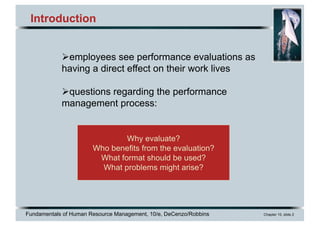
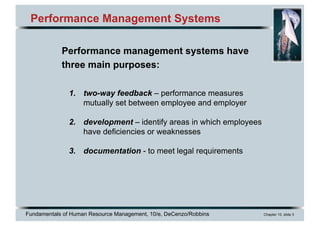
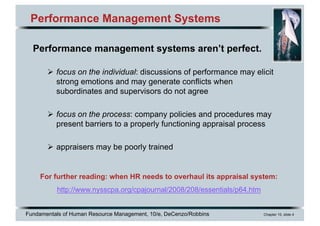
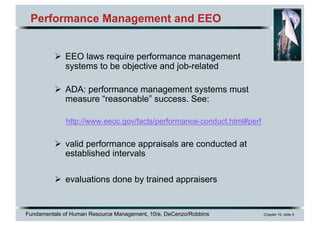
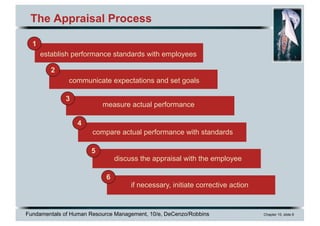
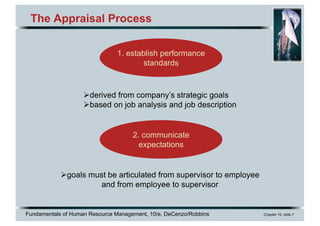
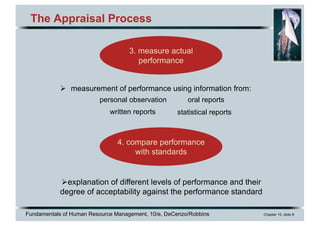
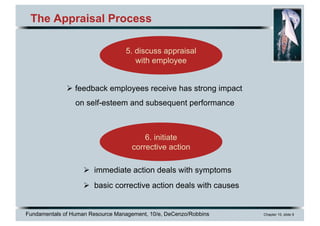
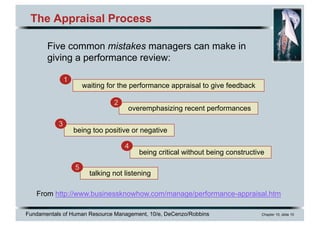
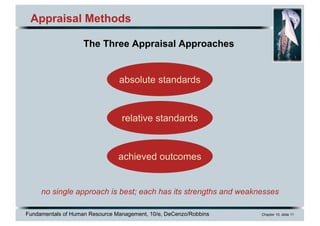
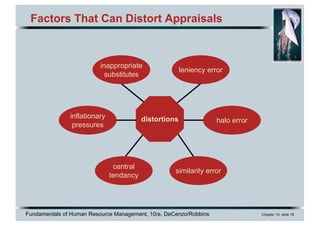
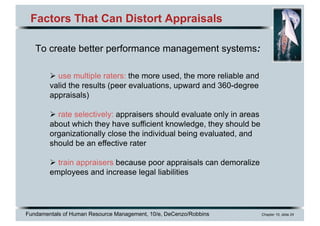
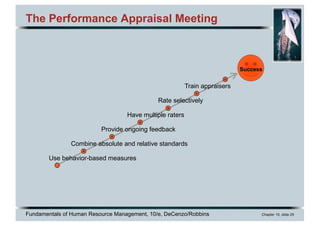
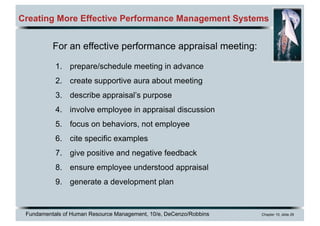
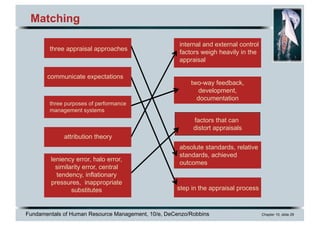

Performance evaluations serve three main purposes: two-way feedback between employees and employers, employee development, and legal documentation. However, performance management systems are imperfect and can focus too much on individuals, leading to strong emotions and conflicts. Several factors can also distort appraisals, such as leniency error, halo effect, and central tendency. To improve systems, organizations should use behavior-based and multiple ratings, provide ongoing feedback, and train appraisers. The evaluation process involves setting standards, measuring performance, discussing reviews, and initiating corrective actions when needed.


