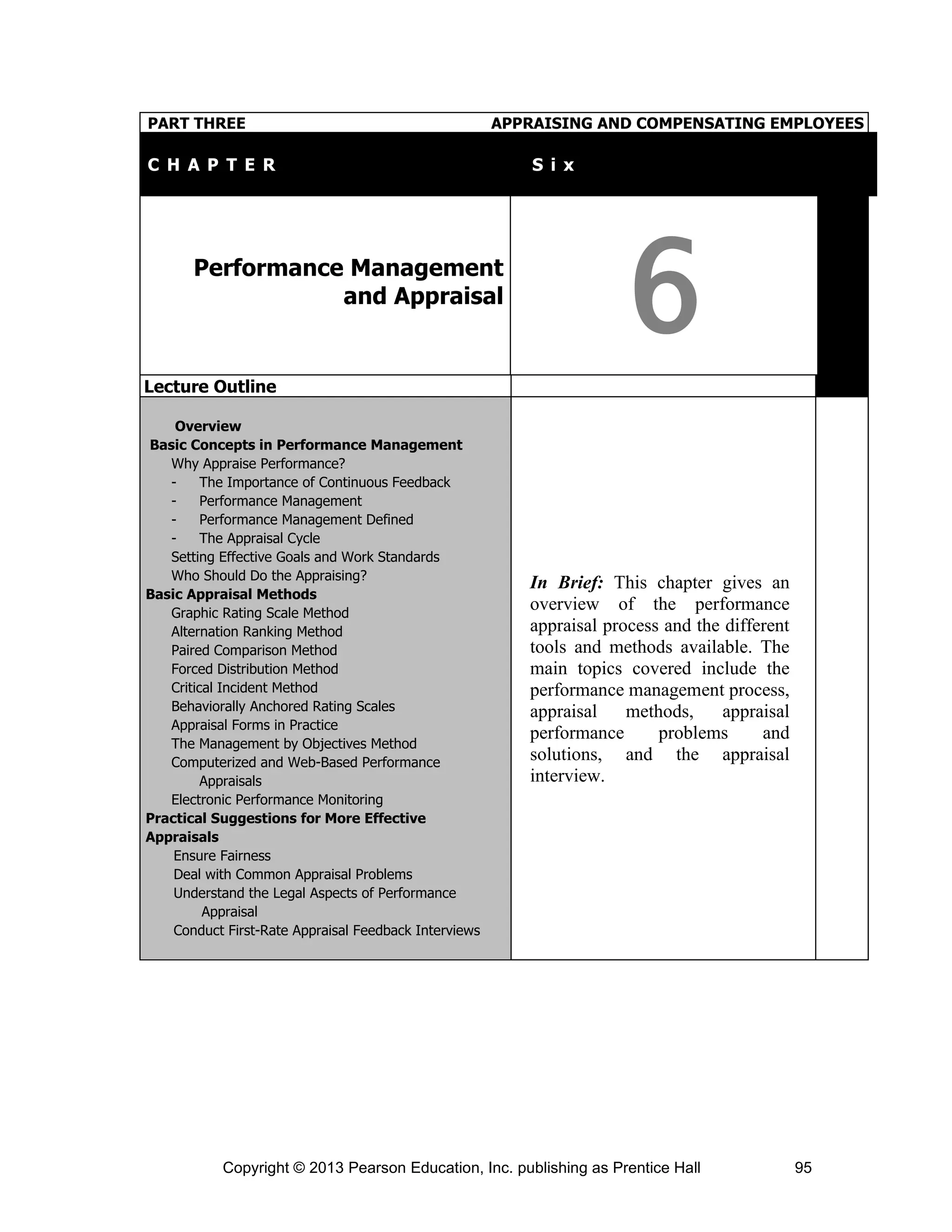
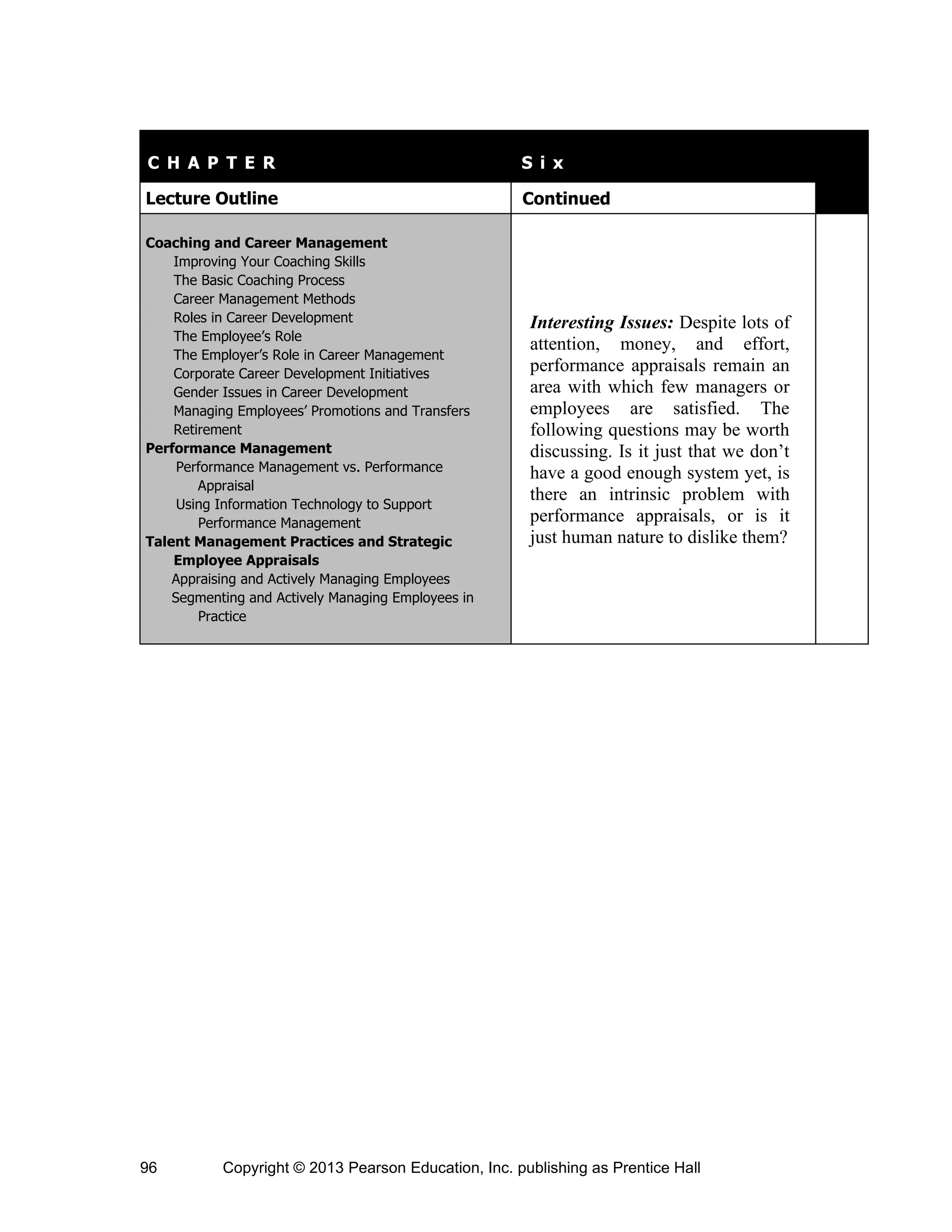
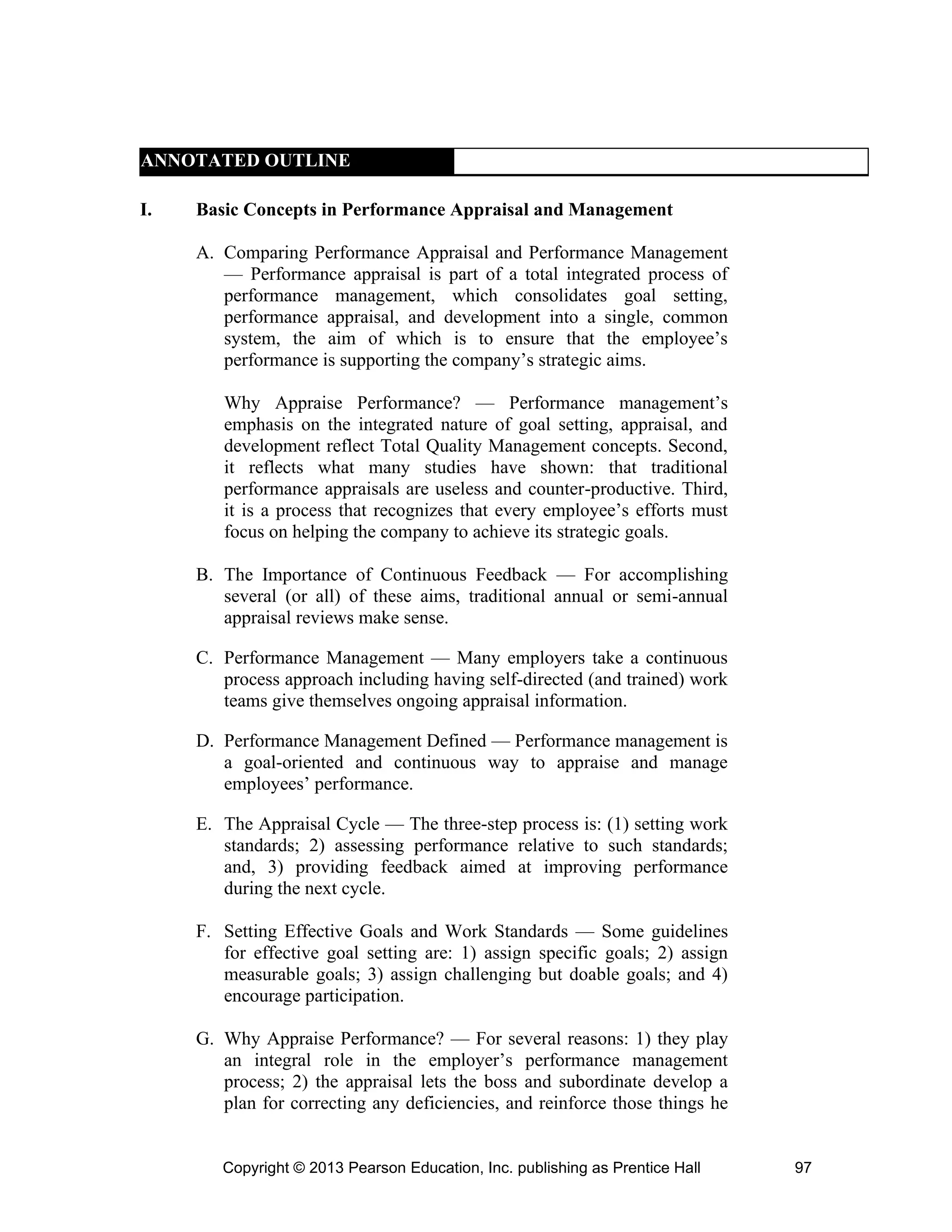
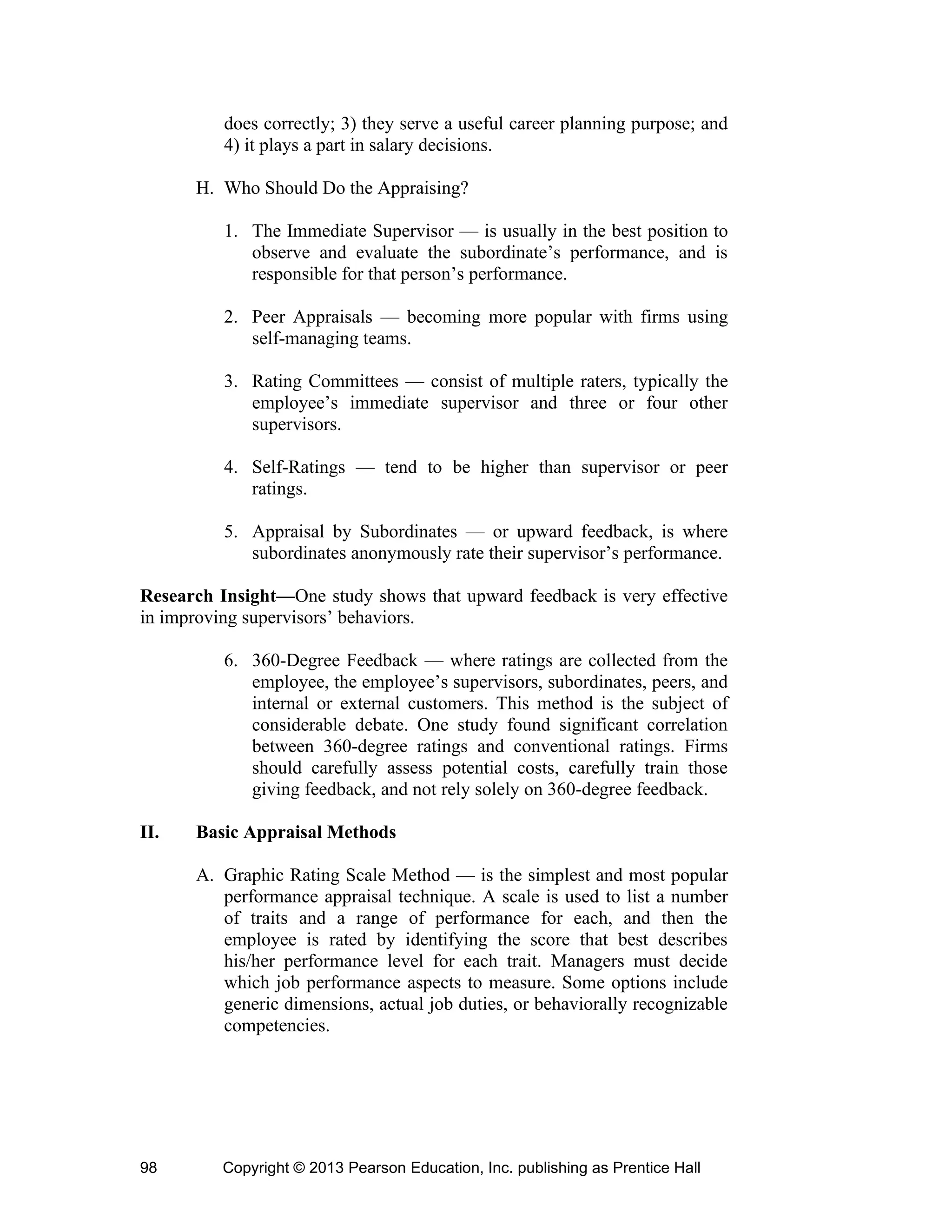
Framework for Human Resource Management 7th Edition Gary Dessler Solutions Manual
Framework for Human Resource Management 7th Edition Gary Dessler Solutions Manual
Framework for Human Resource Management 7th Edition Gary Dessler Solutions Manual
Framework for Human Resource Management 7th Edition Gary Dessler Solutions Manual
Framework for Human Resource Management 7th Edition Gary Dessler Solutions Manual
1.
Framework for HumanResource Management 7th
Edition Gary Dessler Solutions Manual download
https://testbankdeal.com/product/framework-for-human-resource-
management-7th-edition-gary-dessler-solutions-manual/
Find test banks or solution manuals at testbankdeal.com today!
2.
We have selectedsome products that you may be interested in
Click the link to download now or visit testbankdeal.com
for more options!.
Framework for Human Resource Management 7th Edition Gary
Dessler Test Bank
https://testbankdeal.com/product/framework-for-human-resource-
management-7th-edition-gary-dessler-test-bank/
Human Resource Management 14th Edition Gary Dessler
Solutions Manual
https://testbankdeal.com/product/human-resource-management-14th-
edition-gary-dessler-solutions-manual/
Human Resource Management 13th Edition Gary Dessler
Solutions Manual
https://testbankdeal.com/product/human-resource-management-13th-
edition-gary-dessler-solutions-manual/
Electric Power Systems A First Course 1st Edition Mohan
Solutions Manual
https://testbankdeal.com/product/electric-power-systems-a-first-
course-1st-edition-mohan-solutions-manual/
3.
Starting Out withProgramming Logic and Design 4th Edition
Tony Gaddis Test Bank
https://testbankdeal.com/product/starting-out-with-programming-logic-
and-design-4th-edition-tony-gaddis-test-bank/
Vanders Human Physiology The Mechanisms of Body Function
14th Edition Widmaier Solutions Manual
https://testbankdeal.com/product/vanders-human-physiology-the-
mechanisms-of-body-function-14th-edition-widmaier-solutions-manual/
Accounting Information Systems 9th Edition Hall Test Bank
https://testbankdeal.com/product/accounting-information-systems-9th-
edition-hall-test-bank/
Community Based Corrections A TextReader 1st Edition
Barton-Bellessa Test Bank
https://testbankdeal.com/product/community-based-corrections-a-
textreader-1st-edition-barton-bellessa-test-bank/
Nursing research methods and critical appraisal for
evidenced based practice 8th Edition Wood Test Bank
https://testbankdeal.com/product/nursing-research-methods-and-
critical-appraisal-for-evidenced-based-practice-8th-edition-wood-test-
bank/
4.
Consumer Behavior BuildingMarketing Strategy 12th Edition
Hawkins Test Bank
https://testbankdeal.com/product/consumer-behavior-building-marketing-
strategy-12th-edition-hawkins-test-bank/
‘And I amsure it is your own feeling too,’ cried Lady Caryisfort. ‘It is
always best.’
And she dismissed the subject, not feeling herself possessed of sufficient
information to enter into it more fully. She was a little shaken in her own
theory on the subject of the Berties, one of whom at least she felt convinced
must have designs on Kate’s fortune. That was ‘only natural;’ but at least
Kate was not aware of it. And Lady Caryisfort was half annoyed and half
pleased when one of her friends asked admittance in the evening, bringing
with her the young Count Buoncompagni, whom Kate had met at the
Embassy. It was a Countess Strozzi, an aunt of his, and an intimate of Lady
Caryisfort’s, who was his introducer. There was nothing to be said against
the admission of a good young man who had come to escort his aunt in her
visit to her invalid friend, but it was odd that they should have chosen that
particular night, and no other. Kate was in her morning dress, as she had
gone to make a morning call, and was a little troubled to be so discovered;
but girls look well in anything, as Lady Caryisfort said to herself, with a
sigh.
23.
CHAPTER XLII.
It wasabout this time, about two months after their arrival in Florence, and
when the bright and pleasant ‘family life’ we have been describing had gone
on for about six weeks in unbroken harmony, that there began to breathe
about Kate, like a vague, fitful wind, such as sometimes rises in Autumn or
Spring, one can’t tell how or from whence, a curious sense of isolation, of
being somehow left out and put aside in the family party. For some time the
sensation was quite indefinite. She felt chilled by it; she could not tell how.
Then she would find herself sitting alone in a corner, while the others were
grouped together, without being able to explain to herself how it happened.
It had happened several times, indeed, before she thought of attempting to
explain so strange an occurrence; and then she said to herself that of course
it was mere chance, or that she herself must have been sulky, and nobody
else was aware.
A day or two, however, after her visit to Lady Caryisfort, there came a
little incident which could not be quite chance. In the evening Mrs.
Anderson sat down by her, and began to talk about indifferent subjects, with
a little air of constraint upon her, the air of one who has something not quite
pleasant to say. Kate’s faculties had been quickened by the change which
she had already perceived, and she saw that something was coming, and
was chafed by this preface, as only a very frank and open nature can be. She
longed to say, ‘Tell me what it is, and be done with it.’ But she had no
excuse for such an outcry. Mrs. Anderson only introduced her real subject
after at least an hour’s talk.
‘By-the-bye,’ she said—and Kate knew in a moment that now it was
coming—‘we have an invitation for to-morrow, dear, which I wish to
accept, for Ombra and myself, but I don’t feel warranted in taking you—
and, at the same time, I don’t like the idea of leaving you.’
‘Oh! pray don’t think of me, aunt,’ said Kate, quickly. A flush of
evanescent anger at this mode of making it known suddenly came over her.
But, in reality, she was half stunned, and could not believe her ears. It made
her vague sense of desertion into something tangible at once. It realised all
her vague feelings of being one too many. But, at the same time, it stupefied
24.
her. She couldnot understand it. She did not look up, but listened with eyes
cast down, and a pain which she did not understand in her heart.
‘But I must think of you, my darling,’ said Mrs. Anderson, in a voice
which, at this moment, rung false and insincere in the girl’s ears, and
seemed to do her a positive harm. ‘How is it possible that I should not think
of you? It is an old friend of mine, a merchant from Leghorn, who has
bought a place in the country about ten miles from Florence. He is a man
who has risen from nothing, and so has his wife, but they are kind people all
the same, and used to be good to me when I was poor. Lady Barker is going
—for she, too, you know, is of my old set at Leghorn, and, though she has
risen in the world, she does not throw off people who are rich. But I don’t
think your uncle would like it, if I took you there. You know how very
careful I have been never to introduce you to anybody he could find fault
with. I have declined a great many pleasant invitations here, for that very
reason.’
‘Oh! please, aunt, don’t think of doing so any more,’ cried Kate, stung to
the heart. ‘Don’t deprive yourself of anything that is pleasant, for me. I am
very well. I am quite happy. I don’t require anything more than I have here.
Go, and take Ombra, and never mind me.’
And the poor child had great difficulty in refraining from tears. Indeed,
but for the fact that it would have looked like crying for a lost pleasure,
which Kate, who was stung by a very different feeling, despised, she would
not have been able to restrain herself. As it was, her voice trembled, and her
cheeks burned.
‘Kate, I don’t think you are quite just to me,’ said Mrs. Anderson. ‘You
know very well that neither in love, nor in anything else, have I made a
difference between Ombra and you. But in this one thing I must throw
myself upon your generosity, dear. When I say your generosity, Kate, I
mean that you should put the best interpretation on what I say, not the
worst.’
‘I did not mean to put any interpretation,’ said Kate, drawn two ways,
and ashamed now of her anger. ‘Why should you explain to me, auntie, or
make a business of it? Say you are going somewhere to-morrow, and you
think it best I should not go. That is enough. Why should you say a word
more?’
25.
‘Because I wantedto treat you like a woman, not like a child, and to tell
you the reason,’ said Mrs. Anderson. ‘But we will say no more about it, as
those boys are coming. I do hope, however, that you understand me, Kate.’
Kate could make no answer, as ‘the boys’ appeared at this moment; but
she said to herself sadly, ‘No, I don’t understand—I can’t tell what it
means,’ with a confused pain which was very hard to bear. It was the first
time she had been shaken in her perfect faith in the two people who had
brought her to life, as she said. She did not rush into the middle of the talk,
as had once been her practice, but sat, chilled, in her corner, wondering
what had come over her. For it was not only that the others were changed—
a change had come upon herself also. She was chilled; she could not tell
how. Instead of taking the initiative, as she used to do, in the gay and frank
freshness which everybody had believed to be the very essence of her
character, she sat still, and waited to be called, to be appealed to. Even
when she became herself conscious of this, and tried to shake it off, she
could not succeed. She was bound as in chains; she could not get free.
And when the next morning came, and Kate, with a dull amaze which
she could not overcome, saw the party go off with the usual escort, the only
difference being that Lady Barker occupied her own usual place, her
feelings were not to be described. She watched them from the balcony
while they got into the carriage, and arranged themselves gaily. She looked
down upon them and laughed too, and bade them enjoy themselves. She
met the wistful look in Mrs. Anderson’s eyes with a smile, and, recovering
her courage for the moment, made it understood that she meant to pass an
extremely pleasant day by herself. But when they drove away, Kate went in,
and covered her eyes with her hands. It was not the pleasure, whatever that
might be; but why was she left behind? What had she done that they wanted
her no longer?—that they found her in the way? It was the first slight she
had ever had to bear, and it went to her very heart.
It was a lovely bright morning in December. Lovely mornings in
December are rare in England; but even in England there comes now and
then a winter day which is a delight and luxury, when the sky is blue,
crisper, profounder than summer, when the sun is resplendent, pouring over
everything the most lavish and overwhelming light; when the atmosphere is
still as old age is when it is beautiful—stilled, chastened, subdued, with no
possibility of uneasy winds or movement of life; but all quietness, and now
and then one last leaf fluttering down from the uppermost boughs. Such a
26.
morning in Florenceis divine. The great old houses stand up, expanding, as
it were, erecting their old heads gratefully into the sun and blueness of the
sphere; the old towers rise, poising themselves, light as birds, yet strong as
giants, in that magical atmosphere. The sun-lovers throng to the bright side
of the way, and bask and laugh and grow warm and glad. And in the
distance the circling hills stand round about the plain, and smile from all
their heights in fellow-feeling with the warm and comforted world below.
One little girl, left alone in a sunny room on the Lung-Arno in such a
morning, with nothing but her half-abandoned tasks to amuse her, nobody
to speak to, nothing to think of but a vague wrong done to herself, which
she does not understand, is not in a cheerful position, though everything
about her is so cheerful; and Kate’s heart sank down—down to her very
slippers.
‘I don’t understand why you shouldn’t come,’ said some one, bursting in
suddenly. ‘Oh! I beg your pardon; I did not mean to be so abrupt.’
For Kate had been crying. She dashed away her tears with an indignant
hand, and looked at Bertie with defiance. Then the natural reaction came to
her assistance. He looked so scared and embarrassed standing there, with
his hat in his hand, breathless with haste, and full of compunction. She
laughed in spite of herself.
‘I am not so ashamed as if it had been anyone else,’ she said. ‘You have
seen me cry before. Oh! it is not for the expedition; it is only because I
thought they did not want me, that was all.’
‘I wanted you,’ said Bertie, still breathless, and under his breath.
Kate looked up wondering, and suddenly met his eye, and they both
blushed crimson. Why? She laughed to shake it off, feeling, somehow, a
pleasanter feeling about her heart.
‘It was very kind of you,’ she said; ‘but, you know, you don’t count; you
are only one of the boys. You have come back for something?’
‘Yes, Lady Barker’s bag, with her fan and her gloves, and her eau-de-
Cologne.’
‘Oh! Lady Barker’s. There it is, I suppose. I hate Lady Barker!’ cried
Kate.
‘And so do I; and to see her in your place——’
27.
‘Never mind aboutthat. Go away, please, or you will be late; and I hope
you will have a pleasant day all the same.’
‘Not without you,’ said Bertie; and he took her hand, and for one
moment seemed doubtful what to do with it. What was he going to do with
it? The thought flashed through Kate’s mind with a certain amusement; but
he thought better of the matter, and did nothing. He dropped her hand,
blushing violently again, and then turned and fled, leaving her consoled and
amused, and in a totally changed condition. What did he mean to do with
the hand he had taken? Kate held it up and looked at it carefully, and
laughed till the tears came to her eyes. He had meant to kiss it, she felt sure,
and Kate had never yet had her hand kissed by mortal man; but he had
thought better of it. It was ‘like Bertie.’ She was so much amused that her
vexation went altogether out of her mind.
And in the afternoon Lady Caryisfort called and took her out. When she
heard the narrative of Kate’s loneliness, Lady Caryisfort nodded her head
approvingly, and said it was very nice of Mrs. Anderson, and quite what
ought to have been. Upon which Kate became ashamed of herself, and was
convinced that she was the most ungrateful and guilty of girls.
‘A distinction must be made,’ said Lady Caryisfort, ‘especially as it is
now known who you are. For Miss Anderson it is quite different, and her
mother, of course, must not neglect her interests.’
‘How funny that anyone’s interests should be affected by an invitation!’
said Kate, with one of those unintentional revelations of her sense of her
own greatness which were so amusing to her friends. And Count
Buoncompagni came to her side of the carriage when they got to the
Cascine. It was entirely under Lady Caryisfort’s wing that their
acquaintance had been formed, and nobody, accordingly, could have a word
to say against it. Though she could not quite get Bertie (as she said) out of
her head after the incident of the morning, the young Italian was still a very
pleasant companion. He talked well, and told her about the people as none
of the English could do. ‘There is Roscopanni, who was the first out in ’48,
he said. ‘He was nearly killed at Novara. But perhaps you do not care to
hear about our patriots?’
‘Oh! but I do,’ cried Kate, glowing into enthusiasm; and Count Antonio
was nothing loth to be her instructor. He confessed that he himself had been
‘out,’ as Fergus MacIvor, had he survived it, might have confessed, to the
28.
’45. Kate hadher little prejudices, like all English girls—her feeling of the
inferiority of ‘foreigners,’ and their insincerity and theatrical emotionalness.
But Count Antonio took her imagination by storm. He was handsome; he
had the sonorous masculine voice which suits Italian best, and does most
justice to its melodious splendour; yet he did not speak much Italian, but
only a little now and then, to give her courage to speak it. Even French,
however, which was their general medium of communication, was an
exercise to Kate, who had little practice in any language but her own. Then
he told her about his own family, and that they were poor, with a frankness
which went to Kate’s heart; and she told him, as best she could, about
Francesca, and how she had heard the history of the Buoncompagni
—‘before ever I saw you,’ Kate said, stretching the fact a little.
Thus the young man was emboldened to propose to Lady Caryisfort a
visit to his old palace and its faded glories. There were some pictures he
thought that ces dames would like to look at. ‘Still some pictures, though
not much else,’ he said, ending off with a bit of English, and a shrug of his
shoulders, and a laugh at his own poverty; and an appointment was made
before the carriage drove off.
‘The Italians are not ashamed of being poor,’ said Kate, with animation,
as they went home.
‘If they were, they might as well give in at once, for they are all poor,’
said Lady Caryisfort, with British contempt. But Kate, who was rich,
thought all the more of the noble young Florentine, with his old palace and
his pictures. And then he had been ‘out.’
29.
CHAPTER XLIII.
Kate tookit upon herself to make unusual preparations for the supper on
that particular evening. She decorated the table with her own hands, and
coaxed Francesca to the purchase of various dainties beyond the ordinary.
‘They will be tired; they will want something when they come back,’ she
said.
‘Mademoiselle is very good; it is angelic to be so kind after what has
passed—after the affair of the morning,’ said Francesca. ‘If I had been in
Mademoiselle’s place, I do not think I should have been able to show so
much education. For my part, it has yet to be explained to me how my lady
could go to amuse herself and leave Mees Katta alone here.’
‘Francesca, don’t talk nonsense,’ said Kate. ‘I quite approve what my
aunt did. She is always right, whatever anyone may think.’
‘It is very likely, Mees Katta,’ said Francesca; ‘but I shall know ze why,
or I will not be happy. It is not like my lady. She is no besser than a slave
with her Ombra. But I shall know ze why; I shall know ze reason why!’
‘Then don’t tell me, please, for I don’t wish to be cross again,’ said Kate,
continuing her preparations. ‘Only I do hope they won’t bring Lady Barker
with them,’ she added to herself. Lady Barker was the scapegoat upon
whom Kate spent her wrath. She forgave the other, but her she had made up
her mind not to forgive. It was night when the party came home. Kate
rushed to the balcony to see them arrive, and looked on; without, however,
making her presence known. There was but lamplight this time, but enough
to show how Ombra sprang out of the carriage, and how thoroughly the air
of a successful expedition hung about the party. ‘Well!’ said Kate to herself,
‘and I have had a pleasant day too.’ She ran to the door to welcome them,
but, perhaps, made her appearance inopportunely. Ombra was coming
upstairs hand in hand with some one—it was not like her usual gravity—
and when the pair saw the door open they separated, and came up the
remaining steps each alone. This was odd, and startled Kate. Then, when
she asked, ‘Have you had a pleasant day?’ some one answered, ‘The most
delightful day that ever was!’ with an enthusiasm that wounded her feelings
—she could not tell why. Was it indeed Bertie Hardwick who said that? he
30.
who had spokenso differently in the morning? Kate stood aghast, and asked
no more questions. She would have let the two pass her, but Ombra put an
arm round her waist and drew her in.
‘Oh Kate, listen, I am so happy!’ said Ombra, whispering in her ear.
‘Don’t be vexed about anything, dear; you shall know it all afterwards. I am
so happy!’
This was said in the little dark ante-room, where there were no lights,
and Kate could only give her cousin a hasty kiss before she danced away.
Bertie, for his part, in the dark, too, said nothing at all. He did not explain
the phrase—‘The most delightful day that ever was!’ ‘Well!’ said poor Kate
to herself, gulping down a little discomfort—‘well! I have had a pleasant
day too.’
And then what a gay supper it was!—gayer than usual; gayer than she
had ever known it! She did not feel as if she were quite in the secret of their
merriment. They had been together all day, while she had been alone; they
had all the jokes of the morning to carry on, and a hundred allusions which
fell flat upon Kate. She had been put on her generosity, it was true, and
would not, for the world, have shown how much below the general tone of
hilarity she was; but she was not in the secret, and very soon she felt ready
to flag. When she put in her experiences of the day, a momentary polite
attention was given, but everybody’s mind was elsewhere. Mrs. Anderson
had a half-frightened, half-puzzled look, and now and then turned affecting
glances upon Kate; but Ombra was radiant. Never had she looked so
beautiful; her eyes shone like two stars; her faint rose-colour went and
came; her face was lit with soft smiles and happiness. All sorts of fancies
crossed Kate’s mind. She looked at the young men, who were both in
joyous spirits—but either her discrimination failed her, or her eyes were
dim, or her understanding clouded. Altogether Kate was in a maze, and did
not know what to do or think; they stayed till it was very late, and both
Ombra and her mother went to close and lock the door after them when
they went away, leaving Kate once more alone. She sat still at a corner of
the table, and listened to the voices and laughter still at the door. Bertie
Hardwick’s voice, she thought, was the one she heard most. They were all
so happy, and she only listening to it, not knowing what it meant! Then,
when the door was finally locked, Mrs. Anderson came back to her alone.
‘Ombra has gone to bed,’ she said. ‘She is tired, though she has enjoyed it
31.
so very much.And, my dear child, you must go to bed too. It is too late for
you to be up.’
‘But you have had a very pleasant day.’
‘They have—oh yes!’ said Mrs Anderson. ‘The young ones have been
very happy; but it has not been a pleasant day to me. I have so many
anxieties; and then to think of you by yourself at home.’
‘I was not by myself,’ said Kate. Lady Caryisfort called and took me
out.’
‘Ah! Lady Caryisfort is very kind,’ said Mrs. Anderson, with a tone,
however, in which there was neither delight nor gratitude; and then she put
her arm round her niece, and leaned upon her. ‘Ah!’ she said again, ‘I can
see how it will be! They will wean you away from me. You who have never
given me a moment’s uneasiness, who have been such a good child to me! I
suppose it must be so—and I ought not to complain.’
‘But, auntie,’ said Kate, bewildered, ‘nobody tries to take me from you
—nobody wants me, that I know of—even you——’
‘Yes,’ said Mrs. Anderson, ‘even I. I know. And I shall have to put up
with that too. Oh! Kate, I know more than one of us will live to regret this
day;—but nobody so much as I.’
‘I don’t understand you. Auntie, you are over-tired. You ought to be
asleep.’
‘You will understand me some time,’ said Mrs. Anderson, ‘and then you
will recollect what I said. But don’t ask me any questions, dear. Good-
night.’
Good night! She had been just as happy as any of the party, Kate
reflected, half an hour before, and her voice had been audible from the door,
full of pleasantness and the melody of content. Was the change a fiction, got
up for her own benefit, or was there something mysterious lying under it
all? Kate could not tell, but it may be supposed how heart-sick and weary
she was when such an idea as that her dearest friend had put on a semblance
to deceive her, could have entered her mind. She was very, very much
ashamed of it, when she woke in the middle of the night, and it all came
back to her. But what was she to think? It was the first mystery Kate had
encountered, and she did not know how to deal with it. It made her very
uneasy and unhappy, and shook her faith in everything. She lay awake for
half an hour pondering it; and that was as much to Kate as a week of
32.
sleepless nights wouldhave been to many, for up to this time she had no
need to wake o’ nights, nor anything to weigh upon her thoughts when she
woke.
Next morning, however, dissipated these mists, as morning does so
often. Ombra was very gay and bright, and much more affectionate and
caressing than usual. Kate and she, indeed, seemed to have changed places
—the shadow had turned into sunshine. It was Ombra who led the talk, who
rippled over into laughter, who petted her cousin and her mother, and was
the soul of everything. All Kate’s doubts and difficulties fled before the
unaccustomed tenderness of Ombra’s looks and words. She had no defence
against this unexpected means of subjugation, and for some time she even
forgot that no explanation at all was given to her of the events of the
previous day. It had been ‘a pleasant day,’ ‘a delightful day,’ the walk had
been perfect, ‘and everything else,’ Ombra had said at breakfast, ‘except
that you were not with us, Kate.’
‘And that we could not help,’ said Mrs. Anderson, into whose face a
shade of anxiety had crept. But she was not as she had been in that
mysterious moment on the previous night. There was no distress about her.
She had nearly as much happiness in her eyes as that which ran over and
overflowed in Ombra’s. Had Kate dreamed that last five minutes, and its
perplexing appearances? But Mrs. Anderson made no explanations any
more than Ombra. They chatted about the day’s entertainment, their hosts,
and many things which Kate could only half understand, but they did not
say, ‘We are so happy because of this or that.’ Through all this
affectionateness and tenderness this one blank remained, and Kate could not
forget it. They told her nothing. She was left isolated, separated, outside of
some magic circle in which they stood.
The young men joined them very early, earlier even than usual; and then
this sense of separation became stronger and stronger in Kate’s mind.
Would they never have done talking of yesterday? The only thing that
refreshed her spirit a little was when she announced the engagement Lady
Caryisfort had made—‘for us all,’ Kate said, feeling a little conscious, and
pleasantly so, that she herself was, in this case, certainly to be the principal
figure—to visit the Buoncompagni palace. Bertie Hardwick roused up
immediately at the mention of this.
33.
‘Palace indeed!’ hesaid. ‘It is a miserable old house, all mildewed and
moth-eaten! What should we do there?’
‘I am going, at least,’ said Kate, ‘with Lady Caryisfort. Count
Buoncompagni said there were some nice pictures; and I like old houses,
though you may not be of my opinion. Auntie, you will come?’
‘Miss Courtenay’s taste is peculiar,’ said Bertie. ‘One knows what an old
palace, belonging to an impoverished family, means in Italy. It means
mouldy hangings, horrible old frescoes, furniture (and very little of that)
crumbling to pieces, and nothing in good condition but the coat of arms.
Buoncompagni is quite a type of the class—a young, idle, do-nothing
fellow, as noble as you like, and as poor as Job; good for leading a cotillion,
and for nothing else in this world; and living in his mouldy old palace, like
a snail in its shell.’
‘I don’t think you need to be so severe,’ said Kate, with flashing eyes. ‘If
he is poor, it is not his fault; and he is not ashamed of it, as some people are.
And, indeed, I don’t think you young men work so very hard yourselves as
to give you a right to speak.’
This was a blow most innocently given, but it went a great deal deeper
than Kate had supposed. Bertie’s countenance became crimson; he was
speechless; he could make no reply; and, like every man whose conscience
is guilty, he felt sure that she meant it, and had given him this blow on
purpose. It was a strange quarter to be assailed from; but yet, what else
could it mean? He sat silent, and bit his nails, and remembered Mr. Sugden,
and asked himself how it was that such strange critics had been moved
against him. We have said that this episode was refreshing to Kate; but not
so were the somewhat anxious arrangements which followed on Mrs.
Anderson’s part, ‘for carrying out Kate’s plan, which would be delightful.’
‘I always like going over an old palace,’ she said, with a certain
eagerness; ‘and if you gentlemen have not done it already, I am sure it will
be worth your while.’
But there was very little response from anyone; and in a few minutes
more the interruption seemed to be forgotten, and they had all resumed their
discussion of the everlasting history of the previous day. Once more Kate
felt her isolation, and after awhile she escaped silently from the room. She
did not trust herself to go to her own chamber, but retired to the chilly
dining-room, and sat down alone over her Italian, feeling rather desolate.
34.
She tried toinspire herself with the idea of putting the Italian into practice,
and by the recollection of Count Antonio’s pretty compliments to her on the
little speeches she ventured to make in answer to his questions. ‘I must try
not to make any mistakes this time,’ she said to herself; but after five
minutes she stopped and began thinking. With a conscious effort she tried to
direct her mind to the encounter of yesterday—to Lady Caryisfort and
Count Buoncompagni; but somehow other figures would always intrude;
and a dozen times at least she roused up sharply, as from a dream, and
found herself asking again, and yet again, what had happened yesterday?
Was it something important enough to justify concealment? Was it possible,
whatever it was, that it could be concealed from her? What was it? Alas!
poor Count Antonio was but the ghost whom she tried to think of; while
these were the real objects that interested her. And all the time the party
remained in the drawing-room, not once going out. She could hear their
voices now and then when a door was opened. They stayed indoors all the
morning—a thing which had never happened before. They stayed to
luncheon. In the afternoon they all went out walking together; but even that
was not as of old. A change had come over everything—the world itself
seemed different; and what was worst of all was that this change was
pleasant to all the rest and melancholy only to Kate. She said to herself,
wistfully, ‘No doubt I would be pleased as well as the rest if only I knew.’
35.
CHAPTER XLIV.
For thenext few days everything was merry as marriage-bells; and though
Kate felt even the fondness and double consideration with which she was
treated when she was alone with her aunt and cousin to belong somehow to
the mystery, she had no excuse even to herself for finding fault with it. They
were very good to her. Ombra, at least, had never been so kind, so tender, so
anxious to please her. Why should she be anxious to please her? She had
never done so before; it had never been necessary; it was a reversal of
everything that was natural; and, like all the rest, it meant something
underneath, something which had to be made up for by these superficial
caresses. Kate did not go so far as this in her articulate thoughts; but it was
what she meant in the confused and painful musings which now so often
possessed her. But she could not remonstrate, or say, ‘Why are you so
unnecessarily, unusually tender? What wrong have you done me that has to
be made up for in this way?’ She could not say this, however much she
might feel it. She had to hide her wonder and dissatisfaction in her own
heart.
At last the day came for the visit to the Buoncompagni palace. They
were to walk to Lady Caryisfort’s, to join her, and all had been arranged on
the previous night. The ladies were waiting, cloaked and bonneted, when
Bertie Eldridge made his appearance alone.
‘I hope I have not kept you waiting,’ he said; ‘that ridiculous cousin of
mine won’t come. I don’t know what has come over him; he has taken some
absurd dislike to poor Buoncompagni, who is the best fellow in the world. I
hope you will accept my company alone.’
Ombra had been the first to advance to meet him, and he stood still
holding her hand while he made his explanation. She dropped it, however,
with an air of disappointment and annoyance.
‘Bertie will not come—when he knows that I—that we are waiting for
him! What a strange thing to do! Bertie, who is always so good; how very
annoying—when he knew we depended on him!’
‘I told him so,’ said the other,—‘I told him what you would say; but
nothing had any effect. I don’t know what has come to Bertie of late. He is
36.
not as heused to be; he has begun to talk of work, and all sorts of nonsense.
But to-day he will not come, and there is nothing more to be said. It is
humbling to me to see how I suffer without him; but I hope you will try to
put up with me by myself for one day.’
‘Oh! I cannot think what Bertie means by it. It is too provoking!’ said
Ombra, with a clouded countenance; and when they got into the street their
usual order of march was reversed, and Ombra fell behind with Kate, whose
mind was full of a very strange jumble of feeling, such as she could not
explain to herself. On ordinary occasions one or other of the Berties was
always in attendance on Ombra. To-day she indicated, in the most decided
manner, that she did not want the one who remained. He had to walk with
Mrs. Anderson, while the two girls followed together. ‘I never knew
anything so provoking,’ Ombra continued, taking Kate’s arm. ‘It is as if he
had done it on purpose—to-day, too, of all days in the world!’
‘What is particular about to-day?’ said Kate, who, to tell the truth, was at
this moment less in sympathy with Ombra than she had ever been before.
‘Oh! to-day—why, there is—— well,’ said Ombra, pausing suddenly, ‘of
course there is nothing particular about to-day. But he must have known
how it would put us out—how it would spoil everything. A little party like
ours is quite changed when one is left out. You ought to see that as well as I
do. It spoils everybody’s pleasure. It changes the feeling altogether.’
‘I don’t think it does so always,’ said Kate. But she was generous even at
this moment, when a very great call was made on her generosity. ‘I never
heard you call Mr. Hardwick Bertie before,’ she added, not quite generous
enough to pass this over without remark.
‘To himself, you mean,’ said Ombra with a slight blush. ‘We have
always called them the Berties among ourselves. But I think it is very
ridiculous for people who see so much of each other to go on saying Mr.
and Miss.’
‘Do they call you Ombra, then?’ said Kate, lifting her eyebrows. Poor
child! she had been much, if secretly, exasperated, and it was not in flesh
and blood to avoid giving a mild momentary prick in return.
‘I did not say so,’ said Ombra. ‘Kate, you, too, are contradictory and
uncomfortable to-day; when you see how much I am put out——’
‘But I don’t see why you should be so much put out,’ said Kate, in an
undertone, as they reached Lady Caryisfort’s door.
37.
What did itmean? This little incident plunged her into a sea of thoughts.
Up to this moment she had supposed Bertie Eldridge to be her cousin’s
favourite, and had acquiesced in that arrangement. Somehow she did not
like this so well. Kate had ceased for a long time to call Bertie Hardwick
‘my Bertie,’ as she had once done so frankly; but still she could not quite
divest herself of the idea that he was more her own property than anyone
else’s—her oldest friend, whom she had known before any of them. And he
had been so kind the other morning, when the others had deserted her. It
gave her a strange, dull, uncomfortable sensation to find him thus
appropriated by her cousin. ‘I ought not to mind—it can be nothing to me,’
she said to herself; but, nevertheless, she did not like it. She was glad when
they came to Lady Caryisfort’s door, and her tête-à-tête with Ombra was
over; and it was even agreeable to her wounded amour-propre when Count
Antonio came to her side, beaming with smiles and self-congratulations at
having something to show her. He kept by Lady Caryisfort as they went on
to the palazzo, which was close by, with the strictest Italian propriety; but
when they had entered his own house the young Count did not hesitate to
show that his chief motive was Kate. He shrugged his shoulders as he led
them in through the great doorway into the court, which was full of myrtles
and greenness. There was a fountain in the centre, which trickled shrilly in
the air just touched with frost, and oleanders planted in great vases along a
terrace with a low balustrade of marble. The tall house towered above, with
all its multitudinous windows twinkling in the sun. There was a handsome
loggia, or balcony, over the terrace on the first floor. It was there that the
sunshine dwelt the longest, and there it was still warm, notwithstanding the
frost. This balcony had been partially roofed in with glass, and there were
some chairs placed in it and a small white covered table.
‘This is the best of my old house,’ said Count Antonio, leading them in,
hat in hand, with the sun shining on his black hair. ‘Such as it is, it is at the
service of ces dames; but its poor master must beg them to be very
indulgent—to make great allowances for age and poverty.’ And then he
turned and caught Kate’s eye, and bowed to the ground, and said, ‘Sia
padrona!’ with the pretty extravagance of Italian politeness, with a smile for
the others, but with a look for herself which made her heart flutter. ‘Sia
padrona—consider yourself the mistress of everything,’—words which
meant nothing at all, and yet might mean so much! And Kate, poor child,
was wounded, and felt herself neglected. She was left out by others—
38.
banished from thelove and confidence that were her due—her very rights
invaded. It soothed her to feel that the young Italian, in himself as romantic
a figure as heart could desire, who had been ‘out’ for his country, whose
pedigree ran back to Noah, and perhaps a good deal further, was laying his
half-ruined old house and his noble history at her feet. And the signs of
poverty, which were not to be concealed, and which Count Antonio made
no attempt to conceal, went to Kate’s heart, and conciliated her. She began
to look at him, smiling over the wreck of greatness with respect as well as
interest; and when he pointed to a great empty space in one of the noble
rooms, Kate’s heart melted altogether.
‘There was our Raphael—the picture he painted for us. That went off in
’48, when my father fitted out the few men who were cut to pieces with him
at Novara. I remember crying my eyes out, half for our Madonna, half
because I was too small to go with him. Nevare mind’ (he said this in
English—it was one of his little accomplishments of which he was proud).
‘The country is all the better; but no other picture shall ever hang in that
place—that we have sworn, my mother and I.’
Kate stood and gazed up at the vacant place with an enthusiasm which
perhaps the picture itself would scarcely have called from her. Her eyes
grew big and luminous, ‘each about to have a tear.’ Something came into
her throat which prevented her from speaking; she heard a little flutter of
comments, but she could not betray the emotion she felt by trying to add to
them. ‘Oh!’ she said to herself with that consciousness of her wealth which
was at times a pleasure to her—‘oh! if I could find that Madonna, and buy it
and send it back!’ And then other thoughts involuntarily rushed after that
one—fancies, gleams of imagination, enough to cover her face with
blushes. Antonio turned back when the party went on, and found her still
looking up at the vacant place.
‘It is a sad blank, is it not?’ he said.
‘It is the most beautiful thing in all the house,’ said Kate; and one of the
tears fell as she looked at him, a big blob of dew upon her glove. She
looked at it in consternation, blushing crimson, ashamed of herself.
Antonio did what any young Italian would have done under the
circumstances. Undismayed by the presence of an audience, he put one
knee to the ground, and touched the spot upon Kate’s little gloved thumb
with his lips; while she stood in agonies of shame, not knowing what to do.
39.
‘The Signorina’s tearwas for Italy,’ he said, as he rose; ‘and there is not
an Italian living who would not thank her for it on his knees.’
He was perfectly serious, without the least sense that there could be
anything ridiculous or embarrassing in the situation; but it may be imagined
what was the effect upon the English party, all with a natural horror of a
scene.
Lady Caryisfort, I am sorry to say, showed herself the most ill-bred upon
this occasion—she pressed her handkerchief to her lips, but could not
altogether restrain the very slightest of giggles. Ombra opened her eyes, and
looked at her mother; while poor Kate, trembling, horrified, and
overwhelmed with shame, shrank behind Mrs. Anderson.
‘It was not my fault,’ she gasped.
‘Don’t think anything of it, my love,’ whispered Mrs. Anderson, in
consolation. ‘They mean nothing by it—it is the commonest thing in the
world.’A piece of consolation which was not, however, quite so consolatory
as it was intended to be.
But she kept her niece by herself after this incident as long as it was
practicable; and so it came about that the party divided into three. Lady
Caryisfort and Antonio went first, Mrs. Anderson and Kate next, and Ombra
and Bertie Eldridge last of all. As Kate moved gradually on, she heard that a
very close and low-toned conversation was going on behind her; and Ombra
did not now seem so much annoyed by Bertie Hardwick’s absence as she
had been a little while ago. Was she—an awful revelation seemed to burst
upon Kate—was Ombra a coquette? She dismissed the thought from her
mind as fast as possible; but after feeling so uncomfortable about her
cousin’s sudden interest in Bertie, she could not help feeling now a certain
pity for him, as if he too, like herself, were slighted now. Not so would Kate
herself have treated anyone. It was not in her, she said to herself, to take up
and cast down, to play with any sentiment, whether friendship or anything
else; and in her heart she condemned Ombra, though secretly she was not
sorry. She was a coquette—that was the explanation. She liked to have both
the young men at her feet, without apparently caring much for either. This
was a sad accusation to bring against Ombra, but somehow Kate felt more
kindly disposed towards her after she had struck this idea out.
When they reached the loggia, the table was found to be covered with an
elegant little breakfast, which reminded Kate of the pretty meals to be seen
40.
in a theatre,which form part of so many pretty comedies. It was warm in
the sunshine, and there was a scaldina, placed Italian fashion, under the
table, for the benefit of the chilly; and an old man, in a faded livery, served
the repast, which he had not cooked, solely because it had been ordered
from an hotel, to poor old Girolamo’s tribulation. But his master had told
him the reason why, and the old servant had allowed that the expenditure
might be a wise one. Kate found, to her surprise, that she was the special
object of the old man’s attention. He ran off with a whole string of ‘Che!
che’s,’ when he had identified her, which he did by consultation of his
master’s eye. ‘Bella Signorina, this is from the old Buoncompagni
vineyards,’ he said, as he served to her some old wine; and, with another
confidential movement, touched her arm when he handed her the fruit,
‘From the gardens, Signorina mia,’ he whispered; and the honey ‘from
Count Antonio’s own bees up on the mountains;’ and, ‘Cara Signorina mia,
this the Contessa’s own hands prepared for those beautiful lips,’ he said,
with the preserves. He hung about her; he had eyes for no one else.
‘What is the old man saying to you, Kate?’ said her aunt.
‘Nothing,’ answered Kate, half amused and half distressed; and she met
Count Antonio’s eye, and they both blushed, to the admiration of the
beholders.
This was how the visit terminated. Old Girolamo followed them
obsequiously down the great staircase, bowing, with his hand upon his
breast, and his eyes upon the young English lady, who was as rich as the
Queen of Sheba, and as beautiful as the Holy Mother herself. And Kate’s
heart beat with all the little magic flutter of possibilities that seemed to
gather round her. If her heart had been really touched, she would not have
divined what it all meant so readily; but it was only her imagination that
was touched, and she saw all that was meant. It was the first time that she
had seen a man pose himself before her in the attitude of love, and (though
no doubt it is wrong to admit it) the thing pleased her. She was not anxious,
as she ought to have been, to preserve Antonio’s peace of mind. She was
flattered, amused, somewhat touched. That was what he meant. And for
herself, she was not unwilling to breathe this delicate incense, and be, as
other women, wooed and worshipped. Her ideas went no further. Up to this
moment it was somewhat consolatory, and gave her something pleasant to
think of. Poor old Girolamo! Poor old palace! She liked their master all the
better for their sake.
42.
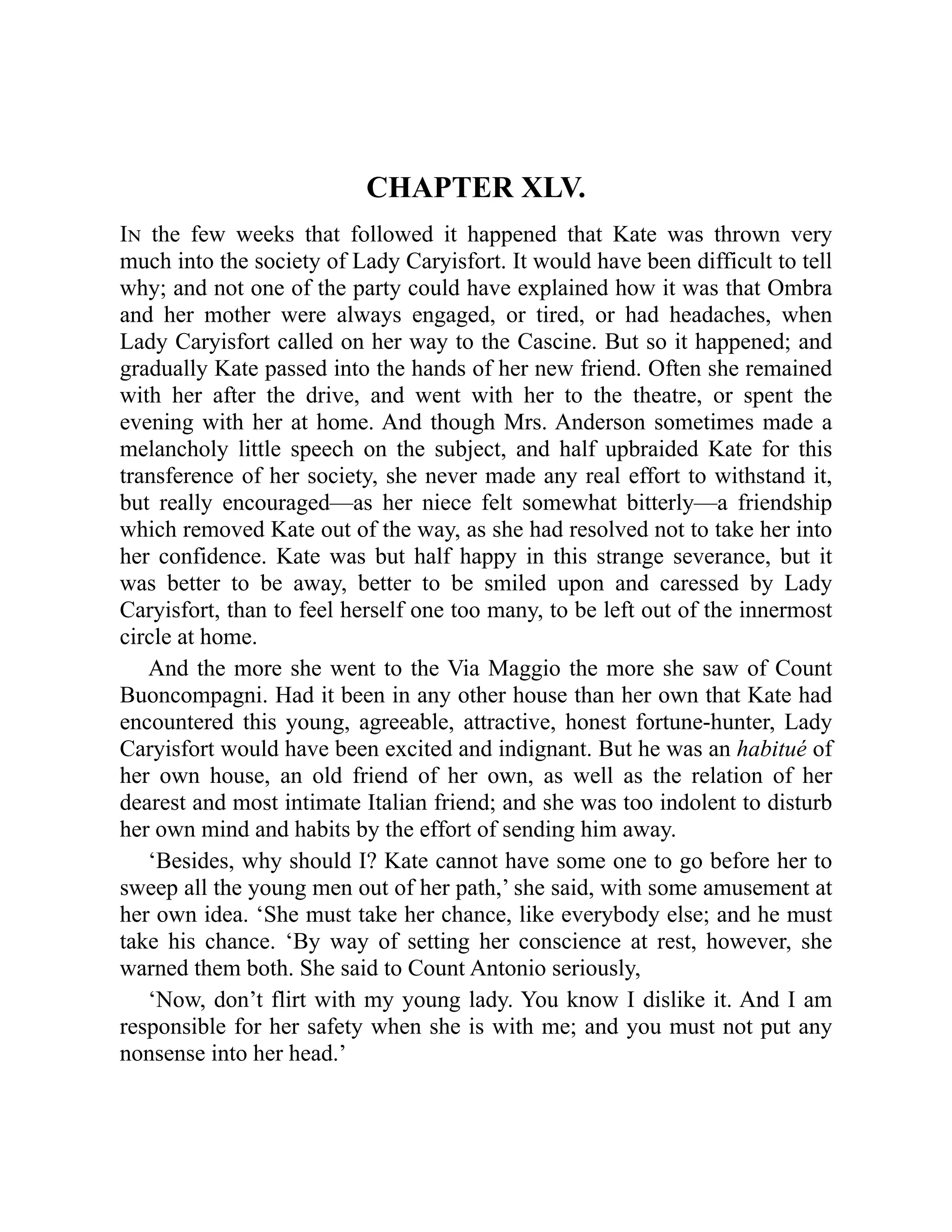
CHAPTER XLV.
In thefew weeks that followed it happened that Kate was thrown very
much into the society of Lady Caryisfort. It would have been difficult to tell
why; and not one of the party could have explained how it was that Ombra
and her mother were always engaged, or tired, or had headaches, when
Lady Caryisfort called on her way to the Cascine. But so it happened; and
gradually Kate passed into the hands of her new friend. Often she remained
with her after the drive, and went with her to the theatre, or spent the
evening with her at home. And though Mrs. Anderson sometimes made a
melancholy little speech on the subject, and half upbraided Kate for this
transference of her society, she never made any real effort to withstand it,
but really encouraged—as her niece felt somewhat bitterly—a friendship
which removed Kate out of the way, as she had resolved not to take her into
her confidence. Kate was but half happy in this strange severance, but it
was better to be away, better to be smiled upon and caressed by Lady
Caryisfort, than to feel herself one too many, to be left out of the innermost
circle at home.
And the more she went to the Via Maggio the more she saw of Count
Buoncompagni. Had it been in any other house than her own that Kate had
encountered this young, agreeable, attractive, honest fortune-hunter, Lady
Caryisfort would have been excited and indignant. But he was an habitué of
her own house, an old friend of her own, as well as the relation of her
dearest and most intimate Italian friend; and she was too indolent to disturb
her own mind and habits by the effort of sending him away.
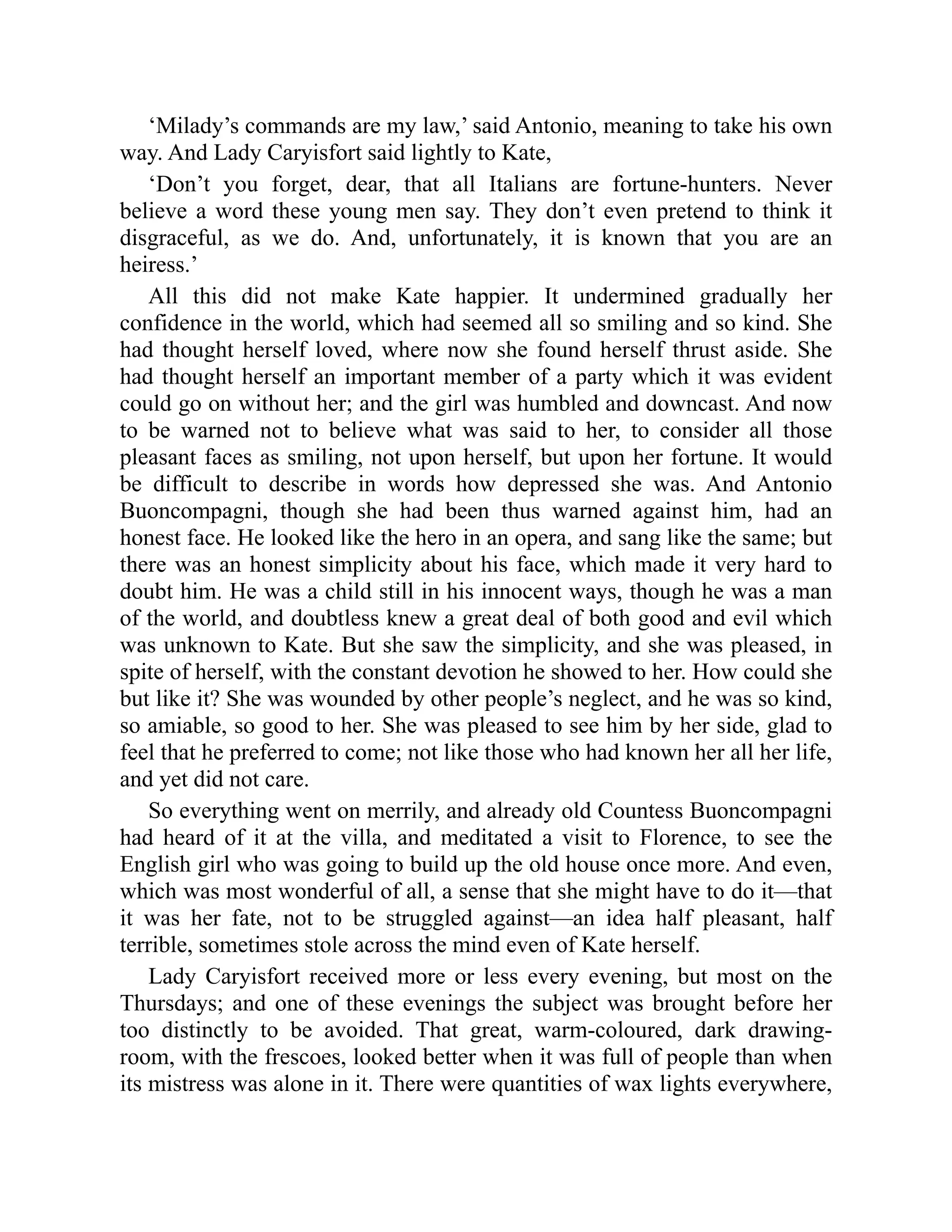
‘Besides, why should I? Kate cannot have some one to go before her to
sweep all the young men out of her path,’ she said, with some amusement at
her own idea. ‘She must take her chance, like everybody else; and he must
take his chance. ‘By way of setting her conscience at rest, however, she
warned them both. She said to Count Antonio seriously,
‘Now, don’t flirt with my young lady. You know I dislike it. And I am
responsible for her safety when she is with me; and you must not put any
nonsense into her head.’
43.
‘Milady’s commands aremy law,’ said Antonio, meaning to take his own
way. And Lady Caryisfort said lightly to Kate,
‘Don’t you forget, dear, that all Italians are fortune-hunters. Never
believe a word these young men say. They don’t even pretend to think it
disgraceful, as we do. And, unfortunately, it is known that you are an
heiress.’
All this did not make Kate happier. It undermined gradually her
confidence in the world, which had seemed all so smiling and so kind. She
had thought herself loved, where now she found herself thrust aside. She
had thought herself an important member of a party which it was evident
could go on without her; and the girl was humbled and downcast. And now
to be warned not to believe what was said to her, to consider all those
pleasant faces as smiling, not upon herself, but upon her fortune. It would
be difficult to describe in words how depressed she was. And Antonio
Buoncompagni, though she had been thus warned against him, had an
honest face. He looked like the hero in an opera, and sang like the same; but
there was an honest simplicity about his face, which made it very hard to
doubt him. He was a child still in his innocent ways, though he was a man
of the world, and doubtless knew a great deal of both good and evil which
was unknown to Kate. But she saw the simplicity, and she was pleased, in
spite of herself, with the constant devotion he showed to her. How could she
but like it? She was wounded by other people’s neglect, and he was so kind,
so amiable, so good to her. She was pleased to see him by her side, glad to
feel that he preferred to come; not like those who had known her all her life,
and yet did not care.
So everything went on merrily, and already old Countess Buoncompagni
had heard of it at the villa, and meditated a visit to Florence, to see the
English girl who was going to build up the old house once more. And even,
which was most wonderful of all, a sense that she might have to do it—that
it was her fate, not to be struggled against—an idea half pleasant, half
terrible, sometimes stole across the mind even of Kate herself.
Lady Caryisfort received more or less every evening, but most on the
Thursdays; and one of these evenings the subject was brought before her
too distinctly to be avoided. That great, warm-coloured, dark drawing-
room, with the frescoes, looked better when it was full of people than when
its mistress was alone in it. There were quantities of wax lights everywhere,
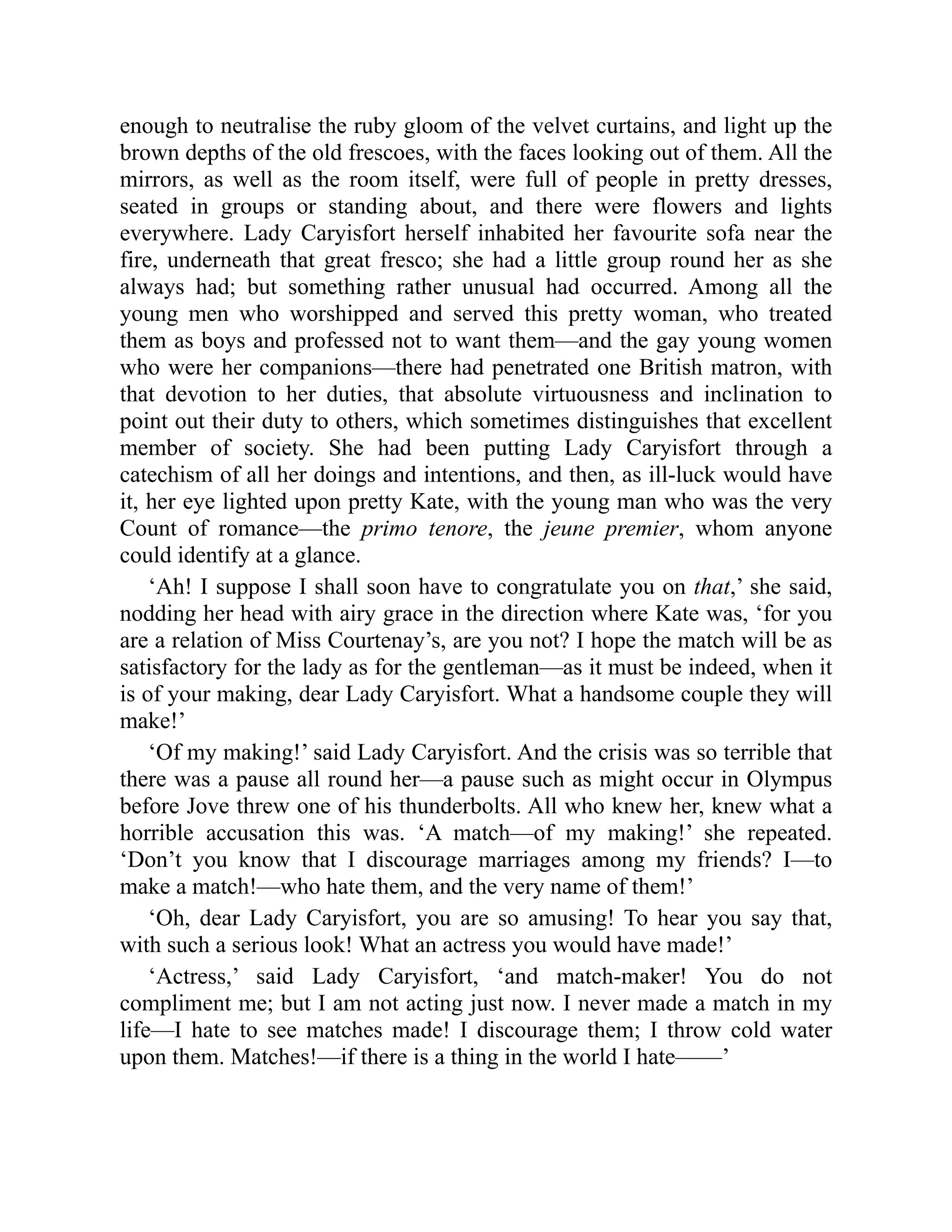
44.
enough to neutralisethe ruby gloom of the velvet curtains, and light up the
brown depths of the old frescoes, with the faces looking out of them. All the
mirrors, as well as the room itself, were full of people in pretty dresses,
seated in groups or standing about, and there were flowers and lights
everywhere. Lady Caryisfort herself inhabited her favourite sofa near the
fire, underneath that great fresco; she had a little group round her as she
always had; but something rather unusual had occurred. Among all the
young men who worshipped and served this pretty woman, who treated
them as boys and professed not to want them—and the gay young women
who were her companions—there had penetrated one British matron, with
that devotion to her duties, that absolute virtuousness and inclination to
point out their duty to others, which sometimes distinguishes that excellent
member of society. She had been putting Lady Caryisfort through a
catechism of all her doings and intentions, and then, as ill-luck would have
it, her eye lighted upon pretty Kate, with the young man who was the very
Count of romance—the primo tenore, the jeune premier, whom anyone
could identify at a glance.
‘Ah! I suppose I shall soon have to congratulate you on that,’ she said,
nodding her head with airy grace in the direction where Kate was, ‘for you
are a relation of Miss Courtenay’s, are you not? I hope the match will be as
satisfactory for the lady as for the gentleman—as it must be indeed, when it
is of your making, dear Lady Caryisfort. What a handsome couple they will
make!’
‘Of my making!’ said Lady Caryisfort. And the crisis was so terrible that
there was a pause all round her—a pause such as might occur in Olympus
before Jove threw one of his thunderbolts. All who knew her, knew what a
horrible accusation this was. ‘A match—of my making!’ she repeated.
‘Don’t you know that I discourage marriages among my friends? I—to
make a match!—who hate them, and the very name of them!’
‘Oh, dear Lady Caryisfort, you are so amusing! To hear you say that,
with such a serious look! What an actress you would have made!’
‘Actress,’ said Lady Caryisfort, ‘and match-maker! You do not
compliment me; but I am not acting just now. I never made a match in my
life—I hate to see matches made! I discourage them; I throw cold water
upon them. Matches!—if there is a thing in the world I hate——’
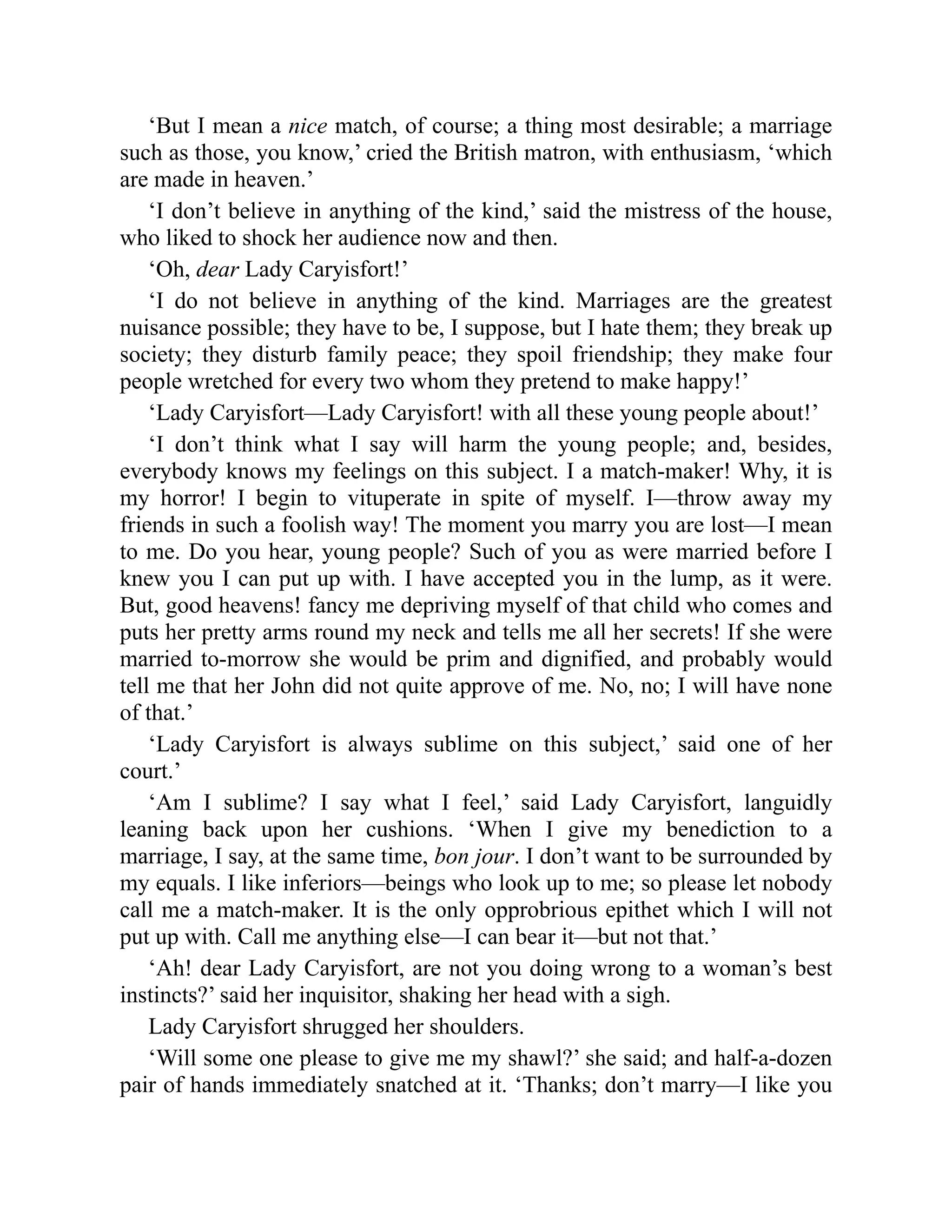
45.
‘But I meana nice match, of course; a thing most desirable; a marriage
such as those, you know,’ cried the British matron, with enthusiasm, ‘which
are made in heaven.’
‘I don’t believe in anything of the kind,’ said the mistress of the house,
who liked to shock her audience now and then.
‘Oh, dear Lady Caryisfort!’
‘I do not believe in anything of the kind. Marriages are the greatest
nuisance possible; they have to be, I suppose, but I hate them; they break up
society; they disturb family peace; they spoil friendship; they make four
people wretched for every two whom they pretend to make happy!’
‘Lady Caryisfort—Lady Caryisfort! with all these young people about!’
‘I don’t think what I say will harm the young people; and, besides,
everybody knows my feelings on this subject. I a match-maker! Why, it is
my horror! I begin to vituperate in spite of myself. I—throw away my
friends in such a foolish way! The moment you marry you are lost—I mean
to me. Do you hear, young people? Such of you as were married before I
knew you I can put up with. I have accepted you in the lump, as it were.
But, good heavens! fancy me depriving myself of that child who comes and
puts her pretty arms round my neck and tells me all her secrets! If she were
married to-morrow she would be prim and dignified, and probably would
tell me that her John did not quite approve of me. No, no; I will have none
of that.’
‘Lady Caryisfort is always sublime on this subject,’ said one of her
court.’
‘Am I sublime? I say what I feel,’ said Lady Caryisfort, languidly
leaning back upon her cushions. ‘When I give my benediction to a
marriage, I say, at the same time, bon jour. I don’t want to be surrounded by
my equals. I like inferiors—beings who look up to me; so please let nobody
call me a match-maker. It is the only opprobrious epithet which I will not
put up with. Call me anything else—I can bear it—but not that.’
‘Ah! dear Lady Caryisfort, are not you doing wrong to a woman’s best
instincts?’ said her inquisitor, shaking her head with a sigh.
Lady Caryisfort shrugged her shoulders.
‘Will some one please to give me my shawl?’ she said; and half-a-dozen
pair of hands immediately snatched at it. ‘Thanks; don’t marry—I like you
46.
best as youare,’ she said, with a careless little nod at her subjects before she
turned round to plunge into a conversation with Countess Strozzi, who did
not understand English. The British matron was deeply scandalised; she
poured out her indignant feelings to two or three people in the room before
she withdrew, and next day she wrote a letter to a friend in England, asking
if it was known that the great heiress, Miss Courtenay, was on the eve of
being married to an Italian nobleman—‘or, at least, he calls himself Count
Somebody; though of course, one never believes what these foreigners tell
one,’ she wrote. ‘If you should happen to meet Mr. Courtenay, you might
just mention this, in case he should not know how far things had gone.’
Thus, all unawares, the cloud arose in the sky, and the storm prepared
itself. Christmas had passed, and Count Antonio felt that it was almost time
to speak. He was very grateful to Providence and the saints for the success
which had attended him. Perhaps, after all, his mother’s prayers in the little
church at the villa, and those perpetual novenas with which she had
somewhat vexed his young soul when she was with him in Florence, had
been instrumental in bringing about this result. The Madonna, who, good to
everyone, is always specially good to an only son, had no doubt led into his
very arms this wealth, which would save the house. So Antonio thought
quite devoutly, without an idea in his good-natured soul that there was
anything ignoble in his pursuit or in his gratitude. Without money he dared
not have dreamed of marrying, and Kate was not one whom he could have
ventured to fall in love with apart from the necessity of marriage. But he
admired her immensely, and was grateful to her for all the advantages she
was going to bring him. He even felt himself in love with her, when she
looked up at him with her English radiance of bloom, singling him out in
the midst of so many who would have been proud of her favour. There was
not a thought in the young Italian’s heart which was not good, and tender,
and pleasant towards his heiress. He would have been most kind and
affectionate to her had she married him, and would have loved her honestly
had she chosen to love him; but he was not impassioned—and at the present
moment it was to Antonio a most satisfactory, delightful, successful
enterprise, which could bring nothing but good, rather than a love-suit, in
which his heart and happiness were engaged.
However, things were settling steadily this way when Christmas came.
Already Count Antonio had made up his mind to begin operations by
speaking to Lady Caryisfort on the subject, and Kate had felt vaguely that
47.
she would haveto choose between the position of a great lady in England
on her own land and that of a great lady in beautiful Florence. The last was
not without its attractions, and Antonio was so kind, while other people
were so indifferent. Poor Kate was not as happy as she looked. More and
more it became apparent to her that something was going on at home which
was carefully concealed from her. They even made new friends, whom she
did not know—one of whom, in particular, a young clergyman, a friend of
the Berties, stared at her now and then from a corner of the drawing-room
in the Lung-Arno, with a curiosity which she fully shared. ‘Oh! he is a
friend of Mr. Hardwick’s; he is here only for a week or two; he is going on
to Rome for the Carnival,’ Mrs. Anderson said, without apparently
perceiving what an evidence Kate’s ignorance was of the way in which their
lives had fallen apart. And the Berties now were continually in the house.
They seemed to have no other engagements, except when, now and then,
they went to the opera with the ladies. Sometimes Kate thought one or the
other of them showed signs of uneasiness, but Ombra was bright as the day,
and Mrs. Anderson made no explanation. And how could she, the youngest
of the household, the one who was not wanted—how could she interfere or
say anything? The wound worked deeper and deeper, and a certain
weariness and distrust crept over Kate. Oh, for some change!—even
Antonio’s proposal, which was coming. For as it was only her imagination
and her vanity, not her heart, which were interested, Kate saw with perfect
clear-sightedness that the proposal was on its way.
But before it arrived—before any change had come to the state of affairs
in the Lung-Arno—one evening, when Kate was at home, and, as usual,
abstracted over a book in a corner; when the Berties were in full possession,
one bending over Ombra at the piano, one talking earnestly to her mother,
Francesca suddenly threw the door open, with a vehemence quite unusual to
her, and without a word of warning—without even the announcement of his
name to put them on their guard—Mr. Courtenay walked into the room.
48.
CHAPTER XLVI.
The scenewhich Mr. Courtenay saw when he walked in suddenly to Mrs.
Anderson’s drawing-room, was one so different in every way from what he
had expected, that he was for the first moment as much taken aback as any
of the company. Francesca, who remembered him well, and whose mind
was moved by immediate anxiety at the sight of him, had not been able to
restrain a start and exclamation, and had ushered him in suspiciously, with
so evident a feeling of alarm and confusion that the suspicious old man of
the world felt doubly convinced that there was something to conceal. But
she had neither time nor opportunity to warn the party; and yet this was
how Mr. Courtenay found them. The drawing-room, which looked out on
the Lung-Arno, was not small, but it was rather low—not much more than
an entresol. There was a bright wood fire on the hearth, and near it, with a
couple of candles on a small table by her side, sat Kate, distinctly isolated
from the rest, and working diligently, scarcely raising her eyes from her
needlework. The centre table was drawn a little aside, for Ombra had found
it too warm in front of the fire; and about this the other four were grouped
—Mrs. Anderson, working, too, was talking to one of the young men; the
other was holding silk, which Ombra was winding; a thorough English
domestic party—such a family group as should have gladdened virtuous
eyes to see. Mr. Courtenay looked at it with indescribable surprise. There
was nothing visible here which in the least resembled a foreign Count; and
Kate was, wonderful to tell, left out—clearly left out. She was sitting apart
at her little table near the fire, looking just a little weary and forlorn—a very
little—not enough to catch Mrs. Anderson’s eye, who had got used to this
aspect of Kate. But it struck Mr. Courtenay, who was not used to it, and
who had suspected something very different. He was so completely amazed,
that he could not think it real. That little old woman must have given some
signal; they must have been warned of his coming; otherwise it was
altogether impossible to account for this extraordinary scene. They all
jumped to their feet at his appearance. There was first a glance of confusion
and embarrassment exchanged, as he saw; and then everyone rose in their
wonder.
49.
‘Mr. Courtenay! Whata great, what a very unexpected——,’ said Mrs.
Anderson. She had meant to say pleasure; but even she was so much
startled and confounded that she could not carry her intention out.
‘Is it Uncle Courtenay?’ said Kate, rising, too. She was not alarmed—on
the contrary, she looked half glad, as if the sight of him was rather a relief
than otherwise. ‘Is it you, Uncle Courtenay? Have you come to see us? I am
very glad. But I wonder you did not write.’
‘Thanks for your welcome, Kate. Thanks, Mrs. Anderson. Don’t let me
disturb you. I made up my mind quite suddenly. I had not thought of it a
week ago. Ah! some more acquaintances whom I did not expect to see.’
Mr. Courtenay was very gracious—he shook hands all round. The
Berties shrank, no one could have quite told how—they looked at each
other, exchanging a glance full of dismay and mutual consultation. Mr.
Courtenay’s faculties were all on the alert; but he had been thinking only of
his niece, and the young men puzzled him. They were not near Kate, they
were not ‘paying her attention;’ but, then, what were they doing here? He
was not so imaginative nor so quick in his perceptions as to be able to shift
from the difficulty he had mastered to this new one. What he had expected
was a foreign adventurer making love to his niece; and instead of that here
were two young Englishmen, not even looking at his niece. He was posed;
but ever suspicious. For the moment they had baffled him; but he would
find it out, whatever they meant, whatever they might be concealing from
him; and with that view he accepted the great arm-chair blandly, and sat
down to make his observations with the most smiling and ingratiating face.
‘We are taking care of Kate—she is a kind of invalid, as you will see,’
said Mrs. Anderson. ‘It is not bad, I am glad to say, but she has a cold, and I
have kept her indoors, and even condemned her to the fireside corner,
which she thinks very hard.’
‘It looks very comfortable,’ said Mr. Courtenay. ‘So you have a cold,
Kate? I hear you have been enjoying yourself very much, making troops of
friends. But pray don’t let me disturb anyone. Don’t let me break up the
party——’
‘It is time for us to keep our engagement,’ said Bertie Hardwick, who
had taken out his watch. ‘It is a bore to have to go, just as there is a chance
of hearing news of home; but I hope we shall see Mr. Courtenay again. We
must go now. It is actually nine o’clock.’
50.
‘Yes. I didnot think it was nearly so late,’ said his cousin, echoing him.
And they hurried away, leaving Mr. Courtenay more puzzled than ever. He
had put them to flight, it was evident—but why? For personally he had no
dread of them, nor objection to them, and they had not been taking any
notice of Kate.
‘I have disturbed your evening, I fear,’ he said to Mrs. Anderson. She
was annoyed and uncomfortable, though he could not tell the reason why.
‘Oh! no, not the least. These boys have been in Florence for some little
time, and they often come in to enliven us a little in the evenings. But they
have a great many engagements. They can never stay very long,’ she said,
faltering and stammering, as if she did not quite know what she was saying.
But for this Kate would have broken out into aroused remonstrance. Can
never stay very long! Why, they stayed generally till midnight, or near it.
These words were on Kate’s lips, but she held them back, partly for her
aunt’s sake, partly—she could not tell why. Ombra, overcast in a moment
from all her brightness, sat behind, drawing her chair back, and began to
arrange and put away the silk she had been winding. It shone in the
lamplight, vivid and warm in its rich colour. What a curious little picture
this made altogether! Kate, startled and curious, in her seat by the fire; Mrs.
Anderson, watchful, not knowing what was going to happen, keeping all
her wits about her, occupied the central place; and Ombra sat half hidden
behind Mr. Courtenay’s chair, a shadowy figure, with the lamplight just
catching her white hands, and the long crimson thread of the silk. In a
moment everything had changed. It might have been Shanklin again, from
the aspect of the party. A little chill seemed to seize them all, though the
room was so light and warm. Why was it? Was it a mere reminiscence of
his former visit which had brought such change to their lives? He was
uncomfortable, and even embarrassed, himself, though he could not have
told why.
‘So Kate has a cold!’ he repeated. ‘From what I heard, I supposed you
were living a very gay life, with troops of friends. I did not expect to find
such a charming domestic party. But you are quite at home here, I suppose,
and know the customs of the place—all about it? How sorry I am that your
young friends should have gone away because of me!’
‘Oh! pray don’t think of it. It was not because of you. They had an
engagement,’ said Mrs. Anderson. Yes, I have lived in Florence before; but
51.
Welcome to ourwebsite – the perfect destination for book lovers and
knowledge seekers. We believe that every book holds a new world,
offering opportunities for learning, discovery, and personal growth.
That’s why we are dedicated to bringing you a diverse collection of
books, ranging from classic literature and specialized publications to
self-development guides and children's books.
More than just a book-buying platform, we strive to be a bridge
connecting you with timeless cultural and intellectual values. With an
elegant, user-friendly interface and a smart search system, you can
quickly find the books that best suit your interests. Additionally,
our special promotions and home delivery services help you save time
and fully enjoy the joy of reading.
Join us on a journey of knowledge exploration, passion nurturing, and
personal growth every day!
testbankdeal.com