Chaparral
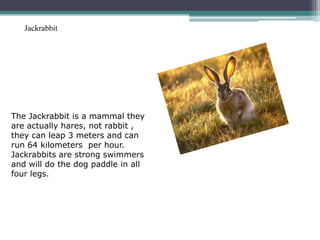
Jackrabbit


The Jackrabbit is a mammal they
are actually hares, not rabbit ,
they can leap 3 meters and can
run 64 kilometers per hour.
Jackrabbits are strong swimmers
and will do the dog paddle in all
four legs.
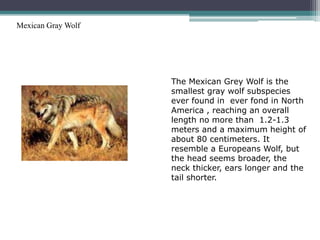
Mexican Gray Wolf


                    The Mexican Grey Wolf is the
                    smallest gray wolf subspecies
                    ever found in ever fond in North
                    America , reaching an overall
                    length no more than 1.2-1.3
                    meters and a maximum height of
                    about 80 centimeters. It
                    resemble a Europeans Wolf, but
                    the head seems broader, the
                    neck thicker, ears longer and the
                    tail shorter.
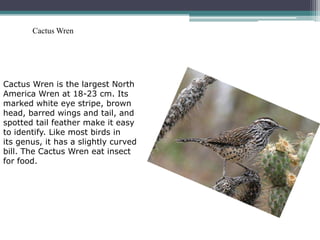
Cactus Wren


Cactus Wren is the largest North
America Wren at 18-23 cm. Its
marked white eye stripe, brown
head, barred wings and tail, and
spotted tail feather make it easy
to identify. Like most birds in
its genus, it has a slightly curved
bill. The Cactus Wren eat insect
for food.
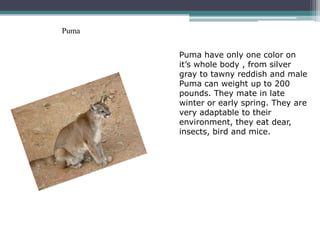
Puma


       Puma have only one color on
       it’s whole body , from silver
       gray to tawny reddish and male
       Puma can weight up to 200
       pounds. They mate in late
       winter or early spring. They are
       very adaptable to their
       environment, they eat dear,
       insects, bird and mice.
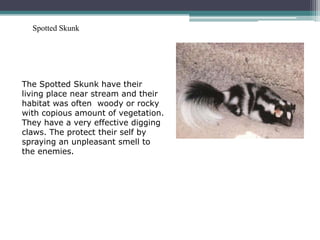
Spotted Skunk


The Spotted Skunk have their
living place near stream and their
habitat was often woody or rocky
with copious amount of vegetation.
They have a very effective digging
claws. The protect their self by
spraying an unpleasant smell to
the enemies.
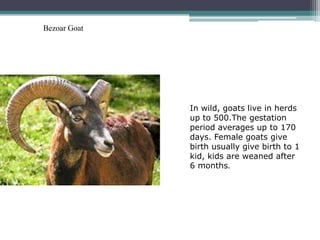
Bezoar Goat


              In wild, goats live in herds
              up to 500.The gestation
              period averages up to 170
              days. Female goats give
              birth usually give birth to 1
              kid, kids are weaned after
              6 months.
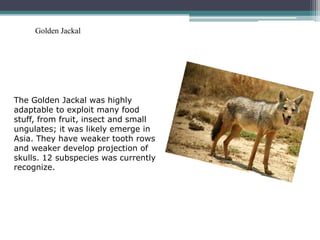
Golden Jackal


The Golden Jackal was highly
adaptable to exploit many food
stuff, from fruit, insect and small
ungulates; it was likely emerge in
Asia. They have weaker tooth rows
and weaker develop projection of
skulls. 12 subspecies was currently
recognize.
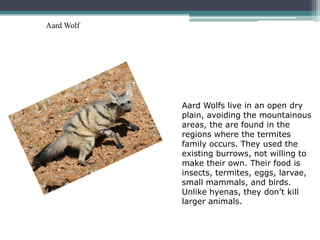
Aard Wolf


            Aard Wolfs live in an open dry
            plain, avoiding the mountainous
            areas, the are found in the
            regions where the termites
            family occurs. They used the
            existing burrows, not willing to
            make their own. Their food is
            insects, termites, eggs, larvae,
            small mammals, and birds.
            Unlike hyenas, they don’t kill
            larger animals.
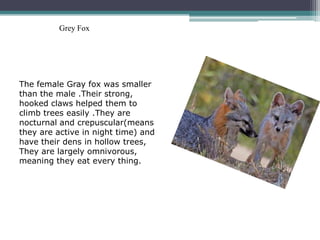
Grey Fox


The female Gray fox was smaller
than the male .Their strong,
hooked claws helped them to
climb trees easily .They are
nocturnal and crepuscular(means
they are active in night time) and
have their dens in hollow trees,
They are largely omnivorous,
meaning they eat every thing.
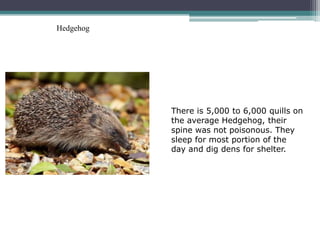
Hedgehog


           There is 5,000 to 6,000 quills on
           the average Hedgehog, their
           spine was not poisonous. They
           sleep for most portion of the
           day and dig dens for shelter.
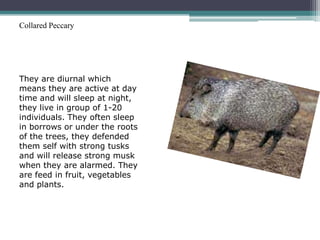
Collared Peccary


They are diurnal which
means they are active at day
time and will sleep at night,
they live in group of 1-20
individuals. They often sleep
in borrows or under the roots
of the trees, they defended
them self with strong tusks
and will release strong musk
when they are alarmed. They
are feed in fruit, vegetables
and plants.
Wallaby


          The Wallabies' powerful tails are
          used for balance. Adult male
          Wallabies are known as “Bucks”,
          “Boomers” and “ Jacks”. Adult
          male Wallaby are known as
          “Doe”, “Flyer” or “Jill”. A group
          of Wallbies are known as
          “Court”, “Mob” or “Troup”.
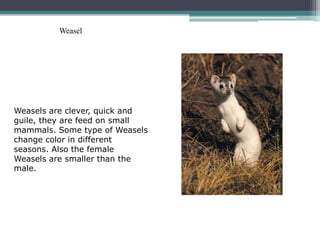
Weasel


Weasels are clever, quick and
guile, they are feed on small
mammals. Some type of Weasels
change color in different
seasons. Also the female
Weasels are smaller than the
male.
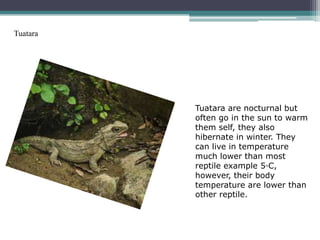
Tuatara


          Tuatara are nocturnal but
          often go in the sun to warm
          them self, they also
          hibernate in winter. They
          can live in temperature
          much lower than most
          reptile example 5◦C,
          however, their body
          temperature are lower than
          other reptile.
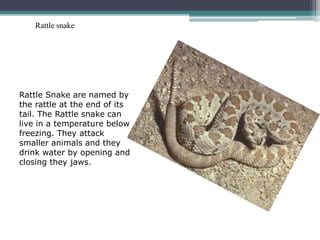
Rattle snake


Rattle Snake are named by
the rattle at the end of its
tail. The Rattle snake can
live in a temperature below
freezing. They attack
smaller animals and they
drink water by opening and
closing they jaws.
Thank you for watching !


                    By Pai

Chaparral

  • 1.
  • 2.
    Jackrabbit The Jackrabbit isa mammal they are actually hares, not rabbit , they can leap 3 meters and can run 64 kilometers per hour. Jackrabbits are strong swimmers and will do the dog paddle in all four legs.
  • 3.
    Mexican Gray Wolf The Mexican Grey Wolf is the smallest gray wolf subspecies ever found in ever fond in North America , reaching an overall length no more than 1.2-1.3 meters and a maximum height of about 80 centimeters. It resemble a Europeans Wolf, but the head seems broader, the neck thicker, ears longer and the tail shorter.
  • 4.
    Cactus Wren Cactus Wrenis the largest North America Wren at 18-23 cm. Its marked white eye stripe, brown head, barred wings and tail, and spotted tail feather make it easy to identify. Like most birds in its genus, it has a slightly curved bill. The Cactus Wren eat insect for food.
  • 5.
    Puma Puma have only one color on it’s whole body , from silver gray to tawny reddish and male Puma can weight up to 200 pounds. They mate in late winter or early spring. They are very adaptable to their environment, they eat dear, insects, bird and mice.
  • 6.
    Spotted Skunk The SpottedSkunk have their living place near stream and their habitat was often woody or rocky with copious amount of vegetation. They have a very effective digging claws. The protect their self by spraying an unpleasant smell to the enemies.
  • 7.
    Bezoar Goat In wild, goats live in herds up to 500.The gestation period averages up to 170 days. Female goats give birth usually give birth to 1 kid, kids are weaned after 6 months.
  • 8.
    Golden Jackal The GoldenJackal was highly adaptable to exploit many food stuff, from fruit, insect and small ungulates; it was likely emerge in Asia. They have weaker tooth rows and weaker develop projection of skulls. 12 subspecies was currently recognize.
  • 9.
    Aard Wolf Aard Wolfs live in an open dry plain, avoiding the mountainous areas, the are found in the regions where the termites family occurs. They used the existing burrows, not willing to make their own. Their food is insects, termites, eggs, larvae, small mammals, and birds. Unlike hyenas, they don’t kill larger animals.
  • 10.
    Grey Fox The femaleGray fox was smaller than the male .Their strong, hooked claws helped them to climb trees easily .They are nocturnal and crepuscular(means they are active in night time) and have their dens in hollow trees, They are largely omnivorous, meaning they eat every thing.
  • 11.
    Hedgehog There is 5,000 to 6,000 quills on the average Hedgehog, their spine was not poisonous. They sleep for most portion of the day and dig dens for shelter.
  • 12.
    Collared Peccary They arediurnal which means they are active at day time and will sleep at night, they live in group of 1-20 individuals. They often sleep in borrows or under the roots of the trees, they defended them self with strong tusks and will release strong musk when they are alarmed. They are feed in fruit, vegetables and plants.
  • 13.
    Wallaby The Wallabies' powerful tails are used for balance. Adult male Wallabies are known as “Bucks”, “Boomers” and “ Jacks”. Adult male Wallaby are known as “Doe”, “Flyer” or “Jill”. A group of Wallbies are known as “Court”, “Mob” or “Troup”.
  • 14.
    Weasel Weasels are clever,quick and guile, they are feed on small mammals. Some type of Weasels change color in different seasons. Also the female Weasels are smaller than the male.
  • 15.
    Tuatara Tuatara are nocturnal but often go in the sun to warm them self, they also hibernate in winter. They can live in temperature much lower than most reptile example 5◦C, however, their body temperature are lower than other reptile.
  • 16.
    Rattle snake Rattle Snakeare named by the rattle at the end of its tail. The Rattle snake can live in a temperature below freezing. They attack smaller animals and they drink water by opening and closing they jaws.
  • 17.
    Thank you forwatching ! By Pai