TEMPERATE
DECIDUOUS
FOREST
Sora Andrews
Abiotic characters
• Water
• Wind
• Rocks

• Sun
Plants and Animal
• Trees (ex.Birch, Oak, etc)
• Animals(ex. Eastern chipmunk, White
tailed deer, coyote, etc)
• Carpet moss, Lady fern, Common Lime
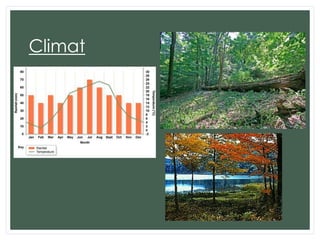
Climat
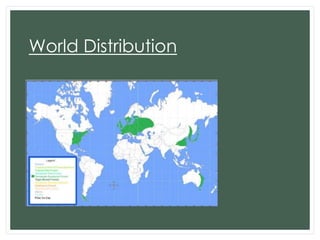
World Distribution
Bioaccumilation
• Polution
• Water
• Air
Intrusive Species Found in the
Biome
• Anoplophora chinensis - Citrus long
horned beetle
-wood boaring insect boring to Asia
-Damaging to trees
• Multiflora Rose
-Introduced to England

-Reproduces quickly causing it to be
harmful to deciduous forests
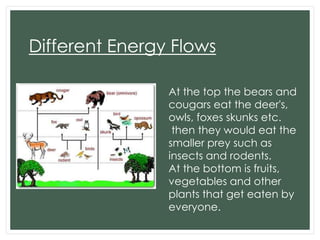
Different Energy Flows
At the top the bears and
cougars eat the deer's,
owls, foxes skunks etc.
then they would eat the
smaller prey such as
insects and rodents.
At the bottom is fruits,
vegetables and other
plants that get eaten by
everyone.
Biotic Relationships
• Mutualism:
-Blackberry shrub and bee – The bee gets nectar and
the blackberry gets pollinated

• Commensalism:
-A chipmunk and a tree- The chipmunk can live inside
the tree without any harm

• Parasitism:
-A bear and a fish- Bear eat fish to survive killing the
fish
Succession which Happens
• Primary Succession:
A natural forest fire starts causing most trees an bushes to
burn to ashes. Smaller animals within the forest eat seeds
from the trees that had not been burnt down. While eating
the seeds the animals would drop some on the burnt down
trees which would start to grow with the help of the ashes.
• Secondary Succession:
Some people come to cut down trees in the forest. After
cutting down the trees they left the stumps in the ground.
Mother nature comes back and the trees grow back from
the stumps.
Predator-Prey Interactions
• A bald eagle and Eastern Chipmunk:
A bald eagle can fly in circles in the sky to scope out the forest
floor. It can find its prey such as the eastern chipmunk and dive
down to catch it. The chipmunk can hide within the bushes and
leaves to escape getting caught. The bald eagle can act like it
gave up on it’s prey and swoop in at the last minute to catch the
chipmunk.

Temperate deciduous forest

  • 1.
  • 2.
    Abiotic characters • Water •Wind • Rocks • Sun
  • 3.
    Plants and Animal •Trees (ex.Birch, Oak, etc) • Animals(ex. Eastern chipmunk, White tailed deer, coyote, etc) • Carpet moss, Lady fern, Common Lime
  • 4.
  • 5.
  • 6.
  • 7.
    Intrusive Species Foundin the Biome • Anoplophora chinensis - Citrus long horned beetle -wood boaring insect boring to Asia -Damaging to trees • Multiflora Rose -Introduced to England -Reproduces quickly causing it to be harmful to deciduous forests
  • 8.
    Different Energy Flows Atthe top the bears and cougars eat the deer's, owls, foxes skunks etc. then they would eat the smaller prey such as insects and rodents. At the bottom is fruits, vegetables and other plants that get eaten by everyone.
  • 9.
    Biotic Relationships • Mutualism: -Blackberryshrub and bee – The bee gets nectar and the blackberry gets pollinated • Commensalism: -A chipmunk and a tree- The chipmunk can live inside the tree without any harm • Parasitism: -A bear and a fish- Bear eat fish to survive killing the fish
  • 10.
    Succession which Happens •Primary Succession: A natural forest fire starts causing most trees an bushes to burn to ashes. Smaller animals within the forest eat seeds from the trees that had not been burnt down. While eating the seeds the animals would drop some on the burnt down trees which would start to grow with the help of the ashes. • Secondary Succession: Some people come to cut down trees in the forest. After cutting down the trees they left the stumps in the ground. Mother nature comes back and the trees grow back from the stumps.
  • 11.
    Predator-Prey Interactions • Abald eagle and Eastern Chipmunk: A bald eagle can fly in circles in the sky to scope out the forest floor. It can find its prey such as the eastern chipmunk and dive down to catch it. The chipmunk can hide within the bushes and leaves to escape getting caught. The bald eagle can act like it gave up on it’s prey and swoop in at the last minute to catch the chipmunk.